Video Production for Social Media That Converts
Key Takeaways
- Video production for social media is the process of planning, filming, and editing platform-native video content built to capture attention and drive action.
- Social video demands shorter formats (15-60 seconds), vertical or square framing, and fast narrative rhythms, unlike traditional long-form video.
- Platform-specific optimization matters: TikTok rewards fast, trend-driven clips; Instagram Reels favor polished visuals; LinkedIn rewards professional, value-packed content.
- You can choose among agency, in-house, or DIY approaches to video production for social media, each with distinct cost, speed, and quality trade-offs.
- High-performing social videos open with a strong hook, keep audio crisp, and close with a clear call to action.
- Measure ROI through platform analytics: views, average percentage viewed, engagement rate, and conversion data.
Video production for social media is the process of planning, filming, and editing platform-native videos that grab attention and drive engagement on TikTok, Instagram, LinkedIn, and YouTube. It blends audience research and short-form storytelling to turn views into results.
What Is Video Production for Social Media?
social media is a specialized craft focused on creating short, platform-native clips built to stop the scroll and deliver measurable outcomes. Unlike a broadcast commercial or a corporate explainer, this work prioritizes speed, vertical framing, and narrative efficiency over polish for polish’s sake.
Definition and Core Components
this type of media is the full process of planning, scripting, filming, editing, and optimizing content specifically for distribution on TikTok, Instagram, Facebook, LinkedIn, and YouTube. The core components break into three phases: pre-production (audience research, scripting, storyboarding), production (filming, lighting, audio capture), and post-production (editing, captioning, platform-specific export). According to SpeakerBee, social video places special demands on both pre-production and post-production, where speed and efficiency are the operative words.
How Social Video Differs from Traditional Video
The biggest difference lives in the storytelling. Social videos need to be short, accurate, and catchy from the first frame, typically running 15 to 60 seconds in a vertical format with a faster narrative rhythm. Traditional productions lean into longer, more layered narratives. Social demands something punchier and more direct, closer to a visual jab than a slow build.
Social media video is significantly different from traditional video production. While traditional productions often focus on longer, more in-depth narratives, social media demands a more dynamic and direct approach.
– SpeakerBee, this kind of social media: The Ultimate Guide
Why Platform-Native Production Matters
Platform-native production means tailoring dimensions, pacing, captions, and hooks to how each network actually behaves. Casual Films notes that YouTube content performs best in a 16:9 aspect ratio, while Facebook and Instagram favor vertical or square formats. Canva points out you’re racing against a two-second attention window, which is exactly why the opening frame of any social clip carries so much weight.
Why Video Production for Social Media Drives Commercial Results
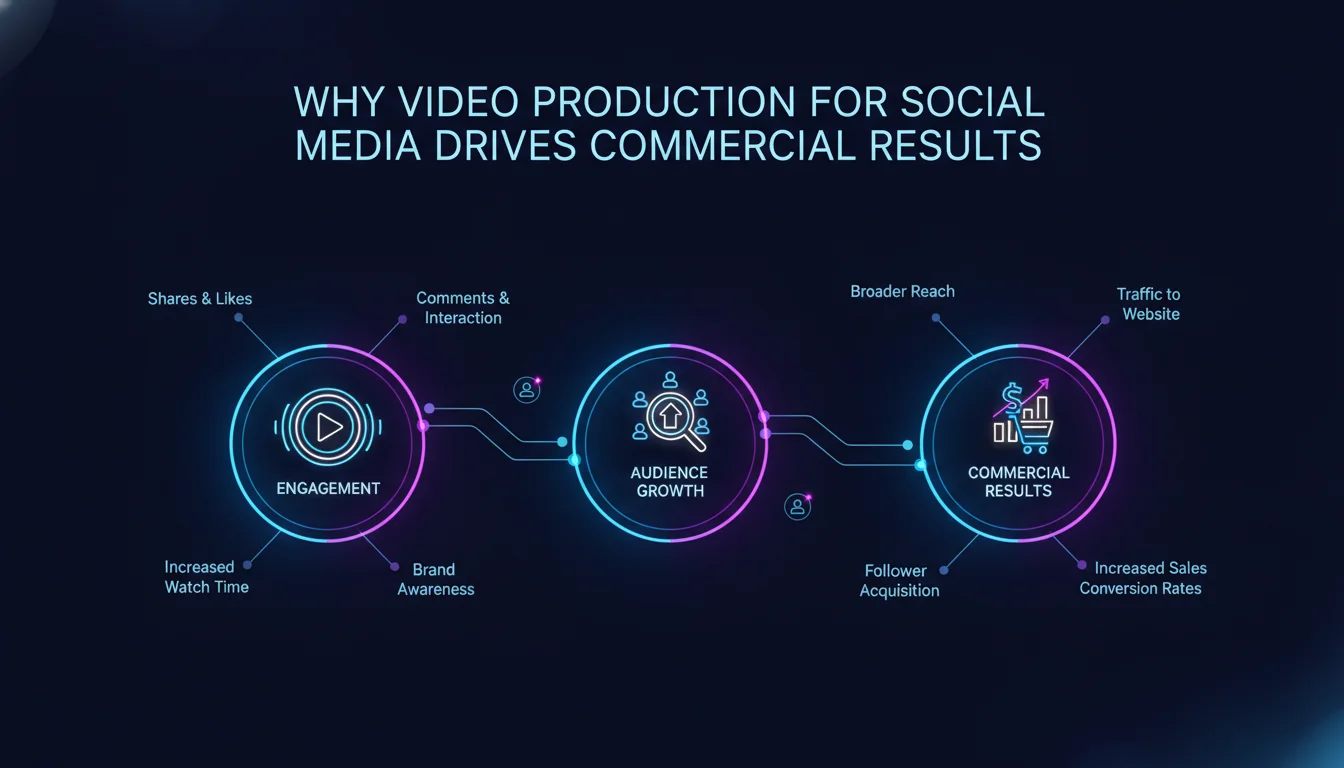
the production for social media drives commercial results because moving images consistently beat static posts on engagement, conversion, and brand recall. This isn’t a creative nice-to-have. It’s a growth lever, and the data across platforms backs that up.
Engagement and Attention Metrics
Social users are pouring hours into video-first apps. According to Wilson College Online, TikTok users spent 23.5 hours per month on the platform, YouTube 23.1 hours, Facebook 19.7 hours, WhatsApp 17.3 hours, and Instagram 12.0 hours in 2022. Superside adds that 167 million videos get watched on TikTok every single minute, and that the average person now spends around 100 minutes a day watching online video content.
Conversion and Revenue Impact
Video moves people toward a purchase decision faster than text ever will. Wilson College Online reports that 91% of people use explainer videos to learn about products and services, 82% have been convinced to buy after watching one, and 77% have downloaded an app because of a video. Superside notes that 93% of companies have seen a real uptick in new customers thanks to social video. In one case study from Casual Films, a campaign for Glean, an enterprise Work AI platform, generated $116 million in sales pipeline influence and delivered 3x engagement versus typical B2B marketing.
Brand Trust and Authenticity
Good video builds trust. Wilson College Online found that 87% of consumers say video quality can change how much they trust a brand, and 89% want more video from the businesses they follow. JoinBrands reports that 95% of marketers say video is a critical part of their strategy, and 87% credit it directly for boosting brand awareness.
High-quality video content doesn’t just bring in views: it drives engagement, builds brand visibility, and brings in sales.
– Superside, The 15 Top-Rated Social Media Video Agencies in 2026
Platform-Specific Requirements for Social Video
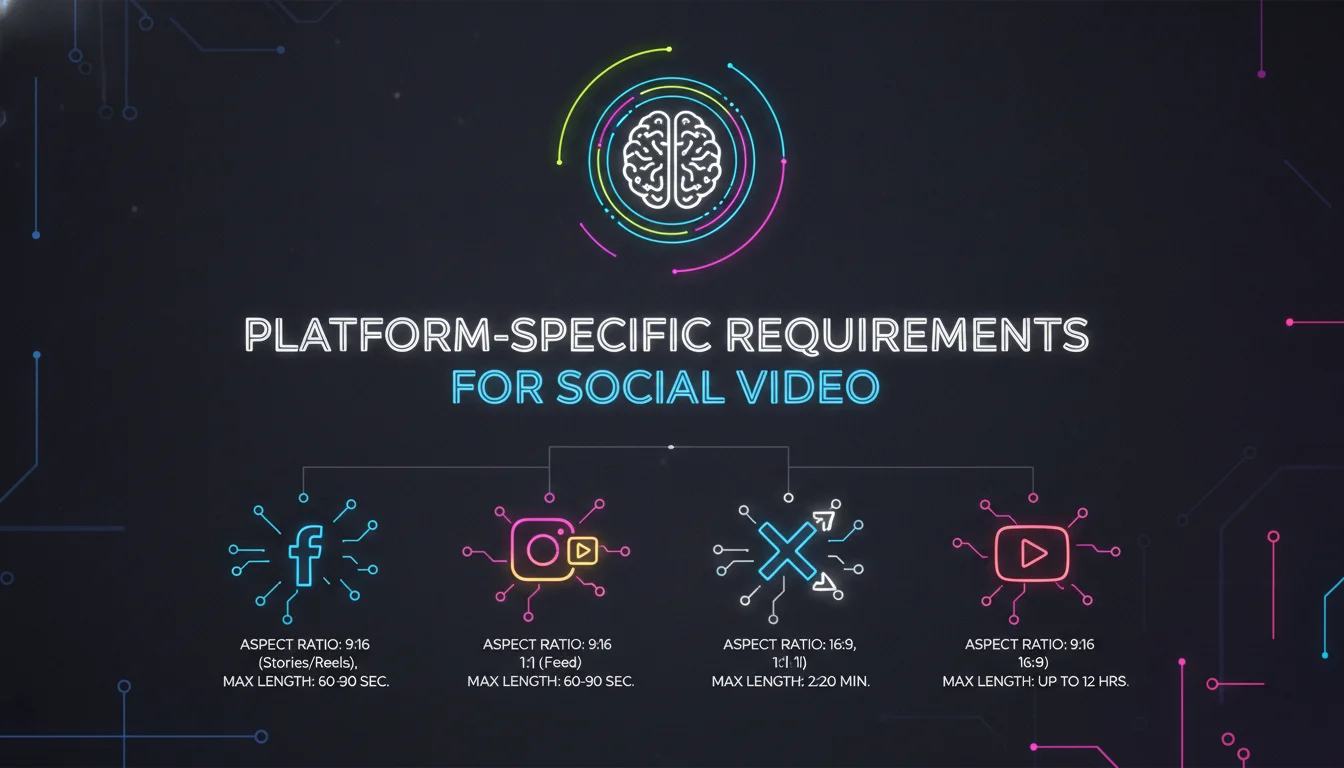
Platform-specific requirements decide whether your video gets seen at all, because each network’s algorithm and audience expect different things from the exact same footage. Getting the format right is not optional polish. It’s the entry fee.
TikTok and Instagram Reels
Adobe Express explains that TikTok rewards fast-paced, informal, trend-driven clips, while Instagram Reels leans toward polished visuals, aesthetics, and storytelling. Both platforms reward vertical 9:16 framing and a strong hook in the first few seconds. Think of TikTok as the improv stage and Reels as the styled photoshoot that happens to move.
YouTube and Facebook
Casual Films advises that YouTube is a natural home for video content, with the flexibility to post any duration and embed clips across every other channel you own. YouTube performs best in 16:9, and hooks in the first five seconds matter because most ads let viewers skip. Facebook’s algorithm favors human-led stories, so content that gets liked, shared, and commented on becomes more visible over time. Facebook Stories, video posts, and banner videos all have a role, but vertical or square framing improves newsfeed visibility across the board.
LinkedIn and Professional Networks
Casual Films notes that LinkedIn has evolved from a hub for long-form B2B content into a versatile home for all kinds of video, with a professional audience that’s ideal for recruitment and brand storytelling. Adobe Express recommends professional, value-packed content for this platform specifically, since the audience mindset here is closer to “what can this teach me” than “entertain me.”
Agency vs. In-House vs. DIY: Choosing Your Production Route
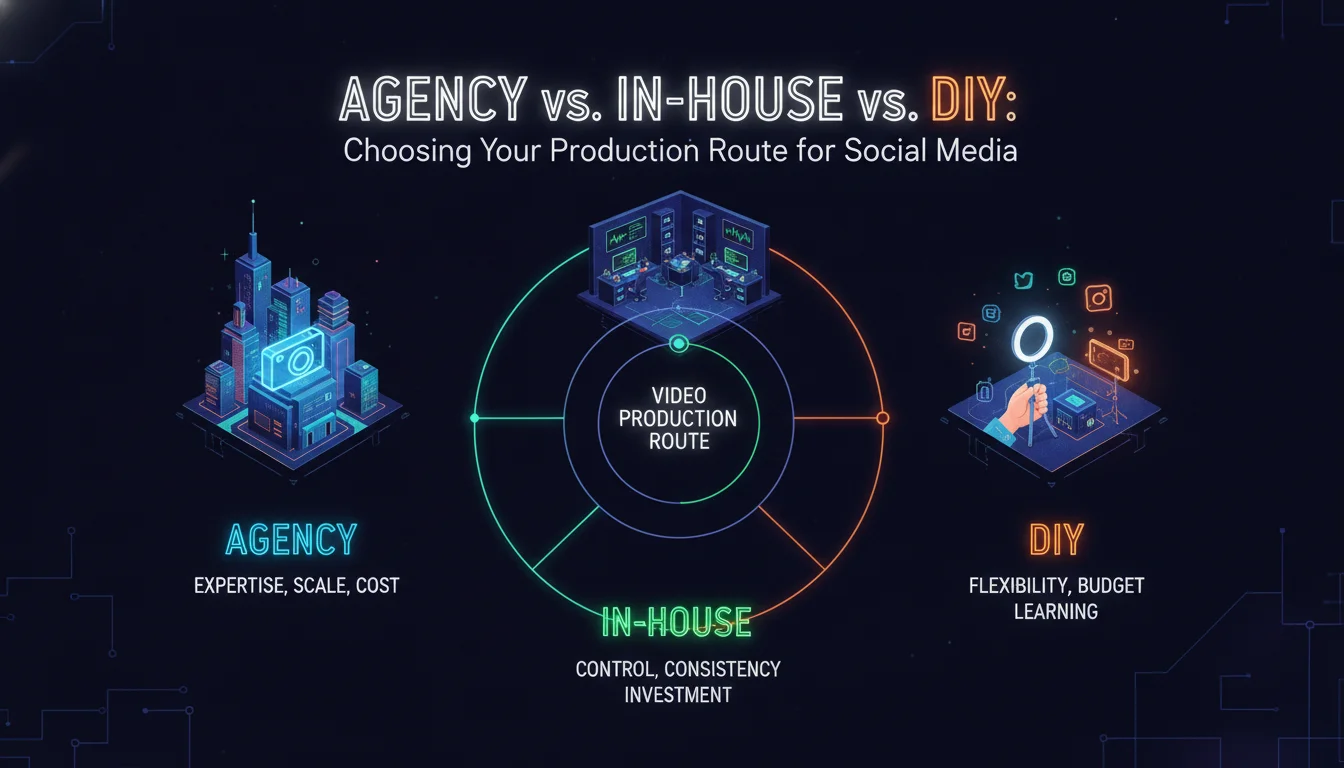
Choosing between agency, in-house, and DIY comes down to your budget, timeline, creative control needs, and how often you need fresh content. Here’s a side-by-side comparison of the three main routes for media.
| Factor | Agency | In-House | DIY Tools |
|---|---|---|---|
| Typical cost | High (project or retainer) | Medium to high (salaries, equipment) | Low (free or subscription) |
| Production speed | Fast turnaround with dedicated teams | Slower if team is new | Fast for simple edits |
| Creative control | Moderate (shared with agency) | High | High but limited by tool features |
| Quality ceiling | High, platform-native expertise | Variable, depends on skills | Good for basic videos, limited for complex |
| Best for | Large campaigns, Fortune 500 brands | Ongoing content, quick iterations | Small businesses, creators, low budgets |
When to Hire a Video Production Agency
Hire an agency when you need specialized creative skills, deep platform knowledge, and output that scales. Superside highlights that a competent social media video agency understands how to use algorithms and data to build short, engaging videos for Instagram, TikTok, YouTube, and LinkedIn. Casual Films, for example, has created social video for Fortune 500 brands for over 20 years, which is the kind of track record that matters when a campaign can’t afford a swing and a miss.
Building an In-House Video Team
An in-house team gives you full creative control and rapid iteration, but it requires real investment in equipment, software, and skilled people. It works best when you need a steady drumbeat of content and have the budget to protect quality as you scale. Many in-house teams still lean on DIY tools like Canva to speed up daily workflows without sacrificing brand consistency.
DIY Tools and Templates for Small Budgets
Canva offers a free social media video maker with over 1 million professionally-designed templates, drag-and-drop editing, and AI-powered Magic Studio features like Beat Sync and Magic Video. Adobe Express lays out ten practical ways to improve video quality, from strong hooks to testing and refining after publishing. Neither requires a film degree, just a willingness to learn the tools.
Video Production for Social Media: A Step-by-Step Process
A structured process for video production follows five phases: research, script, film, edit, and analyze. Here’s the workflow, followed by the details of each phase.
- Research your audience and platform
- Script and storyboard the narrative
- Film and capture clean audio
- Edit and optimize for the platform
- Distribute and analyze performance
Pre-Production: Audience Research, Scripting, and Storyboarding
Start by knowing who your people actually are. Adobe Express advises understanding your audience’s interests, pain points, and where they consume content before you write a single line of script. JoinBrands emphasizes scripting and storyboarding specifically for short attention spans, since a wandering narrative loses viewers within the first few seconds. A clear storyboard saves time on set and makes sure your video communicates fast, before anyone has the chance to scroll away.
Production: Filming and Audio Capture
Adobe Express recommends prioritizing good lighting and keeping audio quality high above almost everything else. Use effective filming techniques like stable framing and proper exposure, even on a modest setup. If you lack professional gear, a smartphone can absolutely work, but audio clarity is non-negotiable: viewers forgive rough visuals far more than they forgive muddy sound.
Post-Production: Editing and Platform Optimization
Edit for engagement speed, clarity, and flow, then layer in captions, the right aspect ratio, and a clear call to action. Canva’s publishing tools let you export high-resolution MP4 files and share directly to your social accounts. Adobe Express advises testing, analyzing, and refining based on real performance data rather than gut feel alone.
Budgeting and ROI for Social Video Production
Budgeting for social video production varies by approach, and the smartest teams align spend with expected returns rather than picking a number out of thin air. The real discipline is measuring performance consistently after the video goes live.
Cost Factors and Pricing Models
Agency engagements typically involve project fees or retainers. In-house teams require salaries, equipment, and software. DIY tools like Canva are free or low-cost. There’s no single price that fits every brand, but a blended approach often works best: bring in an agency for high-stakes campaigns and lean on DIY for daily content.
Measuring ROI with Platform Analytics
Track views, average percentage viewed, engagement rate, click-through rate, and conversion data to know if your video production for social media is actually working. Casual Films’ World Cancer Day campaign, produced for the Union for International Cancer Control, achieved 886,578 total views across platforms, a 70.2% average percentage viewed, and 34,935 impressions on LinkedIn alone. As Superside puts it, video content doesn’t just bring views, it drives engagement, brand visibility, and sales.
High-Impact, Low-Cost Production Strategies
You don’t need a Hollywood budget to make this work. JoinBrands walks through filming high-quality video without one, and Adobe Express’s core tips, strong hooks, good lighting, high audio quality, and a clear CTA, are all low-cost levers that punch above their weight. Canva’s AI tools like Magic Animate and Beat Sync automate professional-grade effects that used to require an editor with years of experience.
Common Mistakes to Avoid in Social Video Production
The most common mistakes in social video production come down to ignoring platform specs, cutting corners on audio and lighting, and forgetting the call to action. Even experienced teams fall into these traps, so treat this as a pre-flight checklist.
Ignoring Platform Specifications
Uploading a 16:9 video to TikTok, or a vertical clip to YouTube without adjustment, quietly kills performance before anyone even judges the creative. Both Casual Films and SpeakerBee stress aspect ratio and duration norms for exactly this reason. Always export the correct format for each destination rather than relying on one master file.
Overlooking Audio and Lighting Quality
Adobe Express warns that poor audio and lighting are major engagement killers, full stop. If viewers can’t hear clearly or the frame is too dim, they’ll scroll past within seconds. Invest in a decent microphone and natural or key lighting before you even think about upgrading the camera.
Skipping the Call to Action
Every social video needs a purpose beyond racking up views. Adobe Express suggests including a clear CTA, whether that’s visiting a website, following an account, or making a purchase. Skip it, and you might generate plenty of views while converting none of them into anything measurable.
Pros and Cons
Pros
- Video consistently outperforms static posts on engagement, recall, and conversion across every major platform.
- DIY and agency options exist at nearly every budget level, so brands of any size can participate.
- Platform algorithms actively reward video, which means organic reach is still achievable without heavy ad spend.
- Short-form formats are fast to test, so you can learn what resonates within days, not months.
Cons
- Platform-native requirements mean you often need multiple versions of the same concept, which adds production time.
- Quality expectations keep climbing, so DIY footage can start to look dated against agency-produced competitors.
- Measuring true ROI requires consistent tracking across platforms, which many smaller teams skip.
- Trend cycles move fast, especially on TikTok, so content can feel stale before it even finishes rolling out.
Topics Worth Watching for 2026
A few adjacent skills round out a strong video production for social media practice this year. Lighting fundamentals and editing software fluency, whether that’s Premiere, DaVinci Resolve, or CapCut, remain the technical backbone behind every polished clip, even ones shot on a phone. If you’re scaling a production team or agency, growing your own visibility on social platforms matters just as much as producing for clients. And if you’re comparing outside help, it’s worth knowing that dedicated social video agencies range from boutique specialists to large-scale shops serving Fortune 500 brands, so match the partner’s size to your campaign’s ambition.
Making Video Production for Social Media a Competitive Advantage
Video production for social media is no longer optional. It’s the primary way brands capture attention, build trust, and drive revenue inside crowded feeds. By combining platform-specific strategy, disciplined pre-production, and continuous optimization, you can turn short-form video into a genuine growth engine rather than a one-off experiment.
Summary of Strategic Choices
Whether you hire an agency, build an in-house team, or lean on DIY tools, the foundation stays the same: know your audience, design for the platform, hook viewers immediately, and measure what matters. Agencies like Casual Films and Superside bring scalability. Canva and Adobe Express open the door for smaller teams to compete on the same feed.
Action Plan for 2026
Start by auditing your current social video performance. As of 2026, the brands winning attention are the ones testing fast: define one primary platform, create three platform-native test videos using the step-by-step process above, and measure engagement and conversion. Then scale what works, whether that means investing in agency support or sharpening your DIY workflow further. Ready to move? Contact Emin Media for a free brand consultation, and let’s build something bold together.
Frequently Asked Questions
What is the best way to make videos for social media?
The best way is to plan for platform-specific formats, open with a strong hook in the first 2 to 5 seconds, and prioritize clear audio and lighting. Use a structured process that includes audience research, scripting, filming, and editing before you ever hit publish.
How long should social media videos be?
Social videos often perform best at 15 to 60 seconds, depending on the platform. According to SpeakerBee, this shorter duration paired with a faster narrative rhythm captures attention more effectively than long-form content.
Do I need a professional agency for social media video production?
Not always. DIY tools like Canva can produce quality clips on a low budget, but agencies bring specialized creative skills, platform expertise, and the ability to scale output. Choose based on your budget, timeline, and quality bar.
What platforms are most important for social video?
TikTok, Instagram, YouTube, Facebook, and LinkedIn form the core lineup. Each has different specs and audience behavior, so optimize your video production for social media around wherever your target audience actually spends time.
Can I repurpose one video across all platforms?
Yes, but you should adjust aspect ratio, duration, captions, and pacing for each destination. Casual Films recommends exporting separate versions for YouTube (16:9), Facebook and Instagram (vertical or square), and TikTok (9:16).
What is a social media video hook?
A hook is roughly the first 2 to 5 seconds of a video, designed to stop the scroll and earn a few more seconds of attention. Adobe Express emphasizes that strong, scroll-stopping hooks matter because viewers decide almost instantly whether to keep watching.
Enjoyed this article?
Contact Emin Media for a free brand consultation and let's create something amazing together.
Get in TouchRelated Articles
How to Market a Creative Business in 2026
Learn how to market a creative business with proven strategies for social media, content, networking,…
Brand Photography for Social Media: 2026 Guide
Master brand photography for social media with our 2026 guide. Plan shoots, choose photographers, and…
Social Media Design Best Practices 2026
Master social media design best practices in 2026. Bold visuals, platform specs, and brand strategy…