How to Market a Creative Business in 2026
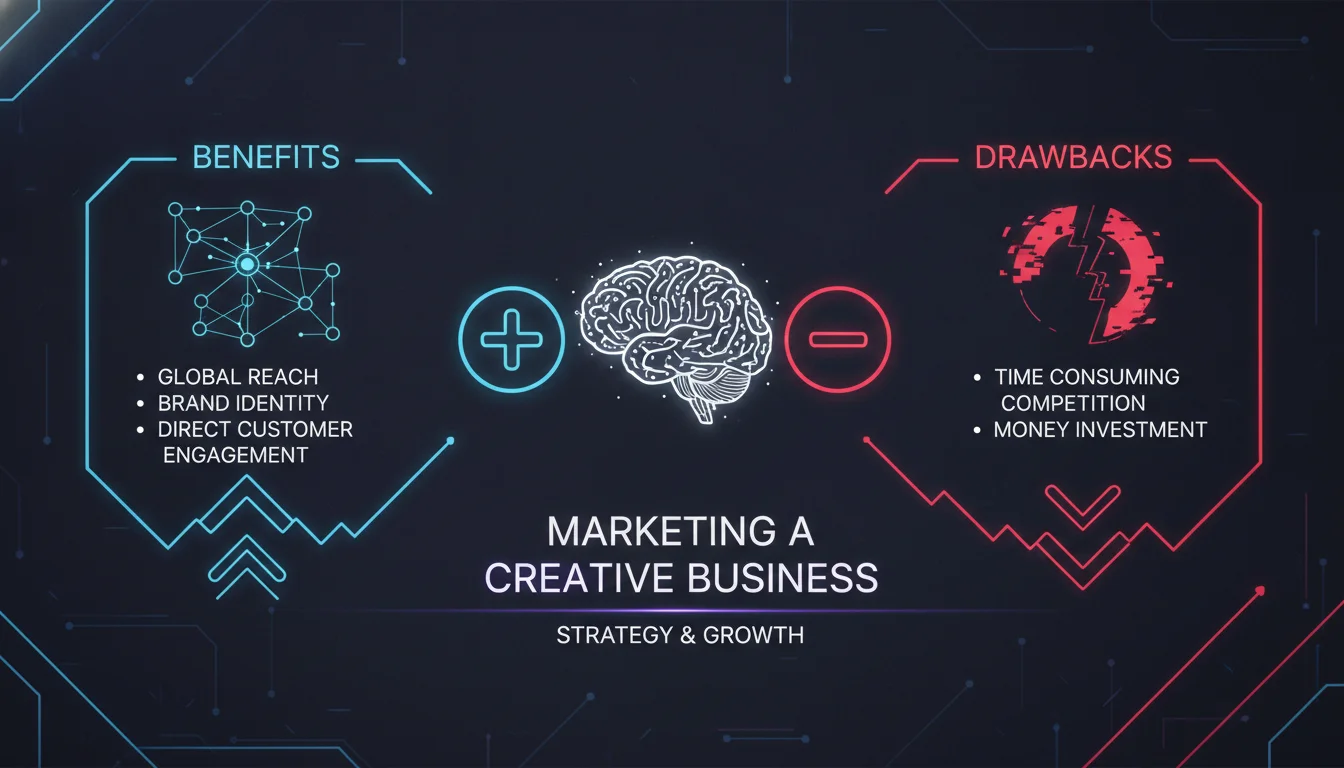
Key Takeaways
- Your unique value proposition is the foundation of every marketing decision you make.
- Knowing how to market a creative business means choosing platforms where your audience already lives.
- Content marketing builds authority over time – consistency beats volume every time.
- Community and networking open doors that paid ads simply cannot.
- Measure what matters: traffic, conversions, and engagement – then adjust.
- Free and low-cost strategies can generate serious momentum before you spend a dollar on ads.
How to market a creative business is the art of combining brand storytelling, digital strategy, and community building to attract clients who genuinely value your work.
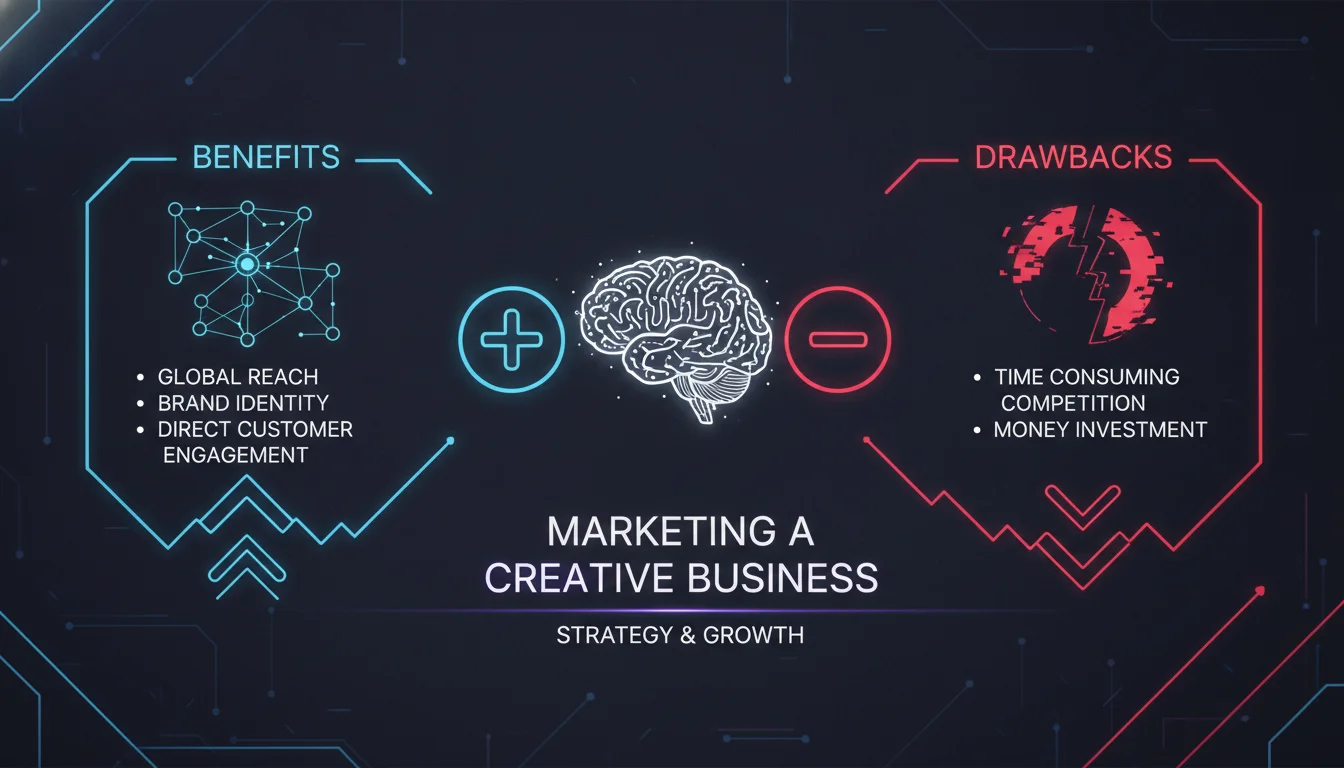
Benefits and Drawbacks of Marketing a Creative Business
Pros
- Creative differentiation: Your work is inherently visual and shareable, giving you a natural content advantage over service businesses with nothing to show.
- Community-driven growth: Creative audiences are loyal. Build the right following and word-of-mouth does heavy lifting for you.
- Low-cost entry points: Social media, content marketing, and networking cost time, not budget. You can start with $0 and build real traction.
- Multiple revenue streams: Creative businesses can sell services, digital products, courses, and licensing – all from the same marketing engine.
- Authentic storytelling: Behind-the-scenes content, process videos, and creative journeys perform exceptionally well across every major platform in 2026.
Cons
- Longer sales cycles: Creative services often require trust-building before a client commits. You rarely close on first contact.
- Pricing perception challenges: Without strong positioning, potential clients undervalue creative work and push back on rates.
- Platform dependency risk: Relying entirely on one social channel leaves you exposed if algorithms shift or accounts get restricted.
- Time-intensive content creation: Producing quality portfolio content, blog posts, and social media takes real hours – hours that compete with client work.
Understanding Your Unique Value Proposition
Your unique value proposition (UVP) is the foundation of your marketing strategy. It defines what sets your creative business apart from competitors and why clients should choose you over anyone else.
Defining Your UVP
A UVP is a clear statement that explains how your product or service solves a client’s problem or improves their situation. It should highlight the specific benefits you offer. If you are a graphic designer, your UVP might focus on your ability to create visually compelling designs that tell a brand’s story – not just make things look pretty.
Marty Neumeier, author of The Brand Gap, offers a practical formula worth using: “My brand is the only __________ that __________.” Simple, direct, and it forces clarity fast. According to Neumeier’s framework, finding your “Onlyness” – the one position in the market only you can occupy – is what separates memorable creative brands from forgettable ones.
“There is no point in doing the same, offering the same, and looking the same as everyone else in your field. Your Onlyness is what makes your creative business stand out.” – Marty Neumeier, brand strategist and author of The Brand Gap
Communicating Your UVP
Once defined, your UVP must appear consistently across every marketing channel: your website homepage, social media bios, email signature, and any promotional materials. Consistency in messaging reinforces your brand identity and helps potential clients immediately understand what you stand for and who you serve.
Examples of Effective UVPs
- Airbnb: “Belong Anywhere” – emphasizes community and unique experiences over generic hotel stays.
- Slack: “Be Less Busy” – highlights efficiency and productivity in a single phrase.
- Dropbox: “Your stuff, anywhere” – focuses on accessibility and convenience without technical jargon.
How Marketing a Creative Business Actually Works
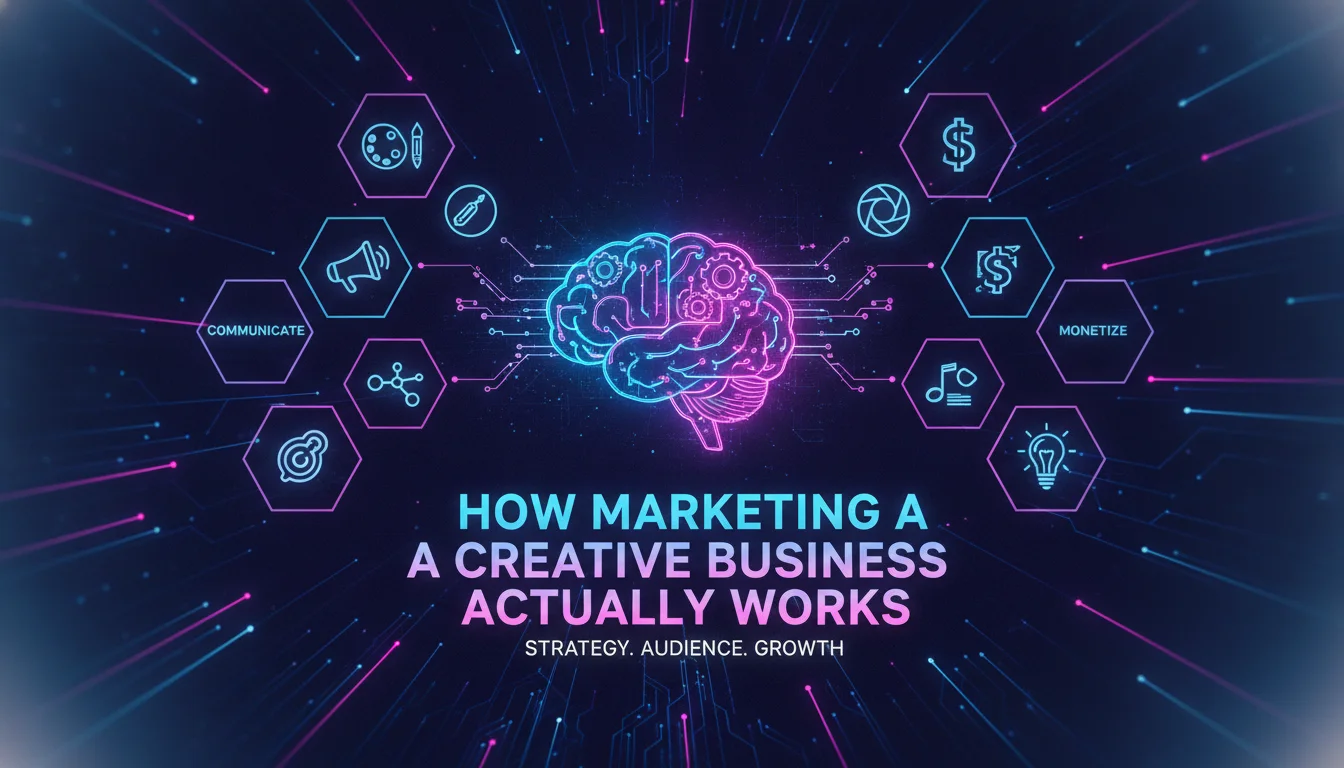
Knowing how to market a creative business requires understanding the full customer journey, from first discovery to repeat referral. Most creative businesses fail at marketing not because their work is weak, but because they treat marketing as an afterthought rather than a system.
Here is the underlying mechanics of an effective creative marketing system:
Awareness: A potential client sees your work – on Instagram, in a Google search result, at a local event, or through a referral. This is the top of your funnel. Your job here is to be visible and immediately recognizable.
Interest: They click through to your portfolio, website, or profile. Now your UVP, case studies, and content do the selling. This is where most creative businesses lose people – weak websites and unclear positioning kill interest fast.
Consideration: The prospect compares you to alternatives. Your testimonials, process transparency, and pricing clarity matter enormously here. Clients want to know what working with you actually feels like.
Conversion: They reach out, book a call, or purchase. A clear call to action and a frictionless inquiry process are non-negotiable at this stage.
Retention and referral: A satisfied client becomes a repeat buyer and, more importantly, a referral source. According to HubSpot research, referral-based leads convert at significantly higher rates than cold traffic – and cost far less to acquire.
Understanding this journey tells you exactly where to invest your marketing energy at each stage of your business growth.
Leveraging Social Media for Marketing
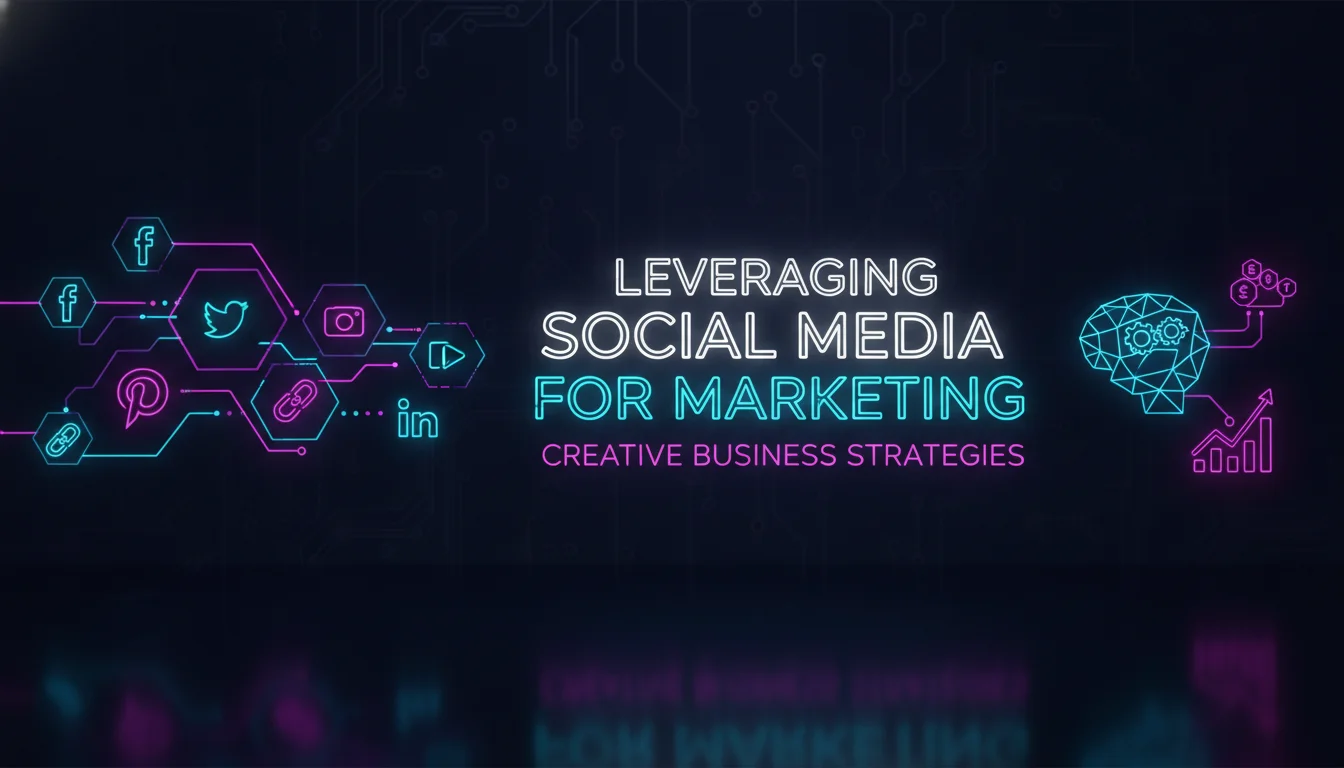
Social media platforms are essential tools for how to market a creative business effectively. They let you reach a broader audience, engage directly with potential clients, and showcase your work in real time.
Choosing the Right Platforms
Not every platform suits every creative business. Visual artists and photographers thrive on Instagram and Pinterest. Motion designers and video producers belong on YouTube and TikTok. Writers and consultants often find LinkedIn and Substack more productive. Analyze where your target audience spends their time and concentrate your energy there rather than spreading thin across six platforms at once.
Creating Engaging Content
Content is the currency of social media marketing. Create posts that resonate with your specific audience: behind-the-scenes looks at your creative process, time-lapse videos of work in progress, client transformation stories, or tutorials that demonstrate your expertise. Use high-quality visuals and video to capture attention in crowded feeds.
As of 2026, short-form video continues to dominate organic reach across Instagram Reels, TikTok, and YouTube Shorts. Creative businesses that document their process – not just their finished work – consistently outperform those that only post polished portfolio pieces.
Building a Community
Engagement builds loyalty. Respond to comments, ask genuine questions, and encourage clients to share their experience with your work. Hosting a giveaway or a collaborative challenge can spike engagement and attract new followers who fit your ideal client profile. The goal is not just followers – it is a community that trusts your creative perspective.
Implementing Content Marketing Strategies
Content marketing is one of the most powerful long-term strategies for how to market a creative business. By producing genuinely useful content, you establish authority, build trust, and attract clients who are already pre-sold on your expertise before they ever contact you.
Creating Valuable Resources
Develop resources your audience actually wants. Blog posts, video tutorials, downloadable guides, and email newsletters all work. A photographer might publish a guide on how to prepare for a brand photoshoot. A brand designer might create a free brand audit checklist. These resources attract the right audience and demonstrate your thinking – which is often what clients are really buying.
SEO Optimization
Search Engine Optimization ensures your content reaches people actively searching for what you offer. Use relevant keywords, optimize your page titles and meta descriptions, and build internal links between related content. Tools like SEMrush help you identify which search terms your ideal clients use and track how your content performs over time.
Guest Blogging and Collaborations
Collaborating with other creatives or complementary businesses expands your reach without paid advertising. Guest blogging on platforms your target audience reads introduces your work to new eyes. Choose platforms that align with your brand values – a mismatch in audience or tone can do more harm than good.
How to Apply This: A Step-by-Step Marketing Plan
Knowing how to market a creative business is one thing. Executing it consistently is another. Here is a practical framework you can start this week.
Step 1: Audit your current presence. Review your website, social profiles, and any existing content. Does your UVP appear clearly on your homepage? Does your portfolio show the type of work you want more of? Fix the foundation before building on top of it.
Step 2: Define your ideal client in specific terms. Not “small businesses” – that is too broad. Think: “female-founded wellness brands with under 10 employees looking for a cohesive visual identity.” The more specific your target, the more effective your messaging becomes.
Step 3: Choose two primary marketing channels. Pick the two platforms or tactics where your ideal client is most active and where you can produce content consistently. Commit to those for at least 90 days before evaluating results.
Step 4: Build a simple content calendar. Plan content weekly, not daily. Three to four strong posts per week beat seven rushed ones. Mix educational content, behind-the-scenes process content, and direct offers in roughly equal proportion.
Step 5: Create one lead magnet. A free resource – checklist, mini-guide, template – that captures email addresses. Email remains one of the highest-converting marketing channels for creative service businesses, and it is one you own regardless of algorithm changes.
Step 6: Set a 30-day review cycle. Check your analytics monthly. Which content drove the most profile visits? Which posts led to inquiries? Double down on what works and cut what does not. Marketing is a feedback loop, not a one-time launch.
Worked Example: A Brand Designer Growing from Referrals to Inbound
Consider a freelance brand designer who has been running her business for three years entirely on referrals. Work is good but inconsistent – feast or famine. She wants predictable inbound leads without spending money on ads.
She starts by clarifying her UVP: she specializes in brand identity for sustainable consumer goods brands. That specificity immediately differentiates her from generalist designers.
She picks two channels: Instagram for visual portfolio work and LinkedIn for reaching brand managers and founders. She posts four times per week on Instagram – alternating between finished brand reveals, behind-the-scenes process clips, and short educational posts about what makes a strong brand identity. On LinkedIn, she publishes one longer-form post per week sharing a branding insight or client case study.
She creates a free “Brand Audit Checklist” as a lead magnet and promotes it in her Instagram bio. Within 90 days, her email list grows, she receives three inbound inquiries from founders who found her through Instagram, and one LinkedIn post gets shared widely within a sustainable business community, bringing two additional leads.
No ad spend. No cold outreach. Just a clear position, consistent content, and the right channels. This is how to market a creative business without burning out or burning through budget.
Networking and Community Engagement
Building relationships within your community significantly strengthens your marketing. Networking opens doors to collaborations, referrals, and visibility that no algorithm can replicate.
Local Events and Workshops
Participate in or host local events and workshops. This showcases your expertise and lets you connect with potential clients face-to-face. Offering a free workshop to a local business group or creative community positions you as a generous expert – and generous experts get remembered and referred.
Partnering with Local Businesses
Form partnerships with businesses that complement your services. A graphic designer could collaborate with a local print shop to offer bundled services. A photographer could partner with a wedding planner. Cross-promotions help both businesses reach new audiences without competing for the same clients.
Becky Bayne, a graphic designer with over 25 years of experience running her own creative business, built much of her early client base through exactly this kind of visible, community-first approach – walking into local businesses, introducing herself, and letting her portfolio do the talking. The principle still holds in 2026; the sidewalk has simply moved online.
Utilizing Influencer Marketing
Influencer marketing can extend your reach significantly. Partner with creators whose audience matches your ideal client profile. Micro-influencers – those with smaller but highly engaged followings – often deliver stronger results for creative businesses than large accounts with passive audiences.
“The creative business playing field is much more even now. You and I have just as much chance of building a successful business that supports ourselves and our families as anyone with big dollops of cash – if we show up consistently and share our process.” – Creators Process, creative business coaching platform
Marketing Channel Comparison
Choosing the right marketing channels is critical for how to market a creative business efficiently. This comparison helps you match your goals and content style to the right platform.
| Channel | Best For | Content Type | Cost | Time to Results |
|---|---|---|---|---|
| Visual artists, designers, photographers | Images, Reels, Stories | Free | 3-6 months organic | |
| B2B creatives, consultants, brand strategists | Articles, case studies, thought leadership | Free | 2-4 months | |
| YouTube | Educators, video producers, illustrators | Long-form tutorials, process videos | Free (time-heavy) | 6-12 months |
| SEO / Blog | All creative businesses | Written guides, portfolio case studies | Free to low | 6-18 months |
| Email Marketing | All creative businesses | Newsletters, offers, updates | Free to low | Immediate (warm list) |
| TikTok | Younger audiences, process-driven creators | Short-form video, trends | Free | 1-3 months (high variance) |
| Paid Social Ads | Scaling proven offers | Promoted posts, video ads | Paid budget required | Immediate (if optimized) |
Common Mistakes to Avoid
Knowing how to market a creative business also means knowing what not to do. These are the mistakes we see most often – and they are all fixable.
Trying to be everywhere at once. Spreading across six platforms with mediocre content on each is far less effective than owning two platforms with excellent, consistent content. Pick your channels deliberately.
Posting portfolio work without context. A finished logo or photo with no story attached is just decoration. Add context: what was the client’s challenge? What decisions did you make and why? The story behind the work is what converts browsers into buyers.
Ignoring your email list. Social media followers are rented. An email list is owned. Creative businesses that build and nurture an email list have a direct line to their audience that no algorithm can take away.
Underpricing and over-explaining. Weak positioning leads to price pressure. When your UVP is clear and your authority is established through content, you attract clients who value your work – and price conversations become much easier.
Skipping the measurement step. Marketing without analytics is guessing. Even basic data – which posts drove profile visits, which pages get the most time on site – tells you what is working and where to focus next.
Waiting until the work is perfect. Creative businesses often delay marketing because they want a better portfolio, a redesigned website, or more experience. Start now. Your marketing improves as your business grows, not before it.
Measuring Your Marketing Efforts
To ensure your marketing strategies are effective, measure and analyze your results on a regular cadence. Data-driven decisions consistently outperform gut-feel adjustments.
Setting KPIs
Key Performance Indicators are measurable values that show how effectively you are hitting your marketing objectives. For creative businesses, the most relevant KPIs include website traffic, portfolio page views, inquiry form submissions, email list growth, and social media engagement rate. Choose three to five KPIs and track them monthly.
Using Analytics Tools
Google Analytics shows you how visitors find your site and what they do once they arrive. Social media platform insights reveal which content formats and topics drive the most engagement. Email marketing platforms like Mailchimp or ConvertKit track open rates and click-through rates. Use these tools together to build a complete picture of your marketing performance.
Iterating Based on Feedback
Qualitative feedback is as valuable as quantitative data. Use short surveys, direct client conversations, or even Instagram Stories polls to understand what your audience values and what they want more of. This information shapes your content strategy and helps you refine your offer over time.
For deeper guidance on building a brand that converts, explore our branding and digital marketing services and see how we approach creative business growth from the inside out. You might also find our perspective on brand storytelling and social media strategy useful as you build your marketing system.
The 2026 Outlook: What Is Changing for Creative Businesses
As of 2026, the marketing environment for creative businesses is shifting in ways that reward authenticity and penalize generic content. AI-generated visuals are flooding every platform, which means hand-crafted, process-driven, human creative work is becoming more distinctive – not less valuable.
Short-form video remains the dominant organic reach driver across Instagram, TikTok, and YouTube Shorts. Creative businesses that show their process, share their perspective, and build genuine community are consistently outperforming those that only post finished work.
Email marketing is experiencing a resurgence. As social platforms become noisier and less predictable, direct inbox access is increasingly valuable. Building your list now is one of the smartest long-term investments a creative business can make.
Search is also evolving. AI-powered search results are pulling answers directly from well-structured content, which means clear, authoritative writing about your area of expertise has more reach potential than ever. According to HubSpot’s content research, businesses that publish consistent, expert-level content generate significantly more inbound leads than those that rely on social media alone.
Frequently Asked Questions
What is the 3-3-3 rule for marketing?
The 3-3-3 rule suggests that for every three pieces of content you share, you should engage with three other pieces of content from others and promote three different brands or individuals. This approach builds community reciprocity and signals to platform algorithms that you are an active, engaged participant rather than a broadcast account.
What are some creative ways to promote my business?
Effective creative promotion methods include hosting free workshops, collaborating with complementary local businesses, partnering with micro-influencers, documenting your creative process on short-form video, and building a lead magnet that captures email addresses. These strategies build relationships and visibility simultaneously, which is exactly what how to market a creative business requires at the early stages.
What are the 5 C’s of marketing?
The 5 C’s of marketing are Company, Customers, Competitors, Collaborators, and Climate. This framework helps businesses analyze their full market environment before committing to a strategy. For creative businesses, the Collaborators and Climate dimensions are especially important – who you partner with and what cultural trends you align with can define your positioning as much as your actual work does.
What is the 70/20/10 rule in marketing?
The 70/20/10 rule suggests allocating the majority of your marketing budget and effort toward proven strategies, a meaningful portion toward newer ideas you are testing, and a small slice toward experimental initiatives. This balance keeps your marketing stable while leaving room for innovation. For creative businesses with limited budgets, this framework is especially useful for deciding where to spend time before spending money.
How can I market my creative business for free?
Free marketing strategies include building a consistent social media presence on one or two platforms, publishing SEO-optimized blog content, networking within creative and local business communities, collecting and showcasing client testimonials, and using word-of-mouth referrals systematically. These methods require time and creative energy, but they build compounding momentum that paid ads cannot replicate on their own.
How long does it take to see results from marketing a creative business?
Organic marketing typically takes three to six months to generate consistent inbound leads, depending on your starting audience size and content consistency. SEO-driven content can take six to eighteen months to rank and convert. The creative businesses that see the fastest results combine a clear UVP, consistent content on the right platforms, and an active referral network from day one. Patience and consistency are the two most underrated marketing tools available.
Ready to build something bold? Contact Emin Media for a free brand consultation and let’s map out a marketing strategy that matches the ambition of your creative work.
Enjoyed this article?
Contact Emin Media for a free brand consultation and let's create something amazing together.
Get in TouchRelated Articles
Digital Marketing for Creatives: A Bold Guide
Digital marketing for creatives builds real visibility and sales. Learn strategies for social media, SEO,…
Branding & Design Agency Tips That Actually Work
Discover branding and design agency tips to choose the right partner, set clear goals, and…
Creative Agency Pitch Deck Tips That Win Clients
Master creative agency pitch deck tips that win clients in 2026. Learn storytelling, design, and…