Branding & Design Agency Tips That Actually Work
Branding and design agency tips are practical strategies that help businesses choose the right creative partner, set clear expectations, and turn design investments into measurable brand growth. Here’s what actually works.
Key Takeaways
- Understand Your Brand: Clearly define your brand identity and goals before engaging with a design agency.
- Evaluate Agency Fit: Assess potential agencies based on their portfolio, process, and client testimonials.
- Focus on Strategy: Prioritize agencies that integrate branding strategy with design execution.
- Build Relationships: Strong partnerships with your agency produce better collaboration and stronger results.
- Stay Updated: Keep up with industry trends to ensure your branding stays relevant and effective through 2026 and beyond.
Understanding Branding and Design Agencies
Branding and design agencies specialize in creating and managing brand identities for businesses. They help companies articulate their vision, values, and unique selling propositions through visual and verbal communication. A successful agency partnership can significantly enhance a brand’s market presence and customer engagement.
What is a Branding Agency?
A branding agency is a firm that focuses on developing a brand’s identity, which includes its name, logo, messaging, and overall aesthetic. These agencies conduct market research, define target audiences, and create strategies to differentiate the brand in a crowded marketplace.
What is a Design Agency?
A design agency focuses on the visual aspects of branding, including graphic design, web design, and product design. They translate brand strategies into visual representations that resonate with target audiences.
Why Choose a Branding and Design Agency?
Engaging a branding and design agency gives businesses access to specialized expertise in creating cohesive brand identities. These agencies provide valuable insights into market trends and consumer behavior, ensuring that branding efforts are effective and aligned with business objectives.
“In the branding world, ‘good design’ isn’t subjective at all. If an agency produces stunning visuals but can’t explain the business strategy behind them, they’re just decorators.” – OpenBlueprint, Quora contributor with over 207.7M answer views
How Branding and Design Agencies Actually Work
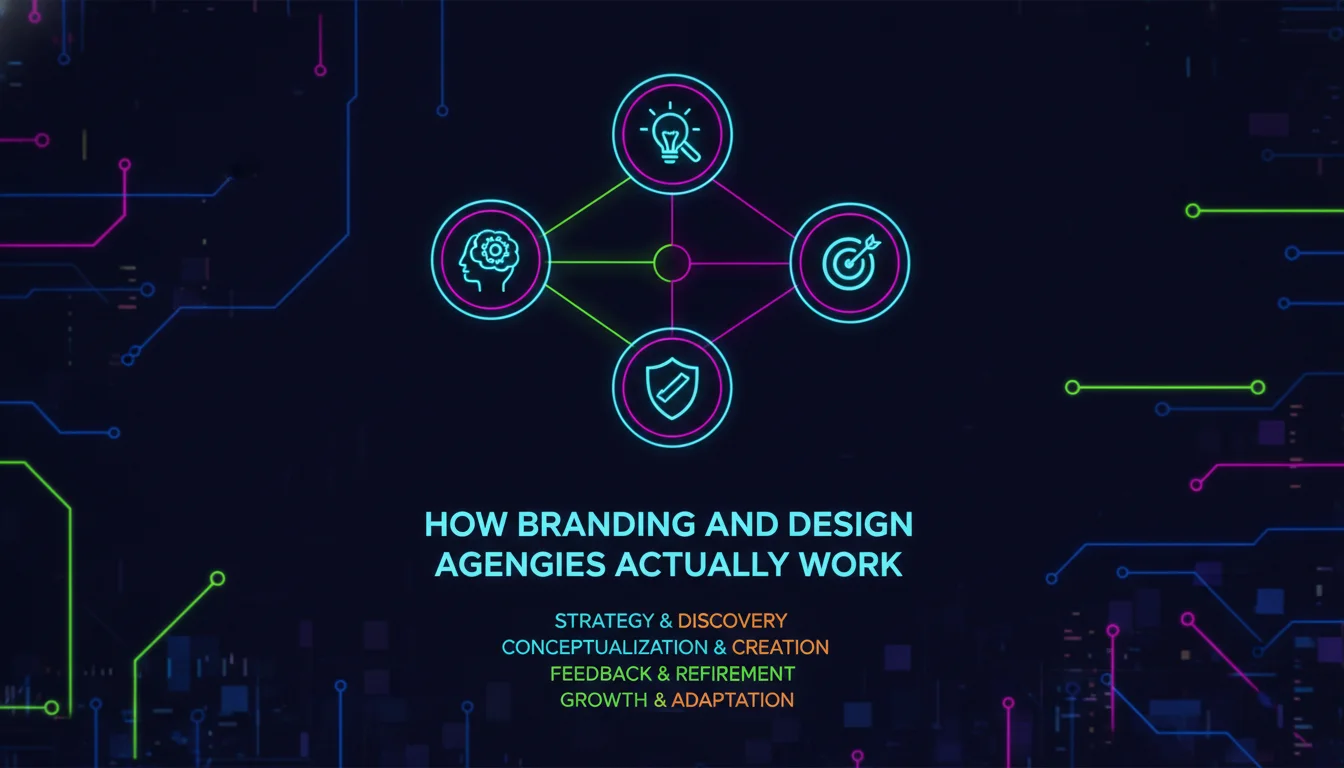
Understanding the mechanics behind agency work helps you become a better client and get stronger results. Most people see the final logo or campaign and assume the process was linear. It rarely is.
A well-run agency operates in four connected phases. Each phase feeds the next, and skipping one creates problems downstream.
Phase 1: Discovery and Research
The agency digs into your business: your market position, competitors, customer perceptions, and internal culture. This isn’t just a kick-off call. Strong agencies run stakeholder interviews, audit your existing brand materials, and map out where perception gaps exist. As SDCO Partners notes, branding becomes relevant “when clarity, positioning, and perception start to impact growth” – and discovery is where that clarity gets built.
Phase 2: Brand Strategy Development
Strategy defines who you are, what you stand for, and where you fit in the market. This is separate from creative direction, though the best agencies treat them as a single connected process. You’ll get outputs like a brand positioning statement, tone of voice guidelines, and audience personas. Without this phase, design becomes decoration.
Phase 3: Creative Execution
This is where strategy becomes visual. Logo systems, color palettes, typography, photography direction, web design, and campaign assets all get developed here. The best agencies don’t just hand you a logo file. They build a complete visual language your team can actually use.
Phase 4: Implementation and Handoff
A strong agency delivers brand guidelines, asset libraries, and sometimes ongoing support. The handoff phase determines whether your new brand gets used consistently or sits in a folder nobody opens. Ask about this phase before you sign anything.
Pros and Cons of Working With a Branding and Design Agency
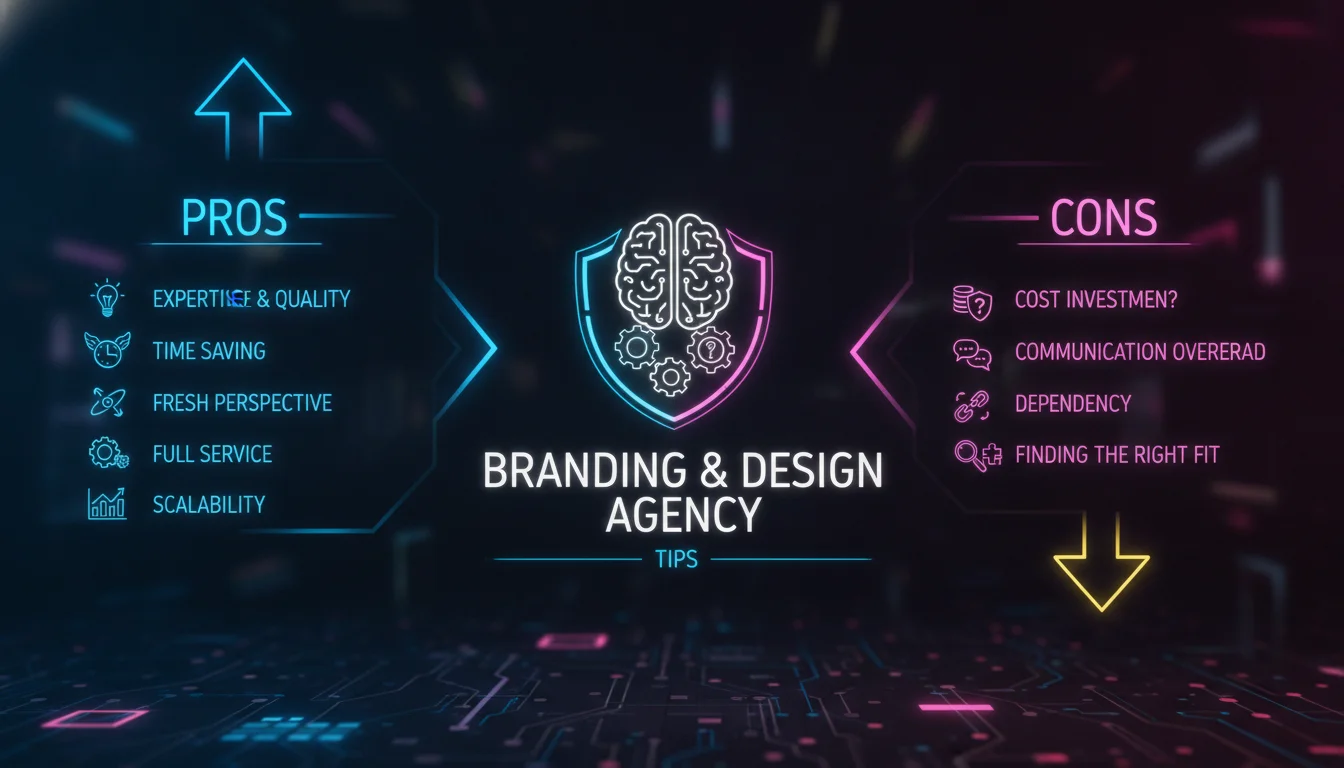
Knowing the advantages and drawbacks upfront helps you set realistic expectations and get more from the partnership.
Pros
- Specialized expertise: Agencies bring cross-industry experience that in-house teams rarely match. They’ve solved your problem before, for someone else.
- Strategic depth: A good agency connects brand strategy to creative execution, producing work that looks great and performs in the market.
- Fresh perspective: External teams see your brand the way customers do, not the way you do after years of internal familiarity.
- Scalable capacity: You get a full team (strategist, designer, copywriter, project manager) without the overhead of full-time hires.
- Faster execution: Agencies have established workflows and tools that compress timelines compared to building capability in-house.
Cons
- Cost: Quality branding work isn’t cheap. Expect a meaningful investment, and be skeptical of agencies that significantly underbid the market.
- Onboarding time: Every agency needs time to understand your business. The first few weeks are slower than clients expect.
- Communication gaps: Without clear briefs and regular check-ins, agencies can drift from your vision. This is usually the client’s responsibility as much as the agency’s.
- Dependency risk: If you don’t receive proper brand guidelines and asset handoffs, you become dependent on the agency for every future update.
Choosing the Right Agency
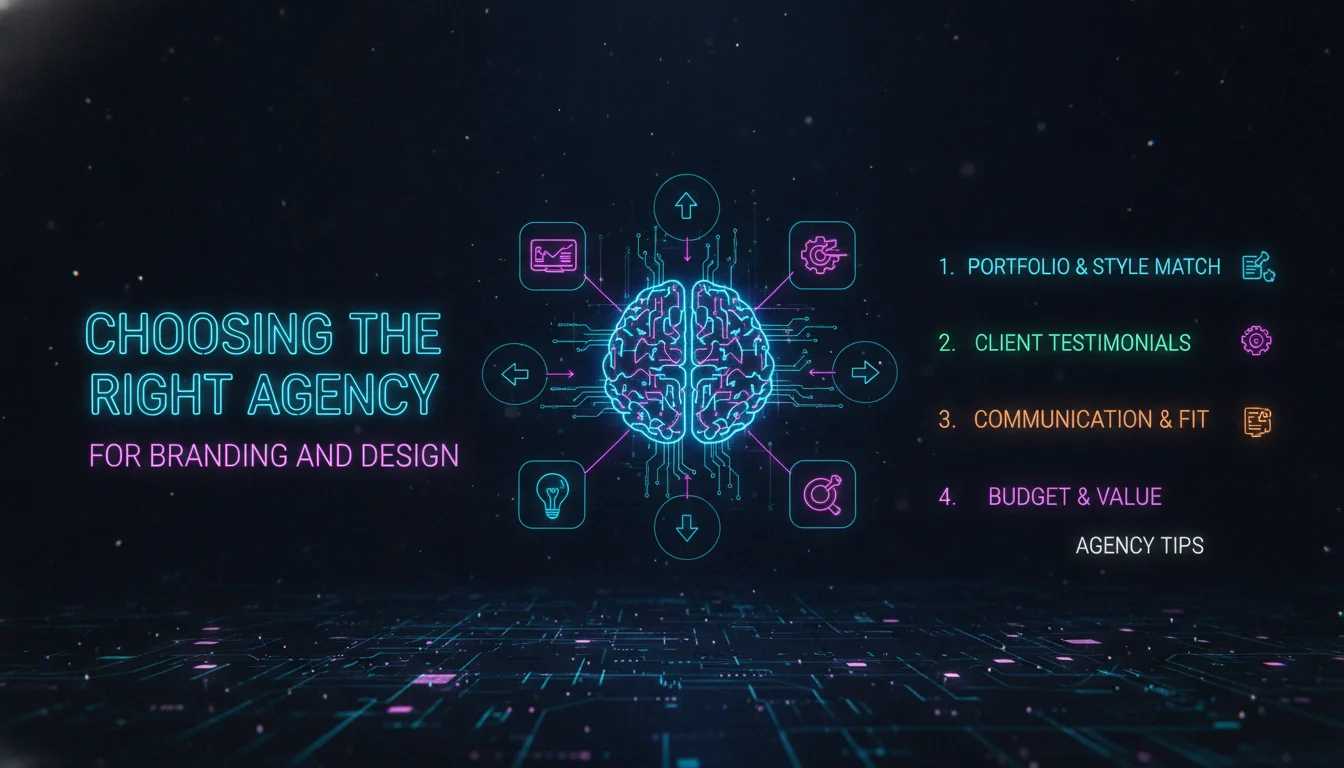
Selecting the right branding and design agency is one of the most consequential decisions in your brand-building process. Here are the key factors that separate good choices from expensive mistakes.
Evaluate Their Portfolio
When assessing potential agencies, review their portfolios to gauge their design capabilities and style. Look for case studies that demonstrate their process and the results achieved for previous clients. A strong portfolio should showcase a variety of projects across different industries.
Critically, look for strategic case studies, not just galleries. As industry practitioners consistently point out, a top-tier agency presents detailed case studies that explain the client’s original challenge, the strategic thinking behind the solution, and the outcome. A gallery of pretty logos tells you almost nothing about whether the agency can solve your specific problem.
Understand Their Process
Each agency has its own design process. Understanding this process helps you determine if it aligns with your expectations. Look for agencies that follow a structured approach, including discovery, strategy development, design, and implementation phases. A clear process means fewer surprises and more predictable outcomes.
Check Client Testimonials
Client testimonials provide insight into the agency’s reliability and effectiveness. Reach out to past clients to inquire about their experiences and the results achieved through the agency’s work. This feedback helps you make an informed decision.
Clarify the Scope of Change You Need
Per SDCO Partners’ April 2026 strategic insights, many businesses approach branding without fully understanding the scale of change required. There are three distinct levels:
- Brand creation: Building from scratch. Name, positioning, visuals, tone – the whole thing.
- Rebranding: Your current identity doesn’t fit anymore. A targeted refresh to realign with where you are now.
- Brand transformation: A deeper rethink of positioning, competitive space, and sometimes internal culture. Not just a visual update.
Knowing which level you need before you approach agencies will save you significant time and money.
Branding Agency Comparison: What to Look For
| Factor | Strong Agency | Weak Agency |
|---|---|---|
| Portfolio presentation | Strategic case studies with context and outcomes | Gallery of logos with no explanation |
| Discovery process | Structured research, stakeholder interviews, brand audit | Skips straight to design concepts |
| Strategy integration | Brand strategy and creative direction treated as one process | Strategy and design handled separately or skipped |
| Communication style | Regular check-ins, clear milestones, proactive updates | Reactive, hard to reach, vague on timelines |
| Deliverables | Full brand guidelines, asset libraries, implementation support | Logo files only, no usage documentation |
| Feedback process | Structured revision rounds with clear scope | Unlimited revisions with no defined process |
| Pricing transparency | Clear scope, defined deliverables, honest about costs | Vague quotes, scope creep, surprise invoices |
Establishing Clear Goals and Expectations
Before engaging with a branding and design agency, establish clear goals and expectations for the partnership. This clarity guides the agency’s work and ensures alignment with your business objectives.
Define Your Brand Identity
Clearly articulate your brand’s mission, vision, and values. This foundational information helps the agency create a brand identity that accurately reflects your business and resonates with your target audience.
Outline Project Goals
Establish specific goals for your branding project. Whether it’s increasing brand awareness, launching a new product, or repositioning your brand, having clear objectives helps the agency tailor their approach to meet your needs.
Set a Budget
Determine a budget for your branding and design initiatives. This budget guides your agency selection and project scope. Be transparent with the agency about your budget to ensure they can deliver results within your financial constraints.
How to Apply These Branding and Design Agency Tips: A Step-by-Step Approach
These branding and design agency tips work best when applied in sequence. Here’s how to move from idea to execution without losing momentum or money.
Step 1: Audit Your Current Brand Position
Before you talk to a single agency, get clear on where you stand. Gather your existing brand materials, review customer feedback, and honestly assess whether your current identity reflects where your business is going. This internal audit becomes the brief that every agency will work from.
Step 2: Define What Success Looks Like
Write down three to five specific outcomes you want from this engagement. Not “look better” – that’s not measurable. Think: “Increase website conversion rate,” “Establish a consistent visual identity across all platforms,” or “Reposition from budget to premium in our category.” Specific goals produce specific results.
Step 3: Build a Shortlist of Three to Five Agencies
Use referrals, portfolio reviews, and industry directories to identify candidates. Look for agencies that have worked in your category or with brands at a similar stage of growth. Diversity of style matters less than depth of strategic thinking.
Step 4: Run a Structured Evaluation
Send each agency the same brief. Ask them to walk you through how they’d approach your challenge. You’re not evaluating the quality of their speculative design – you’re evaluating how they think. The agency that asks the best questions is usually the best agency.
Step 5: Negotiate Scope, Not Just Price
When you receive proposals, resist the urge to negotiate purely on price. Instead, negotiate scope. Understand exactly what’s included, what revision rounds look like, and what the handoff process involves. A cheaper proposal with vague scope will cost you more in the long run.
Step 6: Build a Communication Rhythm
Once the project starts, establish a weekly check-in cadence. Share feedback in writing. Keep a running document of decisions made. This protects both you and the agency, and it dramatically reduces the chance of expensive misalignments late in the project.
Collaborating Effectively with Your Agency
Once you’ve selected a branding and design agency, effective collaboration is the difference between good work and great work. These branding and design agency tips apply throughout the entire engagement.
Communicate Regularly
Maintain open lines of communication with your agency throughout the project. Regular check-ins and updates address concerns early and keep the project on track.
Provide Constructive Feedback
When reviewing design concepts and strategies, provide constructive feedback that is specific and actionable. This feedback helps the agency refine their work and ensures it aligns with your vision.
Be Open to Suggestions
While communicating your preferences matters, stay open to the agency’s suggestions and insights. They bring expertise and experience that can strengthen your branding efforts in ways you haven’t considered.
“When it comes to running a design agency, relationships are as important as ideas and creativity. From clients and suppliers, to business and creative partners, the people you collaborate with will play a major role in either the success or failure of your company.” – Natasha Zlobec, founder of Phage design agency, writing in Medium
Common Mistakes to Watch Out For
Even well-intentioned brand projects go sideways. Here are the patterns we see most often, and how to avoid them.
Choosing on Aesthetics Alone
A beautiful portfolio is necessary but not sufficient. If the agency can’t explain the strategic thinking behind their work, you’re hiring decorators. Always ask: “What problem were you solving, and how did you know the design solved it?”
Skipping the Discovery Phase
Some clients push agencies to skip discovery to save time or money. This almost always backfires. Discovery is where the agency learns enough about your business to make good decisions. Without it, you get generic work that looks polished but doesn’t actually fit your brand.
Treating Feedback as a Negotiation
Feedback like “make it pop” or “I’ll know it when I see it” wastes everyone’s time. Good feedback references your brand goals, your audience, and specific visual or verbal elements. The more precise your feedback, the faster the work improves.
Ignoring the Handoff
Many clients focus entirely on the deliverables and forget to ask about the handoff. What brand guidelines will you receive? In what formats? Who owns the files? What happens if you need updates six months later? These questions belong in the contract, not the final meeting.
Underestimating Internal Alignment
The agency can build a brilliant brand, but if your internal team doesn’t understand or believe in it, it won’t stick. Build internal buy-in early. Share the strategy with your team before the creative work begins. The best brand launches we’ve seen at Emin Media had internal champions, not just external campaigns.
A Realistic Scenario: What a Strong Agency Engagement Looks Like
Here’s a realistic picture of how these branding and design agency tips play out in practice.
Imagine a mid-sized professional services firm that has grown through referrals for a decade. Their brand is inconsistent: three different logo versions in use, no defined color palette, and a website that looks like it was built in a different era. They’re now competing for larger contracts where first impressions matter.
They approach three agencies with a clear brief: reposition from a generalist firm to a specialist in their niche, and build a visual identity that reflects that positioning. They evaluate each agency not on design samples, but on how each agency diagnoses the problem.
The agency they choose runs a four-week discovery phase. Stakeholder interviews reveal that the firm’s real differentiator isn’t their service offering – it’s their client communication style. The agency builds the brand around that insight. The new identity is clean, confident, and specific. The website redesign follows the brand guidelines precisely.
Six months after launch, the firm reports stronger performance in new business pitches and a more consistent experience across every client touchpoint. The investment paid off not because the design was beautiful, but because the strategy was right.
Measuring Success
After implementing your branding and design initiatives, measuring their effectiveness tells you what’s working and what to adjust. This evaluation informs future strategies and justifies the investment.
Track Key Performance Indicators (KPIs)
Identify relevant KPIs to measure the success of your branding efforts. This may include metrics such as brand awareness, customer engagement, website traffic, and conversion rates.
Gather Customer Feedback
Solicit feedback from customers regarding their perceptions of your brand. Surveys and focus groups provide valuable insights into how your branding is resonating with your target audience.
Adjust Strategies as Needed
Based on the data collected, be prepared to adjust your branding strategies. Continuous improvement is vital to staying competitive and relevant in the market.
2026 Outlook: What’s Changing in Branding and Design
As of 2026, the branding and design agency landscape is shifting in ways that affect how clients and agencies work together. Understanding these shifts helps you apply branding and design agency tips in the current context, not just in theory.
Brand strategy and creative execution are converging faster than ever. Agencies that once specialized purely in visual identity are now expected to deliver connected experiences across digital, physical, and social touchpoints. Clients who approach agencies with a narrow “just design a logo” brief often find themselves underserved.
Responsive design has moved from a feature to a baseline expectation. As The Marketing Machine notes, in a mobile-first environment, responsive design is non-negotiable. Any agency that doesn’t build responsiveness into every deliverable from day one is behind the curve.
Brand consistency is also under more scrutiny. According to SiteSwan’s 2025 branding research, consistent brand presentation across platforms builds recognition and trust at a rate that inconsistent branding simply cannot match. The agencies winning the most interesting work right now are the ones treating brand consistency as a system, not a style guide.
Finally, the relationship between brand strategy and performance marketing is tightening. Clients increasingly want to see how brand investment connects to measurable business outcomes. The best branding and design agency tips for 2026 all point in the same direction: strategy first, aesthetics second, measurement always.
Frequently Asked Questions
What are the 5 C’s of branding?
The 5 C’s of branding are Company, Customers, Competitors, Collaborators, and Context. These elements help businesses understand their market position and develop effective branding strategies that account for both internal strengths and external dynamics.
What is the 3-7-27 rule in branding?
The 3-7-27 rule suggests that a brand should communicate its core message in three seconds, provide seven seconds of engagement, and leave a lasting impression over 27 seconds to effectively capture audience attention. It’s a useful framework for evaluating whether your brand identity is doing enough work at first contact.
What are the 5 P’s of branding?
The 5 P’s of branding are Product, Price, Place, Promotion, and People. These elements are essential for developing a complete branding strategy that resonates with target audiences and creates consistent experiences across every touchpoint.
What are some tips for branding effectively?
Effective branding starts with understanding your target audience deeply, then building a visual and verbal identity that speaks directly to them. Maintain consistency across all platforms, and evaluate your branding strategies regularly against measurable business outcomes rather than subjective aesthetic preferences.
How can I measure the success of my branding efforts?
Success can be measured through KPIs such as brand awareness, customer engagement, website traffic, and conversion rates. Gathering direct customer feedback through surveys and focus groups adds qualitative depth that numbers alone can’t provide.
What should I look for when choosing a branding agency?
Evaluate their portfolio for strategic case studies, not just visual galleries. Understand their discovery and strategy process, check references from past clients, and ensure their approach to brand strategy and creative execution treats both as a connected process rather than separate handoffs.
How do I know if a branding agency is actually good at design?
Look past the aesthetics of their portfolio and examine whether they can explain the business strategy behind each project. As industry practitioners consistently note, a strong agency presents case studies that explain the client’s original challenge, the strategic rationale, and the measurable outcome. If they can only show you what it looks like, not why it works, keep looking.
Ready to build something that actually reflects where your brand is going? Contact Emin Media for a free brand consultation and let’s create a brand identity that performs as well as it looks.
Enjoyed this article?
Contact Emin Media for a free brand consultation and let's create something amazing together.
Get in Touch