Brand Positioning Statement: Write One That Works
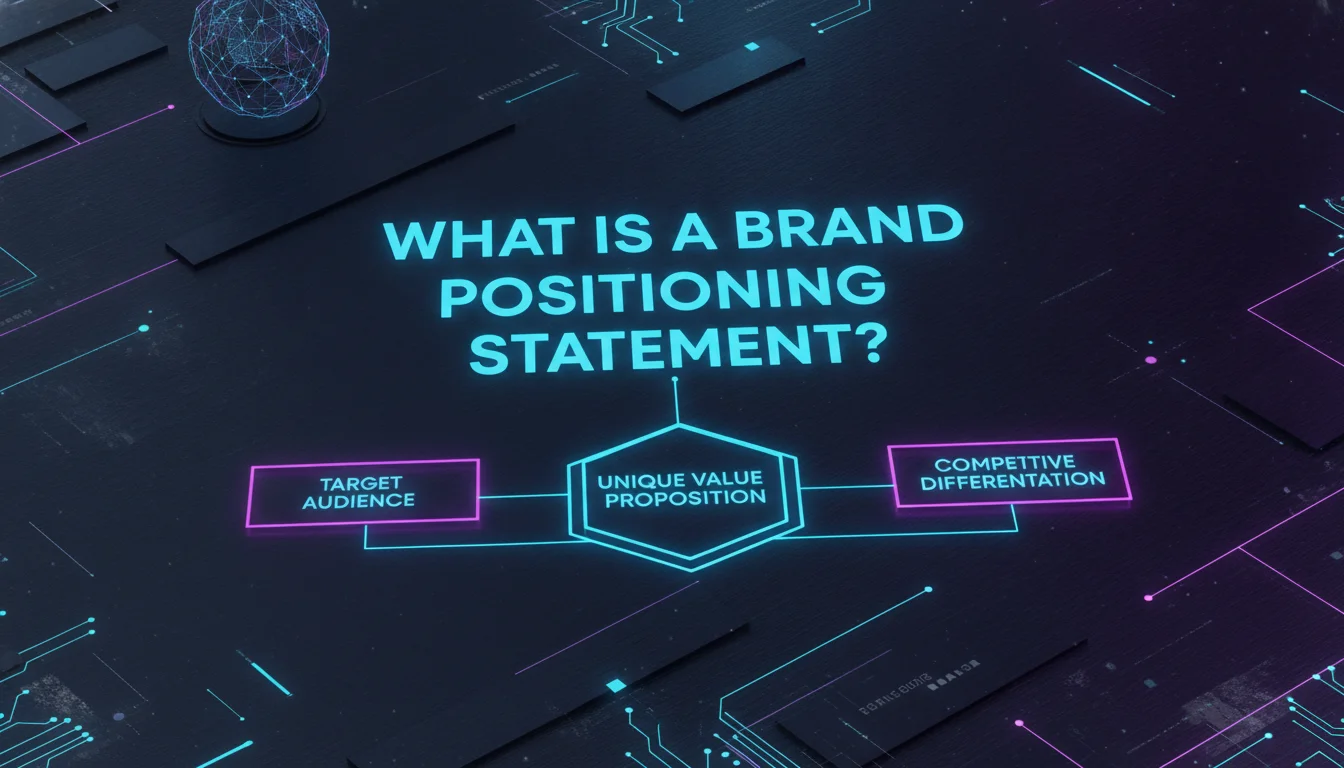
A brand positioning statement is a concise internal declaration that defines how your brand differs from competitors and why your target audience should care. It’s not a tagline. It’s the strategic foundation every campaign, visual, and message is built on.
Key Takeaways
- A strong positioning statement defines your audience, market category, unique value, and key benefit in one focused paragraph.
- It functions as an internal compass, not a public-facing slogan.
- Effective statements differentiate your brand from competitors in a specific, provable way.
- Crafting one requires audience research, competitive analysis, and honest self-assessment.
- Your positioning statement should evolve as your market and customers change.
- Testing and refining the statement against real customer feedback is what separates good from great.
What is a Brand Positioning Statement?
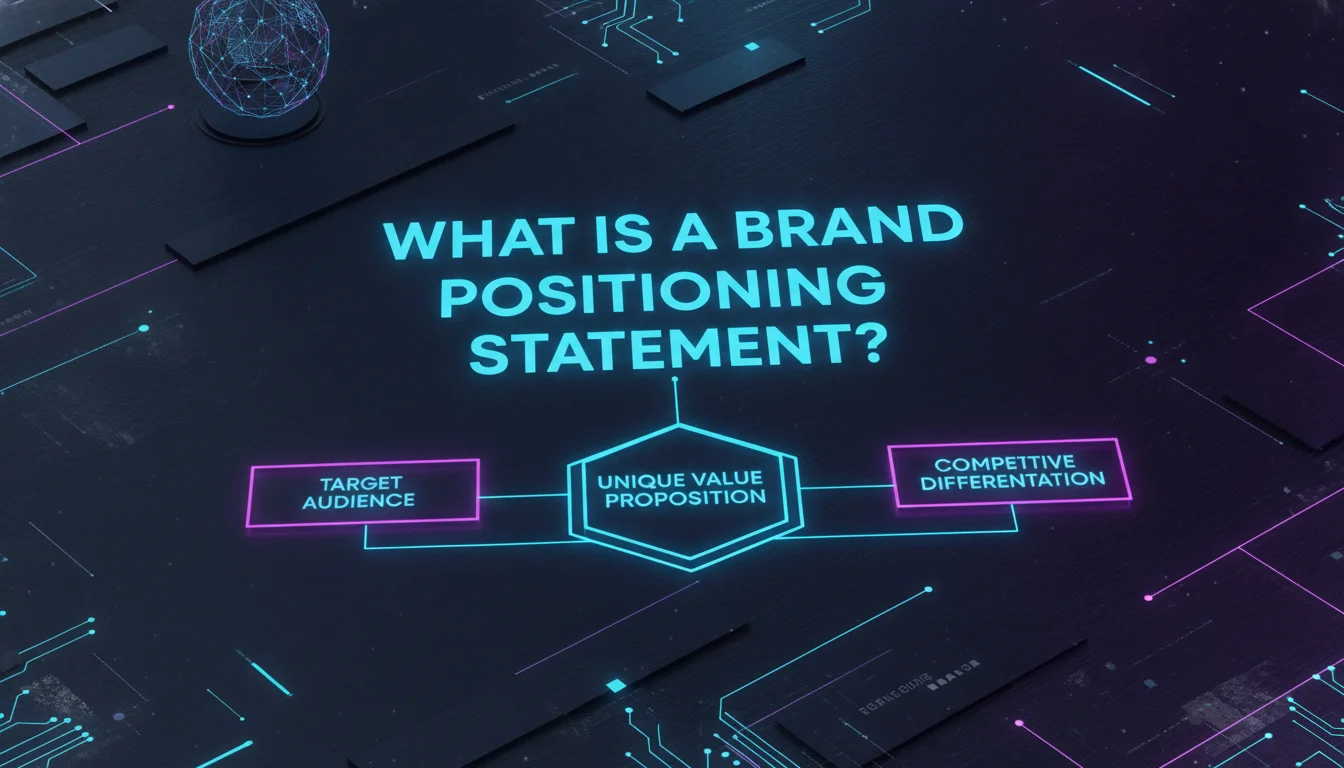
A brand positioning statement is a structured, internal summary of how your brand occupies a distinct space in the market relative to competitors. According to Harvard Business School Professor Jill Avery, who teaches brand strategy, “Brands have never been more important. Consumers are looking to brands to create meaning in their lives – to make their consumption of everyday products and services more significant.” That meaning starts with a clear positioning statement.
Definition and Purpose
At its core, a positioning statement defines the essence of a brand, including its target audience, market category, and unique value proposition. It answers four critical questions:
- Who is the target audience? The specific group of consumers the brand aims to serve.
- What is the market category? The space in which the brand competes.
- What is the unique value proposition? What sets the brand apart from every alternative.
- What is the proof? The reason a customer should believe the claim.
Amazon Ads describes it well: a positioning statement should be “a balance of both aspiration and reality.” You’re not writing fiction. You’re writing a promise you can keep.
Importance of a Brand Positioning Statement
Having a well-defined positioning statement matters for reasons that go far beyond marketing consistency. Here’s what it actually does for your brand:
- Guides Marketing Efforts: Every campaign, caption, and creative brief traces back to this document.
- Enhances Customer Understanding: The process of writing it forces you to understand your audience at a deeper level.
- Facilitates Internal Alignment: It gives your entire team a shared reference point, from product to sales to social media.
- Builds Customer Trust and Loyalty: When customers see a brand consistently delivering on its promise, they return and advocate for it.
“We believe that the more you nurture the brand, the more value we’re going to get. When we work on the brand, and we do marketing and advertising around the brand, it’s just going to be that much more valuable in the long term as far as return on investment and customer feelings.” – Amy Murray, former VP of Global Marketing, McDonald’s
How a Brand Positioning Statement Actually Works
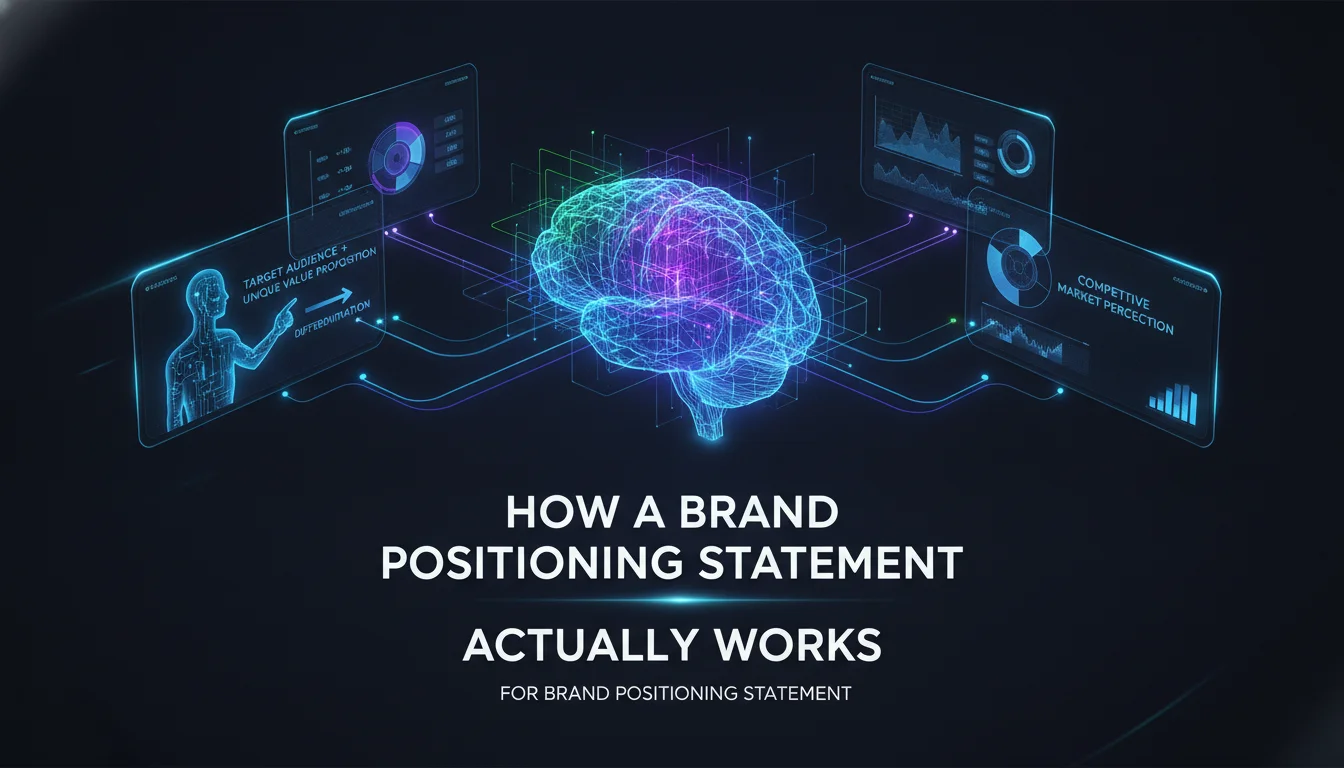
A positioning statement works by occupying a specific piece of mental real estate in your customer’s mind. Think of it as the art of staking out a distinct position in a crowded market, not just on paper, but in how consumers perceive, classify, and remember your brand relative to every alternative they’ve considered.
The mechanics are straightforward. Your statement defines a narrow target, makes a specific claim, and backs it with a reason to believe. Every piece of marketing that follows reinforces that claim. Over time, repetition builds association. Association builds preference. Preference builds loyalty.
This is why positioning statements are internal documents, not ad copy. They’re the blueprint. The ads, the social posts, the packaging, the customer service scripts – those are the construction. Without a solid blueprint, you end up with a brand that looks different every quarter and confuses the very people you’re trying to attract.
As of 2026, the brands winning attention aren’t necessarily the ones with the biggest budgets. They’re the ones with the clearest positioning. In saturated digital markets, clarity is a competitive advantage.
“A positioning statement is not an external marketing tagline but an internal strategic anchor that informs every aspect of your brand’s expression and customer experience.” – The Brand Consultancy
How to Write a Brand Positioning Statement
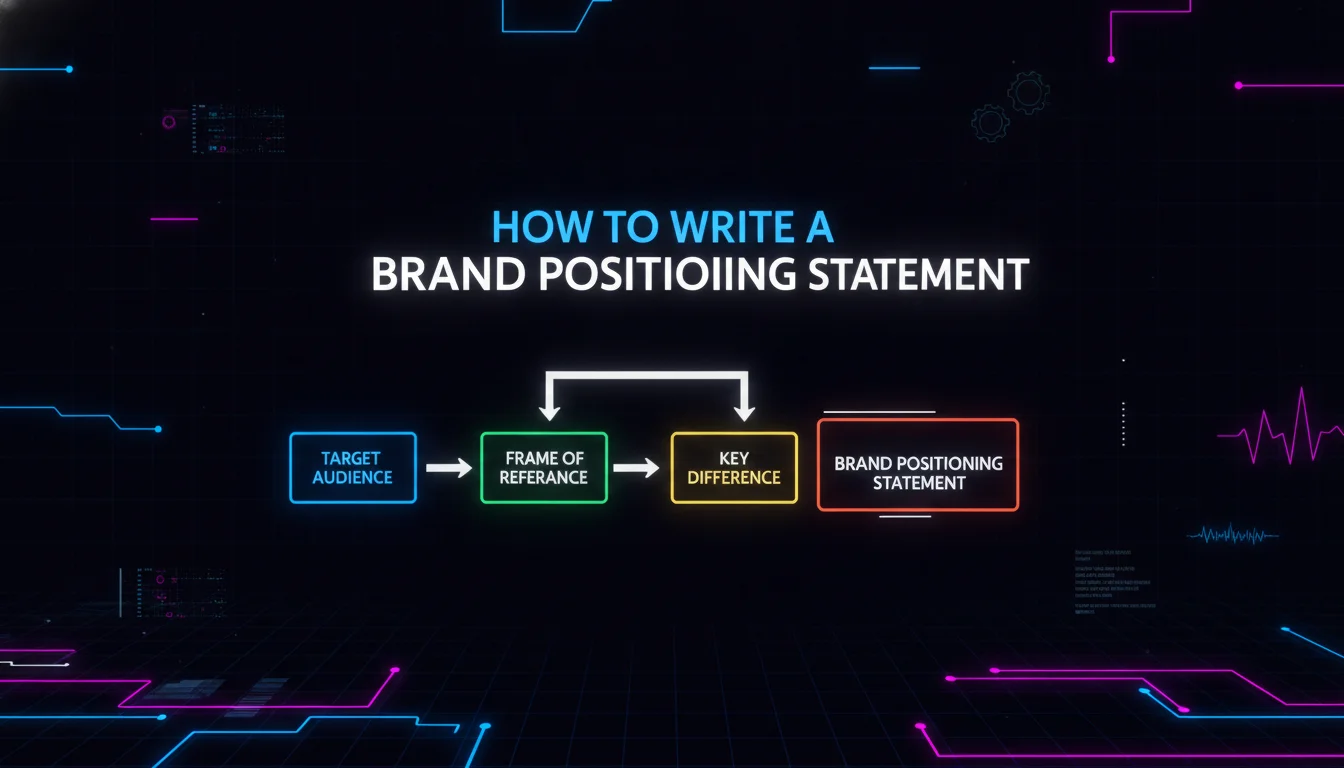
Writing a compelling positioning statement follows a structured process. Here are the steps, in order, with the reasoning behind each one.
Step 1: Define Your Target Audience
Understanding your target audience is the first step in crafting a positioning statement that actually lands. Go beyond demographics. Research psychographics: what motivates your audience, what frustrates them, what they value when choosing between brands like yours.
- What are the age, income level, and lifestyle patterns of your ideal customer?
- What are their core needs, pain points, and aspirations?
- How do they currently perceive your brand versus your competitors?
According to Zendesk’s customer experience research, nearly half of customers want the brands they interact with to be empathetic. That empathy starts with genuinely understanding who you’re talking to before you write a single word.
Step 2: Analyze Your Competition
Next, evaluate your competitors to understand how they’re positioning themselves. This analysis should include:
- Identifying direct and indirect competitors.
- Assessing their strengths and weaknesses in the market.
- Understanding how they communicate their value propositions across channels.
One practical tool here is a perceptual map: a visual grid that plots your brand and competitors along two key dimensions your customers care about, such as price versus quality, or innovation versus tradition. The goal is to find the open space where your brand can own a distinct position.
Step 3: Articulate Your Unique Value Proposition
Your unique value proposition (UVP) is what differentiates your brand from every alternative. To articulate it clearly, ask:
- What unique benefits does your product or service deliver?
- How does your brand solve a specific problem your audience faces?
- What emotional or functional value does your brand provide that competitors don’t?
Step 4: Identify Your Proof Point
A strong positioning statement doesn’t just make a claim. It backs it up. Your proof point is the reason a customer should believe your UVP. This could be a proprietary process, a track record, a technology, a community, or a brand heritage. Without proof, your positioning is just aspiration.
Step 5: Draft, Test, and Refine
Write your first draft using the classic positioning formula: “For [target audience], [brand name] is the [market category] that [unique benefit] because [proof point].” Then test it. Share it internally. Run it past a sample of real customers. Does it resonate? Does it feel distinct? Refine until it does.
The Classic Positioning Statement Formula
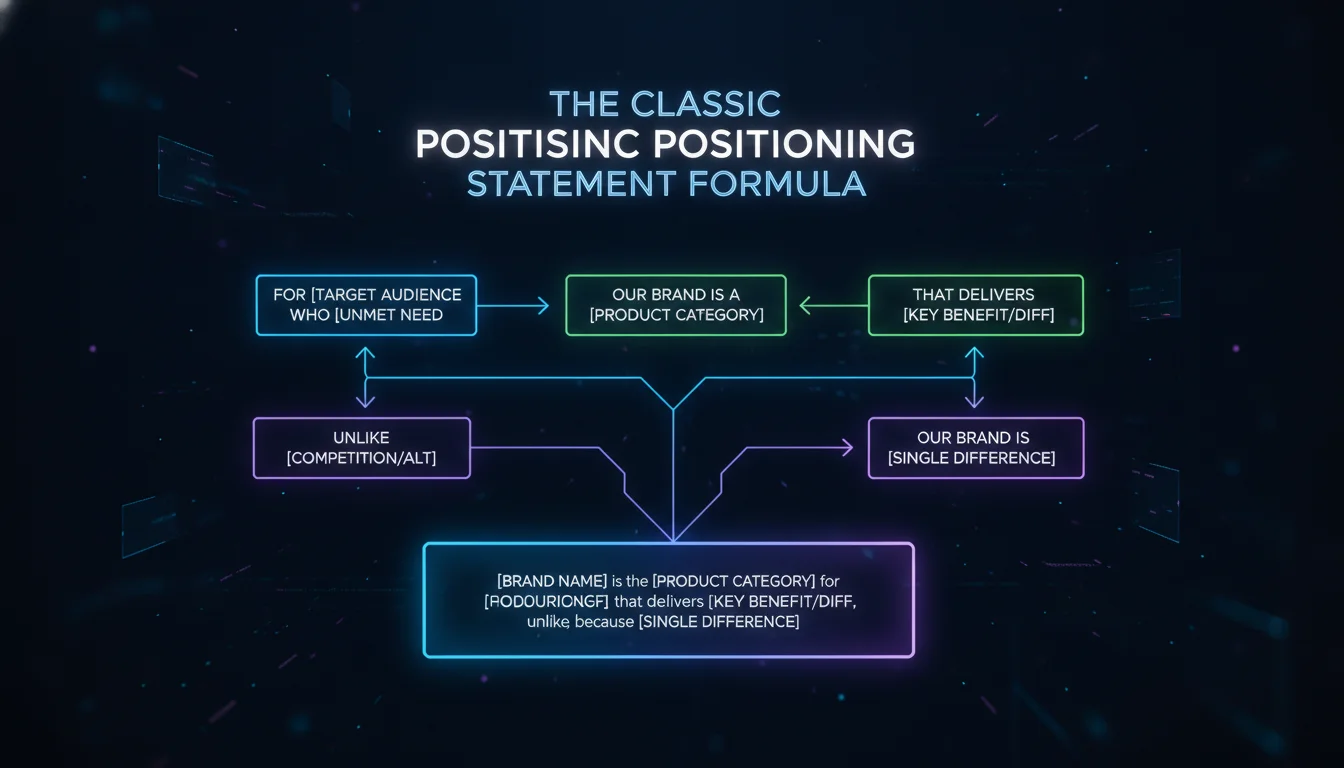
The most widely used positioning statement structure follows this pattern:
“For [target audience], [brand name] is the [market category] that [key benefit / UVP] because [reason to believe].”
This formula works because it forces specificity at every stage. You can’t be vague when the template demands a named audience, a defined category, a concrete benefit, and a proof point. Vagueness gets exposed immediately.
Here’s what each component does:
- Target Audience: Narrows your focus so the statement resonates deeply with the right people rather than weakly with everyone.
- Market Category: Gives customers a mental frame of reference. It tells them what shelf to put you on.
- Key Benefit / UVP: The single most compelling reason to choose you.
- Reason to Believe: The proof that makes the benefit credible.
Elements of a Strong Brand Positioning Statement
A strong positioning statement consistently includes four core elements, each doing specific work.
Target Audience
Clearly define who your brand serves. Move beyond broad demographics into psychographics: motivations, values, and behaviors. The more specific you are, the more powerfully the statement resonates with the right people.
Market Category
Identify the market category in which your brand operates. This contextualizes your brand within the industry and helps customers understand where you fit relative to alternatives they already know.
Unique Value Proposition
Summarize what makes your brand distinct and why customers should choose you over every competitor. This is the heart of the statement. If it could apply to any brand in your category, rewrite it.
Key Benefits
Highlight the primary benefits your brand delivers, covering both functional outcomes and emotional resonance. The best positioning statements work on both levels simultaneously.
Positioning Statement vs. Mission Statement vs. Value Proposition
These three tools are frequently confused. They serve different purposes and live in different places.
| Tool | Purpose | Audience | Scope |
|---|---|---|---|
| Positioning Statement | Defines competitive differentiation and target market | Internal teams | Marketing and messaging strategy |
| Mission Statement | Articulates brand purpose and values | Public-facing | Overall brand identity |
| Value Proposition | Explains specific benefits for customers | Customers | Product or service level |
Think of it this way: the mission statement tells the world why you exist. The value proposition tells customers what they get. The positioning statement tells your team how to win in the market.
Pros and Cons of Using a Formal Brand Positioning Statement
Pros
- Creates internal alignment: Every team member, from design to sales, works from the same strategic foundation.
- Sharpens messaging: Forces you to be specific about who you serve and why you’re different.
- Guides creative decisions: Gives your creative team a clear brief before a single pixel is placed.
- Builds long-term brand equity: Consistent positioning over time creates the kind of brand recognition that compounds.
- Improves competitive clarity: Helps you identify white space in the market where you can own a distinct position.
Cons
- Can become outdated: Markets shift. A positioning statement written three years ago may no longer reflect your audience or competitive landscape.
- Risk of being too narrow: Overly specific positioning can limit growth opportunities as your brand expands.
- Requires real research: A positioning statement built on assumptions rather than customer insight will mislead your team, not guide them.
- Hard to get consensus: Getting leadership, marketing, and product teams to agree on a single statement can be a slow, political process.
Examples of Effective Brand Positioning Statements
Real-world examples provide the clearest picture of what strong positioning looks like in practice. Here are three brands that have built their entire marketing architecture around a clear, consistent position.
Coca-Cola
Coca-Cola’s positioning centers on happiness and refreshment, targeting consumers who seek a joyful, shared experience. A representative statement might read: “For people who seek refreshment and joy, Coca-Cola is the beverage that brings happiness to every moment.” The emotional connection is the product. The drink is just the delivery mechanism.
Apple
Apple positions itself as a premium technology brand for creative individuals who value design and innovation. Their positioning could be expressed as: “For creative individuals who value innovation, Apple is the technology brand that delivers products enhancing creativity and productivity.” Every product launch, every retail experience, every ad reinforces this single position.
Dove
Dove’s positioning centers on real beauty and self-acceptance. As Amazon Ads notes in their brand positioning guide, “Dove sets itself apart by focusing on the natural and real beauty of women. Their brand positioning strategy emphasizes the way in which all women can embrace their authentic self.” That positioning has driven decades of consistent, award-winning campaigns.
McDonald’s
McDonald’s positions itself on consistency and accessibility. According to Amazon Ads, “McDonald’s sets itself apart by promoting exceptional service and consistency among its food products, across its many locations.” In a world of artisanal everything, McDonald’s owns the position of reliable, familiar, and fast. That’s a choice, not a default.
Brand Spotlight: A Worked Example
Let’s build a positioning statement from scratch for a fictional brand: a sustainable activewear company targeting urban millennial women.
Step 1: Target Audience. Urban women aged 25-38 who exercise regularly and make purchasing decisions based on both performance and environmental impact.
Step 2: Market Category. Performance activewear.
Step 3: Unique Value Proposition. The only activewear brand that uses fully traceable, recycled materials without compromising on technical performance.
Step 4: Proof Point. Every garment ships with a QR code linking to the full supply chain story, from raw material to finished product.
Draft Statement: “For environmentally conscious urban women who refuse to choose between performance and purpose, [Brand Name] is the activewear brand that delivers technical excellence through fully traceable, recycled materials, backed by radical supply chain transparency.”
Notice what this statement does. It names a specific audience. It defines a category. It makes a claim that no generic activewear brand can make. And it provides a proof point that’s verifiable. That’s the standard every positioning statement should meet.
Common Mistakes to Avoid
Most positioning statements fail for predictable reasons. Here’s what to watch for.
Being Too Vague
A positioning statement should be clear and specific. Broad statements like “we deliver quality solutions for businesses” convey nothing. If your statement could apply to any brand in your category, it’s not a positioning statement. It’s a placeholder.
Ignoring the Competition
Failing to analyze competitors leads to a statement that doesn’t actually differentiate your brand. Positioning is always relative. You’re not just defining who you are. You’re defining who you are compared to every alternative your customer is considering.
Neglecting the Audience
A statement that doesn’t resonate with the target market will fail to connect, no matter how well-crafted it sounds internally. According to Zendesk’s research, customers want brands to be empathetic. That empathy has to be built into the positioning from the start, not added as an afterthought.
Skipping the Proof Point
Many brands write positioning statements that make strong claims without any supporting evidence. Without a reason to believe, your UVP is just marketing noise. Customers are skeptical. Give them something concrete to hold onto.
Writing It Once and Filing It Away
A positioning statement isn’t a one-time exercise. Markets shift. Competitors evolve. Customer values change. As of 2026, brands that haven’t revisited their positioning since 2020 are likely operating with a document that no longer reflects their market reality.
Testing and Refining Your Positioning Statement
Testing your positioning statement is what separates a document from a strategy. Here’s how to do it properly.
Gather Feedback
Share your positioning statement with internal teams and a select group of real customers. Ask them: Does this feel true? Does it feel distinct? Does it make you want to engage with this brand? Listen for hesitation as much as enthusiasm.
Monitor Market Response
After implementing your positioning in marketing materials, track customer responses and engagement metrics. Are the right people responding? Is the message attracting your target audience or a different one? The data will tell you whether your positioning is landing as intended.
Use a Perceptual Map
Plot your brand and your key competitors on a perceptual map using two dimensions your customers care about most. If your brand clusters with competitors rather than occupying distinct space, your positioning needs sharper differentiation.
Make Adjustments
Be prepared to refine based on feedback and market changes. A positioning statement should evolve as your brand grows and as market conditions shift. Treating it as a living document rather than a finished artifact is what keeps your brand relevant year after year.
Positioning Approaches: A Comparison
Different brands use different positioning strategies depending on their market, audience, and competitive landscape. Here’s how the main approaches compare.
| Positioning Type | Core Focus | Best For | Risk |
|---|---|---|---|
| Quality-Based | Superior craftsmanship or performance | Premium brands with provable quality claims | Price sensitivity; hard to sustain at scale |
| Price-Based | Best value or lowest cost | High-volume, cost-conscious markets | Race to the bottom; margin erosion |
| Benefit-Based | Specific functional or emotional outcome | Brands solving a clear, defined problem | Competitors can copy benefits quickly |
| Values-Based | Shared ethics, purpose, or identity | Brands targeting values-driven audiences | Requires authentic, consistent action |
| Competitor-Based | Direct contrast with a named rival | Challenger brands entering established markets | Keeps attention on the competitor, not you |
| Category-Based | Owning or creating a new category | Innovative brands with no direct equivalent | Requires significant education investment |
The right approach depends on your brand’s strengths, your audience’s priorities, and the competitive gaps you’ve identified. Most strong brands blend two of these approaches rather than relying on just one.
Brand Positioning Statement in 2026: What’s Changed
This year, positioning statements are doing more work than ever. The rise of AI-generated content has flooded every market with generic messaging. Brands that can articulate a genuinely distinct position are cutting through in ways that algorithmic content simply can’t replicate.
Values-based positioning has become particularly important. According to Zendesk’s customer experience research, a significant portion of consumers want to buy from companies that are socially responsible and prioritize diversity and inclusion in their communities. That’s not a trend. It’s a structural shift in how purchasing decisions get made.
At the same time, positioning statements are being tested faster than ever. Social media gives brands real-time feedback on whether their positioning resonates. A message that falls flat on LinkedIn or Instagram is data. Use it.
If you want to see how strong positioning translates into visual identity and campaign execution, our work on brand identity development and creative services shows exactly how the two connect in practice.
Frequently Asked Questions
What is a brand positioning statement?
A brand positioning statement is a concise internal declaration that defines how a brand differentiates itself from competitors and conveys its unique value to the target audience. It’s not public-facing copy. It’s the strategic foundation that guides every marketing decision your team makes.
Why is a brand positioning statement important?
It guides marketing strategies, ensures consistency in messaging, and aligns internal teams around a shared understanding of the brand’s identity and objectives. Without one, brands tend to communicate differently across channels, which erodes trust and recognition over time.
How do I write a brand positioning statement?
Start by defining your target audience, analyzing your competition, and articulating your unique value proposition with a supporting proof point. Use the classic formula: “For [audience], [brand] is the [category] that [benefit] because [proof].” Then test it with real customers and refine based on what you hear.
What is Coca-Cola’s positioning statement?
Coca-Cola’s positioning centers on happiness and refreshment. A representative version reads: “For people who seek refreshment and joy, Coca-Cola is the beverage that brings happiness to every moment.” The brand has built its entire marketing architecture around this emotional position for decades.
What is Apple’s brand positioning statement?
Apple positions itself as the technology brand for creative individuals who value innovation and design. Their positioning could be expressed as: “For creative individuals who value innovation, Apple is the technology brand that delivers products enhancing creativity and productivity.” Every product, retail experience, and campaign reinforces this single position.
How does a brand positioning statement differ from a mission statement?
A positioning statement focuses on competitive differentiation and is used internally to guide marketing and messaging. A mission statement is typically public-facing and articulates the brand’s overall purpose and values. The positioning statement tells your team how to win in the market. The mission statement tells the world why you exist.
Can a brand positioning statement change over time?
Yes. As market conditions, competitive landscapes, and consumer preferences evolve, your positioning should be tested and refined to stay relevant. Brands that treat their positioning statement as a living document rather than a finished artifact consistently outperform those that don’t revisit it.
Build Something That Actually Stands Out
A well-crafted brand positioning statement is the foundation any brand needs to establish a strong market presence. Define your audience precisely. Analyze your competitors honestly. Articulate your unique value with a proof point that makes it believable. Then test it, refine it, and let it guide every creative decision your team makes.
The brands that win aren’t always the loudest. They’re the clearest. Ready to build yours? Contact Emin Media for a free brand consultation and let’s build something bold together.
Enjoyed this article?
Contact Emin Media for a free brand consultation and let's create something amazing together.
Get in TouchRelated Articles

Digital Marketing for Creatives: A Bold Guide
Digital marketing for creatives builds real visibility and sales. Learn strategies for social media, SEO,…
Branding & Design Agency Tips That Actually Work
Discover branding and design agency tips to choose the right partner, set clear goals, and…
Creative Agency Pitch Deck Tips That Win Clients
Master creative agency pitch deck tips that win clients in 2026. Learn storytelling, design, and…