Digital Marketing for Creatives: A Bold Guide
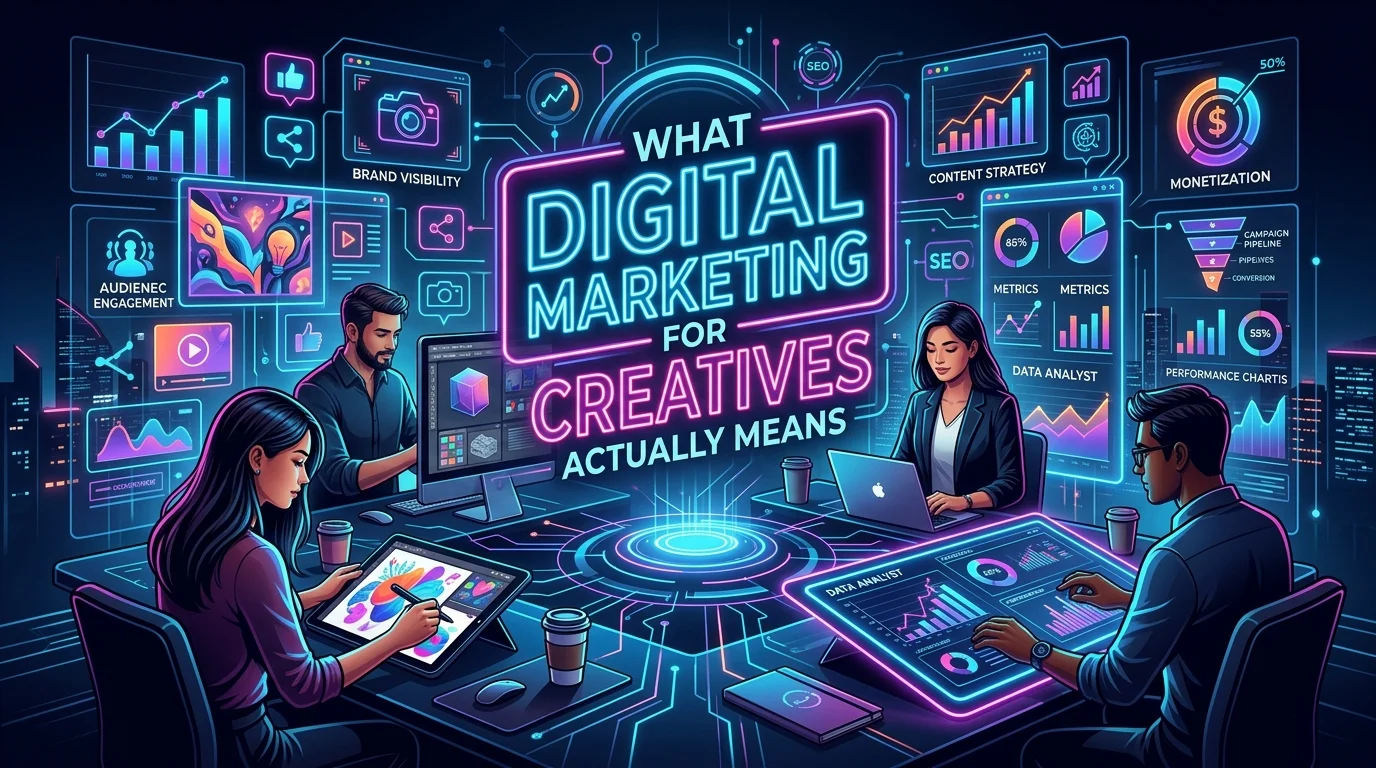
Digital marketing for creatives is the strategic use of online platforms to promote artistic work, build audience relationships, and drive measurable business results. It covers social media, SEO, content creation, and email. For artists and creative professionals, mastering these tools is no longer optional.
Key Takeaways
- Digital marketing for creatives connects your work to the right audience without selling out your artistic voice.
- Clear goals come first. Every tactic flows from what you actually want to achieve.
- Your website is your visual resume. Treat it like one.
- Social media works best when you pick two platforms and own them, rather than spreading thin across six.
- SEO and content marketing build long-term visibility that paid ads alone cannot replicate.
- Spend at least 20% of your working time on marketing or outreach, according to creative business coach Sheryl Garratt at The Creative Life.
What Digital Marketing for Creatives Actually Means
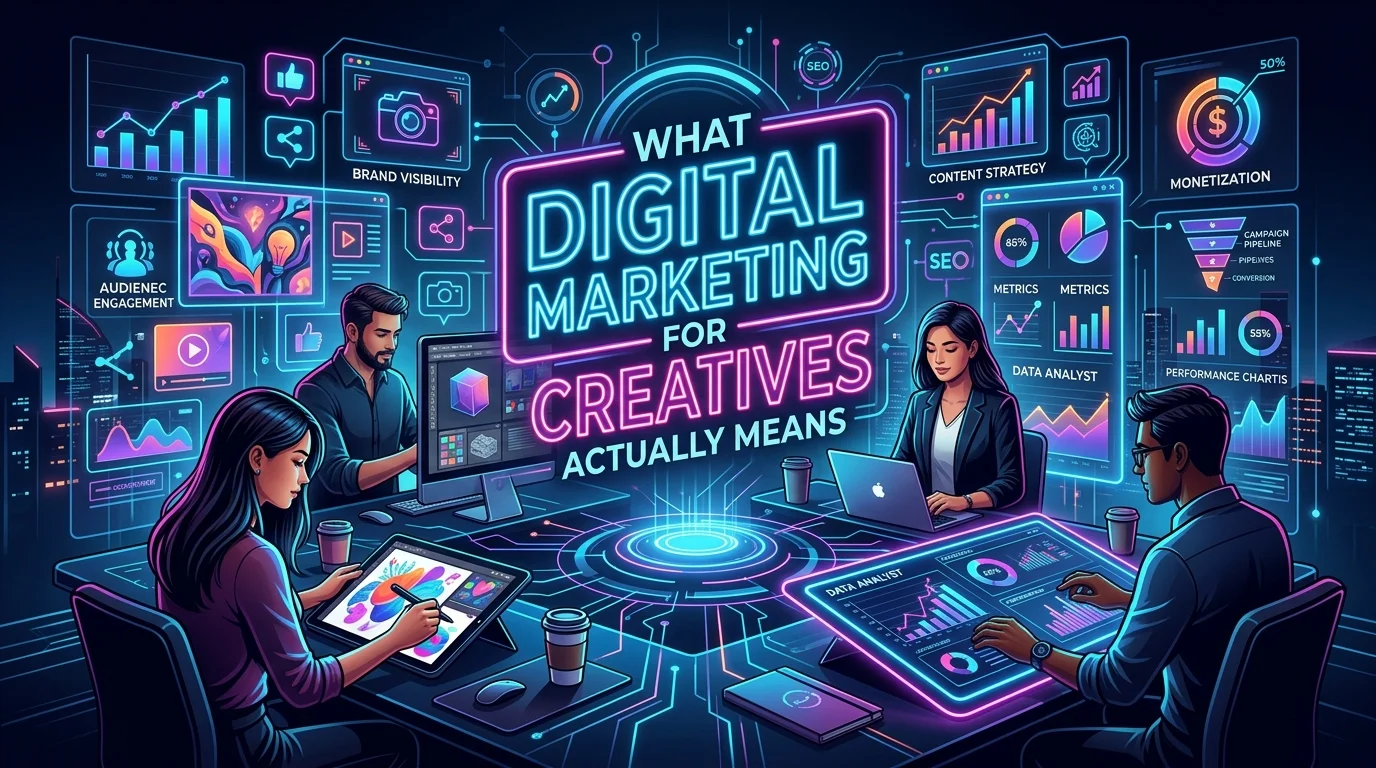
Digital marketing for creatives is not about becoming a corporate marketer in a suit. It is about connecting. Sharing. Inviting people into your world. As creative business coach Sheryl Garratt puts it, you are not screaming “Buy my stuff!” at strangers. You are issuing an invitation to the people who already want what you make.
That reframe matters. Most artists resist marketing because they picture cold sales tactics. The reality is closer to curation: you are selecting what to show, who to show it to, and how to tell the story behind it. That is creative work in itself.
“No idea is original, so don’t feel bad about identifying someone who is doing it well and tailoring it and adapting it to your style, your language, and your target audience.” – Molaundo Jones, Founder of The Clever Agency and Senior Director of Communications and Partnerships at Art21
According to NYFA’s knowledge base on digital marketing for artists, digital marketing is an essential part of being an artist of any discipline. The platforms change. The algorithm shifts. But the need to reach people never goes away.
Pros and Cons of Digital Marketing for Creatives
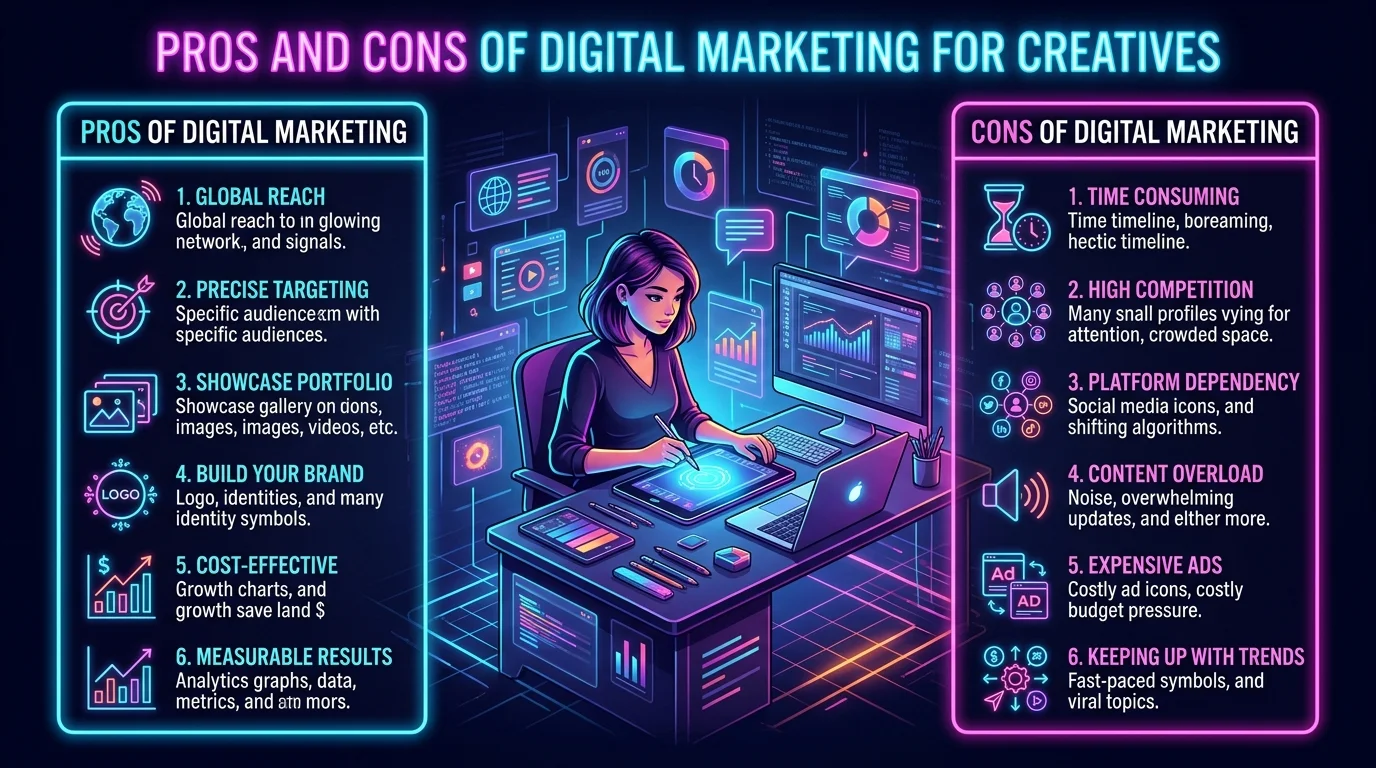
Pros
- Global reach on a small budget. A well-optimized Instagram profile or blog post can reach collectors, clients, and collaborators anywhere in the world without a massive ad spend.
- Full creative control. You decide the narrative, the aesthetic, and the voice. No gallery middleman, no publicist filter.
- Data-backed decisions. Analytics tools show you exactly what resonates, so you stop guessing and start iterating with evidence.
- Compounding returns. SEO content and email lists build value over time. A blog post written today can drive traffic for years.
- Direct audience relationships. Email subscribers and loyal followers are assets you own, unlike social media followers that live on rented platforms.
Cons
- Time cost is real. Spending at least 20% of your working time on marketing is the benchmark creative business coaches recommend. That is a significant chunk of studio time.
- Platform dependency risk. Algorithm changes on Instagram or TikTok can cut your reach overnight. You do not own those audiences.
- Steep learning curve. SEO, paid ads, email automation, and analytics each require real skill. Mastering all of them takes months, not days.
- Content fatigue is a genuine threat. Producing consistent, high-quality content while also doing the actual creative work is exhausting without systems in place.
- Measurement can mislead. Vanity metrics like follower counts feel good but rarely correlate directly with revenue or meaningful engagement.
Setting Goals Before You Post Anything
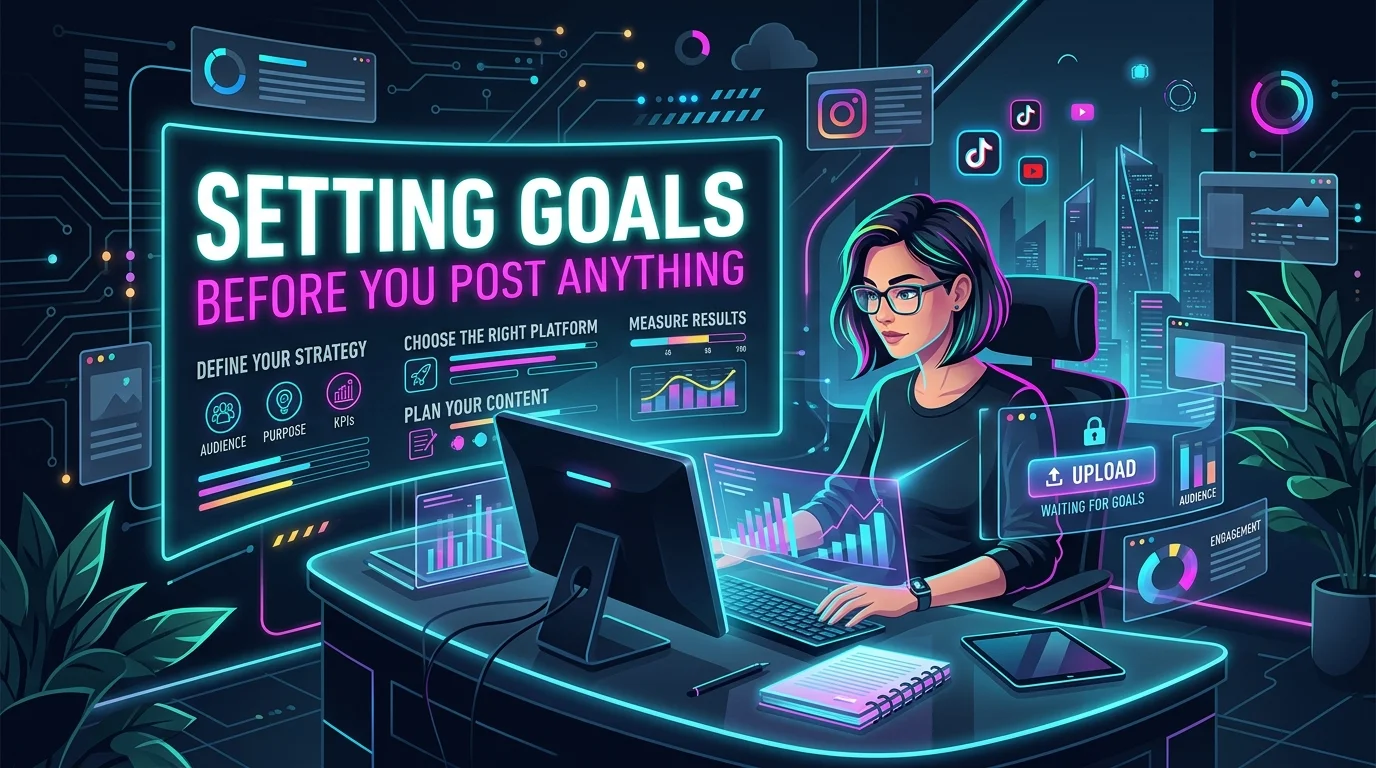
Setting clear goals is the foundation of any effective digital marketing strategy for creatives. Without them, you are just posting into the void and hoping something sticks.
Marketing specialist Molaundo Jones, Senior Director of Communications and Partnerships at Art21, frames it simply: start by asking “What are my goals?” Do you want to sell work, drive event ticket sales, grow engagement, or establish yourself as an expert voice in your field? You can pursue multiple goals, but focus on a manageable few you can actually track.
Identifying Your Objectives
- Brand Awareness: Increase visibility and recognition in your niche or discipline.
- Lead Generation: Attract potential clients, collectors, or collaborators.
- Sales Conversion: Turn warm leads into paying customers or patrons.
- Community Engagement: Build real relationships with your audience, not just follower counts.
Defining Your Target Audience
The more precisely you define your audience, the sharper your marketing becomes. Jones gives a concrete example: if you want to reach urban youth aged 15-25 and also connect with an older audience aged 65 and over, those are two distinct groups with different content preferences, platforms, and language styles. Knowing that shapes everything from your caption tone to your platform choice.
Think beyond demographics. Consider what problems your audience has, what language they use to describe those problems, and what kind of content they actually consume. That research is the raw material for every campaign you will ever run.
Building Your Online Presence as a Creative
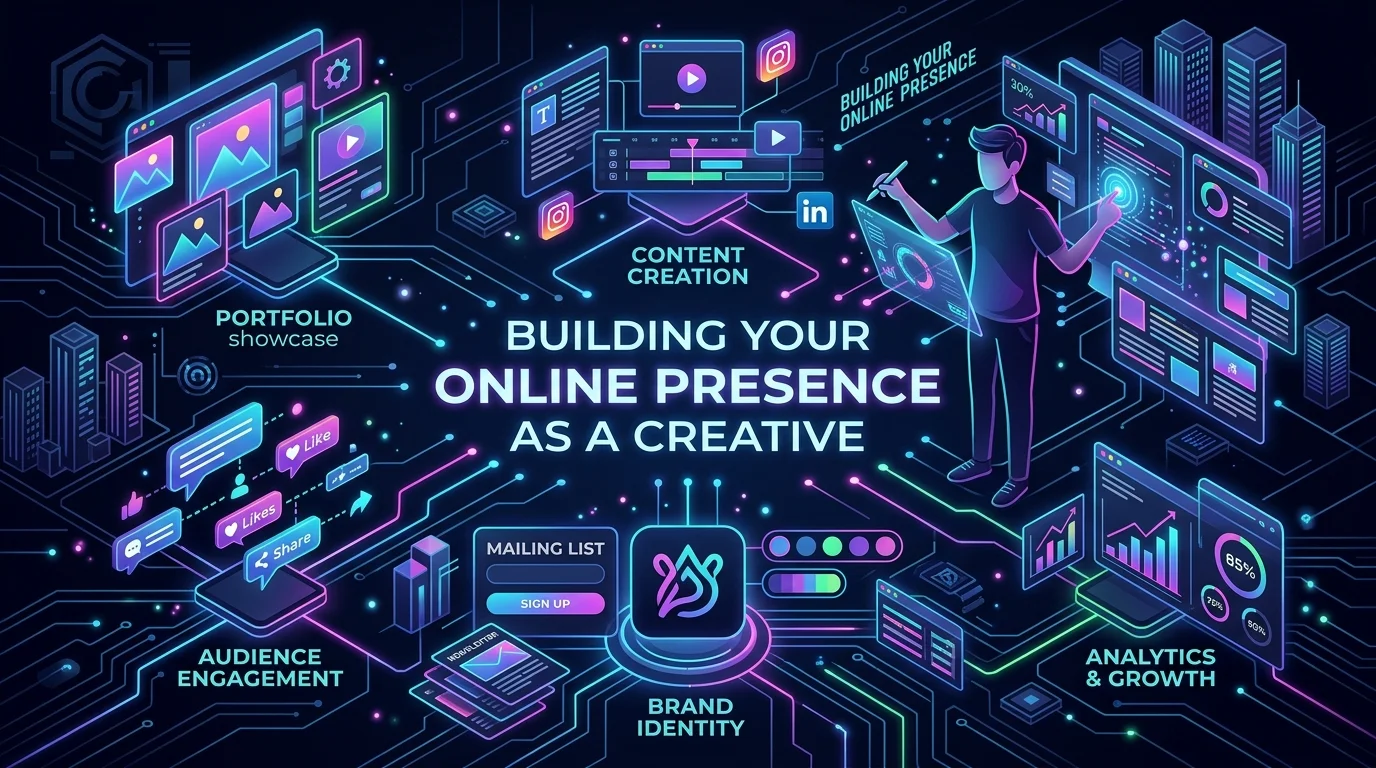
Your online presence is your portfolio, your storefront, and your first impression, all at once. Building it well means treating every digital touchpoint as an extension of your creative vision.
Creating a Professional Website
Your website is your visual resume, as Jones describes it: “one of the lowest bar investments you can make in yourself as an artist” and a must-have for creatives across every discipline. It gives you “visual real estate that people from around the world can access.”
Platforms like Squarespace and Wix offer templates designed for creatives who want professional results without deep technical skills. Jones specifically highlights Squarespace for the simplicity of its design templates. Once your site is live, connect it to Google Analytics to understand who visits, where they come from, and which pages hold their attention longest.
Your site should include a portfolio of your strongest work, clear information about your services or process, a blog or journal for ongoing content, and a direct way for people to contact or hire you. Keep it clean. Let the work breathe.
Choosing the Right Social Media Platforms
You do not need to be on every platform. That is one of the most liberating truths in digital marketing for creatives. Pick the two platforms where your target audience is most active and build genuine presence there before expanding.
Instagram and Pinterest remain strong for visual artists and designers. TikTok and YouTube favor video-first storytellers and educators. LinkedIn works well for creative professionals targeting corporate clients or B2B work. The platform you choose should match both your content style and your audience’s habits, not just whatever is trending this month.
Content Marketing Strategies That Actually Work
Content marketing for creatives is about creating valuable, interesting material that draws your ideal audience toward you, rather than interrupting them with ads. The best creative content marketing does not feel like marketing at all.
Blogging and Written Content
A blog establishes you as a thoughtful voice in your field. Write about your creative process, the ideas behind specific projects, industry observations, or practical tutorials for your audience. This content drives organic search traffic and gives people a reason to return to your site beyond just browsing your portfolio.
The key is consistency over volume. One well-crafted post per month beats four rushed ones. And as The Creative Life notes, you do not always need to create content from scratch. Repurpose existing work, past projects, and older pieces. Keep promoting them, too. Most content gets one push and then disappears. Great content deserves a longer shelf life.
Video Marketing
Video is the most engaging format available to creatives right now. Behind-the-scenes footage of your process, time-lapse work sessions, client project walkthroughs, and live Q&A sessions all perform well across platforms. Video lets people see how you think, not just what you make. That transparency builds trust faster than any polished portfolio image.
As of 2026, short-form video on platforms like TikTok, Instagram Reels, and YouTube Shorts continues to drive discovery for creative professionals. You do not need a production studio. A phone, good natural light, and a genuine point of view are enough to start.
Email Marketing
Email is the most direct line between you and your audience. Unlike social media followers, your email list is an asset you own outright. A regular newsletter, even monthly, keeps collectors, clients, and fans connected to your work between launches or exhibitions. According to creative industry practitioners, email consistently outperforms social media for direct sales conversion, particularly for artists selling original work or limited editions.
Search Engine Optimization for Creative Professionals
SEO is the process of making your online content easier for search engines to find and recommend. For creatives, this means showing up when potential clients search for exactly what you do.
Keyword Research
Start by identifying the specific phrases your ideal clients or collectors actually type into search engines. Tools like Google Keyword Planner help you find relevant terms. Jones recommends focusing on keywords tied directly to your work and discipline. If your practice involves socially engaged art, for example, terms like “social practice artist,” “socially engaged art,” and “art and social justice” are worth building content around.
Think like your audience, not like yourself. The language you use inside your field may differ significantly from what a potential buyer or client types into Google.
On-Page SEO Techniques
Use your target keywords in page titles, headings, image alt text, and naturally throughout your written content. Make sure your site loads quickly on mobile devices. Compress images without sacrificing quality. Write descriptive alt text for every image in your portfolio, both for accessibility and for search visibility.
Internal linking matters too. Connect related pages and blog posts within your site so visitors and search engines can move through your content logically. If you want to go deeper on brand-building strategy, our guide to brand storytelling and visual identity covers the creative frameworks we use with clients. You can also explore our full digital marketing and branding services to see how we approach this work end to end.
The Data and Creativity Balance
The most effective digital marketing for creatives sits at the intersection of analytical thinking and artistic instinct. This is not a contradiction. It is the whole point.
“Structured thinking gives creativity credibility. Data gives storytelling direction. That’s the balance the industry rewards most.” – Dinis Leal, Google Account Strategist and IE Business School Master in Digital Marketing alumnus
As IE Business School’s digital marketing program highlights, the field now attracts professionals who think like strategists but create like artists. Algorithms show you what works. Creativity decides why it matters. The creatives who thrive in 2026 are the ones who can read a performance dashboard and then translate those numbers into a campaign that actually moves people.
This means tracking the right metrics. Reach and impressions tell you about visibility. Engagement rate tells you about resonance. Click-through and conversion data tells you about intent. Each layer reveals something different about how your audience is responding to your work.
Tools That Make Digital Marketing Manageable
The right tools reduce friction and free up more time for the creative work itself. Here is a practical starting stack for creatives building their digital marketing systems.
- Google Analytics: Tracks website traffic, user behavior, and conversion paths. Free and essential.
- Google Keyword Planner: Identifies search terms your audience uses. Helps shape content and SEO strategy.
- Squarespace or Wix: Portfolio and website builders with built-in analytics and SEO tools designed for non-technical users.
- Mailchimp or ConvertKit: Email marketing platforms that let you build and manage your subscriber list, send newsletters, and automate follow-up sequences.
- Canva or Adobe Express: Graphic design tools for creating social media content, promotional graphics, and brand assets without a full design team.
- Later or Buffer: Social media scheduling tools that let you plan and queue content in advance, reducing the daily time burden.
You do not need all of these on day one. Start with your website analytics and one content channel. Add tools as your needs grow and your systems mature.
Measuring Success and Adapting Your Strategy
Measuring success in digital marketing for creatives means looking beyond vanity metrics and asking whether your efforts are actually moving you toward your stated goals.
Using Analytics Tools
Google Analytics gives you a clear picture of your website traffic: where visitors come from, which pages they spend time on, and where they drop off. Review these numbers regularly, not obsessively. Monthly check-ins are usually enough to spot trends and make informed adjustments.
On social media, platform-native analytics show you which content formats and topics generate the most engagement. Over time, patterns emerge. Double down on what works. Cut what consistently underperforms, regardless of how much effort went into it.
Adapting Based on Feedback
Quantitative data tells you what is happening. Qualitative feedback tells you why. Ask your audience directly. Run polls in your Instagram Stories. Read the comments. Send a short survey to your email list. The combination of analytics and direct feedback gives you a complete picture of what your audience actually values.
The Creative Life’s Sheryl Garratt frames this as a lifelong process, not a one-time push. Small, incremental improvements over time compound into significant results. The goal is not to get everything right immediately. The goal is to keep learning and adjusting.
Frequently Asked Questions
What are creatives in digital marketing?
Creatives in digital marketing refers to both the professionals who produce visual and written content for campaigns and the actual creative assets themselves, such as ad graphics, video content, and copy. For artists and creative professionals, digital marketing for creatives describes the specific strategies and tools used to promote their work and build their business online.
What is the 70/20/10 rule in digital marketing?
The 70/20/10 rule suggests allocating roughly 70% of your content to proven formats that reliably engage your audience, 20% to content that builds on what works with a fresh angle, and 10% to experimental ideas that might not succeed but could open new directions. For creatives, this framework helps balance consistency with the creative risk-taking that keeps your content from going stale.
What is the 3-3-3 rule for marketing?
The 3-3-3 rule is a content planning framework suggesting you create content for three different audience awareness stages: people who have never heard of you, people who know you but have not bought, and existing clients or fans. Applying this to digital marketing for creatives means producing discovery content, nurture content, and loyalty content simultaneously rather than only posting work announcements.
Is AI replacing digital marketing for creatives?
AI is changing the tools available to creative marketers, particularly in areas like content drafting, image generation, and campaign analytics. However, the strategic judgment, authentic voice, and genuine audience relationships that define effective digital marketing for creatives are still deeply human skills. The creatives who use AI as a production tool while maintaining their own perspective will have a significant advantage.
How much time should a creative spend on marketing?
According to The Creative Life, if you are not spending at least 20% of your time on some form of marketing or outreach on a permanent basis, you will find it hard to move forward. For a full-time creative working a standard week, that translates to roughly one full day per week dedicated to marketing activities, including content creation, audience engagement, and strategy review.
Ready to stop guessing and start building a brand that actually works? Contact Emin Media for a free brand consultation and let’s build something bold together.
Enjoyed this article?
Contact Emin Media for a free brand consultation and let's create something amazing together.
Get in TouchRelated Articles
Branding & Design Agency Tips That Actually Work
Discover branding and design agency tips to choose the right partner, set clear goals, and…
Creative Agency Pitch Deck Tips That Win Clients
Master creative agency pitch deck tips that win clients in 2026. Learn storytelling, design, and…
Creative Agency Service Offerings: 2026 Guide
Explore creative agency service offerings in 2026: branding, design, digital marketing, and consulting explained to…