Brand Photography for Social Media: 2026 Guide
Key Takeaways
- Brand photography for social media builds recognition, trust, and emotional connection with your audience.
- Professional images create a cohesive visual identity across every platform where your audience finds you.
- Planning your shoot with a clear shot list, defined goals, and the right photographer makes all the difference.
- Variety in your image library – product shots, lifestyle, behind-the-scenes – keeps your content calendar full and fresh.
- Tracking engagement, shares, and conversions tells you exactly which visuals are earning their keep.
Brand Photography for Social Media: Your 2026 Visual Strategy Guide
Brand photography for social media is the practice of creating a planned library of professional images that represent your business across every digital platform. It goes far beyond headshots. Done right, it tells your story before you write a single caption.
Understanding Brand Photography for Social Media
social media is a specialized discipline that builds a complete visual narrative around your business, not just a single polished portrait. Think of the difference between a passport photo and a story. One says “here is my face.” The other says “here is who I am, how I work, and why you should trust me.”
As of 2026, audiences are more visually literate than ever. They scroll fast, they notice inconsistency, and they make trust decisions in seconds. A patchwork of stock photos, mismatched iPhone shots, and recycled headshots signals exactly the wrong thing about your brand.
“As a business owner, I never realized how badly I needed to have a professional brand photographer style and direct a session like this for me. I see now that this is more than just a collection of headshots – this is a complete visual representation of my brand that I desperately needed.” – Katelyn James, Photographer and Educator
What Is Brand Photography?
Brand photography is a planned photoshoot designed to build a visual library for your brand, covering who you are, how you work, and what you stand for. It includes product shots, lifestyle images, behind-the-scenes moments, and portraits – all edited to a consistent look and feel that travels across your website, social channels, email campaigns, and ads.
Why Does Brand Photography Matter?
Strong brand photography matters because it speeds up the trust-building process that every business depends on. According to creative industry practitioners, audiences need to see a brand show up consistently before they feel confident enough to buy. Visuals do that work faster than words alone.
- Building Trust: Professional, consistent images signal that you take your business seriously. A faceless or visually inconsistent brand struggles to earn that trust as effectively.
- Driving Engagement: Visually compelling content captures attention mid-scroll and invites interaction. Social platforms reward this with greater organic reach.
- Creating Recognition: A cohesive color palette, editing style, and visual tone across every post trains your audience to recognize your brand instantly.
Types of Brand Photography
Not every shoot looks the same. The best this type of media draws from several image types to keep your content library versatile:
- Product Photography: Clean, styled shots that showcase what you sell in its best light.
- Lifestyle Photography: Your product or service in real-world context, showing how it fits into your audience’s life.
- Behind-the-Scenes Photography: A peek into your process, workspace, and culture. This is where personality lives.
- Portrait and Team Photography: Faces build connection. Showing the humans behind the brand accelerates the know-like-trust cycle.
Pros and Cons of Professional Brand Photography
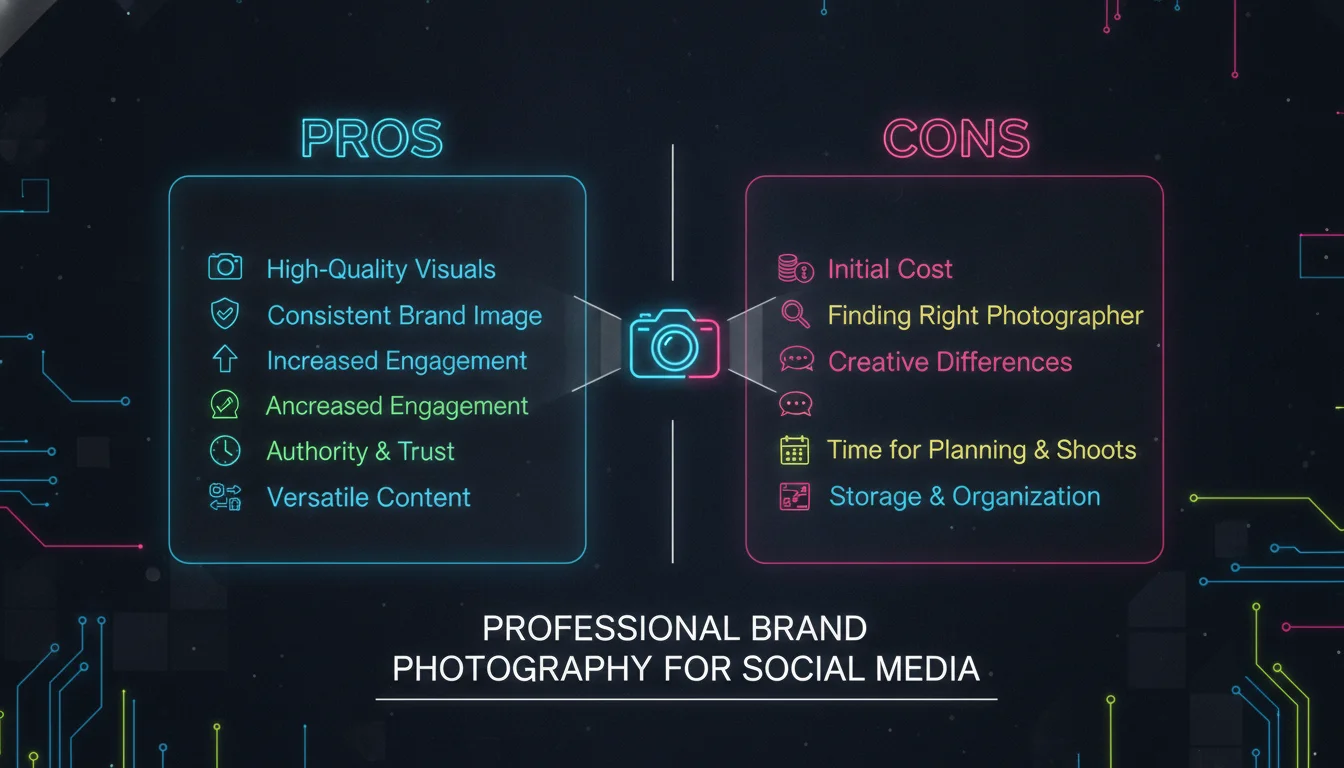
Pros
- Consistent visual identity across your website, social media, and marketing materials – no more patchwork aesthetics.
- Faster trust-building with potential clients who encounter a polished, cohesive brand presence.
- A deep content library that keeps your social calendar full for months without scrambling for new images.
- Custom imagery tailored to your specific brand voice, audience, and upcoming launches – nothing generic, nothing recycled.
- Commercial use rights included with most professional packages, so you can use images freely across all platforms and publications.
Cons
- Upfront investment that can feel significant, especially for early-stage businesses working with lean budgets.
- Time commitment required for pre-shoot planning, questionnaires, location scouting, and post-shoot editing reviews.
- Images age as your brand evolves, meaning you’ll need to schedule refreshes every 12 to 18 months to stay current.
- Finding the right photographer takes research – not every skilled photographer understands brand strategy and social media content needs.
The Role of Brand Photography in Social Media Strategy
this kind of social media is the visual engine behind every high-performing content strategy. It gives you the raw material to show up consistently, tell a coherent story, and connect with your audience across every platform where they spend time.
Visual Storytelling That Actually Connects
Social media is a storytelling medium. Captions matter, but images land first. When your brand photography tells a clear, emotionally resonant story – your workspace, your process, your people, your product in action – audiences feel something before they read a word. That emotional response is what drives follows, saves, and shares.
Behind-the-scenes images, in particular, do heavy lifting. They show what makes your brand different from every competitor offering a similar product or service. No one else has your story, your values, or your specific way of working. Great the photography for social media makes that visible.
Building a Cohesive Visual Identity
Consistency is the thing most brands get wrong. They pull images from different shoots, different photographers, different lighting conditions – and the result looks duct-taped together. A cohesive brand photography library, shot in a single visual language, fixes this immediately.
Your color palette, editing style, and compositional choices should travel from your Instagram grid to your LinkedIn header to your email newsletter without any visual whiplash. That consistency is what makes a brand feel established and trustworthy, even if the business is relatively new.
Maximizing Reach and Engagement
Social platforms are built to reward content that earns attention. Professional media gives you images that stop the scroll, invite interaction, and get shared. Each share extends your reach to an audience you haven’t paid to access. Each save signals to the algorithm that your content is worth showing to more people.
“Your online persona, the content you publish, the voice of your blog, and the style of your photos tell your brand’s story. The number one thing you should invest in when creating a website or Instagram account should be the photos.” – LocalLens, Personal Branding Photography Guide
Step 1: Define Your Goals Before the Shoot
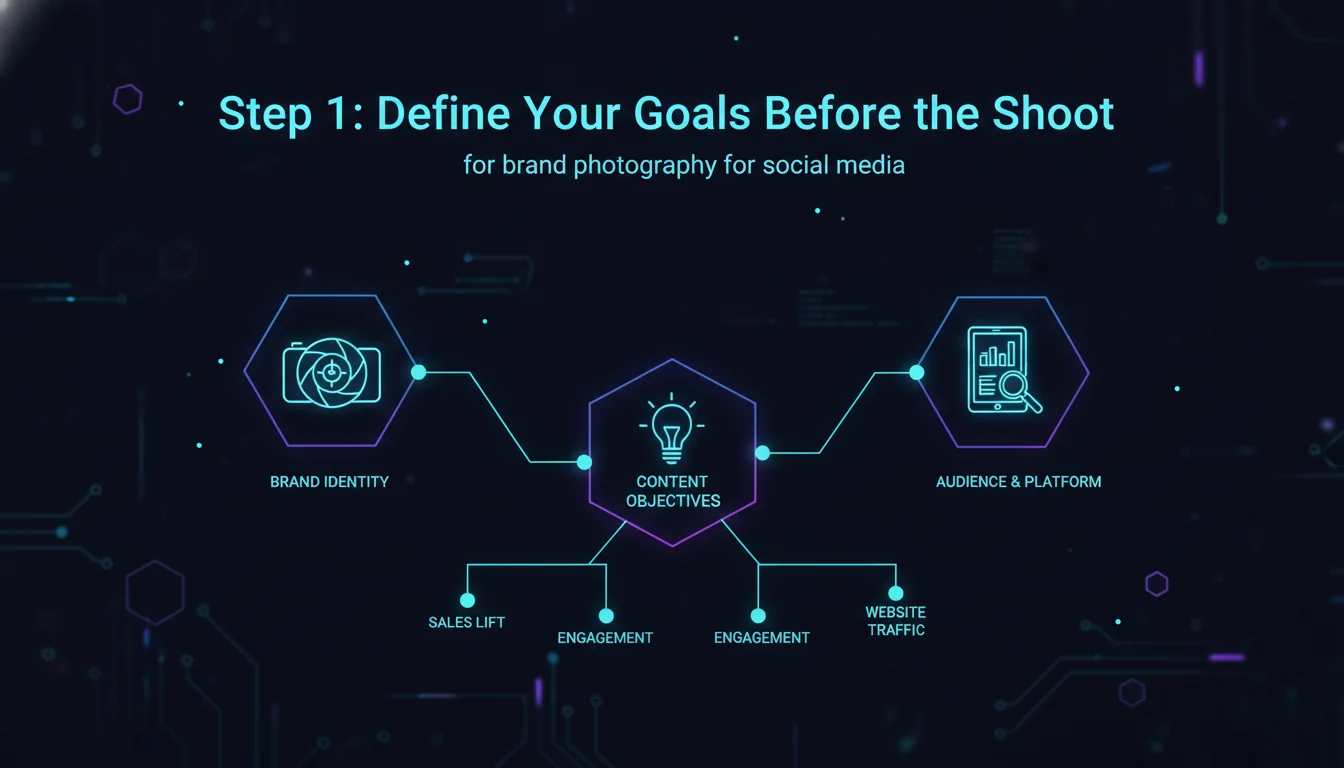
Defining your goals is the first and most important step in planning brand photography, because every creative decision flows from what you’re trying to achieve. A shoot without clear objectives produces beautiful images that don’t actually serve your business.
Ask yourself:
- Who is your target audience? What visual language speaks to them? What do they respond to on the platforms they use?
- What story do you want to tell? Are you launching a new product, repositioning your brand, or building general awareness?
- Which platforms will host these images? Instagram, LinkedIn, and Pinterest each have different format requirements and audience expectations.
- What’s coming up in your content calendar? If you have a launch, a campaign, or a seasonal promotion planned, your shoot should produce images that support it directly.
Step 2: Choose the Right Photographer
Choosing the right photographer means finding someone who understands brand strategy, not just camera settings. Technical skill is the baseline. What separates a great brand photographer is their ability to translate your business identity into images that work across platforms.
Look for a photographer who:
- Has a portfolio that reflects your brand’s aesthetic and target audience.
- Asks questions about your business, your upcoming launches, and your content needs – not just your preferred locations.
- Offers a collaborative planning process, including a pre-shoot questionnaire and a strategy meeting.
- Provides a commercial use license so you can deploy images freely across your website, social media, and paid advertising.
Many top brand photographers send an in-depth questionnaire before the shoot. They use your answers to map out the session from beginning to end, planning the flow of images to match your brand story and upcoming marketing needs. That level of preparation is what separates a strategic shoot from a generic portrait session.
Step 3: Prepare for the Shoot
Preparation is what turns a good shoot into a great one. The more clearly you’ve defined what you need before you arrive on set, the more efficiently you’ll use your time and the stronger your final image library will be.
- Build a Shot List: Outline every image you need, organized by story or use case. Include hero shots, supporting images, and platform-specific formats (vertical for Stories, square for grid posts, horizontal for website banners).
- Scout and Select Locations: Choose settings that reflect your brand’s personality. A clean, minimal studio reads differently than a warm coffee shop or an outdoor urban environment. Match the location to the feeling you want your audience to have.
- Plan Wardrobe and Props: Solid colors photograph cleanly and keep the focus on you and your brand. Bring props that are genuinely part of your work – your tools, your products, your workspace items. Avoid anything that feels staged or generic.
- Arrange Natural Light: Wherever possible, prioritize natural light. Shoot near large windows or outdoors. If you’re working indoors, turn off artificial light sources that clash with natural light – mixed color temperatures create muddy, unflattering shadows.
Step 4: Execute the Session
Executing the session well means staying communicative, staying flexible, and trusting the process you planned. The shoot itself is where preparation pays off.
Create the Right Environment
Your shooting environment shapes everything. A well-lit, uncluttered space keeps the visual focus exactly where it belongs. Clear backgrounds, intentional props, and a location that matches your brand’s mood all contribute to images that feel cohesive rather than accidental.
Collaborate Openly with Your Photographer
The best social media comes from genuine creative collaboration. Share your ideas, your references, and your concerns. Be open to your photographer’s suggestions – they’re seeing the frame in real time and often spot opportunities you’d miss. Unexpected angles and candid moments frequently produce the strongest images in the final gallery.
Capture Variety
A single type of shot will exhaust itself quickly on a content calendar. Aim for a mix that gives you options:
- Close-ups: Product details, textures, expressions. These work beautifully for Stories and carousel posts.
- Wide shots: Environmental context that shows the full picture of where and how you work.
- Candid moments: Authentic interactions and genuine expressions. These tend to outperform polished posed shots in engagement.
- Negative space images: Clean shots with room for text overlay – essential for promotional graphics and ad creative.
Step 5: Edit, Distribute, and Measure
Post-shoot work is where brand photography for social media becomes a strategic asset rather than just a pretty folder of images. This phase determines how much value you actually extract from the investment.
Edit for Brand Consistency
Work with your photographer to select and edit the final images. Every photo in your library should feel like it belongs to the same visual family – consistent color grading, exposure, and style. This cohesion is what makes your social grid look intentional rather than assembled.
Build a Content Distribution Plan
A library of great images without a distribution plan is just a hard drive full of potential. Map your images to your content calendar before you post a single one.
- Content Calendar: Schedule posts in advance so you’re never scrambling for content. A single brand shoot can fuel weeks or months of planned posts.
- Platform Formatting: Resize and crop images for each platform’s specifications. What works on Instagram may need adjustment for LinkedIn or Pinterest.
- Caption and Hashtag Strategy: Pair your visuals with copy and hashtags that extend their reach. The image earns the stop; the caption earns the engagement.
Track What’s Working
Measure the performance of your brand photography for social media the same way you’d measure any marketing investment. Track engagement rates, saves, shares, profile visits, and conversions. Over time, patterns emerge: certain image types, color palettes, or subjects consistently outperform others. Let that data guide your next shoot.
Brand Photography for Social Media: Platform-Specific Considerations
Brand photography for social media doesn’t look identical across every platform. Each channel has its own format requirements, audience expectations, and content culture.
| Platform | Best Image Style | Key Format Notes |
|---|---|---|
| Lifestyle, product, behind-the-scenes | Square (1:1) or portrait (4:5) for feed; vertical (9:16) for Stories and Reels covers | |
| Professional portraits, team shots, workspace | Horizontal (1.91:1) for articles; square for posts | |
| Styled product, lifestyle, how-to visuals | Vertical (2:3 or 9:16) performs best for saves and reach | |
| Community-focused, event, behind-the-scenes | Horizontal (1.91:1) for link posts; square for standalone images | |
| TikTok / Reels | Candid, authentic, motion-friendly stills | Vertical (9:16) only; high contrast and bold composition read best at small sizes |
Frequently Asked Questions
Can you provide some examples of brand photography?
Brand photography examples include styled product shots on clean backgrounds, lifestyle images showing your product in real-world use, behind-the-scenes photos of your workspace or process, team portraits, and candid moments that reveal your brand’s personality. Each type serves a different role in your content strategy and works best on different platforms.
How much does a brand shoot cost?
The cost of brand photography for social media varies based on the photographer’s experience, your location, the number of looks or locations involved, and what’s included in the package. Entry-level packages from newer photographers tend to be more accessible, while experienced brand photographers who include planning meetings, commercial licenses, and post-shoot consultations command higher rates. Treat it as a marketing investment, not a one-time expense.
What is the 20 60 20 rule in photography?
The 20 60 20 rule is a content mix guideline suggesting that roughly 20% of your social posts should be promotional, 60% should be engaging or educational content, and 20% should be personal or behind-the-scenes material that builds human connection. Applying this framework to your brand photography shoot helps you plan a balanced image library from the start.
How do I reach out to brands for photography?
Build a focused portfolio that demonstrates your understanding of brand storytelling, not just technical photography skills. Tailor your outreach to each brand’s specific visual identity and upcoming marketing needs. Networking through industry events, social media, and referrals from existing clients tends to open more doors than cold outreach alone.
What should I wear for my brand photoshoot?
Choose outfits that reflect your brand’s personality and speak to your target audience. Solid colors photograph cleanly and keep the visual focus on you rather than your clothing. Bring multiple options so your photographer can help you select what works best in the chosen locations and lighting conditions.
How can I use my brand photos to promote my business?
Deploy your brand photography for social media posts, website pages, email campaigns, sales pages, online ads, and promotional materials. A well-planned shoot produces a versatile library that fuels every channel simultaneously, creating a consistent visual identity that your audience recognizes wherever they encounter your brand.
Enjoyed this article?
Contact Emin Media for a free brand consultation and let's create something amazing together.
Get in Touch