Social Media Branding Strategy: 2026 Guide
A social media branding strategy is a deliberate plan to express your brand’s identity, values, and personality on social platforms, building recognition and emotional connection with your audience over time. It moves beyond random posting to create a cohesive digital persona that differentiates your business and drives loyalty.
Key Takeaways
- Social media branding strategy is the intentional plan to shape brand perception and build meaningful relationships across social platforms.
- Consistency in visual identity, voice, and messaging across all channels is non-negotiable for recognition and trust.
- A step-by-step process, from defining goals to measuring success, turns scattered posts into a cohesive brand presence.
- Platform-specific adaptation amplifies brand impact while maintaining a unified core identity.
- As of 2026, hyper-personalization and micro-communities demand a shift from broad broadcasting to deep engagement.
What Is Social Media Branding Strategy?
A social media branding strategy is the structured approach businesses use to craft a unique, consistent, and recognizable presence across social platforms. Unlike general social media activity, it focuses on long-term brand building: shaping how audiences perceive your identity, what you stand for, and why you matter. It combines visual identity, voice, storytelling, and engagement to create a cohesive narrative that turns followers into a community and customers into advocates.
Definition and Core Principles
At its simplest, social media branding is the strategic process of expressing and amplifying your brand identity, values, personality, and positioning across social platforms. Adobe defines it as “a digital marketing strategy where a business or individual crafts a unique persona to differentiate themselves from the competition.” This persona must be authentic and rooted in real brand values, not a hollow imitation of competitors. The goal is to build recognition, trust, and emotional connection.
According to Sprout Social research cited by Helms Workshop, 90% of consumers report buying from brands they follow on social media. That single figure reframes social branding from a “nice to have” into a direct revenue driver. The most effective approach rests on three pillars: clarity about who you are, consistency in how you show up, and commitment to genuine two-way conversation. Every post, reply, and visual element should reinforce the same brand story, whether you’re a solopreneur or a global enterprise.
Why It’s Non-Negotiable for Modern Brands
With the average person spending nearly 2.5 hours daily on social media, your brand’s presence can’t be an afterthought. A defined strategy transforms fragmented efforts into a professional image that communicates reliability. It also streamlines content creation: when guidelines for voice and visuals exist, teams make faster, aligned decisions.
There’s a gap worth noting. Helms Workshop, citing Sprout Social data, reports that while 89% of marketers use social media for brand awareness, only 55% use it to build meaningful communities. That gap is exactly where brands can win. Social SEO, where platform search algorithms reward keyword-optimized captions, is now essential for visibility. Without a strategy, you risk blending into the noise or, worse, confusing your audience.
“Social media presence means you exist on platforms; social branding means you’ve thoughtfully shaped how your brand lives, expresses itself, and builds relationships.” – Helms Workshop
Social Media Branding vs. Social Media Marketing
Branding and marketing serve different ends, though they work best together. Social media marketing often prioritizes short-term metrics like clicks, sales, or campaign performance. A social media branding strategy takes a longer view: it’s about building a lasting asset. Marketing pushes products; branding pulls people into a relationship. As the American Marketing Association describes it, a social media strategy is “the blueprint for turning online activity into real business impact.” In practice, consistent branding amplifies marketing efforts, and tactical marketing drives visibility for your brand identity.
Key Elements of a Successful Social Media Branding Strategy
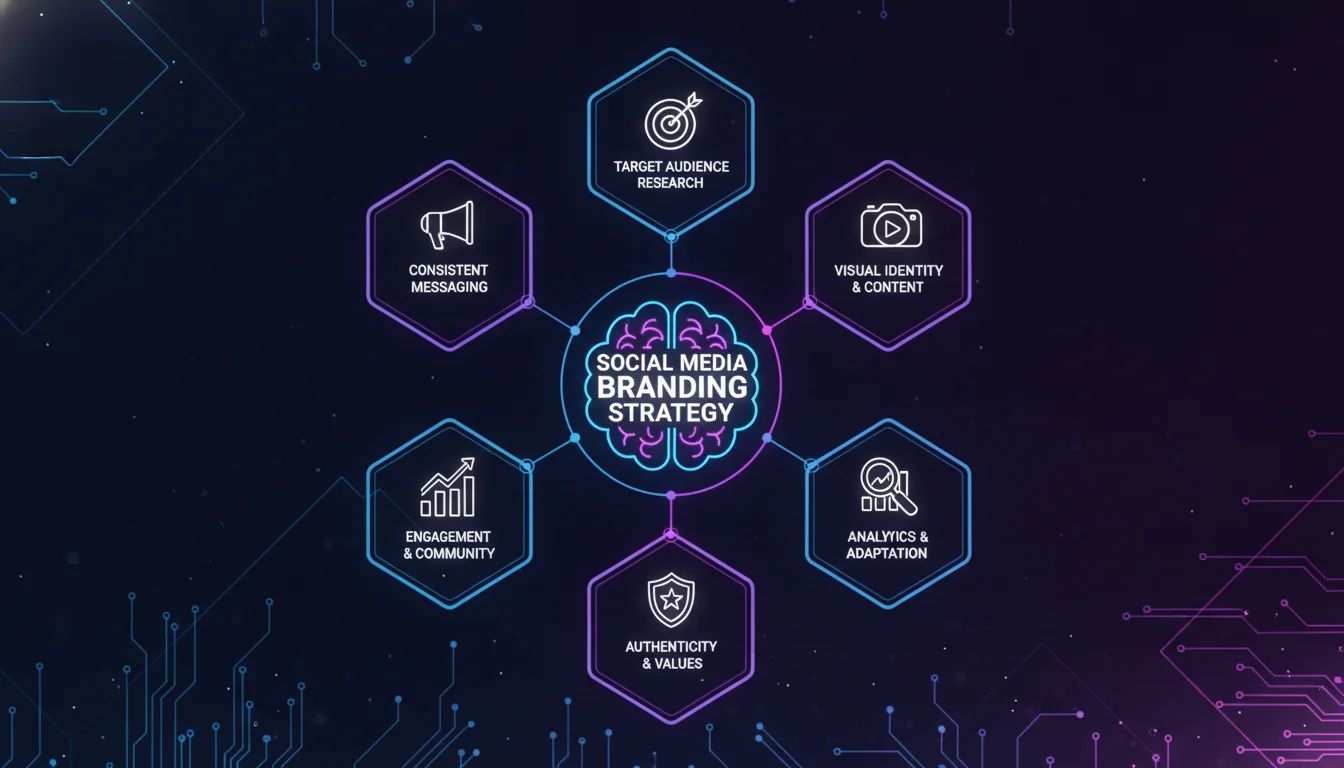
Building a powerful brand presence on social requires focusing on several interconnected elements. Each one contributes to a recognizable, trustworthy, and engaging brand that audiences actually want to follow.
Brand Identity and Voice
Your brand identity is the emotional core that sparks recognition. It starts with a clear mission statement and core values. Patagonia’s commitment to environmental activism, for instance, flows through every post and Reel across every platform. Establishing a distinct brand voice, whether formal or playful, authoritative or friendly, ensures all communication feels like it comes from the same entity. That voice must adapt slightly to platform norms (LinkedIn’s professional register versus TikTok’s casual creativity) without losing its essence.
Visual Consistency Across Platforms
Visuals are often the first signal of your brand in a crowded feed. Rigorous consistency in color palettes, typography, photography style, and logo usage makes your content instantly recognizable. Glossier built a beauty empire partly through its iconic millennial-pink aesthetic that became visually synonymous with the brand. Airbnb’s warm, human-centered photography reinforces its “belong anywhere” positioning across every channel. A strong visual style guide ensures any team member or agency can create on-brand content without a briefing call.
Deep Audience Understanding
No strategy works without knowing who you’re speaking to. Creating detailed buyer personas, covering age, profession, interests, and pain points, helps you prioritize platforms and content types. Professionals gravitate toward LinkedIn, while Gen Z creators flock to TikTok. Surveying existing customers provides real-world data, and social listening tools reveal unfiltered preferences. This understanding shapes everything from posting times to content formats to the specific language you use in captions.
How to Build a Social Media Branding Strategy Step by Step
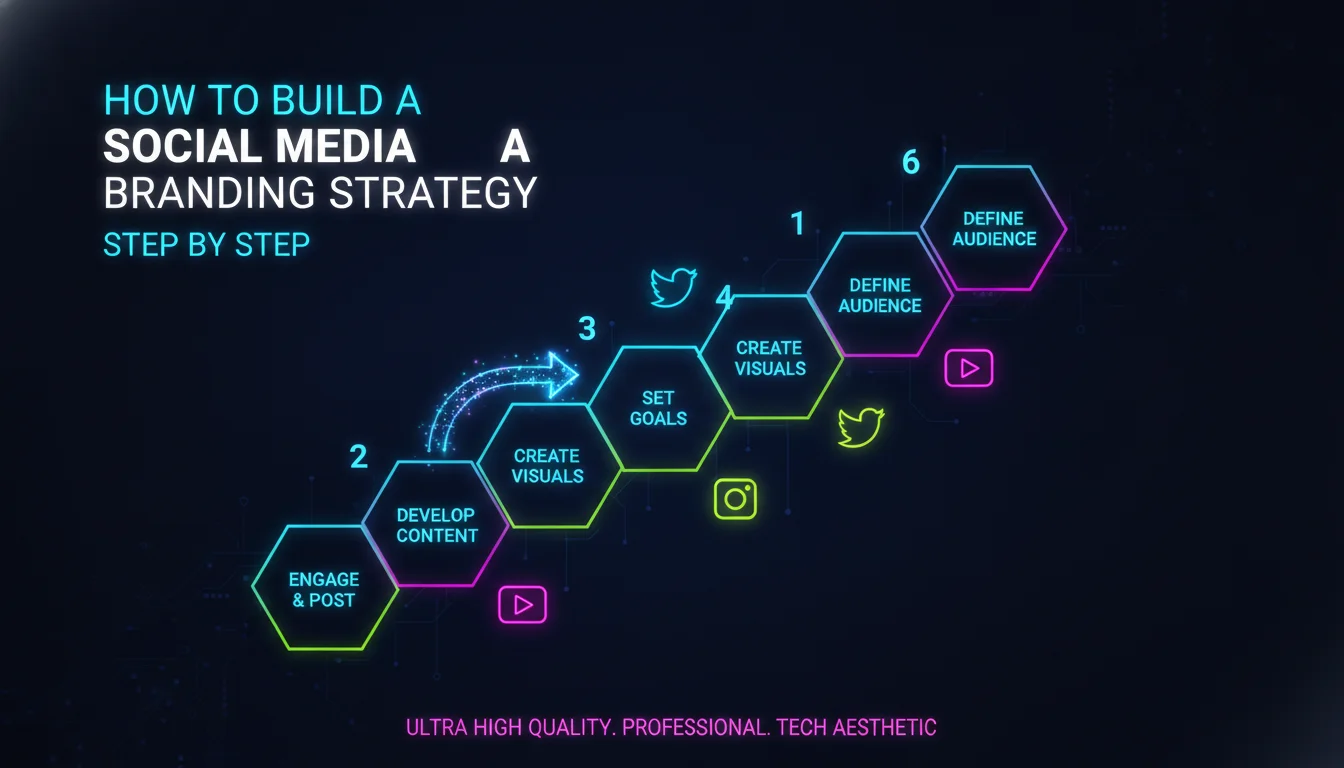
Crafting a strategy from scratch can feel overwhelming, but a structured process turns vision into action. The following six steps mirror the planning approach recommended by the American Marketing Association and validated by successful brands across industries.
Step 1: Set SMART Goals
Begin with clarity on what you want to achieve. Specific, Measurable, Attainable, Relevant, and Time-bound (SMART) goals give your efforts direction. Instead of “grow our audience,” aim for “increase Instagram brand mentions by 25% in Q3.” Goals might span awareness (follower growth, reach), engagement (comments, shares), or conversion (website clicks, lead sign-ups). Well-defined objectives also make measuring ROI straightforward: you’ll know exactly which metrics signal success before you publish a single post.
Step 2: Know Your Audience Deeply
Next, move beyond assumptions. Research where your audience spends time digitally and what content they engage with. Are they decision-makers reading LinkedIn long-form posts, or are they discovering new brands through TikTok trends? Build detailed personas that include demographics, behaviors, and motivations. Native platform analytics and third-party surveys provide hard data; social listening captures sentiment and unmet needs. The better you understand your audience, the more resonant your branding becomes.
Step 3: Choose the Right Platforms
Not every platform suits every brand. A smart social media branding strategy isn’t about being everywhere: it’s about being where your audience expects you. As UCSB’s social media best practices advise, “pick the most appropriate platform and do it well.” Consider the table below for guidance, audit competitor presence, and assess your own resources honestly before committing.
| Platform | Best For | Content Type | Branding Tip |
|---|---|---|---|
| Visual storytelling, lifestyle | Photos, Reels, Stories | Use consistent filters and a cohesive grid aesthetic | |
| B2B, thought leadership | Articles, case studies, professional updates | Share employee advocacy content to humanize the brand | |
| TikTok | Gen Z, viral trends | Short videos, challenges, duets | Embrace humor and authentic, unpolished video |
| X (Twitter) | Real-time news, conversation | Short text, threads, polls | Develop a distinct, conversational voice for timely engagement |
| YouTube | In-depth video, tutorials | Long-form, Shorts | Consistent thumbnail style and intro/outro branding |
| Inspiration, e-commerce | Vertical images, idea pins | Create SEO-friendly boards with keyword-rich descriptions |
Step 4: Develop a Cohesive Content Plan
With platforms chosen, outline what you’ll post. Content pillars, typically 3 to 5 themes reflecting your brand values and audience interests, keep output varied yet on-message. An outdoor brand might use pillars like adventure stories, sustainability tips, and product spotlights. A content calendar, as UCSB recommends, “visualizes your strategy by tracking all posts for the week, month, or year.” This prevents last-minute scrambles and ensures a balanced mix of educational, entertaining, and promotional content.
Step 5: Execute and Engage Authentically
Strategy lives in the execution. Schedule posts using tools like Creator Studio or Sprinklr to maintain consistency, but leave room for real-time interaction. Respond to comments, join conversations, and show the humans behind the brand. Patagonia’s advocacy only works because it’s embedded in a genuine mission, not a marketing brief. Employee advocacy, encouraging team members to share brand stories on their personal profiles, adds credibility and reach. Social media is a two-way street; brands that only broadcast quickly lose relevance.
Step 6: Measure, Analyze, and Optimize
No strategy is complete without measurement. Track key metrics aligned to your goals: awareness (reach, impressions, brand mentions), engagement (likes, comments, shares, saves), and conversion (click-throughs, lead forms, sales). Native insights from each platform provide the basics, while advanced listening tools uncover sentiment and competitive benchmarks. Review what worked and what didn’t on a regular cadence, then adjust accordingly. Flexibility is a competitive advantage in a space that changes fast.
Platform-Specific Strategies for Maximum Impact

While your core brand identity stays constant, platform-specific adaptations make your presence shine. Each network has distinct norms and audience expectations, and successful brands tailor their expression without diluting their essence.
Instagram: Visual Storytelling at Scale
Instagram rewards aspirational yet authentic visual content. Use consistent filters, a cohesive color palette, and a grid layout that tells a story at a glance. Nike’s Instagram combines inspirational athlete stories with sleek product visuals, all tied together by empowering messaging. Reels and Stories allow behind-the-scenes glimpses that humanize the brand. Focus on high-quality imagery, user-generated content, and a clear bio with a branded hashtag to anchor your identity.
LinkedIn: Thought Leadership and B2B Credibility
LinkedIn isn’t just for job hunting. It’s a rich environment for professional branding. Share industry insights, detailed case studies, and employee perspectives. Slack’s LinkedIn presence, for example, provides practical productivity advice alongside company culture highlights. A strong LinkedIn strategy positions your brand as a trusted authority. Post long-form articles, engage in group discussions, and use the platform’s native article feature to expand on ideas your audience already cares about.
TikTok: Embracing Creativity and Culture
TikTok’s algorithm favors creativity and cultural relevance over follower count. Brands that win here understand its trend-driven, unpolished aesthetic. Duolingo’s unhinged owl character is a masterclass in TikTok branding: unexpected, humorous, and perfectly aligned with the brand’s playful identity. Prioritize video-first thinking, rapid trend participation, and authentic interaction with the community through duets and stitches.
X (Twitter): Timeliness and Conversational Voice
X demands a distinctive, quick-witted voice. It’s the place for real-time commentary, customer service, and industry conversations. Wendy’s famously sassy replies built a brand personality that sparked widespread engagement and press coverage. Define your tone, whether helpful, humorous, or provocative, and engage consistently with trending topics and mentions. As part of a broader brand strategy, X can amplify your personality in ways other platforms simply can’t match.
Content Strategy That Drives Engagement
Content is the vehicle for your branding. Without a deliberate plan for what you publish, even the best identity falls flat. The key is balancing value, entertainment, and promotion while staying true to your brand voice.
Pillars, Formats, and Storytelling
Develop content pillars that reinforce your brand’s key messages. GoPro’s pillar of user-generated adventure content consistently showcases the camera’s capabilities while celebrating its community. Mix formats, including images, videos, carousels, and live streams, to cater to different audience preferences and platform algorithms. Most importantly, tell stories. Whether it’s a customer success story or a founder’s journey, narratives create emotional bonds that product specs never will.
Leveraging User-Generated and Employee Content
User-generated content (UGC) is one of the most powerful branding tools available. When customers share their experiences with your product, it builds trust and social proof that no ad budget can replicate. Repost, credit, and celebrate that content. Similarly, employee advocacy extends reach and adds a human face to your brand. Adobe identifies employee advocacy as a key 2026 trend, noting that team members sharing brand stories adds authenticity that corporate accounts struggle to manufacture on their own.
Short-Form Video Dominance
As of 2026, short-form vertical video remains the dominant content format on nearly every platform. Reels, TikTok, and YouTube Shorts drive enormous organic reach. This means prioritizing video-first creation. It doesn’t have to be high-production: raw, authentic clips often outperform polished ones. Use videos to demonstrate products, share quick tips, or participate in challenges while weaving in your brand’s visual and verbal identity throughout.
Pros and Cons of a Social Media Branding Strategy
A social media branding strategy delivers real competitive advantages, but it also comes with genuine challenges. Understanding both sides helps you plan resources and set realistic expectations.
Pros
- Builds lasting brand equity: Consistent presence across platforms compounds over time, creating recognition that paid ads alone can’t buy.
- Drives community and loyalty: Brands that engage authentically convert passive followers into advocates who recommend you without being asked.
- Improves content efficiency: Clear brand guidelines mean faster decisions, fewer revisions, and a team that creates with confidence.
- Boosts discoverability: Social SEO and algorithm-friendly content formats increase organic reach without additional ad spend.
- Supports every stage of the funnel: From awareness through conversion, a strong brand presence makes every marketing tactic work harder.
Cons
- Requires sustained commitment: Brand building is a long-term effort. Results rarely appear in weeks, and inconsistency can undo months of progress quickly.
- Resource-intensive across platforms: Managing multiple channels with tailored content demands time, creative capacity, and often a dedicated team or agency partner.
- Difficult to measure short-term ROI: Brand perception and trust are real assets, but they’re harder to tie to a quarterly revenue number than a direct-response campaign.
- Vulnerable to platform changes: Algorithm shifts, policy updates, or platform decline (remember Vine?) can disrupt a strategy built on a single channel.
Measuring Success: Metrics That Matter
A social media branding strategy without measurement is guesswork. Tracking the right metrics helps you understand what’s working, where to invest, and how to refine your approach over time.
Awareness, Engagement, and Conversion Metrics
- Awareness metrics: Reach, impressions, follower growth, and brand mentions indicate how many people are seeing your brand. Tools like Sprinklr can track share of voice across the industry.
- Engagement metrics: Likes, comments, shares, saves, and click-throughs show how your content resonates. High engagement signals a strategy that genuinely connects with its audience.
- Conversion metrics: Website visits, lead form completions, and revenue attributable to social campaigns measure bottom-line impact. Use UTM parameters and platform pixels to track the customer journey accurately.
Regular reporting, monthly or quarterly, keeps your team aligned and surfaces insights that can shift your strategic direction before small problems become expensive ones.
Tools and Reporting Cadence
Native platform analytics (Meta Business Suite, LinkedIn Analytics, TikTok Insights) provide basic data at no cost. For a more complete view, centralized tools like Sprinklr or HubSpot aggregate cross-platform metrics into a single dashboard. UCSB recommends testing posting times and checking platform insights to observe the effect of each change. Choose a reporting cadence that allows you to act on insights without overreacting to daily fluctuations. The best strategy is one that learns and evolves continuously.
Social Media Branding Trends for 2026
Staying ahead means understanding the forces reshaping how brands show up online. A future-proof approach incorporates these trends that Adobe and leading creative industry observers identify as defining 2026.
Hyper-Personalization Through AI
Audiences increasingly expect content tailored to their specific interests. AI-driven tools enable brands to deliver niche content to specific community segments without manual effort at scale. This goes a step beyond broad demographic targeting: think personalized Reels recommendations or behavior-triggered content sequences. For your strategy, this means using data to create more relevant, human-feeling interactions at scale rather than broadcasting the same message to everyone.
Social SEO and Discoverability
Social platforms are becoming search engines in their own right. Users search Instagram and TikTok for product recommendations, how-tos, and local businesses. Adobe highlights Social SEO as a key 2026 trend: optimizing captions with keywords so your content appears in platform searches. Including relevant hashtags and writing descriptive alt text are simple but effective tactics. Treat your social profiles as searchable databases, not just publishing channels.
Micro-Communities Over Mass Followers
Big follower counts are losing ground to engaged, niche communities. Brands are creating broadcast channels on Instagram, private groups on LinkedIn, and dedicated community spaces to foster deeper connections. This shift means focusing on cultivating loyalty in a smaller group rather than chasing vanity metrics. Micro-communities turn passive followers into active participants and genuine brand evangelists who do your marketing for you.
Common Mistakes to Avoid in Social Media Branding
Even with the best intentions, a strategy can go off course. Avoid these pitfalls to keep your brand presence strong and your audience growing.
Inconsistency Across Touchpoints
One of the fastest ways to erode trust is inconsistency. If your Instagram voice is playful but your X presence is corporate, audiences get confused and disengage. A common mistake is posting without a visual style guide or tone-of-voice document. Small deviations add up over time. Ensure everyone who touches your social media, from internal teams to agency partners, has access to clear brand guidelines before they publish anything.
Over-Promotion and Under-Engagement
Brands that treat social media as a broadcast channel for sales pitches quickly lose followers. The 80/20 rule helps: 80% valuable, entertaining, or educational content, 20% promotional. Your strategy must prioritize two-way dialogue. If a follower takes time to comment, acknowledge it. Neglecting to engage signals you’re not interested in the community you’re trying to build, which is the fastest way to make that community stop showing up.
Ignoring Data and Feedback
Posting without reviewing performance is flying blind. Perhaps your best-performing content is video, but you’re still defaulting to static images. Maybe your audience is most active at 8 p.m., but you schedule posts for noon. A static strategy fails. Use data to inform decisions, but also listen to qualitative feedback: comments and DMs often reveal unmet needs that no analytics dashboard will surface on its own.
“A successful social media plan need not require a presence on all platforms. Pick the most appropriate platform and do it well.” – UC Santa Barbara Brand Guidelines
Frequently Asked Questions
What is the 5 5 5 rule for social media?
The 5 5 5 rule is a simple engagement guideline: every day, like five posts, comment on five posts, and share five pieces of content. This keeps your brand active and fosters reciprocal engagement, which can boost visibility in platform algorithms over time.
What are the 5 C’s of branding?
The 5 C’s are clarity (know your brand), consistency (maintain a unified image), constancy (stay visible), content (provide value), and community (build relationships). These principles form a solid foundation for a social media branding strategy that resonates with audiences and holds up over time.
What is the 5-3-2 rule on Instagram?
The 5-3-2 rule suggests that for every 10 posts, five should be curated content from others that adds value, three should be original educational or entertaining content, and two should be personal, light-hearted posts that humanize your brand. It balances curation, expertise, and personality in a way that keeps feeds interesting.
What is the 3-7-27 rule of branding?
The 3-7-27 rule posits that a customer needs roughly three exposures to your core message to recognize your brand, seven to remember it, and 27 to trust and act on it. In social media, this means consistent, repeated branding across touchpoints is essential for driving conversion rather than just awareness.
How long does it take to see results from a social media branding strategy?
Brand building is a long-term effort. While some metrics like engagement can improve within weeks, meaningful shifts in brand perception and loyalty typically require six to twelve months of consistent effort. Patience and persistence, backed by regular measurement, are what separate brands that break through from those that plateau.
Can small businesses benefit from a social media branding strategy?
Absolutely. A clear strategy helps small businesses compete by creating a professional, memorable presence even on a limited budget. Authenticity and consistency often matter more than big budgets, and small businesses can use community engagement and storytelling to punch well above their weight class.
Ready to build something that actually stands out? Contact Emin Media for a free brand consultation and let’s create a social media branding strategy that reflects who you really are.
Enjoyed this article?
Contact Emin Media for a free brand consultation and let's create something amazing together.
Get in TouchRelated Articles
Digital Storytelling for Brands: The Complete Guide
Digital storytelling for brands builds real audience connections through narrative. Learn proven techniques, formats, and…

Design Thinking for Marketing: A 2026 Guide
Design thinking for marketing builds campaigns around real user needs. Learn the 5 phases, common…

Creative Direction for Video Shoots: A Complete Guide
Master creative direction for video shoots with proven steps, tools, and strategies that build brand…