Digital Storytelling for Brands: The Complete Guide
Digital storytelling for brands is the practice of using narrative techniques across digital channels to communicate a brand’s values, experiences, and purpose in ways that create genuine emotional connection with audiences.
Key Takeaways
- for brands is now a non-negotiable skill for marketing, PR, and content professionals in 2026.
- Effective brand narratives combine emotional resonance with a clear audience focus and consistent cross-platform delivery.
- Co-creative and participatory storytelling methods build deeper community loyalty than one-way broadcast content.
- Reputation management, misinformation response, and collective narrative are critical storytelling challenges brands face today.
- AI, virtual reality, and interactive formats are reshaping how brands tell stories and how audiences experience them.
- Measuring storytelling success requires tracking engagement, shares, sentiment, and conversion signals together.
What is Digital Storytelling?
Digital storytelling is the use of narrative techniques across digital channels to communicate an idea, experience, message, or brand. It goes well beyond traditional storytelling by integrating formats like video, social media, podcasts, scrollytelling, and interactive content into a single, coherent brand voice.
Key Elements of Digital Storytelling
- Narrative Arc: A compelling story follows a structure with a beginning, middle, and end, creating a journey the audience wants to complete.
- Emotional Connection: Effective storytelling evokes genuine emotion, making the audience feel personally invested in the outcome.
- Audience-Centric Design: Understanding your target audience is the foundation of any story that actually resonates.
- Point of View: A clear, consistent perspective gives the narrative authority and makes the brand voice recognizable.
- Dramatic Question: Every strong story poses a question the audience wants answered, keeping them engaged until the resolution.
Formats of Digital Storytelling
- Video Content: Customer testimonials, origin stories, and behind-the-scenes footage create visual narratives that build trust quickly.
- Social Media Campaigns: Platforms like Instagram and TikTok allow brands to share short, high-impact stories that spread organically.
- Podcasts: Audio storytelling offers a personal, intimate channel for brands to explore their narratives in depth.
- Scrollytelling: Long-form web content that reveals narrative elements as the reader scrolls creates an immersive reading experience.
- Interactive Experiences: Quizzes, choose-your-own-path content, and interactive microsites put the audience inside the story.
The Importance of Digital Storytelling for Brands
Digital storytelling for brands is not just a creative exercise. It’s a strategic discipline that shapes perception, builds loyalty, and drives measurable business outcomes across every digital channel.
Building Authentic Connections
Authenticity is the currency of modern brand communication. Brands that share genuine stories about their values and mission build trust that advertising alone cannot manufacture. According to Bridget Tombleson and Katharina Wolf, authors of Digital Storytelling for Brands (SAGE Publications, 2023), the guiding principle of effective brand narrative is: “the more digital we become, the more we crave to feel human.” That tension between digital scale and human warmth is exactly where great storytelling lives.
“The more digital we become, the more we crave to feel human.” – Bridget Tombleson and Katharina Wolf, Digital Storytelling for Brands, SAGE Publications, 2023
Enhancing Brand Awareness
Memorable narratives create lasting impressions that paid media alone rarely achieves. Campaigns by Coca-Cola and Red Bull have demonstrated how consistent storytelling builds brand identities strong enough to define entire product categories. The story becomes the brand, not just a vehicle for it.
Managing Reputation
Misinformation spreads fast in digital environments. Tombleson and Wolf dedicate an entire chapter of their book to outrage, misinformation, and disinformation in the digital world, recognizing that proactive storytelling is one of the most effective tools brands have for protecting credibility. A brand with a strong, established narrative is far harder to misrepresent than one that has stayed silent.
How Digital Storytelling Actually Works: The Mechanics
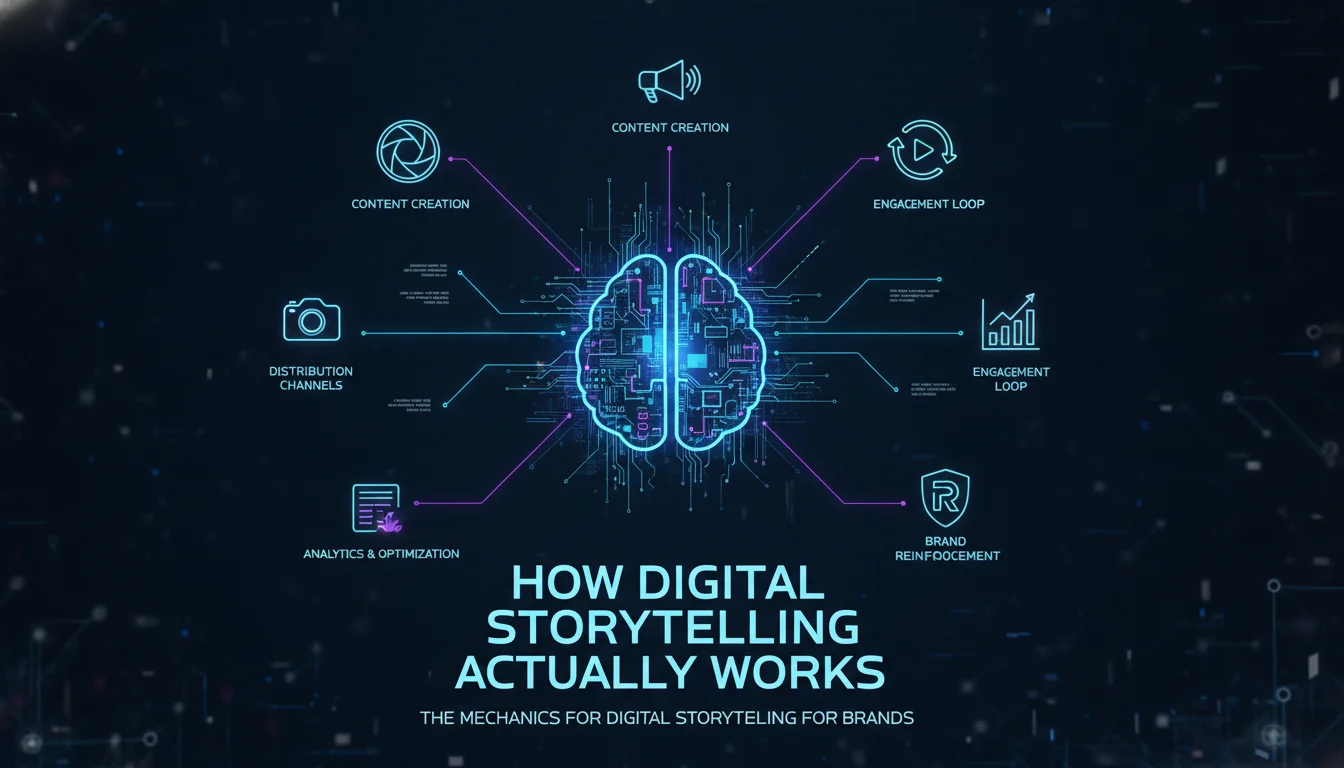
Digital storytelling for brands operates through a layered system of narrative structure, platform selection, audience psychology, and distribution strategy. Understanding each layer helps brands move from random content creation to intentional story architecture.
Layer 1: Narrative Structure
Every effective brand story borrows from narrative models that have existed across cultures for centuries. The hero’s journey, the three-act structure, and the classic conflict-resolution arc all translate powerfully into digital formats. The brand is rarely the hero. The customer is. Your brand is the guide that helps them reach their goal.
Tombleson and Wolf’s work draws on both arts and humanities-based narrative models and business theory, bringing together two disciplines that rarely share a table. That combination produces stories that are both emotionally resonant and strategically purposeful.
Layer 2: Semiotics and Visual Language
Semiotics, the study of signs and symbols, plays a central role in digital storytelling. Every color choice, font, image, and sound carries meaning beyond its literal content. Brands that understand visual semiotics communicate more efficiently because their audiences decode meaning instantly, without needing explicit explanation. A well-chosen image does in one second what three paragraphs cannot.
Layer 3: Participatory Culture and Co-Creation
Modern digital storytelling is not a monologue. Audiences expect to participate. Co-creative methods, where brands invite their communities to contribute to, remix, or extend the narrative, produce content that feels owned rather than broadcast. According to the competitor evidence drawn from Tombleson and Wolf’s framework, co-creative methods are emphasized as providing the theoretical foundation of participatory culture in brand storytelling. User-generated content, crowdsourced campaigns, and community-led narratives all fall under this model.
Layer 4: Transmedia Distribution
Transmedia storytelling means telling different parts of the same story across different platforms, each adding a unique piece to the larger narrative. A brand might introduce a character on Instagram, deepen their story in a podcast episode, and resolve their arc in a long-form video. Each platform gets content native to its format, but all pieces connect to a single, coherent brand world.
“The ability to understand narrative is now a prerequisite for many business, communication, marketing and public relations professionals, as well as content creators and journalists.” – Bridget Tombleson and Katharina Wolf, Digital Storytelling for Brands, SAGE Publications, 2023
How to Apply Digital Storytelling for Brands: A Step-by-Step Framework
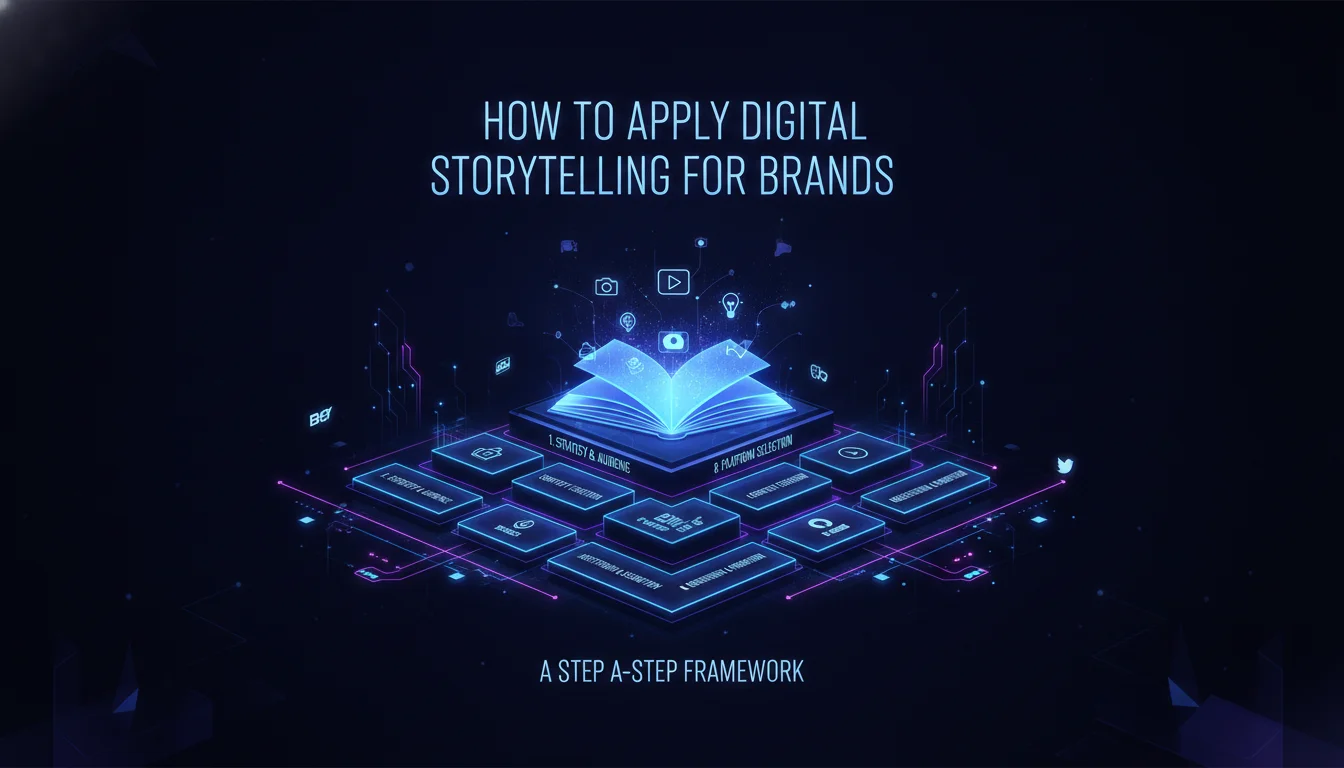
Applying digital storytelling for brands effectively requires moving through a deliberate process, not just picking a format and posting. Here are the steps we use with clients at Emin Media.
Step 1: Define Your Brand’s Core Story
Before choosing a platform or format, identify the story only your brand can tell. What problem did you exist to solve? Who did you exist to serve? What do you believe that your competitors don’t? Your origin story, your mission, and your values are the raw material. Write them down in plain language before you produce a single piece of content.
Step 2: Know Your Audience at a Human Level
Audience research goes deeper than demographics. You need to understand your audience’s fears, aspirations, daily frustrations, and the language they use to describe their own lives. Conduct interviews, read community forums, analyze comments on competitor content. The goal is to find the intersection between your brand’s story and your audience’s lived experience. That intersection is where resonance lives.
Step 3: Choose the Right Narrative Model
Select a narrative structure that fits your story and your audience. The hero’s journey works well for transformation stories. The problem-solution arc works for product-led narratives. The “day in the life” format works for community and culture-driven brands. Don’t force your story into a structure that doesn’t fit. The structure should feel invisible to the audience.
Step 4: Map Your Story Across Platforms
Decide which platforms carry which parts of your story. Short emotional hooks belong on TikTok and Instagram Reels. Deeper context and behind-the-scenes narrative belong in long-form video or podcast episodes. Data-driven insights and thought leadership belong in blog articles and LinkedIn posts. Each platform has its own storytelling grammar. Learn it and use it intentionally.
Step 5: Build in Co-Creation Opportunities
Design your storytelling strategy so your audience can participate. Ask questions. Run campaigns that invite user-generated content. Feature customer stories prominently. When your audience becomes part of the narrative, they become invested in its success. That investment translates directly into loyalty and organic reach.
Step 6: Measure, Learn, and Iterate
Track engagement metrics, sentiment, shares, and conversion signals across every platform. Look for patterns: which story formats generate the most comments? Which narratives drive the most shares? Which content leads to actual inquiries or purchases? Use that data to refine your next story cycle. Digital storytelling for brands is a practice, not a one-time campaign.
Comparing the Main Approaches to Digital Storytelling
Not every storytelling approach fits every brand or objective. Here’s how the primary formats compare across key dimensions.
| Format | Best For | Audience Engagement | Production Effort | Longevity |
|---|---|---|---|---|
| Short-form Video (Reels, TikTok) | Brand awareness, emotional hooks | Very High | Low to Medium | Short (days to weeks) |
| Long-form Video (YouTube, brand films) | Deep storytelling, product demos, origin stories | High | High | Long (months to years) |
| Podcast Series | Thought leadership, community building | Medium to High | Medium | Long (evergreen episodes) |
| Blog and Scrollytelling | SEO, detailed narratives, education | Medium | Medium | Very Long (years with updates) |
| Social Media Campaigns | Community participation, viral reach | Very High | Low to Medium | Short to Medium |
| Interactive Experiences | Immersive engagement, data collection | Very High | Very High | Medium |
| User-Generated Content Campaigns | Authenticity, co-creation, social proof | High | Low (community-driven) | Medium |
Pros and Cons of Digital Storytelling for Brands
Digital storytelling for brands offers significant advantages, but it also comes with real challenges that brands need to plan for honestly.
Pros
- Builds genuine emotional connection with audiences in ways that product-focused advertising rarely achieves.
- Creates differentiation in crowded markets where products and prices are often similar across competitors.
- Drives organic reach because compelling stories get shared, extending reach without additional media spend.
- Supports reputation management by giving brands a proactive narrative voice before crises emerge.
- Scales across platforms when built on a transmedia framework, allowing one core story to generate content across multiple channels.
- Invites co-creation, turning passive audiences into active brand advocates who contribute to and extend the narrative.
Cons
- Requires consistent investment in creative talent, production, and strategy. Storytelling done poorly damages brand perception more than silence.
- Results take time. Brand narrative builds over months and years, not days. Brands expecting immediate ROI from storytelling often abandon the strategy too early.
- Consistency is hard to maintain across multiple platforms, teams, and content formats without clear brand guidelines and editorial oversight.
- Misinformation risk is real. A brand with a visible narrative is also a target for misrepresentation. Proactive monitoring and rapid response are essential.
- Measuring impact is complex. Storytelling’s contribution to brand equity and long-term loyalty is real but harder to attribute than direct-response advertising.
Common Mistakes Brands Make in Digital Storytelling
Most brands that struggle with digital storytelling make the same predictable errors. Recognizing them early saves significant time, budget, and credibility.
Making the Brand the Hero
This is the most common mistake. Brands position themselves as the protagonist of every story, when audiences actually want to see themselves in that role. Your brand is the guide. Your customer is the hero. Shift that perspective and your stories immediately become more relatable and more shareable.
Treating Every Platform the Same
Copy-pasting the same content across Instagram, LinkedIn, TikTok, and your blog is not a storytelling strategy. Each platform has its own native format, audience expectation, and storytelling grammar. A story that works as a 60-second Reel needs to be completely reimagined as a 1,500-word article. Adapt the story to the platform, not the other way around.
Prioritizing Production Value Over Authenticity
Highly polished content often performs worse than raw, genuine storytelling. Audiences have developed a sharp instinct for content that feels manufactured. A founder speaking honestly to camera about a real challenge will outperform a glossy brand film with a generic inspirational soundtrack. Invest in quality, but never at the cost of honesty.
Ignoring the Collective Narrative
Your brand’s story does not exist in isolation. It exists within a broader cultural conversation. Brands that ignore the collective narrative, what their communities, critics, and advocates are saying about them, miss the context that makes their own stories meaningful. Listening is as important as publishing.
Abandoning the Strategy Too Early
Brand storytelling compounds over time. The brands with the strongest narrative equity today, Red Bull, Airbnb, Patagonia, built those narratives over years of consistent, deliberate storytelling. Brands that run one campaign, see modest immediate results, and pivot to the next tactic never build the narrative depth that creates lasting loyalty.
A Worked Example: How a Mid-Size Brand Might Apply This
Consider a sustainable outdoor apparel brand with a strong product but limited brand recognition. Here’s how digital storytelling for brands would work in practice for them.
They start by defining their core story: they exist to make outdoor adventure accessible without environmental compromise. Their customer is the hero: someone who loves nature and feels conflicted about the environmental cost of the gear they buy. The brand is the guide that resolves that conflict.
They map their story across platforms. On Instagram, they share short films of real customers on real adventures, with minimal production polish and maximum authenticity. On their podcast, they interview environmental scientists, trail builders, and community organizers, deepening the narrative around their mission. On their blog, they publish detailed guides to sustainable outdoor practices, earning search traffic and establishing expertise. On TikTok, they show the behind-the-scenes reality of sustainable manufacturing, including the challenges and the trade-offs.
They build in co-creation by inviting customers to share their own adventure stories using a campaign hashtag. The best stories get featured across all channels, turning customers into contributors. Within two seasons, their community is generating content that the brand could never have produced on its own budget.
They track engagement, sentiment, and the ratio of community-generated to brand-generated content as a measure of narrative health. When a misinformation claim surfaces about their supply chain, they already have a body of transparent storytelling to reference in their response. The narrative infrastructure they built protects them.
This is what digital storytelling for brands looks like when it’s working. Not a single viral moment, but a compounding body of narrative that builds trust, community, and resilience over time.
Case Studies of Successful Digital Storytelling
Examining real campaigns reveals the patterns that separate effective digital storytelling from content that simply fills a calendar.
Coca-Cola: Share a Coke Campaign
Coca-Cola’s “Share a Coke” campaign replaced its logo with popular names on bottles, transforming a mass-market product into a personal artifact. The storytelling insight was simple and powerful: people share things that feel personal. The campaign invited consumers to find their name, photograph it, and share the moment. The brand became a prop in millions of individual stories rather than the author of one corporate narrative. That shift from broadcaster to participant is the essence of co-creative storytelling.
Red Bull: Extreme Sports Narratives
Red Bull built one of the most consistent brand narratives in modern marketing by associating its identity entirely with human performance at the edge of possibility. Their content features athletes and experiences that most people will never have but deeply want to witness. The brand rarely appears in its own stories beyond a logo. The story is always the athlete, the challenge, the moment. Red Bull understood early that the most powerful brand storytelling makes the audience feel something, not just know something.
Airbnb: Belong Anywhere Campaign
Airbnb’s “Belong Anywhere” campaign focused on the personal stories of hosts and guests, centering the human experience of connection and belonging rather than the transactional mechanics of booking accommodation. The narrative positioned Airbnb not as a marketplace but as a platform for shared human experience. That story gave the brand cultural meaning that no amount of feature-focused advertising could have created.
Techniques for Effective Digital Storytelling
Mastering digital storytelling for brands requires specific, repeatable techniques that sharpen narratives and improve audience response over time.
Understanding Your Audience
Before crafting any story, brands must understand their audience’s preferences, pain points, and aspirations. Conducting audience research, through interviews, social listening, and behavioral analytics, provides the insights that make stories feel personally relevant rather than generically addressed.
Utilizing Data and Analytics
Data analytics helps brands measure the effectiveness of their storytelling efforts. By analyzing engagement metrics, comment sentiment, and conversion patterns, brands can identify which narrative approaches resonate and refine future campaigns accordingly. The story informs the data. The data sharpens the story.
Incorporating Visual Elements
Visual storytelling accelerates emotional engagement. Brands should incorporate images, video, and motion graphics that complement their narrative and communicate meaning faster than text alone. According to industry content research, visual content consistently generates stronger engagement signals than text-only formats across most major platforms.
Becoming a Story Curator
Not every story a brand tells needs to originate with the brand. Curating and amplifying stories from your community, your customers, and your industry builds narrative richness without requiring constant original production. A brand that curates well becomes a trusted editorial voice, not just a content publisher.
Challenges in Digital Storytelling
Digital storytelling for brands offers significant opportunity, but brands face real obstacles that require deliberate strategy to overcome.
Overcoming Misinformation
Misinformation can undermine brand credibility rapidly. Brands must be proactive in addressing false narratives and providing accurate, transparent information through their storytelling. Tombleson and Wolf identify this as one of the defining challenges of digital brand communication, dedicating specific attention to outrage, misinformation, and disinformation in their framework for brand storytelling.
Maintaining Consistency Across Platforms
Brands often struggle to maintain a consistent narrative across multiple digital platforms. The core message must remain intact while the storytelling style adapts to suit each platform’s native format and audience expectation. A strong brand narrative document, shared across all content teams, is the practical solution.
Engaging Diverse Audiences
Reaching diverse audiences requires cultural sensitivity and genuine inclusivity in storytelling. Brands should actively seek out different perspectives and lived experiences to ensure their narratives feel relevant to communities beyond their immediate core audience.
2026 Outlook: Where Digital Storytelling Is Heading
As of 2026, digital storytelling for brands is being reshaped by three forces that every brand strategist needs to understand and plan for.
Artificial Intelligence and Personalization
AI is increasingly being used to personalize storytelling at scale. Brands can use AI tools to analyze audience behavior and adapt narrative elements, tone, format, and timing, to individual preferences. The risk is that AI-generated content, without strong human editorial oversight, produces stories that feel algorithmically correct but emotionally hollow. The brands winning with AI in 2026 are using it to accelerate human creativity, not replace it.
Virtual Reality and Immersive Experiences
Virtual reality gives brands the ability to place audiences inside a story rather than in front of it. Immersive storytelling experiences create emotional memories that passive content cannot match. As VR hardware becomes more accessible, brands that invest in immersive narrative now will have a significant head start on the formats that define the next decade of brand communication.
Interactive and Participatory Storytelling
Interactive storytelling, where audiences make choices that shape the narrative, is moving from experimental to mainstream. Brands that design stories with genuine participation built in, not just a comment box at the end, will build communities rather than audiences. The distinction matters: communities create, advocate, and defend. Audiences consume and move on.
The Rise of the Collective Narrative
This year, the most sophisticated brand storytellers are paying as much attention to the collective narrative, what their communities say about them, as to the content they publish themselves. Brand narrative is no longer fully controlled by the brand. It’s co-authored in real time by customers, critics, advocates, and cultural commentators. Brands that understand this and design their storytelling strategy around it will be far more resilient than those still operating on a broadcast model.
Frequently Asked Questions
What is digital brand storytelling?
Digital brand storytelling is the practice of using narrative techniques across digital platforms to communicate a brand’s message, values, and experiences in ways that create genuine emotional connection with audiences. It combines traditional narrative structure with digital formats including video, social media, podcasts, and interactive content.
What is the 3-7-27 rule in branding?
The 3-7-27 rule suggests that a brand should communicate its core message in three seconds, provide supporting detail in seven seconds, and deliver the full story in 27 seconds to capture and hold audience attention effectively. It’s a framework for prioritizing the most essential narrative elements in time-constrained digital formats.
What are the 5 C’s of business storytelling?
The 5 C’s of business storytelling are Context, Character, Conflict, Climax, and Conclusion. These five elements provide a repeatable structure for building narratives that engage audiences from opening to resolution, and they apply equally to a 30-second social video and a long-form brand documentary.
What are the 7 elements of digital storytelling?
The seven elements of digital storytelling include Point of View, A Dramatic Question, Emotional Content, The Gift of Your Voice, The Power of the Soundtrack, The Economy of the Story, and Pacing. Together, these elements form a checklist for evaluating whether a digital story has the structural integrity to hold an audience’s attention across any format.
How can brands measure the success of their digital storytelling efforts?
Brands can measure storytelling success through a combination of engagement metrics (comments, shares, saves), sentiment analysis, reach growth, and downstream conversion signals. No single metric tells the full story. The most useful measurement approach tracks both immediate engagement and longer-term brand equity indicators like audience growth, repeat visits, and community participation rates.
What role does audience research play in digital storytelling?
Audience research is the foundation of effective digital storytelling for brands. It helps brands understand their target audience’s preferences, fears, aspirations, and the language they use to describe their own experiences. Without that understanding, even technically well-crafted stories miss the emotional mark because they address a demographic rather than a human being.
Ready to build a brand narrative that actually connects? Contact Emin Media for a free brand consultation and let’s create something your audience will remember. Explore our full range of branding and digital marketing services to see how we bring brand stories to life across every channel.
Enjoyed this article?
Contact Emin Media for a free brand consultation and let's create something amazing together.
Get in TouchRelated Articles

Design Thinking for Marketing: A 2026 Guide
Design thinking for marketing builds campaigns around real user needs. Learn the 5 phases, common…

Creative Direction for Video Shoots: A Complete Guide
Master creative direction for video shoots with proven steps, tools, and strategies that build brand…
Brand Video Examples: Inspiration for 2026
Explore the best brand video examples of 2026. See what makes them work, steal the…