Brand Video Examples: Inspiration for 2026
Key Takeaways
- Brand video examples prove that emotional storytelling outperforms hard-sell messaging every time.
- Successful brand videos share a clear objective, a defined audience, and a narrative that earns attention.
- Different video formats serve different funnel stages: story videos build awareness, demos drive consideration, testimonials close trust gaps.
- AI tools are reshaping production timelines and budgets, making high-quality video accessible to more brands.
- Studying real brand video examples is the fastest shortcut to building a strategy that actually works.
- The best brand videos are built to connect first and sell second.
Brand Video Examples: Inspiration for 2026
Brand video examples are short-to-long-form narrative productions that show who a company is, what it stands for, and why audiences should care, prioritizing emotional connection over direct selling.
The Importance of Brand Videos in Marketing
Brand videos are narrative-driven content designed to communicate a company’s mission, values, and personality. Unlike traditional advertisements, which focus primarily on selling products, brand videos aim to create an emotional connection with the audience. This emotional engagement can significantly influence consumer behavior, leading to increased brand loyalty and sales. As of 2026, video has become the default language of digital marketing, and brands that skip it are handing attention to competitors who haven’t.
“Put the story first and the brand payoff will come with it. Today’s media-savvy audiences are receptive to brand messaging, but in return expect outstanding, compelling and original video content.” – Native Advertising Institute
Why Brand Videos Matter
According to data from Superside’s video marketing research, 87% of marketers reported that video marketing directly increased their sales. The same research found that 62% of businesses already actively use video as part of their marketing strategy, and 98% feel video content works as a marketing tool. Compelling brand video examples can drive higher conversion rates, ultimately contributing to business growth and success. The demand for engaging video content keeps rising, and the bar for quality keeps moving with it.
Research cited by Superside also shows that when people genuinely connect with a brand story, 55% are more likely to buy the brand’s product or service, 44% will share the brand story, and 15% will make a purchase immediately. Those aren’t vanity metrics. That’s the business case for storytelling, written in consumer behavior.
Key Elements of Successful Brand Videos
- Compelling Story: A strong narrative that resonates with the audience is the foundation of every great brand video.
- Clear Objective: Each video should have a defined purpose, whether it’s to raise brand awareness, drive sales, or educate your audience.
- Audience Understanding: Tailoring content to meet the preferences and needs of the target demographic is non-negotiable.
- Distinct Brand Voice: The best brand video examples sound and feel like no one else. Generic is forgettable.
- Shareability: Great brand videos earn organic distribution because they’re worth sharing, not just watching.
- Entertaining First: As Bold Content Video puts it, if you can reward your audience for the time they spend with you by entertaining them, they will thank you in brand love.
Types of Brand Videos
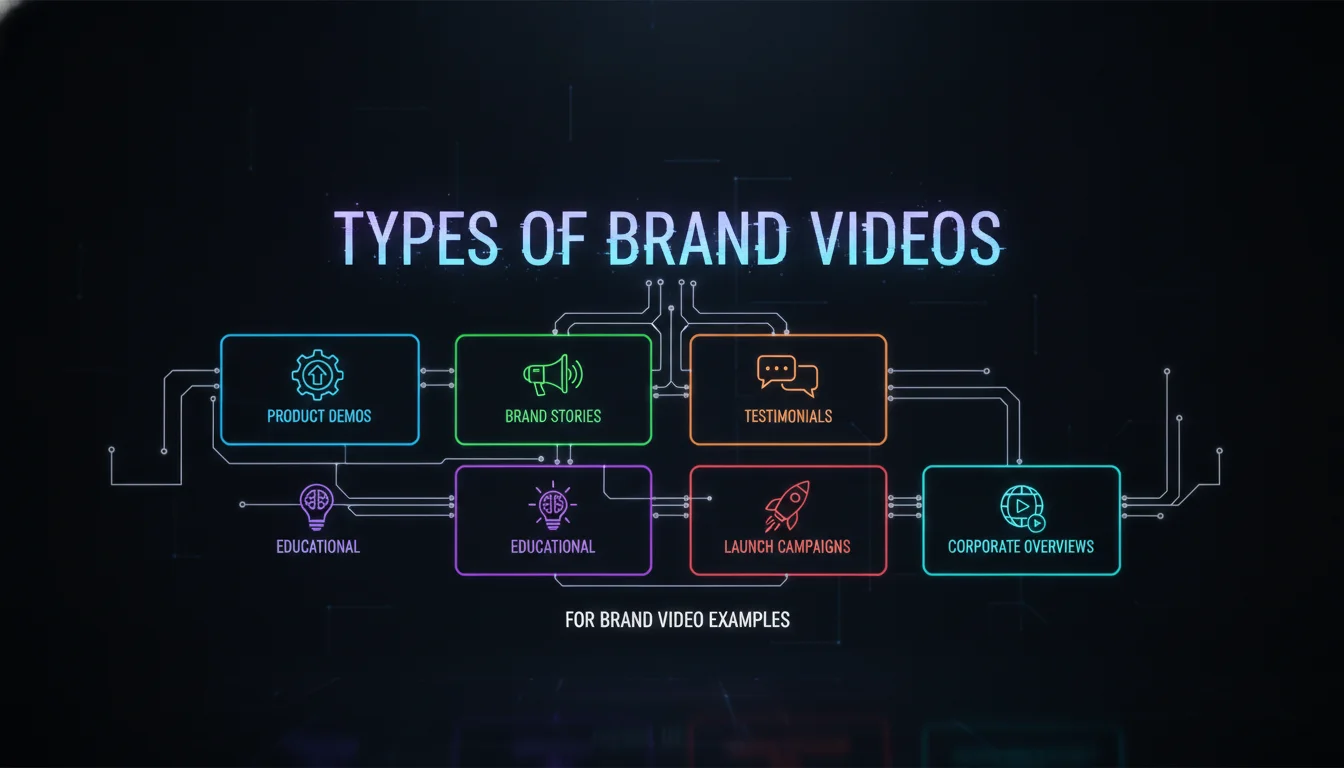
Brand videos can take various forms, each serving different marketing objectives. Understanding these types helps brands choose the right format for their message and their moment in the funnel.
Brand Story Videos
Brand story videos focus on the company’s history, mission, and values. They aim to create an emotional connection with the audience by sharing authentic narratives. Nike’s “Dream Crazy” campaign (2018) is one of the most studied brand video examples in modern marketing: featuring Colin Kaepernick with the line “Believe in something, even if it means sacrificing everything,” it ignited global conversation and left a permanent mark on how brands use purpose-driven storytelling.
Product Demonstration Videos
These videos highlight the features and benefits of a product, often using engaging visuals and storytelling techniques. Apple’s product videos are renowned for their ability to weave product features into a compelling narrative, making the content both informative and entertaining. The “Shot on iPhone” campaign, which has run since 2015, is a masterclass in this format: Apple turned its customers into its creative team, generating years of authentic user-generated content. According to StudioBinder, the campaign earned billions in earned media impressions and scored the Grand Prix for Creative Effectiveness at Cannes Lions in June 2025.
Testimonial Videos
Testimonial videos feature satisfied customers sharing their experiences with a brand’s product or service. This type of content builds trust and credibility, as potential customers are more likely to relate to real-life stories. Brands like Dove have successfully used testimonials to reinforce their brand values and create campaigns that resonate far beyond a single product launch.
Explainer Videos
Explainer videos educate audiences about how a product or service works. Brands like Dropbox and Slack have used this format to break down complex offerings into clear, engaging narratives. Slack’s “The Big Meeting” video is a strong example: it uses humor and relatable workplace scenarios to show the product’s value without ever feeling like a sales pitch.
Culture and Behind-the-Scenes Videos
Culture videos showcase the people and values inside a company. They’re powerful recruiting tools and brand trust signals. Dropbox has used “life beyond work” videos to highlight employee wellbeing, signaling to both talent and customers that the company’s values run deeper than its product roadmap.
Event and User-Generated Content Videos
Event recap videos and UGC compilations capture real moments and real people. They’re lower-cost to produce and often feel more authentic than polished brand films. For brands with active communities, this format can be one of the most effective brand video examples in their content library.
Notable Brand Video Examples from 2026
Here are some of the most inspiring brand video examples worth studying right now, each showcasing a distinct creative approach and a clear strategic purpose.
1. Dr. Martens – What Does Strong Mean Today?
In this powerful brand video, Dr. Martens features 14 young individuals sharing their perspectives on strength, each speaking for 60 seconds. Their responses serve as the voiceover for a genuine, authentic brand film. The video effectively humanizes the brand, showcasing its commitment to inclusivity and resonating with its youthful audience. The retro film aesthetic adds a nostalgic touch, aligning with the brand’s heritage dating back to the 1940s. This style is increasingly popular among young consumers, and Dr. Martens uses it to weave the brand into the fabric of the film rather than stamping a logo on top of it.
2. Colt Technologies
This brand video, produced by Bold Content Video for Colt Technologies, helps the company stand out among competitors and establishes it as a forward-thinking digital infrastructure provider. Rather than relying on stock footage as many B2B brands do, the production uses David Lynch-inspired, slightly surreal visuals to figuratively put Colt under the microscope. Key visual metaphors do the heavy lifting: old photos show longevity, a globe with lights shows global footprint, shadow icons on the wall signal reliability and security. The result is a versatile video that works across LinkedIn, conferences, and sales presentations without leaning on voiceover dialogue alone.
3. IBM – Future H&R Block
IBM’s futuristic brand video showcases its AI tool, Watson, using stunning visuals and a cinematic approach. The innovative use of a large LED-screened cube enhances the storytelling, elevating the perception of the technology and reinforcing IBM’s position as a leader in the AI space. It’s cinematic, futuristic, and, as Bold Content Video puts it, “honestly just cool.” The production gives Watson a sense of sophistication that no product spec sheet ever could.
4. Apple – Shot on iPhone (2015–Present)
Apple didn’t hire a film crew for this campaign. They turned their customers into their creative team. The “Shot on iPhone” campaign invited iPhone users around the world to submit their own photos and videos. The winning works became billboards, TV spots, and social ads. No actors, no pro production crews. Just real people proving the product. According to StudioBinder, the campaign still runs today and scored the Grand Prix for Creative Effectiveness at Cannes Lions in June 2025, making it one of the most enduring brand video examples in advertising history.
5. Doubleday Publishing – Origin Campaign
Doubleday Publishing’s campaign for Dan Brown’s novel “Origin” took a different approach to branded video. The campaign incorporated personalized video content, allowing viewers to insert their own name into the brand video. The videos are beautifully shot and highly shareable. By using technology to create a personal connection, Doubleday elevated the content above a traditional ad, creating something that felt like an experience rather than a promotion.
How Brand Videos Actually Work: The Mechanics Behind the Magic
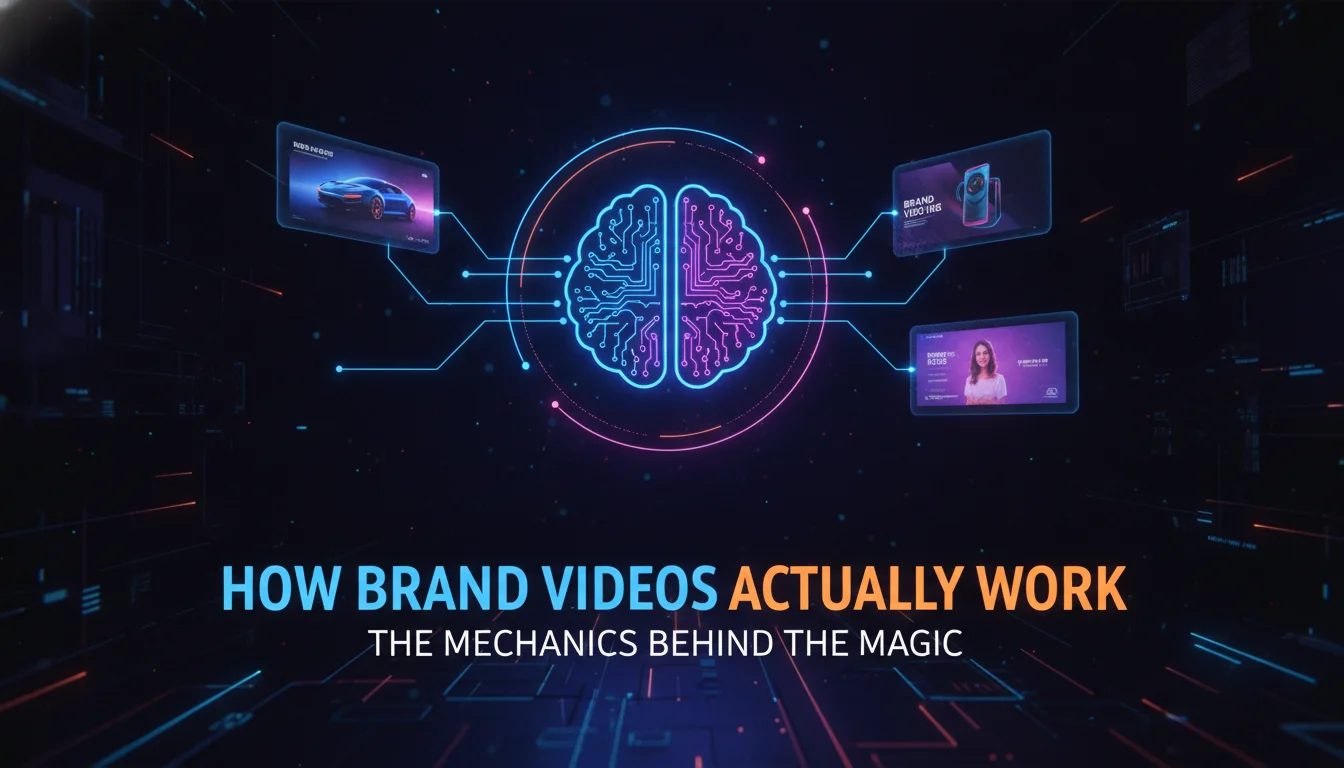
Understanding why brand video examples perform the way they do requires looking at the psychology and structure underneath the creative surface. Great brand videos don’t succeed by accident.
The core mechanic is emotional priming. When a viewer feels something, their brain releases neurochemicals that strengthen memory encoding. A brand associated with a strong emotional moment is recalled more easily and trusted more readily than one associated with a list of features. This is why the best brand video examples lead with story and let the product follow.
Structurally, most high-performing brand videos follow a recognizable arc:
- Hook (0–5 seconds): Capture attention before the viewer can skip. The opening frame must earn the next five seconds.
- Tension or Problem (5–30 seconds): Introduce a challenge, question, or emotional stakes. This is what keeps viewers watching.
- Brand as Resolution: The brand, product, or value proposition enters as the answer to the tension, not as an interruption.
- Emotional Payoff: The ending should leave the viewer feeling something: inspired, amused, moved, or seen.
- Call to Action: Subtle or direct, every brand video should give the viewer a next step.
Distribution also shapes performance. A brand film built for YouTube needs a different pacing than one cut for Instagram Reels or LinkedIn. The best brand video examples are often produced with multiple edits in mind: a 90-second hero version, a 30-second cut for paid social, and a 15-second teaser for Stories. This isn’t just efficiency. It’s strategic reach.
“Brand videos serve two audiences: external customers who need to trust you before they buy, and internal teams who need to believe in what they’re building.” – HSC.tv, Brand Video Examples, Types and Ideas (2026)
How to Create Your Own Brand Video: A Step-by-Step Process
Developing an effective brand video requires careful planning and execution. Here’s a practical process built from what actually works, not just what sounds good in a brief.
Step 1: Define Your Objectives
Determine the primary goal of your video before you write a single word of script. Are you building brand awareness at the top of the funnel? Driving consideration in the middle? Closing trust gaps at the bottom? A clear objective shapes every creative decision that follows, from tone to length to distribution channel.
Step 2: Understand Your Audience
Research your target demographic to tailor your video content, tone, and style to resonate with their preferences and needs. Go beyond demographics. Understand what your audience wants to become, what their fears are, and how they want to be perceived. According to Vimeo’s brand video guide, the most effective brand storytelling isn’t just about the brand. It’s about understanding who the customer wants to become.
Step 3: Craft a Compelling Story
Develop a narrative that captures the essence of your brand and engages viewers emotionally. Ensure the story aligns with your brand values and mission. Start with tension, not with your logo. The Dr. Martens example works because it opens with real people answering a real question. The brand is present, but the human story leads.
Step 4: Plan Your Production
Outline the production process, including scripting, storyboarding, and scheduling. Decide early whether you’ll use live action, animation, or a hybrid approach. Consider the visual language: will you shoot on film for a retro aesthetic, use surreal CGI like Colt Technologies, or go cinematic like IBM? Every visual choice communicates something about your brand. Collaborate with professional video production services to ensure the execution matches the ambition of the concept.
Step 5: Build in Multiple Formats
Before you wrap production, plan your edit suite. Cut a hero version for YouTube and your website. Cut a 30-second version for paid social. Cut a 15-second version for Stories and Reels. This isn’t extra work. It’s how you multiply the return on a single production budget.
Step 6: Promote Your Video
Once your video is complete, promote it across various channels, including social media, email marketing, and your website, to maximize its reach and impact. Organic reach alone rarely delivers results. Build a paid amplification plan alongside your organic distribution strategy.
AI in Brand Video Production: What’s Changed in 2026
Artificial intelligence has fundamentally shifted what’s possible in brand video production, and the best brand video examples of 2026 reflect that shift. AI isn’t replacing creative directors. It’s removing the production bottlenecks that used to slow great ideas down.
According to Superside’s research, 30.8% of video marketers struggle with video production, and 51.3% want help with the full video production process. AI tools address both problems directly. Script generation, voiceover synthesis, automated editing, and AI-powered color grading have compressed timelines that used to take weeks into days.
Practically, this means brands can now:
- Generate multiple script variations quickly and test messaging before committing to production
- Use AI voiceover tools to produce multilingual versions of the same video without re-recording
- Automate the creation of platform-specific cuts from a single master edit
- Use AI-powered analytics to identify which moments in a video drive the most engagement, then apply those insights to the next production
The creative risk with AI is homogenization. When every brand uses the same tools with the same default settings, the output starts to look and sound the same. The brands winning with AI in 2026 are the ones using it to accelerate their unique creative vision, not to replace it. The Colt Technologies approach, surreal visuals built around specific brand metaphors, is the kind of creative specificity that AI can support but cannot generate on its own.
For a deeper look at how AI is reshaping creative production, explore our work on Emin Media’s production services.
Comparison of Brand Video Types
| Type of Video | Primary Purpose | Funnel Stage | Example Brands | Typical Length |
|---|---|---|---|---|
| Brand Story | Create emotional connection and brand identity | Awareness | Nike, Dr. Martens | 60–180 seconds |
| Product Demo | Showcase product features and benefits | Consideration | Apple, Samsung | 30–90 seconds |
| Testimonial | Build trust and credibility | Decision | Dove, Airbnb | 60–120 seconds |
| Explainer | Educate audience about products or services | Consideration | Dropbox, Slack | 60–90 seconds |
| Culture / Behind-the-Scenes | Humanize the brand and attract talent | Awareness / Retention | Dropbox, Patagonia | 60–240 seconds |
| UGC / Event | Build community and authentic social proof | All stages | Apple (Shot on iPhone), GoPro | 15–60 seconds |
Pros and Cons of Brand Video Marketing
Pros
- Emotional impact at scale: Video combines sight, sound, and motion to create emotional responses that static content simply cannot match.
- Versatile across channels: A single brand video can be adapted for YouTube, LinkedIn, Instagram, email campaigns, sales decks, and trade show screens.
- Builds long-term brand equity: The best brand video examples, like Apple’s Shot on iPhone, keep generating value years after production wraps.
- Drives measurable results: According to Superside, 87% of marketers reported video marketing directly increased their sales.
- Supports SEO and discoverability: Video content increases time-on-page and improves search visibility when properly optimized.
- AI tools are lowering the barrier: Production costs and timelines have dropped significantly, making quality video accessible to brands of all sizes.
Cons
- Production costs can be significant: High-quality brand videos require investment in scripting, production, and post-production, even with AI assistance.
- Time-intensive process: From concept to final cut, a polished brand video can take weeks or months to produce properly.
- Creative demand outpaces capacity: Superside’s Overcommitted Report found that 79% of professionals want to create bolder work but are always racing against the clock.
- Platform fragmentation: Different platforms require different formats, aspect ratios, and lengths, multiplying production workload.
- Risk of generic output: Without a strong creative concept, brand videos can blend into the noise rather than cut through it.
- Measurement complexity: Attributing brand lift and long-term equity to a specific video is harder than tracking direct-response metrics.
Common Mistakes to Avoid in Brand Video Production
Studying great brand video examples teaches you what works. Studying failures teaches you what to avoid. Here are the patterns we see most often when brand videos miss the mark.
Leading with the Logo
Opening a brand video with your logo and tagline is the fastest way to lose a viewer in the first five seconds. The audience hasn’t earned a reason to care yet. Lead with a question, a scene, or a human moment. Let the brand reveal itself through the story.
Trying to Say Everything
A brand video that tries to communicate every product feature, every brand value, and every target audience simultaneously communicates nothing clearly. Pick one idea. Build everything around it. The Dr. Martens video asked one question: what does strength mean today? That single focus made the whole film coherent.
Ignoring Distribution Before Production
Too many brands produce a beautiful 3-minute brand film and then realize it doesn’t fit any of their paid social formats. Distribution strategy should inform production decisions, not follow them. Know where the video will live before you write the script.
Skipping the Emotional Hook
Information without emotion is forgettable. If your brand video explains what you do but doesn’t make the viewer feel something, it won’t be shared and it won’t be remembered. According to the Native Advertising Institute, the best branded video content triggers something in the brain that makes it compelling and shareable. That trigger is always emotional.
Treating Video as a One-Off
A single brand video is a campaign, not a strategy. The brands with the strongest video presence, Apple, Nike, Dove, treat video as an ongoing creative practice. Each new production builds on the brand language established by the last one. Consistency compounds over time.
Underestimating Audio
Viewers will forgive imperfect visuals. They will not forgive bad audio. Poor sound quality signals low production value instantly and damages brand perception before a single word of the script lands. Budget for audio before you budget for camera equipment.
A Worked Example: Building a Brand Video from Scratch
Here’s how a mid-sized B2B software company might approach creating one of the stronger brand video examples in its category, using the frameworks above.
The Situation: A project management platform wants to differentiate itself from larger competitors. Its product is solid but not dramatically different on features. The real differentiator is the company’s culture: a team of former project managers who built the tool because they were frustrated with everything else on the market.
The Objective: Build brand awareness and emotional affinity with marketing managers at mid-sized companies. Not a product demo. Not a feature list. A story.
The Creative Concept: A 90-second brand story video following a single day in the life of a stressed marketing manager. The video opens with the chaos of a project gone sideways: missed deadlines, a flooded inbox, a team that’s lost track of who owns what. No voiceover. Just the sound of notification pings and a ticking clock. At the 45-second mark, the tone shifts. The manager opens the platform. The chaos doesn’t disappear, but it becomes manageable. The video ends with the team celebrating a successful launch, and a single line of text: “Built by project managers, for project managers.”
The Production Plan: Shot over two days with a small crew. Real office environment, not a studio set. Minimal dialogue, heavy on visual storytelling. Three edits produced: a 90-second hero cut for YouTube and the website, a 30-second cut for LinkedIn paid campaigns, and a 15-second cut for Instagram Stories.
The Result Framework: Track view-through rate on the hero cut, engagement rate on the LinkedIn cut, and click-through rate on the Stories cut. Use those signals to inform the next production cycle.
This is how the best brand video examples get made: not with the biggest budget, but with the clearest thinking about story, audience, and distribution before a single camera rolls. If you want to explore what this process looks like for your brand, our team at Emin Media works through exactly this kind of strategic creative development.
Brand Video Trends to Watch in 2026 and Beyond
Updated for 2026, the creative and strategic landscape for brand video is shifting in several directions worth tracking.
Short-form is not replacing long-form, it’s complementing it. Brands are learning to think in content ecosystems: a long-form brand film anchors the strategy, while short-form cuts distribute it across platforms. The hero video earns the brand’s creative credibility. The short cuts earn the reach.
Authenticity is winning over production polish. The success of UGC-style content and lo-fi brand videos signals that audiences are increasingly skeptical of over-produced content. The Dr. Martens film aesthetic and Apple’s Shot on iPhone campaign both succeed partly because they feel real. This year, brands are deliberately introducing imperfection into their visual language to signal authenticity.
Personalized video is scaling. The Doubleday Publishing approach, inserting the viewer’s name into the video experience, is now accessible to brands at scale through AI-powered personalization tools. Expect to see more brand video examples that feel like they were made for a specific person, because increasingly, they are.
Vertical video is the default, not the exception. With mobile consumption dominating, brands that still treat horizontal as the primary format are producing for the wrong screen. The best brand video examples of 2026 are conceived vertically first and adapted horizontally for broadcast and YouTube.
For more on how these trends connect to broader digital marketing strategy, explore our thinking on brand and content strategy at Emin Media.
Frequently Asked Questions
What is a brand video?
A brand video is narrative-driven content designed to communicate a company’s mission, values, and personality, rather than just selling a product. As HSC.tv describes it, a traditional ad is built to sell, while a brand video is built to connect. Brand videos can run as paid ads, live organically on YouTube, or play during onboarding sessions.
How do I make a brand video?
To create a brand video, define your objective first, then research your audience, craft a story built around emotional tension and resolution, plan your production with multiple format edits in mind, and build a distribution strategy before you wrap. Working with an experienced production partner significantly improves both the creative quality and the strategic alignment of the final output.
What are some examples of brand videos?
Strong brand video examples include Nike’s “Dream Crazy” (purpose-driven storytelling), Apple’s “Shot on iPhone” (UGC-powered product demonstration), Dr. Martens’ “What Does Strong Mean Today?” (inclusive brand identity), IBM’s Watson film (cinematic B2B storytelling), and Colt Technologies’ surreal visual narrative (B2B differentiation without stock footage). Each takes a different creative approach but shares a clear strategic objective.
How long should a brand video be?
Brand video length depends on the format and platform. Brand story videos typically run 60 to 180 seconds, product demos work well at 30 to 90 seconds, and social media cuts should be 15 to 30 seconds for Stories and Reels. The rule is simple: the video should be exactly as long as it needs to be to tell the story, and not a second longer.
How much does it cost to produce a brand video?
Brand video production costs vary widely based on concept complexity, crew size, location, and post-production requirements. A focused, well-planned production with a small crew can deliver strong results without a broadcast-level budget. AI tools have also reduced certain production costs significantly in 2026. The bigger investment is usually in the strategic and creative development phase, which determines whether the production budget is well spent.
What makes a brand video go viral or get shared?
According to the Native Advertising Institute, the best branded video content triggers something in the brain that makes it compelling and shareable: humor, emotion, inspiration, or genuine surprise. Videos that place narrative and audience engagement above brand promotion consistently outperform those that lead with the product. Shareability is earned by making the audience feel something worth passing on, not by asking them to share.
Enjoyed this article?
Contact Emin Media for a free brand consultation and let's create something amazing together.
Get in TouchRelated Articles
Digital Storytelling for Brands: The Complete Guide
Digital storytelling for brands builds real audience connections through narrative. Learn proven techniques, formats, and…
Design Thinking for Marketing: A 2026 Guide
Design thinking for marketing builds campaigns around real user needs. Learn the 5 phases, common…
Creative Direction for Video Shoots: A Complete Guide
Master creative direction for video shoots with proven steps, tools, and strategies that build brand…