Creative Direction for Video Shoots: A Complete Guide
Key Takeaways
- Creative direction for video shoots is the strategic force that keeps every visual decision connected to a single, unified brand vision.
- It involves planning, collaboration, and execution to achieve a cohesive result across every frame.
- Effective creative direction strengthens storytelling and builds lasting brand identity.
- Tools like mood boards, shot lists, and shoot briefs are non-negotiable production assets, not optional extras.
- Creative direction must align with the brand’s objectives and speak directly to the target audience.
- Without clear creative direction, even technically excellent footage drifts into visual inconsistency.
Creative direction for video shoots is the strategic process of guiding every visual and narrative decision so the final film reflects a single, coherent brand vision. It spans pre-production through post, touching lighting, casting, color, and story structure.
Understanding Creative Direction
Creative direction is the leadership process that shapes every aesthetic and narrative choice in a video production. It is not the same as directing a scene or operating a camera. It sits one level above those roles, translating business objectives into a visual language the entire production team can follow.
“A photographer executes. A creative director decides what to execute and why – what the images should communicate, what feeling they should leave, and how every visual decision connects back to what the brand is trying to be in the market.” – Lenflash Studio, eCommerce Photography & Video Production
Definition of Creative Direction
Creative direction is a leadership role that involves overseeing the creative process and ensuring that all visual elements align with the project’s goals. This includes decisions about lighting, composition, color palettes, and narrative structure. Think of it as the architectural blueprint: every contractor on site works from it, but only one person drew it.
The Role of a Creative Director
A creative director translates business objectives into a visual brief that guides the production team. They collaborate with art directors, cinematographers, stylists, and editors to ensure the final product reflects the intended vision. Critically, according to industry practitioners, creative direction should come from the brand strategy first, not from the session photographer’s personal aesthetic preferences.
Importance of Creative Direction in Video Production
Creative direction is crucial in video production because it maintains consistency across scenes, locations, and edit versions. Without it, a brand’s video catalog tends to drift: different sessions produce different lighting approaches, styling decisions get made on set without a brief to reference, and the output ends up looking like it came from multiple unrelated sources. Creative direction creates coherence, not by controlling every frame, but by establishing the standards every frame is measured against.
How Creative Direction Actually Works: The Mechanics
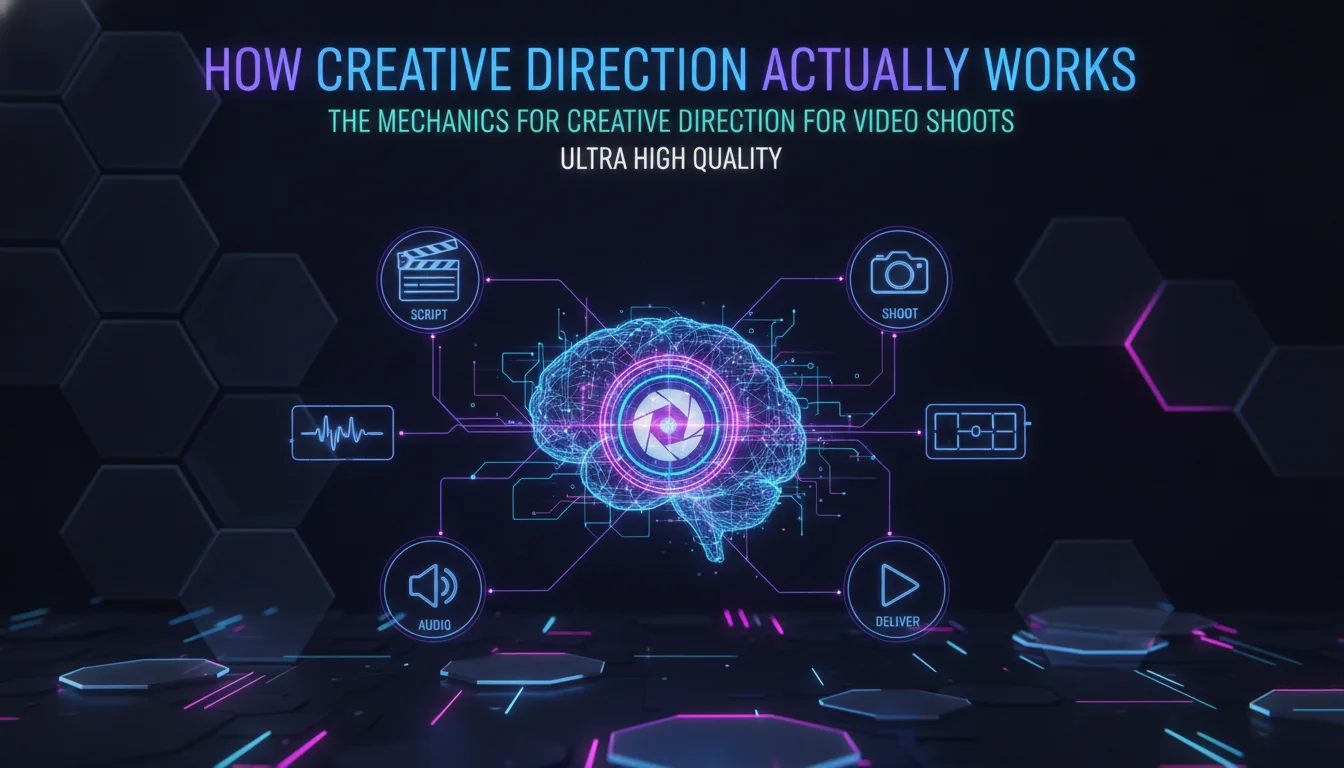
video shoots operates as a layered decision-making system that runs from the first strategy call through the final color grade. Understanding each layer helps brand owners and marketing managers know exactly where to invest attention and budget.
At the top layer sits brand strategy. The creative director absorbs the brand’s positioning, target audience, and campaign objectives before a single visual decision is made. A soft, diffused lighting style for a luxury skincare brand and high-contrast dynamic lighting for a fitness brand are not just visual preferences. They are statements about what each brand is and who it speaks to.
The second layer is pre-production translation. Strategy becomes a visual brief: mood boards, shot lists, casting direction, location scouting notes, prop lists, and a shoot brief that every team member receives before day one. According to Salt Paper Studio, there are an enormous number of moving pieces in any photography or video shoot, all of which need to come together during a finite window of time. The shoot brief is what keeps everyone pulling in the same direction.
The third layer is on-set governance. The creative director is not behind the camera. They are watching the monitor, comparing each frame against the mood board, and making real-time calls about whether the lighting, wardrobe, or blocking is on-brief. They are the final filter between what is being captured and what the brand actually needs.
The fourth layer is post-production oversight. Color grading, music selection, pacing, and graphics all carry creative weight. The creative director reviews cuts against the original brief and ensures the edit does not drift from the visual identity established in pre-production.
“Art direction elevates the quality and impact of photography and videography, resulting in stunning and memorable content – but only when the vision is set before the shoot begins, not improvised on the day.” – Salt Paper Studio + Productions
The Creative Direction Process: Step by Step
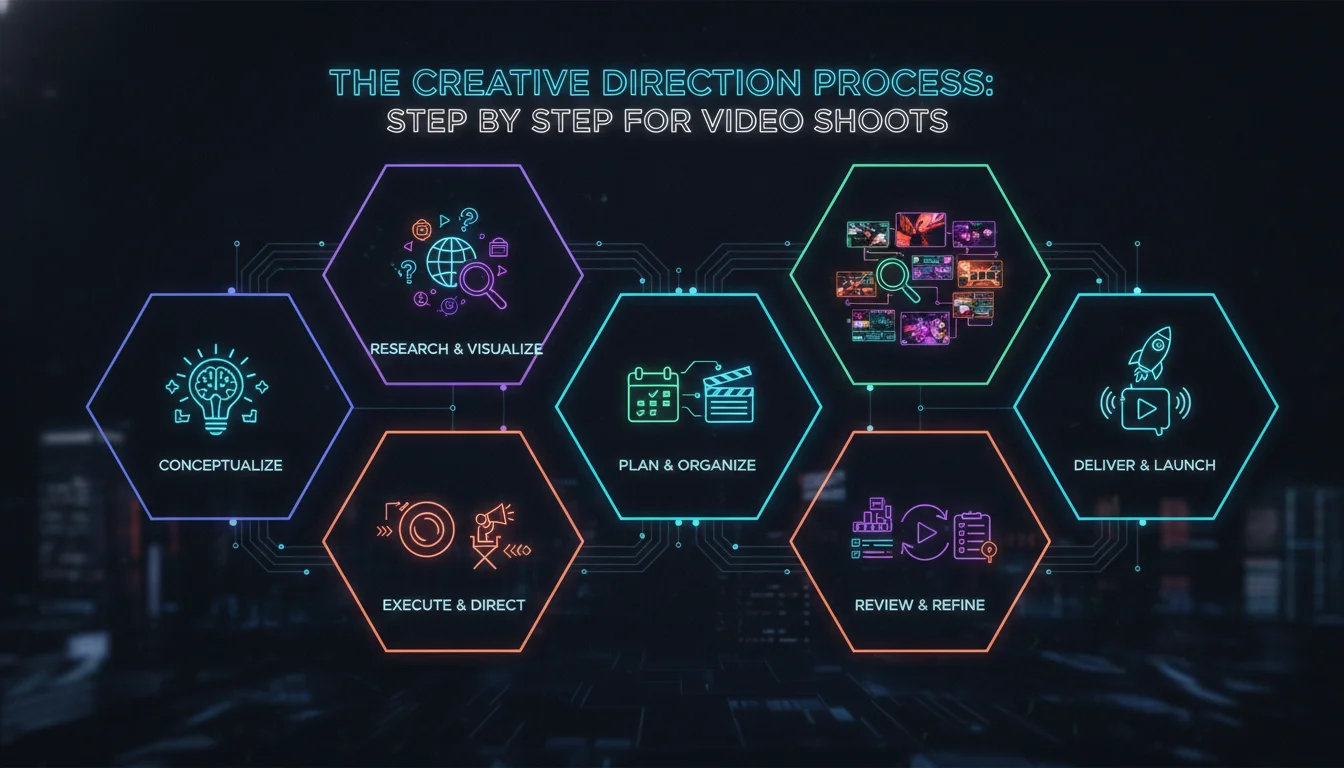
this type of shoots follows a clear sequence of steps that, when executed in order, dramatically reduce on-set confusion and post-production rework.
Step 1: Concept Development
Start by developing a clear concept rooted in brand strategy. Brainstorm ideas, define the target audience, and establish the key messages the video must convey. Every creative decision made later should trace back to this foundation. If a prop, location, or lighting choice cannot be justified by the concept, it does not belong on set.
Step 2: Mood Boarding
Mood boarding is a visual tool that communicates the desired aesthetic and emotional tone before a single frame is shot. It includes images, color palettes, lighting references, and textures that define the look and feel of the project. Tools like Pinterest, Canva, and Adobe Illustrator all work well here. The goal is not to copy reference images but to extract the feeling they carry and replicate that feeling with original content.
Step 3: Shot Listing
A shot list is a document that details every specific photograph or scene that needs to be captured during the shoot. It is the production team’s shared checklist. A well-built shot list prevents the costly mistake of arriving in the edit suite and discovering a critical angle was never captured. It also keeps the shoot day moving efficiently, which matters when you are paying for crew, talent, and location by the hour.
Step 4: Building the Shoot Brief
The shoot brief consolidates the concept, mood board, shot list, casting notes, prop requirements, and schedule into a single document shared with every team member before production day. This is the single most underused tool in independent video production. Teams that skip the brief spend the first hour of the shoot day getting aligned on things that should have been settled a week earlier.
Step 5: On-Set Creative Governance
On the day, the creative director’s job is to protect the brief. They watch playback, compare frames to the mood board, and make real-time decisions about whether the production is on-vision. They also manage the energy of the set, keeping the team focused and the talent comfortable enough to perform naturally.
Step 6: Post-Production Oversight
Creative direction does not end when the cameras stop rolling. The creative director reviews the edit, color grade, music selection, and graphics to ensure the final cut matches the original brief. This is where many productions lose consistency: the editor makes aesthetic choices in isolation that subtly shift the visual identity away from what was planned.
Collaboration in Creative Direction
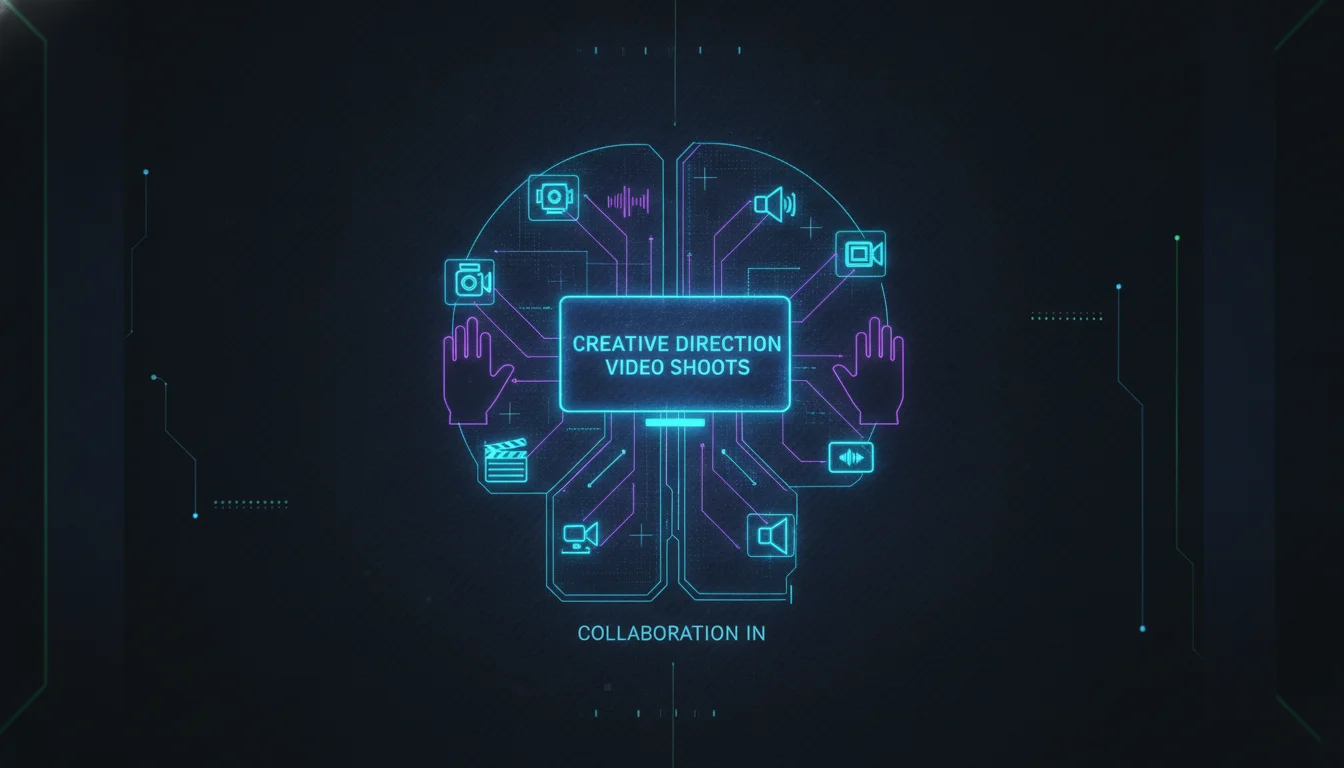
Effective creative direction for video shoots relies on structured collaboration. Each role contributes to the overall vision, and the creative director’s job is to keep all of those contributions pointing in the same direction.
Working with Producers and Directors
Producers and directors are the creative director’s closest partners. The creative director sets the vision; the director executes it on camera; the producer ensures the logistics support both. Clear, written communication between these three roles prevents the most common production failures.
Engaging with the Creative Team
Art directors, cinematographers, stylists, and editors each bring specialized expertise. The creative director’s role is not to override that expertise but to channel it toward a shared outcome. Regular pre-production meetings and a shared mood board keep the team aligned without micromanaging every decision.
Feedback and Iteration
Feedback is built into every stage of the process. The creative director encourages open communication and stays receptive to input from team members. The best creative direction is not a monologue from the top. It is a structured conversation where every specialist’s knowledge improves the final result.
Visual Storytelling and Emotional Engagement
Creative direction for video shoots is ultimately a storytelling discipline. The visual choices, the pacing, the music, the casting: all of it serves the story the brand needs to tell.
Crafting a Compelling Narrative
A well-directed video tells a story that holds attention from the first frame to the last. Every visual element, from the color of the set to the wardrobe on the talent, contributes to that narrative. When those elements are chosen deliberately, the story lands. When they are chosen by default, the story leaks.
Building Emotional Connections
Videos have the power to convey emotions that words sometimes fail to express. Creative direction identifies the emotional beats in a script and ensures the visual execution amplifies them. By guiding the delivery of emotion from the script stage through the final cut, viewers become genuinely invested rather than passive observers.
Enhancing Brand Identity
Every brand has a story, and creative direction ensures that story is told consistently. From the color palette that reflects a brand’s values to the casting choices that signal who the brand speaks to, creative direction is the guardian of brand identity across every piece of video content produced.
Practical Applications: How to Apply Creative Direction on Your Next Shoot
Creative direction for video shoots becomes real when it moves from theory into a repeatable production workflow. Here is how to apply it practically, whether you are a brand owner briefing an agency or a creative director running your own production.
1. Start with a Written Creative Brief
Before any visual work begins, write down the campaign objective, the target audience, the emotional tone, and the key message in plain language. One page is enough. This document becomes the filter every subsequent decision passes through.
2. Build a Mood Board with Purpose
Do not collect images you find beautiful. Collect images that carry the specific feeling your brand needs to communicate. Use Pinterest to build a working board, then refine it to a curated selection in Canva or Adobe Illustrator for the shoot brief. Reference lighting, color, composition, and subject matter separately so the team understands each dimension of the visual direction.
3. Write a Shot List Before You Scout Locations
The shot list should drive location scouting, not the other way around. Know what you need to capture before you fall in love with a location that cannot deliver it. Each shot on the list should include the shot type, the subject, the action, and any specific technical requirements.
4. Cast for the Brand, Not Just for Looks
Casting is a creative direction decision. The talent in your video communicates who your brand speaks to and what it values. A luxury brand and a challenger brand might cast equally attractive talent, but the energy, age, and cultural signals of that talent will be completely different. Brief your casting director with the same specificity you bring to lighting and wardrobe.
5. Hold a Pre-Production Walkthrough
Gather every department head, share the shoot brief, walk through the mood board, and confirm that everyone understands the vision and their role in executing it. This one meeting prevents most of the miscommunications that cost time and money on shoot day.
6. Review Every Edit Against the Original Brief
In post-production, open the brief before you open the edit. Review the cut with the original concept in mind, not just with fresh eyes. Ask whether the pacing, color grade, and music selection reinforce the emotional tone established in pre-production. If they do not, revise before delivery.
Comparison: Approaches to Creative Direction for Video Shoots
Not every production has the same resources or structure. Here is how the main approaches to creative direction compare across key dimensions.
| Approach | Best For | Key Advantage | Main Risk |
|---|---|---|---|
| Dedicated Creative Director | Large campaigns, brand films, multi-day shoots | Full strategic and visual oversight from brief to delivery | Higher budget requirement |
| Director-Led Creative Direction | Narrative films, documentary-style content | Tight integration between vision and execution | Business objectives can get subordinated to artistic ones |
| Brand-Led Creative Direction | In-house teams with strong brand guidelines | Deep brand knowledge, fast decision-making | Too close to the brand to see it objectively |
| Agency Creative Direction | Brands without in-house creative capacity | Fresh perspective, full production team included | Requires thorough briefing to avoid generic output |
| Photographer-as-Director | Small-budget shoots, social content | Cost-efficient, fewer moving parts | Creative vision limited by technical execution demands |
Common Mistakes in Creative Direction for Video Shoots
Creative direction for video shoots fails in predictable ways. Knowing these patterns in advance is the fastest way to avoid them.
Skipping the Written Brief
Verbal briefings feel efficient but they are not. Every team member walks away with a slightly different version of what was said. A written brief, even a short one, creates a shared reference point that survives the chaos of a shoot day. Teams that skip the brief spend the first hour of production getting aligned on things that should have been settled days earlier.
Confusing Aesthetic Preference with Brand Strategy
The most common creative direction mistake is choosing visuals because they look good rather than because they serve the brand’s positioning. A soft, editorial lighting style might be beautiful, but if the brand is a high-energy fitness company, that aesthetic sends the wrong signal. Every visual choice should be justifiable in strategic terms, not just aesthetic ones.
Letting the Mood Board Drift
Mood boards that include too many conflicting references create confusion on set. If your board contains both minimalist Scandinavian interiors and maximalist baroque styling, the team cannot execute a coherent look. Curate ruthlessly. The mood board should communicate one clear visual direction, not a range of options.
Ignoring Post-Production in Pre-Production Planning
Many productions plan the shoot without considering how the footage will be edited, color-graded, or formatted for different platforms. A video shot for a widescreen brand film needs different framing considerations than one that will be reformatted for vertical social media. Plan for the final deliverable from the first day of pre-production.
Treating Creative Direction as a Single-Person Job
The creative director sets the vision, but they cannot execute it alone. Productions that expect one person to direct, shoot, style, and manage the brief simultaneously produce inconsistent results. Even on small-budget shoots, assigning clear roles, even informally, dramatically improves output quality.
Worked Example: Brand Film for a Direct-to-Consumer Skincare Brand
Here is a realistic scenario that shows creative direction for video shoots in action from brief to delivery.
The Brief: A direct-to-consumer skincare brand launching a new serum wants a 60-second hero film for their website and a suite of 15-second cuts for paid social. The brand positions itself as clean, science-backed, and accessible to adults in their 30s and 40s.
Concept Development: The creative director reviews the brand guidelines, the product formulation story, and three competitor campaigns. The concept that emerges: “The ritual of care.” The film will follow a single protagonist through a morning routine, emphasizing texture, light, and quiet confidence rather than dramatic before-and-after transformation.
Mood Board: The board references soft natural light from north-facing windows, a warm neutral color palette with one accent tone pulled from the product packaging, close-up macro shots of water and skin texture, and wardrobe that reads as effortlessly put-together rather than aspirationally glamorous. Lighting references come from editorial beauty photography rather than commercial advertising.
Shot List: The creative director builds a 22-shot list covering the hero sequence, three product detail shots, two lifestyle context shots, and a closing brand frame. Each shot includes framing notes and a priority rating so the team knows which shots are non-negotiable if the day runs short.
On Set: During the shoot, the creative director notices the lighting setup is creating harder shadows than the mood board references. They work with the cinematographer to add a diffusion panel, bringing the look back in line with the brief. This single on-set decision saves two hours of color correction in post.
Post-Production: The creative director reviews the first cut and flags that the pacing in the opening 10 seconds is too slow for the social cuts. The editor trims the opening and reorders two shots. The color grade is reviewed against the mood board palette and approved with minor warmth adjustments. The final film delivers the “ritual of care” concept clearly and consistently across all formats.
Pros and Cons of Investing in Creative Direction for Video Shoots
Pros
- Visual consistency: Every frame connects back to a single brand vision, building recognition across campaigns and platforms.
- Reduced rework: Clear pre-production direction means fewer expensive reshoots and post-production revisions.
- Stronger storytelling: Deliberate visual choices amplify the emotional impact of the narrative.
- Brand equity: Consistent, well-directed video content builds brand trust over time in ways that technically competent but visually inconsistent content cannot.
- Efficient shoot days: A well-briefed team moves faster, wastes less time on set, and captures more usable footage.
Cons
- Upfront time investment: Thorough pre-production takes time that fast-moving brands sometimes resist allocating.
- Budget implications: Dedicated creative direction adds a line item that smaller productions may struggle to justify.
- Creative tension: Strong creative direction can create friction with directors or photographers who have their own aesthetic preferences.
- Over-planning risk: Overly rigid direction can suppress the spontaneous moments that sometimes make the best footage.
Creative Direction Tools and Technology in 2026
As of 2026, the toolkit available to creative directors has expanded significantly, making pre-production planning faster and more collaborative than ever before.
Mood boarding: Pinterest remains the industry standard for initial inspiration gathering. Canva and Adobe Illustrator are the go-to tools for building polished, shareable mood boards for client and team presentations.
Shot listing and production management: Tools like StudioBinder and Celtx have become standard for shot list creation, call sheet generation, and production scheduling. They allow the entire team to access the latest version of every document in real time, eliminating the version-control chaos that plagues email-based production workflows.
AI-assisted pre-visualization: This year, AI image generation tools have entered the pre-production workflow as pre-visualization aids. Creative directors are using them to generate rough visual references for lighting setups and composition ideas before committing to expensive location or studio bookings. This is a significant shift in how creative direction for video shoots is planned, though the strategic and brand judgment layer remains entirely human.
Remote collaboration: Cloud-based review platforms allow creative directors to oversee post-production edits and color grades remotely, which has expanded the talent pool available to brands and reduced the geographic constraints on building a production team.
The Outlook for Creative Direction in 2026 and Beyond
Updated for 2026, the role of creative direction in video production is becoming more central, not less, as the volume of video content produced by brands continues to grow. When every brand is producing more video, the ones with clear, consistent creative direction are the ones that build recognition and trust. Volume without direction produces noise. Direction without volume produces missed opportunities. The brands winning on video right now are doing both.
According to industry observers, the demand for structured creative direction is rising among direct-to-consumer brands that previously relied on user-generated content and informal production. As those brands scale, the visual inconsistency of unmanaged content becomes a brand liability, and creative direction becomes the solution.
The near-term outlook points toward creative directors taking on a broader role that includes overseeing AI-generated content alongside live-action production, ensuring that automated outputs meet the same brand standards as filmed content. This is a new responsibility, but the underlying skill set, translating brand strategy into visual standards, remains unchanged.
Frequently Asked Questions
What is creative direction for video shoots?
Creative direction for video shoots is the strategic process of guiding every visual and narrative decision in a video production so the final result reflects a single, coherent brand vision. It spans pre-production planning through post-production oversight, covering lighting, casting, color, pacing, and story structure. It is distinct from directing, which focuses on on-set execution, and from cinematography, which focuses on technical image capture.
Why is creative direction important in video production?
Creative direction is important because it prevents the visual drift that happens when production decisions are made in isolation. Without it, different shoots produce different looks, and the brand’s video catalog ends up feeling fragmented. Strong creative direction ensures consistency, strengthens storytelling, and builds the kind of brand recognition that compounds over time.
What does creative direction include?
Creative direction includes concept development, mood boarding, shot listing, casting direction, on-set visual governance, and post-production oversight. It also includes the strategic work that happens before any of those steps: absorbing the brand’s positioning, understanding the target audience, and translating business objectives into a visual brief the production team can execute.
Is a creative director a high-level position?
Yes. A creative director operates at the strategic level of a production, making high-level decisions about what the output should communicate and feel like before any specialist begins their work. According to Wikipedia’s overview of the role, creative directors define and lead the creative vision of a brand or project, aligning design, storytelling, and commercial objectives across multidisciplinary teams. It is a leadership role, not a technical execution role.
What are the key tools used in creative direction for video shoots?
The core tools are mood boards (built in Pinterest, Canva, or Adobe Illustrator), shot lists, shoot briefs, and production management platforms like StudioBinder or Celtx. As of 2026, AI image generation tools are also entering the pre-visualization workflow, helping creative directors generate rough lighting and composition references before committing to studio or location bookings.
How does creative direction differ from art direction?
Creative direction operates at the strategic level, translating brand objectives into a visual brief. Art direction operates at the execution level, implementing that brief on set through specific decisions about props, set design, styling, and composition. The creative director sets the standards; the art director ensures those standards are met in every physical detail of the shoot environment. On smaller productions, one person often fills both roles, but on larger campaigns they are distinct positions with distinct responsibilities.
Enjoyed this article?
Contact Emin Media for a free brand consultation and let's create something amazing together.
Get in TouchRelated Articles

Digital Storytelling for Brands: The Complete Guide
Digital storytelling for brands builds real audience connections through narrative. Learn proven techniques, formats, and…
Design Thinking for Marketing: A 2026 Guide
Design thinking for marketing builds campaigns around real user needs. Learn the 5 phases, common…
Brand Video Examples: Inspiration for 2026
Explore the best brand video examples of 2026. See what makes them work, steal the…