Design Thinking for Marketing: A 2026 Guide
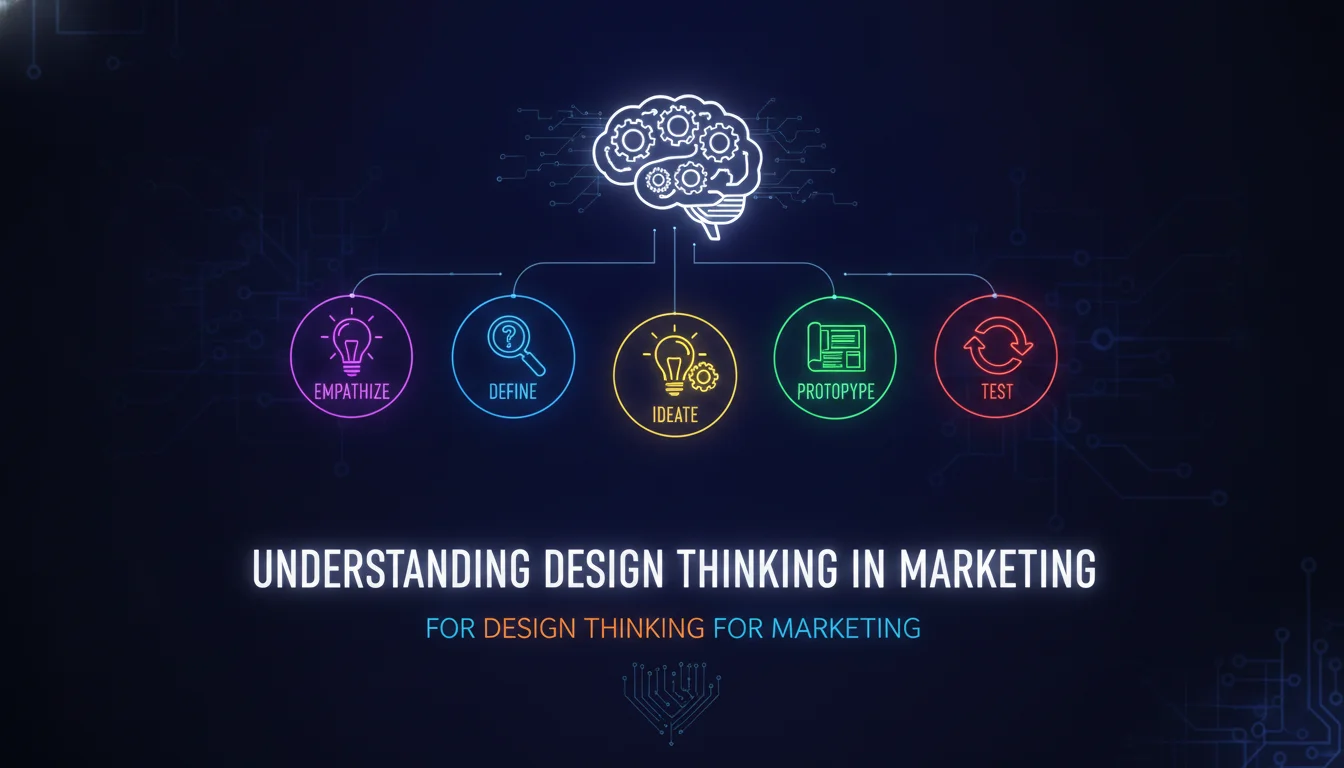
Design thinking for marketing is a human-centered problem-solving approach that builds campaigns, content, and brand experiences around real user needs rather than internal assumptions. It replaces guesswork with empathy, iteration, and evidence.
Key Takeaways
- for marketing is built on five iterative phases: Empathize, Define, Ideate, Prototype, and Test.
- The approach replaces assumption-driven campaigns with research-backed, user-centered strategy.
- Brands like Airbnb and Apple have embedded design thinking into their core marketing DNA.
- Common mistakes include skipping the Empathize phase and defining problems too broadly or too narrowly.
- As of 2026, design thinking remains one of the most practical frameworks for building campaigns that actually convert.
- Any marketing team, B2B or B2C, can apply this process with the right structure and cross-functional buy-in.
Understanding Design Thinking in Marketing
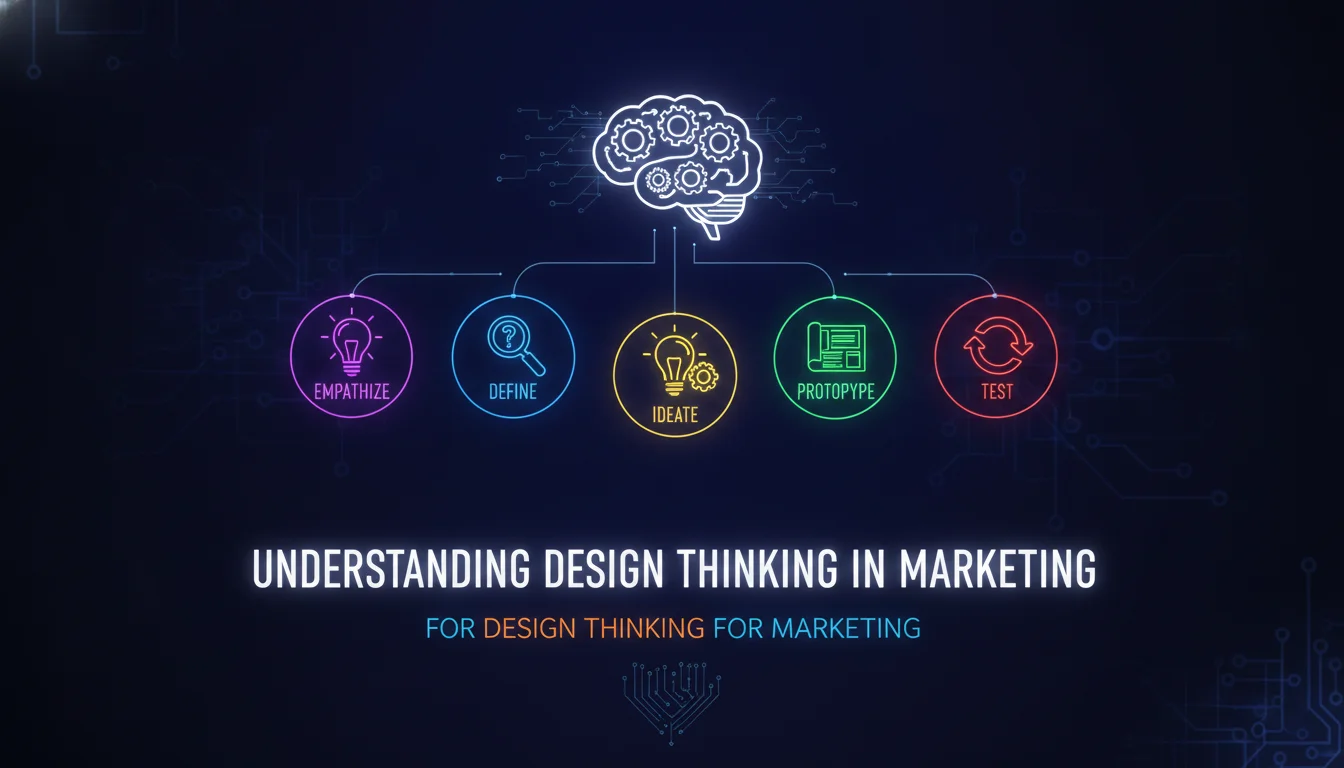
this type of marketing is a problem-solving methodology that prioritizes the needs and experiences of users. It involves understanding customer pain points, generating innovative solutions, and testing those solutions iteratively. This approach enables marketers to create campaigns that resonate deeply with their target audience, ultimately driving engagement and conversion.
What is Design Thinking?
Design thinking is a solution-based approach to problem-solving that emphasizes empathy and user-centricity. According to David M. Kelley, founder of IDEO and director of the d.school at Stanford University, design thinking is “a people-centred approach to innovation that draws from the designer’s toolbox to integrate people’s needs, technology’s capabilities and business success requirements.” This methodology is particularly effective in addressing complex problems that are often ill-defined or unknown.
“What’s special (and in fact radical) about Design Thinking is that it puts human beings first, the people for whom we ultimately solve problems. In the current landscape of big data and depersonalization, this is a surprisingly radical act.” – American Marketing Association (AMA), February 2025
The Importance of Design Thinking in Marketing
Understanding customer needs is no longer optional. this kind of for marketing allows teams to move beyond assumptions and guesswork, building a culture of innovation grounded in real human insight. By focusing on the user experience at every stage, companies create more effective marketing strategies that lead to higher customer satisfaction and loyalty. As GBK Collective president Jeremy Korst notes, marketing should play a central role in shaping brand and product strategy based on continual external feedback and data.
Key Principles of Design Thinking
- Empathy: Understanding the user’s perspective is the foundation for identifying their real needs.
- Collaboration: Involving cross-functional teams enhances creativity and produces more complete solutions.
- Iterative Process: Design thinking is non-linear, allowing teams to revisit and refine ideas based on feedback at any stage.
How Design Thinking Actually Works: The Underlying Mechanics
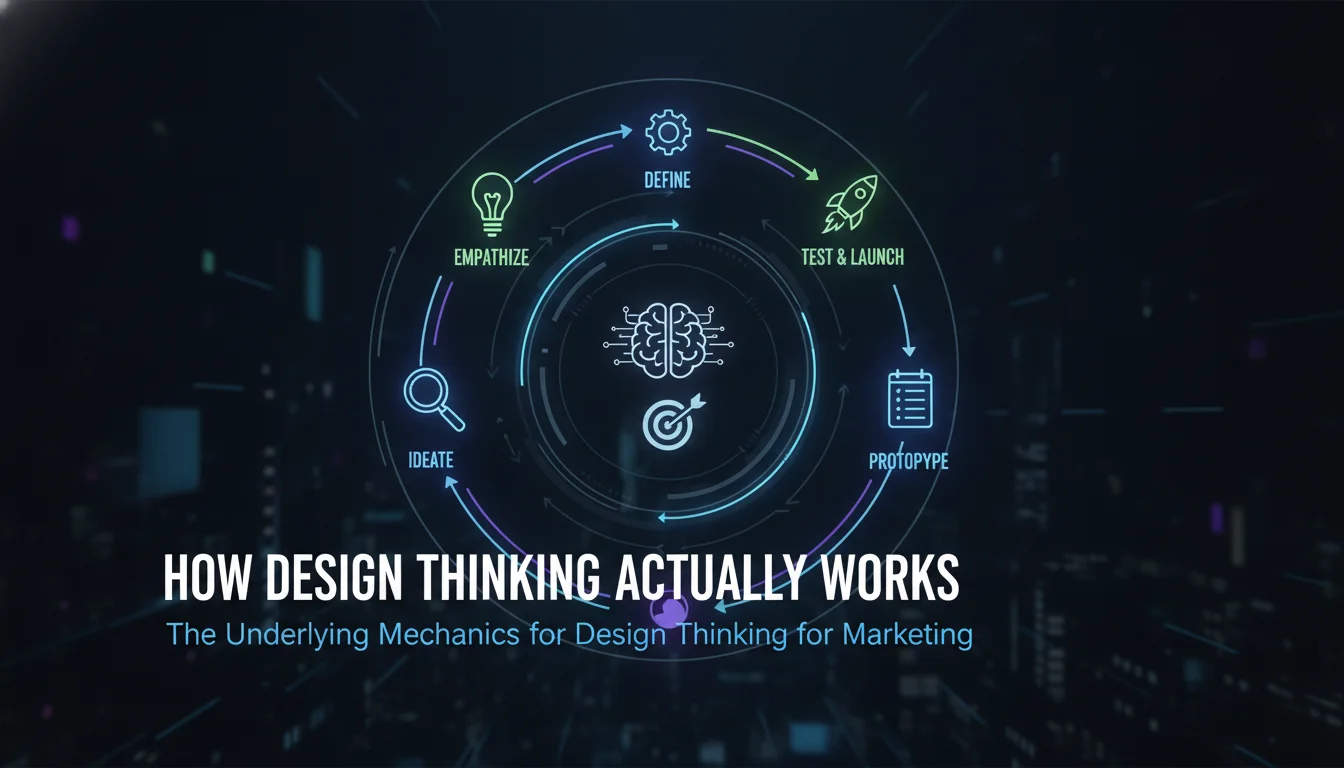
the thinking for marketing works by replacing the traditional linear campaign process with a loop of discovery, definition, creation, and validation. Most marketing failures happen because teams skip the first two phases and jump straight to execution. Design thinking forces a full stop at the human layer before any creative work begins.
The process is deliberately non-linear. According to the American Marketing Association, the five phases “are non-linear and iterative, meaning teams can revisit earlier stages based on new insights gained throughout the process.” That means a failed prototype in Phase 4 sends you back to Phase 2, not to square one. Each loop makes the solution sharper.
At its core, design thinking separates two cognitive modes: divergent thinking (generating many possibilities) and convergent thinking (narrowing to the best option). The Empathize and Ideate phases are divergent. The Define and Test phases are convergent. Prototype sits at the intersection. Marketers who understand this rhythm stop treating brainstorming as a free-for-all and start treating it as a structured creative engine.
“Design thinking reinvigorates a brand’s understanding of customer needs, the key drivers of their choices or actions, in a way that data never could.” – Jeremy Korst, President, GBK Collective
The Harvard Business School framework, developed by HBS Dean Srikant Datar, describes the process as moving from concrete to abstract thinking and back again as the loop repeats. This balance is critical: abstract thinking increases the likelihood that an idea will be novel, while concrete thinking ensures the solution is valid and useful in the real world.
The Five Phases of Design Thinking
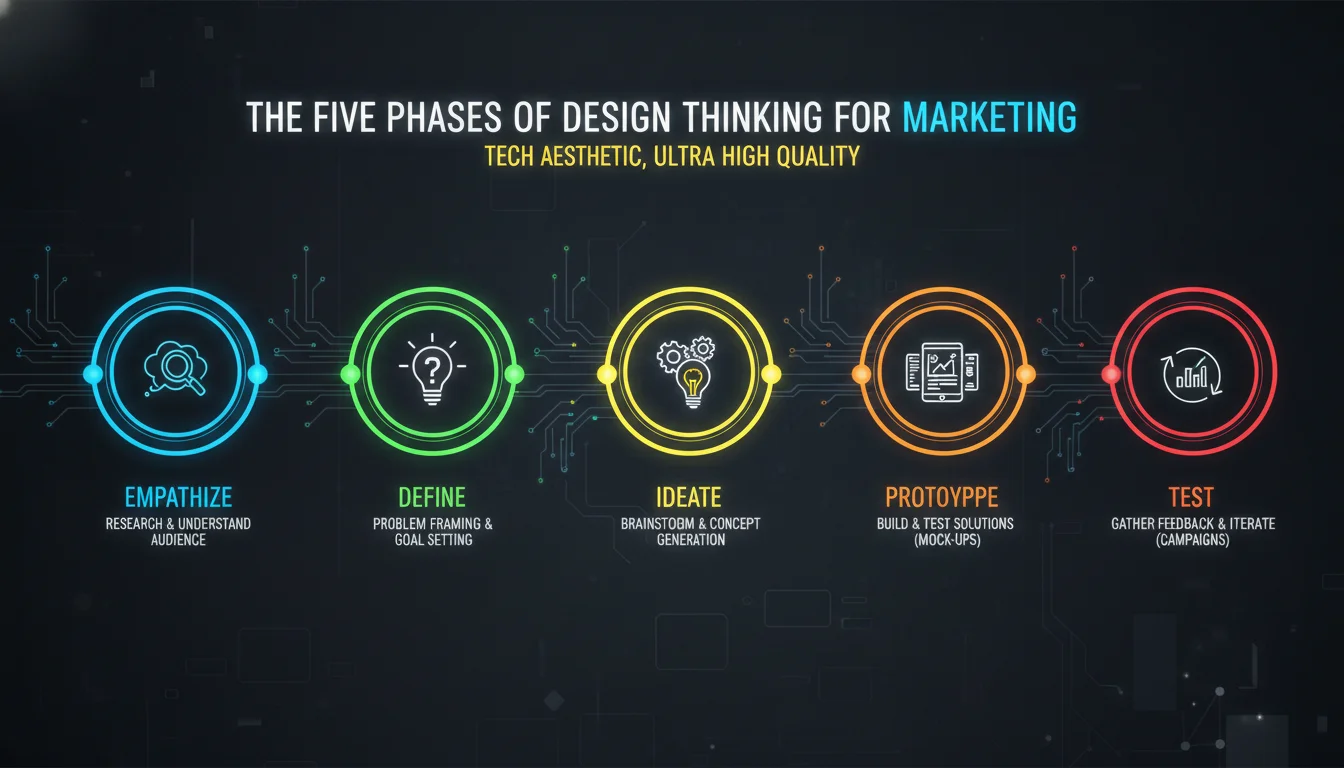
The design thinking process consists of five key phases: Empathize, Define, Ideate, Prototype, and Test. Each phase plays a critical role in developing effective marketing strategies, and each one builds directly on the last.
Phase 1: Empathize
The first phase involves gaining a deep understanding of the users you are designing for. This requires engaging with them through interviews, surveys, and observational studies. The goal is to uncover their motivations, frustrations, and desires without projecting your own assumptions onto them.
Practical tools for this phase include empathy maps (capturing what users think, feel, say, and do), customer journey mapping, and direct observational studies. The AMA is clear on one point: “Be careful not to rely too much on digital research or secondhand data. Real human interaction is irreplaceable in uncovering insights that will shape meaningful solutions.”
Phase 2: Define
After gathering insights, the next step is to synthesize that information into a clear problem statement. This statement should be human-centered and focused on the needs of users rather than business goals. A strong tool here is the “How Might We” (HMW) framing. Instead of saying “We need to increase sign-ups by 20%,” you ask: “How might we make signing up more engaging for first-time users?” One keeps the team locked in metrics. The other opens creative space.
Phase 3: Ideate
In the ideation phase, teams brainstorm potential solutions to the defined problem. This phase encourages creativity and open-mindedness, allowing a wide range of ideas to surface. A useful rule from the design thinking community: replace “Yes, but…” with “Yes, and…” This keeps ideas alive long enough to mature before evaluation begins.
Phase 4: Prototype
Prototyping involves creating tangible representations of ideas. These prototypes can be low-fidelity (like sketches or wireframes) or higher-fidelity (like working landing page mockups) and are used to visualize concepts and gather early feedback. A fail-fast mentality is essential here. The goal is not a finished product. The goal is a learning tool.
Phase 5: Test
The final phase is testing the prototypes with real users. This feedback is invaluable for refining the solutions and ensuring they meet user needs effectively. Test results feed directly back into earlier phases, making the next iteration sharper and more targeted.
How to Apply Design Thinking for Marketing: Step-by-Step
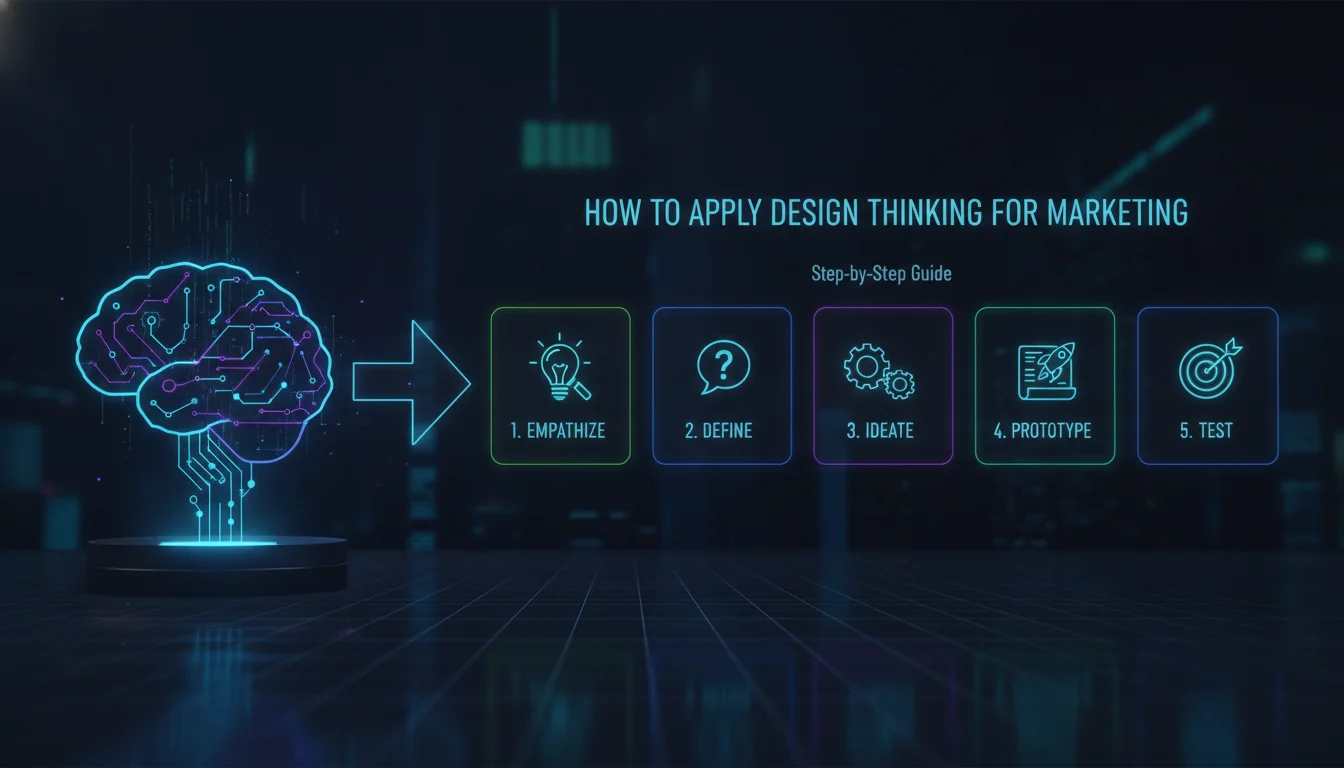
Applying marketing does not require a full agency overhaul. It requires a shift in sequence: research before strategy, empathy before execution, testing before scaling. Here is how to run it in practice.
Step 1: Run a Customer Empathy Sprint
Block two to three days for direct customer research. Conduct at least five to eight user interviews. Use an empathy map template to capture what your customers think, feel, say, and do around the problem your campaign will address. Do not rely on analytics alone. Numbers tell you what happened. Conversations tell you why.
Step 2: Write a Human-Centered Problem Statement
Synthesize your research into a single HMW question. Keep it specific enough to guide action but open enough to allow creative solutions. Share it with your full team before any creative brief is written. This becomes the north star for the entire campaign.
Step 3: Run a Structured Ideation Session
Bring together writers, designers, strategists, and account managers. Use time-boxed brainstorming rounds (eight minutes per prompt works well). Capture every idea without judgment. Then cluster, vote, and prioritize the top three to five concepts worth prototyping.
Step 4: Build a Low-Fidelity Campaign Prototype
Create rough versions of your top campaign concepts. This might mean a one-page landing page mockup, a storyboard for a video ad, or a sample email sequence. The prototype does not need to be polished. It needs to be testable.
Step 5: Test with Real Audience Members
Share your prototypes with a small segment of your actual target audience. Gather qualitative feedback through short interviews or structured feedback forms. Look for patterns in confusion, excitement, or indifference. These patterns tell you what to fix before you invest in full production.
Step 6: Iterate and Scale
Use your test findings to refine the concept. Run another prototype-test loop if needed. Once the concept holds up under real audience scrutiny, scale it into a full campaign. This is the point where design thinking pays off: you are scaling something that already works, not hoping it will.
Applying Design Thinking in Marketing Strategies
Marketers can apply design thinking for marketing across a wide range of strategic contexts. Here are the most practical applications we see working right now.
Customer Journey Mapping
Mapping the customer journey helps identify pain points and opportunities for improvement. By understanding how customers interact with a brand at each touchpoint, marketers can design more effective campaigns that address real friction rather than imagined obstacles.
Creating User-Centric Content
Design thinking for marketing encourages teams to create content that resonates with their audience. By focusing on user needs and preferences, marketers develop messaging that is more engaging and relevant, not just more frequent.
Testing and Iterating Campaigns
Using design thinking, marketers can test their campaigns in real-time, gather feedback, and make necessary adjustments. This iterative approach leads to more successful marketing efforts because it treats every campaign as a learning opportunity, not a final answer.
Design Thinking Approaches: A Comparison
Design thinking for marketing can be applied through several frameworks. Understanding the differences helps you choose the right model for your team’s size, speed, and goals.
| Framework | Phases | Best For | Key Strength | Key Limitation |
|---|---|---|---|---|
| Stanford d.school (5-Phase) | Empathize, Define, Ideate, Prototype, Test | Marketing teams new to design thinking | Clear structure, widely documented | Can feel rigid if followed too literally |
| HBS 4-Phase Model | Clarify, Ideate, Develop, Implement | Business strategy and innovation teams | Strong abstract-to-concrete balance | Less emphasis on empathy research |
| Double Diamond (Design Council) | Discover, Define, Develop, Deliver | Brand and UX-heavy campaigns | Visual clarity, great for cross-functional teams | Requires strong facilitation skills |
| Jobs to Be Done (JTBD) | Research, Frame, Ideate, Test | Product-led marketing and B2B | Deep customer motivation insight | Harder to apply to pure content campaigns |
Pros and Cons of Design Thinking for Marketing
Design thinking for marketing offers real advantages, but it also comes with trade-offs worth understanding before you commit your team’s time and resources.
Pros
- Reduces campaign risk: Testing before scaling means you catch messaging failures early, before they cost you budget and audience trust.
- Builds genuine customer empathy: The research phases force your team to engage with real users, not personas built from assumptions.
- Drives cross-functional collaboration: Design thinking pulls writers, designers, strategists, and product teams into the same room with a shared goal.
- Produces more original creative work: Structured ideation consistently surfaces ideas that pure brief-driven brainstorming misses.
- Scales what works: Because you test before you invest, the campaigns you scale have already proven their resonance with real audiences.
Cons
- Time-intensive upfront: The Empathize and Define phases add days or weeks to your pre-production timeline, which can conflict with fast-moving campaign calendars.
- Requires organizational buy-in: Design thinking only works when leadership supports the process. A single skeptical stakeholder can collapse the iterative loop.
- Hard to measure in isolation: The process improves outcomes over time, but attributing a specific revenue result to design thinking methodology is genuinely difficult.
- Can stall without strong facilitation: Ideation sessions without a skilled facilitator often produce safe, incremental ideas rather than bold creative directions.
Real-World Examples of Design Thinking in Marketing
Design thinking for marketing is not a theoretical exercise. These brands have applied it with measurable results.
Case Study: HubSpot
HubSpot’s SEO team applied design thinking to their content strategy by starting with deep user research rather than keyword volume. By focusing on what their audience actually needed to learn, not just what they were searching for, they built content that earned authority and drove sustained organic growth. The team treated each content experiment as a prototype, gathered performance data, and iterated. This is design thinking for marketing applied to SEO at scale.
Case Study: Airbnb
Airbnb’s design thinking approach transformed their user experience and, by extension, their marketing. By empathizing with both hosts and guests, they identified a core tension: hosts wanted reliable guests, guests wanted authentic local experiences. Their marketing began speaking to both sides of that tension simultaneously, producing campaigns that felt personal rather than transactional. The result was a brand that people talk about without being paid to.
Case Study: Apple
Apple’s marketing strategy is one of the clearest long-running examples of design thinking applied to brand communication. Their focus on user experience and aesthetic clarity has produced campaigns that consistently prioritize how the product makes you feel over what the product technically does. That is the Empathize phase made visible in every ad they run.
Worked Scenario: A Mid-Size E-Commerce Brand
Imagine a mid-size e-commerce brand selling sustainable home goods. Their email open rates are declining and conversion is flat. A traditional response: redesign the template, test a new subject line, move on. A design thinking response looks different.
They start by interviewing 10 recent customers and 10 people who abandoned their cart. They discover that customers love the products but feel uncertain about whether the sustainability claims are real. That insight reshapes the problem statement: “How might we make our sustainability story feel credible and personal, not corporate?” The ideation session produces a concept: a short video series featuring the actual makers behind each product. They prototype it with three videos, test it with a small email segment, and find that click-through rates climb significantly. They scale the series. The campaign works because it was built on a real human insight, not a design assumption.
Common Mistakes to Watch Out For
Design thinking for marketing fails in predictable ways. Knowing these patterns in advance saves your team significant time and budget.
Skipping the Empathize Phase
This is the most common mistake. Teams under deadline pressure jump straight to ideation, treating the Empathize phase as optional. The result is creative work that feels clever internally but lands flat with real audiences. No amount of production quality fixes a campaign built on the wrong insight.
Defining the Problem Too Broadly or Too Narrowly
As the AMA notes, a problem like “How can we improve the entire customer experience?” is too vague to guide action, while “How can we redesign the checkout button?” may be too limiting. The Define phase requires real craft. A poorly framed problem statement produces a well-executed answer to the wrong question.
Treating Prototypes as Final Products
Prototypes are learning tools, not deliverables. Teams that over-invest in prototype polish lose the speed advantage that design thinking provides. Build rough. Test fast. Refine based on evidence.
Ignoring Cross-Functional Input
Design thinking works best when diverse perspectives are in the room. Marketing-only ideation sessions produce marketing-shaped solutions. Bringing in customer service, product, and sales teams surfaces insights that no single department holds alone.
Running One Loop and Stopping
Design thinking is iterative by design. One prototype-test cycle rarely produces the final answer. Teams that treat the first test as a verdict rather than a data point miss the compounding value of multiple loops. The second and third iterations are usually where the real creative breakthroughs happen.
Challenges in Implementing Design Thinking
While design thinking for marketing offers real benefits, there are genuine challenges in its implementation that teams should plan for.
Resistance to Change
Organizations may face resistance from teams accustomed to traditional marketing approaches. Overcoming this resistance requires strong leadership and a commitment to building a culture of innovation. The process feels slower at first, which makes skeptics vocal early.
Resource Constraints
Design thinking can be resource-intensive, requiring time and investment in research and prototyping. Organizations must allocate resources effectively to ensure successful implementation. The upfront cost is real. The downstream savings from avoided campaign failures are also real.
Balancing Creativity and Structure
Finding the right balance between creative freedom and structured processes is genuinely difficult. Teams must learn to navigate this balance to maximize the benefits of design thinking. Too much structure kills creative energy. Too little structure produces ideas that never become campaigns.
Design Thinking for Marketing in 2026: What’s Changed
As of 2026, design thinking for marketing has evolved from a niche innovation framework into a mainstream strategic discipline. Several shifts are worth noting for any team applying it this year.
AI-assisted research tools have dramatically accelerated the Empathize phase. Teams can now synthesize large volumes of customer feedback, review data, and social listening signals in hours rather than weeks. This does not replace human interviews. It makes them sharper by surfacing patterns worth exploring in depth.
The rise of short-form video as a primary marketing channel has made rapid prototyping more accessible than ever. A 30-second video concept can be tested with a real audience for a fraction of what a full production would cost. This aligns perfectly with the design thinking prototype-test loop.
Cross-functional collaboration has also become easier with remote work tools, which means the organizational barrier to running design thinking workshops has lowered significantly. Teams that once needed a physical war room can now run structured ideation sessions across time zones.
According to GBK Collective’s research, the brands that consistently win are those that treat their target customer as the medium itself, not just the recipient of marketing messages. That philosophy is design thinking for marketing expressed at the brand strategy level, and it is more relevant in 2026 than it has ever been.
Frequently Asked Questions
What is design thinking in marketing?
Design thinking in marketing is a human-centered approach that focuses on understanding real user needs before building campaigns or content. It replaces assumption-driven strategy with research, prototyping, and iterative testing to produce work that genuinely resonates with target audiences.
What are the five phases of design thinking?
The five phases of design thinking are Empathize, Define, Ideate, Prototype, and Test. These phases are iterative and non-linear, meaning teams can return to earlier stages as new insights emerge throughout the process.
How can design thinking improve marketing strategies?
Design thinking improves marketing strategies by grounding creative decisions in real customer insight rather than internal assumptions. It reduces campaign risk, drives more original creative work, and produces campaigns that scale because they have already been validated with real audiences before full investment.
Is design thinking still relevant in 2026?
Yes, design thinking for marketing remains highly relevant in 2026. As AI tools accelerate research and short-form video lowers prototyping costs, the framework has become more practical and accessible than ever. The core principle, building around human needs first, has not changed.
Can design thinking be applied to B2B marketing?
Absolutely. Design thinking for marketing works in B2B contexts by focusing on the specific needs, pressures, and decision-making processes of business buyers. The Empathize phase is especially valuable in B2B, where purchase decisions involve multiple stakeholders with different priorities.
What are the most common mistakes teams make with design thinking?
The most common mistakes are skipping the Empathize phase under deadline pressure, defining the problem too broadly or too narrowly, over-investing in prototype polish, and treating the first test cycle as a final verdict. Each of these errors collapses the iterative loop that makes design thinking effective.
Ready to build campaigns that start with your audience and end with results? Contact Emin Media for a free brand consultation and let’s build something bold together. You can also explore how we approach brand strategy and creative production for teams ready to think differently.
Enjoyed this article?
Contact Emin Media for a free brand consultation and let's create something amazing together.
Get in TouchRelated Articles
Digital Storytelling for Brands: The Complete Guide
Digital storytelling for brands builds real audience connections through narrative. Learn proven techniques, formats, and…
Creative Direction for Video Shoots: A Complete Guide
Master creative direction for video shoots with proven steps, tools, and strategies that build brand…
Brand Video Examples: Inspiration for 2026
Explore the best brand video examples of 2026. See what makes them work, steal the…