Media Production Services: The Complete 2026 Guide
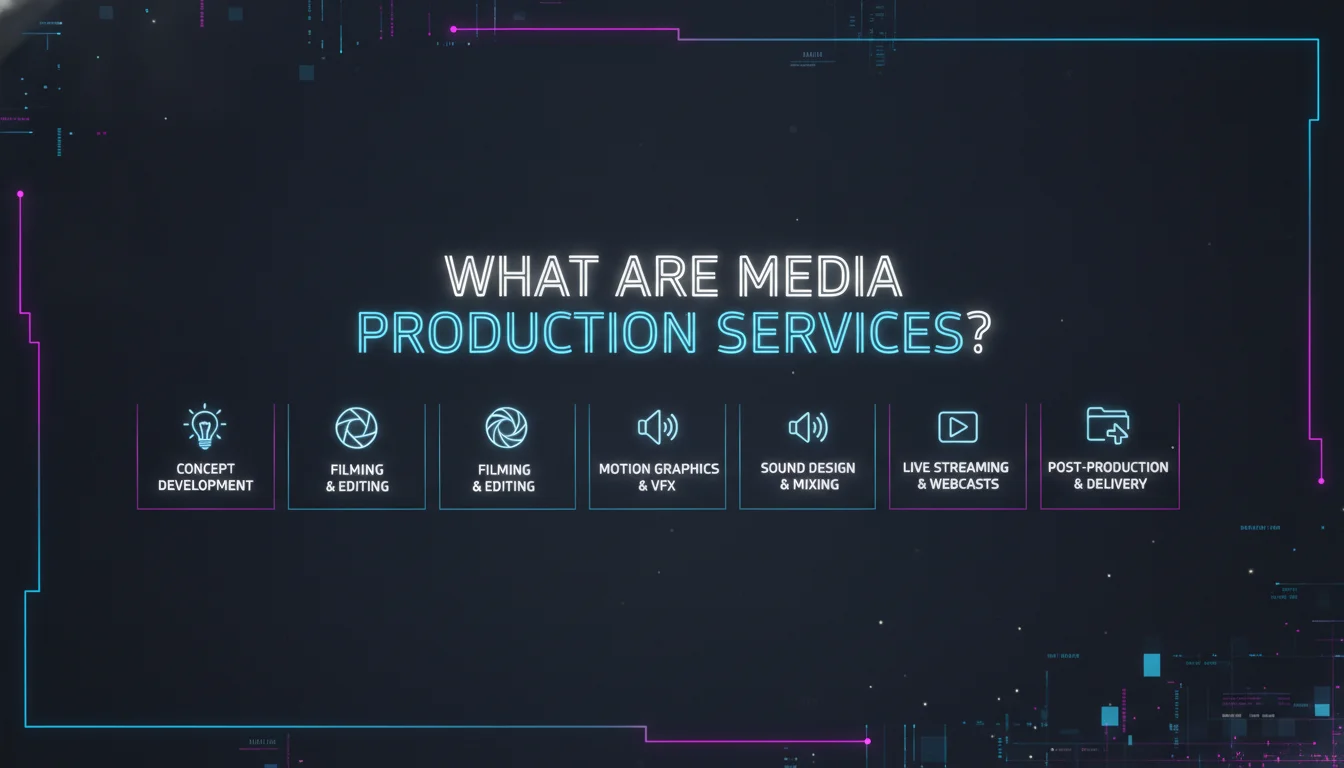
Media production services are professional offerings that turn an idea into finished audio, video, or multimedia content, covering everything from scripting to final edit. Think corporate films, training series, and live event coverage.
Key Takeaways
- production services cover the full lifecycle of content creation, from ideation to final delivery.
- The production process typically follows four stages: planning, pre-production, production, and post-production.
- Services range from corporate video and explainer animations to live event streaming and social media content.
- Industries like corporate, education, and healthcare rely on media production to engage audiences and achieve communication goals.
- Choosing a provider means evaluating portfolios, capabilities, and whether you need a full-service or specialized partner.
- Costs vary widely based on project scope, but scalable solutions exist for nearly any budget.
- Advancements like virtual production and LED studios are reshaping how content gets made.
What Are Media Production Services?
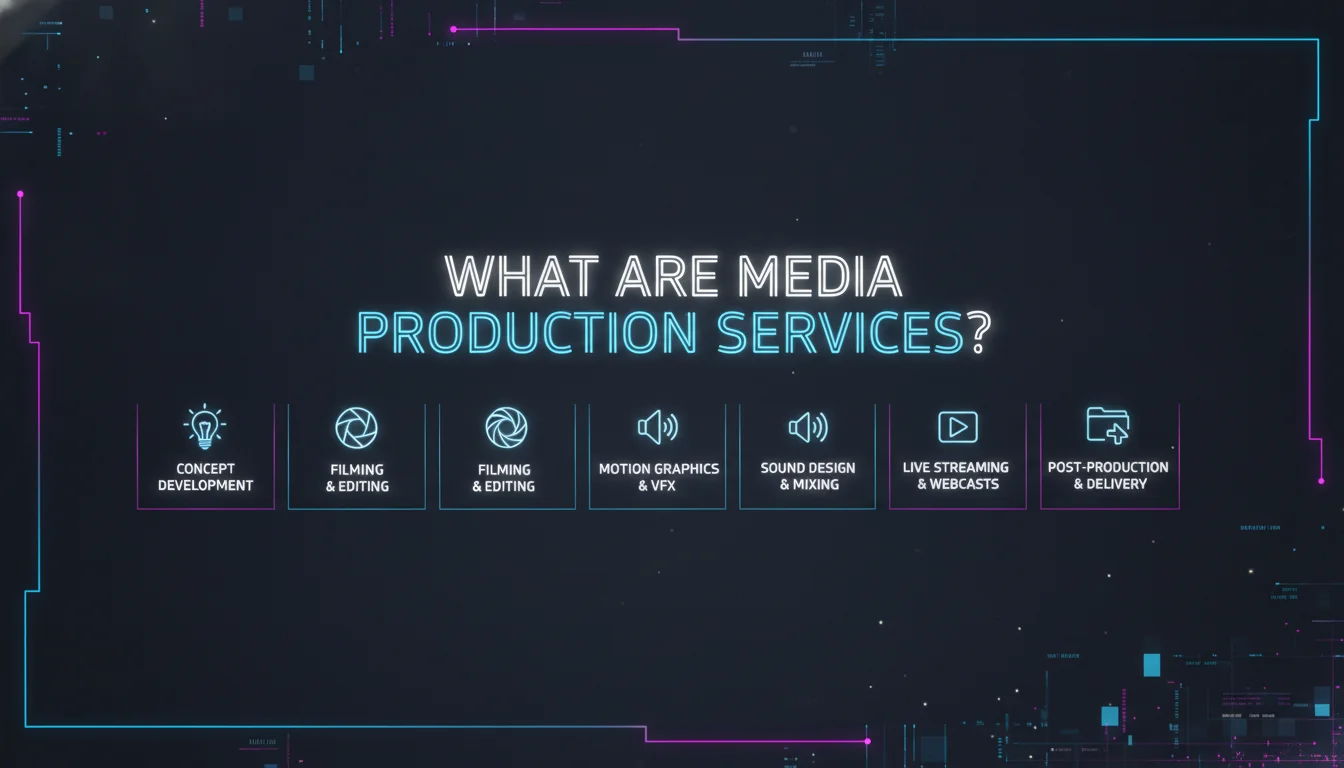
this type of services are the professional creation of multimedia content, ranging from short promotional videos to feature-length films and livestreams. A media production company acts less like a vendor and more like a creative partner, guiding you through the entire process from first sketch to final export.
The Role of a Media Production Company
According to Entasher, these companies manage projects from the initial idea all the way to the finished product, handling scriptwriting, casting, filming, editing, and distribution under one roof. This isn’t a new industry chasing trends. The oldest media production company on record, Gaumont Film Company, was founded in France in 1895, which tells you something: organized visual storytelling has been a business need for well over a century, long before anyone coined the phrase “content strategy.”
Modern this kind of services go far beyond a camera and a call sheet. They now cover digital-first formats built for websites, social feeds, e-learning platforms, and virtual events. Harvard’s media production, for example, supports faculty with instructional videos, podcasts, and livestreams that strengthen teaching and research, according to Harvard University. Their offering includes short-form video, podcast and music recording, studio recording, arts and music event capture, post-production, closed captioning, and even tape transfers for archival material. That breadth matters. It means an organization can consolidate a dozen scattered content needs into one relationship instead of managing five different freelancers with five different invoices.
Key Components of Media Production
At its core, media production blends creative storytelling with technical precision. The key pieces include concept development (defining the message and the goal), production logistics (location scouting, equipment, scheduling), and post-production (editing, color grading, sound design). JLB Media Productions, a full-service provider, describes handling every piece of that chain, from creative concept development through motion graphics and final editing, according to JLB Media. That kind of end-to-end ownership keeps quality consistent instead of watching it degrade every time a project changes hands. The University of Kansas’s Media Production Studio takes a similar integrated approach, pairing videography and post-production with support for platforms like Kaltura and Zoom, which shows how technical infrastructure and creative work are stitched together rather than treated as separate jobs.
“We don’t just shoot videos. We tell your story with purpose. Our in-house production team handles every aspect of the process.” – JLB Media Productions
The Media Production Process: From Concept to Completion
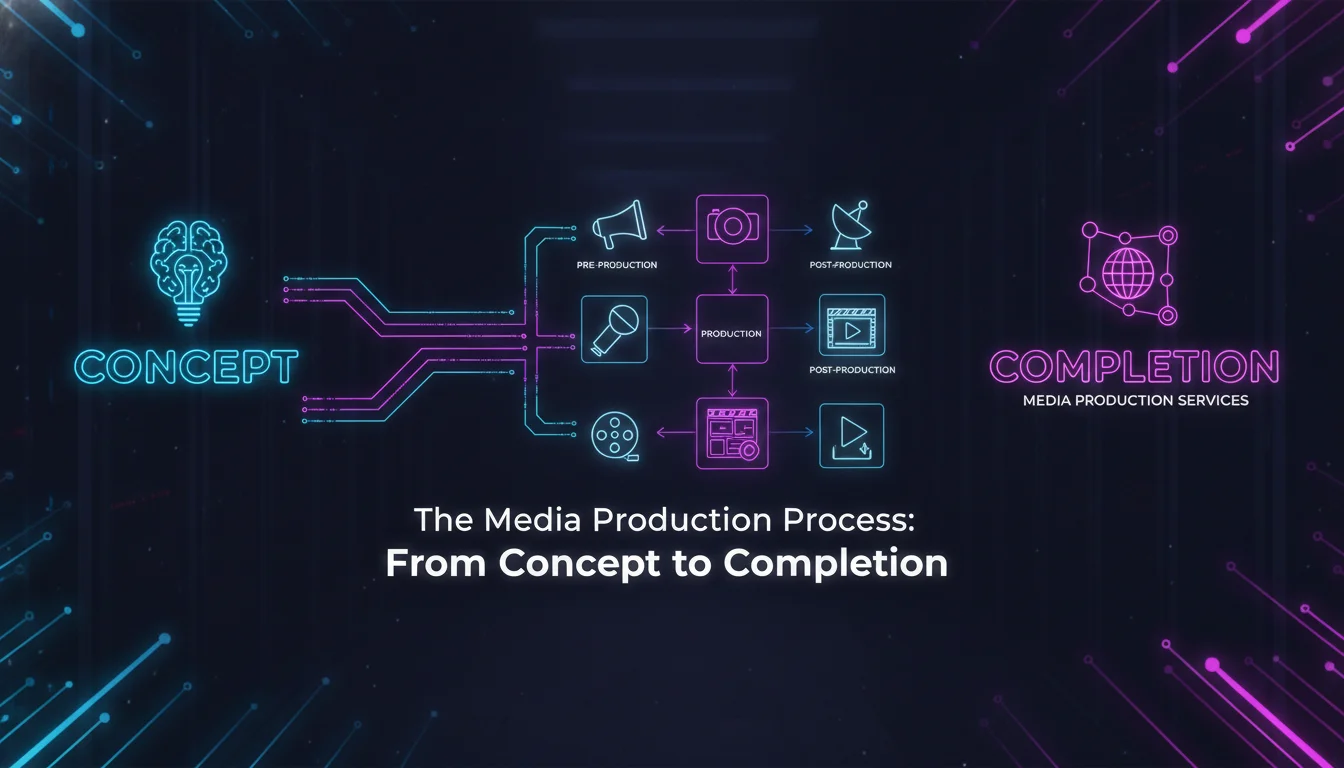
The media production process runs through four defined stages: planning, pre-production, production, and post-production. Knowing these stages upfront helps you collaborate with your chosen production services provider instead of just waiting for a finished file to land in your inbox.
Stage 1: Planning and Concept Development
Planning is where the raw idea gets shaped into something usable. Storyboards start to visualize the narrative, and the messaging gets aligned with what the audience actually needs to hear. This is where you set the real goal, whether that’s driving sales, training a workforce, or building brand recognition, and a clear plan here saves you from expensive confusion later.
Stage 2: Pre-Production Preparation
Pre-production is the unglamorous logistical work that makes production day feel effortless. Casting talent, locking locations, arranging props and makeup, and building the shoot schedule all happen here. Companies like Plum Media work closely with clients at this stage, building a strategy that fits the timeline and budget while keeping the project on target, per Plum Media. Skimping on pre-production is one of the fastest ways to blow a budget mid-shoot.
Stage 3: Production: Lights, Camera, Action
Production is when the cameras actually roll, on location or in a studio, with the director, cinematographer, sound techs, and crew moving as one unit. This phase demands tight coordination and quick problem-solving, since anything unplanned shows up on camera in real time. Harvard’s Hauser Studio, a multi-camera video studio, gives faculty a controlled, professional environment for capturing educational content. JLB Media’s streamlined workflow, meanwhile, is built specifically to keep shoots on time and on budget, a detail that matters more than most clients realize until their first overrun.
Stage 4: Post-Production and Delivery
Post-production is where raw footage becomes a finished story. Editors cut together the strongest takes, layer in music, voiceover, motion graphics, and effects, while color correction and sound mixing pull everything into one cohesive experience. The final file then gets formatted for wherever it’s headed: broadcast, web, or social. Many this type of services also bundle in closed captioning and multiple language versions to widen the audience without a second production cycle.
Types of Media Production Services
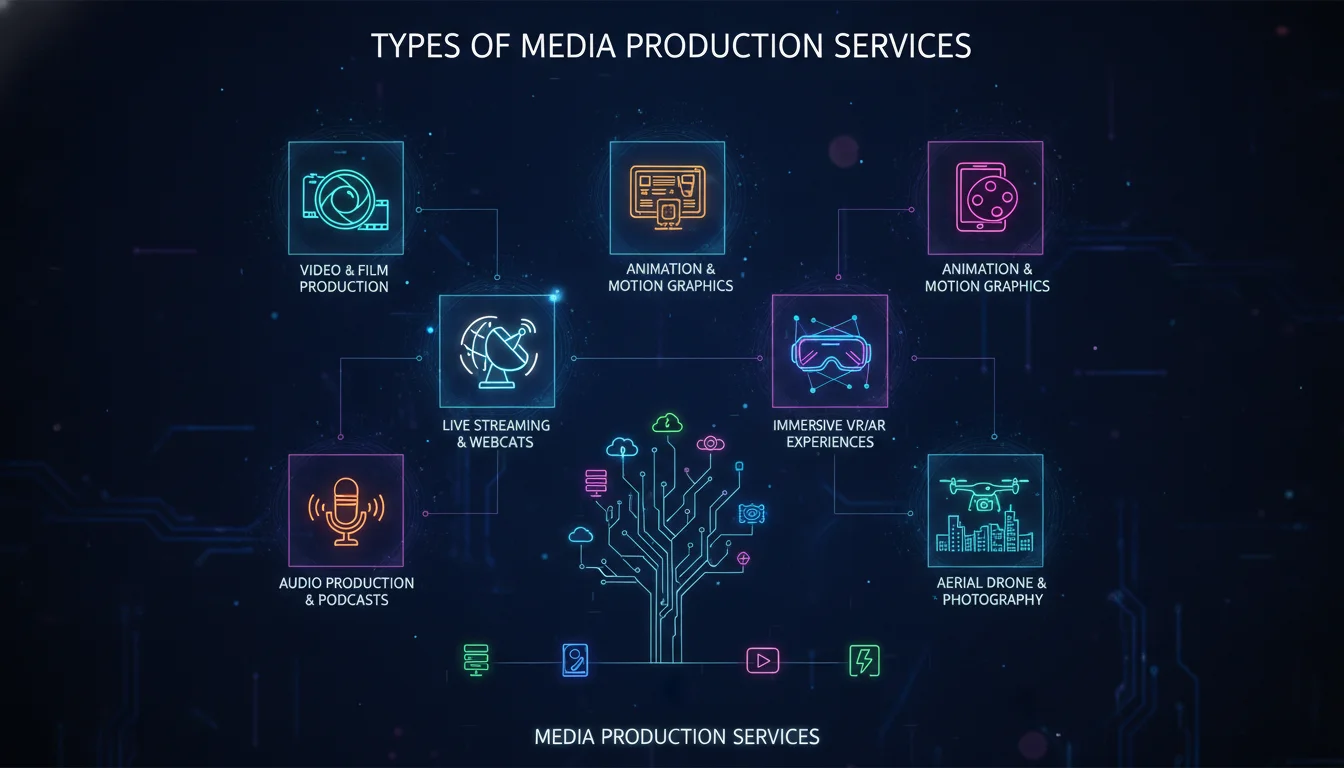
Media production services span a wide range of formats, each built for a specific communication goal. Here’s a quick comparison of three common categories.
| Service Type | Typical Deliverables | Best For |
|---|---|---|
| Corporate Video Production | Brand films, internal communications, recruiting videos, event recaps | Enterprises seeking polished storytelling for stakeholders |
| Explainer Video Production | Animated shorts, product demos, tutorial videos | Tech companies, startups, complex service offerings |
| Live Event Coverage & Streaming | Multi-camera livestreams, highlight reels, real-time broadcasts | Conferences, concerts, sports, and virtual events |
Corporate Video Production
Corporate video production is still a foundation of media production services, spanning everything from CEO messages to customer testimonials and training series. JLB Media Productions, a national corporate video production company, has produced nearly 1,000 videos across 41 states and 93 of the top 100 U.S. metro areas, according to JLB Media. That scale reflects real, sustained demand for polished, on-brand video across the corporate world, not a passing trend.
Explainer and Animated Videos
Explainer videos break down complex ideas through visuals and tight scripting, making them a favorite for software demos, product launches, and training series. Animation and motion graphics open up creative options that live-action simply can’t touch, especially for abstract or technical concepts. Many providers now keep animation in-house, which cuts out the extra vendor and the extra handoff.
Event Coverage and Live Streaming
Live streaming has become one of the fastest-growing ways to extend a physical event’s reach far past the room it happens in. Media Production Services, LLC has built over two decades of experience in this space, with tech management credits on broadcasts like NFL on CBS and the Stanley Cup Finals, according to the Berkshire Film & Media Collaborative. That kind of high-pressure broadcast experience is exactly what keeps a live event running smoothly when there’s zero room for a second take.
Social Media and Short-Form Content
The rise of TikTok and Instagram has pushed short-form vertical video into the core of most media production services offerings. This format demands a different storytelling instinct: snappy pacing, bold visuals, and a mobile-first frame of mind. Plum Media points to its social and influencer work as proof that bite-sized content can still carry a brand’s full creative voice, per Plum Media. Brands that ignore this format are leaving attention on the table.
Industries That Benefit from Media Production Services
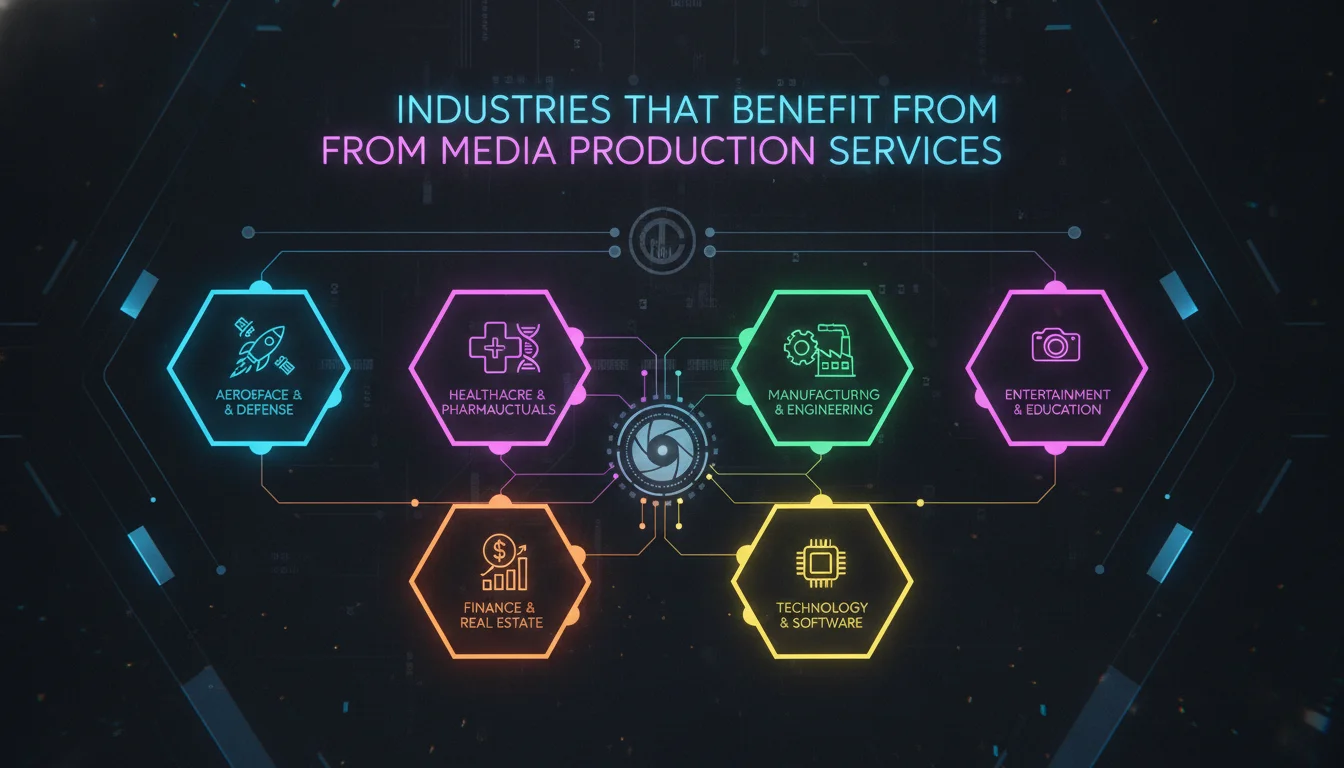
Nearly every sector benefits from media production, but corporate communications, education, and nonprofits lean on it the hardest. Each uses video and multimedia differently, but the goal is the same: connect with an audience faster than text alone ever could.
Corporate and Enterprise Communications
Large organizations rely on media production services for internal training, executive communications, and brand marketing. A well-made video can humanize a company, carry its culture across offices scattered around the globe, and keep messaging consistent no matter who’s watching. Scalable delivery matters here. Providers like JLB Media serve startups and established enterprises with the same level of craft, just at different budgets and scopes.
Education and Academic Institutions
Universities and schools increasingly treat media production as core infrastructure for learning, not an occasional extra. Harvard’s Media Production Services creates instructional videos, documents arts performances, and records podcasts that support both curriculum and research. Access to a dedicated space like the Hauser Studio gives these projects a production quality that genuinely engages students, faculty, and the public.
Non-Profits and Advocacy
Nonprofit organizations depend on storytelling to move people toward action, whether that’s a donation or a signature on a petition. Media production services help these organizations build emotionally resonant documentaries and campaign pieces that make a cause feel personal. Plum Media, based in Milwaukee, highlights work with nonprofits, including mini-documentaries and social content built to inspire real action, according to Plum Media.
How to Choose the Right Media Production Partner
Choosing the right media production partner comes down to matching their portfolio, working style, and specialization to your specific project needs. Skip this step and you risk paying for polish you don’t need, or worse, missing craft you do.
“A strong media production service combines technical expertise with creative storytelling. We guide you through the process and identify the best style, including film-inspired narratives, high-impact visuals, and graphics animation, to achieve your goal.” – Plum Media
Evaluating Portfolio and Experience
Start with the portfolio. Look for projects similar in scope and tone to what you’re planning, and check for range across industries and formats. A provider with broad experience, like Media Production Services, LLC, which counts NFL, NCAA, and political convention credits among its work, brings a depth of problem-solving that a newer shop simply hasn’t earned yet. Client testimonials and case studies with measurable outcomes are worth more here than a flashy reel.
Full-Service vs. Specialized Providers
Full-service media production companies manage every step in-house, which usually means smoother communication and more consistent quality across deliverables. Specialized boutiques might be exceptional in one lane, like animation or live event streaming, but you’ll need to coordinate multiple vendors to cover the full scope. Weigh your internal bandwidth and project complexity before deciding. Firms like Plum Media build integrated teams of writers, producers, editors, and designers specifically to remove that friction and speed up timelines.
Communication and Collaboration
The best providers act like strategic partners, not order-takers. During the selection process, pay attention to responsiveness, how well they listen, and whether they bring creative ideas to the table unprompted. A team that takes the time to actually understand your brand and audience will produce work that feels authentic instead of generic. Plum Media structures its process around regular check-ins and collaborative brainstorming to keep clients in the driver’s seat throughout, which builds the kind of trust that shows up in the final cut.
Media Production Services Costs: What to Expect
Media production services costs vary widely because pricing depends on project length, crew size, location, equipment, and post-production complexity rather than a fixed rate card. A one-minute explainer animation and a multi-day live-streamed shoot live in completely different budget territories.
Factors Influencing Pricing
Several variables drive the final number: project length and complexity, crew size, travel, equipment needs, post-production scope, and talent fees. Exact published rates are rare because most projects are scoped individually, but companies like JLB Media emphasize scalable solutions built for any budget, according to JLB Media. That flexibility means smaller businesses can still access professional-grade work without stretching past their limits.
Budgeting for Your Project
For accurate pricing, request custom proposals from a handful of providers and give them a clear brief covering your goals, audience, and deliverables. Many companies offer tiered packages, basic, standard, premium, that bundle services at different price points. Quality production tends to pay for itself through stronger engagement and sharper brand perception, but always clarify the fine print: revision counts, music licensing, and distribution formats can all move the final bill.
The Evolution of Media Production: Trends and Technology
Media production is evolving fastest around virtual production and multi-platform delivery, both reshaping how content gets made and where it lives once it’s finished. As of 2026, these shifts aren’t experimental anymore, they’re standard operating procedure for competitive providers.
Virtual Production and LED Studios
Virtual production techniques, especially LED volumes, let filmmakers project digital environments in real time, cutting down on green screens and expensive location travel. Plum Media operates an LED studio in Glendale, Wisconsin, offering full production and streaming capabilities, according to Plum Media. This lets clients build immersive, cinematic settings without the travel budget that used to come with them.
Multi-Platform Content and Social Media
Today’s audiences move between websites, social feeds, and streaming platforms constantly, so media production services now have to build for multiple aspect ratios and lengths from day one. A short-form vertical video built for TikTok or Instagram Reels needs a completely different shooting and editing approach than a horizontal corporate documentary. This year, the providers pulling ahead are the ones advising on platform-specific optimization back at the planning stage, not bolting it on after the edit is locked.
Pros and Cons
Pros
- Professional storytelling builds brand trust and improves audience engagement across platforms.
- Full-service providers streamline the process by handling everything from concept to final delivery under one roof.
- Scalable packages mean businesses of nearly any size can access quality production.
- Advances like LED virtual production reduce travel costs and expand creative possibilities.
Cons
- Costs can be unpredictable until you get a custom quote, making budgeting tricky upfront.
- Full-service partners may cost more than piecing together freelance specialists for a single deliverable.
- Timelines can stretch significantly for complex, multi-location, or highly animated projects.
- Coordinating specialized boutique vendors for different needs can create communication gaps.
Frequently Asked Questions
What are media production services?
Media production services are professional offerings that cover the creation of audio, video, and multimedia content, from initial concept and scripting through filming and post-production editing. They’re used across industries from corporate communications to education and nonprofit advocacy.
How much does it cost to hire a production company?
Costs vary widely depending on project scope, crew size, equipment, and post-production needs. Most providers offer customized quotes after reviewing your project brief, and scalable packages are available for different budgets.
What does media production involve?
Media production typically involves four stages: planning (concept development), pre-production (logistics), production (filming), and post-production (editing and final delivery). Each stage builds directly on the one before it.
What are some examples of media production?
Examples include corporate brand films, explainer animations, television commercials, live event streaming, training videos, and social media content. Many providers now bundle several of these formats into one engagement.
How do I choose the best media production company?
Evaluate their portfolio, client reviews, and relevant industry experience, then decide whether you need a full-service partner or a specialist. Make sure they communicate clearly and align with your timeline and budget before signing on.
How long does a media production project take?
Timelines depend on complexity: a simple explainer video may take 2 to 4 weeks, while a large-scale corporate film could span several months from pre-production to final delivery. Live event coverage typically runs on a tighter, date-driven schedule.
Great content doesn’t happen by accident, it happens through process, craft, and a partner who treats your story like it matters. If you’re ready to build something bold, contact Emin Media for a free brand consultation and let’s map out what your next production could look like.
Enjoyed this article?
Contact Emin Media for a free brand consultation and let's create something amazing together.
Get in TouchRelated Articles
Digital Marketing for Creatives: A Bold Guide
Digital marketing for creatives builds real visibility and sales. Learn strategies for social media, SEO,…
Branding & Design Agency Tips That Actually Work
Discover branding and design agency tips to choose the right partner, set clear goals, and…
Creative Agency Pitch Deck Tips That Win Clients
Master creative agency pitch deck tips that win clients in 2026. Learn storytelling, design, and…