How to Start a Branding Project: Step-by-Step
How to Start a Branding Project: A Step-by-Step Process That Actually Works
How to start a branding project is the process of defining your positioning, audience, and differentiation before any visual design begins, then moving through research, identity creation, and documented guidelines in a structured sequence.
Key Takeaways
- Positioning precedes design. Define category, audience, and differentiation before any logo work begins.
- Research is non-negotiable. Audience interviews and competitor analysis prevent generic, forgettable branding.
- Follow a phased process. Move from strategy to identity to guidelines to launch, in that order.
- Use project management tools. Asana, ClickUp, or similar platforms keep stakeholders aligned and projects on track.
- Document everything. A style guide ensures consistency across every touchpoint, now and as you scale.
- Implementation is the beginning, not the end. A brand only works if it’s applied consistently after launch.
What Is a Branding Project?
The Definition of Branding
A branding project is a coordinated effort to define how a company, product, or individual presents itself to the world. According to Business Dictionary, as cited by Tubik Studio, a brand is “a unique design, sign, symbol, words, or a combination of these, employed in creating an image that identifies a product and differentiates it from its competitors.” That definition makes one thing clear: branding is not merely a logo or color scheme. It’s the full set of visual and verbal cues that shape perception.
Many people mistakenly equate branding with logo design. A logo is critical, yes. But branding encompasses the entire experience a customer has with your organization. The visual layer is just one part. The message and emotional appeal behind it matter just as much, as Tubik Studio explains in their six-stage branding framework.
The Scope of a Branding Project
A branding project can range from a new venture’s foundational identity to a full rebrand of an established organization. The scope typically includes positioning, messaging, visual identity, and documented guidelines. Adobe Certified Professional identifies logos, typography, color palettes, taglines, and imagery as the core elements of brand identity design. These elements must work together to create recognition and emotional connection.
Defining scope early prevents misunderstandings. For client work, that means clarifying deliverables: logo variations, color palettes, typography systems, and a style guide. For DIY projects, it means committing to a consistent visual and verbal language across all platforms before you start designing anything.
Why Branding Projects Matter
Strong branding drives both familiarity and preference. Nielsen’s Global New Product Innovation Survey, reported by Tubik Studio, found that nearly 59% of people prefer to buy new products from brands familiar to them, and 21% say they are ready to purchase a product if it comes from a brand they like. A well-executed branding project has measurable business impact, not just aesthetic value.
This data explains why companies invest in branding despite the effort involved. A coherent brand reduces customer acquisition costs over time by building recognition and trust. As American graphic designer Paul Rand put it: “Design is the silent ambassador of your brand.”
“Design is the silent ambassador of your brand.” – Paul Rand, American graphic designer
How to Start a Branding Project: The Strategic Foundation
Positioning Before Design
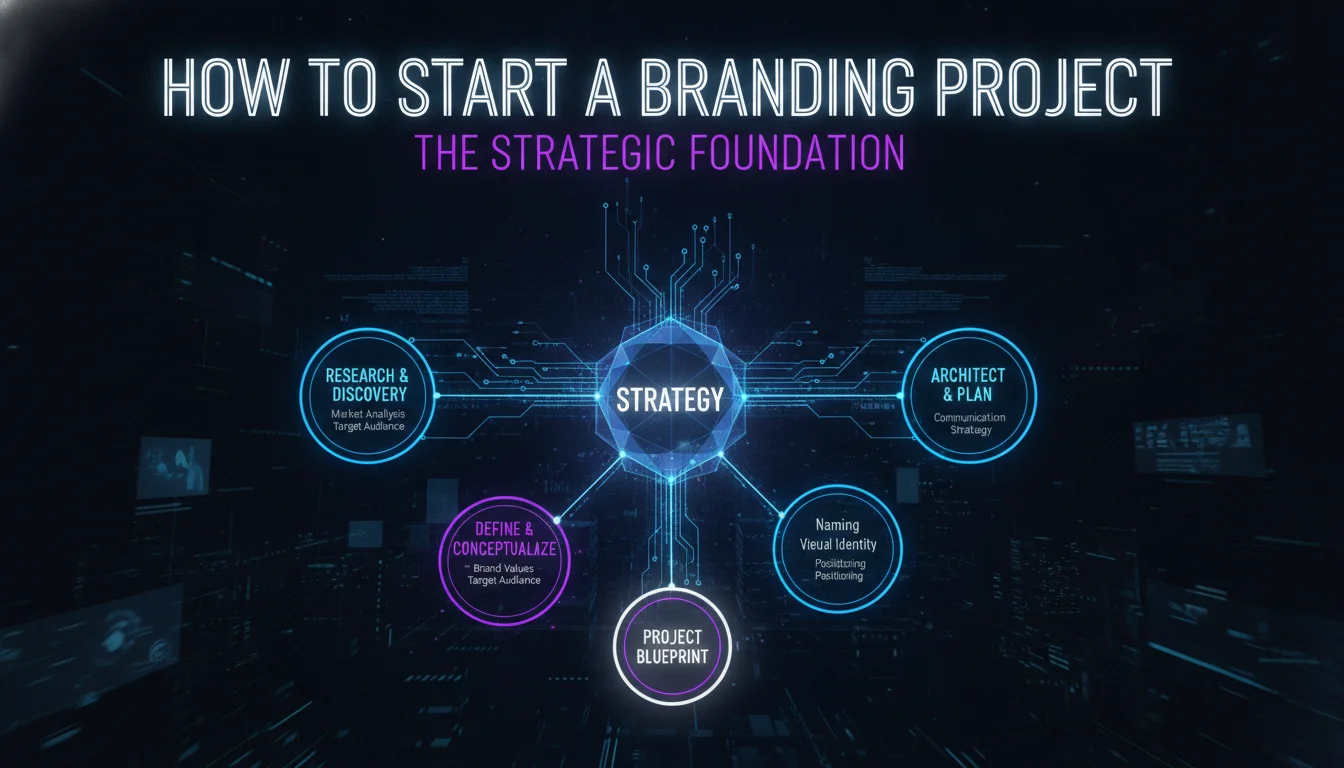
The single most important principle when you start a branding project is to establish positioning before any visual work. Jamie Catherine Barnett emphasizes that having as much positioning in place as possible ahead of time, including category, personas, differentiation, and value proposition, prevents costly rework. Design-first approaches often fail because they skip this strategic anchor entirely.
Positioning answers three fundamental questions: Who is the brand for? What does it offer? Why is it different? Without clear answers, the visual identity will be arbitrary and unlikely to connect with the intended audience. You’ll end up redesigning in six months.
Aligning Stakeholders
A branding project rarely lives in a single department. Barnett’s 7-point checklist includes lining up stakeholders early, appointing a leader who can negotiate contracts and manage agencies, and assigning a coordinator to keep the project moving. When internal decision-makers aren’t aligned, the design process stalls and the final brand lacks coherence.
For larger organizations, this step is especially critical. A rebrand can involve marketing, product, sales, and executive teams, each with different priorities. Establishing clear roles and decision rights at the outset prevents later conflicts. Barnett describes stakeholder management as “goat-herding” for a reason: it’s harder than the design work itself.
Defining Deliverables Up Front
Before any design begins, clarify exactly what the project will produce. Common deliverables include a logo suite, typography system, color palette, tagline, imagery guidelines, and a style guide. Big Cat Creative recommends using project management software to list every step as a task, assign stakeholders, and set due dates. This level of clarity prevents scope creep and keeps the project on track.
For agencies, a clear deliverable list protects the budget and timeline. For DIY branders, it provides a checklist to ensure no critical asset is overlooked. In both cases, defining deliverables transforms an abstract branding effort into a concrete, manageable plan.
Step-by-Step Process for Starting a Branding Project
Overview of the Eight Steps
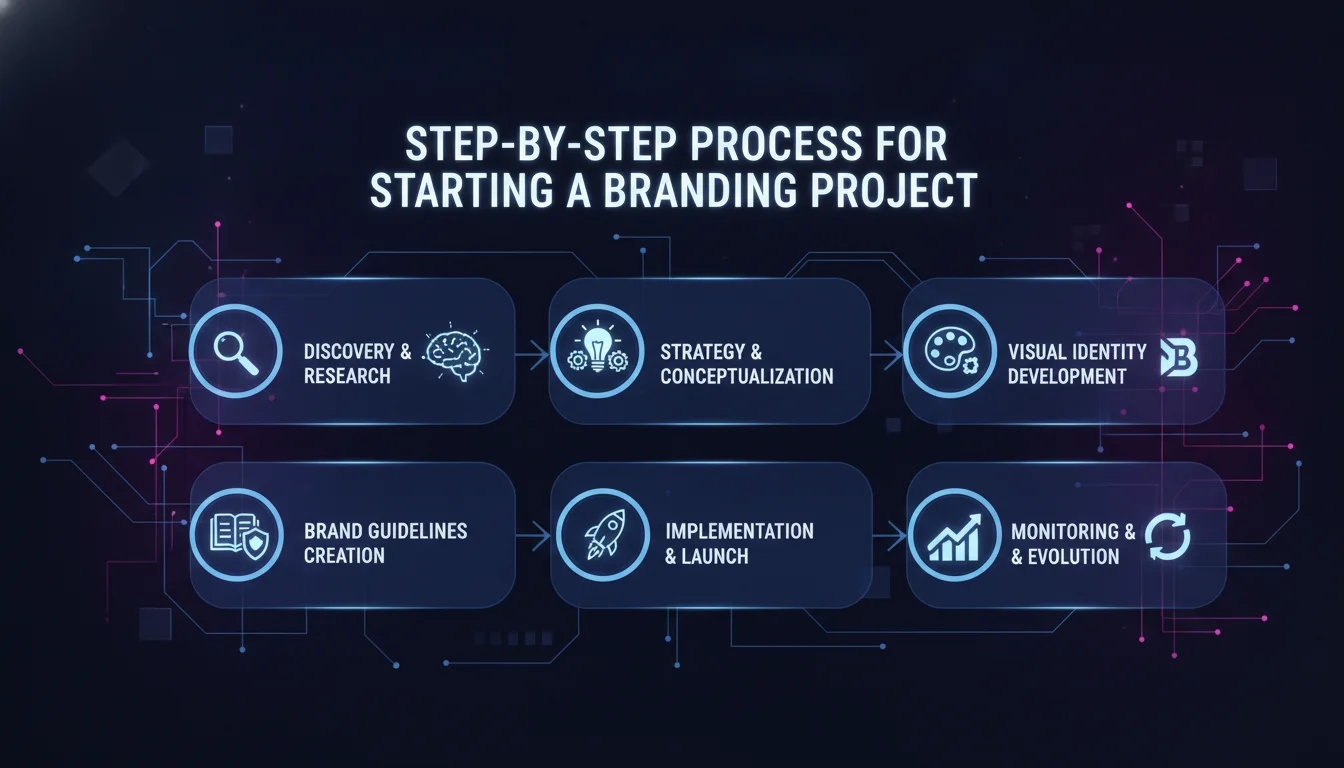
An effective branding project follows a disciplined sequence. This eight-step process synthesizes the strategic checklists from Jamie Barnett, the design stages from Tubik Studio, and the client workflow from Big Cat Creative.
- Define the target audience. Interview clients or yourself to identify a single ideal customer, not a vague demographic group.
- Research competitors. Analyze common design approaches and find differentiation opportunities in the gaps.
- Establish positioning. Articulate category, differentiation, value proposition, and core messaging.
- Align stakeholders. Ensure all decision-makers agree on scope, timeline, and deliverables before design starts.
- Develop brand strategy. Define personality, voice, and key messages that will guide every creative decision.
- Design visual identity. Create logo, typography, color palette, and supporting imagery rooted in strategy.
- Compile a style guide. Document usage rules, color codes, typography specs, and tone of voice guidelines.
- Launch and gather feedback. Deliver assets, implement across touchpoints, and collect testimonials to close the project professionally.
This sequence isn’t rigid. Some steps will overlap. But skipping the early steps to reach visual design faster is the most common cause of expensive rework.
Steps 1 to 4: Strategy and Research
The first half of the process is about understanding before creating. Audience research, competitive analysis, and positioning create the strategic foundation that everything else rests on. Big Cat Creative suggests asking clients to envision a single ideal person rather than a group, which makes the target more concrete and every downstream decision easier.
Competitive analysis should identify both visual trends and strategic gaps. Adobe Certified Professional advises looking at competitors’ brand identities to find common design approaches and opportunities for differentiation. This step is what prevents your brand from blending into the category instead of standing apart from it.
Steps 5 to 8: Design and Delivery
The second half translates strategy into visual and verbal assets. Designers develop the visual identity, then compile a style guide to ensure consistency across every application. Finally, the brand is delivered with all files and documentation, and feedback is collected to refine future work. Big Cat Creative notes that delivering polished brand assets and gathering client testimonials is part of a professional, repeatable process.
Throughout these steps, project management tools keep tasks visible and accountable. Bringing clients into a tool like Asana can reduce back-and-forth email and keep approvals moving, as Big Cat Creative recommends from direct experience running client projects.
Audience and Market Research
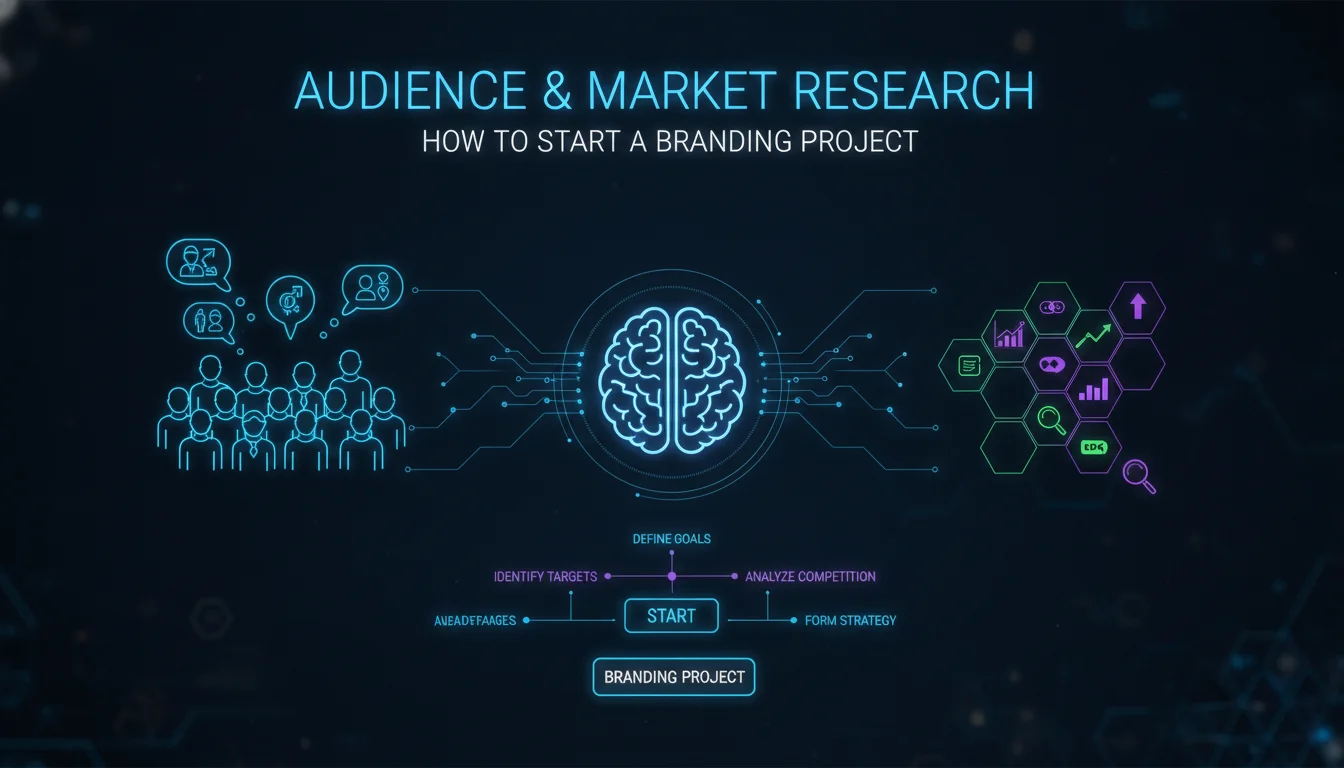
Target Audience Definition
Defining the target audience is the critical first step in any branding project. Big Cat Creative uses a detailed questionnaire covering age, gender, industry, marital status, hobbies, pain points, hopes, and social media platforms. This level of detail clarifies who the brand must attract and how to speak to them in a way that actually resonates.
For DIY branding, this step is often skipped because it feels abstract. But it directly informs tone of voice, visual style, and channel selection. A brand built without this clarity will struggle to connect with any specific group, because it’s trying to speak to everyone at once.
Competitive Analysis
Competitive research identifies design trends and strategic gaps. Adobe Certified Professional advises looking at competitors’ brand identities to find common design approaches and opportunities for differentiation. The goal is not to copy what’s working. It’s to understand the visual and strategic landscape so you can occupy a distinct position within it.
Analyze both direct and indirect competitors. Direct competitors offer similar products or services. Indirect competitors may solve the same problem differently. This broader view reveals how to position the brand uniquely, rather than just being a slightly different version of what already exists.
User Research Methods
Beyond competitor analysis, user research can include interviews, surveys, and social listening. A brand built on observed behavior rather than assumptions is far more likely to resonate with real people. The principle is simple: research before design, always.
For client-based projects, a structured questionnaire is the most practical tool. Big Cat Creative suggests using Google Forms or built-in website forms like Squarespace blocks to collect this information efficiently, without adding friction to the client relationship.
Brand Strategy and Positioning
Core Messaging
Core messaging includes the value proposition, key messages, and tagline. Jamie Barnett stresses that positioning, including category, personas, differentiation, and value proposition, must be articulated before any creative work begins. A clear core message guides every design decision that follows.
Messaging should be specific enough to differentiate but simple enough to remember. Avoid jargon and generic claims. Test messages with real customers when possible. If you can’t explain the brand’s difference in one sentence, the positioning work isn’t done yet.
Brand Personality
Brand personality is the set of human characteristics associated with a brand. It influences tone of voice, visual style, and customer interactions at every level. Tubik Studio includes business goals and brand personality as Stage 1 of the design process, noting that designers don’t set these but rely on them as a foundation for every creative decision.
A useful exercise: imagine the brand as a person. Would it be formal or casual? Ambitious or nurturing? Irreverent or authoritative? These traits then translate directly into typography choices, color decisions, and imagery direction.
Value Proposition
A strong value proposition explains why a customer should choose this brand over alternatives. It must be specific, credible, and relevant to a real pain point. This is not a slogan. It’s a strategic statement that aligns the entire branding project from research through to launch.
The value proposition should emerge from audience research and competitive analysis. It addresses a real pain point and highlights a defensible difference, whether that’s a feature set, a unique competency, or a category reframing. As Jamie Barnett explains, the differentiator should come from “that hard-to-replicate set of features, and/or a unique competency that makes you special.”
“Have as much of your positioning in place as you can ahead of time. That means articulating your category, personas, differentiation, and value proposition.” – Jamie Catherine Barnett, brand strategist and CMO advisor
Visual Identity Design
Logo Design
A logo is the most recognizable element of a brand identity, but it should never be the first thing you create. Adobe Certified Professional states that a well-designed logo should be simple, distinctive, and relevant to the brand’s value and offerings. The logo must emerge from strategy, not from personal preference or trend-chasing.
Jumping to logo design early is the most seductive mistake in branding. It feels productive. But a mark designed before positioning is established often looks good and means nothing. You’ll end up with a beautiful logo that doesn’t support the brand’s actual goals.
Typography and Color Palette
Typography sets the tone, whether modern, classic, playful, or serious, while color evokes feelings and defines personality. Adobe Certified Professional includes both as core elements of brand identity design. Consistent use of typography and color across all materials is what builds recognition over time.
Selecting typefaces and colors should be intentional, not based on trends alone. A limited palette and a defined type hierarchy make the brand easier to apply consistently across different media, from social posts to packaging to presentations.
Imagery and Taglines
Imagery, including photography and graphics, should align with the brand’s identity and values. Taglines reinforce key messages and, when done well, become memorable shorthand for the brand’s entire promise. Both are part of a complete visual identity system, not afterthoughts to be figured out later.
This step also includes selecting iconography, patterns, and supporting graphics. The goal is a cohesive system where every element tells the same brand story, even when the logo isn’t present.
Brand Guidelines and Style Guide
Creating the Style Guide
A style guide documents all brand elements and usage rules in one accessible place. It includes color codes, typography specifications, logo variations, and tone of voice. Tubik Studio lists a style guide as the final stage of the branding design process. Without it, consistency erodes the moment a second person touches the brand.
The style guide should be practical, not just pretty. Include clear examples of correct and incorrect usage. Answer common questions: minimum logo size, spacing requirements, color combinations that work, and ones that don’t. Make it easy for anyone on the team to apply the brand correctly.
Deliverables and Assets
The style guide accompanies the full deliverable package: vector logo files, font files, color swatches, and templates. Big Cat Creative recommends delivering polished brand assets and gathering client testimonials after handoff. This step closes the project professionally and sets up the relationship for future work.
Organize files logically with clear naming conventions. Provide editable source files and exported formats for both print and digital use. A well-prepared asset package saves significant time for every future design project that touches the brand.
Implementation
A brand is only effective if implemented consistently across websites, social media, packaging, and internal documents. The style guide becomes the reference for every future touchpoint, ensuring the brand remains cohesive as it grows and the team expands.
Implementation is not the end of branding. It’s the beginning. Monitor usage, update the guide as needed, and train team members on brand standards. Consistency is what builds recognition over time, not the quality of the logo alone.
Tools and Project Management for Branding Projects
Project Management Software
Using project management software is essential for keeping a branding project organized and on schedule. Big Cat Creative recommends Asana as a free, intuitive option, but also mentions ClickUp and other tools. Listing every step as a task, assigning stakeholders, and setting due dates prevents the delayed timelines that kill creative momentum.
A shared project board gives everyone visibility into progress. For client work, inviting the client into the tool can reduce back-and-forth email and keep approvals moving without endless status meetings.
Design Tools
Design execution relies on professional tools. Big Cat Creative specifically mentions Adobe Illustrator for creating logos and visual assets, along with Loom for asynchronous client communication and Kit for email. Choosing the right tool stack streamlines the workflow and reduces friction at every stage.
Alternatives like Canva may work for simple DIY projects, but professional designers typically prefer vector-based tools for logo work. The key is using tools that allow precise control and easy export of all required file formats, from SVG to PDF to PNG.
Client Collaboration
For client-based branding projects, collaborative tools reduce friction and improve outcomes. Big Cat Creative suggests using Google Forms or built-in website forms like Squarespace for questionnaires, and bringing clients into Asana to keep them accountable. Clear communication systems are as important as design skills when you’re managing a branding project for someone else.
Set expectations about communication frequency and feedback turnaround times upfront. Use asynchronous video tools like Loom to explain design decisions and gather input without scheduling endless meetings that eat into creative time.
Pros and Cons of Starting a Branding Project
Pros
- Builds lasting recognition. A structured branding project creates consistent visual and verbal cues that compound over time, making your brand easier to remember and trust.
- Reduces costly rework. Front-loading strategy and research prevents the expensive redesigns that happen when positioning is figured out after the logo is already live.
- Aligns your team. A documented brand strategy and style guide give everyone, from designers to salespeople, a shared reference point for how to represent the brand.
- Drives measurable business results. According to Nielsen’s research cited by Tubik Studio, brand familiarity directly influences purchase decisions, making branding an investment with real commercial returns.
- Scales with your organization. A well-documented brand identity can be handed off to new team members, agencies, or partners without losing consistency.
Cons
- Takes significant time upfront. Doing a branding project properly, with research, positioning, and stakeholder alignment, requires a real time commitment before anything visual gets created.
- Stakeholder management is hard. As Jamie Barnett puts it, “goat-herding internal stakeholders” is one of the most difficult parts of any rebrand, especially in larger organizations.
- Scope creep is a constant risk. Without clear deliverables and change-control processes, branding projects expand in ways that blow timelines and budgets.
- DIY approaches have real limits. Without strategic and technical expertise, self-directed branding projects often produce visually inconsistent results that need professional correction later.
Comparing Branding Project Approaches
Approach Comparison Table
The table below compares three common approaches to starting a branding project, based on frameworks from Tubik Studio, Jamie Barnett, and Big Cat Creative.
| Approach | Primary Focus | First Step | Strengths | Weaknesses | Best For |
|---|---|---|---|---|---|
| Design-First (Tubik Studio / Adobe) | Visual identity design | Business goals and brand personality | Strong visual consistency; efficient for design-centric projects | Risks misalignment if positioning not established first | Projects with existing strategic clarity |
| Strategy-Led (Jamie Barnett) | Positioning and stakeholder alignment | Get positioning in place | Prevents rework; aligns stakeholders before design begins | Less explicit on visual design stages | Rebrands and complex organizations |
| Integrated (Big Cat Creative synthesis) | End-to-end process from questionnaire to style guide | Target audience questionnaire | Balances strategy and design; client management built in | Requires more project management discipline | Agencies and DIY builders wanting a complete process |
Choosing the Right Approach
The right approach depends on project context. A new brand with no positioning should start with strategy. A brand refresh with known positioning can start with visual exploration. The integrated approach is often most reliable for those learning how to start a branding project, as it covers both strategic and design phases without leaving gaps.
Organizations with complex stakeholder dynamics benefit from a strategy-led process. Startups and small businesses may prefer the integrated approach to avoid the disconnect between strategy and design that derails so many early-stage brands.
How to Blend Approaches
You can blend by front-loading positioning from Barnett’s framework, using Tubik Studio’s design stages for visual development, and adopting Big Cat Creative’s project management and client questionnaire practices. This synthesis avoids the weaknesses of any single method.
The goal is not to follow one framework rigidly. It’s to create a process that fits the specific brand, team, and timeline. Adapting based on experience is a sign of maturity in brand development, not a lack of discipline.
Common Mistakes When Starting a Branding Project
Skipping Research
The most common mistake when starting a branding project is jumping into logo design before understanding the audience and market. This leads to generic visuals that fail to differentiate. Tubik Studio points out that designers need to research the market and target audience to create a proper brand identity. Research need not be exhaustive, but it must be deliberate.
A few well-structured interviews and a competitive audit can provide enough insight to make informed design decisions. That’s a few hours of work that can save weeks of redesign later.
Inconsistent Execution
Even a strong identity fails if used inconsistently. Without a style guide, different team members will interpret colors, fonts, and tone differently, and the brand fractures. Adobe Certified Professional emphasizes consistent use of elements to establish a strong and enduring identity in the minds of consumers.
Inconsistency confuses customers and dilutes brand equity over time. A style guide is not a bureaucratic document. It’s a tool for efficiency, consistency, and protecting the investment you made in the branding project.
Scope Creep and Stakeholder Drift
Uncontrolled scope changes and unaligned stakeholders derail timelines and budgets. Jamie Barnett warns that managing internal stakeholders is one of the most difficult parts of a rebrand. Clear roles and early alignment are the only real mitigation.
Prevent scope creep by documenting requirements, setting change-control processes, and regularly reviewing progress against the original brief. Stakeholder alignment is an ongoing activity, not a one-time kickoff conversation.
How to Start a Branding Project That Lasts
Knowing how to start a branding project is not about mastering a single tool or chasing the latest visual trend. It’s about following a strategic sequence that links audience insight to visual identity in a way that holds up over time. By front-loading positioning, conducting real research, aligning stakeholders, and documenting guidelines, you create a brand that is both distinctive and consistent.
Whether you’re a designer working with clients or a founder building your own brand, the principles stay the same. The brands that endure are built on a foundation of clarity, not just creativity. Use the frameworks and tools described here to turn your next branding project into a repeatable system, not a one-time gamble.
Ready to build something that actually stands for something? Contact Emin Media for a free brand consultation and let’s build your brand the right way, from strategy to style guide.
Frequently Asked Questions
What is the 3 7 27 rule of branding?
The 3 7 27 rule is a general marketing concept describing the number of impressions or touchpoints needed for brand recognition at different levels of familiarity. While the exact origin is debated across the industry, the principle it reinforces is clear: repetition and consistency are essential for a brand to stick in memory and drive preference.
How do I start my own branding?
Start by defining your target audience and positioning before touching any design tools. Then research competitors, develop a brand strategy, design a visual identity rooted in that strategy, and compile a style guide. The same process that professional agencies use applies equally well to a solo founder doing it themselves.
What are the 5 P’s of branding?
The 5 P’s often refer to Product, Price, Place, Promotion, and People in a traditional marketing context. In a branding context, they can also represent Purpose, Positioning, Personality, Presentation, and Promise, depending on the framework. The key is addressing all dimensions of the brand, not just the visual ones.
What are the 5 C’s of branding?
The 5 C’s typically stand for Company, Customers, Competitors, Collaborators, and Climate. These five factors help analyze the brand’s internal strengths, external market conditions, and the relationships that influence positioning and differentiation strategy.
What is the first step in a branding project?
The first step is to define the target audience and establish positioning before any visual design begins. This strategic foundation, covering who the brand serves, what it offers, and why it’s different, prevents rework and ensures the final identity aligns with real business goals.
Do I need a professional designer or can I DIY my branding project?
You can approach how to start a branding project as a DIY effort if you follow a structured process and use professional-grade tools, but designers bring strategic and technical expertise that’s hard to replicate without experience. For complex brands or client work, a professional is typically worth the investment in avoided mistakes alone.
Enjoyed this article?
Contact Emin Media for a free brand consultation and let's create something amazing together.
Get in TouchRelated Articles
Digital Marketing for Creatives: A Bold Guide
Digital marketing for creatives builds real visibility and sales. Learn strategies for social media, SEO,…
Branding & Design Agency Tips That Actually Work
Discover branding and design agency tips to choose the right partner, set clear goals, and…
Creative Agency Pitch Deck Tips That Win Clients
Master creative agency pitch deck tips that win clients in 2026. Learn storytelling, design, and…