Digital Content Marketing: The Complete 2026 Playbook
Digital content marketing is the strategic use of electronic channels to create and share valuable content that attracts, engages, and retains a defined audience. It builds brand awareness, generates leads, and supports retention across blogs, video, email, and social platforms.
Key Takeaways
- content marketing works when it pairs storytelling with a documented strategy, not when it publishes content for its own sake.
- Formats span written, audio, video, and visual assets, and the best mix follows audience behavior, not internal convenience.
- SEO and this type of marketing depend on each other: content answers search intent while SEO gets that content in front of the right eyes.
- Measurement should tie back to visibility, leads, loyalty, and authority, not just likes and impressions.
- Content teams are stretched thin in 2026, so choosing fewer formats and executing them well usually beats spreading effort across every channel.
Content marketing is a strategic marketing approach focused on creating and distributing valuable, relevant, and consistent content to attract and retain a clearly defined audience, and, ultimately, to drive profitable customer action.
That definition, from the Content Marketing Institute and cited by NYTLicensing, frames this kind of marketing as a long-term relationship discipline rather than a short-term promotional tactic. We treat it the same way with our own clients: content is the trust-building layer that sits underneath every campaign we design.
What Is Digital Content Marketing?
Definition and Core Principles
digital content is the use of electronic mediums, like blogs, video, email, and social platforms, to share useful content with a target audience online. This broad discipline overlaps with search engine optimization, email marketing, social media marketing, and pay-per-click advertising, but the core idea stays consistent across every channel: give value before you ask for a sale.
A practical definition used across the industry describes content marketing as the process of creating and distributing digital assets such as blog posts, videos, ebooks, and technical solution briefs. Three principles hold this together. The content has to be relevant, it has to reach a clearly defined audience, and it has to support a business goal over time, not just a single campaign push.
How Digital Content Marketing Differs from Digital Marketing
Digital marketing and content marketing are related but not identical: digital marketing is the broad use of the internet and electronic devices to reach consumers, while content marketing focuses specifically on the information itself. According to Southern New Hampshire University (SNHU), digital marketing breaks into eight main categories: affiliate marketing, content marketing, email marketing, marketing analytics, mobile marketing, pay-per-click, search engine optimization, and social media marketing.
The overlap between these disciplines is real, but the focus differs. Digital marketers manage promotion across websites, programmatic advertising, and content syndication. Content marketers obsess over the substance of what’s being said. Worth noting: content marketing isn’t exclusively digital. Print materials at trade shows and in-person customer interactions still count, which tells you the discipline is bigger than screens alone.
The Role of Storytelling and Brand Trust
Humans connect through stories, and content marketing puts that truth to work. Strong content paired with sharp copywriting boosts brand awareness, increases engagement, and generates more leads. A customer who remembers your story is far more likely to choose you at the moment of purchase, over a competitor whose message never landed.
This is where storytelling separates content marketing from paid interruption. Instead of pushing a message at someone scrolling past, a brand pulls its audience in by being useful, credible, and consistent. Think of it as the difference between a billboard and a conversation. One shouts; the other builds something.
Why Content Is Now a Revenue Driver in Digital Marketing
How Did the Pandemic Change Content Strategy?
The pandemic pushed a structural shift toward online purchasing and content consumption that never fully reversed. According to a study from the Content Marketing Institute, reported by NYTLicensing, 94 percent of B2B content marketers altered their strategy to adapt to the changing digital world. The adjustments went deep: 70 percent revised audience targeting, 64 percent updated editorial calendars, 40 percent increased content marketing budget, and 53 percent changed distribution strategy.
These figures make one thing clear. this type of marketing isn’t a set-it-and-forget-it system. When consumer behavior shifts, your calendar, targeting, and distribution model need to shift with it.
What Business Outcomes Does Content Marketing Actually Drive?
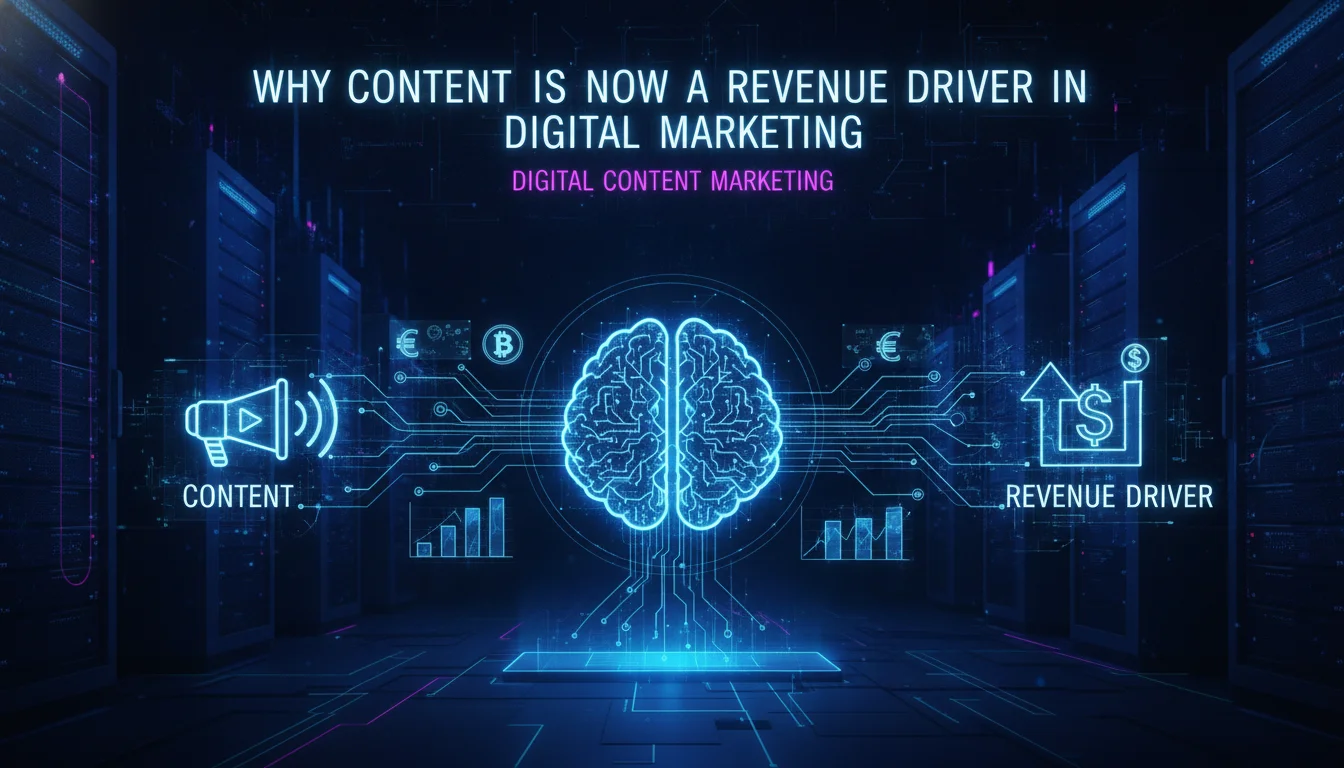
this kind of marketing drives visibility, leads, loyalty, and authority when it’s built around what buyers actually need at each stage. According to Mailchimp, businesses with blogs get 67% more leads than companies without one. In B2B settings, 67% of marketers say content marketing increases engagement and the number of leads they generate. Branded video carries serious weight too: 88% of people credit branded videos for convincing them to purchase a product or service.
These outcomes line up with the four benefits most practitioners associate with a strong content strategy: increased online visibility, more leads, stronger loyalty, and improved authority. digital content earns those results when it educates buyers at the right moment instead of interrupting them at the wrong one.
Operational Realities for Content Teams in 2026
Content marketing is genuinely resource-intensive, and the workload data backs that up. According to Adobe, over 20% of marketers wear ten or more hats in their roles, and 54% take on responsibilities outside their job descriptions. Nearly 80% dedicate personal time to learning new skills, especially AI automation at 39%, and 43% pay out-of-pocket for tools. Inefficient tools cost teams an estimated 60 hours a year, which is nearly two full work weeks lost to friction that shouldn’t exist.
Content marketing is a strategic approach that uses educational, engaging, or inspiring content to attract and retain an audience. Unlike traditional advertising, it focuses on delivering value before asking for a sale, building loyalty across every stage of the customer journey.
As Adobe’s team frames it, the discipline is a long game. That’s also why we push clients toward realistic scope: a content marketing plan has to respect the capacity of the humans running it. Choosing fewer formats executed consistently almost always beats five channels executed poorly.
Core Types of Digital Content Marketing Assets
Written Formats
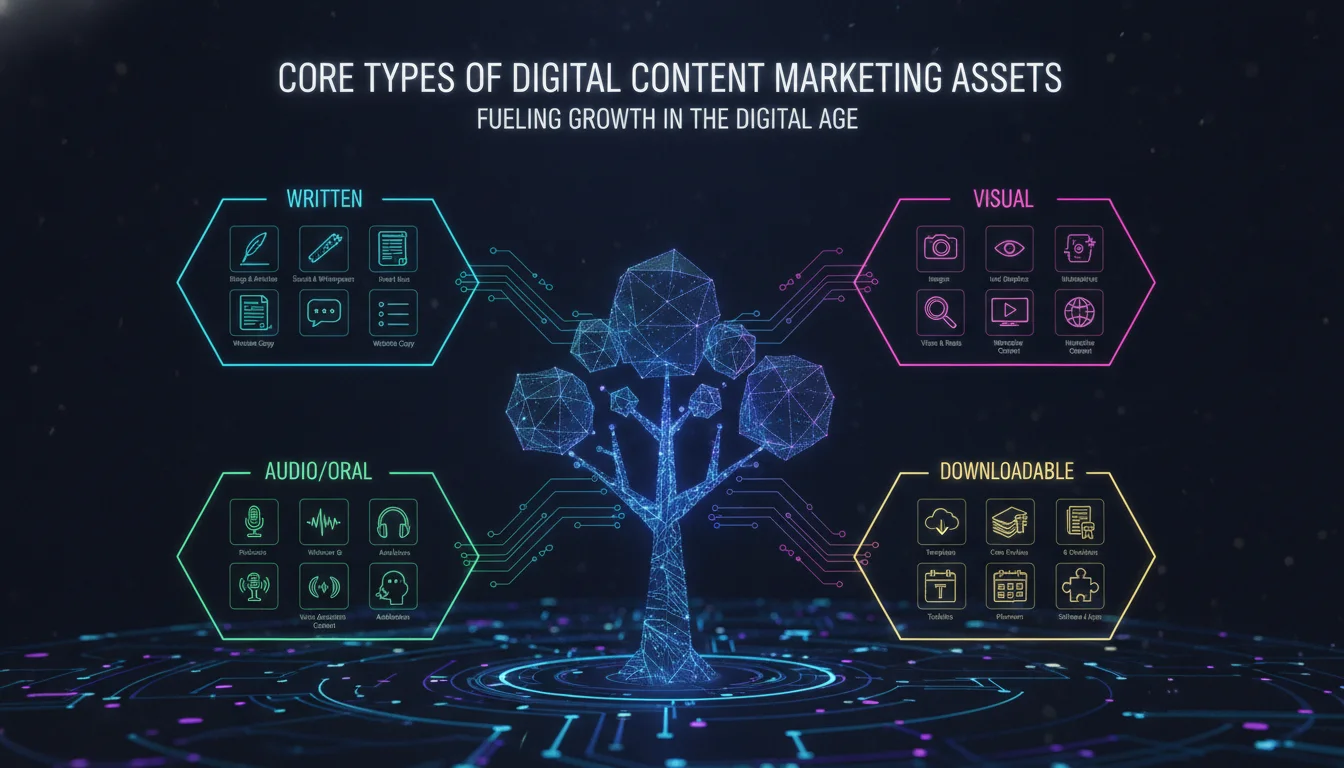
Written content includes blogs, digital newsletters, articles, white papers, ebooks, and technical or solution briefs. These formats are especially strong for SEO and lead generation because they can target specific search queries and sit behind a lead-capture form when it makes sense.
Audio and Video Formats
Audio and video have become central to how audiences discover brands. Podcasts, audiograms, voice assistant content, self-hosted video, social video on YouTube and TikTok, and embedded advertising units all count as this type of marketing. Adobe’s research groups content assets into four basic forms: written, audio, video, and image, and notes that most businesses use several forms to engage audiences across social platforms, websites, and streaming services.
Video pulls real weight in the buying decision. Mailchimp reports that 88% of people credit branded videos for convincing them to purchase, making video a high-impact format once a prospect moves past pure awareness.
Visual and Interactive Formats
Visual content spans social posts, infographics, website banners, and images. Interactive content, like pricing pages, quizzes, calculators, and interactive reports, also functions as this kind of marketing when it helps a prospect make an informed decision. The software company Freshbooks is a good example here: its pricing page reads as content built for a prospect who needs pricing clarity to move forward, not just a static price list.
A well-built content library usually blends all four formats, but the mix should follow what the audience prefers at each funnel stage, not what’s easiest for the production team to churn out.
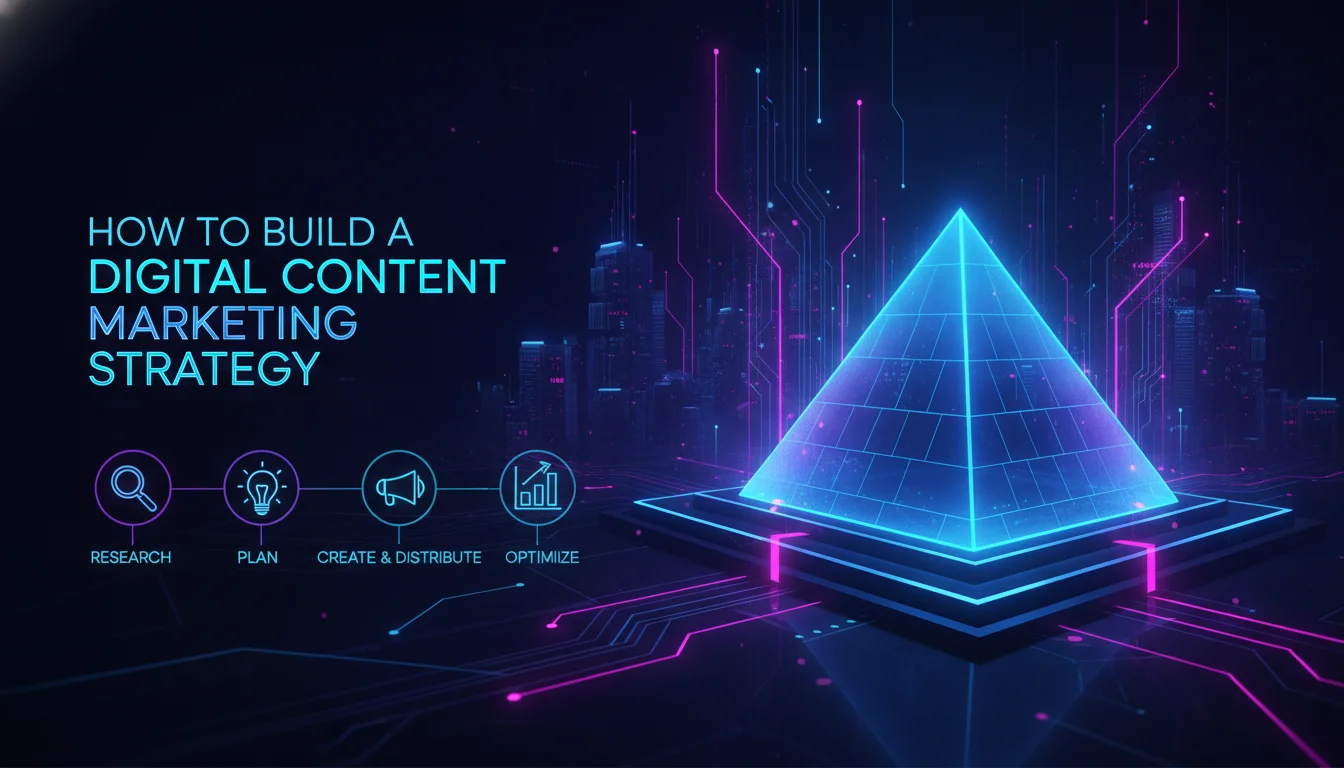
How to Build a Digital Content Marketing Strategy
Step 1: Define Your Audience and Buyer Personas
Start by building buyer personas, semi-fictional profiles of your ideal customers grounded in research and real data. Without this step, content turns generic fast. Document demographics, goals, pain points, preferred channels, and buying objections for every segment you serve, and revisit these personas at least twice a year.
Step 2: Map Content to the Funnel
digital content works across the full sales cycle, but each stage needs different content. Mailchimp’s framework breaks this into three stages:
- Awareness: Educate on pain points with articles, videos, and social posts that answer questions without selling anything.
- Consideration: Blend helpful information with marketing through case studies, webinars, and comparison guides.
- Closing: Highlight expertise and differentiate your offer through testimonials, demos, pricing pages, and solution briefs.
Delivering the right content at the right stage moves prospects from first touch to purchase without forcing a hard pitch too early.
Step 3: Choose Channels and Build a Content Calendar
Content distribution flows through three media types. Owned media covers your website, blog, email list, and app. Paid media covers search ads, social ads, and sponsored placements. Earned media covers press mentions, shares, and third-party coverage. A balanced strategy typically draws on all three rather than betting everything on one.
To put this into motion, follow these steps:
- Audit existing content and identify gaps by funnel stage and persona.
- Select two or three primary formats based on audience research and team capacity.
- Define a monthly publishing cadence with clear owners and due dates.
- Build a content calendar that ties topics to quarterly business goals.
- Schedule distribution for each asset across owned, paid, and earned channels.
Digital Content Marketing and SEO: A Symbiotic Relationship
How Does SEO Work With Content Marketing?
SEO and content marketing work together because content supplies the substance while SEO supplies the discoverability. According to Mailchimp, integrating SEO with content marketing means using relevant keywords naturally, keeping content clear, and aligning the body copy with what the headline promises. The Digital Marketing Institute makes a similar point, noting that the purpose of content marketing is to drive inbound engagement and organic searches from a clearly defined audience.
Content Quality and Answer Engine Optimization
As of 2026, AI answer engines and voice assistants increasingly pull direct answers straight from well-structured content, which changes how this type of marketing needs to be written. That means prioritizing clarity, definitional statements up front, tight opening paragraphs, and clearly labeled sections. Content that answers a query in a short, direct sentence near the top is more likely to get cited by generative engines. This is the space where classic SEO and answer engine optimization (AEO) now overlap.
Distribution Through Owned, Paid, and Earned Media
SEO alone can’t carry a content program on its own. The Digital Marketing Institute stresses distributing content through owned, paid, and earned media to pull customers toward a website or landing page. Paid amplification can jump-start visibility for new content, while earned coverage builds authority over time. this kind of marketing that lives only on a blog is leaving distribution value on the table across social, email, and syndication.
Real-World Examples of Content in Digital Marketing
B2B Lead Generation Examples
In B2B, technical briefs, solution briefs, and gated ebooks work as lead magnets. A software company might publish a comparison guide that captures an email address, then nurture that lead through a series of educational emails. The part that matters is specificity: the content has to solve a real problem the buyer already has, not repeat a generic brand pitch.
B2C Brand Storytelling Examples
B2C brands typically lean on video and social content. A direct-to-consumer brand might use short-form video to show a product in use, share a customer story, or answer a common objection before it’s even asked. Since 88% of people credit branded videos for convincing them to purchase, these assets can move a viewer from scrolling to buying faster than static content usually manages.
Social Media and Influencer Content
Social media is a distribution channel for digital content, not a substitute for it. Content marketing means creating and promoting information across platforms; social media is just one of those platforms. Brands may also work with influencers or affiliates, a tactic SNHU classifies under affiliate marketing. The distinction that matters: social content should point back to owned content or a measurable goal, not exist purely to farm likes.
Measuring Digital Content Marketing Performance
What KPIs Should You Track?
Effective measurement ties content directly to business outcomes across four KPI groups. Online visibility gets measured through organic traffic, impressions, and keyword rankings. Lead generation gets measured through form fills, content downloads, and marketing-qualified leads. Loyalty gets measured through repeat visits, email engagement, and retention. Authority gets measured through backlinks, brand mentions, and share of voice.
Attribution and Reporting
Digital content marketing often influences a prospect across multiple touchpoints, which makes attribution genuinely tricky. A practical approach tracks both engagement metrics, like time on page, scroll depth, and shares, and conversion metrics, like leads, pipeline, and revenue. Monthly reporting should connect content performance to funnel stage and persona, not just report total traffic and call it a day.
Common Pitfalls and How to Avoid Them
The most common pitfall is producing content with no strategy behind it at all. A close second is measuring only surface metrics, likes and impressions, while ignoring lead quality and revenue entirely. A third is treating content as a one-off campaign instead of a long-term asset that keeps earning traffic for years. Digital content marketing works when teams document their strategy, map content to the funnel, and adjust based on real performance data instead of gut feel.
Choosing the Right Digital Content Marketing Formats
Format Comparison
The table below compares five common content formats by primary use, typical channels, and the KPIs that matter most for each.
| Format | Primary Use | Typical Channels | Key Performance Indicators |
|---|---|---|---|
| Written (blogs, ebooks, briefs) | SEO, lead generation, education | Website, email, syndication | Organic traffic, form fills, keyword rankings |
| Video (branded, tutorials, demos) | Persuasion, product explanation, trust | YouTube, social, landing pages | View-to-conversion, engagement, purchase influence |
| Audio (podcasts, voice assistants) | Authority building, retention | Podcast platforms, smart speakers | Subscriber growth, listen-through rate, brand recall |
| Visual (infographics, social posts) | Awareness, shareability | Social media, blogs, email | Shares, impressions, referral traffic |
| Interactive (pricing pages, calculators) | Decision support, conversion | Website, sales enablement | Conversion rate, lead quality, time to decision |
Alignment with Funnel and Audience
No single format wins at every stage. Written content usually dominates awareness and lead generation. Video accelerates consideration and closing. Interactive tools support the final decision. The right mix depends on buyer preference, sales cycle length, and how much production capacity your team actually has, not how many channels a competitor happens to use.
Operational Feasibility
Adobe’s workload data explains why feasibility deserves real weight in planning. If 54% of marketers handle responsibilities outside their job description and teams lose roughly 60 hours a year to inefficient tools, piling on more formats becomes a real risk rather than an ambition. A focused digital content marketing operation often picks one hero format per funnel stage and reuses assets across channels, which keeps output high without burning out the team producing it.
Pros and Cons
Pros
- Builds compounding value: a well-optimized blog post or video keeps generating traffic and leads long after publication, unlike a paid ad that stops the moment budget runs out.
- Strengthens trust and authority, positioning your brand as a resource rather than an interruption.
- Feeds SEO and answer engine visibility at the same time, since well-structured content can rank in search and get cited by AI tools.
- Adapts across the whole funnel, from awareness-stage blog posts to closing-stage case studies and demos.
Cons
- Resource-intensive to sustain: consistent quality output requires real time, skill, and often a mix of internal and outside talent.
- Results build slowly. Content marketing rarely produces the instant spike a paid campaign can deliver.
- Measurement can get murky, since content often influences a purchase decision across several touchpoints rather than in one clean conversion.
- Format sprawl is a real risk. Chasing every channel without the team to support it usually produces mediocre content everywhere instead of strong content somewhere.
Digital content marketing remains a foundational growth system in 2026 because it turns useful information into results you can actually measure. This year, the discipline leans even harder on strategy, storytelling, SEO, and distribution working together to attract, engage, and retain audiences across the full customer journey. By choosing formats based on funnel stage and real operational capacity, marketers can build a digital content marketing engine that drives visibility, leads, loyalty, and authority without chasing every new channel at once. If your team is stretched thin trying to do all of this in-house, that’s exactly the gap our creative and content services are built to close.
Frequently Asked Questions
What is digital content marketing in simple words?
Digital content marketing is the practice of creating and sharing useful online content, such as articles, videos, and emails, to attract and keep a clearly defined audience. The goal is to provide value first and earn sales later.
What are the main types of digital content marketing?
The main types include written content like blogs and ebooks, audio content like podcasts, video content like branded videos and tutorials, and visual content like infographics and social posts. Many businesses use several formats across owned, paid, and earned channels.
How is digital content marketing different from digital marketing?
Digital marketing is the broad use of internet channels to reach consumers, while digital content marketing focuses specifically on creating and distributing valuable information. Content marketing is one of eight digital marketing types identified by SNHU, but it can also extend to print materials.
Does digital content marketing still work in 2026?
Yes. The Content Marketing Institute reported that 94 percent of B2B content marketers changed their strategy during the pandemic, and Mailchimp data shows businesses with blogs get 67% more leads. The discipline stays effective when it’s tied to real audience needs and measurable goals.
How do I start a digital content marketing strategy?
Start by defining buyer personas, mapping content to the awareness, consideration, and closing stages, choosing two or three formats, and building a publication calendar. Then distribute content through owned, paid, and earned media and measure results against lead and revenue goals.
What metrics should I track for content marketing?
Track online visibility through organic traffic and rankings, lead generation through form fills and downloads, loyalty through repeat engagement, and authority through backlinks and mentions. Avoid measuring only likes and impressions without connecting them to business outcomes.
Ready to turn your content into a system that actually compounds? Contact Emin Media for a free brand consultation, and let’s build something bold together.
Enjoyed this article?
Contact Emin Media for a free brand consultation and let's create something amazing together.
Get in TouchRelated Articles
Visual Content Marketing Trends for 2026
Visual content marketing trends for 2026 are reshaping how brands connect. Discover AI visuals, interactive…
Brand Voice Examples 2026: Build a Voice That Sticks
Explore the best brand voice examples 2026 has to offer. Learn frameworks, archetypes, and steps…
What Are the 3 Cs of SEO? Content, Code & Credibility
What are the 3 Cs of SEO? Learn how Content, Code, and Credibility work together…