Visual Content Marketing Trends for 2026
Key Takeaways
- Visual content marketing trends in 2026 center on AI-generated imagery, interactive formats, short-form video, and nostalgia-driven design.
- The human brain processes images far faster than text, making visual formats essential for capturing attention in crowded digital feeds.
- Interactive content, including quizzes, polls, and augmented reality, drives deeper audience participation than static visuals alone.
- User-generated content builds trust and authenticity at a fraction of the cost of produced brand content.
- Measuring visual content performance through engagement rates and conversion data is the only way to know what’s actually working.
- Brands that align their visual strategy with current trends will build stronger loyalty and more memorable identities.
Visual Content Marketing Trends for 2026
Visual content marketing trends are the forces reshaping how brands communicate, connect, and convert audiences across every digital channel in 2026. Understanding them is no longer optional for any brand serious about growth.
Understanding Visual Content Marketing
Visual content marketing is the practice of using images, videos, infographics, and other visual elements to convey messages and engage audiences. It works with the human brain’s natural inclination to process visual information quickly, making it one of the most effective tools for brands looking to capture attention and communicate with clarity.
What is Visual Content?
Visual content refers to any content that conveys information through visual means. This includes images, videos, infographics, and interactive elements. According to Column Five Media, visual content is not just about aesthetics. It is a powerful communication tool that strengthens storytelling and sharpens brand messaging across every stage of the buyer journey.
Why is Visual Content Effective?
Visual content is effective because it engages audiences more deeply than text alone. Our brains process visual information at an astonishing speed compared to written words, which is why visuals cut through the noise in crowded social feeds. According to Mailchimp, visuals also carry emotional weight that text struggles to match. Images and videos can evoke joy, empathy, and excitement in seconds, creating connections that stick long after the scroll.
Benefits of Visual Content Marketing
- Increased Engagement: Visual content captures attention and encourages interaction across social platforms and websites.
- Enhanced Retention: Audiences are far more likely to remember information presented visually than information delivered as plain text.
- Improved Conversion Rates: Effective visual content influences consumer decisions at every stage, from awareness through purchase.
- Emotional Connection: Strong visuals evoke feelings that build brand affinity over time.
- Accessibility: Well-designed visuals make complex information digestible for wider audiences.
How Visual Content Marketing Actually Works
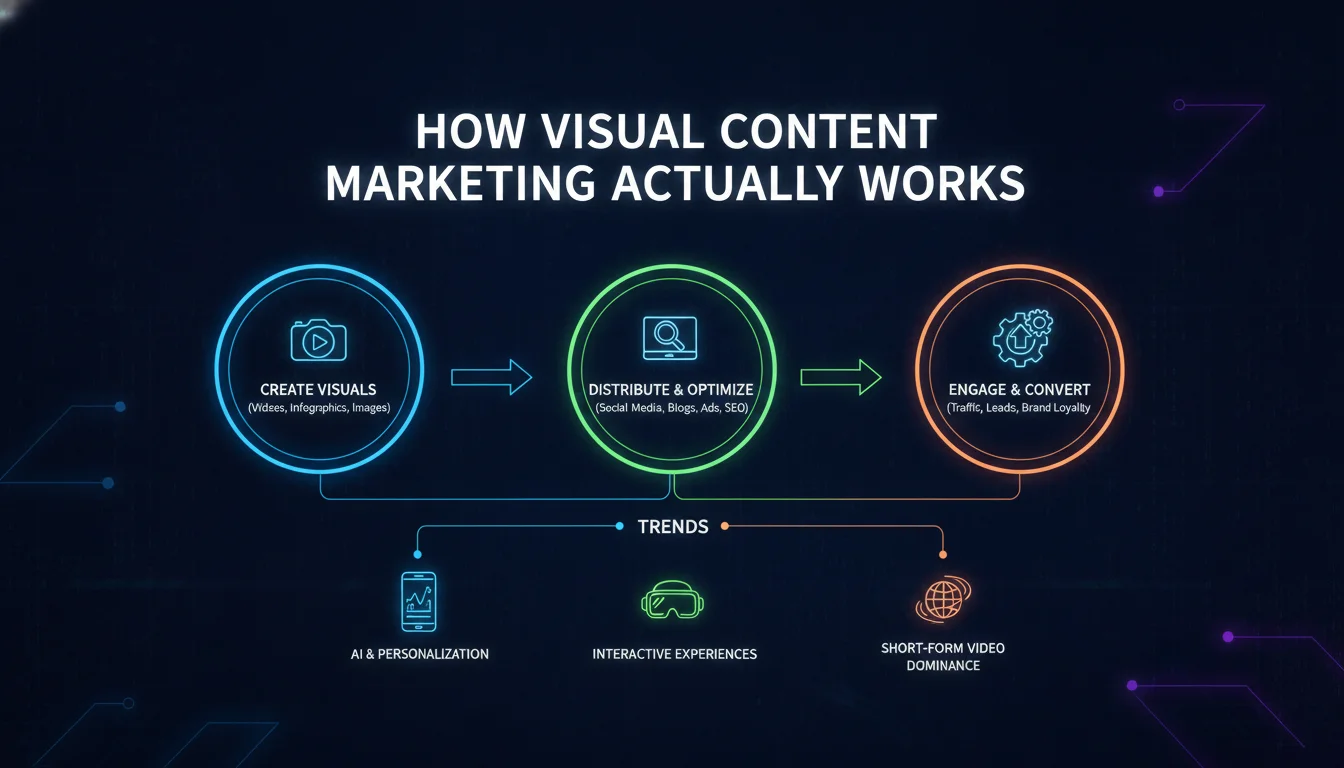
Visual content marketing works by aligning the way humans naturally process information with the goals a brand needs to achieve. It is not simply about posting attractive images. There is a deliberate mechanics behind every effective visual strategy, and understanding it separates brands that get results from those that just get likes.
At its core, the process moves through three layers.
Layer 1: Attention capture. The first job of any visual is to stop the scroll. This happens through contrast, color, motion, or novelty. A well-composed thumbnail, a bold typographic treatment, or an unexpected visual metaphor all trigger the brain’s pattern-recognition system. The viewer pauses. That pause is the entire first objective.
Layer 2: Message delivery. Once attention is captured, the visual needs to communicate something meaningful within seconds. This is where design principles like visual hierarchy, color psychology, and compositional flow do their work. The eye moves through the frame in a predictable path. Smart designers guide that path toward the message they want to land.
Layer 3: Emotional encoding. The most durable visual content does something beyond informing. It makes the viewer feel something. That emotional tag is what converts a passive viewer into someone who shares, saves, or buys. According to Mailchimp’s research on visual content, visuals that evoke emotion create deeper audience connections than informational visuals alone.
When these three layers work together, visual content marketing becomes a compounding asset. Each piece of content builds brand recognition, and recognition builds trust, and trust drives conversion. That is the full mechanical loop.
“Visual content marketing is not just about pretty pictures in blog posts and ever-popular infographics. It’s a powerful communication tool that leverages the human visual system to deliver information in a compelling way, making it an incredibly effective way to tell your brand story.” – Column Five Media, Updated January 2026
Current Visual Content Marketing Trends
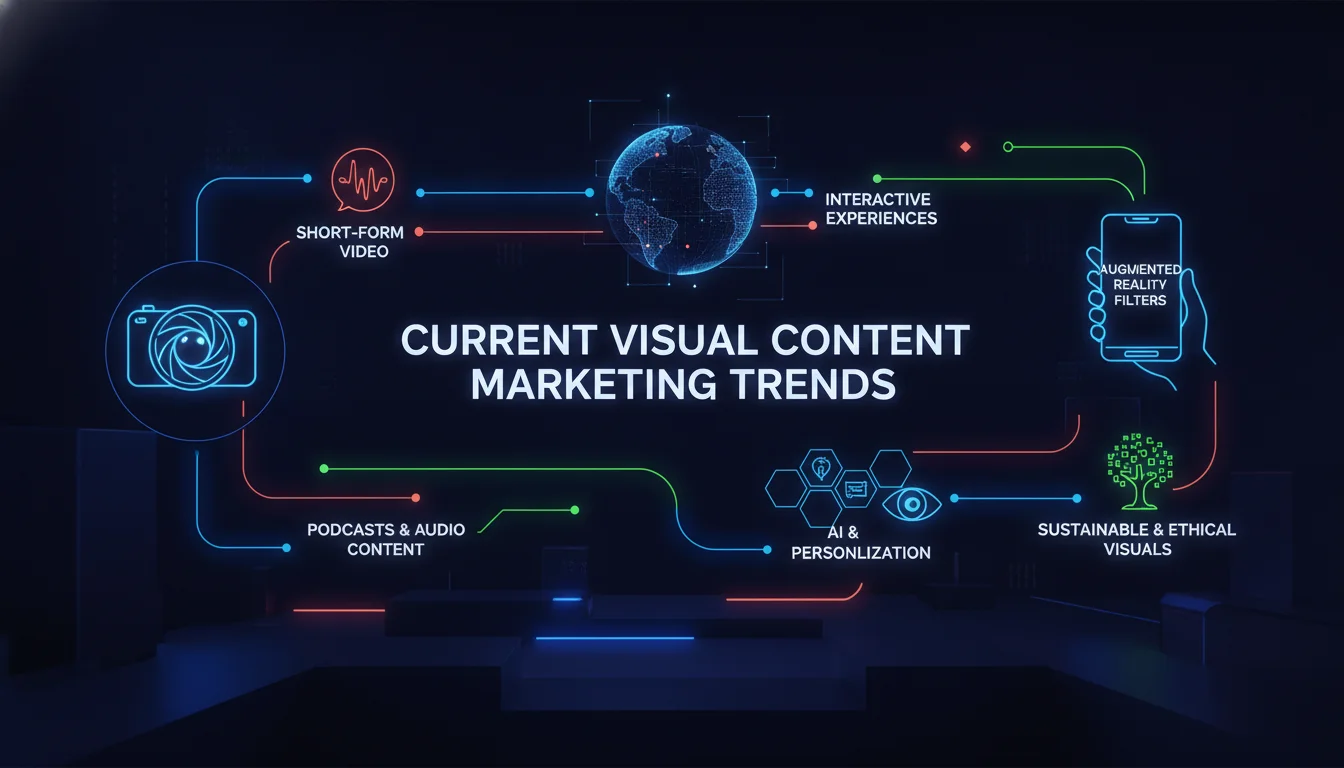
As of 2026, several key visual content marketing trends are reshaping how brands plan, produce, and distribute content. Staying current with these shifts is the difference between a brand that feels alive and one that feels like it is running on last year’s playbook.
1. AI-Generated Imagery
AI-generated imagery is now a standard part of the visual content production toolkit for brands of every size. Tools powered by generative AI allow marketing teams to produce custom visuals at a pace and scale that was simply not possible two years ago. According to Typeface, the real shift in 2026 is not just about individual AI tools. Enterprise teams are consolidating around platforms that carry creative context automatically from ideation through publishing, replacing the fragmented point-solution approach that slowed teams down.
The creative tension worth watching: as AI-generated visuals become more common, audiences are developing a sharper eye for them. Typeface’s 2026 content marketing trend report notes a counter-movement in graphic design toward “anti-AI” aesthetics, sensory textures, and expressive typography that signals human craft. The smartest brands are using AI for speed and scale while preserving handmade visual signatures that feel distinctly theirs.
2. Interactive Content
Interactive content, including quizzes, polls, augmented reality experiences, and interactive infographics, is gaining serious traction as a way to move audiences from passive consumption to active participation. According to SevenAtoms, interactive formats like quizzes, polls, surveys, and interactive infographics encourage engagement in ways that conventional content simply cannot match. When a user explores a data visualization on their own terms or tries on a product virtually through AR, the brand experience becomes personal. That personalization is what drives retention and repeat visits.
3. Nostalgia Marketing
Nostalgia marketing uses the emotional pull of the past to create comfort and connection in the present. As Contently’s visual trend analysis notes, life in the 2020s can feel relentless, and audiences are increasingly drawn to visuals that offer warmth and reassurance. Vintage aesthetics, warm amber and sepia color palettes, earthy tones, and familiar typographic styles are not just retro gestures. They embody timelessness and authenticity, offering a counterpoint to the impersonal, high-gloss digital aesthetic that dominated the previous decade.
4. Human-Centered Design
Human-centered design is one of the visual content marketing trends that has moved from niche principle to mainstream expectation. Audiences in 2026 expect brands to reflect the full spectrum of human experience in their visual choices. This means diverse representation, accessible color contrasts, inclusive imagery, and design that works for people across ability levels. Brands that treat this as a checkbox exercise miss the point. The ones doing it well are building visual identities that genuinely reflect their communities, and audiences notice.
5. Maximalism and Minimalism in Tension
Two opposing design philosophies are both thriving right now, and that is not a contradiction. Maximalist visual marketing, with its layered compositions, bold color clashes, and sensory richness, is performing well for brands targeting younger, culturally engaged audiences. Meanwhile, clean minimalist aesthetics continue to signal premium positioning and clarity for brands in finance, wellness, and technology. The key is knowing which visual language your audience reads as trustworthy and exciting, not defaulting to one because it feels safe.
6. Short-Form Video Dominance
Short-form video is not a trend anymore. It is the default format for social content in 2026. Platforms like TikTok, Instagram Reels, and YouTube Shorts have trained audiences to expect information delivered in under 60 seconds, often vertically framed. According to Coursera’s 2026 marketing trends overview, increasing visibility on platforms like TikTok and YouTube is now a core digital marketing priority. Brands that have not built a short-form video production rhythm are already playing catch-up.
“Some of the top marketing trends include utilizing artificial intelligence, short-form video content, and user-generated content. Digital marketing trends consist of increasing visibility on social platforms, such as TikTok and YouTube.” – Coursera Staff, Updated July 31, 2026
Types of Visual Content to Use in Your Strategy
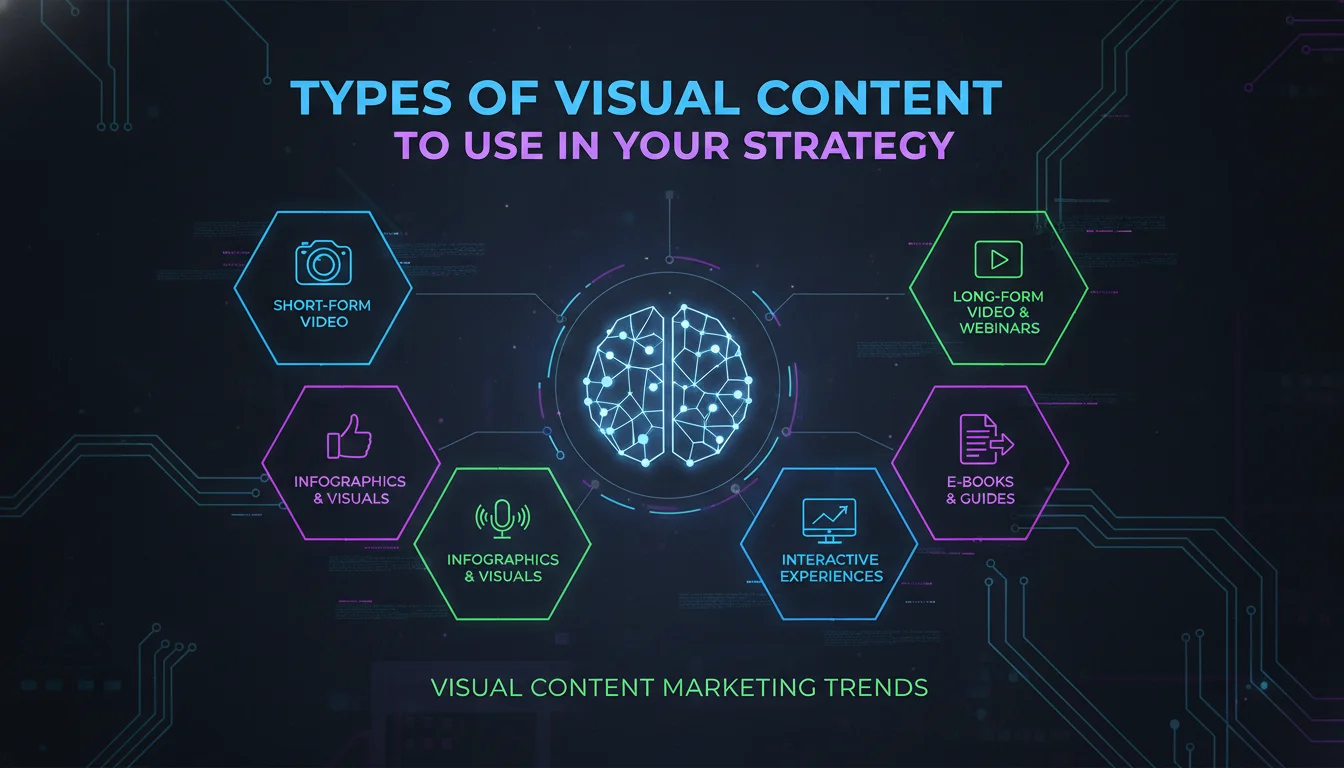
Choosing the right visual content format is one of the most consequential decisions in any campaign. Each format carries different strengths, production requirements, and audience expectations. Here is how to think about the main options.
1. Videos
Video content remains the highest-engagement format in the visual content toolkit. Short-form videos on TikTok and Instagram Reels capture attention fast and reward creative brevity. Longer explainer videos and product demos work well on YouTube and embedded in landing pages, where audiences are already in a research mindset. Live streaming and webinars add a real-time dimension that builds trust through unscripted authenticity.
2. Infographics
Infographics are a reliable format for making complex data or multi-step processes immediately readable. According to Mailchimp, infographics combine text and graphics to create engaging narratives that are easy to understand, significantly enhancing information retention and engagement. They also perform well as shareable assets on LinkedIn and Pinterest, extending organic reach without paid amplification.
3. User-Generated Content (UGC)
User-generated content, including customer reviews, unboxing videos, and social media posts, provides the authenticity that produced brand content often cannot. Brands that actively encourage UGC build community engagement and earn trust at scale. This trend aligns directly with the broader shift toward more human, relatable brand communication that Cork Tree Creative identified as one of the defining content marketing trends of 2025 and 2026.
4. Motion Graphics and Animated Visuals
Motion graphics sit between static design and full video production. They are ideal for explaining abstract concepts, animating data, or adding visual energy to social posts without the production overhead of live-action video. As of 2026, tools for creating motion graphics have become accessible enough that small teams can produce broadcast-quality animations in-house.
5. Interactive Infographics and AR Experiences
Interactive infographics let users explore data on their own terms, clicking through layers of information rather than consuming a fixed narrative. Augmented reality experiences, once reserved for major brand campaigns, are now available through social platform native tools. Both formats represent the leading edge of visual content marketing trends, and both reward brands willing to invest in the experience design upfront.
Comparison of Visual Content Types
| Visual Content Type | Engagement Level | Ease of Creation | Cost | Best Platform | Ideal Use Case |
|---|---|---|---|---|---|
| Short-Form Video | Very High | Moderate | Low to Moderate | TikTok, Reels, Shorts | Brand awareness, product launches |
| Long-Form Video | High | High effort | Moderate to High | YouTube, website | Education, demos, trust-building |
| Infographics | Moderate | Moderate | Low to Moderate | LinkedIn, Pinterest, blog | Data storytelling, SEO content |
| User-Generated Content | High | Low (audience creates it) | Low | Instagram, TikTok, reviews | Social proof, community building |
| Interactive Content | Very High | High effort | Moderate to High | Website, social campaigns | Lead generation, personalization |
| Motion Graphics | High | Moderate | Low to Moderate | Social, presentations, ads | Concept explanation, brand storytelling |
| AR Experiences | Very High | Very High effort | High | Instagram, Snapchat, web | Product try-on, immersive campaigns |
Step-by-Step: How to Apply Visual Content Marketing Trends
Applying visual content marketing trends effectively requires more than awareness. You need a repeatable process that connects creative decisions to business outcomes. Here is how to build one.
- Define Your Goals: Start with the business outcome you need. Brand awareness, lead generation, and customer retention each call for different visual formats and distribution strategies. A campaign built around vague goals produces vague results.
- Identify Your Audience: Map your audience’s platform habits, visual preferences, and content consumption patterns. A B2B buyer researching on LinkedIn responds to different visual cues than a consumer discovering products on TikTok. Know the difference before you produce a single asset.
- Audit Your Current Visual Identity: Before adding new formats, assess what you already have. Is your brand’s visual language consistent across channels? Does it reflect current visual content marketing trends or does it feel dated? An honest audit prevents you from layering new tactics onto a shaky visual foundation.
- Choose Your Formats: Select the types of visual content that match your goals, audience, and production capacity. Do not chase every format at once. Pick two or three and do them well before expanding.
- Create Compelling Visuals: Develop high-quality visuals that reflect your brand identity and speak directly to your audience’s emotional state. Brief your creative team or agency with specific references, not just adjectives. “Bold and modern” means nothing. A mood board with five reference images means everything.
- Distribute Strategically: Share your visual content across the channels where your audience actually spends time. Adapt formats for each platform rather than posting the same asset everywhere. A square graphic that works on Instagram needs to be reformatted for a LinkedIn carousel or a YouTube thumbnail.
- Measure Your Results: Track engagement rates, click-through rates, conversion data, and audience feedback. Identify which visual formats and styles are performing and double down on those. Kill what is not working, regardless of how much you liked the creative.
Common Mistakes to Avoid in Visual Content Marketing
Most visual content underperforms not because the creative is bad, but because avoidable strategic errors undermine it. Here are the patterns we see most often, and how to sidestep them.
Chasing Trends Without Brand Fit
Every trend in visual content marketing is a tool, not a mandate. Nostalgia marketing works brilliantly for certain brands and feels completely off for others. Before adopting any visual trend, ask whether it genuinely reflects your brand’s identity and resonates with your specific audience. A fintech startup forcing vintage aesthetics onto its product marketing will confuse more customers than it attracts.
Inconsistent Visual Identity Across Channels
Your brand should look like itself everywhere. When the color palette on your Instagram differs from your website, and your LinkedIn graphics use a completely different typographic style, you are eroding the recognition that makes visual branding valuable. Consistency is not about being boring. It is about being memorable.
Prioritizing Aesthetics Over Clarity
Beautiful visuals that do not communicate anything are expensive decoration. Every visual asset needs a clear message hierarchy. What is the first thing the viewer should see? What is the second? What action should they take? If you cannot answer those questions before production starts, the creative brief is not finished.
Ignoring Mobile-First Composition
Most audiences encounter your visual content on a phone screen. Designing for desktop first and adapting for mobile second produces visuals that feel cramped, hard to read, and visually awkward on the devices where most people actually see them. Start with the phone frame and scale up, not the other way around.
Skipping the Performance Review
Publishing visual content without reviewing its performance is like running a campaign with your eyes closed. Set a regular cadence, monthly at minimum, to review which visual formats, styles, and topics are driving real engagement and conversion. Let the data shape the next creative cycle.
Over-Relying on AI Without Human Creative Direction
AI tools for visual content creation are genuinely useful. They are not a replacement for creative strategy. Brands that feed generic prompts into AI image generators and publish the output without human curation end up with visuals that look like everyone else’s. The creative director’s eye, the brand strategist’s judgment, and the storyteller’s instinct are what make AI-generated visuals distinctive rather than disposable.
Pros and Cons of Visual Content Marketing
Pros
- Faster audience engagement: Visuals capture attention in crowded feeds far more effectively than text-only content.
- Stronger emotional connection: Images and video evoke feelings that build brand affinity and long-term loyalty.
- Higher information retention: Audiences remember visually presented information at significantly higher rates than text alone.
- Versatile across platforms: Visual content adapts to every major channel, from social media to email to paid advertising.
- Scalable with AI tools: Modern AI-assisted production tools allow smaller teams to produce more content without proportional cost increases.
- Shareable by nature: Compelling visuals earn organic shares, extending reach without additional spend.
Cons
- Higher production investment: Quality visual content, especially video and interactive formats, requires more time, skill, and budget than written content.
- Trend sensitivity: Visual styles date quickly. What feels fresh in 2026 may feel stale by 2027, requiring ongoing creative refresh.
- Platform dependency: Visual content performance is tied to algorithm changes on platforms you do not control.
- Accessibility requirements: Proper alt text, captions, and contrast ratios add production steps that teams often skip, creating both accessibility and SEO gaps.
- Measurement complexity: Attributing business outcomes to specific visual content pieces is harder than tracking direct-response text campaigns.
A Realistic Scenario: How One Brand Rebuilt Its Visual Strategy
Consider a mid-sized wellness brand that had been producing polished, studio-shot product photography for three years. The imagery was technically excellent. Engagement was flat. Conversion from social traffic was declining.
The team ran a content audit and found that their highest-performing posts were not the studio shots at all. They were behind-the-scenes clips filmed on a phone, customer testimonial videos with no production polish, and a single interactive quiz they had posted once and never repeated.
The insight was clear: their audience wanted authenticity and participation, not perfection. So the brand restructured its visual content mix. They reduced studio production to quarterly brand shoots and redirected that budget toward a UGC program that incentivized customers to share their own content. They launched a monthly interactive poll series on Instagram Stories. They began posting short-form video content three times per week, filmed in-house with a basic ring light and a clear content framework.
Within two content cycles, engagement rates climbed. More importantly, the brand’s social following began converting to email subscribers at a meaningfully higher rate, because the content felt like a conversation rather than a broadcast.
This scenario reflects what the current visual content marketing trends are actually pointing toward: less production theater, more genuine connection. The brands winning right now are the ones that understand their audience’s emotional state and meet them there, visually.
Future Outlook for Visual Content Marketing
The future of visual content marketing trends points toward greater personalization, faster production cycles, and deeper integration between creative and data teams. AI will continue to accelerate the production side, but the creative strategy layer, knowing what to make, for whom, and why, will become more valuable, not less.
Interactive and immersive formats will move further into the mainstream as platform tools lower the barrier to AR and interactive content creation. Short-form video will remain dominant, but the brands that stand out will be the ones that bring a distinctive visual point of view rather than simply following the format conventions everyone else is using.
Nostalgia will continue to resonate as long as audiences feel the pace of change is outrunning their ability to process it. Human-centered design will shift from a differentiator to a baseline expectation. And the tension between maximalism and minimalism will keep producing interesting creative territory for brands willing to take a position.
The brands that will lead in 2026 and beyond are the ones treating visual content marketing trends not as a checklist to execute, but as a living creative conversation with their audiences. That requires curiosity, consistency, and the willingness to measure honestly and adapt quickly.
Ready to build a visual content strategy that actually moves the needle? Explore what Emin Media’s creative team can do for your brand, or browse our latest thinking on branding and digital marketing. Let’s build something bold together. Contact Emin Media for a free brand consultation.
Frequently Asked Questions
What are the latest trends in visual content marketing?
The leading visual content marketing trends in 2026 include AI-generated imagery, interactive content formats like quizzes and AR experiences, short-form vertical video, nostalgia-driven design aesthetics, human-centered design, and user-generated content. Brands that combine several of these trends within a coherent visual identity tend to see the strongest audience response.
How can I create effective visual content for my brand?
Start by defining a clear goal for each piece of content, then identify the emotional state your audience is in when they encounter it. Choose a format that matches both the goal and the platform, develop visuals with a clear message hierarchy, and always review performance data to refine your approach over time.
Why is video content so important in marketing right now?
Video captures attention faster than any other format and can convey complex messages in seconds. Short-form video in particular has become the default content format on the platforms where most audiences spend their time, including TikTok, Instagram, and YouTube. Brands without a video presence are effectively invisible on these channels.
What role does user-generated content play in visual marketing?
User-generated content adds authenticity and social proof that produced brand content cannot replicate. When real customers share their own images and videos featuring a brand, it signals genuine satisfaction to prospective buyers. Brands that build active UGC programs benefit from a continuous stream of credible visual content at minimal production cost.
How do I measure the success of my visual content marketing strategy?
Track engagement metrics like saves, shares, and comments alongside conversion data such as click-through rates and lead form completions. Compare performance across visual formats to identify which types resonate most with your audience. Review these metrics on a regular cycle and use the findings to shape your next creative period.
What is the difference between maximalist and minimalist visual marketing?
Maximalist visual marketing uses layered compositions, bold color combinations, and sensory richness to create high-energy, culturally engaged brand experiences. Minimalist design strips back to essential elements, signaling clarity, premium positioning, and confidence. The right choice depends on your brand identity and the emotional response you want your audience to have, not on which style is currently more popular.
Enjoyed this article?
Contact Emin Media for a free brand consultation and let's create something amazing together.
Get in TouchRelated Articles
Digital Storytelling for Brands: The Complete Guide
Digital storytelling for brands builds real audience connections through narrative. Learn proven techniques, formats, and…
Design Thinking for Marketing: A 2026 Guide
Design thinking for marketing builds campaigns around real user needs. Learn the 5 phases, common…
Creative Direction for Video Shoots: A Complete Guide
Master creative direction for video shoots with proven steps, tools, and strategies that build brand…