Digi Marketing Strategy: Build a Plan That Works
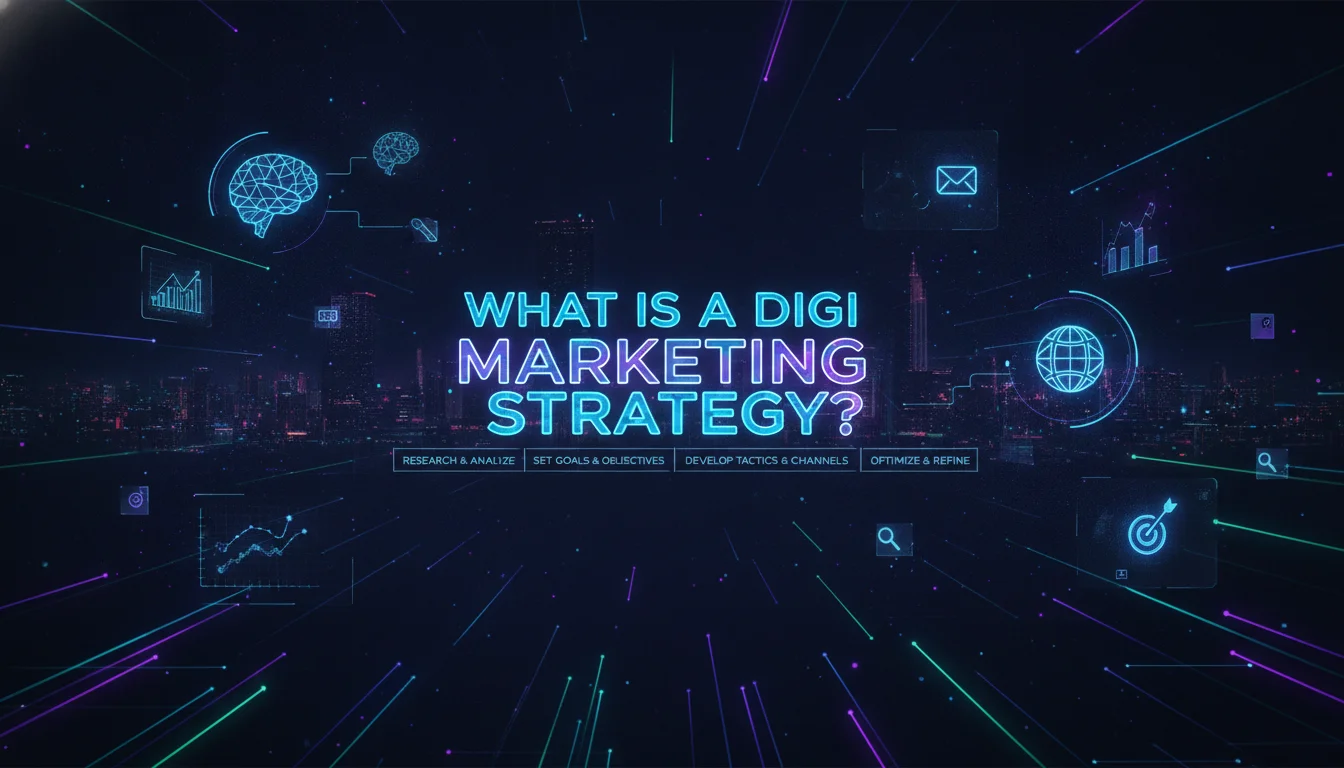
Digi marketing strategy is a data-driven plan that uses online channels, including search, social, email, and content, to achieve specific business goals. It aligns every digital activity with a larger objective so your brand connects with the right audiences, generates leads, and grows with purpose.
Key Takeaways
- A marketing strategy is a long-term plan that integrates digital techniques with business goals, not just a collection of tactics.
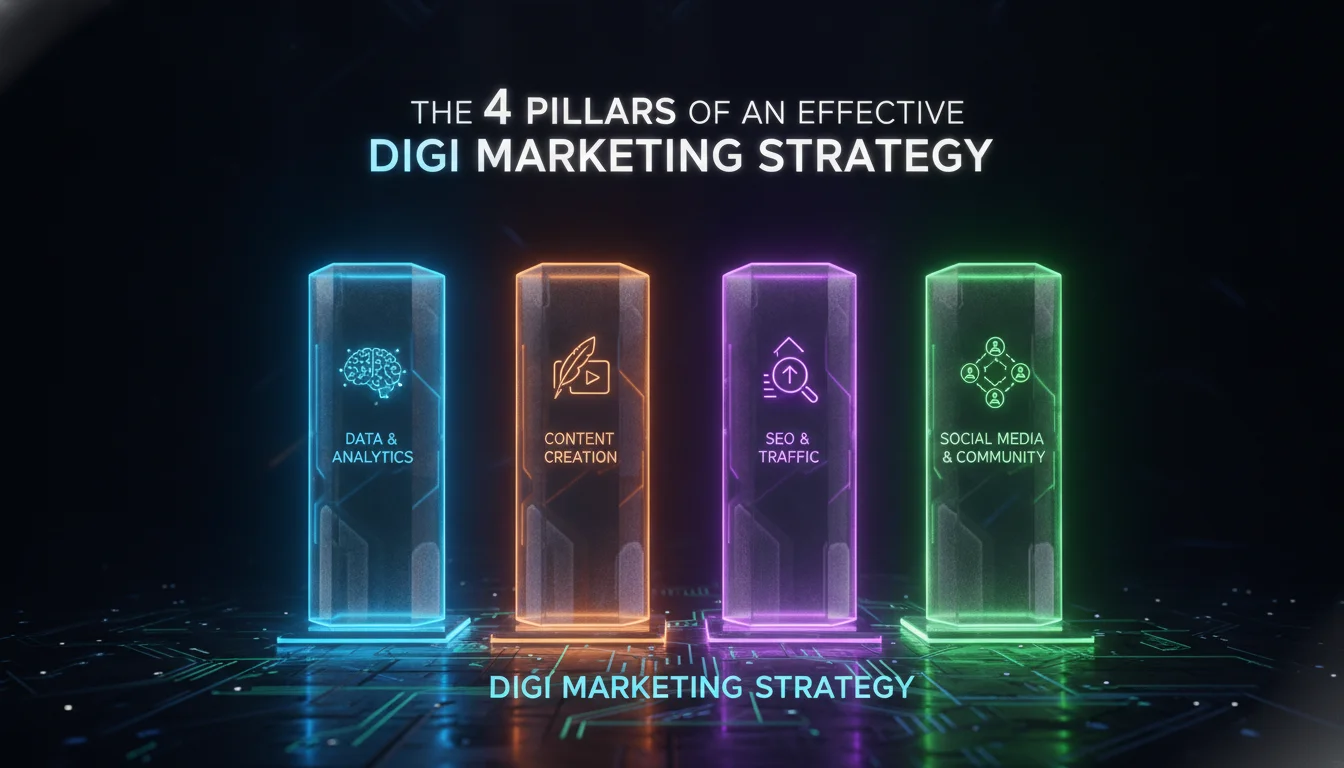
- Effective strategies rest on four pillars: SMART goals, deep audience understanding, smart budgeting, and measurable metrics.
- Building a strategy follows a clear six-step process, from setting objectives to continuous optimization.
- Proven frameworks like RACE and SOSTAC give you a structured path through planning and execution.
- Real-world examples from brands like Coca-Cola show how a unified digital strategy drives engagement and growth.
- According to the Digital Marketing Institute, 53% of senior marketers are spending significantly more on digital channels, making a clear plan essential.
What Is a Digi Marketing Strategy?
Core Definition and Purpose
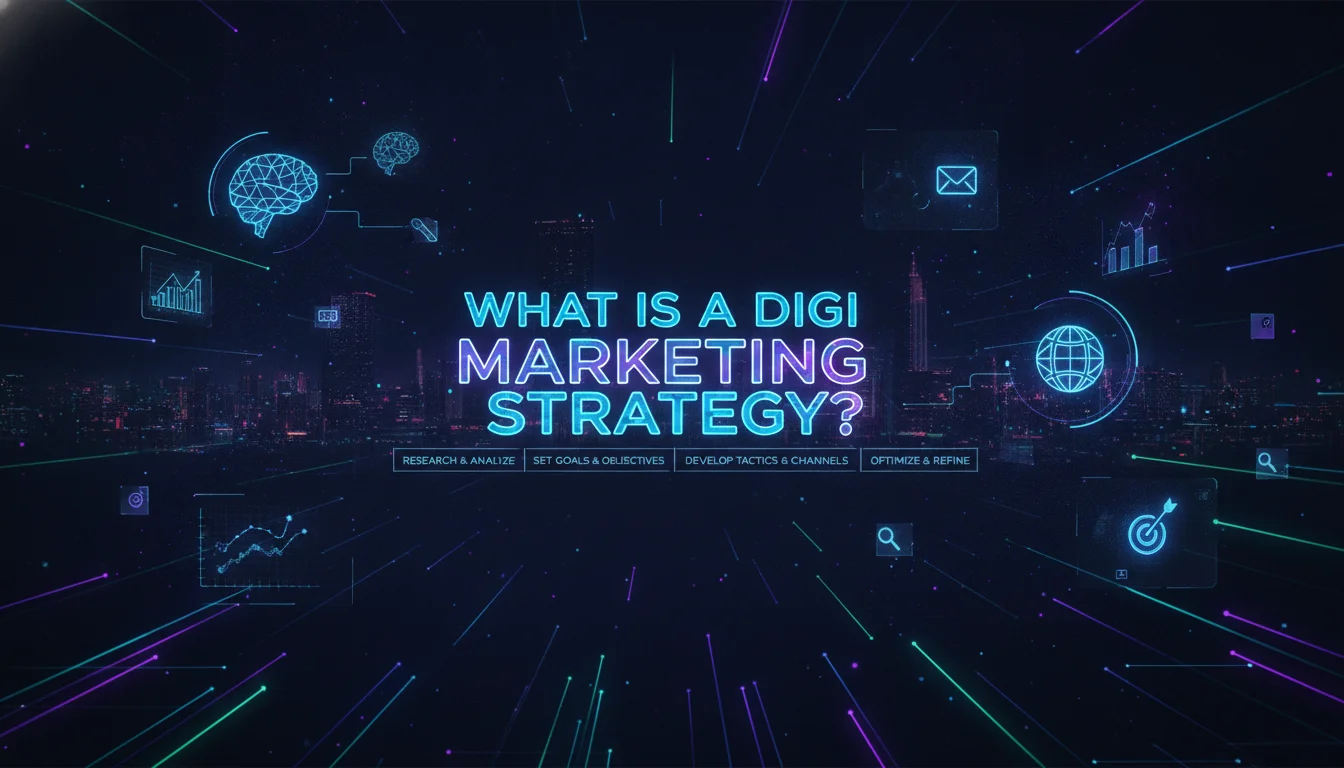
A this type of strategy is a long-term, high-level plan that uses digital platforms to achieve specific business objectives. It defines what you want to accomplish online, whether that is brand awareness, lead generation, or customer retention, and outlines how digital channels will work together to get you there. According to Hinge Marketing, a digital marketing strategy is “a plan for using digital marketing tools and techniques to achieve a firm’s strategic marketing objectives.” The strategy is not the daily social post or a one-off email blast. It is the connective tissue that links every digital action to a larger goal, providing a roadmap that guides all online marketing activities so they stay coordinated, measurable, and pointed toward real business growth.
Digi Marketing Strategy vs. Tactics: A Crucial Distinction
One of the most common mistakes in digital marketing is confusing strategy with tactics. A digi marketing strategy establishes the “what” and “why”: your overarching vision and the business goals that matter. Tactics are the “how,” the specific actions like posting on Instagram, running a Google Ads campaign, or sending a newsletter. As Adobe explains, strategy sets the long-term direction, campaigns are time-bound initiatives, and tactics are the granular steps executed within those campaigns. Without a clear strategy, tactics become isolated and often fail to deliver meaningful results. Aligning strategy, campaigns, and tactics ensures every marketing effort serves a unified purpose.
Why Your Business Needs a Digi Marketing Strategy
A written digi marketing strategy is no longer optional. The Digital Marketing Institute found that 53% of senior marketers are spending significantly more on digital channels, yet many report a lack of talent to compete effectively. A clear strategy helps you prioritize investments, avoid channel overload, and focus on activities that actually move the needle. It also provides a framework for measuring success so you can learn what works and double down on it. In a competitive environment, a defined strategy helps you differentiate your brand, deliver consistent messaging, and build lasting relationships with customers across every touchpoint.
The 4 Pillars of an Effective Digi Marketing Strategy
Setting SMART Goals
Every digi marketing strategy must start with clear, measurable objectives. SMART goals, Specific, Measurable, Achievable, Relevant, and Time-bound, anchor your plan in business reality. Instead of a vague aim like “increase brand awareness,” a SMART goal would be “increase website traffic from organic search by 25% within six months.” Adobe’s blog highlights how Coca-Cola sets a measurable benchmark: “increase brand engagement by 25%.” That kind of precision gives your team a clear target and a way to know when you have succeeded. Aligning digital goals with broader business objectives ensures that marketing contributes directly to revenue, market share, or customer lifetime value.
Understanding Your Audience Deeply
No strategy can succeed without a granular understanding of who you are trying to reach. An effective digi marketing strategy is built on detailed buyer personas, data-driven profiles that capture demographics, behaviors, pain points, and preferences. According to the Digital Marketing Institute, you must “define the channels that fit your key demographics, speak your customer’s language, and understand their pain points.” Coca-Cola, for example, focuses on Gen Z globally, using social media and video storytelling to engage that audience. By creating personas, you can tailor content, choose the right channels, and deliver messages that resonate on an emotional level. Regularly updating these personas with fresh data keeps your strategy relevant as consumer behaviors shift.
Allocating Budget to High-Impact Channels
A digi marketing strategy must include thoughtful resource allocation to maximize ROI. Budgeting involves deciding how much to spend on each channel, SEO, paid ads, content creation, email tools, and in what proportion. Adobe notes that Coca-Cola dedicated $5M to influencer partnerships and digital ads to amplify reach. The key is to align budget with both your goals and audience insights. If your audience spends time on LinkedIn, allocate more to sponsored content there. If organic search drives most leads, invest in SEO. Avoid spreading budget too thin across every possible channel. A good strategy also reserves budget for testing new platforms and tactics in a controlled way.
Measuring Success with the Right Metrics
Metrics are the compass of any digi marketing strategy. They tell you whether your efforts are paying off or need adjustment. Vanity metrics like likes and shares can be misleading. Instead, focus on KPIs tied to business outcomes: conversion rate, cost per lead, customer acquisition cost, and return on ad spend. Adobe points out that Coca-Cola monitors engagement rates, reach, and brand sentiment to gauge campaign success. These numbers inform real-time optimizations and long-term strategic shifts. To do this effectively, you need a measurement plan that connects each tactic to a specific metric and uses tools like Google Analytics, CRM dashboards, and social listening platforms. Regular reporting intervals, weekly, monthly, and quarterly, keep everyone accountable and the strategy on track.
How to Build a Digi Marketing Strategy in 6 Steps
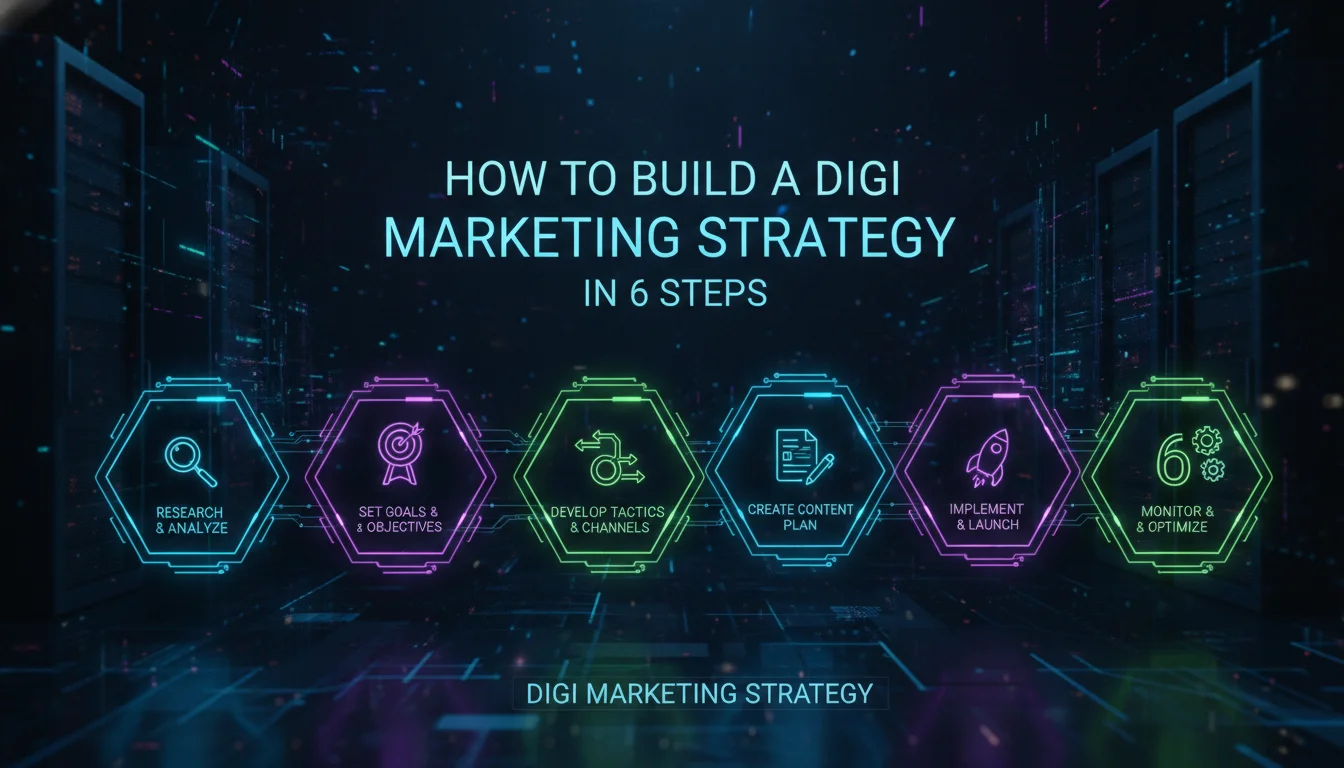
Creating a plan can seem daunting, but a structured process makes it manageable. Follow these six steps to go from zero to a fully operational strategy.
Step 1: Define Business-Aligned Objectives
Begin by articulating what your organization needs to achieve. More online sales? Stronger brand recognition? Higher customer retention? Your digital objectives must tie directly to company priorities. A B2B software firm might aim to generate 500 qualified leads per month, while a direct-to-consumer brand might target a meaningful increase in ecommerce revenue. Write these down. They will shape every decision that follows.
Step 2: Research Your Audience and Create Personas
Use data from customer surveys, web analytics, social insights, and sales teams to build detailed buyer personas. Give each persona a name, background, goals, challenges, and preferred digital hangouts. This step ensures your strategy speaks to real people, not abstract segments. The Digital Marketing Institute recommends downloading a buyer persona template to get started. As you execute, continuously enrich these personas with behavioral data and feedback.
Step 3: Audit Your Current Digital Assets
Before planning forward, look backward. Conduct a thorough audit of your existing digital presence: website, social profiles, email lists, content library, and ad accounts. The Digital Marketing Institute advises linking each asset to organizational goals and mapping it to revenue. This exercise reveals what is already working so you can scale it, and what is not so you can cut or rethink. Capture metrics like traffic, engagement, conversions, and cost in a simple spreadsheet.
Step 4: Select Channels and Tactics
Based on your goals and audience, choose the digital marketing channels that will form your plan. Common channels include organic search (SEO), paid search (PPC), social media, email, content marketing, and influencer collaborations. Smart Insights summarizes six key digital media channels, paid, owned, and earned, that every marketer should consider. For each channel, define the specific tactics you will use. On social media, for instance, tactics might include daily Instagram Stories, weekly LinkedIn articles, and a monthly community Q&A. Ensure every tactic directly supports a strategic objective.
Step 5: Develop a Content Plan
Content fuels most digital channels. Your strategy should include a content plan that outlines what you will create, when, and for whom. Map content to the buyer’s journey: awareness (blog posts, infographics), consideration (case studies, webinars), and decision (free trials, demos). Use an editorial calendar to schedule publication and assign responsibilities. A good content plan also repurposes assets. A single webinar can become a YouTube video, a blog series, and social snippets. This step bridges the gap between channel selection and actual execution.
Step 6: Implement, Measure, and Optimize
With your plan in place, launch your campaigns according to the calendar. The work does not stop there. Use analytics tools to track performance against your KPIs daily, weekly, and monthly. Hold regular review meetings to discuss what the data is saying. If a tactic is not working, pivot. If something is overperforming, allocate more budget. A digi marketing strategy is a living document. It should evolve based on real-world results and changes in the market. Continuous optimization is the hallmark of mature digital marketing.
Key Digital Marketing Channels to Power Your Strategy
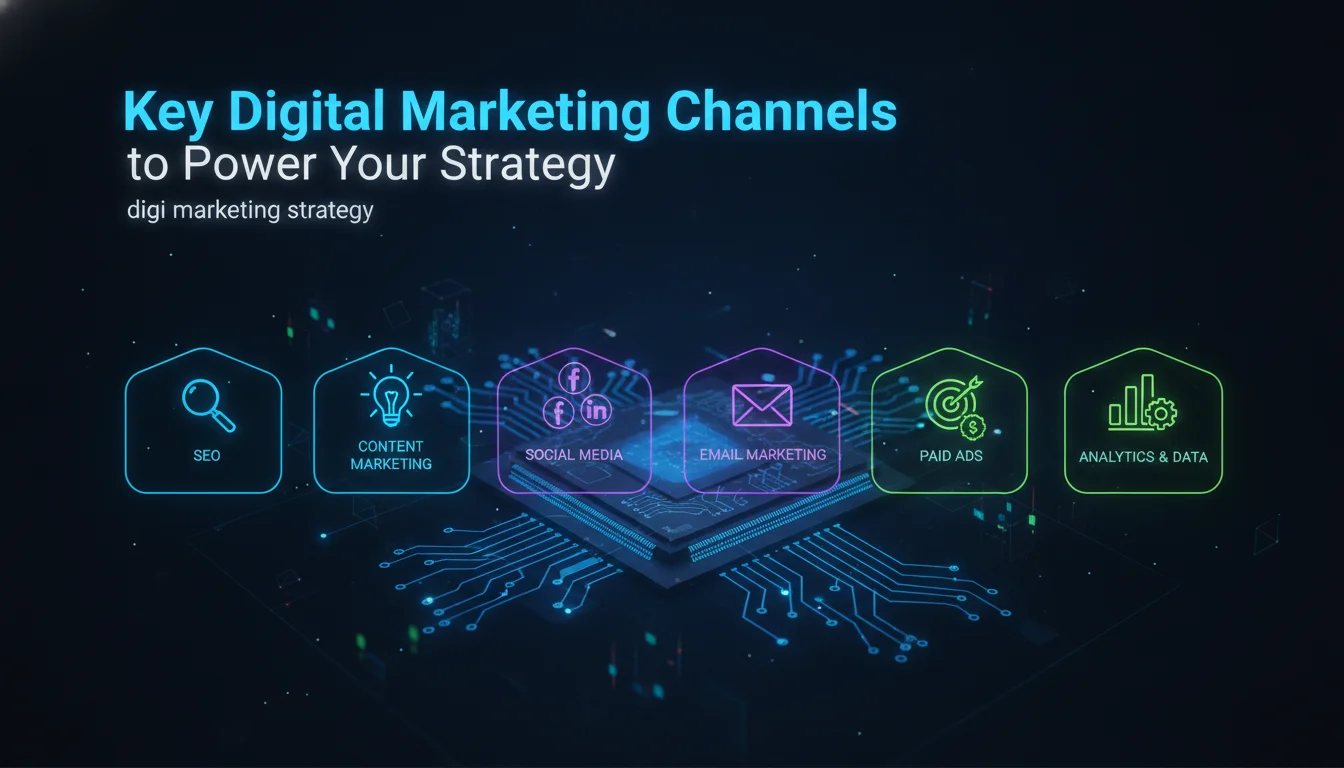
Your plan comes to life through a mix of digital channels. Understanding the role of each helps you build a balanced, effective approach.
| Channel | Primary Goal | Key Metrics | Role in Strategy |
|---|---|---|---|
| Search Engine Optimization (SEO) | Increase organic visibility and traffic | Organic sessions, keyword rankings, CTR | Builds long-term brand authority and cost-effective traffic |
| Content Marketing | Engage and educate audiences | Page views, time on page, conversions | Drives awareness and nurtures leads through the funnel |
| Social Media Marketing | Build community and brand affinity | Engagement rate, reach, follower growth | Amplifies content, drives traffic, and humanizes the brand |
| Email Marketing | Nurture leads and retain customers | Open rate, click-through rate, conversion | Delivers personalized, direct communication at scale |
| Pay-Per-Click (PPC) Advertising | Generate immediate traffic and leads | Cost per click, conversion rate, ROAS | Complements organic efforts and captures high-intent audiences |
| Affiliate & Influencer Marketing | Extend reach through third parties | Referral traffic, commissions, engagement | Uses external audiences to build trust and drive sales |
Content Marketing and SEO
Content marketing and SEO are the twin engines of most successful digital plans. High-quality, optimized content attracts visitors through search and keeps them engaged. Adobe describes content marketing as using blogs, videos, infographics, and guides to establish thought leadership. SEO ensures that content is discoverable by the right people at the right time. Together, they build a sustainable flow of organic traffic that lowers customer acquisition costs over time. Regularly updating old content and targeting long-tail keywords are proven tactics to maintain momentum.
Social Media and Influencer Marketing
Social media platforms offer real-time engagement that few other channels can match. A mature digi marketing strategy uses social channels not just for broadcasting, but for listening and interacting. Influencer marketing amplifies your message by putting it in the voice of trusted creators in your niche. Adobe’s Coca-Cola example allocates $5M to influencer partnerships, showing how seriously leading brands invest in this lever. The key is to choose platforms where your audience naturally congregates and to craft content that fits the native format: Stories, Reels, short-form video. Paid social campaigns can further extend reach beyond your organic follower base.
Email Marketing and Automation
Email remains one of the highest-ROI digital channels available. It is a direct line to your customer’s inbox, ideal for personalized nurturing. A strong plan integrates email with automation tools to send behavior-triggered messages: welcome sequences, abandoned cart reminders, and re-engagement campaigns. The Digital Marketing Institute emphasizes the use of automation for segmentation and targeting, turning a one-size-fits-all blast into a tailored conversation. When done right, email marketing moves subscribers smoothly from awareness to purchase and keeps existing customers coming back.
“Achieving marketing objectives through applying digital media, data and technology.” – Dr. Dave Chaffey, co-founder of Smart Insights, defining digital marketing strategy in his book Digital Marketing: Strategy, Implementation and Practice
Digi Marketing Strategy Frameworks to Guide Your Planning
Using a proven framework simplifies the complexity of building a plan. Here are two of the most widely adopted models.
The RACE Framework
Developed by Smart Insights, RACE stands for Reach, Act, Convert, Engage. It is a practical, customer-lifecycle-focused framework that helps marketers plan and manage digital activities across the entire buyer journey. Reach involves building awareness through paid, owned, and earned media. Act encourages interactions on your website or social channels. Convert is about turning interest into sales. Engage focuses on building long-term loyalty. RACE is particularly useful for creating an “always-on” strategy that continually moves customers through the funnel. Smart Insights describes this approach as essential for B2B and B2C brands alike, especially in complex markets with multiple touchpoints.
The SOSTAC Model
SOSTAC, which stands for Situation analysis, Objectives, Strategy, Tactics, Action, Control, is another classic planning framework applicable to any digi marketing strategy. It starts with a thorough situation analysis (where are we now?), then defines objectives (where do we want to be?), strategy (how do we get there?), tactics (the specific tools), action (the execution plan), and control (measurement). This linear, logical progression ensures no critical piece is missed. Many agencies and in-house teams use SOSTAC as a checklist for building complete digital marketing plans. Its strength lies in forcing disciplined thinking before jumping into execution.
Always-On vs. Campaign-Based Approaches
A modern plan often blends two operational modes: always-on and campaign-based. Always-on refers to continuous, low-level activity that keeps your brand present: social media management, SEO maintenance, and email automation. Campaigns are time-bound bursts focused on a specific goal, like a product launch or seasonal event. Smart Insights emphasizes the importance of always-on lifecycle activities, especially for B2B, where the buying cycle is long and consistency builds trust. An effective strategy integrates both, using always-on to nurture ongoing relationships and campaigns to spike awareness or sales at key moments.
Real-World Digi Marketing Strategy Examples
Seeing how major brands execute their plans can inspire your own approach.
B2C Example: Coca-Cola’s Global Engagement
Adobe’s blog details how Coca-Cola aligns its digital efforts under a clear strategy. The company sets a measurable goal, like “increase brand engagement by 25%,” and then targets a specific demographic: Gen Z. It invests heavily in influencer partnerships, $5M in one documented example, and measures success through engagement rates, reach, and brand sentiment. This approach shows how a massive brand uses a focused digi marketing strategy to stay relevant with younger audiences while using data to optimize every dollar spent.
Professional Services Example: A B2B Consulting Firm
Hinge Marketing illustrates how professional services firms deploy digital techniques. Unlike consumer brands, a consulting or accounting firm’s plan often revolves around thought leadership and trust-building. Digital techniques like SEO, email nurture, and LinkedIn content position the firm as an expert. The high-level strategy, defining key messages and market positioning, remains consistent across online and offline channels. By focusing on educational webinars, white papers, and targeted LinkedIn campaigns, professional services firms can generate high-quality leads and shorten the sales cycle in an industry where relationships are everything.
Always-On B2B Lifecycle Marketing
Smart Insights provides a B2B visual showing the complexity of customer touchpoints, from initial awareness through search and social, to website interactions, email nurturing, and finally conversion. A successful B2B digi marketing strategy embraces this complexity by designing always-on campaigns that guide buyers through each stage. A software company might use SEO-optimized comparison guides to attract early-stage researchers, retarget them with case-study ads, and then use automated email sequences to demo the product. The strategy ensures no lead goes cold and all digital touchpoints work in harmony.
AI and Automation in Your Digi Marketing Strategy
As of 2026, artificial intelligence is reshaping how marketers plan, execute, and optimize their digital efforts. AI-powered tools now assist with content ideation, audience segmentation, predictive analytics, and ad bidding, tasks that once required significant manual effort. The Digital Marketing Institute notes that the growth of AI in digital marketing is increasing the need for a well-planned strategy to guide activities, because AI amplifies both good decisions and poor ones. Integrating AI into your plan means using it to process data faster, personalize at scale, and free your team to focus on creative and strategic work. The brands winning right now are those treating AI as a force multiplier for their strategy, not a replacement for it.
“The growth of AI in digital marketing is becoming ever-more evident, which increases the need for a well-planned strategy to guide activities.” – Digital Marketing Institute, The Marketing Evolution: Leadership, Transformation, Skills, Challenges & the Future
Pros and Cons of a Structured Digi Marketing Strategy
Pros
- Clarity and direction: A written plan aligns your team around shared goals and prevents wasted effort on disconnected tactics.
- Measurable results: Defined KPIs make it possible to track progress, prove ROI, and justify budget decisions to stakeholders.
- Better resource allocation: Knowing which channels serve your goals means you spend where it counts and cut what does not.
- Consistency across touchpoints: A unified strategy ensures your brand voice and messaging stay coherent whether someone finds you on Google, Instagram, or email.
- Competitive advantage: Brands with a clear plan outpace competitors who are still running random acts of marketing.
Cons
- Time-intensive upfront: Building a proper strategy requires research, audits, and planning before you see any results.
- Can become rigid: A strategy that is not reviewed regularly can lock teams into outdated approaches as platforms and algorithms evolve.
- Requires cross-functional buy-in: A plan only works if sales, creative, and leadership are aligned, which is not always easy to achieve.
- Measurement complexity: Setting up proper tracking across multiple channels demands technical skill and the right tooling.
Common Digi Marketing Strategy Mistakes to Avoid
Even seasoned marketers can stumble. Identifying and avoiding these pitfalls will strengthen your approach.
Confusing Strategy with Tactics
A strategy is not a list of tactics. Jumping straight to “we need a TikTok account” without clarifying how TikTok serves a business objective is a recipe for wasted resources. Always start by articulating the strategic goal, then select the channels and tactics that best support it. A clear separation between strategy, campaigns, and tactics, as modeled by Adobe’s comparison table, prevents your team from chasing shiny objects and keeps everyone focused on outcomes that matter.
Ignoring Data and Analytics
Without data, a plan flies blind. Relying on gut feeling rather than performance metrics leads to misinformed decisions. The Digital Marketing Institute warns against vanity metrics and stresses the importance of KPIs tied to business outcomes. Set up dashboards that give you real-time visibility into what matters, and schedule regular reviews. Let the numbers guide your optimization efforts. If something is not working, be prepared to change course quickly.
Failing to Adapt to Market Changes
Algorithm updates, new platforms, and shifting user habits move fast. A strategy written a year ago may already be outdated. Build flexibility into your plan by reserving a portion of your budget for experimentation and by scheduling quarterly strategy refresh sessions. Pay attention to industry reports and competitor moves. A static plan can quickly become a liability. A living, breathing document keeps you ahead of the curve.
Frequently Asked Questions
What are the 5 main strategies of digital marketing?
The five primary digital marketing strategies include content marketing, search engine optimization (SEO), social media marketing, email marketing, and paid advertising. Each can stand alone, but an integrated approach that connects all five typically yields the strongest results.
What is the 3 3 3 rule in marketing?
The 3-3-3 rule suggests creating three pieces of content, promoting each through three different channels, and tracking performance over three weeks. It is a simple framework for testing what resonates with your audience without overwhelming your team or budget.
What are the 4 types of digital marketing?
The main types are often categorized as search engine marketing (SEM), social media marketing, content marketing, and email marketing. Some models also include affiliate marketing and display advertising as distinct categories depending on the business model.
What are the 7 pillars of digital marketing?
The seven pillars typically include SEO, content marketing, social media marketing, email marketing, pay-per-click (PPC) advertising, affiliate marketing, and mobile marketing. These pillars cover the full spectrum of digital tactics available to marketers building a complete plan.
What is the most effective digital marketing strategy?
There is no single most effective strategy. Success depends on your audience, industry, and goals. That said, a well-crafted plan that integrates content, SEO, and social channels, supported by data and continuous optimization, consistently outperforms isolated tactics across most industries and business sizes.
How often should I update my digital marketing strategy?
Your strategy should be reviewed quarterly, with a more thorough overhaul annually. Market changes, platform updates, and performance data should all prompt adjustments to keep your plan relevant and effective throughout the year.
Build Something Bold with Emin Media
A digi marketing strategy is your compass in an expanding digital universe. It moves you from random acts of marketing to a cohesive, measurable plan that drives real business outcomes. By defining clear objectives, understanding your audience, selecting the right channels, and continuously optimizing based on data, you can build a strategy that not only reaches but engages and converts your ideal customers. The brands that succeed, from Coca-Cola to B2B pioneers, treat digital marketing as a disciplined, strategic function, not a loose collection of tactics. Start by auditing where you are, use a proven framework like RACE or SOSTAC, and commit to a process of ongoing refinement. Your strategy will evolve into a powerful engine for sustainable growth.
Ready to stop guessing and start growing? Contact Emin Media for a free brand consultation and let’s build something bold together.
Enjoyed this article?
Contact Emin Media for a free brand consultation and let's create something amazing together.
Get in TouchRelated Articles
Digital Storytelling for Brands: The Complete Guide
Digital storytelling for brands builds real audience connections through narrative. Learn proven techniques, formats, and…
Design Thinking for Marketing: A 2026 Guide
Design thinking for marketing builds campaigns around real user needs. Learn the 5 phases, common…

Creative Direction for Video Shoots: A Complete Guide
Master creative direction for video shoots with proven steps, tools, and strategies that build brand…