Brand Social Media Audit: Complete 2026 Guide
A brand social media audit is a structured evaluation of every social channel your brand owns, measuring performance, consistency, and audience alignment in one clear picture. Think of it as your annual creative health check, except you run it every quarter.
Key Takeaways
- A media audit reveals which platforms, content types, and posting habits actually drive results.
- Regular audits, ideally quarterly, keep your strategy aligned with shifting audience behavior and platform algorithms.
- A structured 10-step process covers goals, data collection, content analysis, competitive review, and action planning.
- The right tools (Sprout Social, Hootsuite, Brand24, and others) cut audit time significantly.
- Common mistakes include auditing too infrequently, ignoring inactive accounts, and collecting data without acting on it.
- As of 2026, AI-assisted social listening is reshaping how teams gather and interpret audit data.
Why Conduct a Brand Social Media Audit?
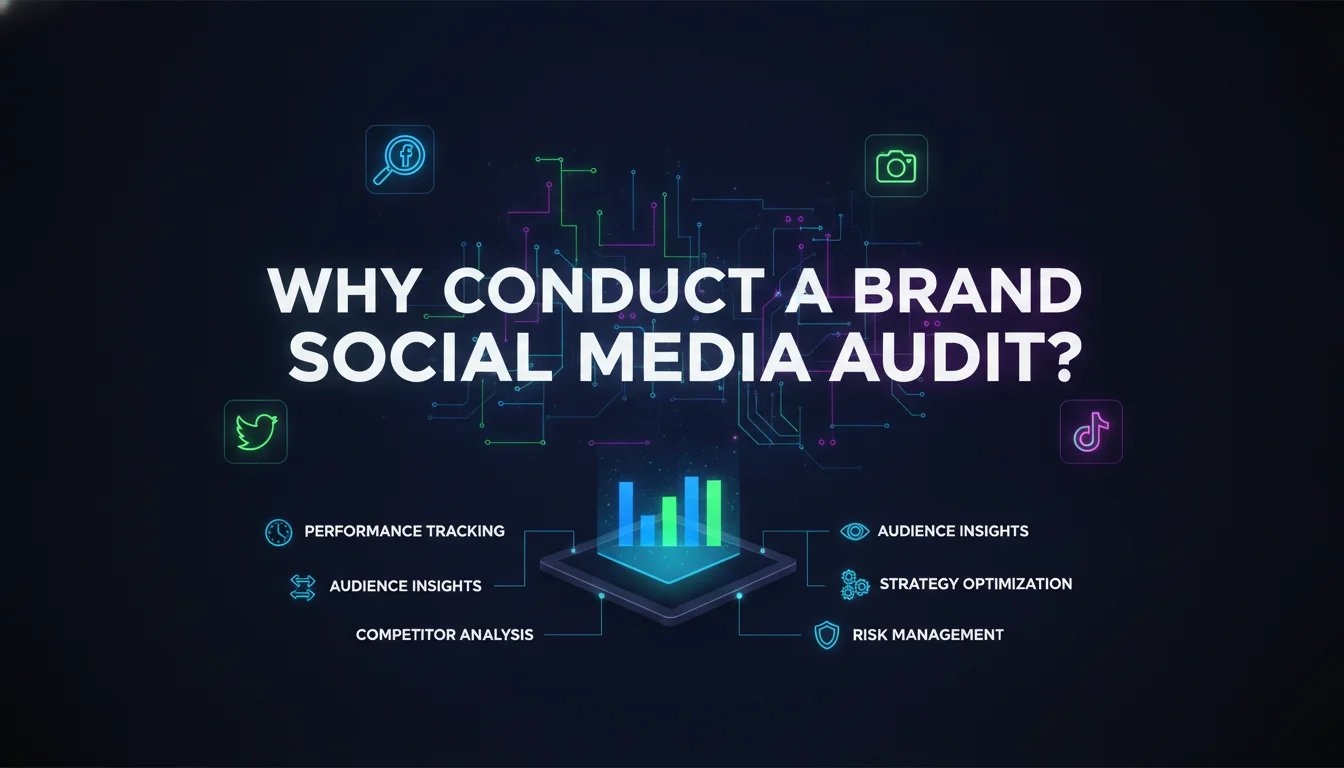
A this type of audit is the fastest path from guesswork to a strategy that drives real results. Too many brands freestyle their social presence without stopping to measure what’s actually working. Some teams inherited accounts with zero documentation. Others haven’t stepped back in months to ask whether their content is moving the needle or just filling a calendar.
According to research published in MDPI’s Sustainability journal, there is a strong link between well-managed social media accounts and higher profitability. That connection doesn’t happen by accident. It happens through structured, recurring audits that surface the right data at the right time.
Here’s what a proper audit delivers:
- Performance clarity: See exactly how your social efforts stack up against your goals, not just vanity metrics.
- Content intelligence: Discover which formats, topics, and posting times generate real engagement.
- Brand protection: Catch off-brand messaging, outdated visuals, or rogue accounts before they damage trust.
- Opportunity mapping: Identify gaps in your platform mix or untapped audience segments worth pursuing.
- Strategic alignment: Confirm that your social activity supports broader business objectives, not just social media KPIs.
DesignRush reports that 37% of consumers check a brand’s social presence before making a purchase. That single data point should make every brand owner take their audit seriously.
How a Brand Social Media Audit Actually Works
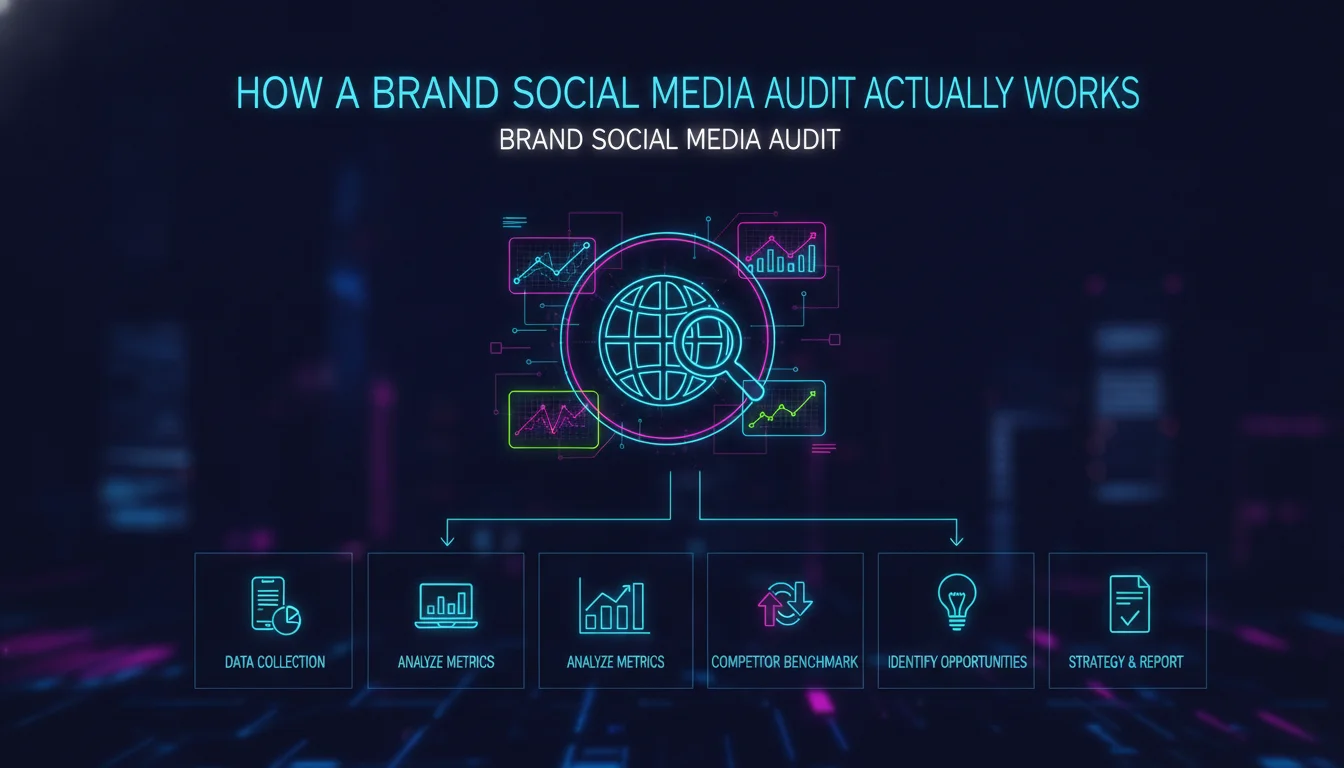
A this kind of media audit works by systematically pulling performance data from every active channel, comparing it against your goals, and identifying the gaps between where you are and where you want to be. It’s less about judgment and more about diagnosis.
Think of it in three layers:
Layer 1: The Account Inventory
Before you analyze anything, you need a complete map of your digital footprint. This means finding every account your brand owns, including the ones nobody updates anymore. Search your brand name on Google and on each major platform. You’ll often find forgotten profiles, duplicate accounts, or even fraudulent pages created by third parties. Each of these is a brand risk until it’s documented and addressed.
Layer 2: The Performance Snapshot
Once you know what exists, you measure how it’s performing. This layer pulls quantitative data: follower counts, engagement rates, reach, impressions, referral traffic, and top-performing posts. Most platforms provide native analytics dashboards. Third-party tools like Sprout Social or Brand24 aggregate this data across channels, saving hours of manual work.
The goal isn’t to collect every number available. It’s to collect the numbers that connect to your stated goals. If your goal is brand awareness, reach and impressions matter most. If your goal is community building, comment volume and reply rates tell a richer story than likes ever will.
Layer 3: The Qualitative Review
Numbers tell you what happened. Content analysis tells you why. This layer involves reading your posts with fresh eyes, checking whether your brand voice is consistent, whether your visuals match your identity guidelines, and whether your messaging actually reflects what your brand stands for. It’s the creative director’s lens applied to a spreadsheet world.
According to Sprout Social’s 2026 audit guide, a complete audit covers profile information, content performance, audience demographics, engagement metrics, and competitive positioning. That’s the full picture.
Step-by-Step: How to Conduct a Brand Social Media Audit
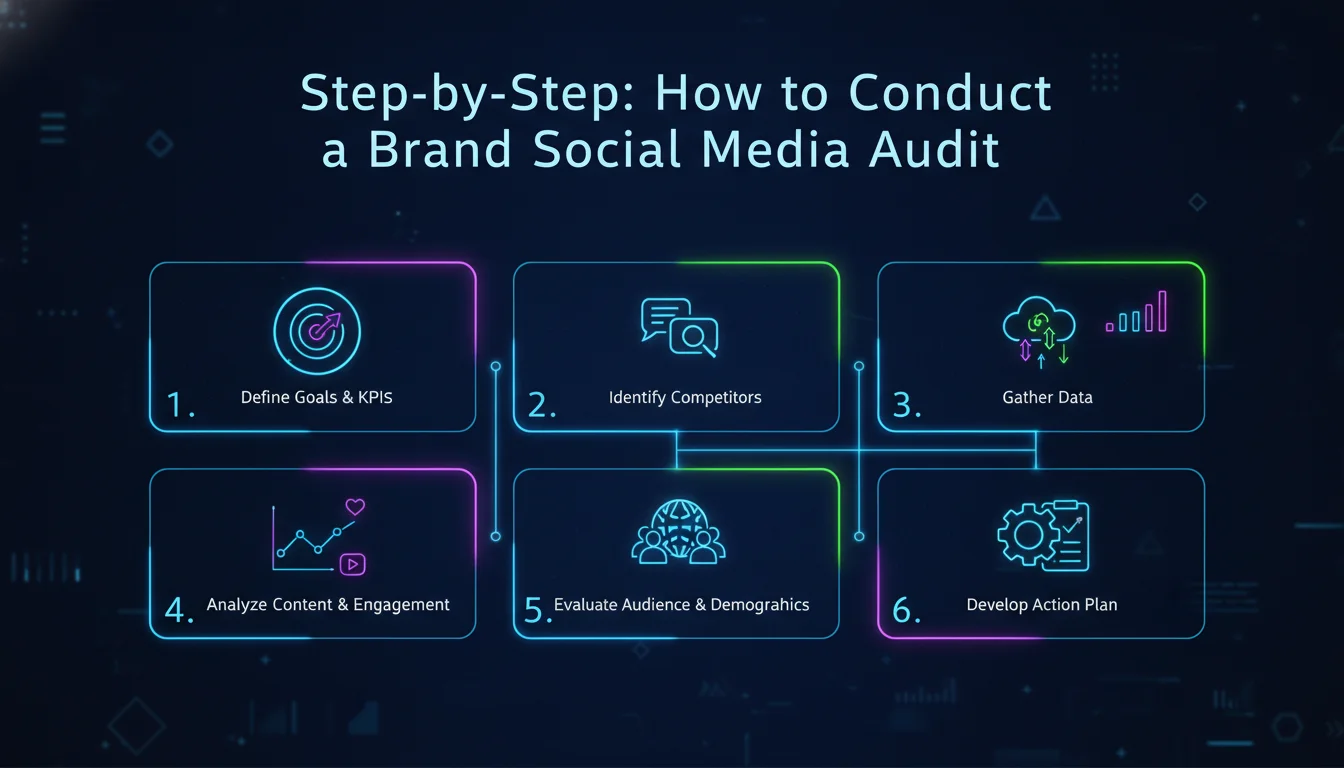
Running a the social media audit follows a clear sequence. Skip steps and you get incomplete data. Follow them in order and you get a strategic roadmap.
Step 1: Define Your Goals
Before touching a single analytics dashboard, decide what you want this audit to answer. Common goals include increasing engagement rates, improving brand visibility, assessing competitor performance, and identifying new audience segments. Your goals shape every decision that follows, from which metrics you track to which platforms you prioritize.
Step 2: List All Social Media Platforms
Compile every social account your brand is active on, and every account it’s inactive on. This includes:
- Twitter (X)
- TikTok
- YouTube
- Threads
- Snapchat
- Any others applicable to your industry
Sort each account by status: active and high priority, inactive or low priority, potentially fraudulent, or managed by a separate department. This taxonomy alone often reveals problems brands didn’t know they had.
Step 3: Collect Data
Gather relevant data for each platform, including:
- Follower counts
- Engagement metrics (likes, comments, shares, reposts)
- Reach and impressions
- Audience demographics
- Posting frequency and times
- Top-performing content
- Referral traffic from social media to your website
Use a spreadsheet or a dedicated template to keep everything in one place. Canva Docs, Asana, and Sprout Social all offer audit templates that structure this collection phase efficiently.
Step 4: Analyze Content
Review past posts to identify trends in audience engagement. Ask yourself:
- What types of content perform best?
- Are there consistent themes or messages that resonate?
- Is the branding consistent across all platforms?
- Are profiles complete and up-to-date, including bios, highlights, and links?
Look for patterns, not just peaks. A single viral post tells you less than a consistent pattern of mid-tier posts that reliably drive clicks.
Step 5: Know Your Audience
Understanding your audience is critical. Use native analytics tools to gain insights into demographics, interests, and behaviors. Then ask the harder question: does your current audience actually match your target audience? If you’re a B2B software brand but your Instagram followers skew toward college students, something in your content strategy is misaligned.
Step 6: Check Competition
Analyze your competitors’ social media presence. Look at follower counts, engagement rates, content strategies, and audience demographics. The goal isn’t to copy them. It’s to find the white space where you can differentiate. Where are they weak? Where are they strong? What are they ignoring that your audience actually wants?
Step 7: Review Branding
Ensure your branding is consistent across all platforms. Evaluate brand voice and tone, visual elements like logos and color palettes, and whether your messaging aligns with your core brand values. Inconsistency here is one of the most common and most damaging findings in any audit.
Step 8: Make a Plan
Based on your analysis, develop a strategic action plan. This should include specific, measurable goals for each platform, strategies to address weak areas, and concrete tactics for content creation and audience engagement. Prioritize ruthlessly. Not every finding needs immediate action.
Step 9: Take Action
Implement your plan. Update profiles, adjust content strategies, refresh visual assets, and enhance your audience engagement approach. Document every change you make so future audits can measure the impact of those decisions.
Step 10: Regularly Update
Schedule regular audits to continuously improve your strategy. Most practitioners find quarterly audits strike the right balance between frequency and depth. High-volume publishing teams benefit from lighter monthly check-ins to catch performance shifts before they compound into bigger problems.
Comparison of Social Media Audit Tools
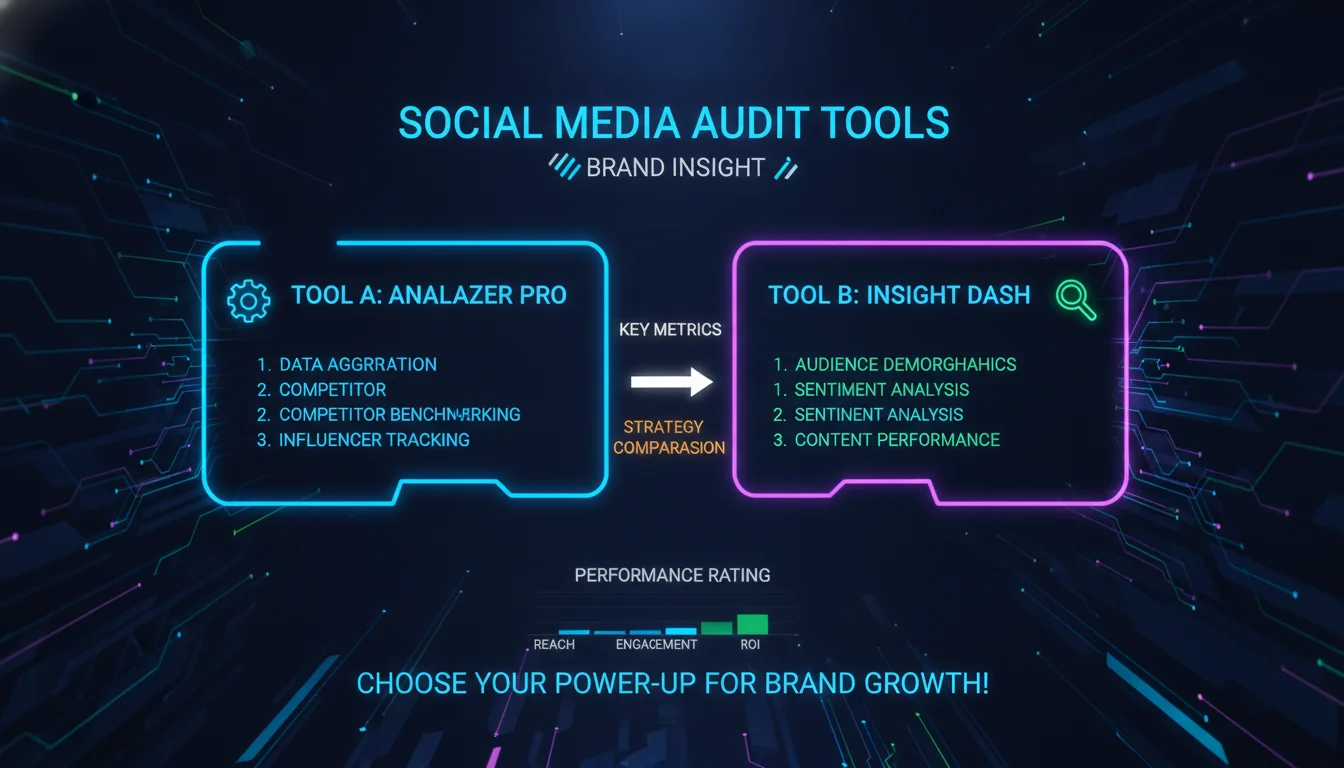
Choosing the right tool for your brand social depends on your team size, budget, and the depth of analysis you need. Here’s how the main options compare:
| Tool | Features | Best For | Pricing Tier |
|---|---|---|---|
| Sprout Social | Cross-platform analytics, automated reporting, competitive benchmarking, scheduling | Comprehensive audits for mid-to-large teams | Premium |
| Hootsuite | Multi-platform management, analytics dashboards, team workflows | Small to medium businesses managing multiple accounts | Mid-range |
| Brand24 | Social listening, sentiment analysis, mention tracking, real-time alerts | Brand reputation monitoring during audits | Mid-range |
| Canva Docs | Audit templates, data visualization, team collaboration, design integration | Visual content audits and team reporting | Free to Premium |
| Asana | Project management, audit templates, task assignment, progress tracking | Team collaboration and audit workflow management | Free to Premium |
| Google Analytics | Referral traffic tracking, conversion attribution, audience behavior | Measuring social media’s impact on website performance | Free |
Pros and Cons of Running a Brand Social Media Audit
A media audit delivers real strategic value, but it also demands real time and resources. Here’s an honest look at both sides.
Pros
- Data-driven clarity: Replaces gut-feel decisions with evidence about what’s actually working.
- Budget efficiency: Identifies which platforms and content types deserve more investment and which ones are draining resources.
- Brand consistency: Catches visual and messaging inconsistencies before they erode audience trust.
- Competitive intelligence: Reveals gaps in competitor strategies that your brand can fill.
- Audience alignment: Confirms whether you’re reaching the people you actually want to reach.
- Accountability: Creates a documented baseline that makes future performance measurable.
Cons
- Time-intensive: A thorough audit across multiple platforms can take days without the right tools.
- Data overload risk: Collecting too many metrics without a clear framework leads to analysis paralysis.
- Requires honest assessment: Teams sometimes resist findings that reflect poorly on past decisions.
- Platform limitations: Native analytics vary widely in depth and accessibility across different social networks.
- Findings expire quickly: Social media moves fast. Audit insights from six months ago may already be outdated.
Common Mistakes to Avoid in Your Social Media Audit
Most this type of audit failures come from the same handful of errors. Knowing them in advance saves you from repeating them.
Auditing Too Infrequently
Running an audit once a year and calling it done is like checking your car’s oil once a year and hoping for the best. Social media platforms update their algorithms, audience behaviors shift, and competitors pivot constantly. Quarterly audits are the minimum for brands that want to stay ahead.
Ignoring Inactive or Forgotten Accounts
That Twitter account you created in 2019 and abandoned? It still shows up in search results. It still shapes how people perceive your brand. Inactive accounts with outdated bios, old logos, or no activity send a signal that your brand isn’t paying attention. Find them. Update them or deactivate them.
Collecting Data Without a Framework
Pulling every available metric from every platform creates a spreadsheet that nobody reads. Start with your goals from Step 1 and collect only the data that speaks directly to those goals. More data isn’t better data.
Skipping the Qualitative Layer
Numbers without context mislead. A post with low likes but high saves and shares might be your most valuable piece of content. A high follower count means nothing if those followers never engage. Always pair quantitative data with a qualitative read of the content itself.
Treating the Audit as a One-Time Project
The audit isn’t the destination. It’s the starting line. Brands that run an audit, file the report, and move on without implementing changes have wasted their time. Build the action plan into the audit process itself, and schedule a follow-up review to measure whether the changes worked.
Overlooking Brand Voice Consistency
Visual branding inconsistencies are easy to spot. Voice inconsistencies are harder to catch but equally damaging. If your LinkedIn sounds like a law firm and your Instagram sounds like a college student, your audience gets a fragmented picture of who you are. The audit should include a voice review across every platform.
A Worked Example: What a Real Brand Social Media Audit Looks Like
Here’s a realistic scenario that shows how the audit process plays out in practice.
Imagine a mid-sized lifestyle brand, let’s call them Solara, selling sustainable home goods. They’ve been active on Instagram, Pinterest, Facebook, and LinkedIn for three years. Engagement has been declining for two quarters. Their marketing manager decides it’s time for a full brand social media audit.
The Discovery Phase
During the account inventory, the team finds two Instagram accounts: the main brand account and an old product launch account from 2022 that was never deactivated. The old account has 4,200 followers and still shows up when people search the brand name. Its bio links to a discontinued product page. That’s an immediate fix.
The Data Phase
Pulling analytics across all active platforms, the team notices that Pinterest drives more referral traffic to the website than Instagram, despite receiving a fraction of the content investment. LinkedIn posts get almost no engagement, but the audience demographics show a high concentration of interior designers, exactly the trade buyer segment Solara has been trying to reach through paid ads.
The Content Analysis Phase
Reviewing the last six months of Instagram content, the team finds that behind-the-scenes production videos consistently outperform polished product shots by a factor of roughly 2-3x in saves and shares. But the content calendar is weighted heavily toward product photography. The strategy and the data are pointing in opposite directions.
The Action Plan
Based on the audit findings, Solara makes three immediate changes: they deactivate the old Instagram account and redirect its followers to the main page, they shift 30% of their Instagram content budget toward behind-the-scenes video, and they develop a LinkedIn content series specifically for trade buyers and interior designers. They schedule a follow-up audit in 90 days to measure the impact.
That’s what a brand social media audit looks like when it’s done right. Not a report that sits in a folder. A decision engine.
The 5-5-5 Rule and the 50/30/20 Rule: Social Media Frameworks That Inform Your Audit
Two content frameworks come up frequently in social media strategy conversations, and understanding them helps you interpret your audit findings more effectively.
The 5-5-5 Rule
The 5-5-5 rule is a social media engagement approach where you spend five minutes engaging with your existing followers, five minutes engaging with new potential followers, and five minutes engaging with industry influencers or partners, daily. During an audit, you can assess whether your team has been applying this kind of intentional engagement or simply broadcasting content without reciprocal interaction. Low comment response rates and minimal outbound engagement are signs this discipline has been missing.
The 50/30/20 Rule
The 50/30/20 rule suggests splitting your social content into roughly 50% value-driven or educational content, 30% curated or shared content from others, and 20% promotional content about your brand. When you analyze your content mix during an audit, this framework gives you a benchmark to compare against. Most brands that struggle with engagement are running an inverted ratio, posting mostly promotional content and wondering why nobody cares.
Can ChatGPT Do a Brand Social Media Audit?
AI tools like ChatGPT can assist with parts of a brand social media audit, but they can’t replace the full process. As of 2026, AI is genuinely useful for analyzing text-based content, identifying voice inconsistencies, drafting audit frameworks, and summarizing large volumes of qualitative data. Some social listening tools now integrate AI to surface sentiment trends and flag anomalies in engagement data automatically.
What AI can’t do is pull your actual platform analytics, access your private account data, or make judgment calls about whether your brand voice feels authentic to your specific audience. Those require human creative judgment. Think of AI as a research assistant that speeds up the process, not a replacement for the strategic thinking that makes audits valuable.
“A social media audit is the fastest path from guesswork to a strategy that drives real results. If your social media strategy isn’t data-driven, goal-oriented and rooted in intentional decisions, run one now.” – Sprout Social, 2026
Brand Social Media Audit in 2026: What’s Changed
The mechanics of a brand social media audit haven’t changed dramatically, but the context around them has shifted in ways that matter.
First, the platform landscape is more fragmented than ever. Threads has matured into a genuine content channel for some brands. TikTok’s role in purchase decisions has grown significantly. LinkedIn has evolved from a recruitment platform into a primary B2B content channel. Your audit needs to reflect this expanded map.
Second, AI-assisted social listening tools have made the data collection phase faster and more precise. Platforms like Brand24 now surface sentiment trends, mention spikes, and competitive shifts in near real-time. This year, brands that integrate social listening into their audit process get a richer picture than those relying solely on native platform analytics.
Third, audience expectations around brand authenticity have risen sharply. The qualitative layer of your audit, the voice review, the visual consistency check, the messaging alignment assessment, matters more now than it did even two years ago. Audiences are better at detecting when a brand’s social presence feels manufactured or inconsistent.
“Research published in MDPI’s Sustainability journal found a strong link between well-managed social media accounts and higher profitability. These results often stem from structured audits that help improve engagement metrics.” – Canva, 2026
Best Practices for a Successful Brand Social Media Audit
To ensure your audit delivers actionable results rather than just a data dump, follow these practices:
- Be consistent: Conduct audits on a regular schedule so you can track progress over time and spot trends before they become problems.
- Involve your team: Bring in perspectives from content creators, designers, and strategists. A solo audit misses blind spots that a collaborative review catches.
- Use templates: Structured templates from tools like Asana or Canva Docs keep data collection consistent across audit cycles, making comparisons meaningful.
- Focus on actionable insights: Prioritize findings that lead to immediate improvements. A 40-page audit report that nobody acts on is a waste of everyone’s time.
- Document your baseline: Record your metrics at the start of each audit period so you have a clear before-and-after picture when you run the next one.
- Connect findings to business goals: Every insight should trace back to a business objective. If it doesn’t, it’s interesting but not strategic.
If you want to see how a brand social media audit connects to your broader digital marketing strategy, our guide on building a social media strategy walks through the planning framework that audits feed into. And if you’re thinking about how branding consistency plays out across channels, our piece on brand identity fundamentals covers the visual and messaging standards your audit should be measuring against.
Ready to build something that actually works? Explore our services to see how Emin Media approaches brand strategy and social media.
Frequently Asked Questions
What is included in a brand social media audit?
A brand social media audit includes an evaluation of all social media accounts, performance metrics, audience demographics, content effectiveness, and brand consistency across platforms. It also covers competitive analysis, profile completeness, brand voice review, and a strategic action plan based on the findings.
How often should I conduct a brand social media audit?
Most practitioners find that quarterly audits strike the right balance between depth and frequency. High-volume publishing teams benefit from lighter monthly check-ins. If you’re experiencing a sudden drop in engagement or launching a major campaign, run an audit immediately rather than waiting for the next scheduled cycle.
Can I use templates for my social media audit?
Yes, and you should. Templates from tools like Asana, Canva Docs, and Sprout Social structure the data collection process, ensure consistency across audit cycles, and make it easier to compare results over time. They also make it simpler to share findings with stakeholders who weren’t involved in the audit itself.
What tools can assist in conducting a social media audit?
Sprout Social, Hootsuite, and Brand24 are strong choices for data collection and competitive analysis. Google Analytics is essential for tracking referral traffic from social channels to your website. Canva Docs and Asana work well for organizing findings and managing the action plan that follows the audit.
Can ChatGPT do a social media audit?
AI tools like ChatGPT can assist with text analysis, voice consistency reviews, and drafting audit frameworks, but they can’t access your private platform analytics or replace human creative judgment. As of 2026, AI works best as a research and synthesis assistant within a broader audit process led by a strategist.
What should I do with the findings from my audit?
Use the findings to build a prioritized action plan with specific, measurable goals for each platform. Address the highest-impact weaknesses first, document every change you make, and schedule a follow-up review in 60 to 90 days to measure whether those changes moved the needle. The audit is only valuable if it drives decisions.
Enjoyed this article?
Contact Emin Media for a free brand consultation and let's create something amazing together.
Get in TouchRelated Articles

Digital Storytelling for Brands: The Complete Guide
Digital storytelling for brands builds real audience connections through narrative. Learn proven techniques, formats, and…

Design Thinking for Marketing: A 2026 Guide
Design thinking for marketing builds campaigns around real user needs. Learn the 5 phases, common…

Creative Direction for Video Shoots: A Complete Guide
Master creative direction for video shoots with proven steps, tools, and strategies that build brand…