Brand Refresh Process: A 2026 Complete Guide
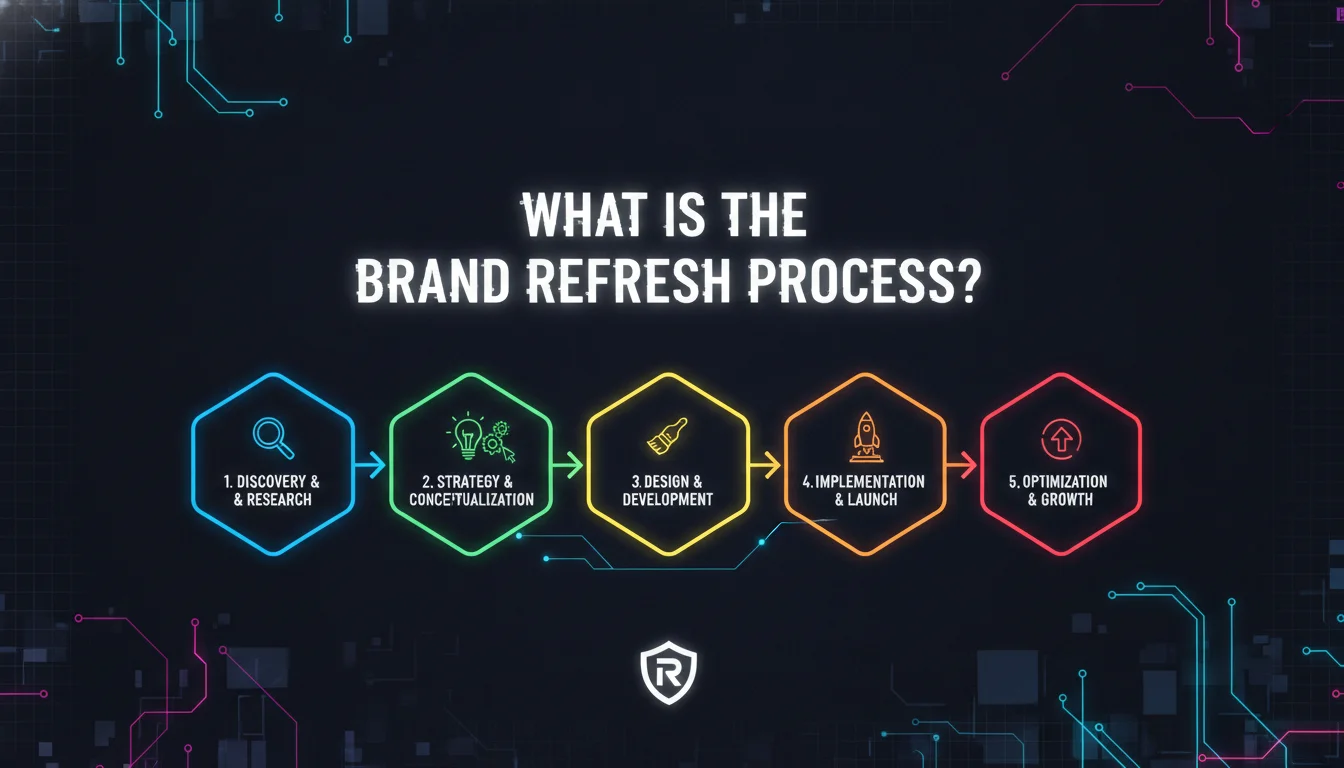
The brand refresh process is a structured approach to modernizing an existing brand’s visual identity, messaging, and market positioning without replacing its core values or starting over. Think of it as a precision tune-up, not an engine swap. Done right, it keeps your brand sharp, relevant, and competitive.
Key Takeaways
- A brand refresh updates your brand’s look and voice while preserving its core identity.
- Key steps include discovery, competitive analysis, strategy development, visual updates, and rollout.
- According to Design Bridge and Partners, consumer brands need to refresh every 6 years on average to stay relevant.
- Communicating the refresh clearly, both internally and externally, is just as important as the creative work itself.
- A brand refresh is not a rebrand. Knowing the difference saves time, money, and brand equity.
- Measuring success through brand awareness, engagement, and sales data tells you whether the refresh actually worked.
What is the Brand Refresh Process?
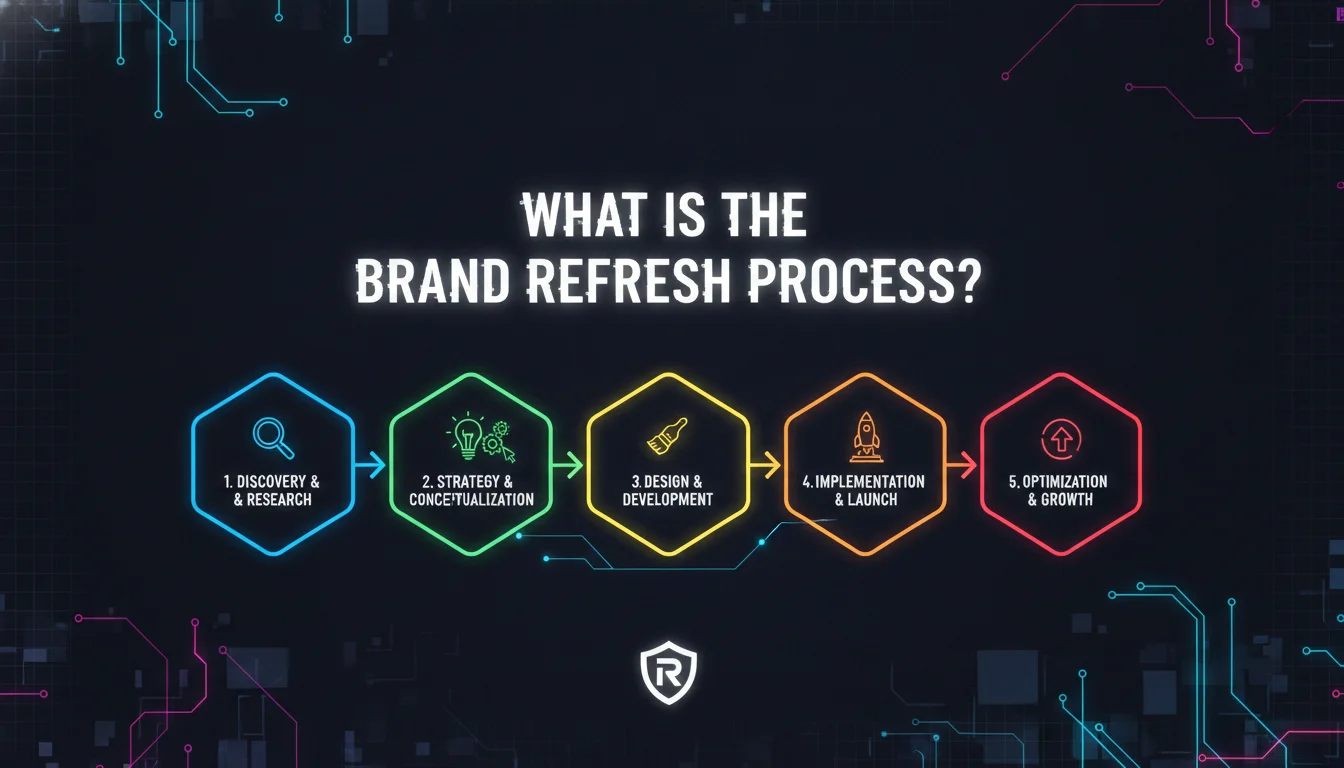
The brand refresh process involves updating and modernizing an existing brand to enhance its relevance and appeal without fundamentally changing its core identity. This typically includes refining messaging, visual identity, and overall market positioning. A successful brand refresh can reinvigorate a company’s image, align it with current trends, and improve how customers feel about you.
As Design Bridge and Partners put it: a brand refresh is enhancing, repainting and updating the furniture, while rebranding is reinventing, gutting and fundamentally rebuilding. That distinction matters enormously when you’re deciding how much to invest and how far to go.
As of 2026, brands face a more visually saturated environment than ever. AI-generated content, short-form video, and platform algorithm shifts mean your brand identity gets tested across more surfaces, faster. The brand refresh process has become less of a once-a-decade project and more of a strategic discipline.
Why is a Brand Refresh Necessary?
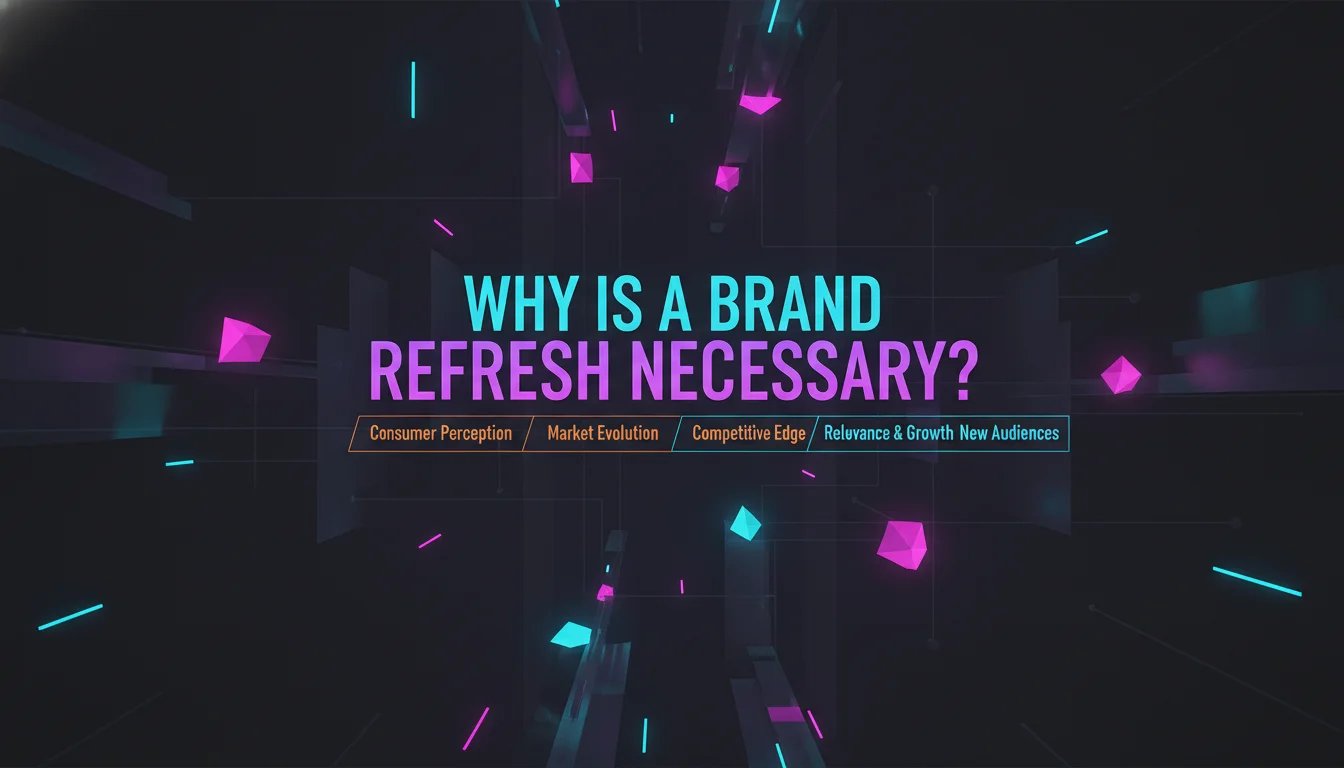
Brands need to evolve because markets, audiences, and culture never stand still. A brand that felt fresh five years ago can start to feel dated, disconnected, or simply invisible in a crowded feed. According to Design Bridge and Partners, standing still for too long results in going backwards, which in most cases leads to certain brand death.
A brand refresh becomes necessary for several reasons:
- Market Changes: Shifts in consumer behavior or competitive dynamics may require a brand update to stay positioned correctly.
- Outdated Image: An outdated visual identity or tone of voice can erode customer trust and reduce engagement over time.
- Competitive Pressure: When competitors modernize their brands, staying static makes you look like the old option by comparison.
- Business Evolution: New products, new markets, or new leadership often signal that the brand needs to catch up with where the company actually is.
Indicators for a Brand Refresh
Common signs that your brand is ready for a refresh include:
- Declining brand awareness or shrinking market share.
- Negative customer perceptions or feedback that keeps surfacing in reviews and surveys.
- Changes in your target audience’s demographics, values, or platform habits.
- Your visual identity looks noticeably older than your competitors’ brands.
- Internal teams feel embarrassed sharing brand materials or struggle to explain what the brand stands for.
“Your brand is what other people say about you when you’re not in the room.” – Jeff Bezos, as cited in BrandZ global brand value research
How the Brand Refresh Process Actually Works
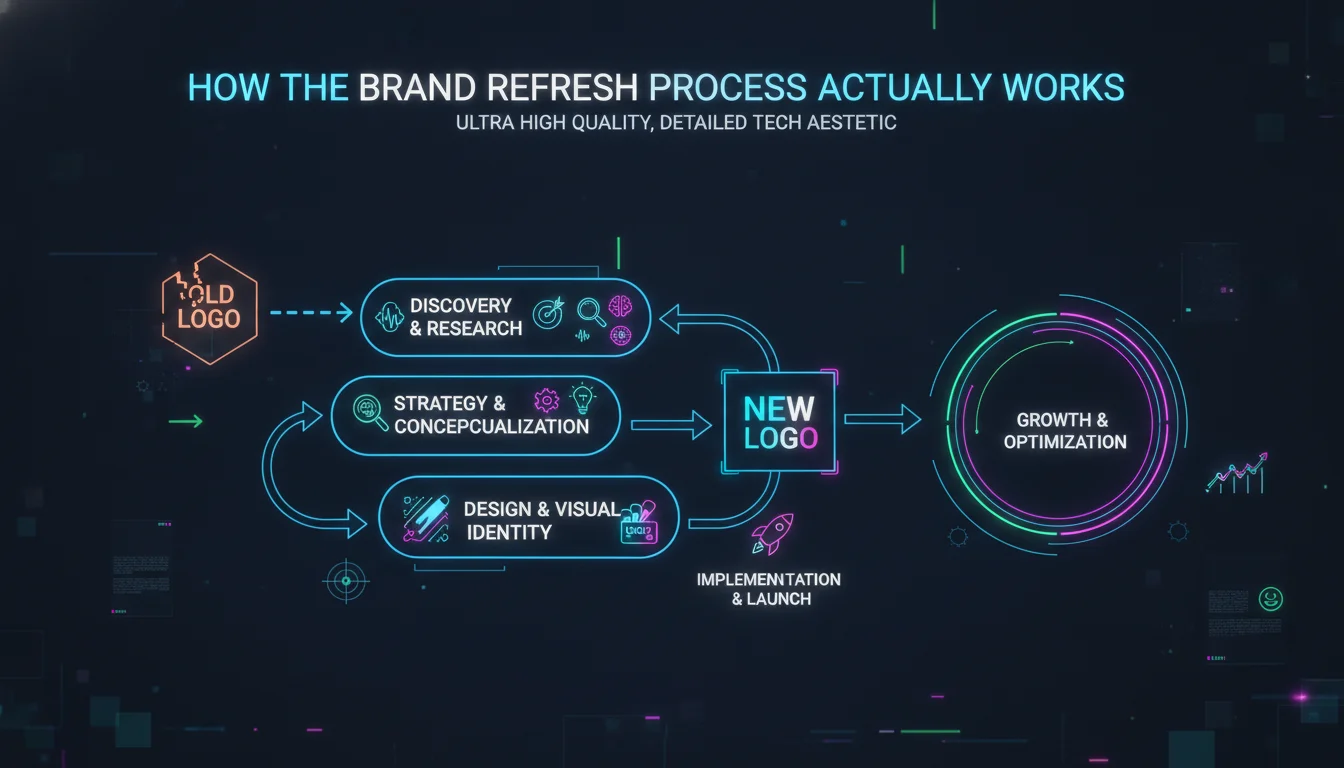
The brand refresh process works by systematically auditing what exists, identifying what’s still strong, and updating only what’s holding the brand back. It’s not about throwing everything out. It’s about knowing what to keep, what to evolve, and what to retire.
Think of it in three phases:
Phase 1: Diagnosis. You gather evidence. What does the market think of you? What do your own people believe about the brand? Where are the gaps between internal perception and external reality? This phase is research-heavy and should feel uncomfortable if you’re doing it honestly.
Phase 2: Strategy. Based on what you found, you define what needs to change and why. This is where positioning, messaging, and visual direction get decided. Every creative choice in Phase 3 should trace back to a strategic decision made here.
Phase 3: Execution and Rollout. You update the brand assets, create guidelines, train your team, and launch. The rollout is not just a design handoff. It’s a communication campaign in its own right.
Each phase builds on the last. Skipping Phase 1 to get to the fun creative work in Phase 3 is the single most common reason brand refreshes fail to stick.
Key Steps in the Brand Refresh Process
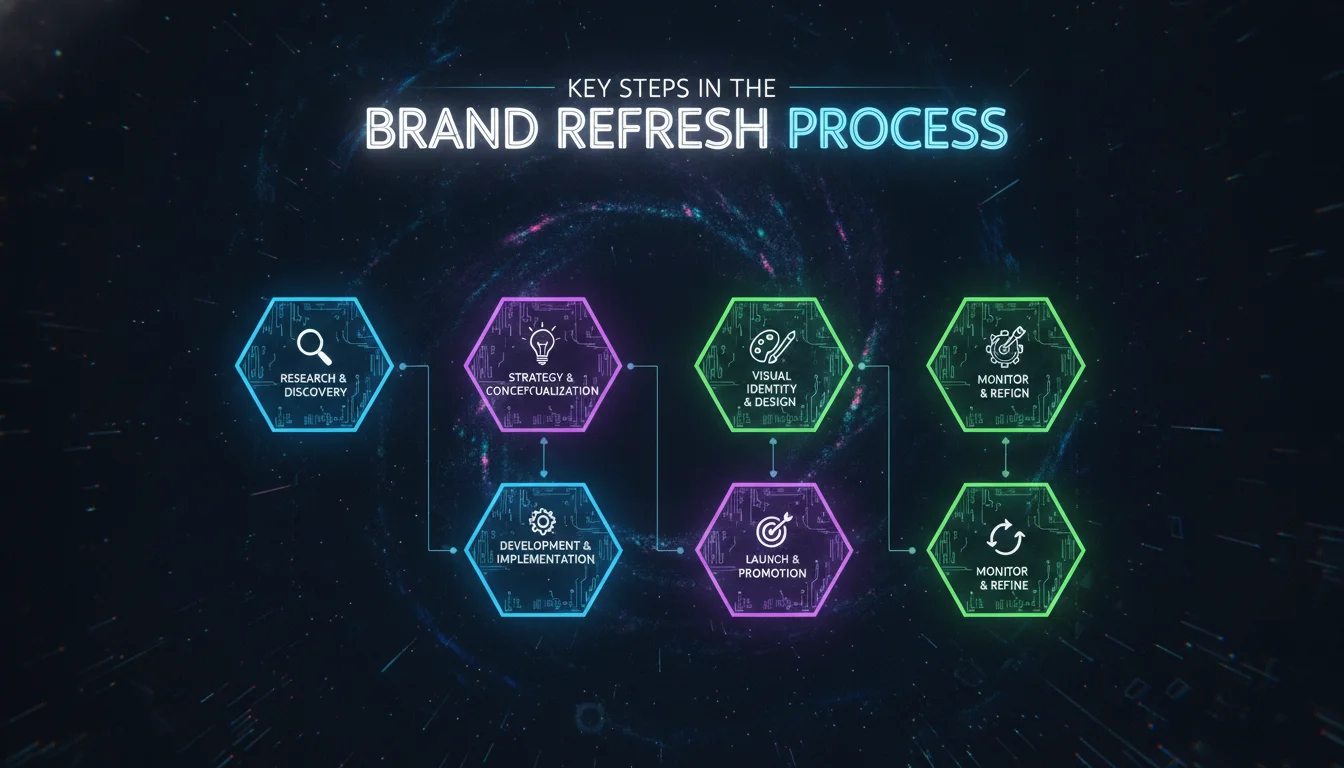
The brand refresh process breaks down into clear, sequential steps. Each one builds the foundation for the next.
Step 1: Set a Clear Goal
Before touching a single design file, define what success looks like. A brand refresh without a goal is just an expensive aesthetic exercise. Your goal might be to modernize the visual identity for a younger audience, tighten messaging to stand out in a crowded category, or signal a strategic shift to the market. Write it down. Make it specific. Every decision that follows should answer to that goal.
Step 2: Discovery and Research
Conducting thorough discovery and research is essential for understanding current brand perception. This means gathering insights from stakeholders, customers, and market data to identify gaps and opportunities.
- Qualitative Interviews: Talk to customers, employees, and partners. Ask what they think the brand stands for. The answers will surprise you.
- Quantitative Surveys: Use surveys to collect data on customer preferences, brand associations, and competitive perceptions at scale.
- Brand Audit: Review every existing brand touchpoint, website, social profiles, sales decks, email signatures, packaging. Assess what’s consistent and what’s drifted.
According to Circles Studio, discovery and research are often the most overlooked steps in the brand refresh process, yet they form the foundation of everything that follows. Two essentials of a powerful brand are credibility and authenticity, and research is how you verify both.
Step 3: Competitive Analysis
Analyzing competitors helps you understand how they position themselves and where your brand can genuinely differentiate. This step is critical for developing a brand identity that feels distinct, not derivative.
- Visual Audit: Assess competitors’ logos, color palettes, typography, and photography styles.
- Messaging Review: Study their taglines, value propositions, and tone of voice across channels.
- Positioning Map: Plot where competitors sit on key axes (premium vs. accessible, technical vs. human, etc.) and find the white space your brand can own.
Step 4: Brand Strategy Development
Based on your research, develop a clear brand strategy that defines your unique value proposition and key messages. This strategy should connect with your audience at both a rational and emotional level.
- Positioning Statement: Define what makes your brand uniquely valuable in the marketplace and to whom.
- Key Messages: Craft messages that communicate your brand’s values, personality, and benefits clearly and consistently.
- Tone of Voice: Define how the brand sounds across every channel, from social captions to investor decks.
Step 5: Visual Identity Updates
Updating the visual identity is a critical component of the brand refresh process. The extent of the update depends on how far the current identity has drifted from where the brand needs to be.
- Logo Refinement: This might mean a full redesign or subtle adjustments that modernize the mark while retaining brand equity.
- Color Palette: Update colors to reflect the brand’s personality and perform well across digital and print environments.
- Typography: Choose typefaces that enhance readability and align with the brand’s tone.
- Photography and Illustration Style: Define the visual language for imagery, what it looks like, who it features, what mood it creates.
Step 6: Build a Brand Standards Guide
A great visual identity means nothing without consistency. A brand standards guide tells everyone, from your design team to your sales reps to your agency partners, exactly how to use every brand element. It covers logo usage, color codes, typography rules, tone of voice guidelines, and approved imagery styles. Without this document, the refresh will drift within months.
Step 7: Implementation and Rollout
Once the brand refresh elements are defined, roll them out across all channels with a clear communication plan. This is not just a design handoff. It’s a launch.
How to Apply the Brand Refresh Process: A Practical Walkthrough
The brand refresh process is most effective when you treat it like a campaign, not a project. Here’s how to apply it in the real world, step by step.
Week 1-2: Stakeholder Alignment. Get your leadership team aligned on why the refresh is happening and what it needs to achieve. Document the goal. Assign an internal brand champion who owns the process from start to finish.
Week 3-6: Research Sprint. Run customer interviews (aim for at least 8-12 conversations across different customer segments). Deploy a brand perception survey to your email list. Complete a competitive visual and messaging audit across your top 5-8 competitors.
Week 7-10: Strategy Workshop. Bring your leadership team and creative partners together to synthesize research findings. Define your updated positioning, key messages, and tone of voice. Get written sign-off before moving to design.
Week 11-16: Creative Development. Brief your design team or agency with the strategy document. Develop logo options, color palette explorations, and typography systems. Present 2-3 creative directions, not just one, so stakeholders feel involved in the decision.
Week 17-20: Asset Production. Once a direction is approved, produce the full suite of brand assets: updated website, social templates, presentation decks, email signatures, and any physical materials. Build the brand standards guide in parallel.
Week 21-24: Internal Launch. Train your team before you go public. Run a brand workshop. Share the new guidelines. Give people time to ask questions and get comfortable with the new identity before customers see it.
Week 25+: External Launch. Go public with a planned campaign. Announce the refresh through social media, email, and a press release if warranted. Tell the story of why you refreshed, not just what changed.
Visual Identity Updates in Detail
Visual identity updates are the most visible part of the brand refresh process, which makes them both the most exciting and the most politically charged.
Logo Redesign
The logo is often the most recognizable element of a brand. A logo refresh can range from a complete overhaul to minor adjustments that modernize its appeal. The key principle: retain brand equity while evolving the design. Circles Studio notes that in many cases, a refresh is more like a visual facelift that retains existing brand equity while evolving the design to reflect the firm’s growth, culture, and strategic direction.
- Maintain Brand Equity: Keep elements that audiences already associate with the brand. Change what’s holding it back.
- Visual Consistency: Align the updated logo with the refreshed brand strategy and messaging so everything feels coherent.
Color Palette and Typography
Updating the color palette and typography can significantly shift how a brand is perceived. Colors carry psychological weight. Typography signals personality. Both need to work across digital screens, print, and motion.
- Color Psychology: Choose colors that evoke the emotional response you want from your audience. A fintech brand moving upmarket might shift from bright primary colors to a more restrained, sophisticated palette.
- Typography Selection: Choose typefaces that enhance readability and align with the brand’s tone. A variable font system gives you flexibility across digital environments.
Brand Refresh vs. Rebranding: A Clear Comparison
Understanding the distinction between a brand refresh and a complete rebrand is one of the most important strategic decisions you’ll make. Both aim to strengthen a brand’s market position, but they differ dramatically in scope, cost, and risk.
| Factor | Brand Refresh | Full Rebrand |
|---|---|---|
| Scope | Updates visual identity and messaging | Overhauls strategy, identity, sometimes name |
| Core Identity | Preserved | Replaced or fundamentally shifted |
| Timeline | Typically 3-6 months | Often 6-18 months |
| Cost | Lower investment | Significantly higher investment |
| Risk | Lower risk of audience confusion | Higher risk of losing existing brand equity |
| When to use | Brand feels dated but strategy is sound | Brand strategy itself is broken or irrelevant |
| Examples of change | Logo refinement, new color palette, updated tone | New name, new values, new target audience |
Brand Refresh
A brand refresh is a targeted update that retains the core identity while modernizing the brand’s appearance and messaging. It typically involves refining visual elements, updating tone of voice, and sharpening positioning without changing what the brand fundamentally stands for.
Rebranding
Rebranding is a more extensive process that may involve changing the brand’s name, core values, and overall identity. It’s usually undertaken when a brand faces significant challenges, enters a new market, or needs to reposition itself entirely. As Design Bridge and Partners describe it, rebranding is reinventing: gutting and fundamentally rebuilding.
Pros and Cons of the Brand Refresh Process
The brand refresh process offers real advantages, but it also comes with genuine risks worth understanding before you commit.
Pros
- Modernizes your image without the cost and disruption of a full rebrand.
- Retains brand equity built up over years of customer relationships and marketing investment.
- Aligns the brand with current market trends, audience expectations, and platform requirements.
- Boosts internal morale by giving teams a brand they’re proud to represent.
- Lower risk of audience confusion compared to a complete identity overhaul.
- Creates a natural PR moment to re-engage existing customers and attract new ones.
Cons
- Limited impact if the underlying brand strategy is fundamentally broken. A fresh coat of paint won’t fix a structural problem.
- Potential for confusion if the refresh is communicated poorly or rolled out inconsistently across channels.
- Stakeholder friction is common. People get attached to existing brand elements, and change management takes real effort.
- Resource intensive even at the refresh level. Design, strategy, production, and rollout all require time and budget.
- Risk of going too far and accidentally erasing brand recognition that took years to build.
Common Mistakes to Avoid in the Brand Refresh Process
The brand refresh process fails most often not because of bad design, but because of avoidable strategic and process errors. Here are the ones we see most frequently.
Skipping the research phase. The most common mistake. Teams jump straight to visual exploration without understanding what the market actually thinks of the brand. The result is a refresh that looks different but doesn’t solve the real problem.
Refreshing for refresh’s sake. As Design Bridge and Partners note, a refresh for refresh’s sake makes no sense from a marketer’s point of view. Every brand refresh needs a clear strategic rationale. If you can’t articulate why you’re doing it, you’re not ready to start.
Going too early or too late. Timing matters enormously. Refresh too early and you waste resources and create unnecessary disruption. Refresh too late and your brand looks tired and dated compared to competitors. The 6-year average from Design Bridge and Partners is a useful benchmark, but watch your own brand health signals closely.
Ignoring internal communication. Employees and stakeholders who don’t understand the refresh will undermine it, often unintentionally. Internal launch before external launch is not optional.
No brand standards guide. Without clear guidelines, the new identity drifts within months. Every team member, agency partner, and vendor needs to know exactly how to use the brand.
Measuring the wrong things. Tracking only vanity metrics like social likes after a refresh misses the point. Measure brand awareness, customer perception, and business outcomes over a meaningful time horizon.
Letting design lead strategy. Visual updates should always follow strategic decisions, not precede them. If your creative team is making positioning decisions, the process is running backwards.
A Realistic Brand Refresh Scenario
Consider a mid-sized professional services firm that has been operating for 12 years. Their logo was designed in 2014, their website copy still references services they retired three years ago, and their social media presence uses four different versions of their color palette depending on who made the post. New business pitches are going well, but close rates have dropped. Prospects keep saying the firm feels “established” – which is polite language for dated.
They commission a brand refresh. The discovery phase reveals that their core positioning, deep expertise in a specialized niche, is still genuinely differentiated and valued by clients. The problem isn’t the strategy. It’s the execution. The brand looks like it belongs to a different era.
The refresh focuses on three areas: a logo refinement that retains the existing mark’s structure but updates the typography and removes dated graphic elements; a new color palette that keeps the primary brand color (which has strong recognition) but adds a modern secondary palette for digital use; and a complete rewrite of the website copy to reflect current services and a sharper tone of voice.
The rollout includes an internal brand workshop, a new brand standards guide, updated social templates, and a refreshed website launched with a short campaign explaining the evolution. Six months later, the firm reports stronger engagement on social content and improved consistency across all client-facing materials. The brand feels current without feeling unfamiliar.
That’s the brand refresh process working exactly as intended.
Implementation and Communication
Once the brand refresh elements are defined, the next step is implementation. Rolling out the new brand identity across all channels requires a communication plan that’s as carefully considered as the creative work itself.
Internal Communication
Communicating the brand refresh internally is critical for gaining genuine buy-in from employees and stakeholders. This is not a memo. It’s a change management effort.
- Training Sessions: Educate employees about the new brand elements, the reasoning behind the changes, and how to apply the guidelines in their daily work.
- Brand Guidelines: Provide clear, accessible documentation on how to use every brand asset correctly.
- Brand Champions: Identify enthusiastic team members in each department who can answer questions and model correct brand usage.
External Communication
For external audiences, a well-planned launch creates excitement and builds awareness around the refreshed brand. Don’t just swap the logo and hope people notice.
- Press Releases: Announce the brand refresh through targeted media outreach, especially if the refresh signals a strategic shift worth covering.
- Social Media Campaigns: Use social platforms to tell the story of the refresh. Show before and after. Explain the thinking. Invite your audience into the evolution.
- Email to Existing Customers: Your existing customers deserve a direct explanation of what changed and why. This builds trust and reduces confusion.
“If done at the right time, a brand refresh can prompt re-evaluation, attract more attention and new customers, and boost the bottom line. But a clear strategy to justify and drive the refresh is vital.” – Design Bridge and Partners
Measuring the Success of a Brand Refresh
After implementing the brand refresh, measuring its impact tells you whether the investment was worth it and what to adjust. Track these indicators over a 6-12 month window post-launch for meaningful data.
- Brand Awareness: Track changes in brand recognition and recall through surveys or brand tracking tools.
- Customer Engagement: Monitor engagement levels across digital platforms. Are more people interacting with your content?
- Sales Performance: Analyze sales data to assess whether the refresh has influenced revenue, close rates, or average deal size.
- Net Promoter Score: Survey customers on how likely they are to recommend you. A successful refresh often moves this number.
- Brand Consistency Score: Audit brand asset usage across teams and channels. Consistency is a leading indicator of long-term brand health.
The 2026 Outlook: What’s Changing in Brand Refresh Strategy
As of 2026, the brand refresh process is being shaped by forces that didn’t exist at the same scale even three years ago. AI-generated content has flooded every channel, making authentic visual identity and a distinctive brand voice more valuable, not less. Brands that look and sound like everyone else are getting lost in the noise.
Motion and animation have become standard brand identity elements, not optional extras. A static logo system is no longer enough. Brands refreshing in 2026 need to consider how their identity performs in video, in short-form content, and in AI-generated document environments.
Platform fragmentation continues to accelerate. Your brand identity needs to hold up across LinkedIn, TikTok, email, pitch decks, and physical spaces simultaneously. This year, the most effective brand refresh projects are building modular identity systems that flex across contexts while staying recognizably consistent.
Sustainability and values alignment have also moved from nice-to-have to expected. Audiences in 2026 scrutinize whether a brand’s visual and verbal identity actually reflects its stated values. A refresh that ignores this dimension will feel hollow to a growing segment of consumers and B2B buyers alike.
Frequently Asked Questions
What is included in a brand refresh?
A brand refresh typically includes updates to the brand’s visual identity, messaging, and overall market positioning without changing its core identity. This may involve logo refinement, color palette adjustments, typography updates, tone of voice guidelines, and a rewrite of key brand messages.
How often should a brand be refreshed?
According to Design Bridge and Partners, consumer brands need to refresh every 6 years on average to stay relevant and aligned with market trends. However, timing should be driven by brand health signals like declining awareness, audience shifts, or competitive pressure, not by a fixed calendar.
What is the difference between a brand refresh and a rebrand?
A brand refresh is a targeted update that modernizes the brand’s appearance and messaging while preserving its core identity and values. A rebrand is a more extensive overhaul that may include changing the brand’s name, core values, target audience, and overall strategic direction.
Why is market research important in the brand refresh process?
Market research identifies gaps between how the brand sees itself and how the market actually perceives it. Without this evidence base, creative decisions are guesswork. Research ensures the refresh solves real problems rather than just producing a different-looking brand.
How can I measure the success of a brand refresh?
Success is best measured through a combination of brand awareness tracking, customer engagement metrics, sales performance data, and Net Promoter Score changes over a 6-12 month period post-launch. Looking at only one metric gives an incomplete picture of the refresh’s actual impact.
What are common signs that a brand needs a refresh?
Common signs include declining brand awareness, negative or lukewarm customer perceptions, a visual identity that looks dated compared to competitors, internal teams struggling to explain what the brand stands for, and a mismatch between the brand’s current appearance and its actual strategic direction.
What are the 5 C’s of branding?
The 5 C’s of branding are Clarity, Consistency, Content, Connection, and Community. These principles guide how a brand communicates its identity, maintains recognition across touchpoints, creates relevant content, builds emotional relationships with its audience, and cultivates loyal advocates over time.
Enjoyed this article?
Contact Emin Media for a free brand consultation and let's create something amazing together.
Get in TouchRelated Articles
Digital Storytelling for Brands: The Complete Guide
Digital storytelling for brands builds real audience connections through narrative. Learn proven techniques, formats, and…
Design Thinking for Marketing: A 2026 Guide
Design thinking for marketing builds campaigns around real user needs. Learn the 5 phases, common…
Creative Direction for Video Shoots: A Complete Guide
Master creative direction for video shoots with proven steps, tools, and strategies that build brand…