Brand Influencer Collaboration: 2026 Strategy Guide
Brand Influencer Collaboration: 2026 Strategy Guide
Brand influencer collaboration is a structured partnership where brands and creators co-create content to drive measurable outcomes. In 2026, winning strategies shift from one-off paid posts to always-on creator networks with performance tracking.
Key Takeaways
- influencer collaboration has shifted from one-off paid posts to always-on performance systems.
- According to Impact.com, Yamazaki Home tripled influencer-driven revenue in 18 months after switching to performance-based partnerships.
- Obviously reports 152,562 influencer collaborations completed, with ambassador content generating a 65% engagement lift over one-off campaigns.
- Collabstr gives brands access to 1.2m+ vetted creators with escrow payments and real-time ROI dashboards.
- AI discovery tools like CreatorGPT help brands move from random selection to intentional creator matching.
- Successful 2026 programs combine multiple collaboration types: ambassadorships, quick-turn content, UGC, and seeding.
What Is a Brand Influencer Collaboration?
Defining the Modern Brand Influencer Collaboration
A this type of collaboration is not a casual social media shoutout. It is a formal or semi-formal agreement where a brand compensates a content creator, with money, free product, affiliate commission, or a combination, to produce and publish content featuring the brand’s products or services. This arrangement can include Instagram posts, TikTok videos, YouTube integrations, blog content, or user-generated content (UGC) repurposed for paid ads.
According to Collabstr, a leading influencer marketplace, brands can search a vetted database of 1.2m+ creators across platforms such as Instagram, TikTok, YouTube, X, Twitch, and Amazon. Brands can filter by niche, audience, and budget before committing. This structured discovery process is a core component of modern this kind of collaboration because it replaces guesswork with audience data.
Why 2026 Marks a Shift from Campaigns to Systems
The 2026 brand influencer landscape is defined by a move away from one-off activations. Impact.com describes many brands treating influencer collaborations like magazine ads: pick a face, pay a fee, post once, move on. Their seven-step framework positions influencer collaboration as a continuous system rather than an isolated event.
The result of such a system, according to Impact.com, is that brands can scale partnerships predictably rather than chasing campaign spikes. Obviously, a creator network platform, similarly emphasizes owning a first-party creator network for always-on content. A successful this type of collaboration in 2026 is not an isolated event but a managed portfolio of creator relationships.
The Business Case for Brand Influencer Collaboration
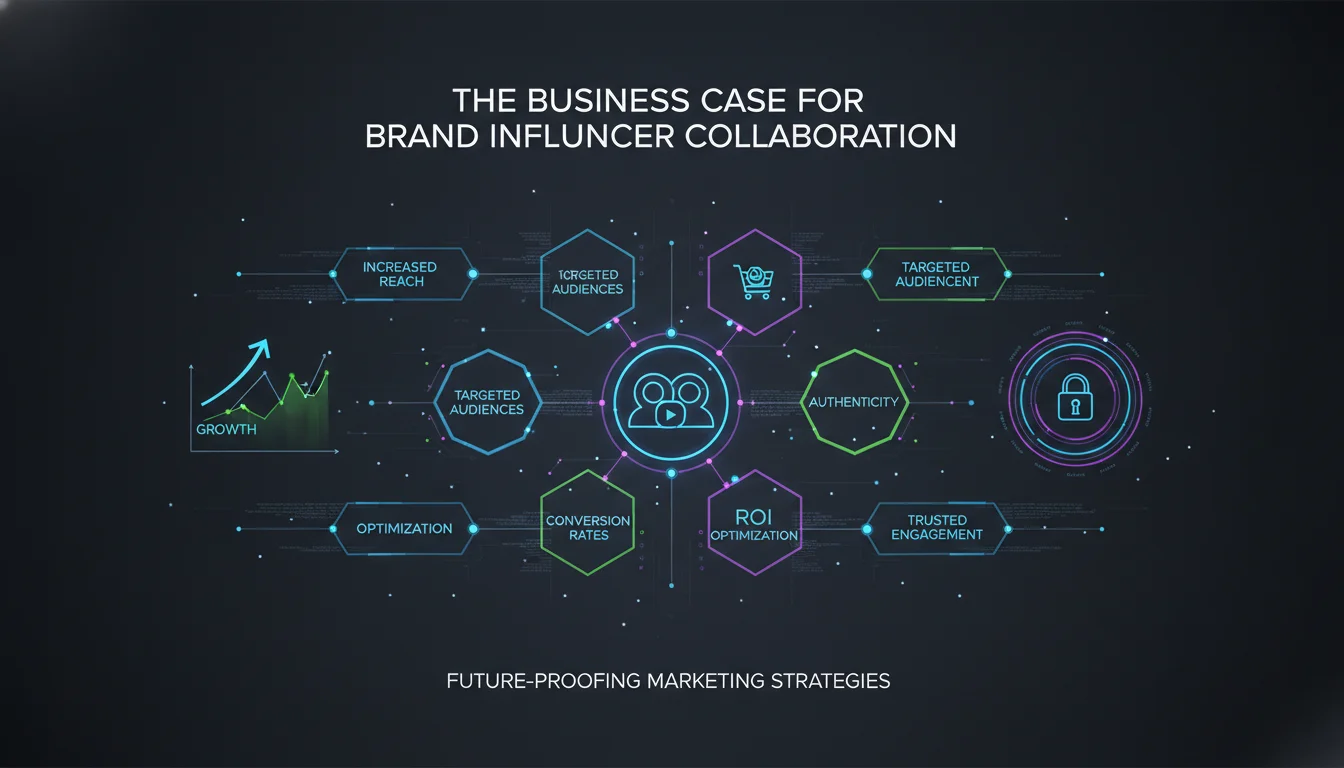
The data behind this shift is concrete. Obviously reports 152,562 influencer collaborations completed on its platform, 5,175,687,487 organic impressions served, and 425,634 unique pieces of content created. These volume metrics demonstrate that this kind of collaboration at scale generates substantial content libraries that compound over time.
“In comparison to influencers who participate in one-off campaigns, ambassador content and activations/events see a 65% lift in engagement.” – Obviously, Creator Network Platform
That single figure encapsulates the performance rationale: long-term relationships outperform transactional ones. It is not a marginal difference. It is the kind of gap that reshapes budget allocation.
Transactional vs. Always-On Partnerships
A transactional brand influencer is a one-time exchange: a brand pays a creator for a single post, and the relationship ends. An always-on partnership involves repeated collaborations, ongoing communication, and often performance-based compensation.
Impact.com provides a concrete case study: Yamazaki Home used to run one-off creator campaigns with flat fees and impressive reach, but revenue did not materialize. After shifting to performance-based compensation and always-on partnerships, Yamazaki Home tripled its influencer-driven revenue in 18 months while reducing the total number of partnerships it managed. This is the clearest evidence that a system, not a campaign calendar, drives ROI. When planning a influencer collaboration, the first question should be: is this built for continuity or just a single content drop?
“They built a system, not a campaign calendar. The result: they tripled their influencer-driven revenue in 18 months while actually reducing the number of partnerships they managed.” – Impact.com, Brand Collaboration Guide 2026
Pros and Cons of Brand Influencer Collaboration
Pros
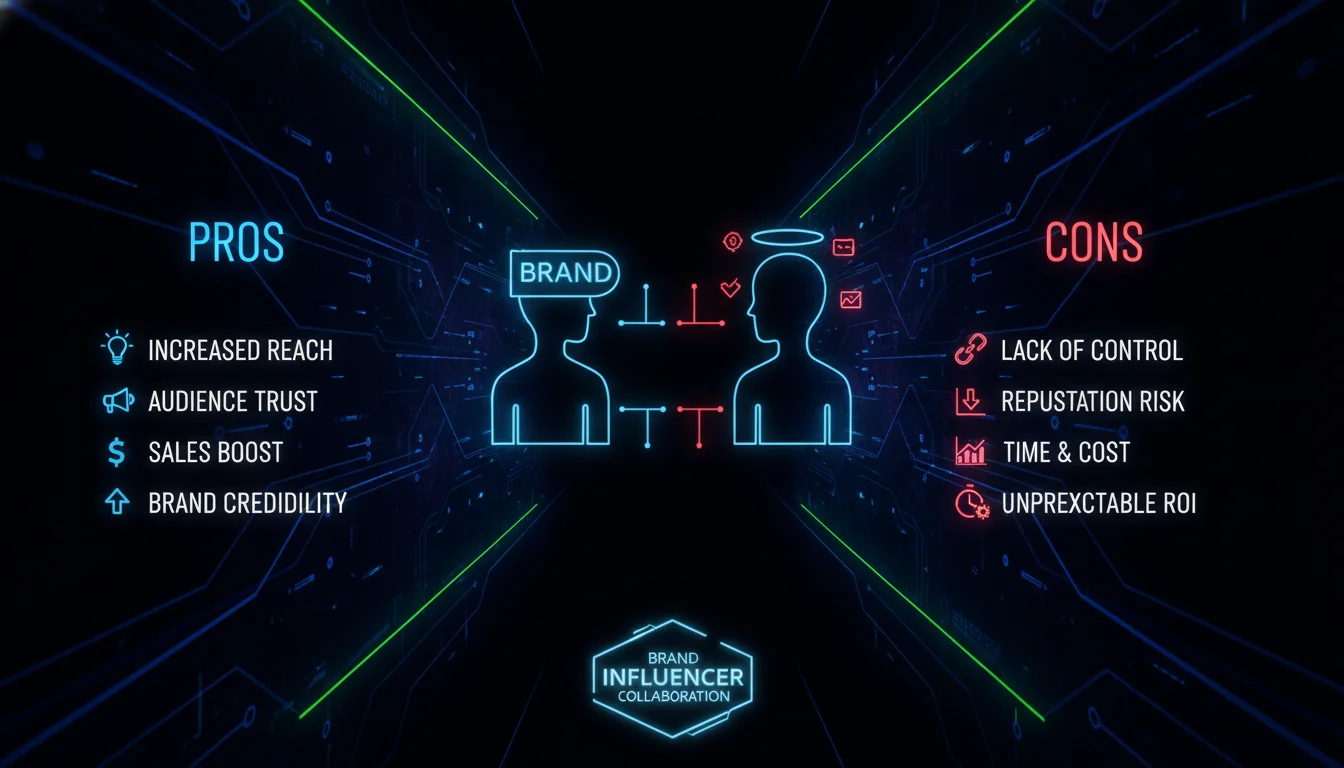
- Authentic reach: Creators bring pre-built audience trust that paid ads cannot replicate.
- Scalable content production: Always-on networks generate continuous creative assets without agency overhead.
- Performance accountability: Modern platforms like Collabstr and Impact.com tie compensation directly to conversions and revenue.
- Audience intelligence: Surveying your creator network gives you real-time product feedback before a full campaign launches.
- Compounding returns: Long-term ambassador relationships build brand association that deepens with every post.
Cons
- Discovery overhead: Finding the right creators is operationally heavy without the right tools or platforms.
- Brand safety risk: Creator behavior outside the partnership can reflect on the brand unexpectedly.
- Attribution complexity: Measuring which creator actually drove a sale requires proper tracking infrastructure, not just impressions.
- Relationship management: Always-on programs require ongoing communication and briefing that one-off campaigns do not.
How to Build a Brand Influencer Collaboration System
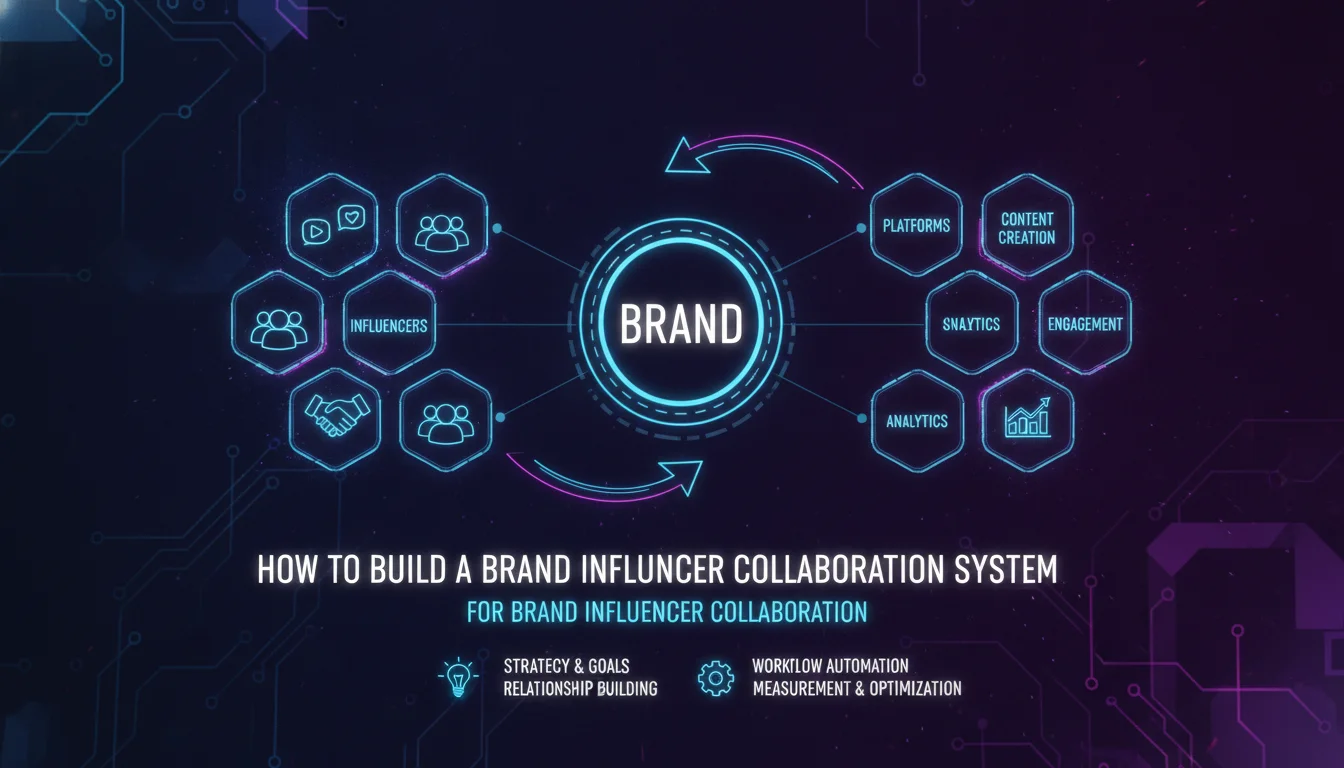
Step 1: Set Goals and Choose Partner Types
Before contacting creators, define what you want a this type of collaboration to achieve. Impact.com’s seven-step guide begins here: define influencer marketing goals and partner types. Goals might include awareness, engagement, content production, affiliate sales, or customer retention. Partner types range from nano- and micro-influencers with high engagement to macro-influencers and celebrities with broad reach. Each tier serves different objectives.
Obviously’s creator network allows brands to survey thousands of creators about product concepts before a campaign finalizes. That only works when you know what questions matter. Aligning goals before discovery prevents wasted spend.
Step 2: Discover and Vet Creators
Discovery is the most operationally heavy phase of any this kind of collaboration. Collabstr addresses this with a database of 1.2m+ vetted creators, searchable by platform, niche, audience demographics, and budget. The platform shows real creator rates: $65 for an actor/lifestyle/model creator with 16.8k followers, $300 for an athlete/sports creator with 36.6k followers, and $400 for a comedy/music creator with 750k followers. Pricing varies significantly by niche and reach.
Afluencer recommends using AI discovery tools such as CreatorGPT to understand whether a creator’s content leans educational, conversational, humorous, or sales-focused before outreach. This dual approach, search filters plus content style analysis, reduces random selection and improves campaign fit.
Step 3: Formalize Contracts and Compensation
A brand influencer must be formalized to protect both parties. Impact.com advises brands to formalize partnerships through contracts covering deliverables, usage rights, exclusivity, payment milestones, and performance incentives. Collabstr handles global payments via escrow and tax forms, removing a common friction point for teams working across borders.
Performance-based compensation tied to conversions or revenue is becoming standard, as the Yamazaki Home case demonstrates. A clear contract also supports the always-on model by setting expectations for repeat content and ongoing communication from the start.
Proven Ways to Collaborate with Influencers and Creators
Long-Term Ambassador Programs
Ambassador programs are ongoing partnerships where creators repeatedly represent a brand. According to Obviously, ambassador content sees a 65% engagement lift over one-off influencer posts. Obviously’s network supports multi-tier influencers, key opinion leaders, and celebrities on a long-term basis. Repeated endorsement builds audience trust in a way that a single sponsored post simply cannot.
Afluencer adds that most influencer collaborations in 2026 are built around long-term partnerships and creator-led storytelling. These programs often include seeded product, event access, and co-created content series that deepen brand association over time.
Quick-Turn Content and Always-On Creative Pipelines
Quick-turn content is another proven format: creators produce content rapidly in response to trending moments or brand needs. Obviously positions its creator network as an exclusive 24/7 creative pipeline, where creators proactively pitch ideas and stay available for quick-turn content creation. This model lets a brand respond to viral moments without a lengthy agency briefing process, because the relationships are already built.
Collabstr’s campaign brief tool similarly lets brands post detailed briefs and have matched creators come to them, speeding up the sourcing cycle considerably.
UGC for Commerce and Seeding
User-generated content (UGC) is creator content used in paid social ads, product pages, and email. Collabstr lists UGC for Ads as a primary use case, where creator content becomes performance creative. Obviously offers UGC for Commerce, enabling relevant influencer content to power shopping experiences directly.
Seeding and custom boxes are another tactic. Obviously identifies and vets qualified influencers based on creative requirements, interests, favorite products, foundation color matching, and preferences like cruelty-free, then designs and ships tailored boxes. These physical touchpoints often generate organic content and deeper brand affinity that a digital brief alone cannot produce.
AI and Technology in Brand Influencer Collaboration
AI-Powered Creator Discovery with CreatorGPT
AI now plays a central role in improving the efficiency of influencer collaboration. Afluencer describes CreatorGPT as an AI-powered discovery and idea assistant designed to help brands explore better ways to collaborate with influencers before launching a campaign. Instead of relying only on follower counts or hashtags, brands can use CreatorGPT to analyze content tone, generate collaboration ideas, and plan outreach.
Afluencer notes that AI tools help brands understand whether a creator’s content is educational, conversational, humorous, or sales-focused before reaching out. The key point Afluencer emphasizes: AI does not replace influencer relationships. It helps brands collaborate with influencers more intentionally and efficiently.
Measurement, Attribution, and Share of Influence
No this type of collaboration strategy is complete without measurement. Collabstr provides real-time reach and ROI dashboards, giving brands visibility into performance as campaigns run. Impact.com’s guide prioritizes measuring campaign success and includes attribution to determine which creators actually drive revenue, not just likes.
Obviously offers a proprietary Share of Influence analysis that examines competitors’ influencer spending, creator volume, and top-performing content trends. This competitive intelligence layer helps brands benchmark their own collaborations. As of 2026, this kind of collaboration is increasingly data-driven and far less reliant on vanity metrics.
Comparison of Influencer Collaboration Platforms
Platform-by-Platform Overview
| Platform | Type | Key Capability | Notable Data | Best For |
|---|---|---|---|---|
| Collabstr | Marketplace | Vetted creator search, campaign briefs, escrow payments, ROI dashboards | 1.2m+ vetted creators; creator rates from $65 to $400 | Brands wanting quick, secure creator sourcing |
| Obviously | Creator network platform | Exclusive creator network, seeding, quick-turn content, ambassador programs | 152,562 collaborations; ambassador content 65% engagement lift | Brands building always-on, owned creator communities |
| Impact.com | Partnership management software | Performance tracking, attribution, contracts, scaling partnerships | Yamazaki Home tripled influencer revenue in 18 months | Brands focused on revenue-driven, performance-based partnerships |
| Afluencer | Influencer marketplace + AI | CreatorGPT AI discovery, global database, brand partnerships | 11 proven collaboration approaches for 2026 | Brands wanting AI-assisted discovery and outreach |
| Instagram Creator Marketplace | Platform native tools | Branded content tools for creators to partner with brands | Native platform integration for branded content | Creators already active on Instagram |
How to Choose the Right Platform
The choice depends on whether the brand prioritizes speed, ownership, or performance. A marketplace like Collabstr accelerates creator sourcing with upfront rates and escrow payments. Obviously is built for brands that want a first-party creator network, first-party data, and an always-on content engine. Impact.com suits brands that want to track attribution and revenue directly, as in the Yamazaki Home case. Afluencer combines AI discovery with a global database for brands that want smarter outreach from day one.
A brand may use multiple tools simultaneously. Collabstr for UGC creators, Obviously for long-term ambassadors. Map your current pain points to each platform’s strongest capability before committing.
Common Mistakes in Brand Influencer Collaboration
Relying on Reach Instead of Relevance
Relevance is the foundation of a successful brand influencer collaboration. Afluencer explicitly warns that relying on follower counts or hashtags leads to random influencer selection. High reach with low relevance consistently underperforms. Collabstr allows filtering by niche, audience, and budget precisely to avoid this trap. Obviously’s network curation includes interests, favorite products, and even cruelty-free preferences, which is stricter than demographic matching alone.
Treating Collaborations as One-Off Transactions
Both Impact.com and Obviously converge on this point: one-off campaigns underperform long-term ambassador programs. Impact.com’s Yamazaki Home case shows that flat-fee, one-off campaigns produced reach but no revenue. Obviously’s 65% engagement lift for ambassador content quantifies the difference clearly. The mistake is treating a brand influencer collaboration as a media buy rather than a relationship. Always-on partnerships promote repeated exposure and stronger audience association over time.
Ignoring Measurement and Attribution
Measuring only impressions and likes is a common failure mode. Impact.com’s guide includes measuring campaign success as a full step, emphasizing which creators actually drove revenue. Collabstr’s real-time ROI dashboards are built to counter this. Obviously’s Share of Influence uses competitor spending and top-performing content trends as benchmarks. Without attribution, brands cannot optimize spend or justify increased investment in brand influencer collaboration.
Step-by-Step: Launching Your First Brand Influencer Collaboration
The Seven-Step Process from Impact.com
- Define your influencer marketing goals and partner types. Start with clear objectives, whether awareness, conversions, or UGC volume, and decide which creator tiers fit those goals.
- Find the right creators for your brand. Use search filters (Collabstr’s 1.2m+ database) and AI content analysis (Afluencer’s CreatorGPT) to shortlist aligned creators.
- Formalize the partnership through contracts and compensation terms. Include deliverables, usage rights, payment milestones, and performance bonuses.
- Co-create compelling content. Brief creators but allow their authentic voice. Obviously suggests creators pitch ideas and co-create culture rather than just execute briefs.
- Avoid common influencer marketing mistakes. Do not chase reach over relevance. Do not treat collaborations as one-offs.
- Measure campaign success. Track reach, engagement, clicks, conversions, and revenue. Use platforms with attribution dashboards, not just vanity metrics.
- Optimize and scale partnerships. Shift budget toward creators and formats that perform. Build an always-on creator network over time.
Applying the Steps to a Real Scenario
Consider a mid-sized DTC brand launching a spring product line. It starts with a goal: generate 200 pieces of UGC and a defined revenue target in attributed sales. Using Collabstr, it searches for lifestyle, beauty, and health creators under $250. It reviews engagement rates and past reviews from creators like Allee-Sutton Hethcoat, Isaiah Lamb, and Tiki Caldwell. It posts a campaign brief, receives creator applications, and formalizes contracts with performance bonuses. Then it tracks real-time ROI and doubles down on the top performers for an ongoing ambassador tier. This sequence operationalizes all seven steps without guesswork.
The future of brand influencer collaboration is not about finding a single viral face. It is about building a measurable, always-on creator network where performance data, AI-assisted discovery, and long-term relationships work together. Brands that adopt this system, like Yamazaki Home, which tripled influencer-driven revenue, will turn a fragmented tactic into a scalable growth channel.
Ready to build something bold? Contact Emin Media for a free brand consultation and let’s design a creator strategy that actually performs.
Frequently Asked Questions
What is a brand influencer collaboration?
A brand influencer collaboration is a structured partnership where a brand compensates a content creator to produce and publish content featuring the brand’s product or service. It can include paid posts, UGC, ambassadorships, or long-term creator partnerships across platforms like Instagram, TikTok, and YouTube.
How much do influencer collabs cost?
Costs vary widely depending on creator size and niche. According to Collabstr, creator rates range from $65 for micro-influencers to $400 and above for creators with larger followings. Overall program budgets depend on scope, platform mix, and whether compensation is flat-fee or performance-based.
How do I get brands to collab with me?
Build a media kit, develop a niche content portfolio, and join marketplaces like Collabstr or Afluencer where brands actively search for creators. Demonstrate authentic engagement and a consistent content style rather than leading with follower count alone.
What is the difference between a one-off campaign and an always-on collaboration?
A one-off campaign is a single paid post with no ongoing relationship. An always-on collaboration is a continuous partnership with repeated content and communication. According to Obviously, ambassador content sees a 65% engagement lift over one-off posts, making the always-on model significantly more effective for brand building.
How can AI help with influencer collaboration?
AI tools like CreatorGPT analyze creator content tone and generate collaboration ideas, helping brands move beyond follower counts to find genuinely aligned partners. As Afluencer notes, AI supports discovery and outreach planning but does not replace the human relationships that make creator partnerships work.
Which platform is best for brand influencer collaboration?
Collabstr excels at fast, vetted creator sourcing with secure payments and real-time ROI dashboards. Obviously suits brands building an owned creator network with always-on ambassador programs. Impact.com is best for performance tracking and revenue attribution at scale.
Enjoyed this article?
Contact Emin Media for a free brand consultation and let's create something amazing together.
Get in TouchRelated Articles
Digital Storytelling for Brands: The Complete Guide
Digital storytelling for brands builds real audience connections through narrative. Learn proven techniques, formats, and…
Design Thinking for Marketing: A 2026 Guide
Design thinking for marketing builds campaigns around real user needs. Learn the 5 phases, common…
Creative Direction for Video Shoots: A Complete Guide
Master creative direction for video shoots with proven steps, tools, and strategies that build brand…