Brand Identity vs Brand Image: The Real Difference
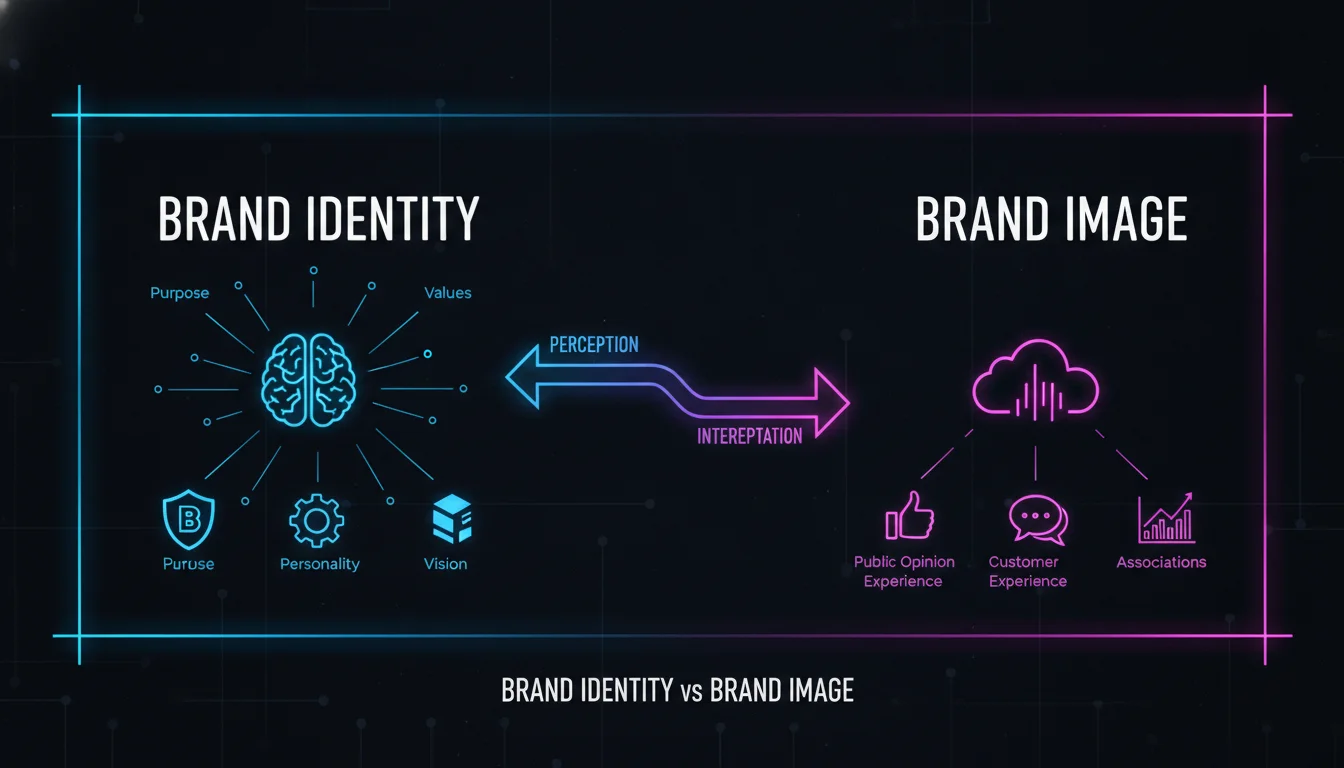
Brand identity vs brand image is the difference between what your company deliberately projects and what your audience actually perceives. One lives inside your organization. The other lives inside your customer’s head. Closing the gap between them is where real brand work happens.
Key Takeaways
- Brand identity is how a company defines and presents itself through deliberate design and messaging choices.
- Brand image is how consumers actually perceive that brand based on their experiences and associations.
- The two concepts are interconnected but serve different roles in branding strategy.
- Effective branding requires alignment between identity and image.
- Misalignment can lead to consumer distrust and lasting brand damage.
- Measuring both regularly is the only way to know if your brand is working.
Understanding Brand Identity
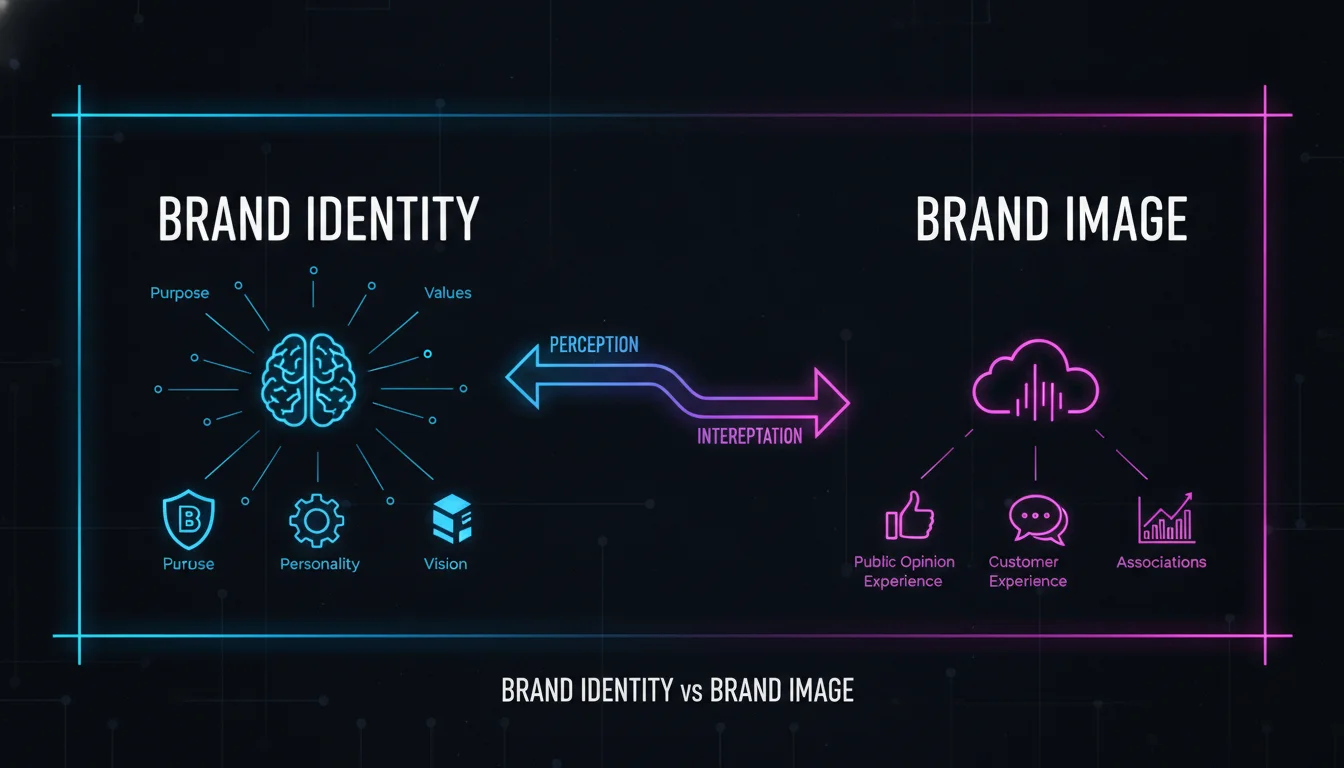
Brand identity is the full collection of deliberate choices a company makes to present itself to the world. This includes visual components such as logos, color palettes, and typography, as well as deeper elements like mission statements, core values, and tone of voice. Think of it as the self-portrait your company paints on purpose.
According to brand strategy practitioners, a useful identity does three things: it rules things out as much as it rules things in, it stays consistent across every touchpoint, and it differentiates you from the three closest competitors who might otherwise describe themselves in exactly the same way.
Components of Brand Identity
- Visual Identity: Logos, color schemes, typography, and imagery that represent the brand at a glance.
- Verbal Identity: Tone of voice, messaging style, taglines, and vocabulary choices that carry the brand’s personality into language.
- Experiential Identity: Customer interactions, packaging, and overall user experience that reinforce the brand’s promise at every touchpoint.
Importance of Brand Identity
A well-defined brand identity helps a company stand apart in a crowded market. It serves as a guide for all marketing and communication efforts, ensuring consistency across every channel. Apple’s minimalist design system and “Think Different” messaging are a textbook example: every product, every store, every ad speaks the same visual and verbal language.
As Alchemy Branding Studio puts it, a strong identity is “specific enough that a designer can act on it.” Vague descriptors like “premium and approachable” give no one direction. Specificity is what makes identity actionable.
Defining Brand Image
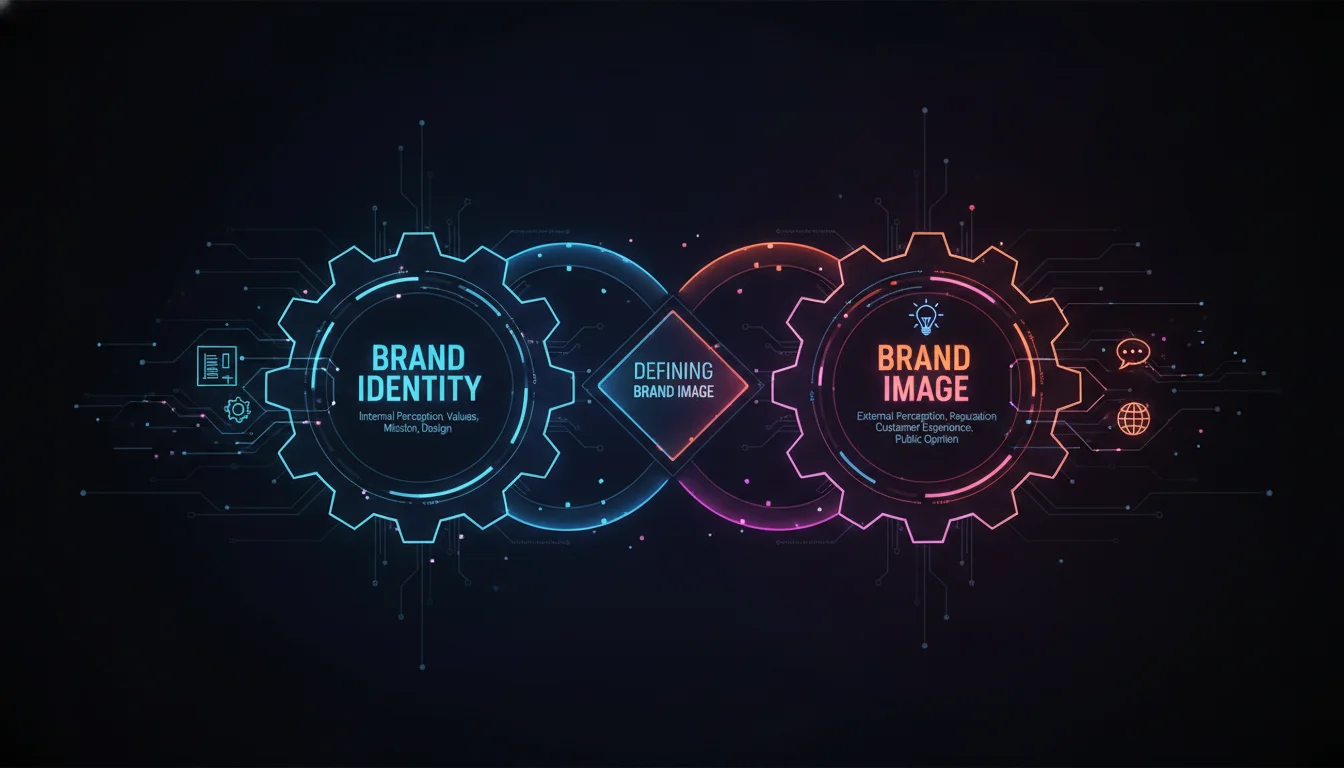
Brand image is the perception that forms in a consumer’s mind after they’ve encountered your brand, and it’s built from far more than what you put out intentionally. It’s shaped by product quality, customer service moments, press coverage, social media sentiment, and even what a friend said over coffee last Tuesday.
Unlike brand identity, which you craft and control, brand image forms organically. You influence it. You don’t fully own it.
Factors Influencing Brand Image
- Customer Experiences: The quality of products and services directly shapes how consumers feel about a brand over time.
- Public Relations: Media coverage, crisis handling, and public sentiment can shift brand image quickly and dramatically.
- Social Proof: Testimonials, reviews, influencer endorsements, and word-of-mouth recommendations compound into a collective perception.
- Corporate Behavior: How a company treats its employees, responds to social issues, and handles complaints all feed into the image consumers hold.
Examples of Brand Image
Coca-Cola’s brand image is globally associated with happiness, sharing, and refreshment, built through decades of consistent marketing and emotional storytelling. Tesla carries an image of innovation and sustainability, even among consumers who’ve never sat in one of its vehicles. Both images were shaped as much by public narrative as by deliberate brand decisions.
How Brand Identity and Brand Image Actually Work
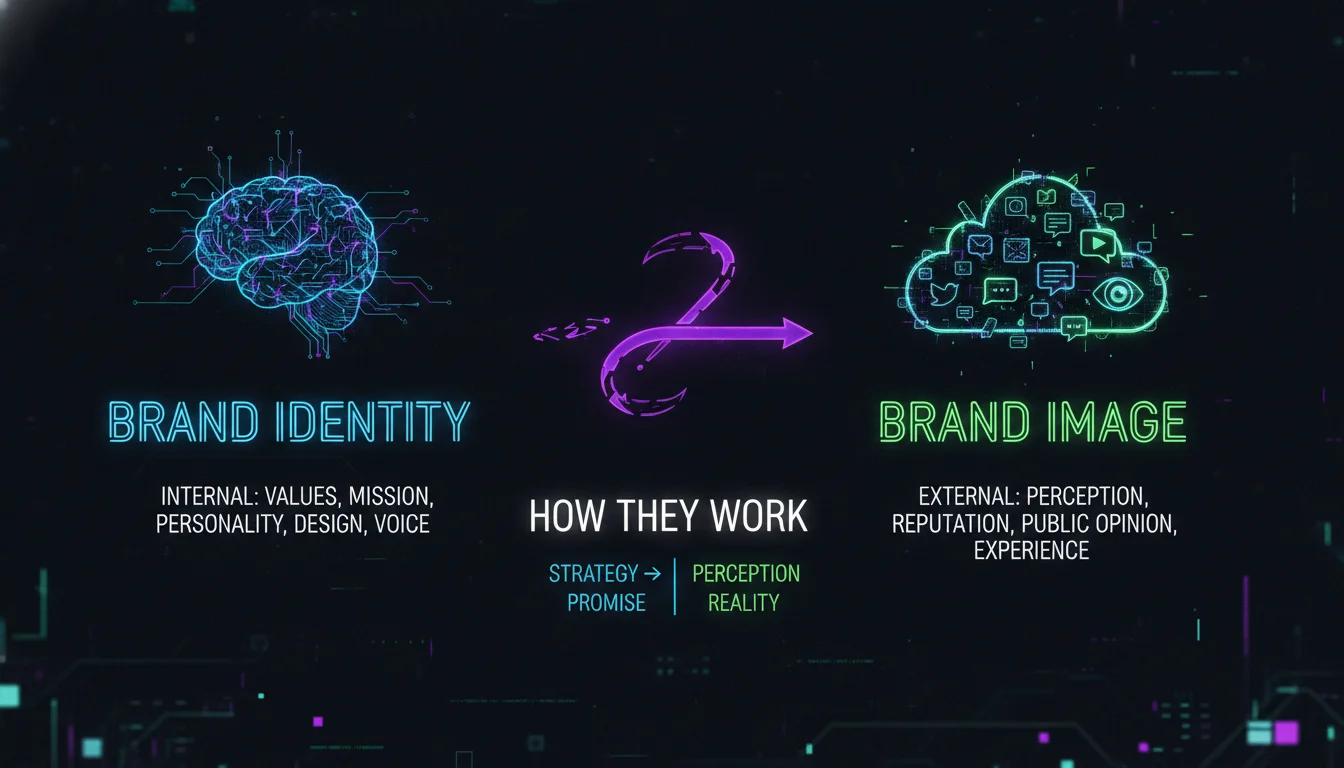
The mechanics behind brand image are simpler than most marketing frameworks make them sound. Identity is the input. Image is the output. Branding is the process connecting the two.
Here’s how the cycle runs in practice:
- You set your identity. Your team defines visual standards, messaging guidelines, values, and positioning. These become the signals you send into the world consistently.
- You communicate it through branding. Every campaign, social post, packaging decision, and customer service script either reinforces or contradicts your identity.
- Consumers form an image. Based on what they see, experience, and hear from others, they build a mental picture of your brand. This picture is your brand image.
- The image feeds back into your identity work. Surveys, reviews, and social listening reveal whether your image matches your intent. That gap becomes your next creative brief.
According to branding industry analysis, the brands that sustain strong reputations over decades are the ones that treat this as a continuous loop, not a one-time launch exercise. Nike doesn’t revisit “Just Do It” every few years. They live it daily across every touchpoint.
“Brand identity is what you put out. Brand image is what people take in. The work of branding is mostly the gap between them.” – David Morgan, Alchemy Branding Studio
Key Differences Between Brand Identity and Brand Image
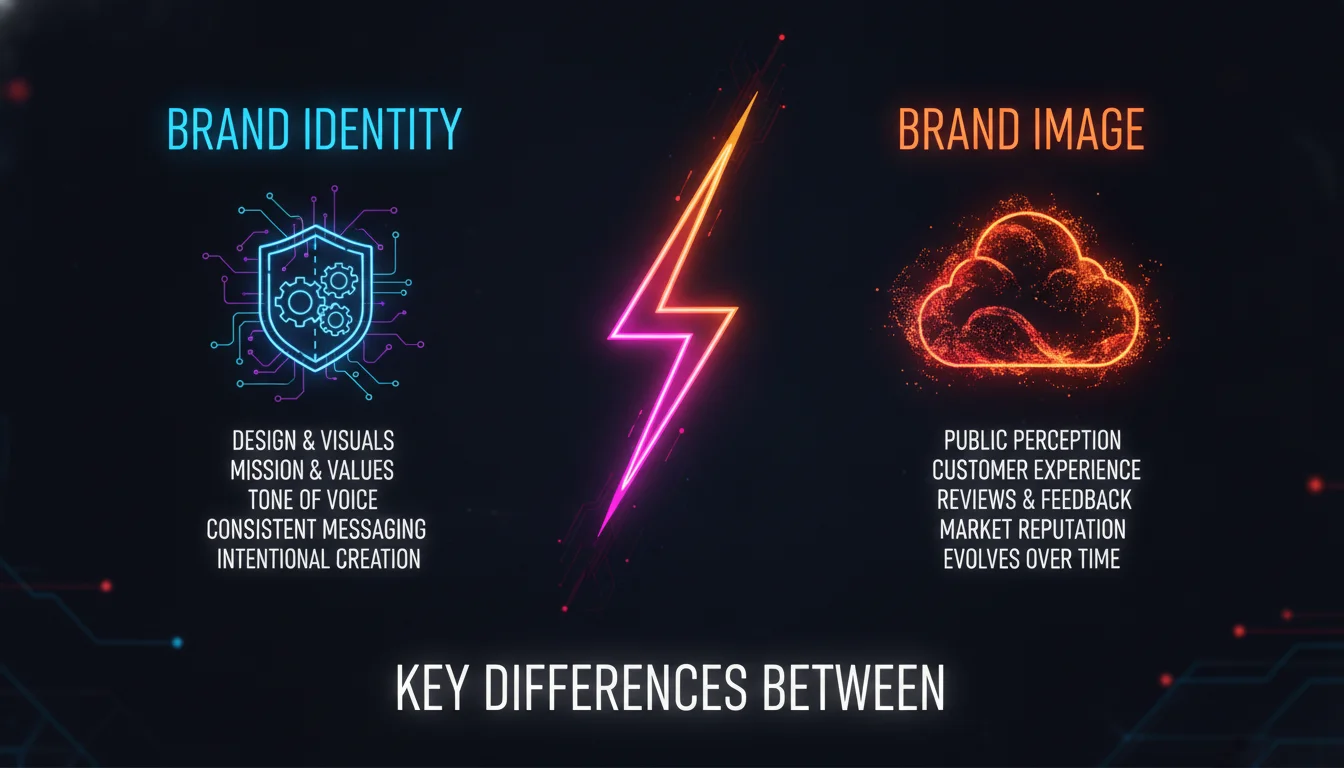
this type of image represents a fundamental distinction in branding strategy: one is what you control, the other is what the market decides. Understanding these differences is critical for effective brand management.
Active vs. Passive
Brand identity is an active component. Your team creates it, refines it, and enforces it through brand guidelines. Brand image is passive. It forms in the minds of consumers whether you’re paying attention or not.
Creation and Control
Brand identity is deliberately crafted through design choices, messaging frameworks, and positioning strategy. You have full control over it. Brand image is influenced by external factors including customer interactions, media portrayal, and competitor comparisons, making it far less controllable but no less important to monitor.
Focus and Perspective
Brand identity focuses on how a company wants to present itself. Brand image reflects how consumers actually experience and remember the brand. This distinction matters enormously when you’re deciding where to invest your next marketing budget.
Brand Identity vs Brand Image: Side-by-Side Comparison
This table captures the core contrasts between brand identity vs brand image at a glance, making it easier to apply both concepts strategically.
| Dimension | Brand Identity | Brand Image |
|---|---|---|
| Definition | How the company wants to be perceived | How consumers actually perceive the brand |
| Nature | Active and intentional | Passive and organic |
| Control | Fully controlled by the company | Partially influenced, not fully controlled |
| Components | Logo, colors, typography, voice, values | Perceptions, associations, emotions, reviews |
| Measurement | Brand audits, consistency checks | Surveys, social listening, sentiment analysis |
| Timeline | Set during brand strategy phase | Evolves continuously over time |
| Risk of misalignment | Inconsistent messaging across channels | Consumer distrust, negative reputation |
How to Apply This: Aligning Identity with Image
Closing the gap between brand identity vs brand image is the practical work of branding. Here are concrete steps to do it well.
- Audit your current identity. Pull together every customer-facing asset: website, social profiles, packaging, email templates, sales decks. Do they look and sound like the same brand? Inconsistency here is the first sign of identity drift.
- Listen to your current image. Run a brand perception survey with existing customers. Read your reviews on Google and industry platforms. Monitor social mentions. What words do people actually use to describe you? Write them down.
- Map the gap. Place your intended identity descriptors next to the words your customers use. Where they diverge, you have work to do. Where they align, you have proof points to amplify.
- Tighten your brand guidelines. If your guidelines are vague or outdated, your team will fill the gaps inconsistently. Specific rules for color, typography, tone, and imagery reduce the chance of identity drift across channels.
- Train every team that touches the brand. Customer service, sales, and social media teams shape brand image daily. They need to understand your identity as well as your design team does.
- Measure and repeat. Brand image isn’t a one-time read. Schedule quarterly sentiment checks and annual brand audits. As of 2026, social listening tools make this faster and more affordable than ever for teams of any size.
Pros and Cons
Every branding approach involves trade-offs. Here’s an honest look at the strengths and limitations of focusing on each side of the brand identity vs brand image equation.
Pros
- Strong brand identity gives you a creative compass. Every design decision, campaign concept, and content piece has a clear standard to meet.
- A positive brand image builds trust faster than advertising. When customers advocate for you organically, their word carries more weight than any paid placement.
- Alignment between the two creates pricing power. Brands whose image matches their identity can charge a premium because consumers trust what they’re buying.
- Consistent identity reduces creative costs over time. When your team knows exactly what the brand looks and sounds like, production becomes faster and cheaper.
- Monitoring brand image gives you real-time market intelligence. Customer perception data often surfaces product or service issues before they become crises.
Cons
- Building a strong identity takes significant upfront investment. Strategy, design, and guidelines require time and budget that early-stage brands often don’t have.
- Brand image can shift faster than you can respond. A single viral complaint or negative press story can reshape perception in hours.
- Misalignment is expensive to fix. Rebranding to close a gap between identity and image requires creative, media, and organizational resources.
- Identity can become rigid. Brands that over-enforce guidelines sometimes struggle to adapt when markets or audiences shift.
- Image measurement is inherently subjective. Sentiment analysis and surveys give directional data, not precise answers, which can make decision-making harder.
Common Mistakes to Watch Out For
Most brand problems trace back to a handful of recurring errors. Here’s what we see most often when working with brands on the brand identity vs brand image gap.
Confusing the Two Concepts
Teams that treat identity and image as the same thing tend to over-invest in visual design while ignoring customer perception data. You can have a beautiful brand identity and a terrible brand image. The logo won’t save you if the product experience contradicts it.
Launching Identity Without Listening First
Some brands build their identity in isolation, without researching how they’re already perceived. If your current image is “affordable and reliable” but your new identity positions you as “luxury and exclusive,” you’re creating a gap that will confuse your existing customers.
Treating Brand Guidelines as a One-Time Document
Brand guidelines published at launch and never revisited become outdated quickly. Markets evolve, audiences shift, and new channels emerge. Your identity framework needs regular review, especially when you’re entering new markets or launching new product lines.
Ignoring Internal Brand Culture
Your employees are your most powerful brand image shapers. If your customer service team doesn’t understand or believe in your brand identity, every interaction they have chips away at the image you’re trying to build. Internal brand alignment is not optional.
Measuring Identity Instead of Image
Many brands track brand consistency (an identity metric) but never measure brand perception (an image metric). Knowing your logo appears correctly on every asset tells you nothing about whether customers trust you. Both need measurement systems.
Brand Spotlight: When Identity and Image Collide
The Pepsi and Kendall Jenner ad from 2017 is one of the clearest case studies in brand identity vs brand image misalignment. Pepsi’s intended identity in that campaign was unity, social awareness, and cultural relevance. The brand image that emerged was tone-deafness and insensitivity to real social movements. The gap between what Pepsi intended to communicate and what consumers actually received was enormous, and the backlash was swift.
Contrast that with Jaguar’s more recent rebrand. Before the refresh, Jaguar’s image had drifted toward “traditional” and “outdated” in the minds of younger luxury buyers. The brand responded with a deliberate identity shift: a sleeker visual system, refreshed typography, and digital campaigns targeting a new generation. The identity work preceded the image shift, which is exactly the right sequence. You set the identity first. The image follows.
“A brand’s strength lies in the harmony between brand identity, branding, and brand image. If any of these are misaligned, a brand can lose credibility and consistency.” – Hitchcock Michalski, Brand Strategy Agency
At Emin Media, we’ve seen this pattern repeatedly across the brands we work with. The ones that grow fastest aren’t always the ones with the most polished logos. They’re the ones whose internal identity and external image are telling the same story.
When to Focus on Brand Identity vs Brand Image
Knowing when to prioritize each side of the brand identity vs brand image equation can sharpen your strategic decisions and save you from wasting budget on the wrong problem.
When to Focus on Brand Identity
Prioritize brand identity when you’re launching a new product, rebranding, or entering a new market. Establishing a clear and consistent identity sets the foundation for every consumer perception that follows. If your team can’t describe your brand in three words without disagreeing, your identity work isn’t done.
When to Focus on Brand Image
Shift focus to brand image when you’re managing a PR crisis, responding to consistent negative feedback, or noticing a gap between how you describe yourself and how customers describe you. Monitoring brand image helps you identify where your identity isn’t landing and what needs to change.
The 2026 Outlook: Why This Gap Is Getting Harder to Ignore
As of 2026, the distance between brand identity and brand image can close or widen faster than ever before. Social media amplifies both praise and criticism at a speed that previous generations of marketers never had to manage. A single customer video can reshape a brand’s image in 24 hours. AI-generated content is flooding every channel, making authentic brand voice a genuine competitive advantage rather than a nice-to-have.
This year, we’re also seeing more brands invest in brand perception tracking as a standard marketing function, not just a crisis-response tool. The brands winning in 2026 treat brand image data the same way they treat sales data: as a regular input into strategic decisions, not an afterthought.
If you want to go deeper on how to build the visual and strategic foundations of a strong brand, our guide on brand strategy and creative direction covers the full process. And if you’re thinking about how social media shapes brand perception in real time, our work on social media and digital marketing is worth exploring.
Frequently Asked Questions
What are the 5 pillars of brand identity?
The five pillars of brand identity typically include visual identity, verbal identity, experiential identity, brand values, and brand positioning. Together, these elements form the complete framework a company uses to present itself consistently across every channel and customer touchpoint.
What is an example of a brand identity?
Nike’s brand identity is one of the clearest examples: the swoosh logo, the “Just Do It” tagline, and a consistent focus on athletic empowerment across every campaign and product line. These elements work together to communicate a single, coherent brand personality regardless of the channel or audience.
What is Coca-Cola’s brand image?
Coca-Cola’s brand image is associated with happiness, sharing, and refreshment, built through decades of emotionally consistent marketing campaigns. This image has been reinforced so consistently that it persists globally even in markets where the product itself is less dominant.
Are brand image and brand identity the same thing?
No. Brand identity is how a company deliberately defines and presents itself, while brand image is how consumers actually perceive that brand based on their experiences and associations. One is controlled internally; the other is formed externally. Confusing the two leads to misaligned strategy and wasted budget.
How can a company improve its brand image?
A company can improve its brand image by enhancing customer experiences, engaging in consistent and authentic public relations, and ensuring every team member who interacts with customers understands and embodies the brand identity. Regular perception surveys and social listening help identify where the image is drifting from the intended identity.
Why does the gap between brand identity and brand image matter?
The gap between brand identity vs brand image is where brand trust is won or lost. When the two align, customers experience exactly what the brand promises, which builds loyalty and advocacy. When they diverge, customers feel misled, and no amount of advertising spend closes that credibility gap as effectively as simply delivering on the brand’s stated promise.
Enjoyed this article?
Contact Emin Media for a free brand consultation and let's create something amazing together.
Get in TouchRelated Articles
Digital Storytelling for Brands: The Complete Guide
Digital storytelling for brands builds real audience connections through narrative. Learn proven techniques, formats, and…
Design Thinking for Marketing: A 2026 Guide
Design thinking for marketing builds campaigns around real user needs. Learn the 5 phases, common…
Creative Direction for Video Shoots: A Complete Guide
Master creative direction for video shoots with proven steps, tools, and strategies that build brand…