Brand Engagement on Instagram: 2026 Guide
Brand engagement on Instagram is the measurable set of interactions – likes, comments, saves, shares, story replies, and more – that show how actively your audience connects with your content. Strong engagement signals relevance to the algorithm and builds the kind of community that converts.
Key Takeaways
- on instagram includes likes, comments, shares, saves, story replies, and direct messages: any action that shows active audience participation.
- A good engagement rate is 1% or higher, placing your account in the top 25% of brand accounts, according to RivalIQ data cited by Sprout Social.
- Saves and shares carry more algorithmic weight than likes or comments. One save can outweigh dozens of likes in reach potential.
- Carousel posts and Reels are the highest-performing formats for driving meaningful engagement. Reels outperform TikTok’s average reach engagement rate, per Emplifi.
- Responding to comments, DMs, and tags is non-negotiable. Brands that engage back see higher overall participation and loyalty.
- Instagram has over 2 billion active monthly users, making it one of the most powerful platforms for brand-to-audience connection.
What Is Brand Engagement on Instagram?
this type of instagram is the full spectrum of interactions users have with a brand’s content on the platform. It goes well beyond passive scrolling. Unlike reach or impressions, which measure exposure, engagement measures active participation and intent – the difference between someone seeing your post and someone actually caring about it.
Core Engagement Actions
The most direct forms of engagement are likes and comments, but this kind of on instagram extends far beyond these basics. Saves, shares to stories or direct messages, story replies, poll votes, question sticker responses, and even profile visits all count. Each action represents a different level of audience investment. A like is a low-effort acknowledgment. A save or share signals that you provided enough value that the user wants to return to or distribute your content.
According to Sprout Social, engagement rate is the percentage of your audience that actively interacts with your content. This metric is essential for benchmarking content performance, evaluating influencer partnerships, and proving the business value of your Instagram strategy. Without measuring it, you cannot know whether your creative efforts are working.
Why Brand Engagement Matters for Businesses
Engagement is the heartbeat of your Instagram presence. It tells the algorithm that your content is valuable and worth showing to more people. High engagement signals relevance, which increases organic reach and places your posts in front of a wider, more qualified audience without relying on paid spend.
Beyond algorithmic benefits, engagement builds community. When people interact with your posts, they feel a stronger connection to your brand, which translates into long-term loyalty and, ultimately, conversions. Sprinklr reports that 90% of Instagram users follow at least one business, which means the opportunity for meaningful the engagement on instagram is massive. Brands that treat engagement as a vanity metric will be left behind. Those that treat it as a relational practice will thrive.
“What truly matters is building an online community of people who are genuinely invested in your brand and eagerly anticipate your content.” – Sprinklr Social Media Management Blog
How to Measure Brand Engagement on Instagram

Measuring instagram requires understanding the core formula, knowing what benchmarks to compare against, and recognizing that not all engagement actions carry equal weight. Without a clear measurement framework, you cannot diagnose problems or track improvements over time.
The Engagement Rate Formula
The most common way to calculate Instagram engagement rate is straightforward: add up the total number of likes, comments, shares, and saves on a post, divide that number by your total follower count, and multiply by 100. This gives you a percentage. For example, if you have 1,000 followers and a post receives 50 likes, 10 comments, 5 shares, and 5 saves, your engagement rate is (50+10+5+5) / 1,000 x 100 = 7%. This formula is widely cited by Adobe Express, Mayple, and Sprout Social, though some sources focus only on likes and comments for a simpler calculation.
To access your engagement data natively, switch to an Instagram Business or Creator account, go to your profile, tap the hamburger menu, and select “Insights.” The Overview section shows engagement metrics for posts, Stories, Reels, and Live videos. This is step one in understanding your current performance.
What Is a Good Engagement Rate?
According to RivalIQ data cited by Sprout Social, a good Instagram engagement rate is 1% or higher. That threshold places your account in the top 25% of brand accounts on the platform. Adobe Express suggests that a result of 1 to 3% is generally good, while anything above 3% is considered excellent. These benchmarks vary by industry, audience size, and content type, so use them as directional guides rather than absolute targets.
For influencer partnerships, the benchmark differs. Micro-influencers typically achieve higher engagement rates than celebrities because their audiences are more niche and trusting. Always evaluate engagement rate rather than raw follower count when vetting potential collaborators.
Engagement Type Hierarchy: Saves, Shares, Comments, Likes
Not all engagement actions are equal. The Instagram algorithm weights each type differently based on the level of user intent. Saves are the strongest signal. They tell the algorithm your content is worth returning to, and one save outweighs dozens of likes in algorithmic value. Shares are high-value distribution. When followers share your content to their Stories or DMs, you reach entirely new audiences without paid spend. Comments require deliberate effort and signal genuine reaction. Likes are the most common action but carry the lowest weight. A post with 500 comments outperforms one with 5,000 likes in terms of reach and visibility.
This hierarchy changes how you design content. Instead of optimizing for likes, create content that people want to save for later reference or share with their own network. That is the key to moving the algorithm in your favor.
The Instagram Algorithm and Brand Engagement on Instagram

The Instagram algorithm is the system that determines which posts appear in users’ feeds, Explore pages, and Reels tabs. It uses multiple signals to rank content, and engagement is one of the most important. Understanding how the algorithm processes engagement helps you align your creative and distribution strategies.
How the Algorithm Prioritizes Content
The algorithm looks at a combination of factors: the likelihood a user will interact with a post, the recency of the post, the relationship between the user and the account, and historical engagement patterns. When a post receives high engagement shortly after publishing, the algorithm interprets that as a quality signal and expands its distribution. This creates a positive feedback loop: more engagement leads to more visibility, which leads to even more engagement.
Sprout Social explains that even among relevant content, posts that see high engagement are more likely to show up in a user’s Explore feed. A good engagement rate is essential for organic discovery. Conversely, low engagement signals the algorithm to limit distribution, creating a negative cycle that is hard to break.
The Role of Explore Page and Reach
The Explore page is a major discovery surface where Instagram recommends content to users based on their interests and past behavior. Getting featured on Explore can dramatically increase your reach, and the algorithm selects posts for Explore based on engagement velocity and relevance. Posts that earn saves, shares, and comments quickly after posting are prime candidates.
Brands that consistently produce high-engagement content see compounding benefits. Every new follower gained through Explore becomes a potential engager, which further strengthens algorithmic signals. This is why optimizing for meaningful interactions, not just likes, is critical for sustainable growth on the platform.
Content Formats That Drive Strong Brand Engagement on Instagram
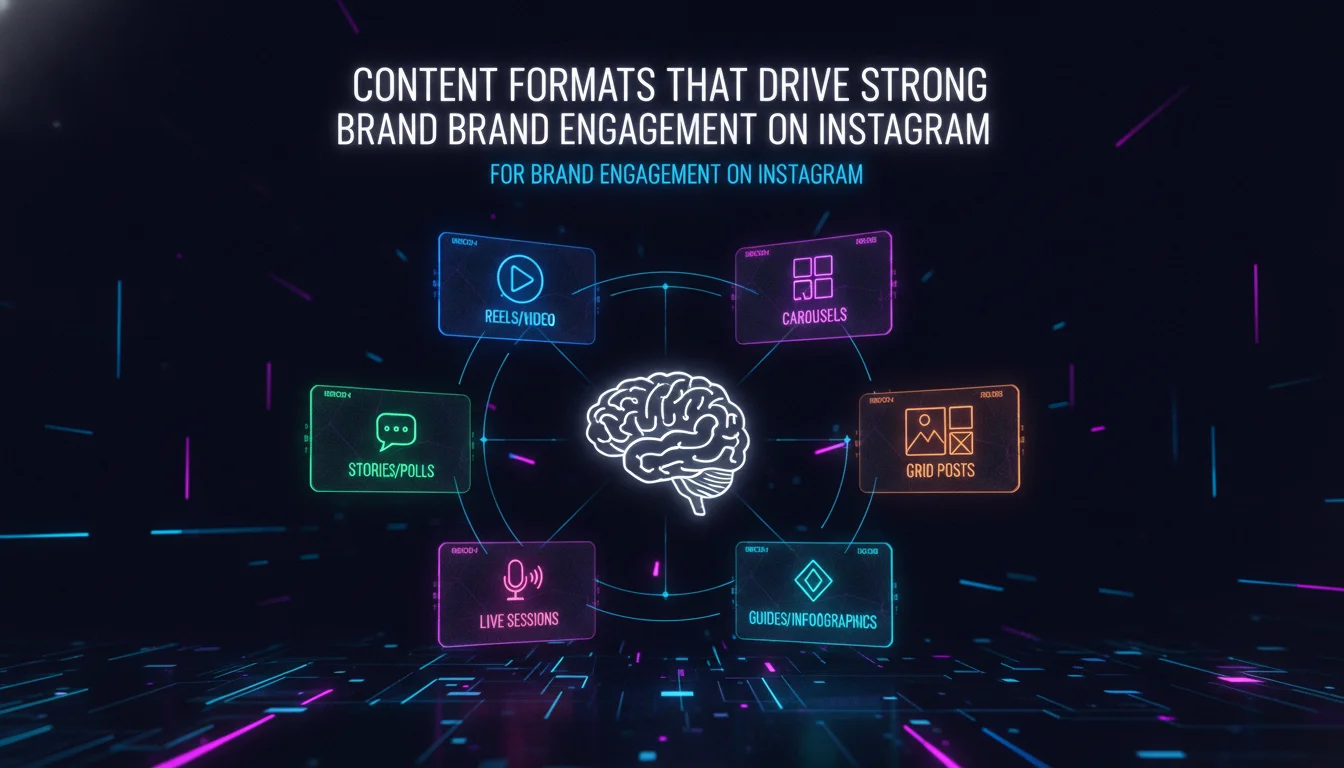
Different content formats produce different engagement patterns. Instagram supports feed posts, carousels, Reels, Stories, and Live videos. Choosing the right mix is essential for maximizing brand engagement because the algorithm favors certain formats and users interact with each in distinct ways.
Carousels, Reels, and Stories
Carousel posts are the most engaging type of static content. By allowing users to swipe through multiple images or videos, carousels increase time spent on the post and encourage saves for later reference. Adobe Express notes that carousel posts are incredibly effective for breaking down complex information into multiple graphics while avoiding cluttered text.
Instagram Reels have become the dominant content format, surpassing static images in frequency of use. Emplifi reports that Reels even outperform TikTok’s average reach engagement rate, making them essential for brands. Reels operate on a dual distribution system that pushes content to both followers and non-followers, maximizing discovery potential. Stories drive real-time engagement through stickers, polls, questions, and direct replies, creating a more intimate connection with your audience.
Why Saves and Shares Outperform Likes
Saves and shares are the two most valuable engagement types because they signal high intent. A save means the user wants to revisit your content, which is a strong indicator of usefulness. A share means the user is willing to endorse your brand to their own followers, which extends your reach organically. Likes, while easy and abundant, carry less algorithmic weight because they require minimal effort and often happen without deep consideration.
To earn saves and shares, create content that is inherently useful: step-by-step guides, infographics, templates, checklists, and industry insights. Passion Planner, for example, consistently publishes visually appealing and useful planning content that users naturally want to save and share. The key is to provide value first and ask for engagement second.
Comparison of Content Formats for Engagement
| Content Format | Typical Engagement Strengths | Algorithmic Weight | Best For |
|---|---|---|---|
| Carousel Post | High saves, longer time spent, repeated swipes | Very high | Educational content, step-by-step guides, storytelling |
| Instagram Reel | High reach, shares, comments, watch time | Very high | Entertainment, trends, product demos, brand personality |
| Story (with stickers) | Direct messages, poll votes, question replies | Moderate (boosts real-time engagement) | Behind-the-scenes, quick polls, announcements |
| Static Image Post | Likes, some comments | Lower | Aesthetic branding, quotes, simple updates |
Pros and Cons of Prioritizing Brand Engagement on Instagram
Investing in on instagram delivers real business results, but it also comes with trade-offs worth understanding before you commit your resources.
Pros
- Organic reach amplification: High engagement signals quality to the algorithm, expanding your distribution without additional ad spend.
- Community and loyalty: Consistent two-way interaction turns casual followers into brand advocates who buy, refer, and return.
- Social proof: Visible engagement (comments, shares, saves) builds credibility with new visitors who judge your brand by how others respond to it.
- Actionable audience data: Engagement patterns reveal exactly what your audience values, giving you a real-time feedback loop for content strategy.
- Cost-effective growth: A strong engagement rate drives organic follower growth through Explore and shares, reducing dependence on paid acquisition.
Cons
- Time-intensive community management: Responding to every comment, DM, and mention requires daily attention that small teams often struggle to sustain.
- Algorithm dependency: Engagement-driven reach is subject to platform changes. What works today may shift when Instagram updates its ranking signals.
- Vanity metric risk: High like counts can create a false sense of success if saves, shares, and conversions are not also tracked.
- Giveaway inflation: Tactics like giveaways can spike engagement artificially, attracting followers who never convert into customers.
Proven Strategies to Increase Brand Engagement on Instagram
Increasing this type of instagram is not about hacking the algorithm. It is about creating content worth engaging with and building relationships through consistent, authentic interaction. The following strategies are drawn from leading social media management platforms and have been tested by thousands of brands.
Step 1: Audit Your Current Performance
Go to Instagram Insights and identify your top-performing posts by engagement rate. Note patterns in format, topic, and posting time. This baseline tells you what is already resonating before you change anything.
Step 2: Define a Measurable Engagement Goal
Set a specific target, such as increasing saves by a meaningful margin or raising your overall engagement rate from below 1% to above it. Vague goals produce vague results. Make it measurable and time-bound.
Step 3: Analyze Your Audience
Review demographics, active hours, and content preferences. Sprinklr recommends aligning your brand voice, objectives, and audience profile before creating content. Think of it like constructing a bridge: you need a clear understanding of your starting point and destination before you build anything.
Step 4: Build a Content Calendar Around High-Engagement Formats
Prioritize carousels, Reels, and interactive Stories. Mix value-driven posts with community-building prompts. A content calendar keeps you consistent, and consistency is what the algorithm rewards over time.
Step 5: Post When Your Audience Is Most Active
Use Insights to find peak engagement times, then schedule posts accordingly. Later recommends posting when your audience is already online. Early engagement velocity is a key signal the algorithm uses to decide whether to expand your post’s reach.
Step 6: Respond to Every Comment and DM Within 24 Hours
Engagement is a two-way street. The algorithm rewards responsiveness, and your followers notice when you show up. Adobe Express calls the alternative “post and ghost” – a reliable way to suppress this kind of on instagram over time.
Step 7: Track and Iterate Weekly
Compare engagement rates across formats, refine your captions and calls-to-action, and double down on what works. Weekly iteration compounds over time. Brands that review data regularly outperform those that set and forget their strategy.
Community Management and Responsiveness
One of the most overlooked strategies for improving the engagement on instagram is simply engaging back. Respond thoughtfully to comments, answer questions in DMs, and acknowledge tags and mentions. Show your followers that you are listening. This builds loyalty and encourages repeat interactions.
Community management also involves proactive outreach: comment on relevant posts from your followers and industry peers, reply to story mentions, and use interactive stickers to prompt conversations. Brands that consistently respond to comments see higher overall engagement because followers know their input is valued.
User-Generated Content and Creator Collaborations
User-generated content (UGC) is any content created by your customers or followers that features your brand. It is a powerful form of social proof that drives engagement because people trust peer recommendations more than branded messages. Encourage UGC by creating branded hashtags, running contests, and featuring customer photos in your feed. When you share UGC, tag the original creator and thank them. This often leads to that user sharing your post, expanding reach organically.
Collaborating with creators or micro-influencers taps into their engaged audiences. Choose creators whose followers align with your target demographic, and structure partnerships around authentic product demonstrations or storytelling rather than overly scripted ads. Sprinklr recommends using AI-powered tools to identify the right influencers and find partnership opportunities that genuinely fit your brand.
Advanced Tactics for Sustained Brand Engagement on Instagram
Beyond the basics, several advanced tactics can help you maintain high engagement over time. These strategies are particularly effective for brands that already have a solid foundation but want to push performance further.
Instagram Stories Stickers and Interactive Features
Stories stickers, including polls, questions, quizzes, sliders, and countdowns, are engineered to elicit quick, low-friction engagement. Polls give your audience a voice. Question stickers invite direct feedback. Quizzes test knowledge and spark curiosity. Later highlights Stories stickers as a top tactic for increasing engagement because they create a conversational dynamic that static posts cannot replicate.
Use these features consistently. A fashion brand might post a poll asking followers to choose between two outfits. A software company might use a quiz to test industry knowledge. Each interaction sends signals to the algorithm that your story is engaging, which can boost your overall account’s visibility and strengthen instagram over time.
Giveaways, Memes, and Relatable Content
Giveaways are a proven tactic for spiking engagement in the short term. Ask participants to like the post, follow your account, tag friends in comments, and share to their Stories. This multiplies engagement quickly and introduces your brand to new audiences. Use giveaways sparingly, though, to avoid attracting engagement-only followers who will not convert.
Memes and relatable content humanize your brand and tap into cultural moments. Later recommends creating relatable memes that resonate with your target audience’s daily experiences. When done well, memes are highly shareable, earning organic distribution far beyond your existing follower base.
Micro-Influencers vs. Macro-Influencers for Engagement
Influencer tier matters when you are trying to drive genuine brand engagement. Micro-influencers, those with smaller but highly focused audiences, typically generate stronger engagement rates than macro-influencers or celebrities because their followers are more niche and trusting. When evaluating any influencer partnership, prioritize engagement rate over raw follower count. A creator with a fraction of the followers but a deeply engaged community will almost always deliver better results for brand engagement than a celebrity with a passive audience.
Using Audience Insights for Data-Driven Engagement
Instagram’s native Insights provide critical data on demographics, peak engagement times, and top-performing posts. For deeper analysis, many brands adopt third-party tools. Sprinklr’s Audience Insights uses AI to analyze numerous data signals, helping you understand what your audience truly wants. You can create custom segments based on likes, dislikes, and behaviors, then tailor content accordingly.
Sprout Social offers similar capabilities, including sentiment analysis and cross-channel reporting. By combining native and third-party analytics, you move from guesswork to precision: knowing exactly which formats, topics, and posting times drive the most meaningful brand engagement on Instagram for your specific audience.
“Effective Instagram marketing strategies combine content variety, analytics, and authentic engagement to maximize reach and results.” – Emplifi, Mastering Instagram Marketing (2025)
Common Mistakes That Hurt Brand Engagement on Instagram
Even well-intentioned brands make mistakes that suppress engagement. Recognizing and avoiding these pitfalls is just as important as implementing best practices.
Over-Posting or Inconsistent Scheduling
Posting too frequently overwhelms your audience and reduces the engagement rate per post because your followers cannot keep up. Conversely, posting too infrequently causes your account to fade from memory. Consistency matters more than volume. Use Instagram Insights to find your audience’s active hours, then maintain a predictable posting schedule. Quality always beats quantity.
Ignoring Comments and Direct Messages
When brands post content but never respond to comments or DMs, they signal that engagement is a one-way street. This discourages future interactions and tells the algorithm your content is not worth amplifying. Adobe Express calls this “post and ghost,” a reliable way to tank brand engagement on Instagram. Dedicate time each day to community management, even if it is just 15 minutes.
Chasing Vanity Metrics Instead of Meaningful Interactions
Likes and follower counts are tempting vanity metrics, but they do not tell the full story. A post with thousands of likes and zero comments or saves is less valuable than a post with hundreds of comments and a strong save count. Focus on the engagement types that drive real business outcomes: saves, shares, comments, and story replies. These indicate genuine interest and intent, not passive scrolling.
Tools and Analytics for Monitoring Brand Engagement on Instagram
You cannot improve what you do not measure. A range of tools, from native Instagram Insights to enterprise social media management platforms, can help you track, analyze, and optimize brand engagement on Instagram.
Native Instagram Insights
Instagram’s built-in analytics is the starting point for every brand. Available for Business and Creator accounts, Insights shows engagement metrics for each post, Story, Reel, and Live video, as well as audience demographics and active times. It is free, easy to access, and sufficient for small businesses or creators who need basic performance tracking. It does lack advanced features like competitor benchmarking or sentiment analysis, which is where third-party tools earn their place.
Third-Party Social Media Management Platforms
For larger teams or deeper analysis, platforms like Sprout Social, Sprinklr, Emplifi, and Later offer comprehensive engagement tracking, competitive benchmarking, sentiment analysis, and automated reporting. These tools save time and provide actionable insights that native analytics cannot. Choose a platform based on your team size, budget, and need for cross-channel analytics.
Emplifi emphasizes that effective Instagram marketing combines content variety, analytics, and authentic engagement. The right tool streamlines workflows so you can focus more on creative and community time, and less on manual spreadsheet updates. For brands serious about brand engagement on Instagram, investing in one of these platforms pays for itself quickly.
Frequently Asked Questions
What is a good engagement rate on Instagram for brands?
A good engagement rate is 1% or higher, placing you in the top 25% of brand accounts according to RivalIQ data cited by Sprout Social. Rates between 1% and 3% are generally considered good, while anything above 3% is excellent. These thresholds vary by industry and audience size, so treat them as directional benchmarks.
How do I calculate brand engagement on Instagram?
Add up total likes, comments, shares, and saves on a post, divide by your follower count, and multiply by 100. For example, a post with 70 total interactions and 1,000 followers has a 7% engagement rate. This formula is widely used by Sprout Social, Mayple, and Adobe Express.
Which type of Instagram content gets the most engagement?
Carousel posts and Instagram Reels typically drive the highest engagement. Carousels earn more saves and longer time spent, while Reels reach new audiences and outperform TikTok’s average reach engagement rate, according to Emplifi. Both formats should anchor any serious brand engagement on Instagram strategy.
What are the most important engagement metrics on Instagram?
Saves and shares are the most important because they signal high intent and carry the most algorithmic weight. Comments are next, while likes are the least valuable in terms of reach impact. Optimize for saves and shares to maximize how far your content travels.
How often should I post on Instagram to increase engagement?
Consistency matters more than frequency. Post when your audience is most active, typically several times per week for feed posts and daily for Stories. Use Instagram Insights to find your peak times and adjust your schedule accordingly.
Can Stories stickers really boost engagement?
Yes. Polls, questions, quizzes, and sliders in Stories encourage low-friction interactions that show the algorithm your content is engaging. They are one of the easiest ways to increase real-time brand engagement on Instagram and maintain audience attention between feed posts.
Brand engagement on Instagram is not a single tactic. It is a complete practice that combines measurement, content strategy, and genuine community interaction. By focusing on saves and shares, building with carousels and Reels, responding consistently, and using data to refine your approach, you can build a loyal audience that actively participates rather than passively scrolls. Start with a clear engagement rate baseline, set measurable goals, and iterate weekly. The algorithm rewards brands that prioritize meaningful connection over vanity metrics.
Ready to build something bold? Contact Emin Media for a free brand consultation and let’s turn your Instagram presence into a real community.
Enjoyed this article?
Contact Emin Media for a free brand consultation and let's create something amazing together.
Get in TouchRelated Articles
30 Creative Marketing Campaign Ideas for 2026
Explore 30 creative marketing campaign ideas for 2026: gamification, zero-budget stunts, influencer plays, and content…

AI in Creative Marketing: The 2026 Guide
AI in creative marketing is reshaping how brands create, personalize, and scale campaigns. Discover tools,…
10 Types of Digital Marketing Explained
Explore the 10 essential types of digital marketing—from SEO to video—and learn which channels fit…