10 Types of Digital Marketing Explained
Key Takeaways
- Types of digital marketing span 10 core channels, from search engines and social media to email and mobile apps, each serving distinct business goals.
- The 10 most impactful types of digital marketing include SEO, content marketing, social media marketing, PPC advertising, email marketing, affiliate marketing, influencer marketing, mobile marketing, video marketing, and marketing analytics.
- Success comes from integration, not isolation. The Paid-Owned-Earned (POEM) framework shows how channels reinforce one another when strategically aligned.
- No single channel works for every business. Choosing the right mix depends on your audience, budget, timeline, and objectives.
- Digital marketing keeps evolving. AI-driven search and shifting privacy rules demand continuous learning and adaptation.
Types of digital marketing are the distinct online channels and strategies businesses use to reach, engage, and convert customers across the web. This guide covers all 10 core types, how they fit together, and how to choose the right mix for your goals.
What Is Digital Marketing?
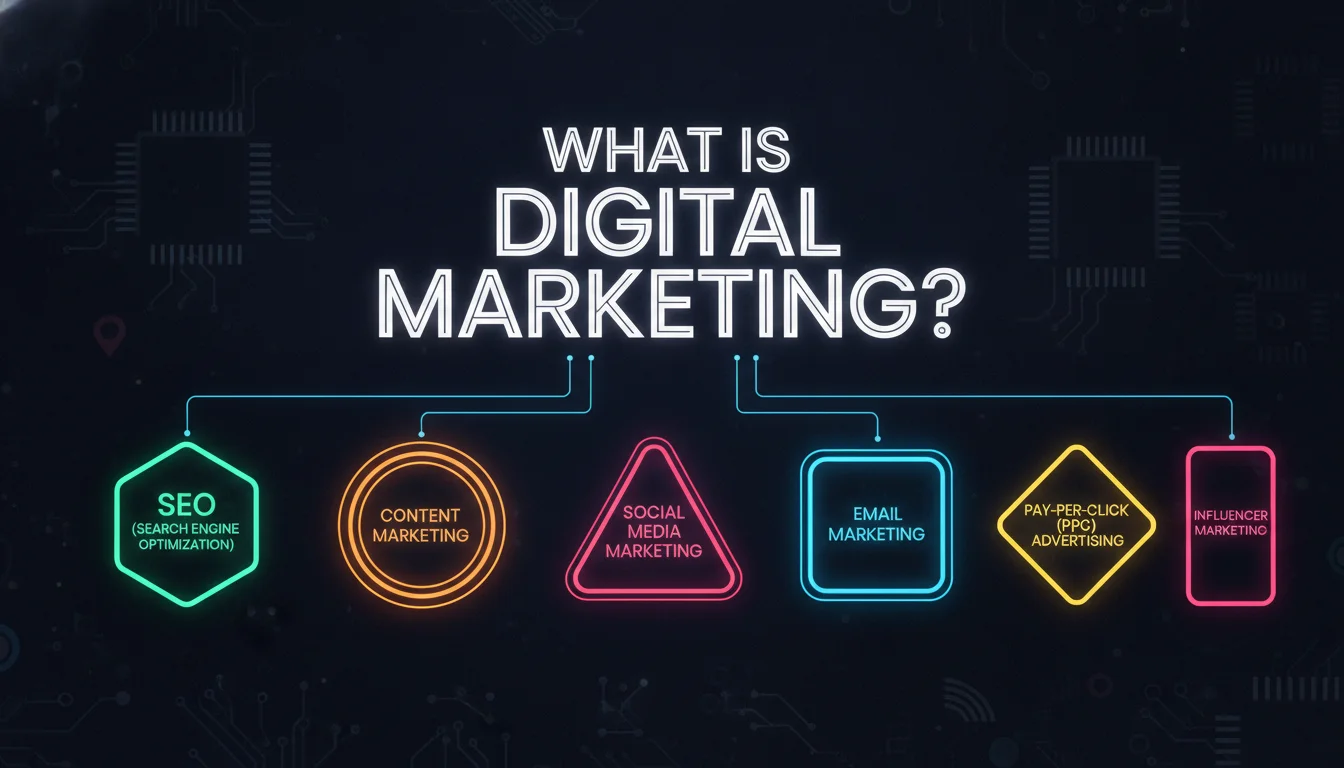
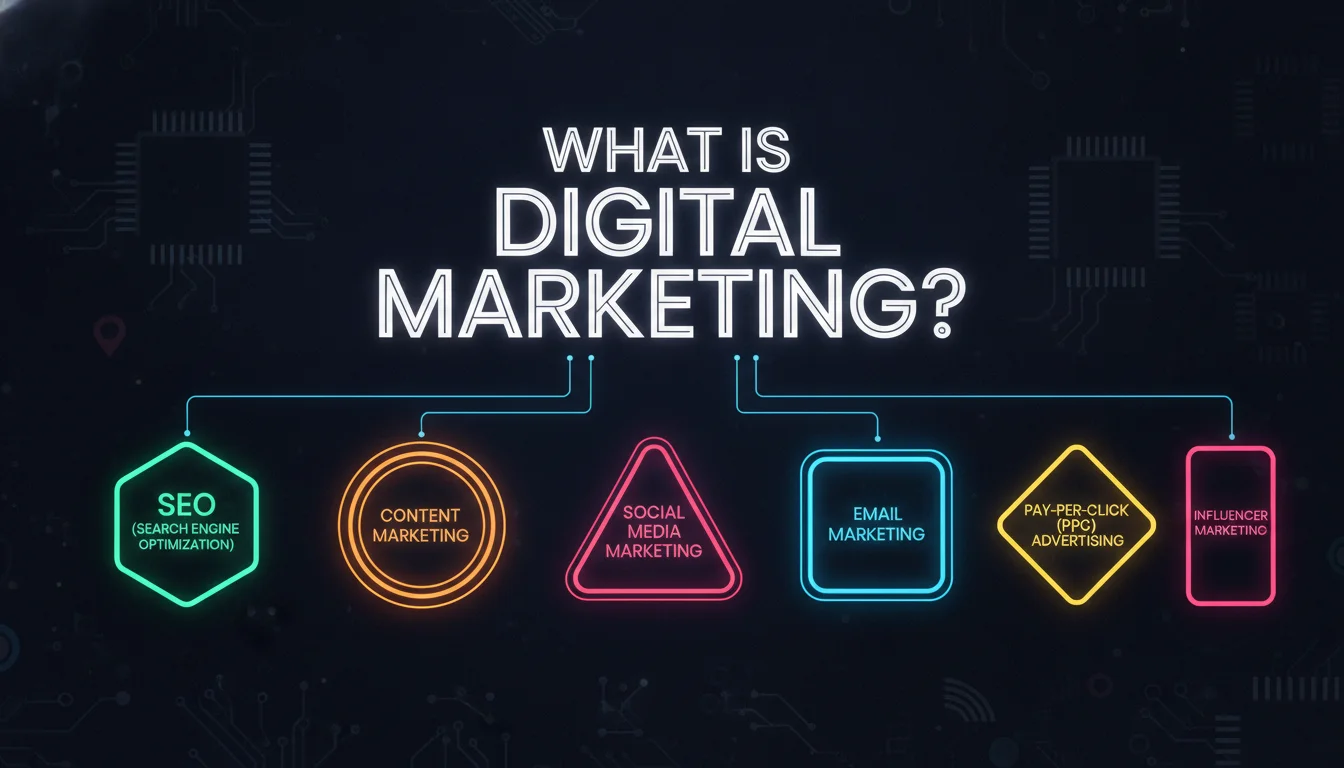
Digital marketing is the practice of promoting products or services through digital channels such as websites, social media, email, search engines, and mobile applications. It lets businesses connect with audiences where they already spend time online, using data-driven tactics to target, engage, and convert potential customers. Unlike traditional marketing, digital marketing offers real-time feedback, precise audience segmentation, and measurable return on investment.
The Evolution from Traditional to Digital
For decades, marketing relied on print, television, radio, and billboards. Those channels still have value, but consumer attention has shifted dramatically online. According to Mailchimp, 89% of Americans are online daily, and 31% are online almost constantly. With over 5.5 billion internet users worldwide as of 2025, digital platforms have become the primary marketplace. This shift has transformed how brands build awareness, nurture leads, and drive sales.
Why Businesses Can’t Afford to Ignore Digital Marketing
Digital marketing levels the playing field. A small startup can compete with industry giants through creative content and smart targeting. Every click, impression, and conversion can be tracked, enabling continuous optimization and efficient budget allocation. According to Salesforce’s Tenth Edition State of Marketing report, the average company markets across 10 different digital channels. The U.S. Bureau of Labor Statistics reports that the median salary for advertising, promotions, and marketing managers was $156,580 in 2022, with a projected 6% growth through 2032, reflecting how central these skills have become.
The 3 Pillars of Digital Media: Paid, Owned, and Earned
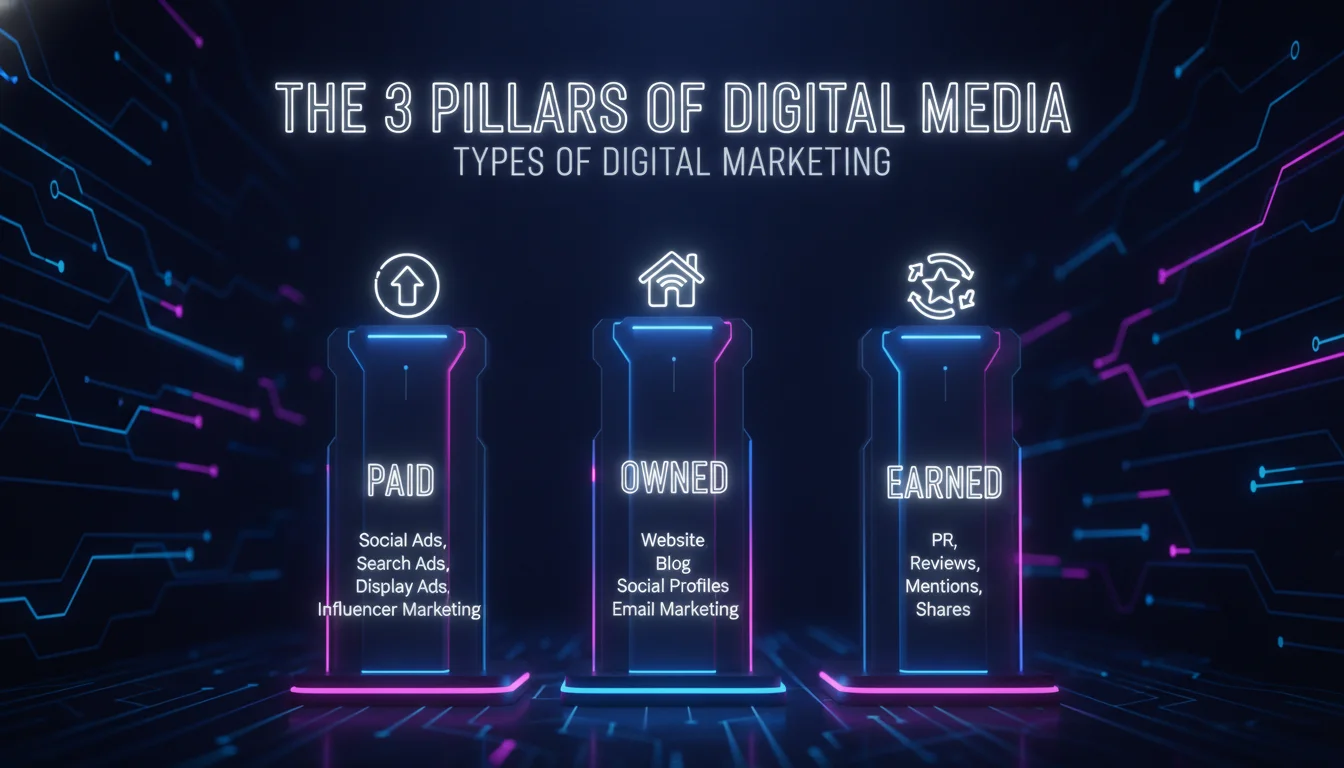
The POEM framework is the foundation for understanding how all digital marketing relate to one another. Most digital tactics fall into one of three categories: Paid Media, Owned Media, and Earned Media. Mapping your strategy across these three buckets ensures you’re not over-relying on any single traffic source.
| Media Type | Definition | Examples | Role in Strategy |
|---|---|---|---|
| Owned Media | Assets the business directly controls and manages. | Website, blog, email list, social profiles. | Permanent home base that houses your brand identity. |
| Paid Media | Promoting content through paid advertising to reach audiences. | PPC, display ads, paid social, sponsorships. | Fuel to generate immediate traffic and visibility. |
| Earned Media | Exposure gained organically through the actions of others. | Reviews, media coverage, social shares, backlinks. | External validation that builds long-term trust. |
How the Three Pillars Work Together
Picture a new product launch. You write a detailed blog post (owned media) and promote it through Google Ads (paid media). An industry analyst finds it valuable and shares it with their audience. That share and the traffic it generates become earned media. The most resilient strategies blend all three pillars, creating a flywheel where each reinforces the others.
Mapping Digital Marketing Types to the POEM Framework
Understanding which pillar a tactic belongs to clarifies its role in your mix. SEO, for example, straddles owned and earned media: you own the content but rely on earning backlinks and authority signals. Social media marketing can be owned (organic posts), paid (boosted content), or earned (user-generated content). The 10 this type of marketing we cover next each map onto this framework in distinct ways.
10 Essential Types of Digital Marketing You Need to Know
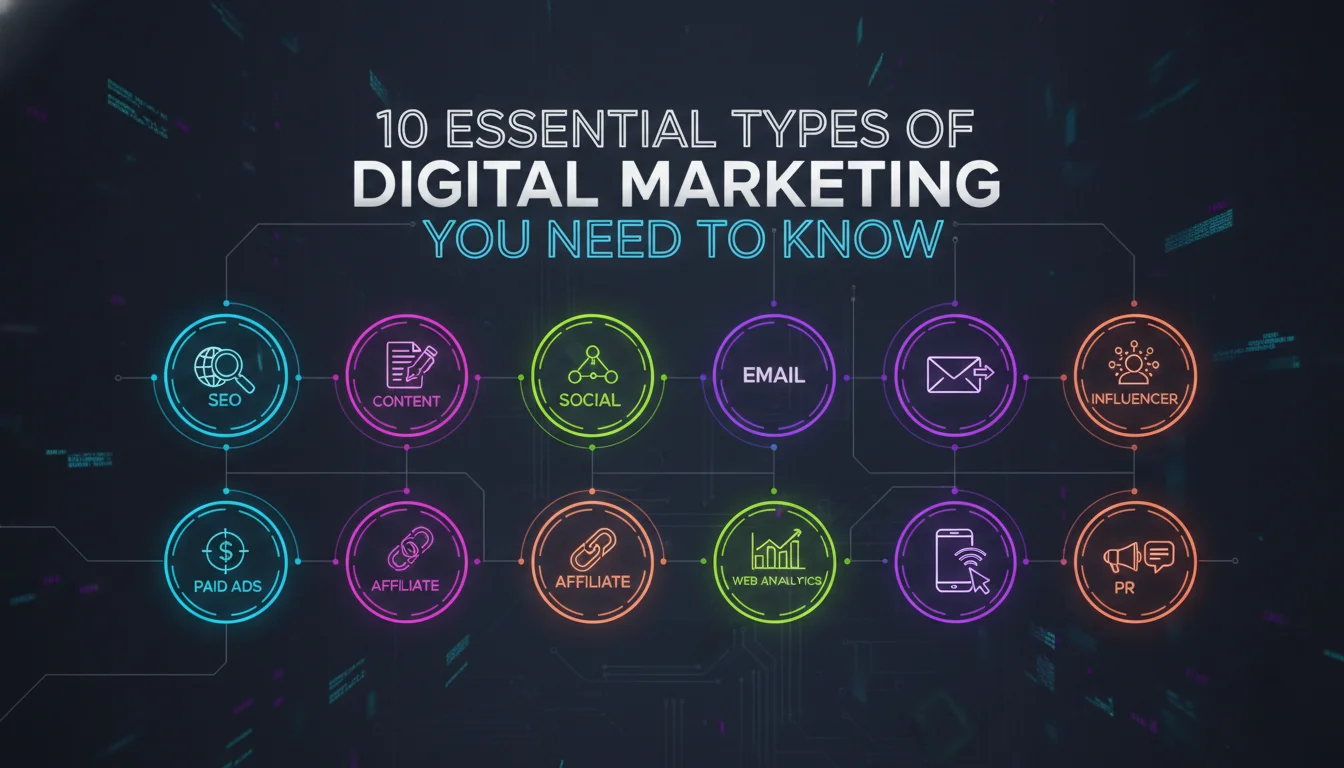
The core this kind of digital marketing fall into 10 categories. Each has its own strengths, ideal use cases, and key tactics. Whether you’re building a startup’s first marketing plan or refining an enterprise mix, understanding these channels is foundational.
| Type | Primary Goal | Cost Level | Time to Results | Difficulty |
|---|---|---|---|---|
| SEO | Organic traffic & visibility | Low-Medium | 3-12 months | High |
| Content Marketing | Brand authority & engagement | Medium | 6-18 months | Medium |
| Social Media Marketing | Community & brand awareness | Low-High | 1-6 months | Low-Medium |
| PPC Advertising | Immediate traffic & conversions | High | Days | Medium |
| Email Marketing | Nurturing & retention | Low | 1-3 months | Low |
| Affiliate Marketing | Performance-based sales | Medium | 2-6 months | Medium |
| Influencer Marketing | Trust & reach via endorsements | High | 1-4 weeks | Medium |
| Mobile Marketing | On-the-go engagement | Medium | 1-3 months | Medium |
| Video Marketing | Engagement & storytelling | High | 2-6 months | High |
| Marketing Analytics | Optimization & measurement | Low | Ongoing | High |
Here’s a detailed breakdown of each of these the of digital marketing.
1. Search Engine Optimization (SEO)
SEO is the practice of optimizing your website and content to rank higher in organic search results. It’s one of the most foundational marketing because it captures high-intent traffic without paying for every click. When someone searches for a product, service, or answer, appearing at the top of Google or Bing means your brand is first in line. SEO builds compounding value over time.
Effective SEO covers three core areas. On-page SEO ensures each page’s content, headers, and meta tags align with user intent and target keywords. Technical SEO focuses on site speed, mobile-friendliness, and crawlability so search engines can index your pages without errors. Off-page SEO builds authority through backlinks from reputable sites, which act as votes of confidence in your content.
“Traditional media is a great way to reach a broad consumer base, whereas digital media has the ability to reach very specific audiences. A key point is that depending on the target audience, some channels are more effective than others.” – Dr. Jessica Rogers, Senior Associate Dean of Business Programs, SNHU
According to Salesforce’s State of Marketing report, 85% of marketers are reshaping their SEO strategies, and 88% are actively optimizing for AI-driven search experiences. Yet according to Gartner, only about one-third of consumers currently believe generative AI chatbots are as effective as standard search engines for learning new information. That gap means strong traditional SEO fundamentals remain essential, even as new search interfaces emerge.
2. Content Marketing
Content marketing is a type of digital marketing that focuses on creating and distributing valuable, relevant, and consistent content to attract and retain a clearly defined audience. Rather than pushing a direct sales message, it educates, entertains, or solves problems, building trust and authority over time. Blog posts, whitepapers, ebooks, podcasts, and infographics all fall under this umbrella.
High-quality content fuels every other channel in your mix. It supports SEO by targeting keywords, provides material for social media and email newsletters, and establishes thought leadership that competitors can’t easily copy. A well-executed content strategy can reduce customer acquisition costs because it draws people in organically rather than interrupting them with ads.
Content marketing also multiplies its own reach. A comprehensive guide that ranks well on Google can be repurposed into a series of social posts, a YouTube video, and an email drip campaign. One piece of content, many touchpoints. That’s the creative efficiency that separates good content programs from great ones.
3. Social Media Marketing
Social media marketing is among the most dynamic types of, using platforms like Facebook, Instagram, LinkedIn, TikTok, and X (formerly Twitter) to connect with audiences, build brand personality, and drive engagement. It includes both organic posting and paid social advertising. Platform choice depends on your target demographic: B2B brands typically focus on LinkedIn, while fashion and lifestyle brands thrive on Instagram and TikTok.
Social media excels at humanizing a brand. Real-time interaction, community building, and customer service all happen here. User-generated content and influencer partnerships also thrive on social platforms, turning customers into advocates. Paid social campaigns offer granular targeting based on demographics, interests, and behaviors.
One of social media’s biggest advantages is its low barrier to entry. Businesses can start with organic posting for free. That said, as organic reach has declined on most major platforms, a balanced mix of organic and paid efforts is usually necessary to achieve meaningful scale.
4. Pay-Per-Click (PPC) Advertising
PPC advertising is a performance-driven type of digital marketing where advertisers pay a fee each time someone clicks their ad. Google Ads is the most common platform, but social networks and display ad networks offer PPC options too. The appeal is speed: your ads can appear at the top of search results within hours of campaign launch.
PPC works especially well for time-sensitive promotions, product launches, or capturing demand from high-intent keywords. It allows precise targeting by keyword, location, device, and even remarketing to previous site visitors. Budgets are tightly controlled, with cost-per-click varying by industry and competition level.
PPC requires constant monitoring. Without active management, costs can spiral and returns diminish fast. The strongest PPC strategies combine search ads with retargeting and display campaigns to guide users through the full buyer’s journey, not just the first click.
5. Email Marketing
Email marketing is a type of digital marketing that involves sending targeted messages to a subscriber list to nurture leads, build loyalty, and drive conversions. It delivers personalized, direct communication with people who have already expressed interest in your brand, making it one of the highest-ROI channels available.
Email campaigns range from welcome sequences and promotional newsletters to abandoned cart reminders and re-engagement flows. Automation tools enable behavior-triggered emails, ensuring subscribers receive relevant content at the right moment. Segmentation, dividing your list by demographics, past purchases, or engagement level, further increases relevance and conversion rates.
Building a permission-based list, writing compelling subject lines, and testing formats consistently are the fundamentals that separate high-performing email programs from ones that collect dust in inboxes. Email marketing consistently delivers strong returns, making it a foundation of most mature digital marketing strategies.
6. Affiliate Marketing
Affiliate marketing is a commission-based type of digital marketing where businesses reward third-party publishers for driving traffic or sales. Affiliates promote products through blogs, social media, coupon sites, or review platforms using unique tracking links, and earn a commission for each conversion they generate.
This model is cost-effective because you pay only for results. It also extends your reach through partners who already have established, trusted audiences. According to Influencer Marketing Hub, the affiliate marketing industry was estimated at $13 billion in 2023, reflecting how seriously brands now treat performance-based partnerships.
Successful affiliate programs require clear terms, reliable tracking, and genuine relationships with partners. While affiliate marketing is sometimes grouped with influencer marketing, the distinction matters: affiliate programs typically run on direct sales commissions, while influencer deals often involve flat fees or product exchanges and are more content-focused by nature.
7. Influencer Marketing
Influencer marketing has become a core type of digital marketing, built on collaborating with individuals who have large, engaged followings on social media or other digital platforms. Influencers promote your products through posts, stories, videos, or live streams, lending their credibility and personal brand to your business.
Consumers trust peer recommendations far more than brand advertisements. That’s the engine behind influencer marketing’s effectiveness. Micro-influencers, those with smaller but highly engaged audiences, often deliver stronger engagement rates and more authentic connections than mega-celebrities with millions of passive followers. Influencer platforms and agencies have made it easier than ever to find and manage these partnerships at scale.
Influencer marketing can be paid (sponsored content), earned (organic mentions), or a blend of both. Unlike affiliate marketing, it’s typically measured by engagement, reach, and brand sentiment rather than direct conversion alone. The relationship is content-first, not transaction-first.
8. Mobile Marketing
Mobile marketing is a type of digital marketing focused on reaching users on smartphones and tablets through SMS, push notifications, in-app ads, and mobile-optimized websites. With over 5.5 billion internet users worldwide and the majority accessing the web via mobile devices, this channel is critical for reaching on-the-go consumers.
Key mobile marketing tactics include location-based advertising, QR codes, mobile-friendly email design, and responsive web design. Apps offer rich engagement opportunities, from loyalty programs to gamified experiences. Given that 89% of Americans are online daily, many of them on their phones, mobile marketing ensures your brand is always within reach.
Mobile marketing must be permission-based and privacy-conscious. Clear opt-in processes and easy opt-out options are essential for maintaining trust and staying compliant with regulations like GDPR and CCPA. Respecting user preferences here isn’t just good ethics; it’s good business.
9. Video Marketing
Video marketing is a highly engaging type of digital marketing that uses visual content to promote, educate, or entertain. Platforms like YouTube, TikTok, Instagram Reels, and LinkedIn Video have made video one of the most consumed content formats online. It ranges from short-form social clips to long-form webinars and product demos.
Video drives higher engagement than text or static images. It’s particularly effective for product demonstrations, customer testimonials, and brand storytelling. According to the Digital Marketing Institute, video marketing delivers a high return on investment and has become a key component of modern content strategies.
Effective video content doesn’t require blockbuster budgets. Authentic, behind-the-scenes footage often outperforms polished productions. The key is understanding your audience’s preferences and the platform’s native format: vertical video for TikTok and Instagram Stories, longer educational content for YouTube, and punchy thought-leadership clips for LinkedIn.
10. Marketing Analytics
Marketing analytics is the measurement and analysis layer that makes every other type of digital marketing smarter. It involves collecting data from all digital channels, including website traffic, social media engagement, email open rates, and conversion paths, to inform strategic decisions and optimize ROI.
Without analytics, you’re guessing. Tools like Google Analytics, Adobe Analytics, and platform-specific dashboards help you understand which digital marketing are actually driving results. Attribution modeling reveals how different touchpoints contribute to conversions, enabling smarter budget allocation across channels.
As privacy regulations tighten and third-party cookies phase out, analytics is shifting toward first-party data and machine learning models. Marketers who stay sharp on data interpretation will hold a significant advantage. Analytics isn’t just a support function; it’s a strategic discipline in its own right.
Pros and Cons of Digital Marketing
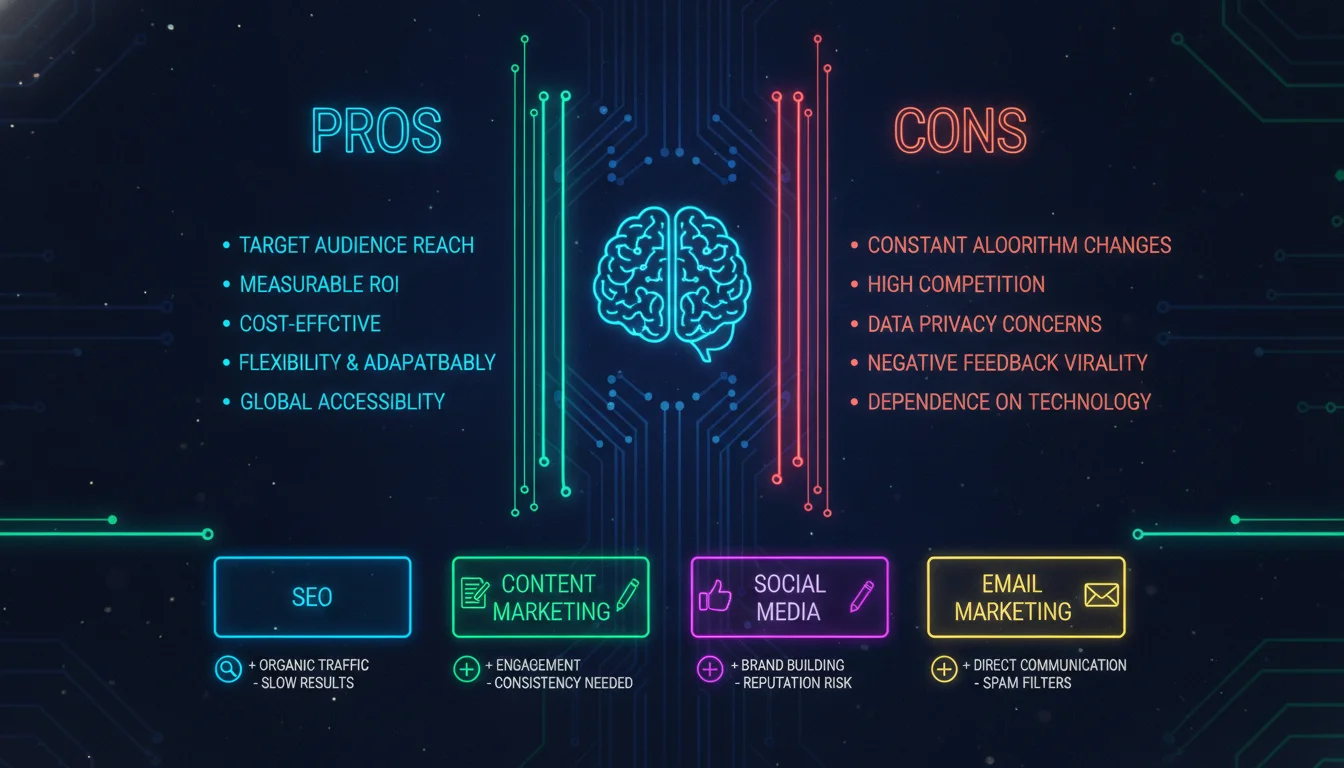
Understanding the advantages and drawbacks of digital marketing helps you set realistic expectations and build a strategy that plays to its strengths.
Pros
- Precise targeting: Reach specific audiences by demographics, interests, behavior, and location, something traditional media can’t match.
- Measurable results: Every click, impression, and conversion is trackable, enabling data-driven decisions and continuous improvement.
- Scalable budgets: Start small with organic content or email, then scale paid channels as revenue grows. Entry costs are far lower than traditional advertising.
- Real-time optimization: Adjust campaigns mid-flight based on live performance data, not post-campaign reports.
- Channel diversity: The 10 types of digital marketing give businesses multiple ways to reach audiences at every stage of the buyer’s journey.
Cons
- Steep learning curve: Each channel has its own tools, algorithms, and best practices. Mastering even two or three takes real time and expertise.
- Constant change: Algorithm updates, platform policy shifts, and new privacy regulations mean strategies that work today may need rethinking next quarter.
- Content saturation: Every brand is publishing. Standing out requires genuine creativity and consistency, not just volume.
- PPC costs can escalate: Paid channels require active management. Without it, budgets drain fast with little to show.
“The ability to customize and adapt digital marketing can benefit businesses in any industry.” – Amazon Ads Guide to Digital Marketing
How to Choose the Right Types of Digital Marketing for Your Business
Selecting the right mix of types of digital marketing depends on your business goals, target audience, budget, timeline, and available resources. A B2B software company will prioritize LinkedIn and SEO; an e-commerce fashion brand may focus on Instagram and PPC. Start by getting clear on what you want to achieve.
Step 1: Define Your Marketing Goals
Are you aiming for brand awareness, lead generation, sales, or customer retention? Awareness goals align well with content marketing and social media. Sales goals benefit from PPC and email. Retention thrives on email sequences and mobile push notifications. Write down your top two or three objectives before choosing any channel.
Step 2: Know Your Audience
Build detailed buyer personas that include demographics, online behavior, and content preferences. Where do they spend time? What problems are they trying to solve? Targeting Gen Z calls for TikTok and short-form video. Reaching C-suite executives demands LinkedIn and in-depth whitepapers. The channel follows the audience, not the other way around.
Step 3: Assess Your Resources
Consider your team’s expertise and available budget honestly. SEO and content marketing require upfront effort but yield long-term compounding results. PPC can deliver quick wins but needs ongoing investment and active management. Many small businesses start with one or two types of digital marketing and expand as they grow and learn what works.
Step 4: Test and Iterate
No plan survives contact with reality unchanged. Launch small experiments, measure performance through analytics, and double down on what works. If Instagram Stories drive high engagement, create more. If a Google Ads campaign shows poor ROI, pause and reassess before spending further. Digital marketing’s measurability makes iteration a genuine competitive advantage.
Step 5: Integrate Across Channels
Make sure your messaging is consistent and that channels support each other. A blog post should link to related social content. An email campaign can drive traffic to a landing page. The POEM framework helps you visualize how paid efforts can amplify owned content and generate earned media over time.
Common Pitfalls to Avoid in Digital Marketing
Even experienced marketers fall into traps that waste budget and erode trust. Knowing these pitfalls in advance can save you significant time and money as you build out your approach to the various types of digital marketing.
Over-reliance on a Single Channel
Putting all your resources into one channel, say, only running Facebook ads, leaves you exposed to algorithm changes, platform policy shifts, or audience saturation. A diversified strategy across multiple types of digital marketing hedges against that risk and creates multiple touchpoints along the buyer’s journey.
Ignoring Data and Analytics
Vanity metrics like likes and shares are tempting, but they don’t always translate to business impact. Focus on metrics tied to your goals: conversion rate, cost per acquisition, and customer lifetime value. According to Salesforce, the average company markets across 10 channels, and measuring each one’s contribution is essential to avoid wasted spend.
Neglecting Mobile Users
With more than half of global web traffic coming from mobile devices, slow-loading pages or clunky forms kill conversions before they start. Make sure your website is responsive, emails render properly on small screens, and ads lead to mobile-optimized landing pages. Mobile isn’t a secondary consideration anymore; it’s the primary one.
The Future of Digital Marketing: Trends and Predictions
The types of digital marketing we rely on today will keep evolving. Emerging technologies and shifting consumer behaviors are shaping the next wave of strategies, and brands that adapt early will hold a clear advantage.
AI and Machine Learning Integration
Artificial intelligence is already powering chatbots, personalized recommendations, and predictive analytics. As AI becomes more embedded in search engines through tools like Google’s AI Overviews, marketers must optimize content for both traditional search and conversational AI interfaces. According to Salesforce, 88% of marketers are actively optimizing for AI-driven search experiences, signaling how quickly this shift is accelerating.
Privacy-First Marketing
With third-party cookies being phased out and stricter regulations like GDPR and CCPA in effect, marketers are pivoting to first-party data collection. Building direct relationships through email lists, loyalty programs, and gated content is more valuable than ever. Contextual advertising, targeting based on page content rather than user tracking data, is also making a strong comeback.
Video and Interactive Content
Short-form video and live streaming are booming across every major platform. TikTok, YouTube Shorts, and Instagram Reels have made bite-sized video a primary content format for brands of all sizes. Interactive content such as quizzes, polls, and augmented reality filters engages audiences more deeply than static posts. Brands that invest in creative video and interactive experiences will stand apart from those still relying on text-only content.
Marketing Automation as a Growing Discipline
Marketing automation deserves its own mention as an emerging category within the types of digital marketing. Automation software streamlines repetitive tasks like email sequences, lead scoring, and social scheduling, freeing teams to focus on strategy and creative work. As of 2026, automation tools are increasingly powered by AI, making them smarter about timing, personalization, and channel selection. Brands that build automation into their workflows early gain compounding efficiency advantages over time.
Frequently Asked Questions
What are the four types of digital marketing?
The four foundational types most often cited are search engine optimization (SEO), content marketing, social media marketing, and pay-per-click (PPC) advertising. These cover organic and paid strategies across search and social channels. Most businesses start with these before expanding into email, affiliate, and other advanced types of digital marketing.
What are the 7 types of digital marketing?
A common grouping includes SEO, content marketing, social media marketing, PPC, email marketing, affiliate marketing, and influencer marketing. This framework covers the major channels that drive traffic, engagement, and conversions. Mobile marketing and video marketing are often added as distinct types of digital marketing in broader frameworks.
What are the top 10 types of digital marketing?
The top 10, as outlined in this guide, are SEO, content marketing, social media marketing, PPC, email marketing, affiliate marketing, influencer marketing, mobile marketing, video marketing, and marketing analytics. This list covers the full spectrum of digital channels and the supporting disciplines that make them measurable and effective.
What are the 12 main types of digital marketing?
Some frameworks expand to 12 by adding marketing automation and digital PR as separate categories. Marketing automation refers to software that streamlines repetitive tasks like email sequences and lead scoring, while digital PR focuses on building brand reputation through online media coverage and backlinks. Both are growing in importance as of 2026.
Which type of digital marketing is most effective?
Effectiveness depends entirely on your specific goals. SEO and content marketing excel for long-term organic growth. PPC delivers immediate results for sales or leads. Email marketing delivers strong ROI for nurturing relationships. Social media builds brand awareness and community. A blend of types of digital marketing tailored to your audience and objectives almost always outperforms any single channel.
How do I choose the right digital marketing mix for my business?
Start by defining your goals, understanding your target audience, and honestly assessing your budget and resources. Test a few channels with clear KPIs, then allocate more budget to what performs. The Paid-Owned-Earned framework helps balance short-term gains from paid channels with the long-term stability of owned and earned media.
Ready to build a strategy that actually works? Contact Emin Media for a free brand consultation and let’s create something bold together.
Enjoyed this article?
Contact Emin Media for a free brand consultation and let's create something amazing together.
Get in TouchRelated Articles
Brand Engagement on Instagram: 2026 Guide
Master brand engagement on Instagram with proven strategies for Reels, carousels, saves, and shares. Boost…
30 Creative Marketing Campaign Ideas for 2026
Explore 30 creative marketing campaign ideas for 2026: gamification, zero-budget stunts, influencer plays, and content…
AI in Creative Marketing: The 2026 Guide
AI in creative marketing is reshaping how brands create, personalize, and scale campaigns. Discover tools,…