Best Digital Photography Camera: 2026 Buyer’s Guide
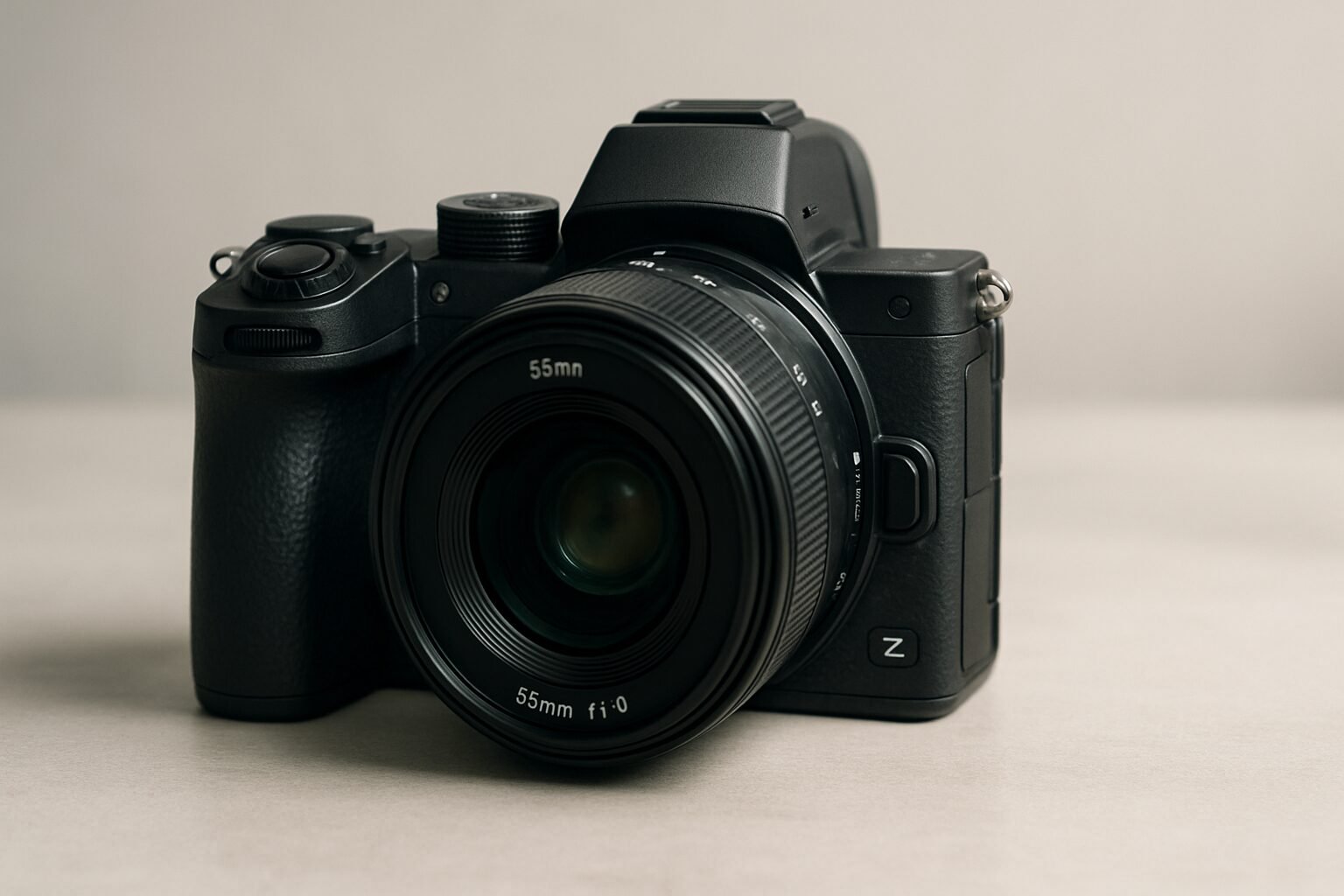
A digital photography camera is a dedicated imaging device that captures photos and video using a digital sensor rather than film. As of 2026, top picks range from the Canon EOS R50 at $799.99 to the Sony a7 IV full-frame model at $2,199.99, with strong used options available at every price point.
Key Takeaways
- Sensor advantage: A photography camera outperforms smartphones with larger sensors, interchangeable lenses, and full manual controls.
- Budget picks: Canon EOS R50 ($799.99), Sony a6400 ($899), and Nikon Z 30 ($699.95) offer exceptional value under $1,000.
- Used market savings: Save 30-50% through KEH Camera and B&H Photo. Always check shutter count before buying.
- Mirrorless is the future: Most new development is mirrorless. DSLRs remain viable on the used market but new lens development has slowed.
- Lenses matter most: Invest in glass first. A 50mm f/1.8 prime is the most affordable first upgrade for any system.
- Budget sweet spot: For a capable first camera, plan to spend between $500 and $1,200, including a kit lens and basic accessories.
What to Look for in a Digital Photography Camera
The right this type of camera matches your shooting style, not just your budget. Before comparing specs, understand the three factors that matter most: sensor size, lens ecosystem, and autofocus performance.
Sensor Size and Image Quality
The sensor is the heart of any camera, converting light into the images you see. Larger sensors capture more light and detail, producing cleaner images in low light and better background separation. Full-frame sensors measure 36×24mm and represent the gold standard for image quality. APS-C sensors, roughly 23.6×15.7mm, appear in most enthusiast models and offer a strong balance of performance and affordability. Micro Four Thirds sensors at 17.3×13mm are smaller still, but they enable incredibly compact systems from brands like Panasonic and OM System.
Lens Ecosystem and Compatibility
Your camera is only as good as the glass you attach to it. Canon’s RF-mount and Sony’s E-mount offer the most extensive native lens lineups, spanning ultra-wide to super-telephoto. Nikon’s Z-mount and Fujifilm’s X-mount provide excellent prime and zoom options at competitive prices. Always factor in the long-term cost of lenses before committing to a system. A body is a one-time purchase. Glass is a lifetime investment.
Autofocus Performance and Video Capabilities
Modern mirrorless cameras feature phase-detection autofocus with hundreds of tracking points, including eye-detection for people, animals, and vehicles. If video is part of your plan, look for 4K at 60fps or higher, in-body image stabilization (IBIS), and a dedicated microphone port. The difference between a camera with and without IBIS is immediately visible in handheld footage.
Digital Photography Camera Types: DSLR vs. Mirrorless vs. Point-and-Shoot
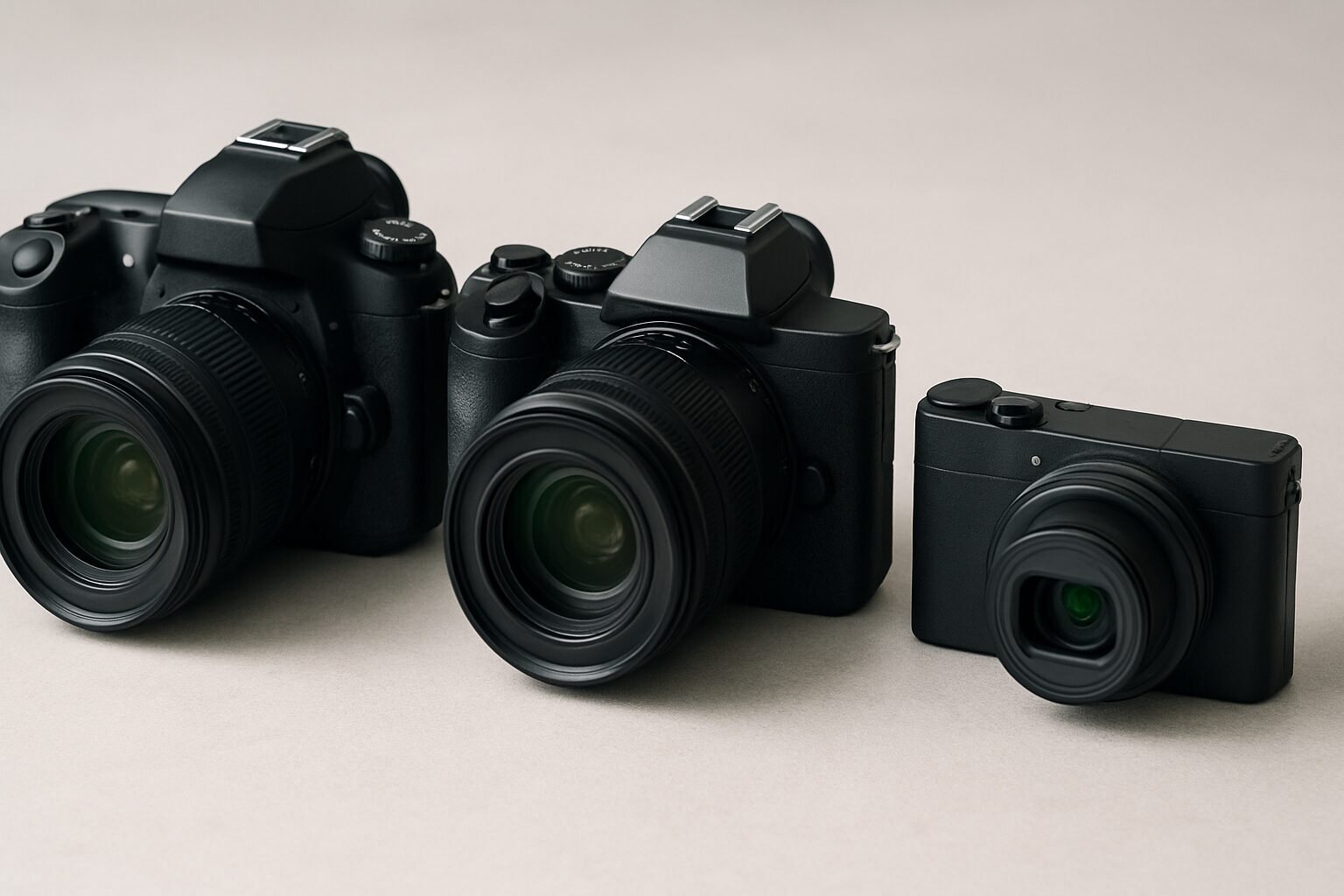
Each camera type serves a different photographer. Understanding the trade-offs saves you from buying the wrong tool for your creative work.
DSLR Cameras: The Optical Legacy
DSLRs use a mirror and prism to deliver an optical viewfinder that shows exactly what the lens sees, with zero lag. They offer exceptional battery life and access to a massive used market. A DSLR like the Canon EOS 5D Mark IV, available used for under $1,500, remains a workhorse for wedding and portrait photographers who value reliability over cutting-edge specs.
Mirrorless Cameras: Where Digital Photography Is Heading
Mirrorless cameras have surged in popularity thanks to electronic viewfinders, silent shooting modes, and fast burst rates. The Sony a7 IV at $2,199.99 offers a 33MP full-frame sensor and advanced AI autofocus, making it a top choice for hybrid photo and video shooters. Canon and Nikon have both committed fully to mirrorless development, which means new lenses, accessories, and firmware updates will prioritize these systems for years to come.
Point-and-Shoot Cameras: Compact and Convenient
For photographers who want a pocketable option, models like the Canon PowerShot G7 X Mark III at $1,499 from Camera Wholesalers deliver a 1-inch sensor and an f/1.8-2.8 lens without the bulk of an interchangeable-lens system. They’re ideal for travel, vlogging, and street photography where discretion matters. At the budget end, the Kodak PIXPRO FZ55 at $139.99 consistently ranks as a top-selling entry-level option for casual shooters.
Best Digital Photography Cameras for Beginners Under $1,500
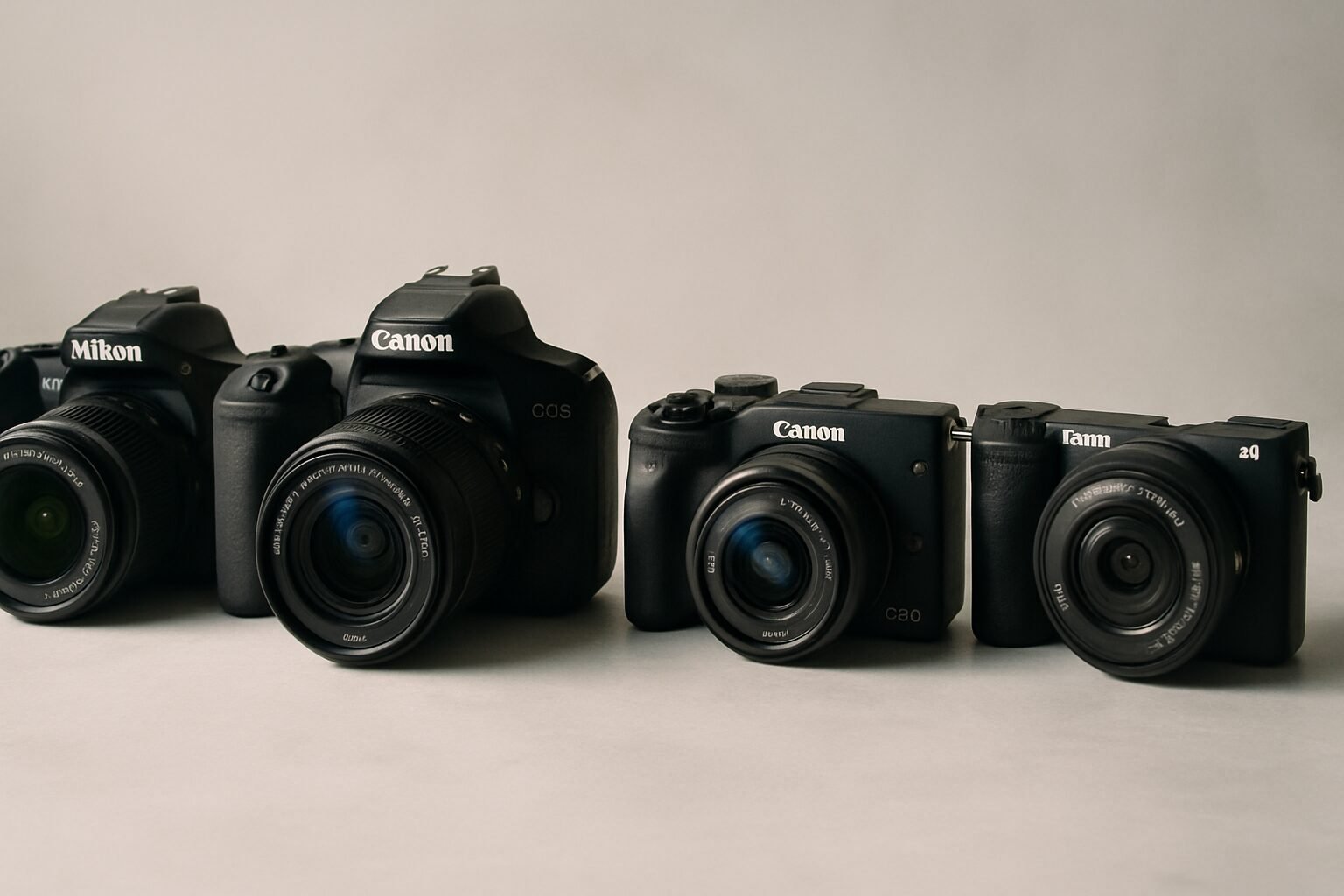 Best Buy, the Canon EOS R50 is a standout entry-level this kind of camera. It features a 24.2MP APS-C sensor, 4K video recording, and a guided interface that helps beginners understand settings without digging through menus. The RF-mount ecosystem means your lens investment carries forward as you upgrade bodies over time.
Sony a6400: Versatile and Travel-Ready
The Sony a6400 at $899 delivers 11fps burst shooting and real-time eye autofocus, making it a standout choice for action, travel, and everyday photography. Its compact body and the extensive E-mount lens selection, which includes options from Sony, Sigma, Tamron, and Zeiss, make it a long-term investment that scales with your ambitions.
Nikon Z 30: A Budget Content Creator‘s Dream
At $699.95 at Best Buy, the Nikon Z 30 is a viewfinder-free mirrorless camera built for vlogging and content creation. Its 20.9MP DX-format sensor and 4K/30p video make it a capable stills camera too. If you’re building a YouTube or social media presence, this is one of the most cost-effective starting points available.
Top Mirrorless Digital Photography Cameras for Enthusiasts
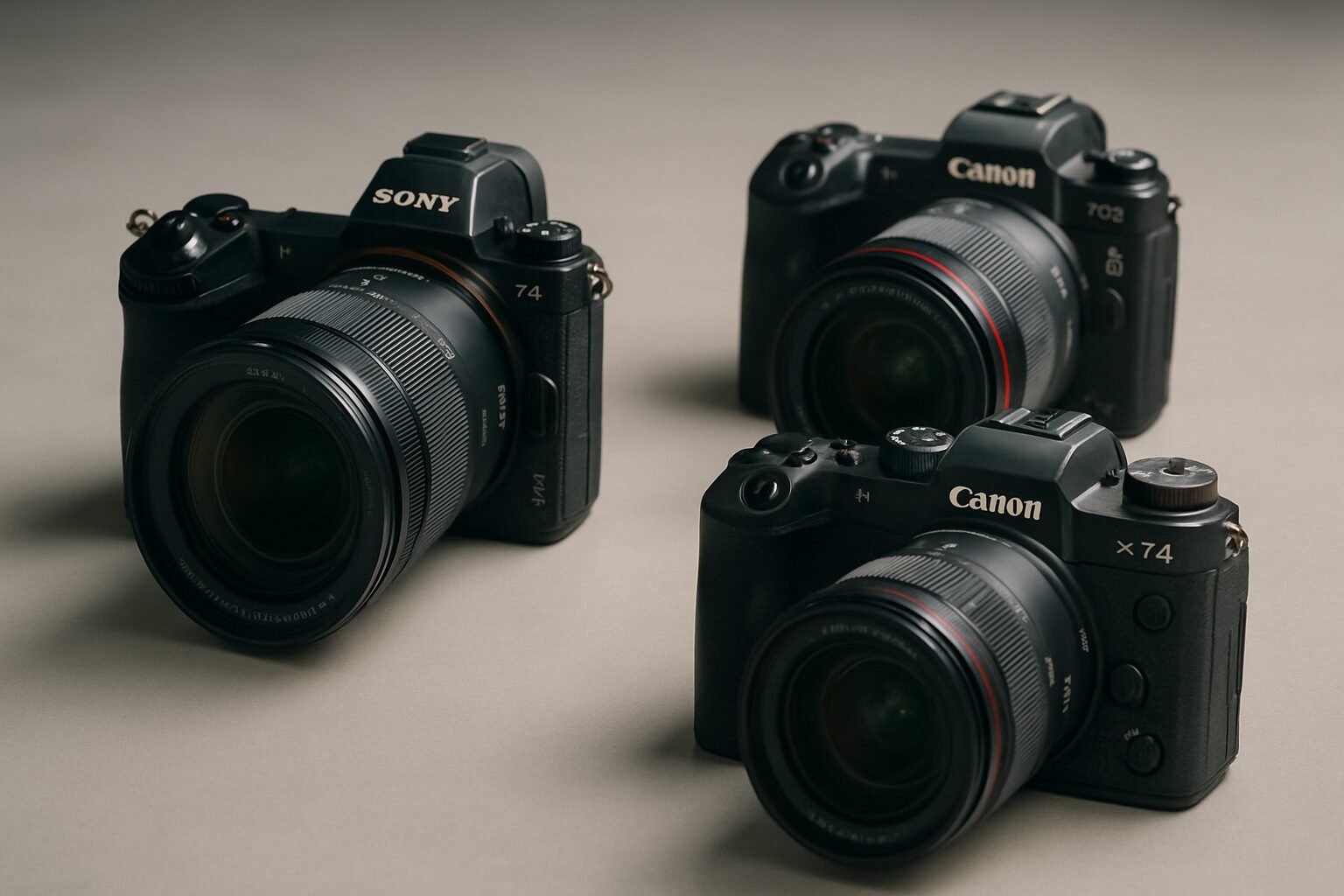
Once you’ve outgrown a beginner body, these three cameras represent the next level: more resolution, better low-light performance, and professional-grade video capabilities.
Canon EOS R6 Mark II: Low-Light Champion
The Canon EOS R6 Mark II at $2,099 from Camera Wholesalers is a full-frame mirrorless body that excels in difficult lighting, with an ISO range extending to 102,400. Its 40fps electronic shutter and 6K oversampled 4K video make it a genuine hybrid powerhouse for photographers who also shoot professional video work.
Fujifilm X-T50: Retro Style, Modern Performance
For photographers who love tactile controls and film-inspired aesthetics, the Fujifilm X-T50 at around $1,400 offers a 40MP APS-C sensor and Fujifilm’s renowned film simulations. The JPEGs this camera produces straight out of the body are so refined that many photographers skip post-processing entirely. The X-mount lens ecosystem includes sharp, affordable primes starting around $200-400.
Sony a7C II: Full-Frame in a Compact Body
The Sony a7C II at $2,199 packs a 33MP full-frame sensor into a rangefinder-style body, delivering exceptional image quality in a travel-friendly package. It includes Sony’s latest AI autofocus system and 5-axis IBIS, making it one of the most capable travel cameras available at any size.
DSLR vs. Mirrorless: Which Digital Photography Camera Is Right for You?
The choice between DSLR and mirrorless comes down to three practical factors: how you view your subject, how long your battery lasts, and how future-proof your investment needs to be.
Optical vs. Electronic Viewfinders
A DSLR offers a pure optical view with zero lag, which many experienced photographers prefer for fast-moving subjects. Mirrorless cameras use an electronic viewfinder (EVF) that shows a live preview of exposure and white balance, so what you see is exactly what you’ll capture. For beginners, the EVF is genuinely educational. For sports photographers, the optical view still has its advocates.
Size, Weight, and Battery Life
Mirrorless bodies are generally lighter than DSLRs, but high-end glass can equalize the total weight quickly. Battery life is where DSLRs still win clearly. The Canon 6D Mark II delivers around 1,200 shots per charge. The Sony a7 IV manages roughly 610 shots, and the Canon EOS R50 around 440 shots per charge. Wildlife and event photographers often carry 2-3 spare mirrorless batteries as standard practice.
Lens Availability and Future-Proofing
Canon and Nikon have both confirmed they are phasing out new DSLR lens development, concentrating resources on mirrorless mounts. Buying a new digital photography in 2026 means mirrorless is the safer long-term bet. That said, DSLRs still offer tremendous value on the used market, and the existing lens libraries for Canon EF and Nikon F mounts are enormous.
Side-by-Side: DSLR vs. Mirrorless Comparison
| Feature | Canon 6D Mark II (DSLR) | Sony a7 IV (Mirrorless) | Canon EOS R50 (Mirrorless) |
|---|---|---|---|
| Price (New/Used) | $1,200 / $600-$800 | $2,199.99 / $1,800 | $799.99 / $600 |
| Sensor | Full-frame 26.2MP | Full-frame 33MP | APS-C 24.2MP |
| Viewfinder | Optical (OVF) | 3.68M-dot EVF | 2.36M-dot EVF |
| Video | 1080p 60fps | 4K 60fps, 10-bit | 4K 30fps |
| Battery Life (CIPA) | 1,200 shots | 610 shots | 440 shots |
| Best For | Portrait, studio | Hybrid photo/video | Travel, beginners |
Pros and Cons of Buying a Digital Photography Camera
A dedicated camera is a significant purchase. Here’s an honest look at what you gain and what you give up compared to shooting on a smartphone.
Pros
- Superior image quality: Larger sensors capture more light, producing cleaner images with better dynamic range and true optical depth-of-field effects.
- Interchangeable lenses: Swap from a wide-angle to a telephoto to a macro lens depending on your subject. No smartphone can replicate this flexibility.
- Manual creative control: Full control over aperture, shutter speed, and ISO opens up creative techniques like long exposures, motion blur, and selective focus.
- Resale value: Quality camera bodies and lenses hold their value well. Some cult models like the Panasonic Lumix GM5 have even appreciated on the used market.
- Professional credibility: For client work, a dedicated camera signals professionalism and produces files that meet commercial print and licensing standards.
Cons
- Cost and complexity: Entry-level systems start around $700-$800 for a body alone. Add lenses, bags, and accessories and the investment grows quickly.
- Size and weight: Even compact mirrorless systems are bulkier than a smartphone. Full-frame kits with professional lenses can weigh several kilograms.
- Learning curve: Manual controls require time to master. Beginners often spend weeks before consistently getting the results they want.
- Battery management: Mirrorless cameras typically deliver 440-610 shots per charge. Long shoots require spare batteries and a charging plan.
How to Save Money: Smart Tips for Buying Used Digital Photography Cameras
The used camera market is one of the best-kept secrets in photography. With the right approach, you can buy professional-grade gear at a fraction of the original retail price.
Step 1: Determine Your Must-Have Features
Write down your essential specs before you browse: sensor size, megapixel count, video resolution, and lens mount. This list keeps you focused and prevents impulse purchases based on specs you’ll never use in practice.
Step 2: Research Reliable Sellers
Stick with trusted platforms. KEH Camera and B&H Photo both offer rigorous inspection processes and warranties on used gear. eBay can yield strong deals, but always check seller ratings, return policies, and the number of completed transactions before committing.
Step 3: Check the Shutter Count
A shutter count is the odometer reading for a digital photography camera. Most mechanical shutters are rated for 150,000 to 500,000 actuations depending on the model. A used camera with under 50,000 clicks is considered gently used and should provide years of reliable service under normal shooting conditions.
Step 4: Inspect or Test Before You Commit
If buying locally, test every function: autofocus speed, sensor for dust or dead pixels, LCD and EVF condition, and all physical buttons and dials. For mail-order purchases, insist on a no-questions-asked return window of at least 14 days. Any reputable seller will offer this without hesitation.
Digital Photography Camera vs. Smartphone: Why a Dedicated Camera Still Wins
Smartphones have closed the gap in casual photography, but a dedicated digital photography camera still holds clear advantages for anyone serious about image quality and creative control.
Image Quality and Sensor Size
Even the best computational photography on flagship smartphones cannot fully replicate the depth and detail of a large sensor camera. A full-frame sensor has roughly 15-20 times the surface area of a typical smartphone sensor, enabling true optical depth-of-field and superior dynamic range in challenging light. According to camera industry research, this physical size advantage translates directly into cleaner shadow detail and more accurate color rendering at high ISO settings.
Lens Flexibility and Creative Control
Smartphones rely on a small set of fixed lenses with digital zoom filling the gaps. A dedicated camera lets you swap lenses freely, from ultra-wide to telephoto to macro, and control aperture, shutter speed, and manual focus for effects that computational photography can only approximate. This flexibility is what separates a photographer from someone who takes pictures.
Long-Term Investment and Resale Value
A well-chosen digital photography camera often retains its value for years. Some cult models like the Panasonic Lumix GM5 have actually appreciated on the used market as compact camera enthusiasts seek them out. Smartphones, by contrast, depreciate rapidly and are typically replaced every 2-3 years with little resale return.
“The best camera is the one that gets out of your way and lets you make pictures. But when image quality and creative control matter, a dedicated sensor and interchangeable lenses still have no equal.” – Widely held principle among professional photographers and echoed consistently in editorial reviews from publications including Popular Photography and Digital Camera World.
“Mirrorless technology has matured to the point where there’s no meaningful optical quality trade-off versus DSLRs. The advantages are now entirely on the mirrorless side for most shooting scenarios.” – Reflects the consensus position of camera reviewers at outlets including DPReview and Imaging Resource, updated for 2026.
First Lens Recommendations for Your New Camera
The kit lens that ships with most cameras is a solid starting point, but your second lens purchase is where creative photography really begins.
For Canon RF-mount shooters, the RF 50mm f/1.8 STM at around $200 is the most affordable prime in the lineup and produces beautiful background separation. Sony E-mount users should look at the Sony 35mm f/1.8 OSS or the Sigma 30mm f/1.4 DC DN, both available for under $400. Fujifilm X-mount photographers have access to the XF 35mm f/2 R WR, a weather-sealed prime under $400 that matches the X-T50’s retro aesthetic perfectly. According to gear guides from B&H Photo and KEH Camera, a fast prime in the 35-50mm range is the single most impactful upgrade for photographers moving beyond kit lenses.
Frequently Asked Questions
What is the best digital photography camera for a beginner?
The Canon EOS R50 is an excellent choice for beginners, offering a guided user interface, 24.2MP APS-C sensor, and 4K video for $799.99. Its lightweight body and growing RF-mount lens ecosystem make it a strong learning tool that won’t limit you as your skills develop.
Are DSLR digital photography cameras still worth buying?
Yes, particularly on the used market. A DSLR like the Canon EOS 5D Mark IV can be found for under $1,500 and delivers professional image quality, a vast lens selection, and exceptional battery life. New DSLR development has slowed significantly as brands shift focus to mirrorless systems.
How much should I spend on my first digital photography camera?
For a capable starter setup, budget between $500 and $1,200. This range covers capable mirrorless models like the Sony a6400 or Nikon Z 30, plus a kit lens and basic accessories. Buying used through KEH Camera or B&H Photo can stretch your budget by 30-50%.
Which sensor size is best for a digital photography camera?
Full-frame sensors offer the best image quality and low-light performance, but APS-C sensors are more than sufficient for most beginners and enthusiasts. Micro Four Thirds sensors, used in Panasonic and OM System cameras, allow for ultracompact systems. Choose based on your print size needs and the lighting conditions you typically shoot in.
Can I use old lenses on a new digital photography camera?
With the right adapter, many DSLR lenses work on mirrorless cameras. Canon’s EF-to-RF adapters and Sony’s LA-EA5 adapter allow you to mount older glass with reasonable autofocus performance. Research compatibility for your specific lens and body combination before purchasing an adapter.
How long does a digital photography camera last?
A well-maintained camera can last 10 years or more. Mechanical shutters are typically rated for 150,000 to 500,000 actuations, and electronics hold up well unless exposed to moisture or dust. Regular firmware updates and sensor cleaning extend the working life of any body significantly.
Ready to find the camera that fits your creative vision? Contact Emin Media for a free brand consultation and let’s build something bold together. Whether you’re launching a photography brand, producing visual content, or building a social media presence, our team brings the creative and strategic expertise to make it happen. Visit our services page to see how we work.
Enjoyed this article?
Contact Emin Media for a free brand consultation and let's create something amazing together.
Get in TouchRelated Articles
Best Digital Rechargeable Camera Picks for 2026
Find the best digital rechargeable camera for 2026. Compare top picks, battery life, USB-C charging,…
Best Compact Digital SLR Camera Guide 2026
A compact digital slr camera delivers DSLR-quality shots in a pocket-friendly body. Compare top 2026…
Camera Fotografia Digital: Complete 2026 Guide
Camera fotografia digital options in 2026 span compacts to mirrorless. Find the right sensor, lens,…