Visual Identity Design Trends Shaping Brands in 2026
Visual identity design trends are the shifting visual strategies, from motion and color to typography, that brands use to stay relevant and emotionally connect with audiences. In 2026, they blend AI speed with human warmth.
Key Takeaways
- design trends in 2026 favor motion-first branding, imperfect aesthetics, and expressive typography that build emotional connection.
- Node-based AI workflows open up new creative experimentation while human-driven details keep brands feeling honest.
- Vibrant, adaptive color systems and immersive 3D elements deepen brand storytelling and engagement.
- Neo-minimalism and micro-maximalism give designers two flexible frameworks for balancing clarity with personality.
- Brands that align these this type of trends with real purpose build more resilience as AI agents start shaping discovery.
- Sonic branding, personal branding, and values-driven design are emerging layers worth watching alongside the visual shift.
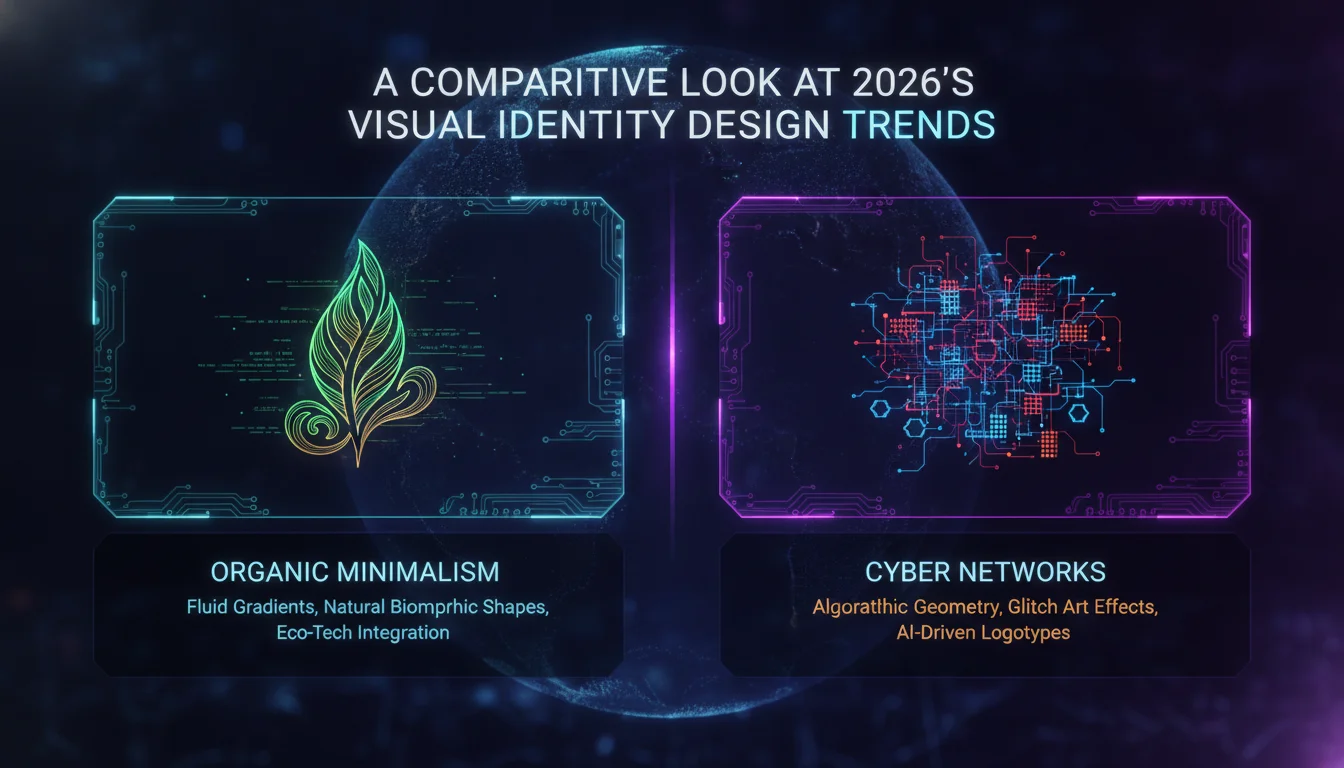
A Comparative Look at 2026’s Visual Identity Design Trends
What are the biggest visual identity design trends right now?
The biggest this kind of design trends right now are motion-first branding, AI-assisted workflows, imperfect aesthetics, expressive typography, and adaptive color systems working together, not in isolation. The table below pulls insights from Behance, The Branding Journal, and Three Rooms, mapping each trend to its strategic function and a real-world example worth studying.
| Trend Category | Description | Key Benefit | Example Brand |
|---|---|---|---|
| Node-Based AI Workflows | Visual node interfaces connecting AI models, prompts, and data | Speeds production, enables complex creative experimentation | Milo Studio |
| Motion-First Identities | Kinetic logos, micro-interactions, cinematic transitions | Guides attention, conveys personality, boosts engagement | Hamilton |
| Imperfect Aesthetics | Rough textures, asymmetry, visible grids, 90s nostalgia | Signals authenticity and human touch | RED digital cameras by Talvinsa S |
| Expressive Typography | Custom, hand-drawn letterforms as brand voice | Creates a unique, recognizable identity | Babcock font by atipo |
| Vibrant Color Systems | Dynamic palettes, gradients, duotones, reactive schemes | Emotional storytelling, adaptable across contexts | Revolte by 23 Designs |
| Immersive 3D Design | Spatial interfaces and 3D micro-interactions | Enhances immersion and modern brand perception | Microsoft Teams Backgrounds |
| Neo-Minimalism & Micro-Maximalism | Clean layouts with bold focal points or intricate micro-details | Balances clarity with personality | ALTO ROASTERS by Catherine & Vlad |
Each entry on this list acts as its own lever for brand differentiation. We’ll break down the mechanics and the strategy behind each one below.
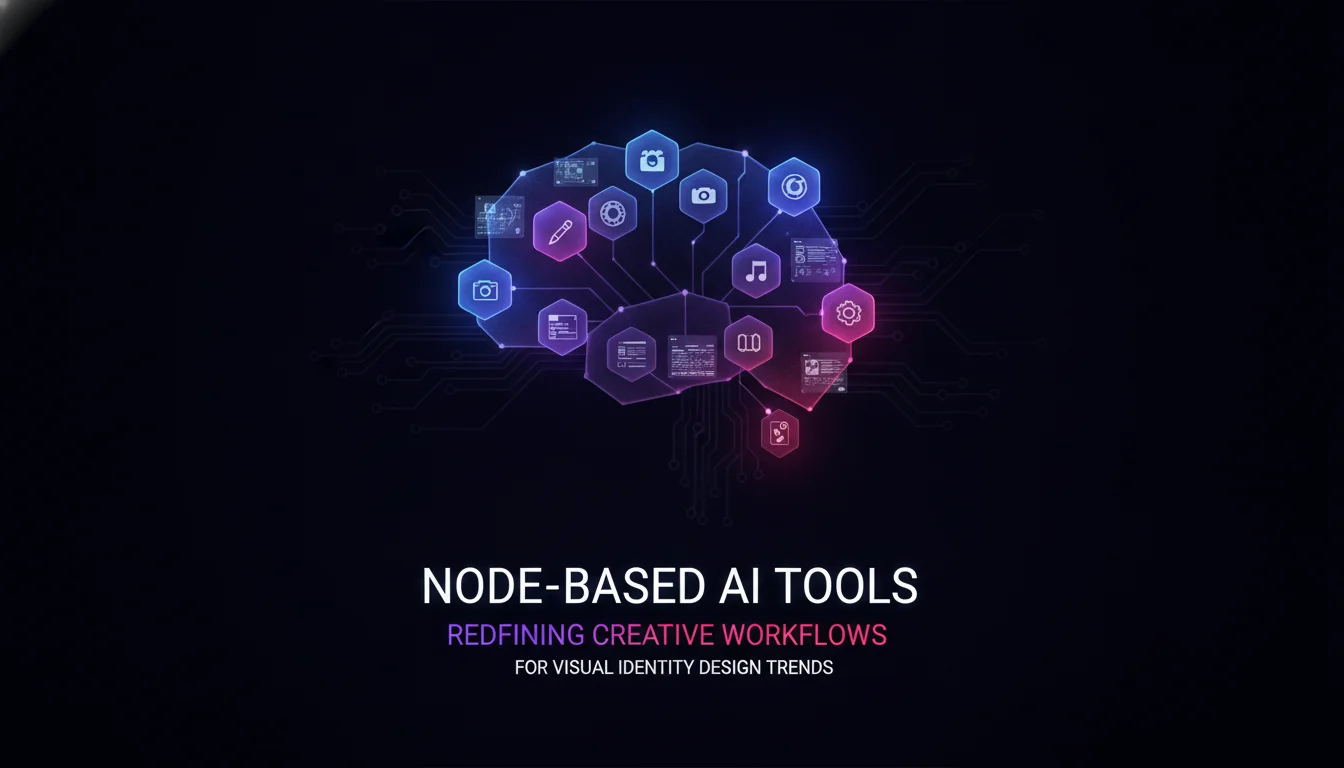
Node-Based AI Tools: Redefining Creative Workflows
How do node-based interfaces change the design process?
Node-based interfaces change the design process by letting designers build AI workflows visually, connecting models, prompts, and logic on a flexible canvas instead of a rigid, linear tool. This is one of the more technical the identity design trends to watch this year, and it’s already changing how studios staff creative teams. According to a Behance trend report, this approach gives designers full control and transparency over AI processes, making it easier to adjust, remix, and scale creative output. The visual clarity speeds up experimentation and shortens the learning curve for teams folding AI into daily design work.
“Designers who embrace new tools while holding tight to purpose, human, inclusive, meaningful, will lead,” according to Behance’s 2026 design trend analysis.
Where are node-based tools showing up in real brand work?
Milo Studio has already leaned into node-based tools to produce layered, adaptive visual identities, using node-driven AI to generate dynamic patterns and layouts for projects like Flora/Fauna. Other studios use the same approach to automate repetitive production work, resizing assets across platforms, so designers can spend their energy on strategy instead of grunt work. This isn’t about swapping out human creativity for a machine. It’s augmentation: precision and speed working alongside taste and judgment.
Tips for getting started with node-based workflows
Starting small is the smartest way in. Here’s what we’d suggest to any team dipping a toe into node-based design:
- Begin with simple node chains and expand gradually so your system stays clear and organized.
- Organize nodes clearly to keep the workflow transparent and reusable across projects.
- Document your process for the whole team, not just future-you.
- Let AI carry the repetitive load while you steer the creative direction and final call.
Humanizing Visual Identity: Imperfect Aesthetics and Expressive Typography
Why are brands embracing imperfect design in 2026?
Brands are embracing imperfect design in 2026 because audiences are tired of polish that feels machine-made, and rough textures or visible grids read as more honest. As highlighted in the Behance report and echoed by Three Rooms, 2026 embraces visual honesty: rough textures, asymmetry, visible grids, and a return to 90s nostalgia. This wave of brutalist, hand-crafted design is a direct counterbalance to the precision of AI output. RED digital cameras by Talvinsa S and the OFEN UI/UX project by Toufiq Hossen both show how raw, unrefined elements can still build a sharp, memorable identity.
How does expressive typography function as a brand voice?
Typography now does more than communicate words. It carries the brand’s tone the way a logo used to carry its symbol. Custom letterforms, playful shapes, and kinetic type give brands a voice you recognize before you even read the copy. The Branding Journal notes that bespoke typefaces and experimental letterforms are one of the clearest ways to differentiate in a saturated market. Expressive typography acts as a voice with character, and custom and experimental forms are what separate memorable brands from forgettable ones. The Babcock font by atipo carries brand character through design alone, while Brau Mono by Type Colony and Lofka by Daniel Ng show how a typeface can become the whole brand asset.
Balancing imperfection with legibility
Confidence in imperfect design means the flaws feel deliberate, never careless. Pair hand-drawn elements with clear hierarchy so the message still lands. This tension between raw and refined sits at the center of the most compelling visual identity design trends this year. Done well, an imperfect design signals confidence, not sloppiness, and it helps a brand cut through a feed full of algorithmically smoothed sameness.
Motion-First Identities and Immersive 3D Design
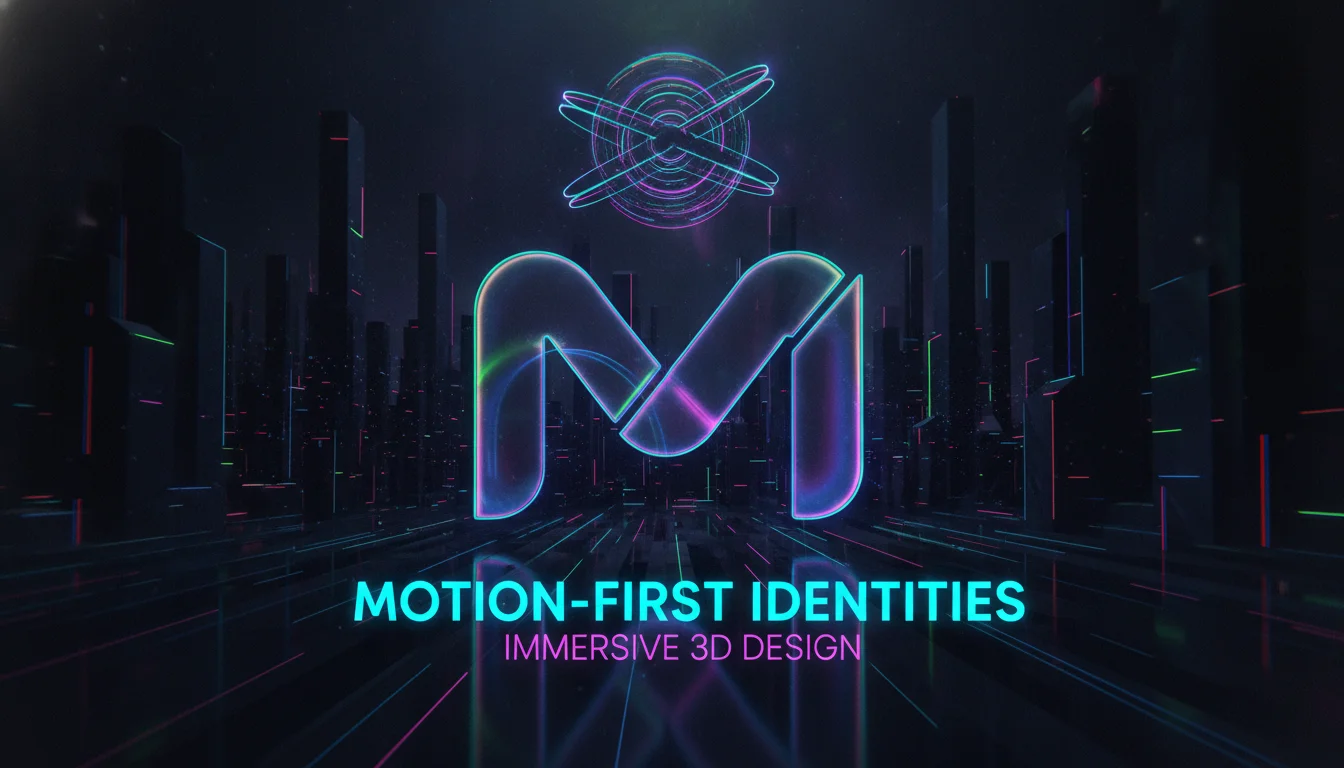
What makes a brand identity “motion-first”?
A motion-first brand identity treats animation, kinetic logos, and micro-interactions as core assets rather than decoration bolted on at the end. Screens are now where most brand interactions happen, so static visuals alone can’t hold attention the way they once did. Motion-first identities are now core brand assets, not afterthoughts, according to Three Rooms. Hamilton has built motion deep into its branding, turning ordinary interactions into small story-driven moments that a static logo never could.
How is immersive 3D showing up in brand design?
Immersive 3D has become native to web and app design, ranging from subtle depth effects to full spatial environments, rather than a novelty reserved for game studios. Behance’s trend coverage shows brands like Microsoft integrating 3D into product backgrounds, while studios like Steelworks use it for full brand storytelling. Depth and motion pull users in and signal a forward-thinking brand, but performance still has to come first: realism can’t come at the cost of usability. Green Day 2024 by ZHEESHEE studio and Poppi by Steelworks Studio both prove 3D can elevate a brand narrative without dragging down load times.
Using motion and 3D with intention
Every animation should earn its place: delight, inform, or direct the eye. The strongest work uses motion to simplify complex information or build emotional resonance, not just add flash. As of 2026, this purpose-driven approach to motion has become one of the more mature visual identity design trends brands are using to hold attention in a crowded digital market. Motion and 3D should feel woven into the brand story, not sprinkled on top of it.
Vibrant and Adaptive Color Systems
Why is color returning as a bold brand tool in 2026?
Color is returning as a bold brand tool in 2026 because static, single-purpose palettes can’t carry the emotional range brands now need across platforms and contexts. Vibrant color systems in 2026 include dynamic palettes, gradient layering, and reactive schemes that shift with mood or context, according to Behance’s research. The Branding Journal points to the same shift, away from static color guides and toward fluid systems that reflect brand energy in real time. Revolte by 23 Designs shows how vibrant color communicates innovation, while Cybalance Branding by Anothern Creative and Magenta Figment by SMLXL Company push the same idea further.
Keeping vibrancy accessible
Bold color only works if people can actually read it. Designers are pairing high saturation with enough contrast to keep things legible everywhere, from mobile screens to print. This is what separates a mature approach to visual identity design trends from a purely decorative one: bold color still has to serve the brand’s functional needs, not just its mood board.
Reactive color for different contexts
Reactive color schemes shift based on user interaction, time of day, or mood, creating a more personalized brand experience. This fits the broader move toward adaptive systems. As AI agents start curating more brand content on a user’s behalf, color becomes a quiet signal of context and consistency across touchpoints, energetic daytime hues giving way to calmer, trust-building tones in the evening, all while staying recognizably on-brand.
Strategic Branding in an AI-Driven World
How is agentic AI changing brand strategy?
Agentic AI is changing brand strategy by inserting a new decision-maker between brands and customers: software that filters, recommends, and chooses on a person’s behalf. AI agents are becoming new gatekeepers of the consumer journey, influencing which brands even get seen, according to The Branding Journal. Visual identity plays a real role here: consistent, professional design helps these systems recognize and favor a brand the same way a human would. That means brands need to rethink how they show up everywhere, not just on the channels they control directly.
As The Branding Journal puts it, brands that win in this environment “will be those that AI agents see as credible and authoritative, and that people genuinely cherish and support over time.”
Visual identity as a trust signal
A well-built visual identity reads as reliability, both to people and to machines. When AI can spin up endless visual variations in seconds, a coherent, intentional system stands out precisely because it wasn’t generated on autopilot. Branding experts advise keeping design consistent across every touchpoint to reinforce recognition and trust. Logo, color, and type working as one unified language tells everyone, human or algorithm, that this brand is worth engaging with.
Building flexible but consistent identity systems
The challenge for brands right now is building systems flexible enough to adapt across platforms and AI-generated contexts, but consistent enough to still be recognizable. That means modular components: logos, palettes, and type scales that can rearrange without losing the brand’s core feel. A strong visual DNA with variable extensions lets a brand meet human emotion and algorithmic curation at the same time, which is quickly becoming table stakes among visual identity design trends worth adopting.
Beyond the Visuals: Personal Branding, Sonic Identity, and Values
What other trends should brands watch alongside visual identity shifts?
Brands should also watch personal branding, sonic branding, and values-driven design, since these forces shape perception just as much as color or type. Personal branding is moving from performance toward ownership, real relationships instead of just visibility, a shift The Branding Journal flags as one of three defining movements of 2026 alongside agentic AI and adaptive visual systems. Sound is becoming part of identity too: distinct sonic branding gives a company a recognizable audio signature the same way a logo gives it a visual one. And audiences increasingly expect brands to stand for something, rewarding genuine brand activism and eco-conscious positioning over performative gestures. None of these replace strong visual identity design trends, but they round out a brand system that feels complete rather than surface-level.
How to Implement 2026 Visual Identity Design Trends: A Step-by-Step Guide
Step 1: Audit Your Current Visual Identity
Start by honestly assessing your existing brand assets. Identify what still communicates your core values and what feels dated. Benchmark against the visual identity design trends covered above, then document the gaps. This audit gives you a real baseline instead of a guess.
Step 2: Select Trends That Fit Your Brand Purpose
Not every trend belongs on your brand. Pick the ones that amplify the story you’re already telling. A tech company might lean into immersive 3D; a craft brand might lean into imperfect aesthetics instead. Map each trend choice to specific touchpoints, website, app, packaging, so the rollout feels cohesive rather than scattered.
Step 3: Prototype and Test Incrementally
Experiment in low-risk environments first. Node-based AI tools make it faster to iterate on options before committing. Test changes with real users and watch for friction, especially if motion or 3D elements are new additions. This keeps risk low while you build evidence for a wider rollout.
Step 4: Implement Systematically and Measure Impact
Roll updated visual identity components out across channels in a deliberate order, not all at once. Track engagement and brand perception as you go. Use what you learn to refine the system, and keep revisiting it as new visual identity design trends emerge. Regular reviews keep your identity aligned with both the market and your original brand values.
Pros and Cons
Pros
- Motion, 3D, and adaptive color create richer, more memorable brand experiences than static systems alone.
- Node-based AI workflows speed up production and free up designers for higher-value strategic work.
- Imperfect aesthetics and expressive typography help brands stand out against AI-generated sameness.
- Modular, flexible identity systems adapt more easily across platforms and emerging AI-driven discovery channels.
Cons
- Motion and 3D elements can hurt site performance and accessibility if not built with care.
- Chasing every trend without a strategic filter can dilute brand consistency and confuse audiences.
- Node-based AI tools carry a learning curve that can slow small teams down initially.
- Imperfect aesthetics require intentional restraint. Sloppy execution reads as unprofessional, not authentic.
Frequently Asked Questions
What are the top visual identity design trends in 2026?
The top trends include motion-first identities, imperfect and humanized aesthetics, expressive typography, vibrant adaptive color systems, immersive 3D design, and node-based AI tools. Together, they merge technology with human creativity to build emotionally resonant brands.
How is AI influencing visual identity design?
AI-powered tools, particularly node-based interfaces, let designers build complex creative workflows out of modular components. This speeds production and encourages experimentation, while strategic branding now has to account for AI agents that curate consumer choices before a person even sees a brand.
What is motion-first identity in branding?
Motion-first identity treats kinetic elements like animated logos and micro-interactions as core brand assets, not decorative add-ons. It uses screen-based interaction to guide attention, convey personality, and create memorable, dynamic experiences.
How can imperfect aesthetics benefit my brand?
Imperfect aesthetics, rough textures, asymmetry, hand-drawn elements, signal authenticity and human touch in an AI-saturated world. They help a brand feel approachable and distinct, which builds deeper emotional connection with an audience.
What are neo-minimalism and micro-maximalism?
Neo-minimalism pairs clean layouts with one bold focal point, while micro-maximalism packs intricate detail into a restrained frame. Both give designers a flexible way to balance clarity with personality inside a single system.
Embracing Visual Identity Design Trends for Future-Proof Branding
What’s the smartest way to apply these trends long-term?
The smartest way to apply these trends long-term is to treat them as tools in service of brand purpose, not a checklist to complete. Brands that thrive going forward will blend AI efficiency with real human warmth, motion, emotion, and adaptability all working together. This year’s shift asks designers to experiment boldly while staying rooted in what the brand actually stands for, so every visual choice adds up to a story people remember. Updated for 2026, that’s the model we build toward with every client. If your visual identity feels stuck in 2022, explore our branding and creative services or check out our thoughts on brand storytelling frameworks and this year’s social media trends for the fuller picture. Let’s build something bold. Contact Emin Media for a free brand consultation.
Enjoyed this article?
Contact Emin Media for a free brand consultation and let's create something amazing together.
Get in TouchRelated Articles
Digital Marketing for Creatives: A Bold Guide
Digital marketing for creatives builds real visibility and sales. Learn strategies for social media, SEO,…
Branding & Design Agency Tips That Actually Work
Discover branding and design agency tips to choose the right partner, set clear goals, and…
Creative Agency Pitch Deck Tips That Win Clients
Master creative agency pitch deck tips that win clients in 2026. Learn storytelling, design, and…