20+ Social Media Campaign Examples for Business
Social media campaign examples for business are coordinated, time-bound initiatives that combine content, influencer work, and audience participation to hit specific marketing goals. The best ones blend creative storytelling with measurable KPIs. Below, we break down 20+ real-world campaigns and give you a framework to build your own.
Key Takeaways
- Social media campaigns are time-bound, goal-oriented initiatives – distinct from everyday posting in intensity, focus, and measurement.
- Top for business show how creativity paired with data-driven insight generates real, attributable ROI.
- The strongest campaigns span UGC (Apple’s #ShotOniPhone), data personalization (Spotify Wrapped), influencer storytelling (CeraVe), and emotional branding (Dove).
- A five-step framework – goal setting, audience research, creative concept, platform selection, and measurement – gives every campaign a fighting chance.
- Low-budget this type of business can win big through community participation and micro-influencer partnerships.
What Is a Social Media Campaign?
A social media campaign is a time-bound, goal-driven set of coordinated actions executed across one or more social platforms. According to Sprout Social, a campaign unifies every tactic – organic, paid, and earned – around a single business objective, whether that’s launching a product, growing an audience, or driving revenue. That’s the critical difference between a campaign and a content calendar.
Social Media Campaign vs. Everyday Posting
Daily social activity maintains presence. A campaign introduces intensity and focus. It has a clear start and end date, dedicated creative assets, and usually involves branded hashtags, influencer partnerships, or contests. Everyday posting builds relationships. Campaigns build momentum toward a specific outcome.
The Purpose of a Social Media Campaign
A campaign’s purpose can range from brand awareness and community building to direct sales and customer loyalty. It provides a structured way to pursue a business goal, ensuring every tactic, asset, and metric points in the same direction – turning social activity into measurable business impact.
Social Marketing vs. Social Media Marketing: Know the Difference
These two terms get confused constantly, and the confusion costs campaigns their focus. Social marketing is a methodology for driving behavioral change – think public health campaigns or sustainability initiatives. Social media marketing is a channel. You can run a social marketing campaign on Instagram, but not every Instagram campaign is social marketing. The clearest this kind of for business sit in the social media marketing bucket: they exist to drive brand outcomes, not societal behavior change. Knowing which one you’re running shapes your entire creative brief.
Why Social Media Campaigns Matter for Business Growth
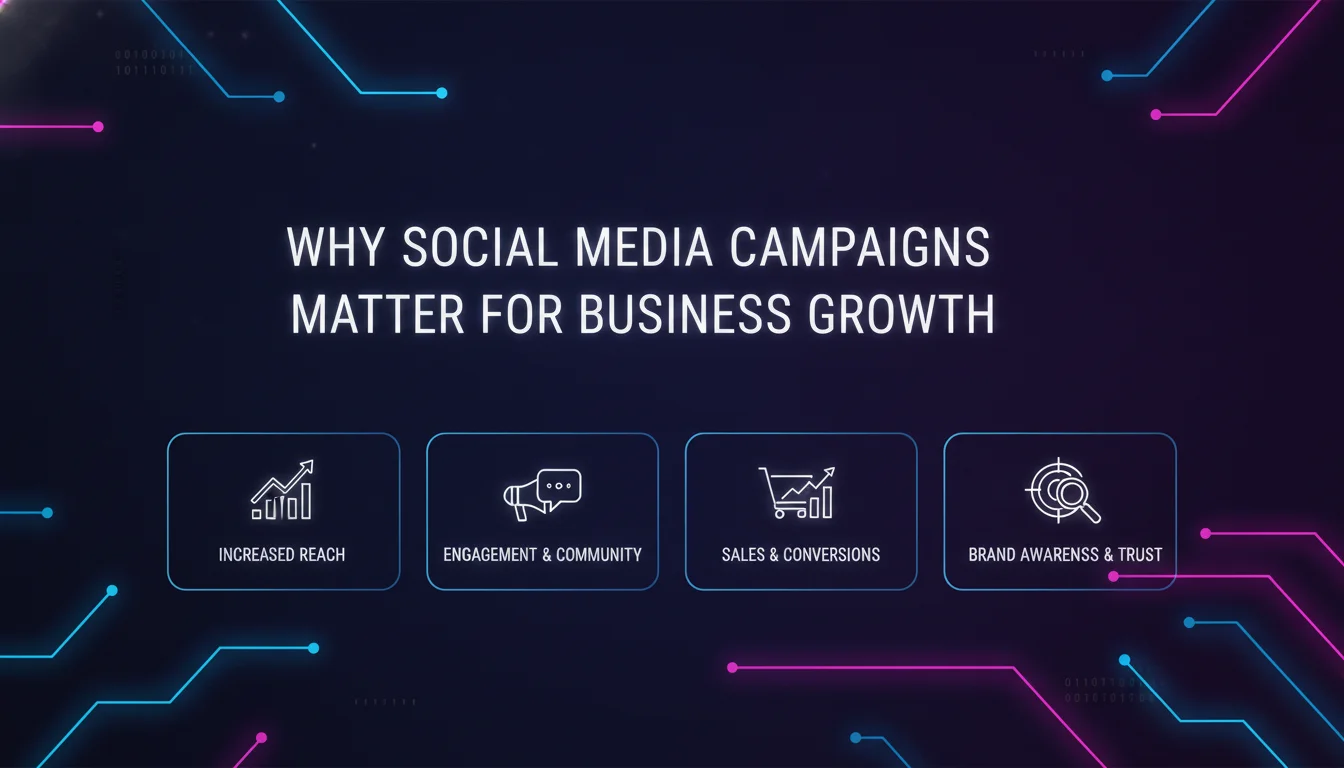
Examining the media campaign examples for business reveals how these initiatives directly contribute to growth by extending reach, deepening loyalty, and delivering quantifiable results.
Reach a Global Audience
With over 4.5 billion people using the internet worldwide (per Canva’s social media campaign guide, citing DataReportal), social platforms offer access to diverse markets at a scale no other channel matches. A well-executed campaign can put a small business in front of millions. Sustained success, though, requires understanding cultural nuances and platform-specific behaviors – not just reach.
Build Brand Awareness and Loyalty
Campaigns that resonate emotionally or encourage participation create lasting brand associations. When users share, comment, and contribute, they shift from passive viewers to active advocates. That deepens loyalty and amplifies reach through organic word-of-mouth – the most trusted form of marketing there is.
Drive Measurable Business Outcomes
Beyond likes and shares, effective business are tied to concrete KPIs: website traffic, lead generation, or sales. The best campaigns demonstrate clear attribution, proving social media’s role in the sales funnel. Tools like UTM parameters and platform-native analytics make precise measurement possible from day one.
Key Elements of a Successful Social Media Campaign
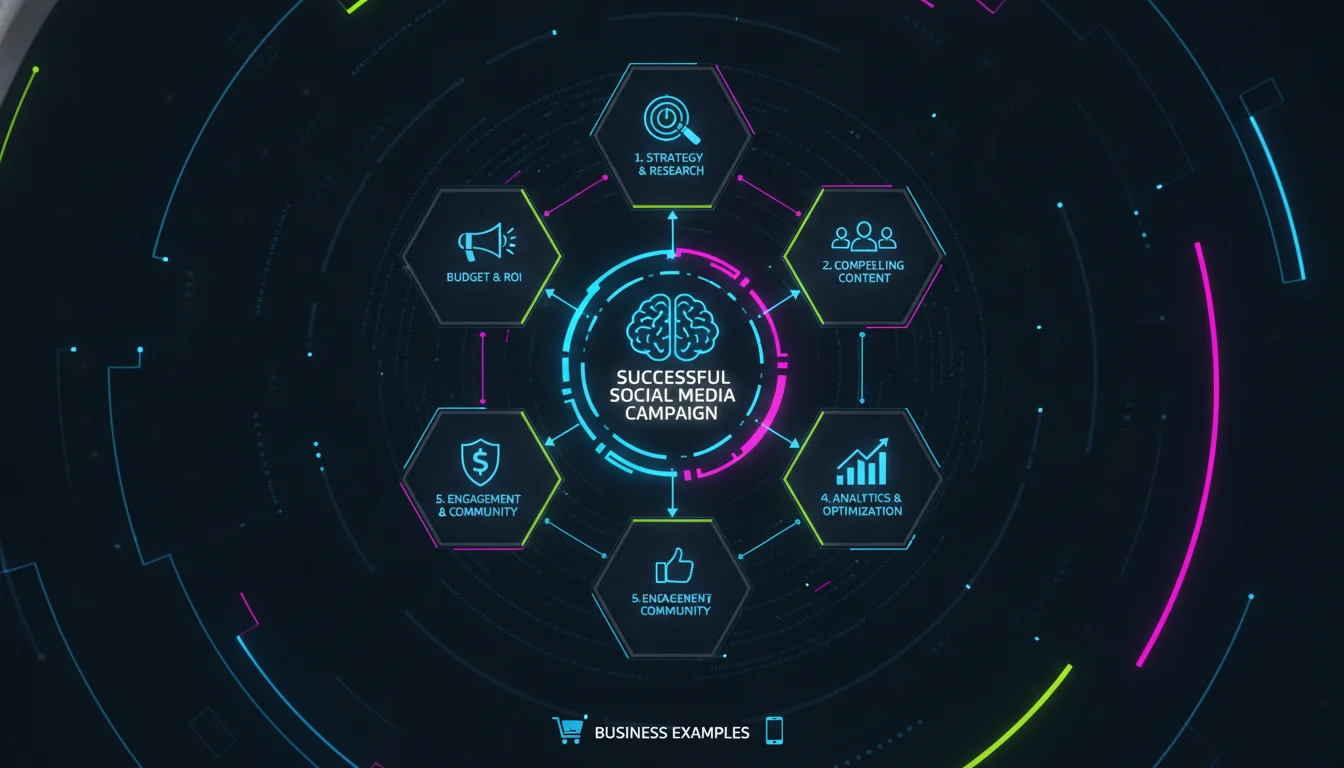
Every winning campaign, regardless of industry or budget, shares several common traits. According to YouScan’s analysis of 25 campaigns, the best social media tap into specific emotions that drive action – and they build measurement in from the start, not as an afterthought.
Clear, Measurable Goals
Without a defined objective, a campaign is merely content. Goals should be specific and aligned with broader business outcomes. This clarity guides creative decisions and ensures every asset earns its place in the plan.
Deep Audience Understanding
Effective campaigns speak directly to audience desires, frustrations, and cultural moments. This requires more than demographics – it demands ongoing social listening and persona development. The brands behind the strongest for business treat audience research as a continuous practice, not a one-time exercise.
Creative That Stops the Scroll
With shrinking attention spans, the first few seconds of a video or the hero image of a post must be arresting. High-quality visuals, compelling narratives, and interactive elements make users pause and engage. Great content still needs amplification – but without that initial spark, you’re just pouring fuel on nothing.
Integrated Measurement and KPIs
From day one, tracking mechanisms must be in place. Engagement metrics (likes, shares, comments) indicate resonance. Conversion metrics (clicks, sign-ups, purchases) tie directly to ROI. A campaign without measurement is a missed learning opportunity – and a harder sell to leadership next time.
Types of Social Media Campaigns for Business
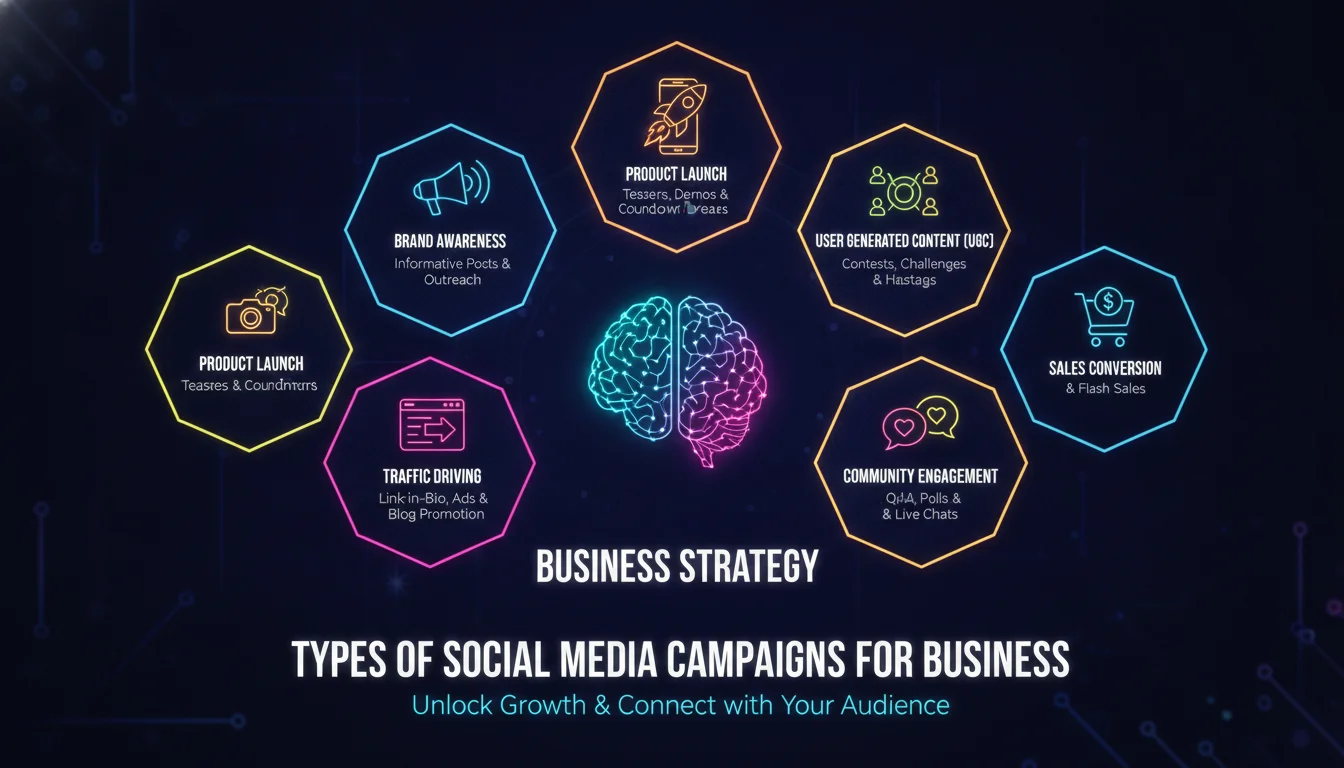
Understanding the strategic purpose behind each campaign type helps marketers choose the right approach for their objectives. According to Sprout Social, the five core campaign types are product launch, brand awareness, contests and giveaways, seasonal, and UGC. Most this type of business fall into one of these buckets – or blend two intentionally.
Brand Awareness Campaigns
These introduce a brand or new offering to a broad audience. Tactics include viral videos, influencer partnerships, and memorable hashtags. The goal is reach and recall, often measured by impressions and brand mention volume.
Engagement and Community-Building Campaigns
Designed to spark conversation and cultivate a loyal following, these campaigns rely on interactive content – polls, challenges, Q&As. They deepen relationships and turn customers into advocates. Successful examples often feature user-generated content (UGC) as the engine.
Direct-Response and Conversion Campaigns
These focus on immediate actions: purchases, sign-ups, or downloads. Paid social ads with clear calls-to-action, retargeting, and limited-time offers are common. Measurement centers on cost per acquisition (CPA) and return on ad spend (ROAS).
User-Generated Content (UGC) Campaigns
UGC campaigns invite customers to create and share content featuring a brand. This provides authentic social proof while significantly reducing content production costs. Brands like Apple and GoPro have built entire campaign strategies around UGC – and the trust it generates outperforms polished brand ads consistently.
Referral and Advocacy Campaigns
Referral marketing applies the same core principle as social marketing: community and social connection are more powerful drivers of action than any ad. Referral campaigns give existing customers a reason to bring in new ones – through incentives, recognition, or shared identity. For businesses with strong retention, this is often the highest-ROI campaign type available.
Top Social Media Campaign Examples for Business
Analyzing real-world this kind of for business reveals patterns that any marketer can adapt. Below is a comparison of seven standout campaigns, followed by detailed breakdowns of what made each one work.
| Campaign | Brand | Type | Goal | Key Tactic | Result |
|---|---|---|---|---|---|
| Spotify Wrapped | Spotify | Data-driven engagement | Boost user retention and virality | Personalized annual listening summaries shared as social cards | Global trending topic annually; massive UGC and press coverage |
| #ShotOniPhone | Apple | UGC / brand awareness | Showcase camera quality through user content | Encouraged users to share iPhone photos with branded hashtag | Thousands of high-quality submissions; long-term brand halo |
| “Michael Cera” Conspiracy | CeraVe | Influencer storytelling | Launch a viral narrative for a skincare line | Multi-week narrative arc of actor Michael Cera “owning” the brand | Widespread organic conversation; successful Super Bowl ad |
| Real Beauty Sketches | Dove | Emotional branding | Strengthen Dove’s body-confidence positioning | Short film comparing self-descriptions to stranger descriptions | Significant uplift in brand sentiment and global conversation |
| Getty Museum Challenge | Getty Museum | Cultural engagement | Drive engagement during pandemic closures | Invited people to recreate artworks at home and share on social | Viral participation; global media coverage; sustained follower growth |
| Euphoria Elixirs Launch | Calvin Klein (feat. Rosalía) | Product launch | Generate buzz for a new fragrance | Surreal, movement-driven visuals with Grammy-winner Rosalía | High social engagement; successful product debut |
| OPEN Forum | American Express | B2B thought leadership | Build a community of small-business owners | Content hub with expert advice, articles, and social sharing | Recurring traffic; brand authority in the SMB space |
Data-Driven Personalization: Spotify Wrapped
Spotify Wrapped turns user listening data into a shareable, personalized year-in-review story. Running annually since 2017, it ignites social media feeds every December because it makes users feel seen while giving them bragging-rights content. The campaign’s genius lies in its built-in virality: every share is a personal endorsement of Spotify. For businesses, this demonstrates how proprietary data can create a campaign that customers voluntarily promote – no paid push required.
“The best social media campaigns don’t rely on luck. They follow patterns, tap into emotions, and give people a reason to pay attention.” – YouScan, 25 Social Media Campaign Examples That Delivered Real Results, 2026
UGC and Co-Creation: #ShotOniPhone by Apple
Apple’s long-running #ShotOniPhone campaign features user-submitted photos on billboards, commercials, and social media. It validates the iPhone camera’s quality while rewarding customers with recognition. Businesses can replicate this by running photo contests or testimonials that showcase real-world product use – generating authentic content that outperforms polished brand ads in trust and engagement.
Influencer-Led Storytelling: CeraVe’s “Michael Cera” Conspiracy
Skincare brand CeraVe orchestrated a four-week narrative that actor Michael Cera was the secret founder of the brand. The campaign leaked content from influencers, staged a podcast walk-off, and fueled online debate before culminating in a Super Bowl ad. This earned-first, story-driven approach generated organic conversation at scale and proved that playful, participatory storytelling can break through a crowded market without a traditional advertising launch.
“CeraVe’s campaign completely inverted the traditional Super Bowl playbook. Instead of launching with a big ad, it culminated in one.” – Adobe for Business, Digital Marketing Campaign Examples, 2025
Emotional Brand Storytelling: Dove Real Beauty
Dove’s “Real Beauty Sketches” is a masterclass in emotional resonance. The campaign showed women describing themselves to a forensic sketch artist, then compared those sketches to descriptions given by strangers. The stark contrast highlighted the gap between self-perception and reality, fueling global conversations about body confidence. This campaign demonstrates the power of purpose-driven content to create a movement – not just a moment.
Cultural Engagement: Getty Museum Challenge
When the pandemic forced the Getty Museum to close, it asked followers to recreate famous artworks using household objects and share the results. The #GettyMuseumChallenge went viral, generating millions of posts and massive media coverage. For businesses, this illustrates how participatory challenges tied to cultural moments can drive extraordinary engagement without a significant budget.
Product Launch: Rosalía x Calvin Klein Euphoria Elixirs
Calvin Klein’s 2026 fragrance launch featured Grammy-winner Rosalía in surreal, movement-driven visuals scored with her own music. The campaign borrowed cultural capital from the artist and created a distinct visual identity that stood out in feeds. Product launches that collaborate with culturally relevant figures achieve immediate recognition and desirability – especially when the creative brief gives the talent real creative latitude.
B2B Thought Leadership: American Express OPEN Forum
American Express built a content hub and social community tailored to small-business owners, offering expert advice and peer support. This campaign positioned Amex as a partner, not just a payment processor, and drove recurring engagement through valuable, niche-specific content. B2B companies can apply similar strategies by curating knowledge sharing on LinkedIn – turning a brand channel into a destination.
Pros and Cons of Running Social Media Campaigns for Business
Social media campaign examples for business make the wins look effortless. They rarely are. Here’s an honest look at what you’re signing up for.
Pros
- Measurable ROI: Platform analytics and UTM tracking connect campaign activity directly to business outcomes – clicks, leads, and sales.
- Scalable reach: A single well-timed campaign can reach audiences that would take years to build organically through daily posting alone.
- Audience insight: Campaign data reveals what your audience actually responds to – creative preferences, timing, format – sharpening every future effort.
- Community building: UGC and participation-based campaigns turn customers into advocates, creating a self-sustaining content engine.
- Budget flexibility: From micro-influencer partnerships to paid social, campaigns can be structured around almost any budget size.
Cons
- Resource intensive: A real campaign requires dedicated creative assets, copy, scheduling, monitoring, and post-campaign analysis – not just a few extra posts.
- Unpredictable virality: You can create the conditions for a viral moment, but you cannot guarantee one. Campaigns that chase virality without substance tend to fall flat.
- Platform dependency: Algorithm changes on any major platform can significantly reduce organic reach mid-campaign, disrupting carefully planned timelines.
- Measurement complexity: Multi-channel campaigns require consistent UTM tagging and cross-platform attribution – easy to get wrong, hard to fix retroactively.
How to Create a Social Media Campaign: A Step-by-Step Framework
Turning insights from social media campaign examples for business into action requires a structured process. Follow these five steps to build a high-impact campaign from brief to post-campaign report.
Step 1: Define Your Goal and KPIs
Start with a S.M.A.R.T. goal – specific, measurable, achievable, relevant, and time-bound. Key KPIs might include engagement rate, conversion rate, cost per click, and return on ad spend. This clarity will guide every subsequent creative and tactical decision. Without it, you’re producing content, not running a campaign.
Step 2: Research Your Audience and Competitors
Use social listening tools and platform analytics to understand your audience’s interests, pain points, and online behavior. Analyze competitor social media campaign examples for business to identify gaps and opportunities. Map out which platforms your audience prefers and how they engage with content – then build your plan around that reality, not assumptions.
Step 3: Develop Your Creative Concept and Content Plan
Brainstorm a big idea that aligns with your goal and audience. Determine the visual style, tone, and key messages. Build a content calendar detailing post formats (videos, carousels, stories), copy, and CTAs. Plan for both organic posts and paid amplification, and create a branded hashtag if the campaign calls for community participation.
Step 4: Choose the Right Platforms and Promotion Mix
Not every platform suits every campaign. A B2B lead-gen campaign might focus on LinkedIn, while a fashion launch leans on Instagram and TikTok. Allocate budget for paid promotion, influencer collaborations, or content seeding to extend reach beyond your existing audience. Consider cross-promotion via email marketing and website CTAs to close the loop on your paid-organic mix.
Step 5: Launch, Monitor, and Optimize
Execute the campaign according to your calendar, but stay flexible. Monitor real-time metrics – reach, engagement, sentiment – and be ready to double down on what works or pivot if needed. After the campaign ends, conduct a comprehensive analysis to document learnings for future iterations. The debrief is where the next campaign actually begins.
Measuring Social Media Campaign Success
Without measurement, you cannot demonstrate ROI or improve. This section covers the metrics and tools that turn raw data into actionable insight.
Engagement Metrics vs. Outcome Metrics
Vanity metrics like likes and follower counts offer only surface-level feedback. Focus instead on outcome metrics tied to business goals: website clicks, lead form completions, sales, and customer acquisition cost. Engagement metrics (shares, saves, comments) remain important for algorithm visibility and resonance assessment – just don’t let them dominate your reporting.
Tools for Campaign Tracking
Platform-native analytics (Meta Business Suite, TikTok Analytics, LinkedIn Analytics) provide foundational data. For cross-channel tracking, use UTM parameters and integrate with Google Analytics. Social listening platforms like YouScan and Sprout Social add sentiment analysis and competitive benchmarking to the mix.
Low-Budget Social Media Campaign Ideas for Small Business
Not every set of social media campaign examples for business requires a large production budget. Creativity and community focus can yield impressive results without breaking the bank – the Getty Museum Challenge proved that with household objects and a good idea.
User-Generated Content Contests
Invite customers to share photos or videos using your product with a branded hashtag. Offer a modest prize and feature the best entries on your channels. This generates authentic, low-cost content while building community – and the entries keep working for you long after the campaign ends.
Collaborations with Micro-Influencers
Partner with niche influencers (roughly 1K to 50K followers) who have highly engaged audiences. Micro-influencers often accept free products or modest fees in exchange for authentic endorsements. Their recommendations carry more trust than mass-market celebrity posts – and the cost-per-engagement is typically far more favorable.
Behind-the-Scenes Storytelling
Humanize your brand by showing the faces and processes behind your products. A series of Instagram Stories or TikTok videos taking viewers through your workshop, office, or production line builds emotional connection and transparency. This is one of the most underused social media campaign examples for business – and one of the most effective for building lasting loyalty.
Referral Campaigns for Existing Customers
Your happiest customers are your best marketers. A simple referral campaign – give a friend a discount, get one yourself – activates social sharing without requiring a creative production budget. The key is making the sharing action feel natural and the reward feel genuinely valuable. Community and social connection drive action more reliably than any ad format.
Frequently Asked Questions
What are some great examples of social media campaigns?
Standout social media campaign examples for business include Spotify Wrapped (data-driven personalization running annually since 2017), Apple’s #ShotOniPhone (UGC at scale), Dove’s Real Beauty Sketches (emotional branding), and CeraVe’s “Michael Cera” conspiracy (influencer storytelling that culminated in a Super Bowl ad). Each leverages a distinct tactic to drive engagement and measurable business results.
What should a social media campaign include?
A complete social media campaign should include a clearly defined goal, deep audience understanding, a creative concept with branded assets, a content calendar, a promotion plan covering paid and organic channels, and a measurement framework with KPIs set before launch. Without these elements, campaigns risk being unfocused and underperforming against business objectives.
What is an example of a media campaign?
The Getty Museum Challenge is a classic example: the museum invited the public to recreate artworks at home and share results online during pandemic closures. It spanned social media, earned press coverage, and traditional PR – demonstrating how a simple, participatory idea can achieve multi-channel amplification without a significant budget.
What is the 5-5-5 rule for social media?
The 5-5-5 rule suggests interacting with 5 accounts in your niche, liking 5 posts, and commenting on 5 posts daily to build community and organic visibility. It’s not a campaign strategy on its own, but consistent engagement supports the organic reach of any active campaign you’re running.
How long should a social media campaign last?
Campaign duration depends on the goal. Product launches typically run 2 to 4 weeks, while brand-awareness efforts can sustain over several months. The key is a clear timeframe that creates urgency and enables accurate measurement of impact – open-ended campaigns are difficult to evaluate and easy to deprioritize.
Can small businesses run effective social media campaigns?
Absolutely. Low-budget tactics like UGC contests, micro-influencer partnerships, referral programs, and authentic behind-the-scenes storytelling can drive significant engagement. The strongest social media campaign examples for business prove that creativity and community focus consistently outperform raw ad spend when the idea is right.
Social media campaign examples for business evolve constantly, but the underlying principles stay fixed: clear objectives, audience empathy, creative excellence, and rigorous measurement. Whether you draw inspiration from global giants or scrappy small enterprises, the next winning campaign starts with a well-planned strategy and the courage to engage authentically.
Ready to build something that actually moves the needle? Contact Emin Media for a free brand consultation and let’s design a campaign worth talking about.
Enjoyed this article?
Contact Emin Media for a free brand consultation and let's create something amazing together.
Get in TouchRelated Articles
Digital Marketing for Creatives: A Bold Guide
Digital marketing for creatives builds real visibility and sales. Learn strategies for social media, SEO,…
Branding & Design Agency Tips That Actually Work
Discover branding and design agency tips to choose the right partner, set clear goals, and…
Creative Agency Pitch Deck Tips That Win Clients
Master creative agency pitch deck tips that win clients in 2026. Learn storytelling, design, and…