Social Media Brand Management Guide 2026
Key Takeaways
- Social media brand management is the practice of maintaining a consistent, engaging brand presence across every platform your audience uses.
- Knowing your audience deeply, not just demographically, is the foundation every other strategy is built on.
- A content calendar transforms reactive posting into intentional storytelling.
- Analytics aren’t a report card. They’re a creative brief for your next move.
- Consistency across visuals, voice, and posting rhythm is what separates memorable brands from forgettable ones.
- Platform choice matters. TikTok, Instagram, LinkedIn, and Facebook each serve a different brand purpose.
Social Media Brand Management: The Complete 2026 Guide
Social media brand management is the ongoing practice of shaping, protecting, and growing a brand’s identity across social platforms through consistent voice, strategic content, and active audience engagement.
What Is Social Media Brand Management?
Social media brand management is the full system behind how a brand shows up online: what it says, how it looks, how it responds, and how it earns trust over time. It’s not just scheduling posts. It’s the creative and strategic discipline of making sure every touchpoint, from a caption to a comment reply, reflects who you are and what you stand for.
“Social media branding is the use of combined social media marketing and promotion services that align with your brand persona to attract, engage, and expand your target market.” – Thrive Internet Marketing Agency
Think of it as brand management with the volume turned up. Every interaction is public. Every inconsistency is visible. And every great piece of content has the potential to reach an audience you haven’t even met yet.
Defining the Practice
Strong brand management on social media combines three disciplines that most companies treat as separate departments: marketing, public relations, and customer service. When those three work together under one coherent brand voice, the results compound fast. Here’s what that looks like in practice:
- Brand Voice: A distinct tone and personality that your audience recognizes instantly, whether you’re posting a product launch or responding to a complaint.
- Engagement: Two-way conversations that make followers feel seen, not broadcast at.
- Content Strategy: A deliberate plan for what you publish, when, and why, tied directly to brand values and audience needs.
Why It Matters More Than Ever
According to 2026 data from Datareportal, the world spends over 15 billion hours consuming content on social platforms each day. That’s not an opportunity to ignore. A well-managed brand presence increases visibility, builds trust, and gives you a direct line to the people who buy from you. Mismanage it, and you’re not just missing out. You’re actively creating confusion about who you are.
- Brand Awareness: Consistent, strategic presence puts your brand in front of people who didn’t know they needed you yet.
- Customer Engagement: Responding, reacting, and creating community builds the kind of loyalty that paid ads can’t manufacture.
- Reputation Management: Proactive brand stewardship means you shape the narrative before someone else does.
Pros and Cons of Social Media Brand Management
Pros
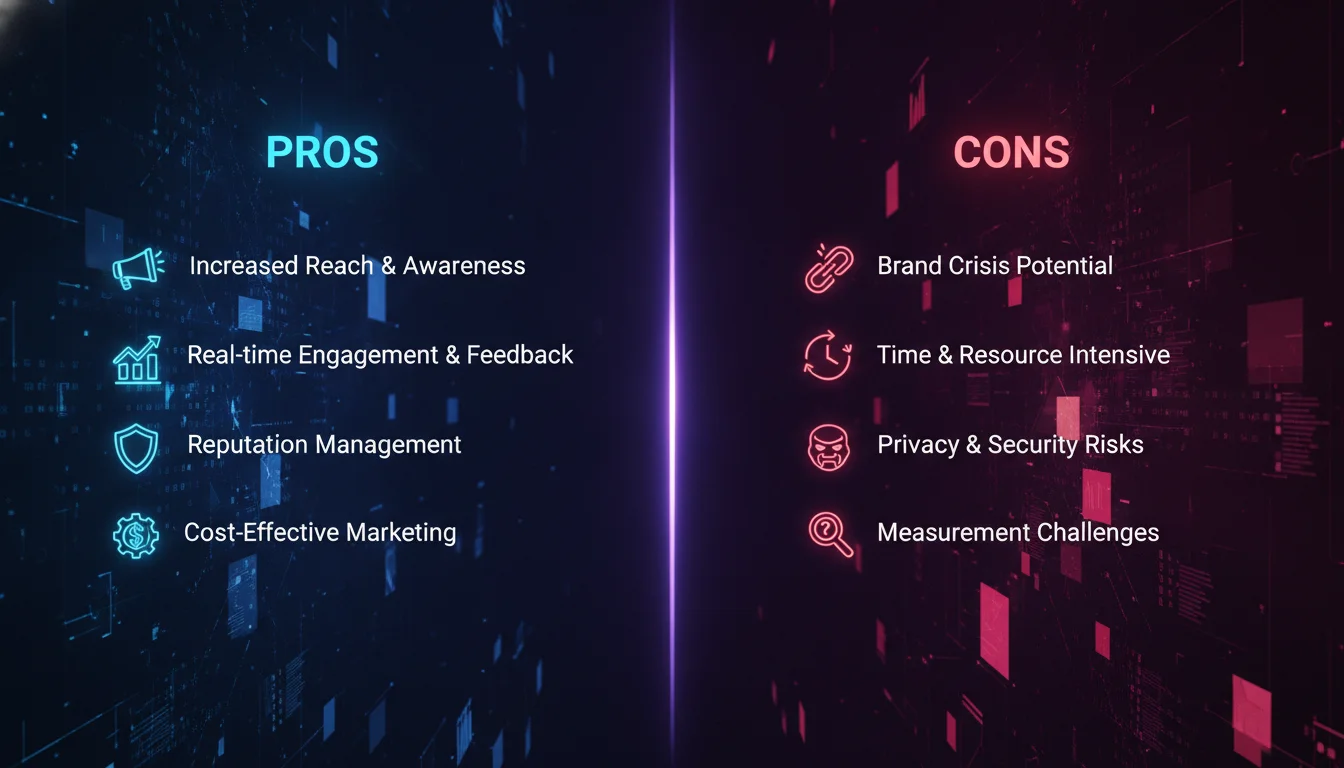
- Direct audience access: No middleman between your brand and billions of active users worldwide.
- Real-time feedback: You learn what resonates, and what doesn’t, faster than any focus group.
- Cost-effective reach: Organic content can outperform paid placements when the brand voice is sharp and the strategy is sound.
- Community building: Done right, your audience becomes your most credible marketing channel through shares, tags, and word-of-mouth.
- Competitive intelligence: Social platforms give you a live view of what competitors are doing and how audiences are responding.
Cons
- Resource intensive: Doing this well requires writing, design, strategy, analytics, and community management. That’s rarely one person’s job.
- Algorithm dependency: Platform reach can shift overnight with an algorithm update, making organic strategies unpredictable.
- Reputation risk: Public-facing brands are exposed to public criticism. One tone-deaf post can generate significant backlash.
- Content volume pressure: Audiences expect consistency. Maintaining quality at volume is genuinely hard without a system.
Key Strategies for Effective Brand Management on Social
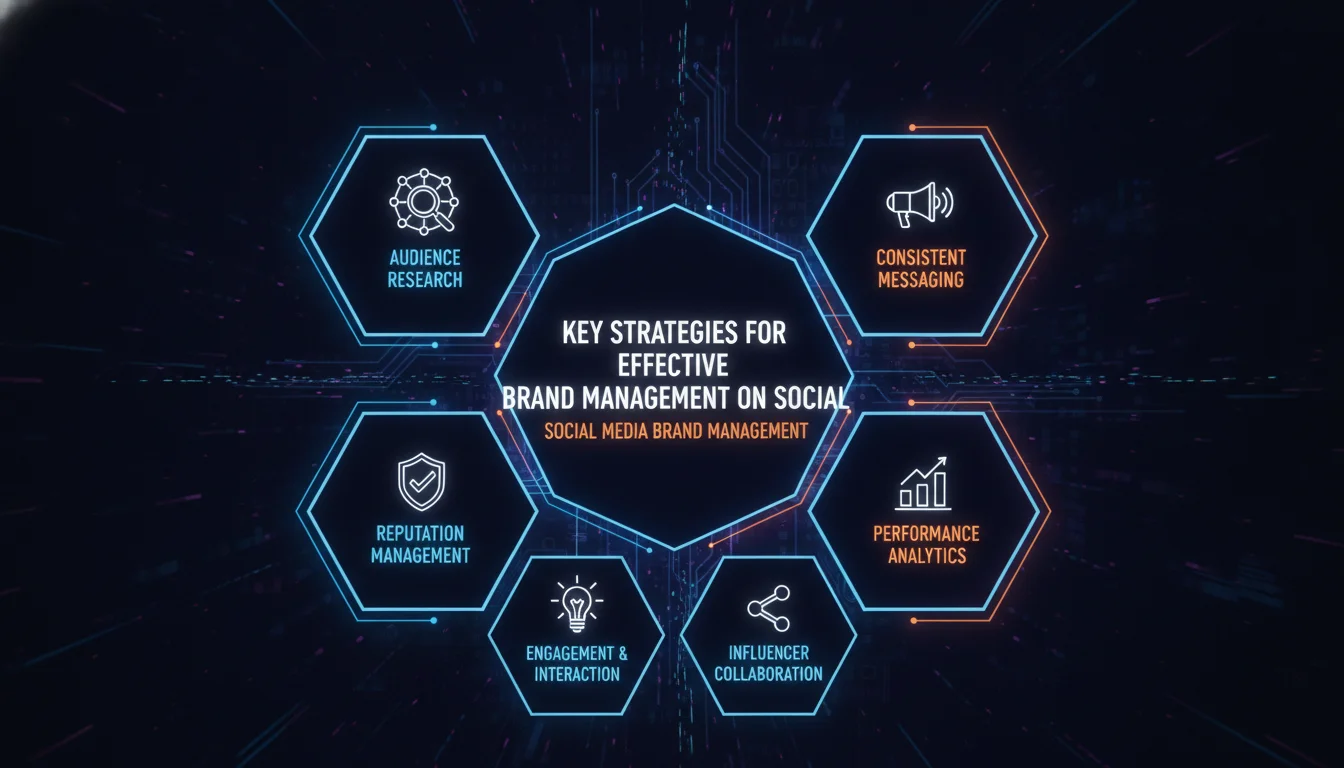
Effective social media brand management doesn’t happen by accident. It’s built on repeatable systems and sharp creative instincts working together.
1. Know Your Audience at a Deeper Level
Knowing your audience is the foundation everything else is built on. Demographics are a starting point, not a destination. The brands that win on social go further:
- Market Research: Surveys, comment analysis, and platform insights reveal not just who your audience is, but what they actually care about.
- Segmentation: Different audience segments respond to different content. A B2B founder on LinkedIn and a consumer scrolling TikTok need completely different creative approaches, even if they’re buying the same product.
- Feedback Loops: Treat every comment, DM, and poll response as a creative brief. Your audience is constantly telling you what to make next.
2. Build a Content Calendar That Works Like a Newsroom
A content calendar is the operational backbone of any serious brand management effort. It’s not a rigid schedule. It’s a living document that keeps your team aligned and your audience consistently engaged.
- Scheduling Posts: Planning content in advance removes the panic of daily posting and creates space for higher-quality creative work.
- Aligning with Cultural Moments: The best brand content meets audiences where they already are, whether that’s a trending format, a cultural event, or a seasonal moment.
- Performance Tracking: Every post is a data point. Use engagement metrics to inform what you create next, not just to report what happened.
3. Use Analytics as a Creative Tool
Analytics are the creative director’s secret weapon. Most brands use data to measure the past. Smart brands use it to design the future.
- Measure What Matters: Likes are vanity. Track saves, shares, link clicks, and sentiment to understand real audience behavior.
- Spot Patterns Early: When a content format consistently outperforms others, that’s a signal, not a coincidence.
- Iterate Fast: The brands winning on social in 2026 are the ones treating every post as a test and every result as a lesson.
Best Practices for Consistent, Compelling Brand Presence
Best practices in this space aren’t about following rules. They’re about building systems that make great brand work repeatable.
1. Maintain Visual and Verbal Consistency Across Every Platform
Consistency is what makes a brand recognizable rather than just visible. That means the same logo treatment, color palette, and typographic choices across every channel, but it also means the same tone of voice whether you’re writing a LinkedIn article or responding to a TikTok comment.
- Visual Identity: Your brand’s visual system should be documented in a style guide that anyone touching your social accounts can reference.
- Messaging: Core brand messages should stay consistent even when the format changes. The story doesn’t shift just because the platform does.
- Posting Rhythm: Irregular posting signals an inactive brand. Consistency in frequency builds audience expectation and algorithmic favor.
2. Make Engagement a Priority, Not an Afterthought
Engagement is a two-way relationship. Brands that only broadcast, never respond, never ask questions, never join conversations, are leaving real brand equity on the table.
- Respond Promptly: Acknowledging comments and messages quickly signals that a real team is behind the brand, not a content robot.
- Host Live Sessions: Live Q&As, product reveals, and behind-the-scenes streams create urgency and intimacy that pre-produced content can’t replicate.
- Encourage User-Generated Content: When your audience creates content about your brand, amplify it. It’s the most credible marketing you’ll ever get.
3. Stay Current Without Chasing Every Trend
Staying relevant doesn’t mean jumping on every viral moment. It means knowing which trends align with your brand and which ones would feel forced.
- Follow Platform Changes: Algorithm updates, new features, and shifting user behaviors all affect how your content performs. Stay informed.
- Adapt Strategically: As of 2026, short-form video continues to dominate engagement across platforms. If your brand isn’t experimenting with Reels, TikToks, or YouTube Shorts, you’re ceding ground to competitors who are.
- Experiment with Formats: Stories, carousels, live video, and long-form posts each serve different audience intents. Test them all. Double down on what works.
“It’s not enough to just be active on social channels. You need to know how to talk to and serve your audience, share content that informs and excites, boost brand awareness, tap into social media trends, and generate leads.” – Digital Marketing Institute, 2026
Comparison of Social Media Platforms for Brand Management
| Platform | Best For | Key Features | Avg. Engagement Rate |
|---|---|---|---|
| Community Building | Groups, Events, Ads | ~0.09% | |
| Visual Branding | Stories, Shopping, Reels | ~0.5% | |
| X (Twitter) | Real-Time Engagement | Threads, Polls, Moments | ~0.045% |
| Professional Networking | Articles, Job Listings, Groups | ~0.39% | |
| TikTok | Creative Content | Short Videos, Challenges | ~2.5% |
Note: Engagement rate figures for Facebook, Instagram, X, and LinkedIn are drawn from widely cited industry benchmarks. The TikTok figure of approximately 2.5% is referenced in Adobe’s 2025 social media research. Treat all figures as directional ranges, not precise targets, since rates vary significantly by industry, audience size, and content type.
The 5-3-1 and 5-5-5 Rules: What They Actually Mean
Two content frameworks come up constantly in brand management conversations, and both are worth understanding before you dismiss them as oversimplified.
The 5-3-1 rule suggests that for every 9 posts, 5 should share useful content from others in your space, 3 should be original content from your brand, and 1 should be a direct promotional message. The logic is sound: brands that only sell get unfollowed. Brands that educate and entertain earn the right to sell.
The 5-5-5 rule is a community engagement framework. For every piece of content you publish, spend time engaging with 5 existing followers, 5 potential new followers, and 5 accounts in your industry. It’s a discipline that keeps brands from becoming broadcast channels and turns them into active community members.
Neither rule is a rigid law. They’re starting points for building habits that make your brand presence feel genuinely social rather than automated.
What a Social Media Brand Manager Actually Does
A social media brand manager is the person responsible for translating brand strategy into daily social execution. The role sits at the intersection of creative direction, community management, data analysis, and brand guardianship.
This isn’t one job. It’s closer to five. A strong brand manager writes compelling copy, makes informed creative decisions, reads analytics dashboards, handles real-time community interactions, and thinks strategically about how every post serves the larger brand narrative. Finding all of that in one person is rare. Building a system that supports it is essential.
According to Salesforce research, the average person spends 143 minutes per day on social media platforms. A brand manager’s job is to make sure your brand earns a meaningful slice of that attention, every single day.
Brand Spotlight: What Great Social Media Brand Management Looks Like
The brands that consistently win on social share a few traits. They have a point of view. They show up consistently. They respond like humans, not corporations. And they treat their social presence as a creative product, not a checkbox.
Great brand management on social isn’t about being everywhere. It’s about being unmistakably yourself in the places that matter most to your audience. That requires a documented brand voice, a clear visual identity, a content strategy tied to real business goals, and a team, or agency partner, with the creative range to execute across formats and platforms.
If you’re building this from scratch or rebuilding after a period of inconsistency, start with your brand voice. Everything else, the calendar, the content, the campaigns, flows from knowing exactly who you are and how you want to sound.
Frequently Asked Questions
What is social media brand management?
Social media brand management is the practice of overseeing a brand’s presence across social platforms through consistent messaging, visual identity, and active audience engagement. It combines content strategy, community management, and performance analysis to build long-term brand trust and loyalty.
What is a social media brand manager?
A social media brand manager is the person responsible for translating a brand’s strategy into daily social execution. They oversee content creation, community engagement, analytics reporting, and brand consistency across all active platforms. In practice, the role requires a blend of creative, analytical, and strategic skills.
What is the 5-3-1 rule for social media?
The 5-3-1 rule is a content balance framework suggesting that for every 9 posts, 5 should share valuable third-party content, 3 should be original brand content, and 1 should be a direct promotional message. It’s designed to keep brand feeds useful and engaging rather than purely promotional.
What is the 5-5-5 rule for social media?
The 5-5-5 rule is a community engagement practice where, for each piece of content published, a brand engages with 5 existing followers, 5 potential new followers, and 5 industry accounts. It builds genuine community presence and prevents social accounts from becoming one-way broadcast channels.
How do I measure the success of my brand management on social media?
Success is best measured through a combination of engagement metrics (saves, shares, comments), audience growth rate, brand sentiment analysis, and conversion data tied to social traffic. Vanity metrics like raw follower counts matter less than the quality and consistency of audience interaction over time.
How often should I update my social media strategy?
A quarterly review is a solid baseline, but the best teams treat strategy as a living document. Platform algorithm changes, new content formats, and shifts in audience behavior can all warrant faster adjustments. Build in monthly check-ins and a deeper strategic review every quarter.
Ready to Build Something Worth Following?
Your brand deserves a social presence that actually reflects how good you are. At Emin Media, we work with brand owners, founders, and marketing teams to build social strategies that are creatively sharp and strategically grounded. From brand voice development to full content production, we bring the creative range and the analytical discipline to make your brand impossible to ignore.
Contact Emin Media for a free brand consultation and let’s build something bold together.
Enjoyed this article?
Contact Emin Media for a free brand consultation and let's create something amazing together.
Get in TouchRelated Articles
Digital Storytelling for Brands: The Complete Guide
Digital storytelling for brands builds real audience connections through narrative. Learn proven techniques, formats, and…

Design Thinking for Marketing: A 2026 Guide
Design thinking for marketing builds campaigns around real user needs. Learn the 5 phases, common…

Creative Direction for Video Shoots: A Complete Guide
Master creative direction for video shoots with proven steps, tools, and strategies that build brand…