Brand Voice Development: Build a Voice That Sticks
Brand voice development is the process of defining and refining the unique personality and communication style of a brand. It shapes how a brand expresses itself through language, tone, and messaging across every platform. Done well, it turns casual browsers into loyal customers.
Key Takeaways
- voice development is the foundation of every communication your brand puts into the world.
- Voice is consistent; tone shifts based on context. You need both working together.
- According to Sprout Social research, 33% of consumers say a distinct personality is the main reason a brand stands out from others.
- A brand voice guide is not a one-time document. It needs regular audits as your audience evolves.
- Measuring voice effectiveness through engagement metrics and customer feedback keeps your strategy sharp.
- As of 2026, AI-generated content makes a distinctive human brand voice more valuable, not less.
What is Brand Voice Development?
this type of development is the structured practice of identifying, documenting, and consistently applying a brand’s unique communication personality. It goes far beyond choosing a few adjectives in a style guide. It answers the question: if your brand were a person, how would they speak, what would they care about, and how would they make people feel?
Defining Brand Voice
Brand voice is the consistent expression of a brand’s personality, values, and mission. It is the way a brand communicates with its audience, influencing how customers perceive and interact with the brand. A strong brand voice can evoke emotions, create memorable experiences, and build loyalty. Think of it as your brand’s character: stable, recognizable, and true to your core values regardless of which channel or team member is doing the writing.
Why Brand Voice Matters More in 2026
A distinct brand voice is essential for standing out in a crowded marketplace. According to Sprout Social research cited across the industry, 33% of consumers say a distinct personality is the main reason a brand stands out from others. That number carries even more weight this year. As AI-generated content floods every feed and inbox, brands that sound like everyone else disappear into the noise. A voice that feels genuinely human and specific to your brand is now a competitive asset, not just a nice-to-have.
According to Asana’s 2026 brand research, 88% of marketers believe that brand language helps their brand connect with customers, which translates directly into better engagement, stronger retention, and increased sales. The data is clear: this kind of development is not a branding exercise. It is a revenue strategy.
“A consistent brand voice is the verbal equivalent of your visual identity. It creates immediate recognition and builds trust through familiarity. When customers recognize your voice across channels, you’re reinforcing who you are with every interaction.” – Les Kollegian, CEO of Jacob Tyler Agency
Brand Voice vs. Brand Tone
Brand voice and tone are not the same thing, even though people use them interchangeably. Brand voice is the overall personality of the brand: it never changes. Tone refers to the emotional inflection applied to that voice based on context. A brand may maintain a warm, direct voice but adopt a more empathetic tone when addressing a customer complaint, or a more celebratory tone when announcing a product launch. You are still you. You have just read the room.
Harley-Davidson is the clearest example of this in practice. Their voice consistently embodies freedom, rebellion, and authenticity. Their tone shifts from bold and powerful in product copy to supportive and community-focused in rider group communications. The underlying voice of rugged independence never wavers.
How Brand Voice Development Actually Works
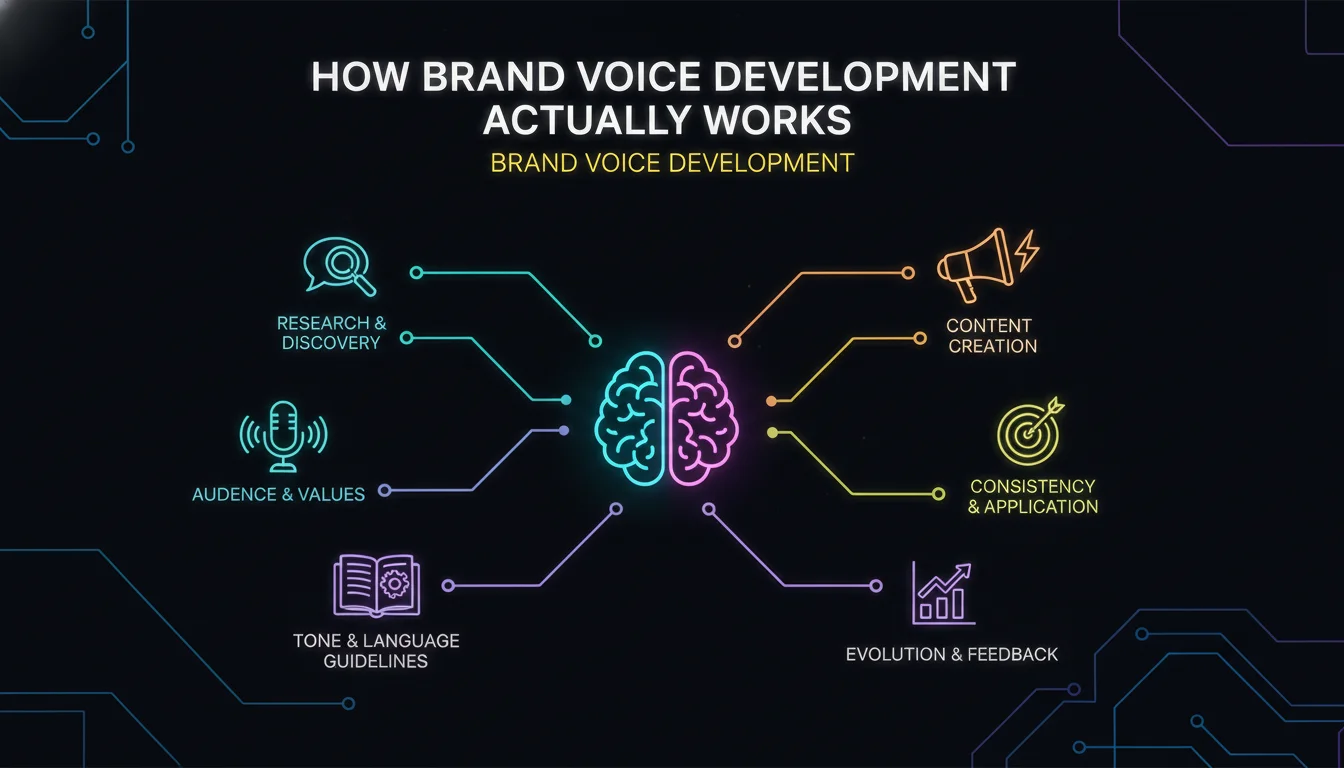
brand voice works by moving through three distinct phases: discovery, documentation, and deployment. Most brands skip the first phase entirely and wonder why their guidelines never stick.
Phase 1: Discovery. This is where you excavate what your brand already sounds like versus what it should sound like. You audit existing content, interview internal stakeholders, and research how your audience actually speaks. You are not inventing a voice from scratch. You are surfacing the authentic one that already exists in your best work.
Phase 2: Documentation. Discovery findings get translated into a brand voice guide. This is not a mood board. It is an operational document with specific language examples, do-and-don’t comparisons, vocabulary lists, and tone guidance for different contexts. The best voice guides show writers exactly what the voice looks like in practice, not just what adjectives describe it.
Phase 3: Deployment. Guidelines mean nothing without adoption. This phase covers training content teams, building voice into editorial workflows, and creating feedback loops so the voice stays consistent as teams grow and channels multiply.
“Building a better brand voice is a big opportunity. It has a huge role to play in conveying what you stand for and communicating with your audience. It isn’t just about brand or marketing. It also affects your user experience.” – Lauren Pope, brand voice consultant
Steps to Develop Your Brand Voice
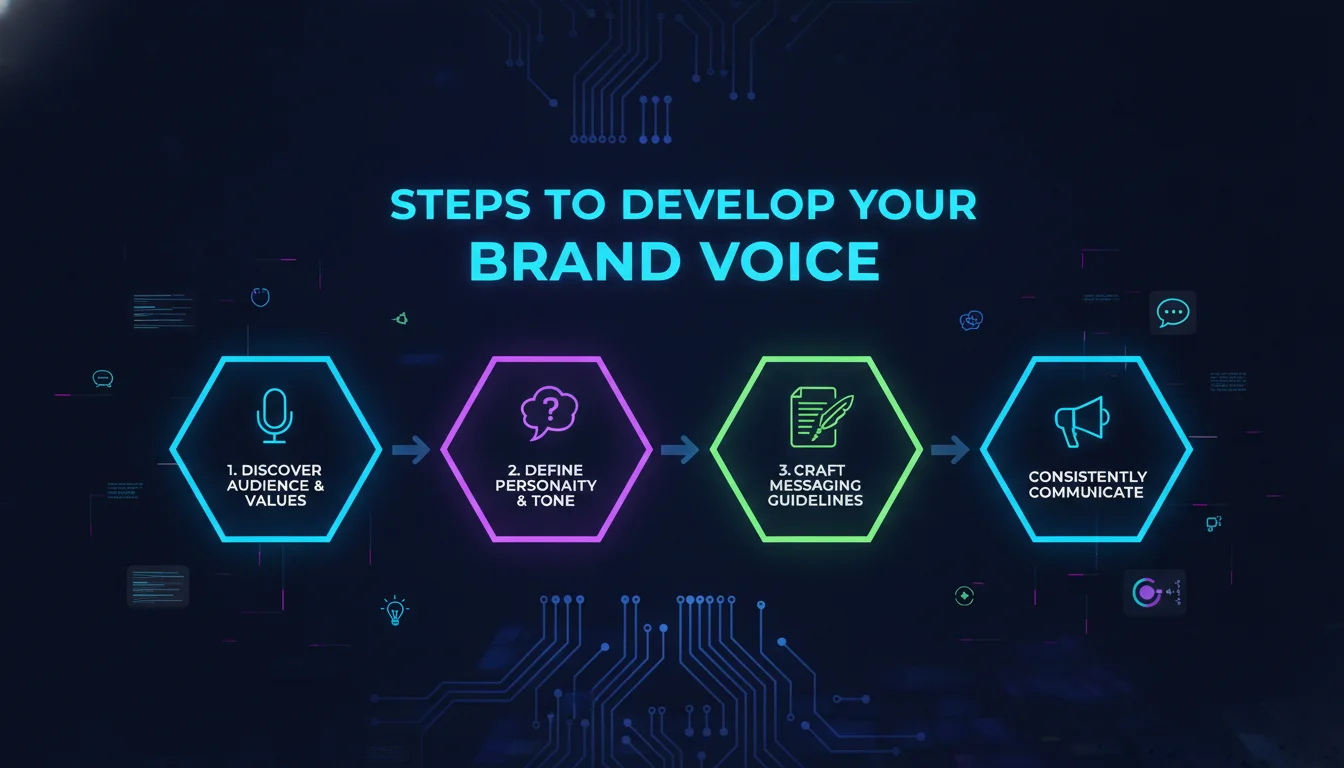
Brand voice development follows a clear sequence that moves from audience research through guidelines creation and into ongoing measurement. Here are the key steps, built for real teams working in 2026.
Step 1: Audit Your Current Voice
Before building anything new, understand what you already have. Pull a sample of content from every channel: website copy, social posts, email campaigns, customer service scripts. Read them aloud. Do they sound like the same brand? Do they sound like anyone in particular? Most teams discover their current voice is a patchwork of whoever wrote what, when. That audit becomes your baseline.
Step 2: Understand Your Audience
To create an effective brand voice, you need to know exactly who your audience is. Conducting audience research helps identify demographics, preferences, and pain points. Tools like Google Analytics and social media insights provide valuable data. But go deeper than demographics. Look at how your audience writes in comments, reviews, and community forums. The language they use to describe their problems is often the language your brand voice should mirror back to them.
Step 3: Define Your Brand Values
Your brand values are the core principles that guide your business. These values should align with your brand voice and influence how you communicate with your audience. If your brand values innovation, your voice may be more forward-thinking and direct. If your brand values warmth and community, your voice should feel conversational and inclusive. Values are not decorative. They are the structural logic behind every word choice.
Step 4: Identify Your Voice Characteristics
Choose three to five adjectives that describe your brand’s personality. Then, for each adjective, write a short explanation of what it means in practice and what it does not mean. “Bold” does not mean aggressive. “Friendly” does not mean unprofessional. This distinction work is where most brand voice guides fail. Without the contrast, writers default to their own interpretation.
Step 5: Create Brand Voice Guidelines
Once you understand your audience and define your values, the next step is to create brand voice guidelines. These guidelines should outline key characteristics of your voice, including tone variations, language style, vocabulary preferences, and messaging principles. Include real before-and-after examples. This document serves as a reference for all team members to ensure consistency across all communications, from a 280-character tweet to a 2,000-word blog post.
Step 6: Train Your Team and Build Feedback Loops
A voice guide sitting in a shared drive is not a brand voice strategy. Run workshops with your content, marketing, and customer service teams. Build voice checks into your editorial review process. Create a feedback channel where writers can flag edge cases and get guidance. The voice only stays consistent if the people using it understand it and have somewhere to turn when they are unsure.
Brand Voice Development in Practice: A Worked Example
Brand voice development becomes clearest when you see it applied to a real scenario. Consider a mid-sized sustainable skincare brand launching its first major content push.
Their audit reveals three problems: their website copy sounds clinical and distant, their Instagram captions are overly casual to the point of feeling unserious, and their email campaigns read like they were written by a different company entirely. Three channels, three voices. Zero brand recognition.
They run a discovery workshop with their founding team and their most loyal customers. The words that keep surfacing: honest, grounded, curious. Not aspirational in a glossy way. More like a knowledgeable friend who happens to know a lot about ingredients.
They build a voice guide around those three characteristics. “Honest” means they explain what their products cannot do, not just what they can. “Grounded” means they avoid trend-chasing language and write in plain sentences. “Curious” means they ask questions, share the science behind their formulas, and treat their audience as intelligent adults.
Six months after rolling out the guide across all channels, their email open rates climb, their social engagement improves, and their customer reviews start using the same language the brand uses to describe itself. That last signal is the most powerful one. When your customers start echoing your voice back to you, the brand voice development process has worked.
Brand Spotlight: Three Voices Worth Studying
Mailchimp
Mailchimp is the most-cited example in brand voice development for good reason. Their messaging is clear, concise, and often infused with humor, making complex topics feel accessible. Their internal style guide famously instructs writers to imagine they are explaining something to a smart friend who does not know the subject. That single instruction produces more consistent copy than most 20-page voice documents. It has helped them build exceptional rapport with their small business audience.
Harley-Davidson
Harley-Davidson embodies a rugged and rebellious brand voice. Their messaging reflects themes of freedom and adventure, appealing to their target audience’s desire for individuality and community. The consistency of their voice across all channels reinforces their brand identity. Whether the copy is on a billboard, a product page, or a community forum post, it sounds unmistakably like Harley.
Innocent Drinks
Innocent Drinks uses a playful and quirky brand voice that resonates with their audience. Their light-hearted messaging and humorous tone create a friendly connection with consumers, making their brand memorable and relatable. What makes Innocent worth studying is how they maintain that playfulness even in operational communications like packaging and delivery notes. The voice is not reserved for marketing. It lives everywhere.
Comparing Brand Voice Approaches
Brand voice development is not one-size-fits-all. Different approaches suit different brand stages and team structures. Here is how the main options compare:
| Approach | Best For | Strengths | Weaknesses |
|---|---|---|---|
| Internal Workshop Model | Startups and small teams | Fast, low cost, builds internal buy-in | Can lack outside perspective, risks echo chamber |
| Agency-Led Brand Sprint | Rebrands and growth-stage companies | Expert facilitation, structured output, fresh eyes | Higher investment, requires strong internal briefing |
| Customer-Led Discovery | Audience-first brands | Voice grounded in real audience language | Time-intensive research phase |
| Content Audit First | Established brands with existing content | Builds on what already works | May reinforce existing inconsistencies |
| AI-Assisted Voice Mapping | Brands scaling content production | Speeds up pattern recognition across large content sets | Requires human editorial layer to avoid generic output |
Tools for Measuring Brand Voice Effectiveness
Measuring brand voice effectiveness means tracking signals across multiple data sources, not just gut feel. Here are the tools and methods that actually tell you whether your voice is working.
Engagement Metrics
Monitoring engagement metrics such as likes, shares, comments, and click-through rates provides direct insight into how well your brand voice resonates with your audience. High engagement levels often indicate a strong connection with your messaging. Look for patterns: which content formats and which tonal registers consistently outperform? That data tells you where your voice is strongest.
Social Listening Tools
Platforms like Sprout Social, Brandwatch, and Mention let you track how your audience talks about your brand and whether the language they use mirrors your intended voice. If your brand voice development work is succeeding, you will start to see your own vocabulary appearing in customer reviews, comments, and user-generated content. That echo effect is one of the clearest signs of voice adoption.
Customer Feedback and Surveys
Gathering customer feedback through surveys, reviews, and social media interactions helps assess how your audience perceives your brand voice. Ask direct questions: does our brand feel approachable? Do our emails feel like they come from a real person? This feedback informs adjustments to your messaging strategy before small inconsistencies become bigger perception problems.
Brand Awareness Studies
Conducting brand awareness studies measures how well your audience recognizes and recalls your brand voice. This data provides insight into the effectiveness of your branding efforts and highlights areas for improvement. For growing brands, even a simple quarterly survey asking customers to describe your brand in three words can reveal whether your voice is landing as intended.
Content Governance Software
As of 2026, tools like Markup AI (formerly Acrolinx) allow brands to embed voice guidelines directly into the content creation workflow. Writers get real-time feedback on whether their copy aligns with the brand voice guide. For larger organizations managing content across multiple teams and markets, this kind of automated governance is the difference between a voice guide that gets followed and one that collects digital dust.
Common Mistakes in Brand Voice Development
Brand voice development fails in predictable ways. Knowing the patterns saves you from repeating them.
Mistaking Adjectives for a Voice Guide
The most common failure is a voice guide that lists six adjectives with a sentence of explanation for each. “Bold. Friendly. Innovative.” That is not a voice. That is a mood board. A real voice guide shows writers what the voice looks like in actual sentences, with before-and-after examples and explicit guidance on what to avoid.
Inconsistency Across Channels
Maintaining a consistent brand voice across various channels is difficult, especially for larger organizations with multiple teams. The social media manager, the email copywriter, and the customer service team are often working from different mental models of what the brand sounds like. Establishing clear guidelines and training staff can help close that gap. Without it, every channel becomes its own micro-brand.
Confusing Voice with Tone
Teams that do not understand the voice-versus-tone distinction often make one of two mistakes. They either apply the same flat tone to every context (a serious brand that sounds robotic even in celebratory moments) or they let tone drift so far that the underlying voice disappears entirely. Both problems come from the same root: not enough clarity in the guidelines about when and how tone should shift.
Adapting to Audience Changes Too Slowly
As audience preferences and market trends evolve, brands must be prepared to adapt their voice accordingly. This does not mean chasing every trend. It means scheduling regular audits, at minimum annually, to check whether your voice still resonates with the audience you are actually serving in 2026, not the audience you were serving three years ago.
Balancing Authenticity and Professionalism
Finding the right balance between an authentic brand voice and maintaining professionalism is a genuine tension. Brands that lean too casual risk losing credibility in high-stakes contexts. Brands that lean too formal risk sounding cold and distant. The answer is not a compromise. It is a well-defined voice with clear tone guidance for different situations, so writers know exactly how to calibrate.
Building a Voice in Isolation
Brand voice development that happens entirely inside the marketing team, without input from sales, customer service, or product, produces a voice that only lives in marketing materials. The most powerful brand voices are the ones that show up in every customer touchpoint: the support email, the onboarding flow, the invoice. That requires cross-functional buy-in from the start.
Pros and Cons of Formal Brand Voice Development
Pros
- Consistency at scale: A documented voice guide lets multiple writers produce content that sounds like one coherent brand, even across large teams.
- Faster content production: Writers spend less time second-guessing tone and style when clear guidelines exist.
- Stronger audience connection: According to Asana’s research, 88% of marketers report that consistent brand language improves customer connection and engagement.
- Competitive differentiation: A distinctive voice makes your brand recognizable without a logo, which is increasingly valuable as content volume grows.
- Trust and loyalty: Consistent voice signals reliability. Customers who recognize your voice across channels are more likely to trust your brand over time.
Cons
- Time investment upfront: A proper brand voice development process, done right, takes weeks of research, workshops, and documentation before a single piece of content improves.
- Risk of rigidity: Overly prescriptive guidelines can stifle creative writers and produce copy that feels mechanical rather than genuine.
- Adoption challenges: Guidelines only work if teams use them. Without training and reinforcement, even the best voice guide sits unused.
- Requires ongoing maintenance: A voice guide written in 2023 may not reflect your audience or market position in 2026. It needs regular revisiting.
Challenges in Brand Voice Development
Brand voice development surfaces real organizational challenges that go beyond writing style. Understanding them upfront makes the process smoother.
The biggest structural challenge is cross-channel consistency. When your social team, your email team, and your customer service team are all operating with different interpretations of the brand voice, the customer experience feels fragmented. Clear guidelines help, but they need to be paired with regular calibration sessions where teams review real content together and align on edge cases.
The second challenge is evolution. A brand voice is not static. As your audience grows and your market position shifts, the voice needs to evolve with it. The brands that handle this best treat their voice guide as a living document, not a finished artifact. They schedule annual reviews, track audience language shifts through social listening, and update their guidelines accordingly.
The third challenge is authenticity under pressure. When brands face a crisis, a controversy, or a difficult public moment, the temptation is to abandon the brand voice in favor of corporate-speak. That is usually the wrong call. A well-defined voice includes guidance for difficult moments, so the brand can respond in a way that feels human and consistent rather than defensive and distant.
Brand Voice Development: The 2026 Outlook
This year, brand voice development sits at the intersection of two powerful forces. AI content tools are making it easier than ever to produce large volumes of copy. At the same time, audiences are becoming more sophisticated at detecting generic, machine-produced content. The brands winning attention in 2026 are the ones with voices specific enough that AI cannot easily replicate them.
According to Smashbrand’s industry analysis, 77% of consumers prefer shopping with brands they follow on social media, precisely because social is where brand expression is most direct and most human. That preference signals something important: people are not just buying products. They are buying into personalities. Brand voice development is how you build a personality worth buying into.
The near-term outlook is clear. Brands that invest in brand voice development now, building documented, trained, and consistently applied voice systems, will have a structural advantage as content volume continues to grow. The voice becomes the filter that makes everything you produce recognizable, regardless of who wrote it or which channel it lives on.
Frequently Asked Questions
What is brand voice development?
Brand voice development is the process of defining, documenting, and consistently applying a brand’s unique communication personality across all channels. It covers the language style, tone guidance, vocabulary choices, and messaging principles that make a brand sound recognizably itself. It is not a one-time project. It is an ongoing practice that evolves with your audience and market position.
How do you develop a brand voice?
Start with an audit of your existing content, then research your audience’s language and preferences, define your core brand values, and identify three to five voice characteristics with practical examples. Document those findings in a brand voice guide with before-and-after examples, then train your team and build voice checks into your editorial workflow. Measure the results through engagement data and customer feedback, and revisit the guide at least once a year.
What is the difference between brand voice and tone?
Brand voice is the consistent, unchanging personality of your brand. Tone is how that voice adapts to specific situations, audiences, or contexts. Your voice stays the same whether you are writing a product page or a customer service email. Your tone shifts to match the emotional register of the moment, more celebratory in a product launch, more empathetic in a complaint response.
What is a brand voice example?
Mailchimp is one of the most studied examples of effective brand voice development. Their voice is friendly, clear, and lightly humorous, making complex email marketing topics feel approachable. Innocent Drinks uses a playful, quirky voice that shows up even on their packaging. Harley-Davidson maintains a rugged, freedom-focused voice across every touchpoint from product copy to community communications.
Why is brand voice important?
A distinct brand voice helps businesses stand out in a crowded marketplace, connect with their audience, and build trust and loyalty over time. According to Sprout Social research, 33% of consumers say a distinct personality is the main reason a brand stands out from others. In 2026, with AI-generated content increasing across every channel, a genuinely distinctive voice is one of the few things that cannot be easily replicated.
Can a brand voice change over time?
Yes, and it should. A brand voice can and should evolve as audience preferences, market conditions, and brand positioning shift. The key is to evolve intentionally, through regular audits and deliberate updates to your voice guide, rather than drifting accidentally because different team members are pulling in different directions. The core personality stays stable. The expression of it gets refined.
Ready to build a brand voice that people actually recognize and remember? Contact Emin Media for a free brand consultation and let’s build something bold together.
Enjoyed this article?
Contact Emin Media for a free brand consultation and let's create something amazing together.
Get in TouchRelated Articles
Digital Marketing for Creatives: A Bold Guide
Digital marketing for creatives builds real visibility and sales. Learn strategies for social media, SEO,…
Branding & Design Agency Tips That Actually Work
Discover branding and design agency tips to choose the right partner, set clear goals, and…
Creative Agency Pitch Deck Tips That Win Clients
Master creative agency pitch deck tips that win clients in 2026. Learn storytelling, design, and…