Parts of Digital SLR Camera: Functions Explained
Parts of Digital SLR Camera: Functions Explained
Parts of a digital SLR camera are the lens, reflex mirror, pentaprism, image sensor, shutter, and body working together as one optical-electronic system to capture precise, high-quality photographs.
Key Takeaways
- The reflex mirror and pentaprism are what separate a DSLR from every other digital camera format.
- Sensor size (full-frame vs. APS-C) directly shapes low-light performance and creative control.
- The focal-plane shutter is a wear item rated between 50,000 and 200,000 actuations depending on the model tier.
- Knowing the parts of a digital SLR camera helps you troubleshoot problems, maintain gear, and make smarter upgrade decisions.
- DSLRs still hold real advantages over mirrorless systems in optical viewfinder clarity, battery life, and lens ecosystem depth.
- User-replaceable parts (lenses, batteries, memory cards) require no professional service; shutter and sensor work does.
A digital single-lens reflex camera is a precision instrument where optical physics and digital electronics meet. According to Wikipedia, the reflex design scheme is the primary difference between a DSLR and other digital cameras. Every photographer, from first-timer to working professional, benefits from understanding how these components interact. Image quality, shooting speed, and creative control all trace back to specific parts of a digital SLR camera doing their jobs correctly. This guide breaks down each component, explains its function, and gives you practical guidance on maintenance and replacement.
What Are the Essential Parts of Digital SLR Camera?
The Camera Body
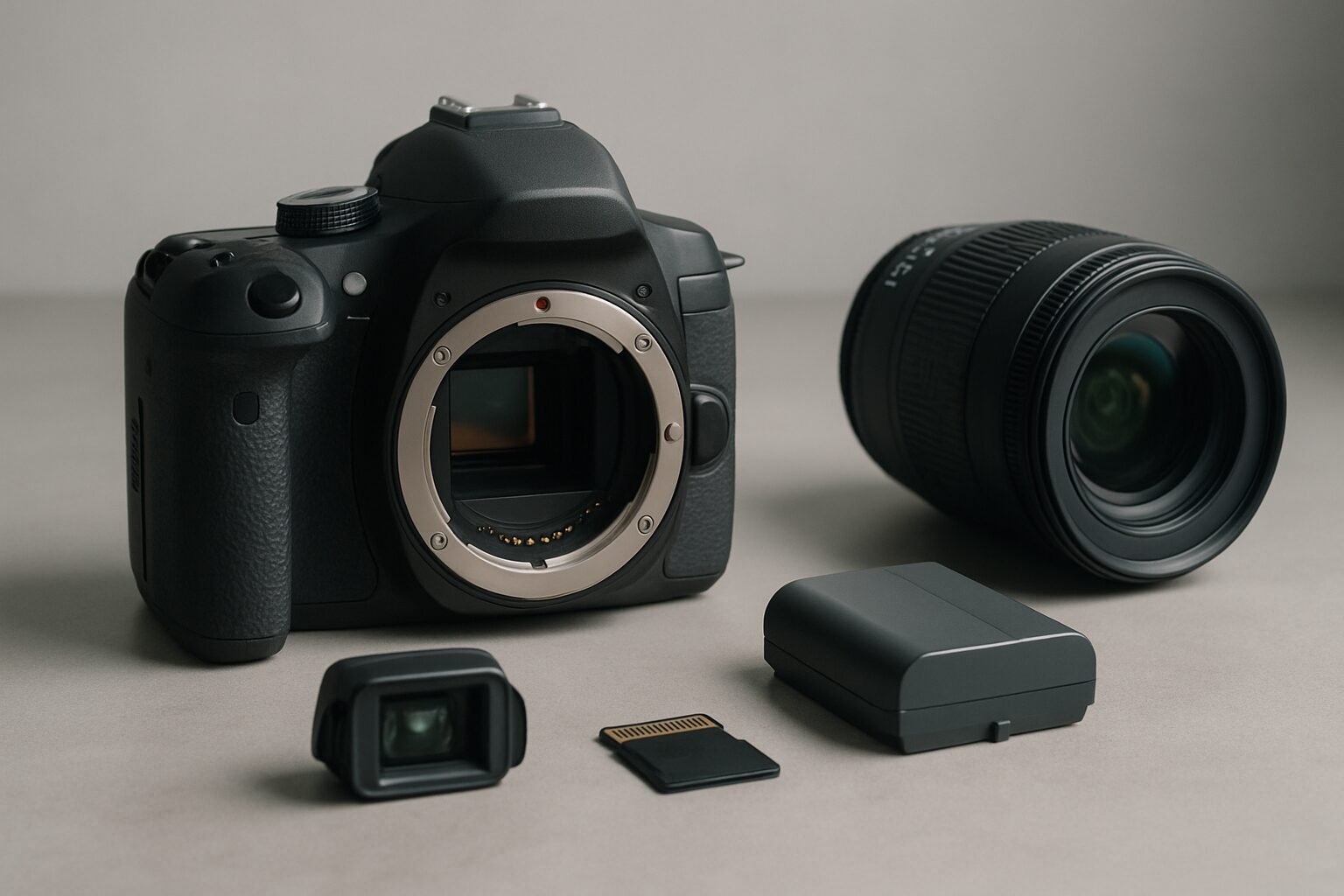
The camera body is the structural core that holds every other component in precise alignment. Typically constructed from magnesium alloy or high-grade polycarbonate, it provides both structural integrity and weather sealing against dust and moisture. On the Nikon D780 (documented in Nikon’s online manual), the body includes dedicated dials, a shutter-release button, and a mode dial, all ergonomically positioned for fast access during a shoot. The body also houses the mirror box, image sensor, and image-processing engine. Canon, Nikon, and Sony each bring distinct ergonomic shapes to their bodies, but all serve the same purpose: aligning the optical path and protecting sensitive internals from the outside world.
The Lens and Lens Mount
The lens is arguably the most influential of all the parts of a digital SLR camera when it comes to image quality. It gathers light from the scene and focuses it precisely onto the sensor plane. Lenses span a wide range of focal lengths, from ultra-wide 8mm fisheyes to super-telephoto 800mm primes, and come in types including prime, zoom, macro, and tilt-shift. The lens mount is both a mechanical and electronic interface: it locks the lens to the body and carries electronic contacts that transmit autofocus commands, aperture data, and image stabilization signals. Different systems use proprietary mounts. Nikon built its F-mount ecosystem over decades; Canon uses EF and EF-S; Sony A-mount cameras use their own standard. Lens compatibility is one of the most important factors when choosing a system, because switching brands often means replacing an entire glass collection.
The Image Sensor
The image sensor is the digital equivalent of film and one of the most critical parts of a digital SLR camera. It converts incoming light into electrical signals that become your photograph. Two main sensor types exist: CCD (Charge-Coupled Device) and CMOS (Complementary Metal-Oxide-Semiconductor). The history here is worth knowing. Kodak engineer Steven Sasson built the first portable digital still camera in 1975 using a Fairchild 100×100 pixel CCD. By 1981, the Sony Mavica was capturing images on a 280K-pixel CCD sensor. The Canon RC-701 in 1986 pushed that to a 380K-pixel CCD. Today’s cameras favor CMOS sensors for better power efficiency, faster readout speeds, and superior high-ISO performance. Sensor size remains a major spec: full-frame sensors measure 36×24 mm and deliver superior low-light results, while APS-C sensors (approximately 22×15 mm) keep costs down in entry-level and mid-range bodies. The sensor sits directly behind the shutter curtains and is exposed to light only during the actual exposure.
The Optical System of a Digital SLR
The Reflex Mirror
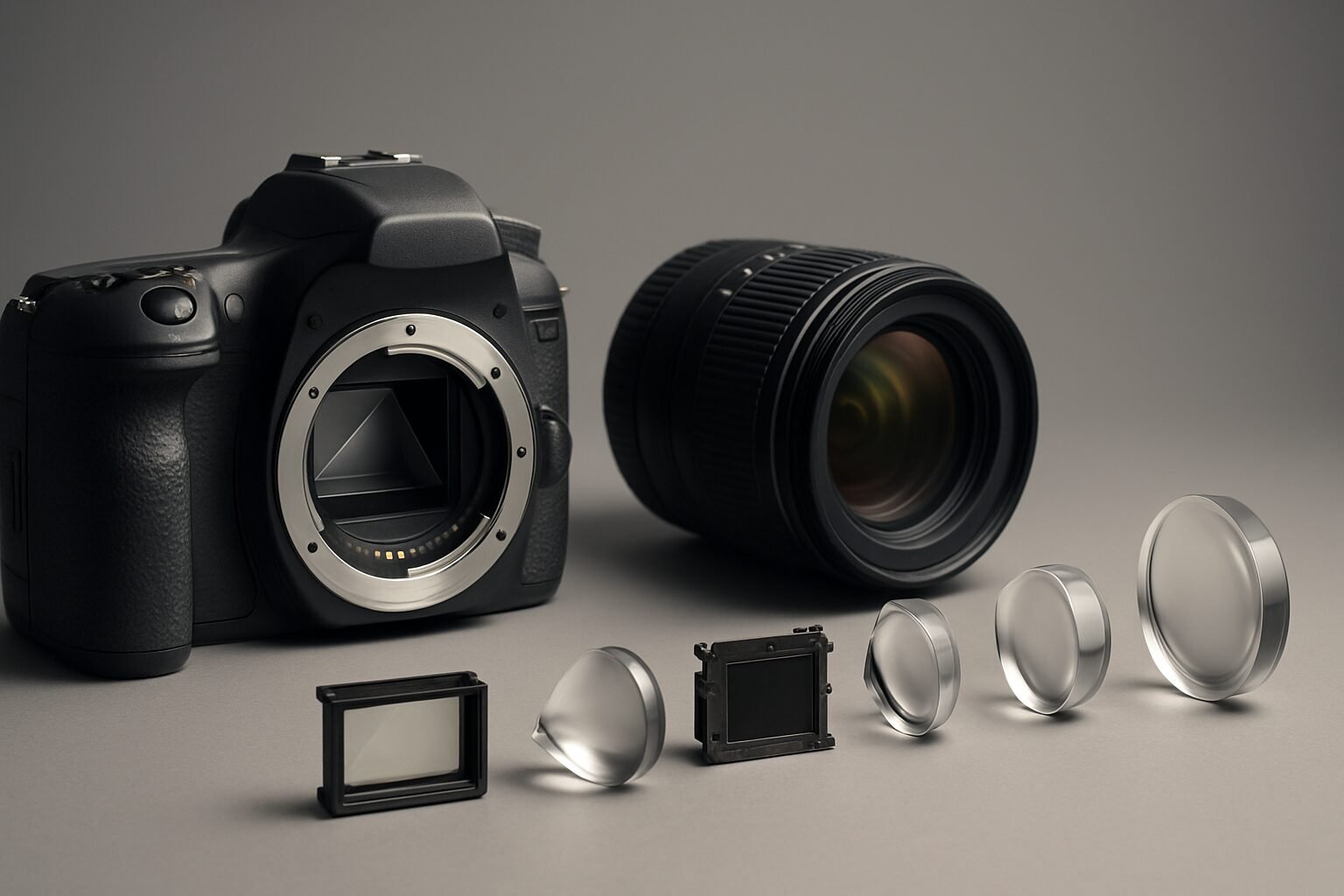
The reflex mirror is the defining mechanical part of a DSLR, and what gives the camera its name. Positioned at a 45-degree angle behind the lens, it reflects incoming light upward toward the viewfinder system. The moment you press the shutter button, the mirror flips up out of the light path so the sensor can be exposed. That brief blackout in the viewfinder is a signature characteristic of DSLR operation. Mirror assemblies are built to last: the Nikon D780’s shutter mechanism is rated to 200,000 cycles, and a dampened mirror design reduces both vibration and audible noise during shooting.
The Pentaprism and Pentamirror
The pentaprism is a five-sided glass prism sitting inside the distinctive hump on top of every DSLR body. Its job is image orientation correction: a lens projects an image that is both upside-down and laterally reversed, and the pentaprism flips it right-side-up and correctly oriented before it reaches your eye. Higher-end models use a solid glass pentaprism for maximum brightness and color accuracy. Entry-level cameras often substitute a lighter, cheaper pentamirror, which trades some brightness for lower production cost. This optical component feeds directly into the viewfinder eyepiece, giving photographers a real-time, accurate preview of the scene.
The Viewfinder and Its Importance
The optical viewfinder (OVF) is a direct window through the lens with zero lag and zero battery drain. It displays shooting data, including shutter speed, aperture, ISO, and active focus points, superimposed over the live scene. A diopter adjustment dial on the eyepiece lets users compensate for near- or far-sightedness without wearing glasses. Professional DSLRs offer 100% frame coverage, meaning what you see is exactly what the sensor captures. Consumer models typically show 95-98% coverage. For many photographers, the OVF experience is the primary reason they choose a DSLR over a mirrorless body.
“The optical viewfinder remains one of the most underrated tools in photography. There’s no electronic interpretation between you and the scene – just glass, light, and your eye.” – Adorama Learning Center, 42West
How Light Travels Through a DSLR: Step-by-Step
Step 1: Light Enters the Lens
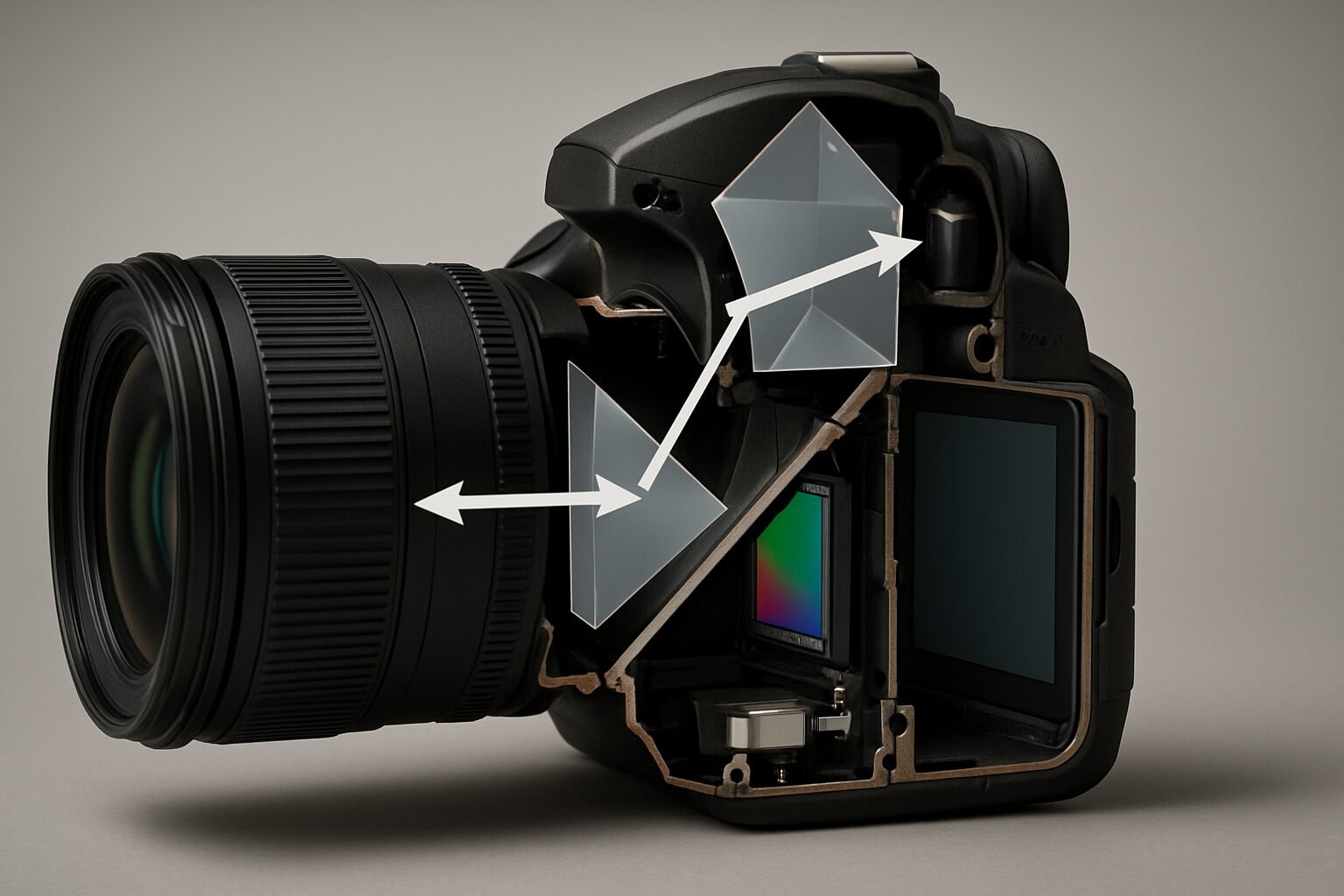
Light from the scene passes through the lens elements, which focus and shape the beam. The aperture diaphragm, a set of overlapping metal blades inside the lens, controls how much light is admitted. Lenses with optical image stabilization (Nikon calls it VR; Canon calls it IS) contain additional floating elements that shift to counteract camera movement during handheld shooting.
Step 2: Reflection and Focusing
The light strikes the reflex mirror, which directs it upward through the focusing screen. This transparent glass plate shows the exact plane of focus, and its matte surface aids manual focusing precision. From there, the light passes through a condenser lens and into the pentaprism, where it is corrected and rotated. It exits through the viewfinder eyepiece directly to your eye, giving you a real-time optical preview with no processing delay.
Step 3: Image Capture on the Sensor
Pressing the shutter button triggers a precise sequence: the mirror flips up, the shutter curtains open, and light reaches the image sensor. The sensor’s photodiodes convert light intensity and color into electrical charges. An analog-to-digital converter (ADC) translates those charges into digital data, which the image processor renders into a JPEG or RAW file. That file writes to the memory card in a fraction of a second, ready for the next frame.
External Parts of Digital SLR Camera You Should Know
Shutter Release Button and Mode Dial
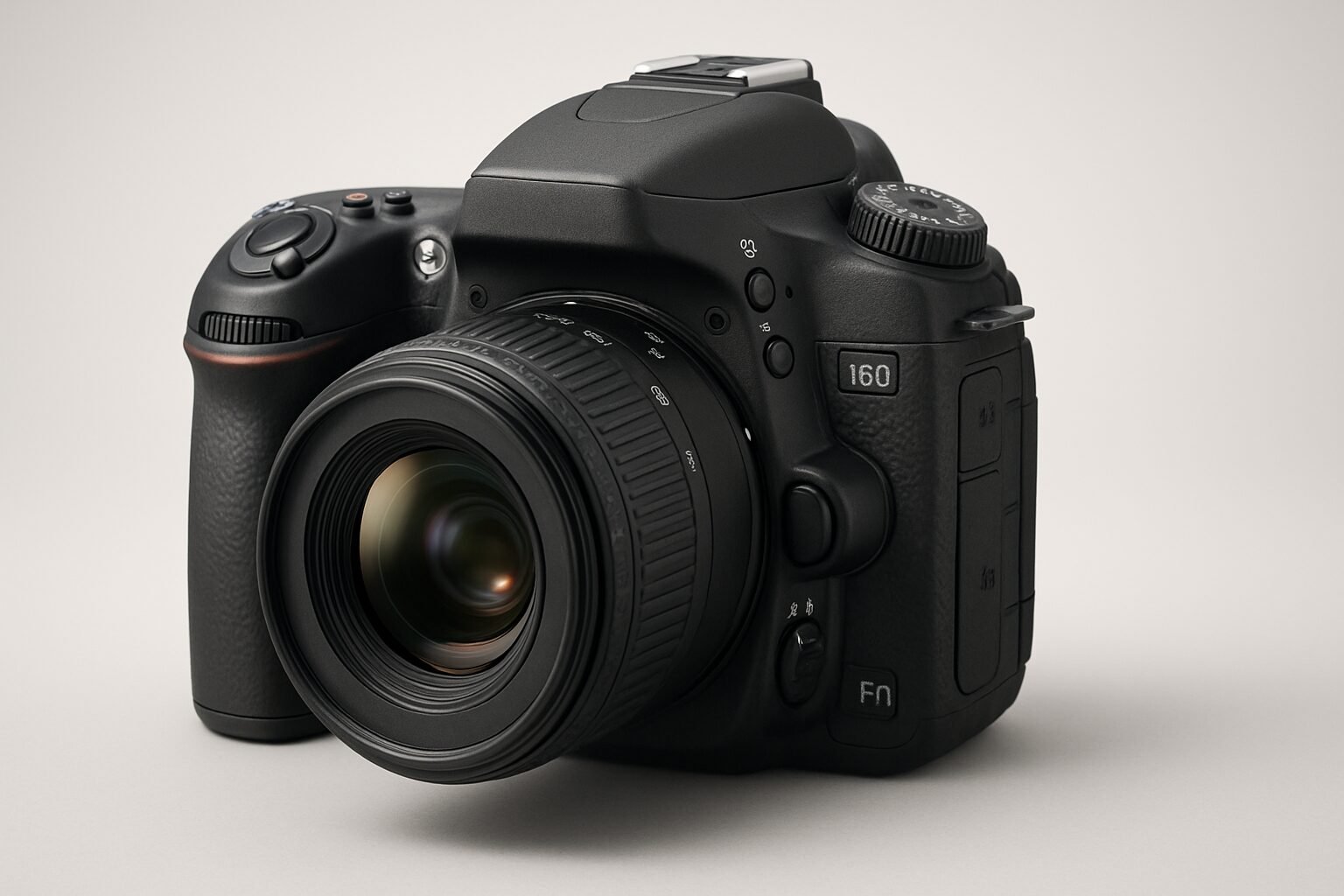
The shutter release button is a two-stage control. A half-press activates autofocus and exposure metering; a full press fires the shutter. The mode dial allows fast switching between Manual (M), Aperture Priority (A/Av), Shutter Priority (S/Tv), Program (P), and various scene modes. On Nikon bodies, these modes are clearly labeled on the dial itself. On Canon bodies, the Auto mode is typically marked in green for quick identification by newer shooters.
Built-in Flash and Hot Shoe
Most consumer DSLRs include a pop-up flash mounted on the pentaprism hump, released by a dedicated flash button. Flash exposure compensation can be dialed in independently of the main exposure. The hot shoe, sitting on top of the viewfinder housing, is an accessory mount for external speedlights, microphones, and GPS units. It provides electronic communication with compatible flashes, enabling TTL (Through-The-Lens) metering for automatic flash exposure.
Control Buttons and LCD Screen
A DSLR body carries a full set of dedicated controls: playback, delete, menu, info, and customizable function buttons. The rear LCD screen, typically 3 to 3.2 inches with over 1 million dots of resolution, handles image review, menu navigation, and Live View shooting. In Live View, the mirror locks up and a live feed streams to the screen. Touch controls are standard on newer models like the Nikon D780, enabling tap-to-focus and swipe-based image review without pressing physical buttons.
Internal Mechanisms: Shutter and Aperture
The Focal-Plane Shutter
The shutter is a pair of curtains positioned directly in front of the sensor. The first curtain opens to begin the exposure; the second follows to end it. The gap between them determines shutter speed, which can range from 30 full seconds down to 1/8000th of a second, plus a Bulb mode for exposures of any length. Shutter mechanisms are rated wear items. Entry-level bodies typically carry ratings of 50,000-100,000 actuations; the Canon 5D Mark IV’s shutter is tested to 150,000 cycles; professional-tier bodies often reach 200,000 or beyond. A failing shutter can produce dark banding across images or refuse to fire entirely.
Aperture in the Lens
The aperture is a diaphragm of overlapping metal blades inside the lens barrel. It controls both the intensity of light reaching the sensor and the depth of field in the final image. The f-number (f/2.8, f/5.6, f/11, and so on) represents the ratio of focal length to aperture diameter. A wide aperture at f/1.8 produces a shallow depth of field with a blurred background. A narrow aperture at f/16 keeps near and far subjects sharp simultaneously. Aperture is adjusted via the camera’s command dials or, on some legacy lenses, a physical aperture ring on the barrel.
How Shutter Speed and Aperture Work Together
These two settings are the core of exposure control. A fast shutter speed freezes motion but admits less light, so a wider aperture or higher ISO compensates. A slow shutter with a narrow aperture suits static landscape work on a tripod. Understanding the parts of a digital SLR camera that govern this relationship is the foundation of intentional, creative image-making. ISO, the sensor’s sensitivity setting, completes the exposure triangle as the third variable.
“Exposure is a conversation between shutter speed, aperture, and ISO. Change one, and the other two respond. Understanding the mechanics behind each setting is what separates deliberate photographers from lucky ones.” – HubSpot Marketing Blog, Visual Content Research
Power, Storage, and Connectivity Parts
Battery and Battery Compartment
DSLRs run on rechargeable lithium-ion batteries, usually proprietary to the manufacturer. The battery compartment sits inside the grip, secured by a latch. Real-world battery life typically yields 600-1,200 frames per charge depending on the model and how heavily the LCD and Live View are used. Carrying a second battery is standard practice for any serious shoot, particularly in cold weather where battery performance drops noticeably.
Memory Card Slot and Types
Most DSLRs include one or two memory card slots behind a side cover. Common formats are SD (Secure Digital, including UHS-I and UHS-II speed classes) and CFexpress. The Nikon D780 features dual UHS-II SD slots for fast burst writing and backup redundancy. The Canon EOS 7D Mark II uses a CF and SD combination. Card speed class directly affects burst depth and file-writing time. The memory card access lamp blinks during a write operation; removing the card while it is lit risks data corruption.
USB, HDMI, and Wireless Connectivity
Modern DSLRs include USB ports for tethered shooting and battery charging, HDMI outputs for external monitors and recorders, and built-in Wi-Fi and Bluetooth for wireless file transfer and remote control via smartphone apps. Connector covers protect ports from dust and moisture when not in use. The Nikon D780 includes USB-C, HDMI, and accessory terminals for remote triggers and external microphones, making it a capable hybrid stills-and-video platform.
Comparing Parts of Digital SLR Camera with Mirrorless Systems
| Part | DSLR | Mirrorless |
|---|---|---|
| Viewfinder | Optical (OVF) via mirror and pentaprism | Electronic (EVF) or rear LCD only |
| Mirror Box | Yes – reflex mirror assembly present | No – light goes directly to sensor |
| Autofocus System | Phase-detection AF module (separate from sensor) | On-sensor phase-detect or contrast-detect AF |
| Body Size | Generally larger and heavier | More compact and lighter |
| Lens Mount | Proprietary DSLR mounts (Nikon F, Canon EF) | Short-flange mounts (Nikon Z, Canon RF, Sony E) |
| Burst Speed | Often limited by mirror mechanism | Faster possible without a mirror |
| Battery Life | 600-1,200+ shots per charge typical | Generally lower due to EVF power draw |
Mirrorless systems are growing fast, and as of 2026, most major manufacturers have shifted their primary R&D investment toward mirrorless platforms. DSLRs still hold real ground in optical viewfinder clarity, battery endurance, and access to decades of native-mount glass. According to camera industry research, the installed base of DSLR lenses in active use numbers in the hundreds of millions globally, making the ecosystem argument for DSLRs genuinely compelling for many shooters.
Pros and Cons of Digital SLR Cameras
Pros
- Optical viewfinder: Zero lag, no battery drain, and a direct view through the lens that many photographers find irreplaceable.
- Battery life: 600-1,200+ frames per charge is standard, far ahead of most mirrorless bodies.
- Lens ecosystem: Decades of native-mount lenses available new, used, and at every price point.
- Ergonomics: Deep grips and physical controls suit long shooting sessions and gloved hands.
- Repairability: Authorized service centers (Nikon Professional Services, Canon CPS) have deep parts inventories and established repair workflows.
- Value: Used DSLR bodies offer exceptional image quality at prices that mirrorless equivalents cannot match.
Cons
- Size and weight: The mirror box and pentaprism add bulk that mirrorless designs eliminate entirely.
- Burst speed ceiling: The physical mirror mechanism limits how fast the camera can cycle between frames.
- Live View limitations: Autofocus in Live View on most DSLRs is slower than on mirrorless bodies using on-sensor phase detection.
- Diminishing manufacturer support: As of 2026, most brands have stopped developing new DSLR bodies, focusing resources on mirrorless lines.
- Shutter wear: The focal-plane shutter is a mechanical wear item with a finite rated lifespan.
Maintaining and Replacing Parts of Digital SLR Camera
Common Wear-and-Tear Parts
The shutter mechanism and mirror assembly have finite lifespans and are the most likely components to require professional attention over a camera’s life. LCD screens can crack from impact, rubber grips peel with age, and hot shoe contacts wear from repeated flash attachment. Error messages, visible shutter banding, or a shutter count approaching its rated maximum are all signals to book a service appointment. Cameras like the Canon EOS 5D Mark III have a range of user-replaceable rubber accessories, including the ER-SC1 shoe cover and rubber eyecup, that extend the camera’s usable life without professional intervention.
Replacing Lenses, Batteries, and Memory Cards
These are the user-serviceable parts of a digital SLR camera that require no tools and no technical expertise. Lens swaps should happen in a dust-reduced environment with the camera body facing downward to limit sensor contamination. Batteries and memory cards are accessed through dedicated covered compartments. Always power the camera off before removing a memory card. OEM (original equipment manufacturer) parts are the safest choice for batteries and chargers. Third-party options from established suppliers can be cost-effective for accessories like battery grips and door covers, but quality varies significantly.
Professional Repairs for Shutter and Sensor
When the shutter fails or the sensor develops contamination that a bulb blower cannot clear, professional service is the right call. Authorized service centers, including Nikon Professional Services and Canon CPS, perform shutter replacements and professional sensor cleanings with factory-spec parts. Turnaround time typically runs 1-3 weeks depending on the service center and model. Routine sensor maintenance with a quality bulb blower after every lens change extends the interval between professional cleanings considerably. Specialized sensor swabs are available for wet cleaning, but improper technique risks permanent sensor damage.
Frequently Asked Questions
What are the main parts of a digital SLR camera?
The main parts of a digital SLR camera are the lens, reflex mirror, pentaprism, optical viewfinder, image sensor, focal-plane shutter, and camera body. These components work as an integrated system: the lens gathers light, the mirror and pentaprism route it to your eye, and the shutter and sensor capture the final image.
What are the 5 basic parts of a digital camera?
The five foundational parts of a digital camera are the lens, image sensor, shutter, viewfinder, and camera body. In a DSLR specifically, the reflex mirror and pentaprism are added to that list because they define how the optical viewfinder system works.
What are the seven basic parts of a camera?
The seven basic parts are the lens, reflex mirror, pentaprism, viewfinder, image sensor, shutter, and camera body. Each plays a distinct role in the image-capture chain, from gathering light to writing a finished file to the memory card.
How does a DSLR differ from a smartphone camera?
A DSLR uses a large interchangeable lens, a sizable image sensor, and an optical viewfinder, giving it a fundamental physical advantage in low-light performance and creative control. Smartphone cameras rely on fixed lenses, small sensors, and computational processing to compensate for their hardware limitations.
How long does a DSLR shutter last?
Shutter longevity is rated in actuations. Entry-level DSLR bodies are typically rated between 50,000 and 100,000 cycles. Mid-range bodies like the Canon 5D Mark IV are rated to 150,000. Professional-tier bodies often reach 200,000 or beyond. Tools like ShutterCount software let you monitor your current shutter count against the rated maximum.
What is the difference between CCD and CMOS sensors?
CCD sensors, used in early digital cameras including the 1975 Kodak prototype and the 1981 Sony Mavica, offer low noise but consume significant power. CMOS sensors, now standard across all modern DSLRs, are more energy-efficient, support faster readout speeds, and enable high frame rates and Live View shooting without the power penalty of CCD designs.
Ready to build a brand as precise and intentional as the gear you shoot with? Contact Emin Media for a free brand consultation and let’s create something worth capturing.
Enjoyed this article?
Contact Emin Media for a free brand consultation and let's create something amazing together.
Get in TouchRelated Articles
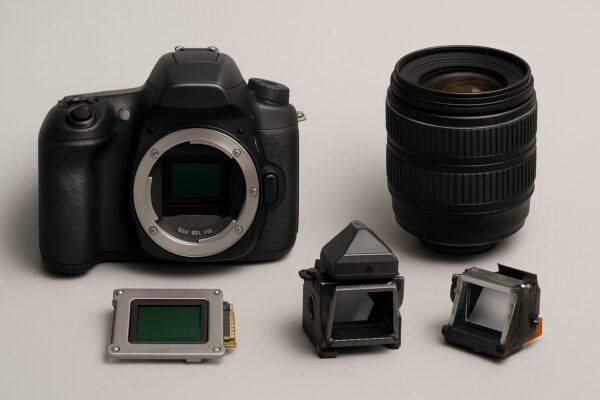
Parts of a Digital Single Lens Reflex Camera Guide
Explore every part of a digital single lens reflex camera: lens, mirror, sensor, shutter, and…
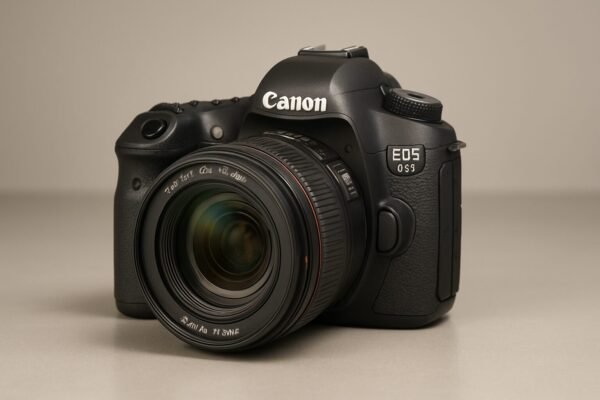
Canon DSLR Guide: Best Digital SLR Cameras 2026
A digital single lens reflex camera Canon offers optical clarity, 500+ lenses, and pro image…
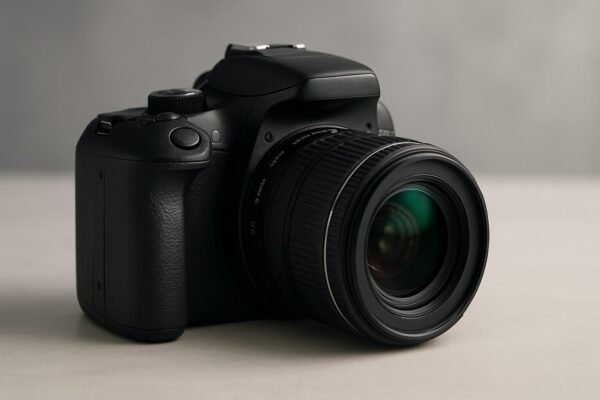
Best Compact Digital SLR Camera Guide 2026
A compact digital slr camera delivers DSLR-quality shots in a pocket-friendly body. Compare top 2026…