Canon DSLR Guide: Best Digital SLR Cameras 2026
Key Takeaways
- Canon’s DSLR lineup offers entry-level to professional models, all using the vast EF lens mount system with over 500 native and compatible lenses.
- Optical viewfinders provide zero-lag, real-time viewing essential for fast action and precise framing.
- Interchangeable lenses let you swap between wide-angle, telephoto, and macro optics for any creative vision.
- DSLR battery life significantly outperforms mirrorless alternatives, with the Rebel T7 rated for roughly 600 shots per charge.
- Affordable pricing puts a capable digital single lens reflex camera Canon within reach, with kits starting at $579.
- Canon’s EOS system has been in continuous development since 1987, giving buyers a proven, mature ecosystem to build on.
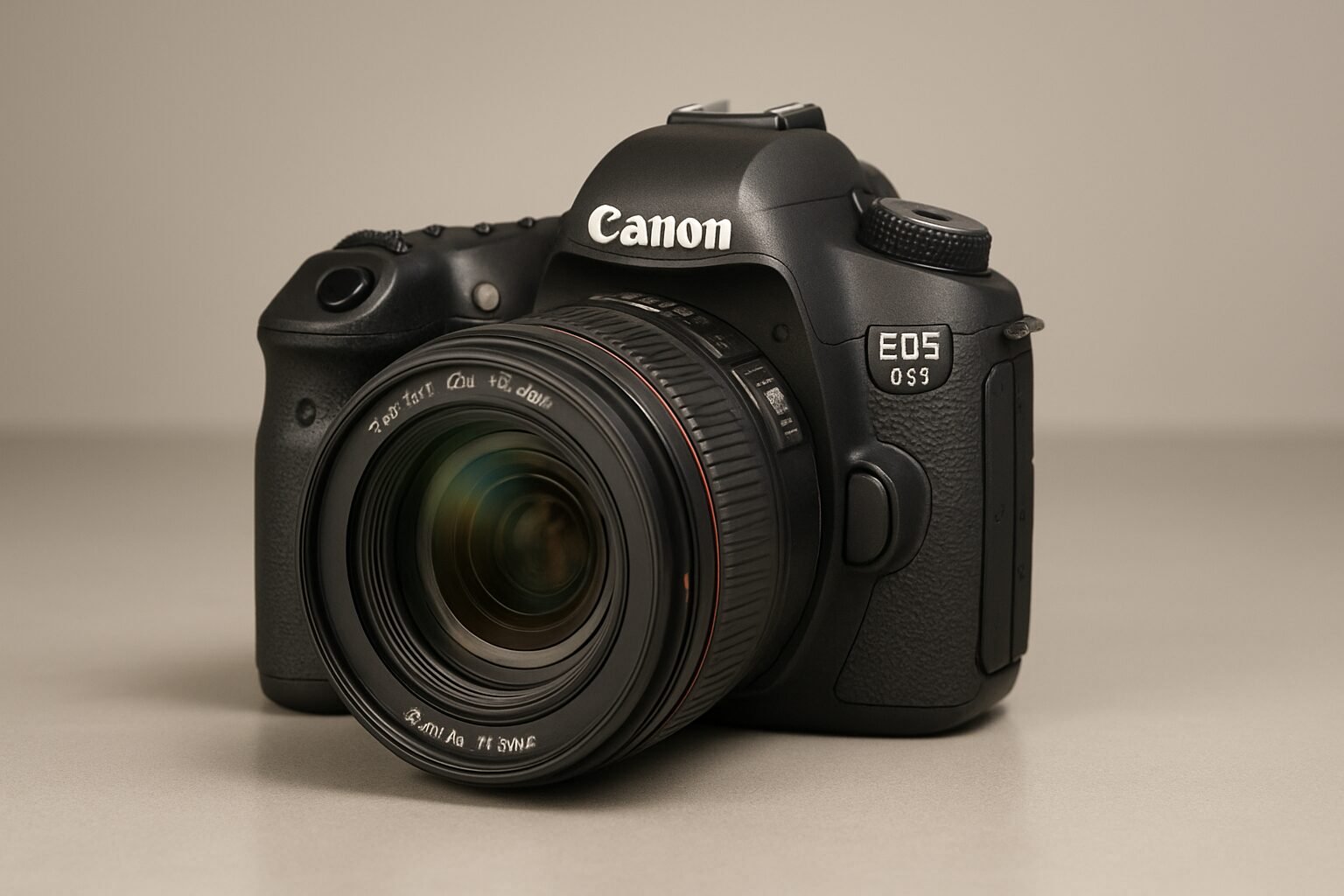
A digital single lens reflex camera Canon is a camera that uses a mirror-and-pentaprism system to deliver a real-time optical view through interchangeable lenses, combining precise control with exceptional image quality across every skill level.
When you hold a camera canon, you hold decades of imaging innovation. The reflex design uses a mirror that sends light from the lens straight to your eye, giving a true, lag-free view of the world. Combine that with Canon’s famously sharp EF lenses and generations of color science, and you get a tool that feels both classic and deeply capable. Whether you’re shooting a child’s first steps, a wedding ceremony, or a moonrise over the Pacific, a Canon DSLR turns a moment into a memory with technical clarity few other cameras can match.
What Is a Digital Single Lens Reflex Camera Canon?
A this type of canon is a camera that uses a mirror mechanism to direct light from the lens to an optical viewfinder, providing a direct, real-time view of the scene before you press the shutter. Canon has been a leader in DSLR technology since 1987, when it launched the EOS (Electro-Optical System) brand with the EOS 650 film SLR. Today, the this kind of camera canon lineup features sensors that capture 24.1 megapixels or more, backed by a lens system that includes over 70 native EF lenses and hundreds of compatible third-party options.
The Reflex Design: How It Works
The reflex design is the core of every DSLR. Here’s the step-by-step process that happens inside your Canon camera:
- Light enters the lens – The aperture opens to let light through the glass elements.
- Light hits a mirror – A main reflex mirror reflects the image upward toward a focusing screen and pentaprism (or pentamirror in entry-level bodies).
- The image appears in the viewfinder – You see exactly what the lens sees, with no electronic processing delay.
- When you press the shutter button – The mirror flips up, the shutter opens, and light strikes the digital sensor to record the photo.
- The mirror returns – Once the exposure finishes, the mirror drops back down, and you can compose the next shot.
This optical pathway is what gives a the single lens reflex camera canon its characteristic bright, natural viewfinder experience, favored by sports and wildlife photographers who need split-second timing.
Why Choose a Canon DSLR Over a Point-and-Shoot?
Compared to a compact camera or smartphone, even an entry-level Canon DSLR offers dramatically larger sensors, true depth-of-field control, and the flexibility to swap lenses. The Rebel T7 uses an APS-C sensor roughly 14 times larger than a typical smartphone sensor, capturing far more light and detail in a single frame. You also gain access to Canon’s Speedlite flash system and a wide ecosystem of accessories, from battery grips to wireless triggers, letting you grow your kit as your skills advance.
How a Digital Single Lens Reflex Camera Canon Delivers Superior Images
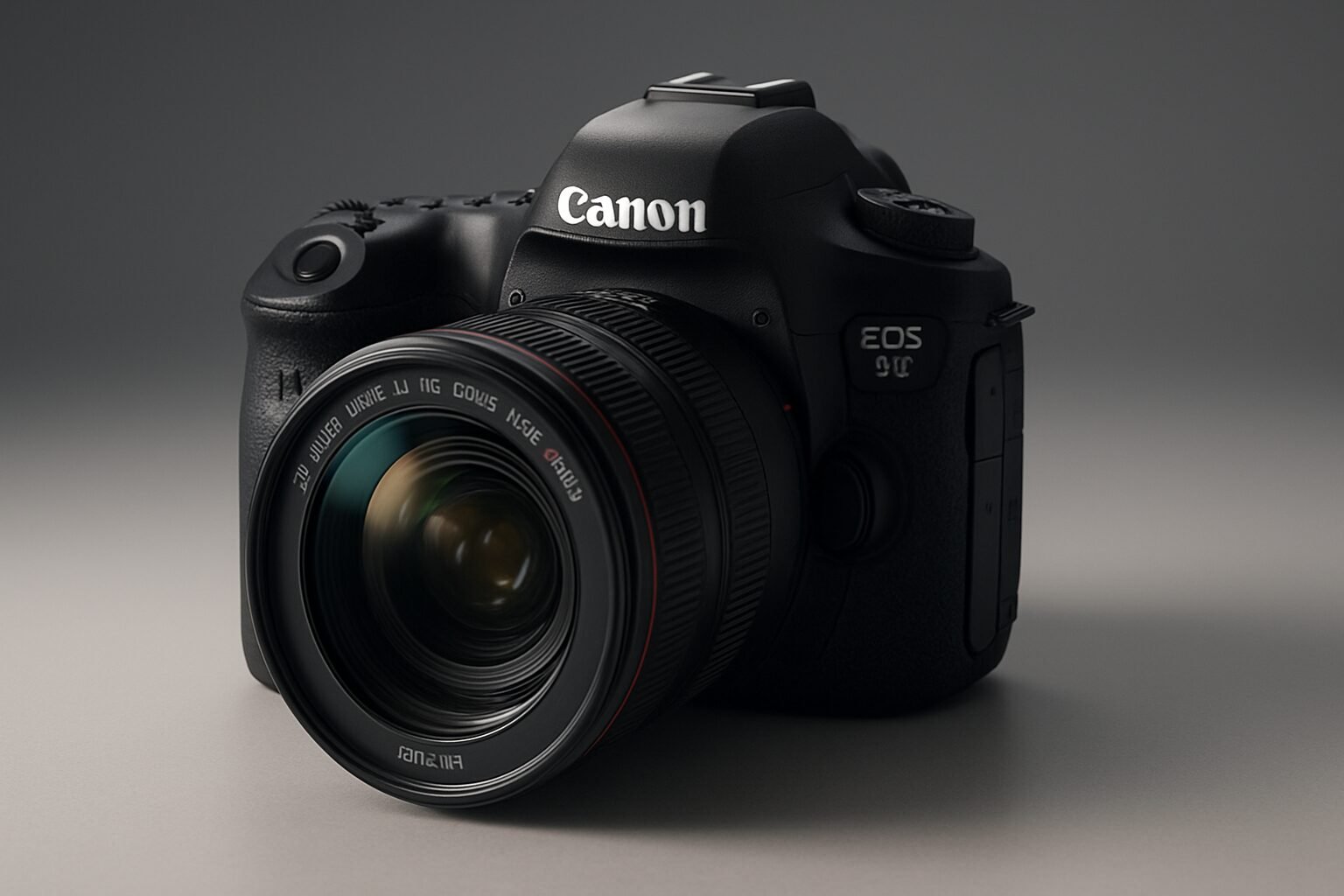
Image quality stems from two core components: the sensor and the lens. Canon’s DSLRs combine large CMOS sensors with the DIGIC image processor, a technology that has evolved across multiple generations within the Rebel line alone. The result is clean, vibrant photos even in challenging light.
Sensor Size and Low-Light Performance
Sensor size directly impacts image quality. Canon’s entry-level DSLRs use an APS-C sensor (approximately 22.3 x 14.9 mm), while professional models like the EOS 5D Mark IV use a full-frame sensor (36 x 24 mm). A larger sensor gathers more light, meaning less noise at high ISOs. The Rebel T7, powered by a 24.1-megapixel APS-C sensor and DIGIC 4+ processor, can shoot at ISO 6400 with acceptable grain, making handheld twilight shots possible without a flash.
According to Wikipedia’s history of DSLRs, the format’s ability to deliver cleaner, higher-resolution images than compact cameras drove its widespread adoption through the 2000s. That advantage remains true today for a canon, especially when paired with fast prime lenses.
Lens Ecosystem and Creative Flexibility
Canon’s EF lens mount, introduced with the EOS system in 1987, has been in continuous production for nearly four decades. The mount’s all-electronic communication between camera and lens enables fast, silent autofocus and accurate aperture control. Whether you mount a budget EF 50mm f/1.8 STM for dreamy portraits or an EF 70-200mm f/2.8L IS III USM for professional sports, the image quality scales with your ambition. Third-party brands such as Sigma, Tamron, and Rokinon also produce EF-mount lenses, expanding the total options to more than 500 native and compatible lenses.
The Evolution of Canon DSLRs: From Film to Digital
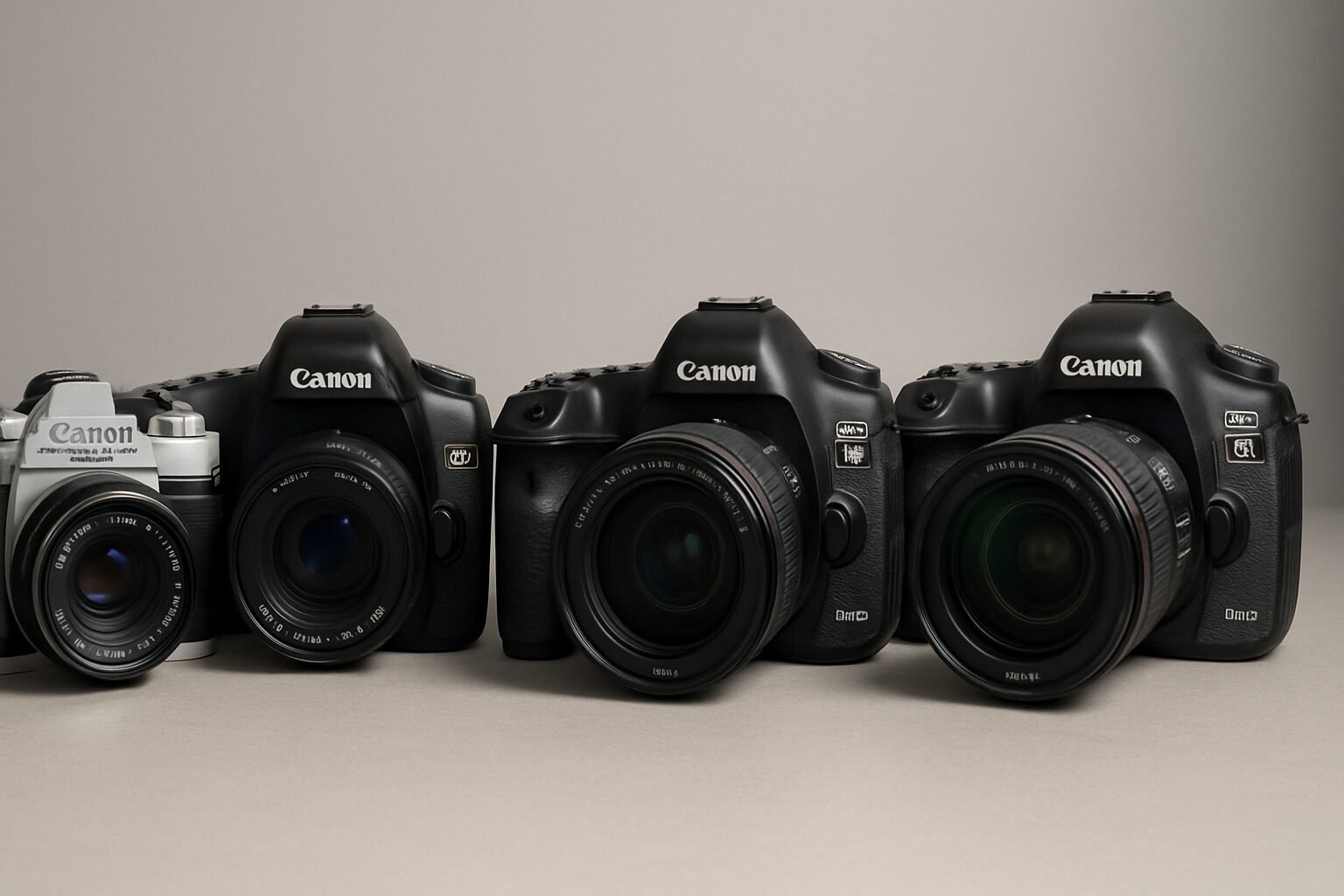
Canon’s journey into digital reflex cameras began in the mid-1980s, long before the mass market embraced pixels over silver halide. Understanding this history helps you appreciate why a modern digital single feels so refined and reliable.
The First Canon Digital Reflex: EOS D30
Canon’s own digital SLR story started in 2000 with the EOS D30, a 3.1-megapixel camera that used a CMOS sensor at a time when most competitors relied on CCD. That choice set a lasting pattern: Canon bet on CMOS for lower power consumption and faster readout, and the industry eventually followed. By 2005, Canon had shifted its entire new-product line to digital. The EOS 5D in 2005 was the first full-frame DSLR priced under $4,000, making professional image quality accessible to a far wider audience.
Rebel Series: Making DSLR Mainstream
The Rebel series, known as EOS XXXD or EOS Rebel T-series outside Japan, brought DSLR ownership to millions of everyday photographers. The EOS Rebel SL1, announced in 2013, was the world’s smallest and lightest DSLR at the time. According to Pictureline’s detailed announcement, the SL1 body measured just 4.6 x 3.57 x 2.74 inches and weighed 14.36 ounces, making it 25% smaller and 28% lighter than the Rebel T4i. It packed an 18-megapixel sensor and DIGIC 5 processor, proving that a compact body doesn’t force a compromise on image quality.
Today’s EOS Rebel T7 (2000D) builds on that philosophy. It offers a 24.1-megapixel APS-C sensor and DIGIC 4+ processor at an even more accessible price point. On Amazon.com, it has earned a 4.7-star rating from over 8,400 reviews and consistently appears as a best-seller, with more than 500 units sold in a typical month.
“The EOS Rebel SL1 Digital SLR Camera represents a new era in DSLR versatility: ultra-portable, full-featured DSLR cameras.”
“The optical viewfinder remains one of the most important tools a photographer has. It shows you the world as it is, not as a screen interprets it.”
Key Features of Modern Canon Digital Single Lens Reflex Camera Models
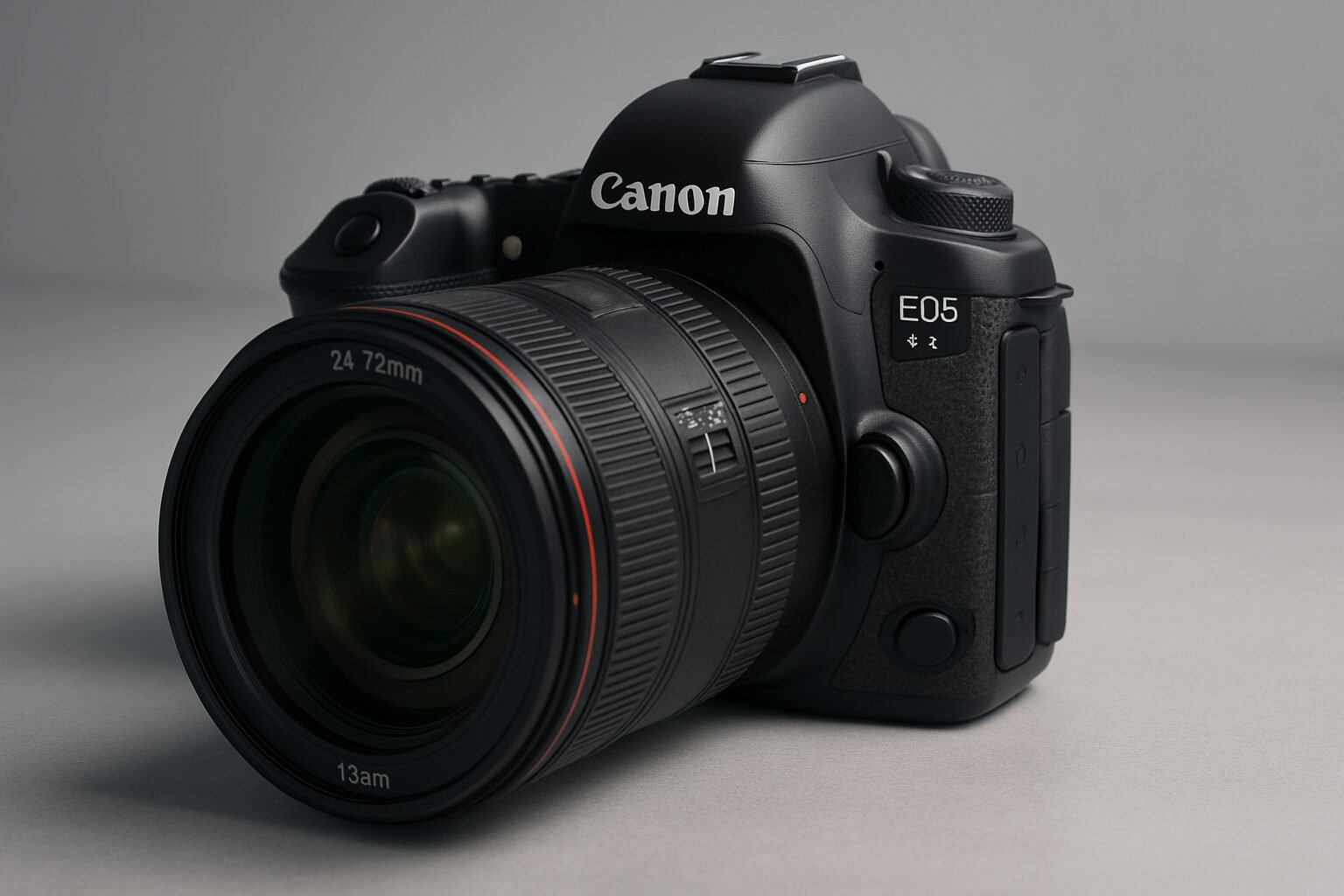
Today’s Canon DSLR lineup delivers features that were once exclusive to flagship models. Whether you pick a compact Rebel or a professional EOS 5D Mark IV, you get a set of core capabilities that define the Canon shooting experience.
Megapixels and Image Processing
Resolution matters when you crop or print large. The Rebel T7 gives you 24.1 megapixels, enough for a 20 x 30-inch print at 200 dpi without interpolation. The DIGIC 4+ image processor handles noise reduction, color rendition, and burst depth, letting the camera shoot continuously at 3 frames per second. For faster action, the EOS 1D X Mark III (available on the used market) can reach 20 fps with full autofocus tracking through the optical viewfinder, making it one of the fastest DSLR bodies Canon ever produced.
Autofocus and Shooting Speed
Autofocus performance often separates a keeper from a blur. The Rebel T7 uses a 9-point phase-detection AF system with a central cross-type point that stays sensitive when using lenses with a maximum aperture of f/5.6 or brighter. While modest by today’s mirrorless standards, it remains highly reliable for portraits, travel, and everyday photography. Canon’s higher-end DSLRs deploy up to 65 cross-type AF points covering a much wider area of the frame, essential for tracking birds in flight or a striker cutting through the box.
Video and Connectivity
Every Canon DSLR from the last decade shoots Full HD 1080p video. The Rebel T7 records at 30 fps, while models like the EOS 90D offer uncropped 4K recording. Built-in Wi-Fi on the T7 lets you transfer photos to a smartphone and control the camera remotely via the Canon Camera Connect app. NFC pairing simplifies the first connection on Android devices. These connectivity features make it easy to share a camera canon image to social media within seconds of capture.
Dust Reduction and Long-Term Reliability
One underrated advantage of the this type of canon design is its built-in dust reduction system. Canon’s EOS Integrated Cleaning System uses a self-cleaning sensor unit that vibrates at startup and shutdown, shaking dust off the low-pass filter. This matters enormously for photographers who swap lenses frequently in the field. Combined with Canon’s reputation for mechanical shutter durability, rated at 100,000 actuations or more on mid-range bodies, these cameras are built to last years of heavy use.
Pros and Cons
Pros
- Optical viewfinder with zero lag – See the scene exactly as it is, with no electronic delay or battery drain while composing.
- Exceptional battery life – The Rebel T7 is rated for roughly 600 shots per charge (CIPA standard), far ahead of most mirrorless competitors at the same price.
- Massive lens ecosystem – Over 500 native and compatible EF-mount lenses, including affordable used options that hold their value well.
- Proven reliability – Mechanical shutters rated at 100,000+ actuations and a dust reduction system built for real-world use.
- Accessible pricing – Kits start at $579 new, and the used market offers full-frame bodies like the EOS 5D Mark II for under $400.
- Intuitive controls – Physical dials and dedicated buttons make it easier to learn photography fundamentals than touchscreen-only interfaces.
Cons
- Larger and heavier than mirrorless – The mirror box and pentaprism add bulk that some photographers find inconvenient for travel or street shooting.
- Live View autofocus is slower – Phase-detection AF is fast through the viewfinder, but contrast-detect Live View AF lags behind mirrorless systems.
- Canon’s R&D focus has shifted – New lens and body development now centers on the EOS R mirrorless system, so DSLR innovation has slowed.
- No in-body image stabilization – Most Canon DSLRs rely on lens-based IS rather than sensor-shift stabilization found in newer mirrorless bodies.
Comparing Popular Canon DSLR Cameras
To help you choose the right model, the table below compares two of Canon’s most popular entry-level DSLRs: the EOS Rebel T7 and the compact EOS Rebel SL1. Both are available as of 2026 through major retailers and the used market.
| Feature | Canon EOS Rebel T7 (2000D) | Canon EOS Rebel SL1 (100D) |
|---|---|---|
| Sensor Resolution | 24.1 MP APS-C | 18.0 MP APS-C |
| Image Processor | DIGIC 4+ | DIGIC 5 |
| ISO Range | 100-6400 (expandable to 12800) | 100-12800 (expandable to 25600) |
| AF Points | 9 (1 cross-type) | 9 (1 cross-type, Hybrid CMOS AF II in Live View) |
| Continuous Shooting | 3 fps | 4 fps |
| LCD Screen | 3.0″ fixed (920k dots) | 3.0″ fixed touchscreen (1.04M dots) |
| Body Weight | Approx. 16.8 oz (475 g) | 14.36 oz (407 g) |
| Price (Body Only) | $579 (with 18-55mm lens) | $649.99 (body only, at launch) |
Prices are approximate and subject to change. The Rebel T7 is the current entry-level champion, while the SL1 remains a popular choice on the used market for its compact size.
Canon DSLR vs Mirrorless: Which Is Right for You?
Canon now dedicates most of its R&D to the EOS R mirrorless system, and the difference in lens design freedom is real. Removing the mirror box lets lens designers place rear elements closer to the sensor, enabling higher-performance wide-angle optics. Canon’s RF 15-35mm f/2.8L IS USM shows what’s possible when the flange-back distance shrinks from 44 mm (EF mount) to 20 mm (RF mount). Even so, for many photographers, a this kind of camera canon remains the smarter buy in 2026.
Optical vs Electronic Viewfinder
The optical viewfinder (OVF) is the DSLR’s signature strength. An OVF shows the scene with no pixel lag, no blackout delay, and zero battery drain while composing. For sports and wildlife, this real-time feed can be the difference between capturing the peak moment and missing it entirely. Modern electronic viewfinders (EVFs) have improved dramatically, but they still consume power and can stutter in burst shooting. Many photographers who grew up on film or early DSLRs also prefer the natural color and dynamic range of optical viewing.
Battery Life and Reliability
Because a DSLR doesn’t need to power an EVF or full-time sensor readout, its battery life far exceeds that of a mirrorless camera. The Canon Rebel T7 is rated for approximately 600 shots per charge (CIPA standard), while a similarly priced mirrorless body might manage 300-400 shots. In real-world use, many DSLR users report well over 1,000 frames from a single LP-E10 battery. For travel, wedding, and event shooters who can’t always recharge midday, this advantage is significant.
Is a Digital Single Lens Reflex Camera Canon Worth Buying in 2026?
Mirrorless may grab headlines, but a digital single lens reflex camera Canon still holds immense value, especially for beginners and cost-conscious enthusiasts. The vast used market for EF lenses, the proven reliability of mechanical shutters, and the simple joy of an optical finder make these cameras a lasting choice rather than a compromise.
Rtings.com, a well-regarded testing lab, continues to evaluate Canon’s DSLR offerings alongside its mirrorless line. In their 2025 round-up, they highlighted the Rebel T7 as a top budget pick, praising its straightforward controls and strong image quality for the price. According to camera industry data, the used DSLR market has grown steadily as mirrorless prices rise, making entry into the digital single lens reflex camera Canon ecosystem more affordable than ever.
Who Should Buy a Canon DSLR Today?
- Students and beginners – The Rebel T7’s guided interface and $579 kit price make it the perfect learning tool.
- Parents and family documenters – Fast autofocus and long battery life keep you ready for the next messy, adorable moment.
- Analog enthusiasts going digital – If you love the feel of a traditional camera, a Canon DSLR provides a smooth transition.
- Budget-minded wildlife and sports shooters – Used EF super-telephoto lenses are far cheaper than their RF equivalents, and an optical finder has no lag.
- Content creators who need a second body – A rugged DSLR serves as a reliable backup for video shoots or time-lapse work.
Budget-Friendly Options for Every Photographer
An entry-level digital single lens reflex camera Canon like the Rebel T7 with the EF-S 18-55mm IS II lens costs $579, and double-zoom kits including the EF 75-300mm III telephoto zoom sell for $699. These kits cover a focal range from wide landscapes to distant wildlife in a single purchase. On the used market, a well-kept Canon EOS 5D Mark II (full-frame, 21.1 MP) can be found for under $400, offering a large sensor and pro-grade build for the price of a compact camera. Every EF lens ever made mounts natively on any Canon DSLR, so you can build a system over time without fear of obsolescence.
For more on building a complete visual brand with the right camera gear, explore our creative production services and see how we approach visual storytelling for brands at every budget.
Conclusion
A digital single lens reflex camera Canon is more than a tool. It’s an invitation to see the world through an optical masterpiece built on nearly four decades of engineering. From the beginner-friendly Rebel T7 at $579 to the professional-grade 5D Mark IV, Canon’s DSLRs deliver proven ergonomics, a massive lens library, and the unique joy of an optical viewfinder. While the camera industry marches toward mirrorless, millions of photographers will continue capturing stunning images with these durable, affordable machines for years to come. If you crave a tactile, dependable camera that never gets between you and the moment, a Canon DSLR deserves a spot in your bag.
Ready to build something bold with your visuals? Contact Emin Media for a free brand consultation and let’s create imagery that actually moves people.
Frequently Asked Questions
What is a digital single lens reflex camera?
A digital single lens reflex camera uses a mirror and pentaprism to show the exact image from the lens in an optical viewfinder. When you press the shutter, the mirror flips up and the sensor records the photo. This design gives photographers a true, lag-free view of the scene before capture.
Why should I buy a Canon DSLR instead of a mirrorless camera?
Canon DSLRs offer a true optical viewfinder with no lag, longer battery life rated at roughly 600 shots per charge, and access to an enormous library of affordable EF lenses. They are ideal for beginners and anyone who values a traditional, tactile shooting experience over the latest electronic features.
Which Canon DSLR is best for beginners?
The Canon EOS Rebel T7 (2000D) is the most popular entry-level model, featuring a 24.1 MP sensor, built-in Wi-Fi, and an easy-to-use interface. Kits start at $579 with an 18-55mm lens, making it one of the most accessible digital single lens reflex camera Canon options available new in 2026.
Can I use old Canon lenses on a new DSLR?
Yes. All Canon EF and EF-S lenses work natively on any Canon DSLR body without an adapter. Third-party EF-mount lenses from brands like Sigma and Tamron are also fully compatible, giving you access to more than 500 lens options total.
Is Canon still making new DSLRs in 2026?
Canon has shifted its primary development focus to the EOS R mirrorless system, but popular DSLR models like the Rebel T7 remain in production and are widely available new. Canon continues to provide firmware support and service for its full DSLR line.
Does a Canon DSLR shoot good video?
Every modern Canon DSLR shoots Full HD 1080p video, and select models like the EOS 90D offer uncropped 4K recording. Built-in Wi-Fi makes it easy to transfer clips directly to a smartphone for quick editing and sharing.
Enjoyed this article?
Contact Emin Media for a free brand consultation and let's create something amazing together.
Get in Touch