Online Marketing Strategies That Actually Work
Key Takeaways
- Online marketing strategies are integrated plans that use digital channels to achieve business goals, requiring a clear picture of your audience and objectives before anything else.
- SEO, content marketing, social media, email, and paid advertising form the core pillars, but successful execution depends on data-driven optimization across all of them.
- Small businesses can compete effectively by prioritizing high-impact channels and measuring performance with discipline rather than spreading thin across every platform.
- Affiliate and influencer marketing has become a significant standalone channel, with the industry estimated at $13 billion as of 2023, according to Influencer Marketing Hub.
- Continuous refinement through analytics keeps your online marketing strategies aligned with shifting market conditions and customer behaviors.
Online marketing strategies are integrated plans that use digital channels like search engines, social media, email, and content to attract, engage, and convert target audiences. The most effective approaches combine multiple tactics tailored to specific business objectives and real customer insight.
What Are Online Marketing Strategies?
marketing strategies are the overarching plan for using internet-based channels to promote products or services and build brand presence. Unlike isolated tactics, a strategy integrates multiple channels, such as organic search, paid ads, social media, and email, guided by a unified set of goals. According to the Digital Marketing Institute, a digital marketing strategy is “a plan for using channels to grow your visibility online,” taking into account your target audience, competitive landscape, and business strengths.
A key distinction exists between strategy and tactics: strategy sets the direction, while tactics are the specific actions, like a social media post or an email campaign, that execute the plan. Without clear this type of strategies guiding your activities, businesses risk wasting resources on disjointed efforts that fail to deliver measurable outcomes. Research from the Digital Marketing Institute found that 53% of senior marketers are spending significantly more on digital marketing channels, which makes a well-planned strategy more essential than ever.
The Strategic Foundation: Goals and Audience
Every set of this kind of strategies must begin with defined goals and a deep understanding of the customer. The American Marketing Association (AMA) emphasizes that internet marketing connects brands with customers where they are, on search engines and social media, delivering personalized messaging at scale. To achieve this, marketers need to answer fundamental questions: Who is your ideal customer? What problems do they need solved? Which digital channels do they actually use?
Creating detailed buyer personas helps tailor content and predict buying patterns. A B2B software company might target IT decision-makers on LinkedIn, while a fashion retailer might engage Gen Z consumers on Instagram and TikTok. The channel follows the audience, not the other way around.
“Traditional media is a great way to reach a broad consumer base, whereas digital media has the ability to reach very specific audiences,” says Dr. Jessica Rogers, Senior Associate Dean of Business Programs at Southern New Hampshire University.
The Role of Data and Analytics
Data is the backbone of modern online marketing. By analyzing performance across channels, businesses can identify what works and refine their approach with precision. Key metrics like website traffic, conversion rates, and customer acquisition cost provide the insights that guide optimization. A data-centric approach ensures marketing budgets go to the most effective channels, a principle highlighted by Bank of America’s guide for small businesses, which stresses measuring performance to turn activity into return on investment.
“A clear strategy, defined goals and the right metrics turn marketing activity into return on investment,” notes Bank of America’s Center for Business Empowerment, updated June 2026.
6 Steps to Build Online Marketing Strategies That Deliver
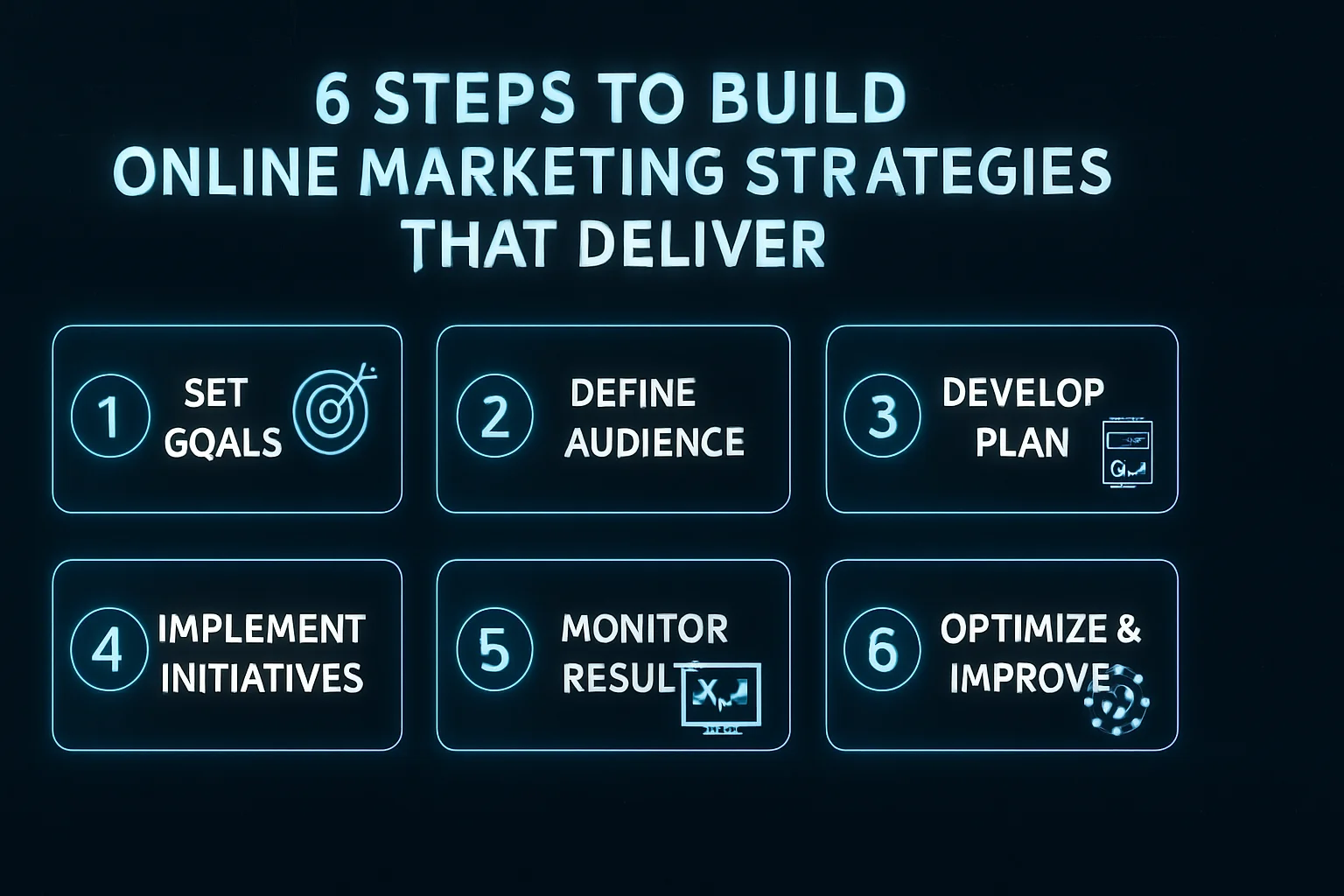
Building marketing strategies from scratch can feel overwhelming. Follow this process to create a cohesive, executable plan:
- Define Clear Goals: Establish what you want to achieve, whether that’s brand awareness, lead generation, or direct sales. Align these with broader business objectives so every channel has a purpose.
- Research Your Audience: Create detailed buyer personas based on demographics, behaviors, and pain points. Use data from analytics and customer feedback, not assumptions.
- Audit Existing Channels: Review current owned, paid, and earned media to identify what’s working and where gaps exist. Map each channel to revenue, as the Digital Marketing Institute recommends.
- Select Appropriate Channels: Based on audience and goals, choose the right mix of SEO, content, social, email, and paid ads. Fewer channels executed well beats many channels executed poorly.
- Create and Execute a Content Plan: Develop a content calendar that aligns with your strategy and distributes across chosen channels consistently.
- Measure, Analyze, and Refine: Set KPIs, track performance, and iterate continuously. This is where most this type of strategies either compound or collapse.
Pros and Cons of Online Marketing Strategies
Pros
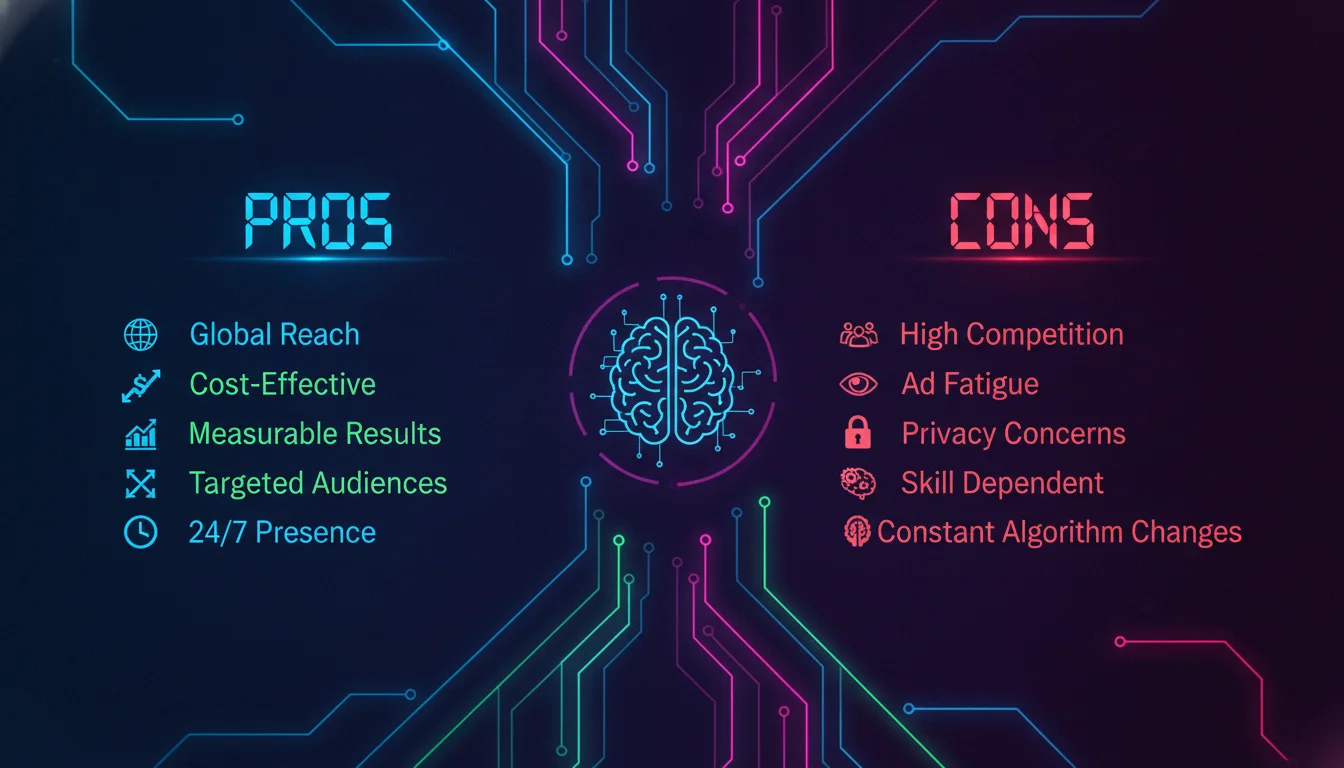
- Precise audience targeting that traditional media cannot match, reaching specific demographics, interests, and behaviors.
- Real-time performance data lets you optimize campaigns while they run, not after budgets are spent.
- Scalable for businesses of any size: even modest budgets can drive meaningful growth when focused correctly.
- Multiple channels work together, with SEO, content, email, and social reinforcing each other for compounding results.
- Long-term assets like SEO authority and email lists continue delivering value without ongoing spend.
Cons
- Requires consistent time investment: algorithms change, platforms evolve, and strategies that worked last year may underperform today.
- Can become fragmented without a clear plan, spreading resources too thin across too many channels.
- Paid channels stop delivering the moment budgets run out, creating dependency if organic channels are neglected.
- Measuring true ROI across channels requires analytics expertise that many small teams lack.
SEO: The Foundation of Long-Term Online Visibility
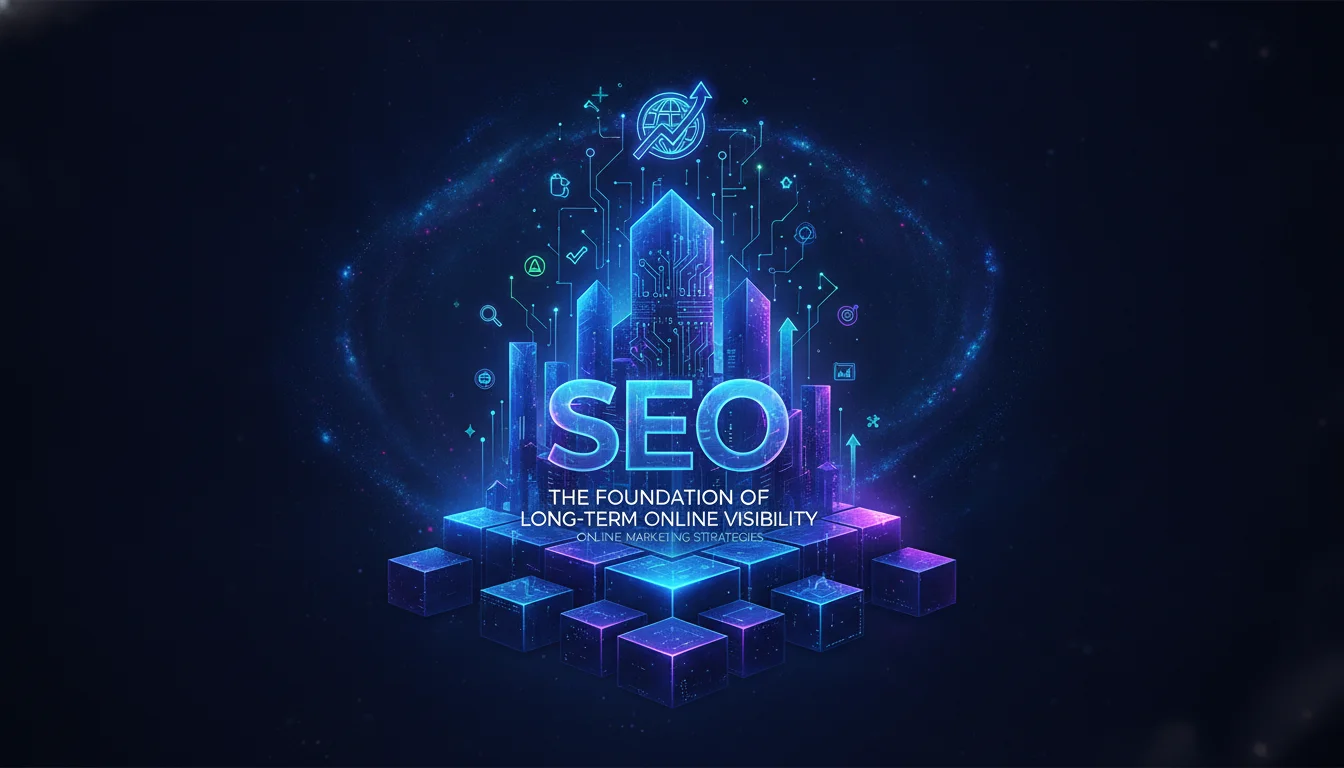
Search engine optimization (SEO) is one of the most sustainable this kind of strategies because it drives organic traffic from search engines like Google without a cost-per-click. The AMA describes SEO as “a powerful long-term strategy that helps brands build authority and attract high-intent customers.” Unlike paid ads, organic listings keep generating clicks after the initial investment, making SEO one of the few online marketing that compounds over time.
On-Page SEO
On-page SEO involves optimizing individual web pages to rank higher in search results. This includes strategically using keywords, writing compelling title tags and meta descriptions, and structuring content with clear headings. Ensuring your content directly answers user search intent is critical: search engines favor pages that satisfy queries quickly and thoroughly, not pages that bury the answer.
Technical SEO
Technical SEO addresses the backend of your site. Fast-loading pages, mobile responsiveness, and a clean site architecture make it easy for search engines to crawl and index your content. Even exceptional content won’t rank if technical issues block access. Tools like Google Search Console help identify and fix these problems before they cost you rankings.
Off-Page SEO and Link Building
Off-page SEO builds your site’s authority through backlinks from reputable sources. Each link acts as a vote of confidence from another domain. Strategies include guest blogging, digital PR, and earning media mentions. Even unlinked brand mentions contribute to trust signals that can improve rankings over time, according to the AMA.
Content Marketing: Building Trust Before the Sale
Content marketing uses storytelling and information sharing to attract and engage audiences long before they’re ready to buy. The goal is to provide genuine value that builds trust over time, eventually leading to customer action. As SNHU explains, “content marketing works in symbiosis with other types of digital marketing,” supporting SEO and social media efforts with shareable, search-friendly material.
Types of Content
Content takes many forms: blog posts, videos, podcasts, infographics, e-books, and case studies. Each format serves different audience preferences and stages of the buying journey. A B2B buyer might prefer an in-depth white paper, while a consumer might engage with a short video on TikTok. The key is aligning content type with both audience behavior and marketing goals, not just producing volume.
Content Distribution and Promotion
Creating great content is only half the work. Distribution determines reach. Share content across social media, email newsletters, and with industry influencers. Repurpose content strategically: turn a blog post into a video, an infographic, or a LinkedIn carousel to maximize its mileage. Guest posting on reputable sites also extends your audience without paid spend.
Measuring Content ROI
Track metrics like page views, time on page, social shares, and lead conversions to gauge content effectiveness. Use UTM parameters to attribute leads to specific content pieces. This data reveals which topics and formats resonate, allowing smarter investment in future content rather than guesswork.
Affiliate and Influencer Marketing: The Trust Shortcut
Affiliate and influencer marketing has grown into one of the most significant online marketing strategies for brands that want to reach new audiences through trusted voices. According to Influencer Marketing Hub data cited by SNHU, the affiliate marketing industry was estimated at $13 billion in 2023, driven by the rise of TikTok, Instagram, YouTube, and creator-led blogs as mainstream media.
The model is straightforward: your brand collaborates with third-party creators who promote your products or services to their established audiences in exchange for compensation. The value isn’t just reach. It’s borrowed trust. A creator’s recommendation carries weight that a banner ad never will. For brands building online marketing strategies on limited budgets, affiliate partnerships can deliver measurable leads without upfront ad spend.
Focus on creators whose audience genuinely overlaps with your ideal customer. Micro-influencers with smaller but highly engaged followings often outperform celebrity partnerships on conversion metrics, even if their raw reach numbers look modest by comparison.
Social Media and Community Engagement
Social media platforms offer direct access to audiences at scale, and for small businesses, they can level the playing field against competitors with larger ad budgets. Constant Contact advises staying authentic and consistent: “curate your content to fully align with who you are” as a brand before chasing follower counts.
Choosing the Right Platforms
Not every platform suits every business. B2B companies often find traction on LinkedIn, while visual brands thrive on Instagram and Pinterest. TikTok and Snapchat skew toward younger demographics. The practical move: focus on one or two platforms initially, master them, then expand. Spreading across six platforms with mediocre content beats none of them.
Organic Social Tactics
Organic social media means posting engaging content without paid promotion. It builds community and trust but demands consistency. Responding to comments, sharing user-generated content, and hosting live sessions boost engagement without budget. Organic reach has declined across most platforms, but it remains a foundation for brand loyalty that paid ads alone can’t replicate.
Paid Social Advertising
Paid ads on social media enable precise targeting by demographics, interests, and behaviors. Platforms like Facebook and Instagram let you reach custom audiences, including people who have already visited your website. This makes paid social one of the most effective online marketing strategies for retargeting warm prospects and scaling campaigns quickly when you have a proven offer.
Email Marketing and Automation
Email marketing consistently delivers one of the highest returns on investment among all digital channels. It allows direct communication with audiences who have opted in, making it ideal for nurturing leads and retaining customers. Automation extends this by triggering personalized messages based on user actions, turning a single setup into ongoing revenue.
Building a Quality Email List
A permission-based list is non-negotiable. Use lead magnets, like free guides or exclusive discounts, to encourage sign-ups. Avoid purchasing lists, which damage deliverability and brand reputation. Segment subscribers by interests, purchase history, or engagement level to send more relevant content that actually gets opened.
Effective Email Campaigns
Newsletters, promotional offers, and transactional emails are the most common types. Subject lines, preview text, and mobile optimization are critical for open rates. A/B testing different elements refines performance over time. As Constant Contact notes, email “gets your content in the right inboxes and allows your audience to get more visibility into who you are.”
Automation Workflows
Automation saves time and increases relevance simultaneously. Welcome series for new subscribers, abandoned cart reminders, and re-engagement campaigns run automatically based on triggers. This ensures timely communication without manual effort. Platforms like Constant Contact and Mailchimp offer visual workflow builders that make setup accessible even for small teams without dedicated marketing staff.
Paid Advertising: PPC and Beyond
Paid advertising delivers immediate visibility while organic online marketing strategies build long-term value. For new websites or competitive keywords, pay-per-click (PPC) can be essential to gain early traction. As Bank of America’s guide notes, even modest budgets can be effective when targeted carefully and measured rigorously.
Search Engine Advertising
Google Ads and Microsoft Advertising dominate search advertising. Advertisers bid on keywords, and ads appear above organic results for immediate visibility. Key success factors include thorough keyword research, compelling ad copy, and landing page optimization. A well-structured account with negative keywords prevents wasted spend on irrelevant clicks.
Display and Retargeting Campaigns
Display ads reach users across the web through banner images on participating sites. Retargeting specifically shows ads to people who have previously visited your site, keeping your brand present while they consider their options. These campaigns require strong creative visuals and careful frequency capping to avoid ad fatigue that turns prospects off.
Measuring Paid Campaigns
Track click-through rate (CTR), conversion rate, and return on ad spend (ROAS). Continuous testing of ad variations and audiences is essential. Analytics platforms integrate with ad accounts to provide a unified view of performance, enabling real-time optimization rather than waiting for end-of-month reports.
Choosing and Integrating the Right Mix
No single channel wins alone. The most effective online marketing strategies integrate multiple channels into a coherent system where each one reinforces the others. The challenge is determining which channels deserve the most investment given your specific goals, budget, and team capacity.
Assessment Criteria for Online Marketing Strategies
Consider target audience, budget, timeline, and internal expertise before committing to a channel mix. SEO suits a content-rich business with a long view. PPC fits a new product launch needing immediate traffic. According to the Digital Marketing Institute, auditing existing channels and mapping them to revenue reveals what’s truly driving results versus what just looks busy.
Building a Balanced Plan
A balanced plan combines slow-burn online marketing strategies like SEO and content with faster tactics like social ads and PPC. This ensures you’re building a sustainable asset while also feeding the sales pipeline short-term. For small businesses, a few channels executed with discipline consistently outperform a scattered approach across many platforms.
Comparison of Online Marketing Strategies
The table below outlines the pros and cons of common strategies to help you decide where to focus first.
| Strategy | Pros | Cons |
|---|---|---|
| SEO | Long-term, cost-effective, builds authority | Slow initial results, requires technical skills |
| Content Marketing | Builds trust, supports SEO and social | Time-intensive, demands consistent quality |
| Social Media | High engagement, direct customer interaction | Algorithm changes can reduce reach, constant attention needed |
| Email Marketing | High ROI, personalization, automation | List maintenance, spam filter risks |
| PPC | Immediate traffic, precise targeting | Costs can rise, stops when budget ends |
| Affiliate/Influencer | Borrowed trust, performance-based cost | Creator vetting required, results vary by niche |
Analytics and Continuous Improvement
The digital landscape evolves fast, making continuous optimization essential to keeping online marketing strategies effective. What worked last quarter may underperform today. Successful marketers treat analytics not as an afterthought but as a core discipline built into every campaign from day one.
Key Performance Indicators (KPIs)
Identify metrics aligned with business objectives before you launch anything. For awareness campaigns, track reach and impressions. For lead generation, monitor conversion rate and cost per lead. Avoid vanity metrics like raw page views. Instead, focus on engagement and conversion metrics that tie directly to revenue. The Digital Marketing Institute emphasizes stepping away from numbers that aren’t crucial to long-term success, like Facebook likes in isolation.
A/B Testing for Optimization
A/B testing compares two versions of a variable to see which performs better in real conditions. Test headlines, CTAs, landing pages, and email subject lines systematically. Even small changes can produce meaningful improvements in click-through and conversion rates over time. Tools like Google Analytics facilitate testing without requiring a dedicated development team.
Iterating Based on Data
Review analytics dashboards weekly or monthly with a specific agenda: identify underperforming areas and reallocate resources accordingly. If blog posts on a certain topic drive most conversions, produce more content on that theme. This cycle of measurement and refinement keeps online marketing strategies agile rather than locked into last year’s assumptions.
As of 2026, the most successful online marketing strategies are those that evolve deliberately. By integrating SEO, content, social media, email, affiliate marketing, and paid advertising, and continuously optimizing based on data, businesses of any size can build a digital presence that drives sustainable growth.
Frequently Asked Questions
What are the best online marketing strategies for small businesses?
Small businesses benefit most from focusing on a few high-impact channels such as local SEO, social media marketing, and email automation. According to Bank of America’s business resource center, digital marketing levels the playing field for smaller brands when they focus on consistent execution and clear performance metrics rather than trying to do everything at once.
How do I choose the right online marketing strategy for my business?
Start by defining your business goals and understanding your target audience in detail. Audit your current channels, map each one to revenue, and experiment with a mix of organic and paid tactics to identify what yields the best return. The Digital Marketing Institute recommends this audit-first approach before committing budget to any new channel.
What is the difference between internet marketing and digital marketing?
Internet marketing specifically refers to online channels like search, social, and email, whereas digital marketing may also include offline digital media like digital billboards or SMS campaigns. In practice, most professionals use the terms interchangeably, but the distinction matters when planning channel mix and budget allocation.
How long does it take to see results from SEO?
SEO is a long-term strategy. It typically takes 3 to 6 months to start seeing significant organic traffic growth, depending on competition level and the quality of optimization work. Brands that combine SEO with content marketing tend to see compounding results faster than those treating SEO as a one-time technical fix.
Is paid advertising necessary for online marketing success?
Not necessarily, but it accelerates results significantly for new brands or competitive markets. Most businesses that build durable online marketing strategies combine organic efforts like SEO and content with paid ads for a balanced approach that drives both immediate and sustained traffic without full dependency on either.
How can I measure the success of my online marketing strategies?
Use KPIs aligned with your specific goals, such as conversion rate, cost per acquisition, and customer lifetime value. Tools like Google Analytics and platform-native dashboards provide the data needed to evaluate performance. The key is reviewing these metrics on a regular cadence and acting on what you find rather than collecting data passively.
Enjoyed this article?
Contact Emin Media for a free brand consultation and let's create something amazing together.
Get in TouchRelated Articles
Digital Storytelling for Brands: The Complete Guide
Digital storytelling for brands builds real audience connections through narrative. Learn proven techniques, formats, and…
Design Thinking for Marketing: A 2026 Guide
Design thinking for marketing builds campaigns around real user needs. Learn the 5 phases, common…

Creative Direction for Video Shoots: A Complete Guide
Master creative direction for video shoots with proven steps, tools, and strategies that build brand…