Motion Graphics for Branding: Strategy & Examples
Key Takeaways
- Motion graphics for branding are animated visual elements that sharpen brand storytelling and drive audience engagement.
- Video viewers retain far more of a message than text readers, making animation a powerful communication tool.
- Motion ads consistently outperform static ads in click-through performance across major social platforms.
- Brands across industries, from Google to Burger King, are using motion graphics to anchor rebrands and product launches.
- The right tools, Adobe After Effects, Blender, and Jitter, each serve different production needs and budget levels.
- AI and interactivity are reshaping how motion content gets made and experienced in 2026.
Motion graphics for branding are animated visual elements that combine graphic design with movement to communicate a brand’s identity, values, and messages in a dynamic, memorable way.
Understanding Motion Graphics
What Are Motion Graphics?
Motion graphics are digital animations that combine text, images, and graphic shapes to convey information or tell a story. Unlike traditional animation, which centers on character development and narrative arcs, motion graphics emphasize visual communication and abstract ideas. Think of them as graphic design that breathes.
History of Motion Graphics
The origins of motion graphics are rooted in film credits. Post-World War Two, designers like Saul Bass and Elaine Bass pioneered bold, colorful animated title sequences for films including The Seven Year Itch (1955) and North by Northwest (1959). Pablo Ferro followed with iconic work on Dr. Strangelove (1964). The arrival of the Apple Mac in the early 1980s opened the discipline to a wider creative community, and software like Adobe After Effects later expanded what was possible. According to Adobe’s creative history documentation, it was the evolution of digital technology that brought motion graphics to a truly mass audience of creators.
Key Elements of Motion Graphics
- Animation Techniques: Easing, scaling, offset, delay, and masking are foundational. Easing mimics natural movement, where objects accelerate and decelerate rather than moving at a constant, robotic speed.
- Visual Hierarchy: Effective motion graphics guide viewers’ attention through movement and timing, directing the eye from one key element to the next.
- Color and Typography: Color choices and font selection carry the brand’s personality. Every frame is a brand touchpoint.
The Role of Motion Graphics in Branding
Enhancing Brand Identity
for branding help create a memorable identity by bringing static elements to life. An animated logo is no longer just a symbol. It becomes a living expression of what a brand stands for. Studio Pigeon’s research on motion branding describes this as transforming a traditional logo into a dynamic, moving representation of the brand, one that resonates across every digital platform it touches.
“Motion branding encompasses the art of bringing a brand’s visual elements to life through animation and movement, creating a more immersive and interactive experience for the target audience.” – Studio Pigeon, Motion Branding Guide
Improving Engagement and Retention
People retain 95% of a message when they watch it in a video, compared to just 10% when reading text. That gap is enormous. According to Superside’s motion design research, this retention advantage is amplified when colorful animation is paired with clear visuals and strong storytelling. For brands competing in crowded feeds, that difference in recall is the difference between being remembered and being scrolled past.
Driving Conversions
Motion ads on Facebook, Instagram, and Amazon drive 1.5x more clicks than static ads, according to performance data cited by Superside. Multi-channel campaigns using motion graphics see meaningful increases in revenue, and emails that include motion or video see click-through rates jump by 200-300%. These are not marginal gains. They represent a fundamental shift in how audiences respond to brand content.
Brand Spotlight: Motion Graphics in the Wild
The best way to understand motion graphics for branding is to see what top brands actually do with them. Here are real-world examples drawn from 2025-2026 creative work:
- Google: Welcome to the Gemini Era. A full brand motion system built around the Gemini product launch, using fluid shape transitions and the Google color palette to signal a new chapter without abandoning brand familiarity.
- Burger King: New Brand Identity. Motion graphics anchored the rollout of BK’s visual rebrand, with animated versions of the new logo and packaging system deployed across social and digital OOH.
- Slack: Communication Without Chaos. Slack used motion graphics to explain a complex product value proposition in under 90 seconds, turning abstract workflow concepts into clear, watchable visual sequences.
- PayPal: Explainer Video. A motion-led explainer that simplified a financial product for a general audience, proving that motion graphics for branding work just as well in fintech as in consumer goods.
- Dropbox: Do More Than Store. Dropbox used kinetic typography and shape animation to reframe its product positioning, moving from a storage utility to a creative collaboration platform.
“When executed well, motion graphics bring brand stories, products and ideas to life, making them more memorable and engaging for audiences across every touchpoint.” – Superside, Motion Graphics Examples for Brands, 2025
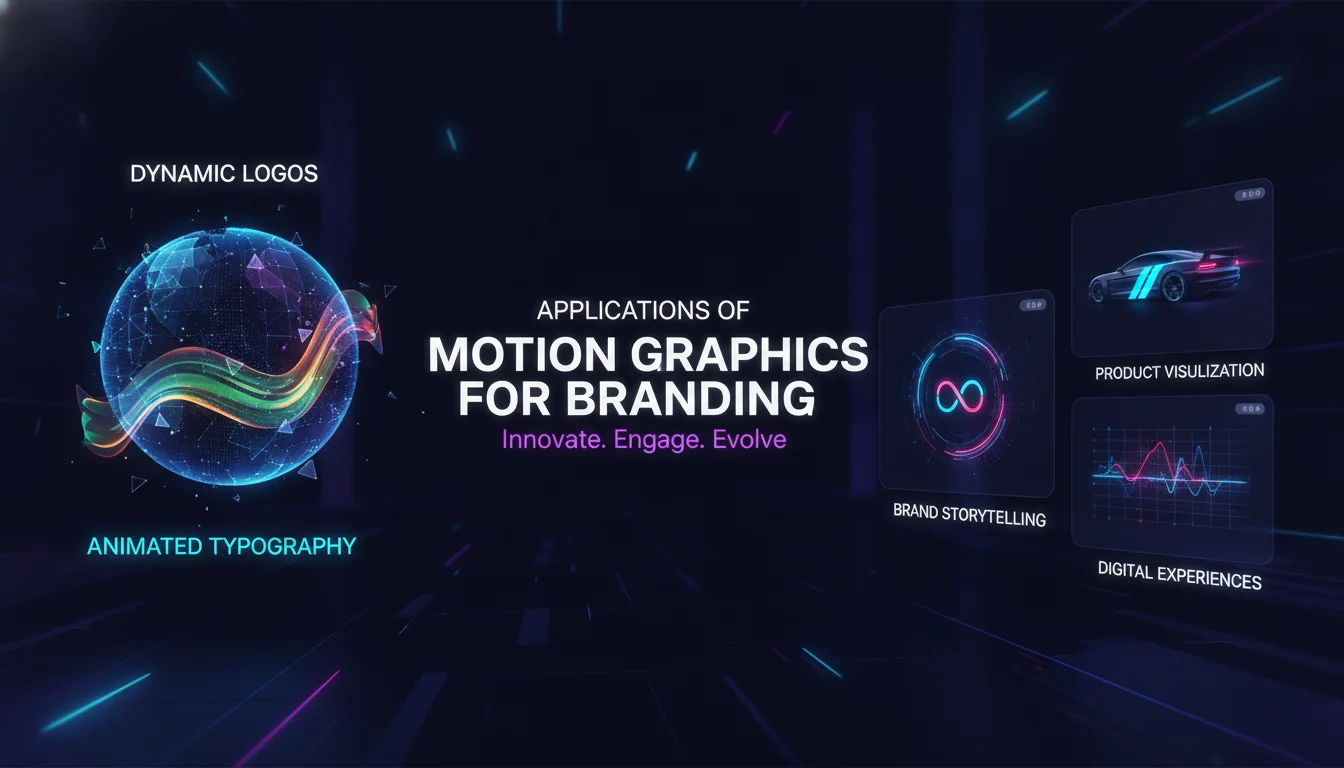
Applications of Motion Graphics in Branding
Social Media Marketing
Motion graphics for branding are particularly powerful in social media, where attention is the scarcest resource. Animated posts capture viewers’ interest in the first two seconds, before a thumb can scroll past. According to Superside’s 2026 brand marketing data, the use of motion graphics in social media marketing is expected to grow by 40% by 2027. In 2017, only 63% of businesses used motion graphics in their marketing strategies. By 2023, that number had climbed to 86%, and it continues to rise.
Advertising Campaigns
Motion graphics simplify complex ideas and communicate messages faster than any other format. Explainer videos that use motion graphics clarify product features and benefits in a format audiences actually finish watching. That completion rate translates directly into higher customer conversion rates.
Website and User Experience Design
Incorporating motion into website design guides visitors through the experience and highlights key information at the right moment. UI animation captures the mood of a brand and conveys it to the target audience. According to motion design principles documented by Zajno Studio, good animation also makes the entire user experience more memorable and exciting, encouraging interaction by enticing users to explore.
News Broadcasting and Retail Experiences
Motion graphics help broadcasters tell stories more effectively, especially during high-stakes news events like elections. In retail, digital menu boards and billboards that once displayed flat print formats now carry animated brand content, turning passive signage into active brand communication.
Pros and Cons
Pros
- Dramatically higher retention: Audiences remember video content far longer than text, giving motion graphics a clear edge in brand recall.
- Stronger conversion performance: Motion ads consistently outperform static creative in click-through and purchase intent metrics.
- Versatile across channels: The same motion asset can be adapted for social, web, email, broadcast, and retail environments.
- Simplifies complex ideas: Abstract concepts, technical products, and multi-step processes become clear and watchable through animation.
- Builds brand personality: Movement adds dimension to a brand identity that static logos and color palettes alone cannot achieve.
Cons
- Higher production cost: Quality motion graphics require skilled designers and more production time than static assets.
- Longer turnaround: Even with modern tools, a polished motion piece takes longer to produce than a static graphic.
- File size and load times: Poorly optimized motion files can slow websites and hurt user experience on mobile connections.
- Requires brand consistency discipline: Motion systems need clear guidelines, or animated assets can drift from the core brand identity.
Creating Effective Motion Graphics for Branding
Step 1: Define Your Brand Motion Language
Before opening any software, decide what movement says about your brand. Fast cuts and kinetic energy signal urgency and innovation. Slow, fluid transitions communicate luxury and calm. Your motion language should be as deliberate as your color palette.
Step 2: Choose the Right Tools
To create motion graphics for branding, designers work across several platforms depending on the project scope. Adobe After Effects remains the industry standard for professional animators, offering advanced compositing and visual effects. Blender handles 3D modeling and rendering for brands that want dimensional animation. Jitter is built for speed, offering template-based animations that creative teams can customize and export in minutes, ideal for social media content at scale.
Step 3: Apply Core Design Principles
Balance, contrast, alignment, and visual hierarchy are not optional. They are the structure that makes motion graphics readable and effective. Easing is especially critical: objects that accelerate and decelerate naturally feel alive, while linear movement feels mechanical and cheap.
Step 4: Test With Real Audiences
After creating motion graphics, test them with target audiences before full deployment. Gather feedback on clarity, pacing, and emotional response. Iteration is not a sign of failure. It is the process that separates good animation from great brand communication.
Comparison of Motion Graphics Tools
| Tool | Features | Best For | Learning Curve |
|---|---|---|---|
| Adobe After Effects | Advanced animation, compositing, visual effects | Professional animators and designers | Steep |
| Blender | 3D modeling, animation, and rendering | 3D animation and dimensional brand work | Steep |
| Jitter | Template-based animations, Figma import, Lottie export | Quick social media animations and brand reveals | Low |
Future Trends in Motion Graphics for Branding
AI-Assisted Production
As of 2026, AI tools are actively reshaping how motion graphics get made. AI can accelerate the animation process, helping brands produce more content without proportionally increasing production costs. The creative director still sets the vision. AI handles the repetitive execution work.
Personalization and Interactivity
Motion graphics for branding are moving toward personalized, interactive experiences. Rather than a single animation broadcast to everyone, brands are building motion systems that respond to user behavior, location, and context. This creates brand experiences that feel individual rather than mass-produced.
Brand Characters as Long-Term Assets
As noted by Motionographer contributor Federico Masini, the smartest brands treat mascots and motion characters as long-term brand infrastructure rather than campaign-specific assets. FIFA retires its mascots after one tournament. The brands that win over decades raise their characters for life.
Sustainability in Production
With growing awareness of environmental responsibility, brands are examining the footprint of their digital production workflows. Motion graphics, produced digitally without physical sets or travel, already carry a lighter environmental load than live-action production. Forward-thinking studios are building on that advantage.
Frequently Asked Questions
Can you give me some examples of motion graphics?
Strong examples include Google’s Gemini era brand video, Burger King’s rebrand motion system, Slack’s product explainer, PayPal’s animated explainer, and Dropbox’s brand repositioning video. Animated logos, kinetic typography sequences, and social media ad animations are also common formats used across industries.
How much does a motion graphic cost?
The cost of motion graphics varies widely based on complexity, length, and the experience level of the production team. Simple template-based animations can be produced at low cost using tools like Jitter, while custom, professionally animated brand videos typically represent a more significant investment. The return on that investment, measured in engagement and conversion performance, tends to justify the spend for brands serious about their visual identity.
Will motion graphics be replaced by AI?
AI is accelerating the production of motion graphics, not replacing the creative thinking behind them. The tools are getting faster and more accessible, but brand strategy, visual storytelling, and creative direction still require human judgment. AI is best understood as a production accelerant, not a creative substitute.
What do people use for motion graphics?
The most widely used tools are Adobe After Effects for professional-grade animation, Blender for 3D work, and Jitter for fast, template-based brand animations. The right choice depends on the complexity of the project, the team’s skill level, and the turnaround time required.
How can motion graphics improve branding?
Motion graphics for branding improve recall, drive higher engagement on social platforms, and increase conversion rates compared to static creative. They give brands a way to communicate personality, simplify complex ideas, and create consistent visual experiences across every channel where audiences encounter the brand.
What are the key elements of effective motion graphics?
Effective motion graphics rely on animation technique, visual hierarchy, color, and typography working together. Easing and timing are especially important: they determine whether an animation feels natural and intentional or mechanical and forgettable. Brand consistency across all motion assets is equally critical.
Ready to put your brand in motion? Contact Emin Media for a free brand consultation and let’s build something bold together. You can also explore our full range of branding and motion design services to see how we approach visual identity from strategy through production.
Enjoyed this article?
Contact Emin Media for a free brand consultation and let's create something amazing together.
Get in TouchRelated Articles
Digital Marketing for Creatives: A Bold Guide
Digital marketing for creatives builds real visibility and sales. Learn strategies for social media, SEO,…
Branding & Design Agency Tips That Actually Work
Discover branding and design agency tips to choose the right partner, set clear goals, and…
Creative Agency Pitch Deck Tips That Win Clients
Master creative agency pitch deck tips that win clients in 2026. Learn storytelling, design, and…