How to Plan a Social Media Campaign (2026 Guide)
Key Takeaways
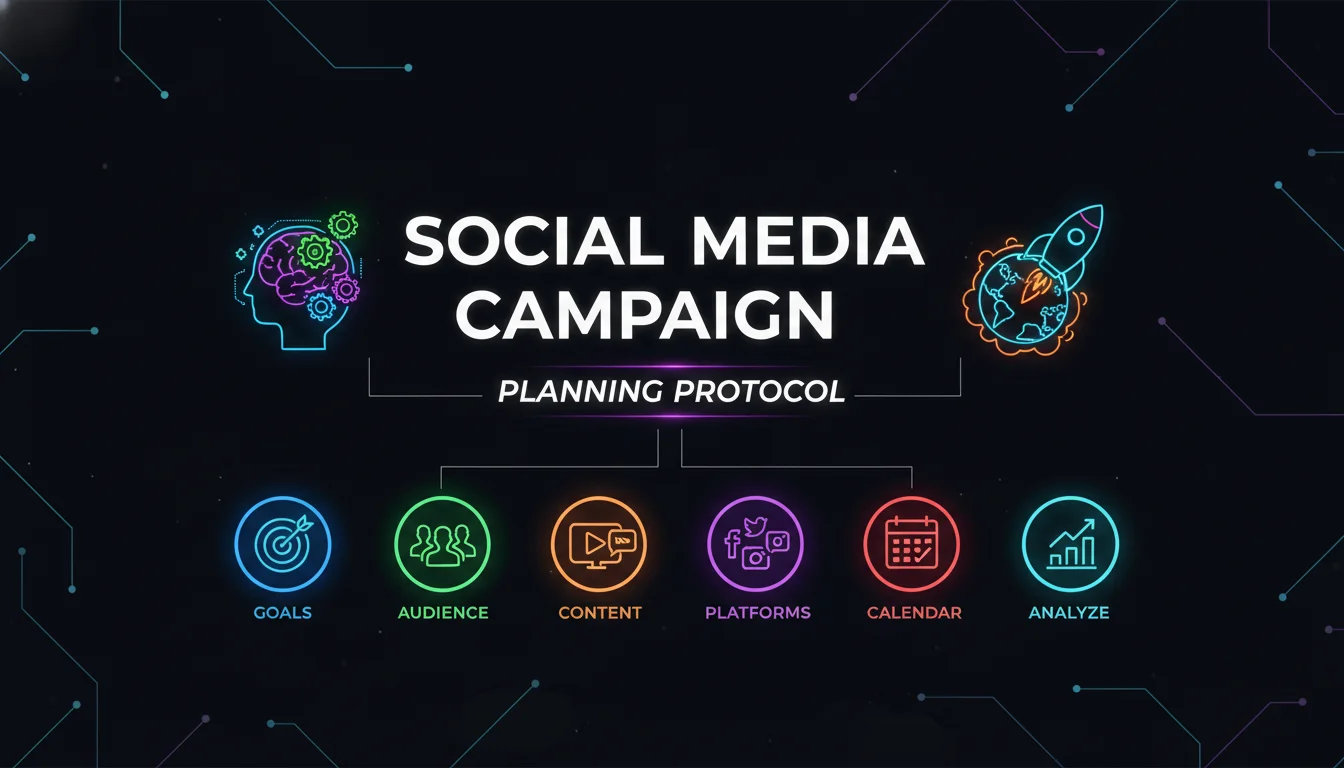
- Learning how to plan a social media campaign starts with one clear, measurable business objective, not a vague wish to “go viral.”
- Audience research and first-party data consistently outperform broad interest-based targeting when you’re building campaign strategy.
- Choosing the right platforms matters more than being everywhere. Match the channel to where your audience actually spends time.
- A content calendar keeps your campaign organized, but the creative inside it is what actually earns attention.
- Every social media campaign needs KPIs defined before launch, not after you’re wondering why the results feel murky.
- Budget flexibility exists at every tier. You can plan a social media campaign on a shoestring or a six-figure media buy.
“A well-planned social media campaign can drive significant engagement and measurable business outcomes, transforming your brand’s online presence.” – Marketing Expert
Introduction
How to plan a social media campaign is a question we hear from founders and marketing directors alike, and the answer is a repeatable process, not a lucky guess.
Most brands treat social media like a diary. They post when they remember, celebrate a random spike in likes, and call it strategy. A real campaign is different. It has a start date, an end date, a business reason for existing, and a way to prove it worked. That’s the version we’re building here, step by step, with the visual thinking and analytical rigor we bring to every client project at Emin Media.
What is a Social Media Campaign?
A social media campaign is a planned series of posts, ads, and interactions across social platforms, all tied to a single goal within a set timeframe. Unlike your everyday feed content, a campaign is a coordinated push, built with a beginning, middle, and end, designed to move a specific number.
Think of it like a short film versus a home video. Your regular posts are the home video: casual, ongoing, low stakes. A campaign is the short film: scripted, art-directed, and released with a purpose. As of 2026, brands that treat campaigns like creative productions rather than content dumps are the ones winning attention in increasingly crowded feeds.
Key Components of a Social Media Campaign
- Defined Objectives: Establish clear goals, such as increasing website traffic or generating a target number of qualified leads within the campaign window.
- Target Audience: Identify who your campaign is aimed at, using demographic and psychographic data rather than assumptions.
- Content Strategy: Develop a plan for the type of content you will create, the visual style, and the story arc across the campaign’s lifespan.
Difference Between Campaigns and Regular Posts
While regular posts maintain your brand’s presence on social media, campaigns are strategic initiatives with a start and end date, focused on achieving specific goals. Campaigns require more planning, coordination, and measurement than your average Tuesday post, and they typically pull in paid budget, creative assets, and cross-team approval.
How Do You Plan a Social Media Campaign Step by Step?
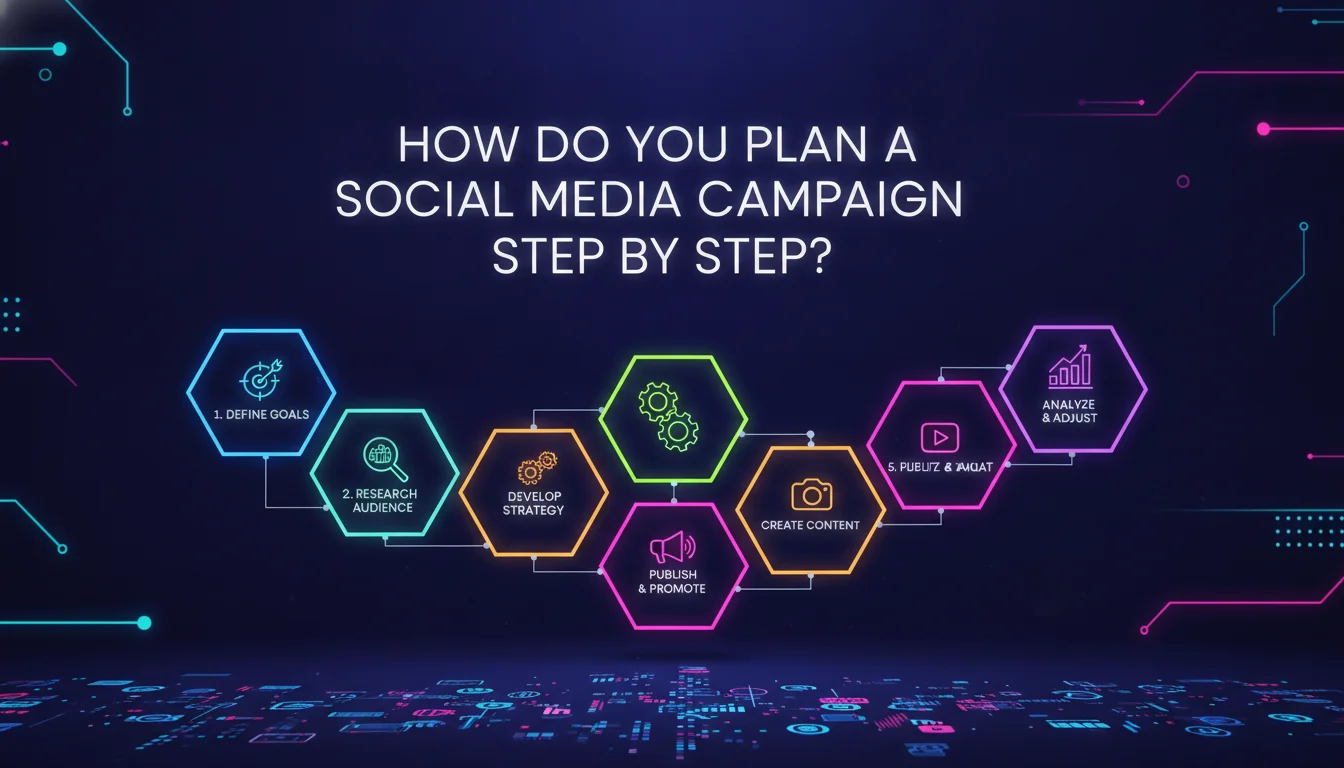
You plan a social media campaign by defining a goal, researching your audience, picking platforms, building creative, scheduling distribution, and measuring results against pre-set KPIs. Skip any one of these steps and the whole structure gets shaky.
Step 1: Define Your Campaign Goals
Begin by identifying what you want to achieve with your campaign. Every campaign needs a defined objective, whether that’s awareness, leads, or conversions, and it should be SMART (Specific, Measurable, Achievable, Relevant, Time-bound). For example, aim to increase engagement by a meaningful percentage over a three-month window rather than leaving the target open-ended.
Step 2: Write a Campaign Brief
A well-structured campaign brief answers a simple question: what business problem does this solve? According to creative industry data, campaigns that start with a written brief move faster through approvals and stay more consistent across platforms. Your brief should cover the objective, audience, budget tier, timeline, and the single message you want to land.
Step 3: Identify Your Target Audience
Utilize first-party data and analytics tools to segment your audience based on their behaviors and preferences. Campaigns built on first-party data consistently outperform broad interest-based targeting, according to campaign performance data from platform advertisers. Understanding your audience helps tailor your messaging, visual tone, and even the platforms you choose.
Step 4: Choose Your Platforms
Select the social media platforms that best align with your audience and campaign goals. Instagram is ideal for visual storytelling, LinkedIn works better for B2B engagement, and TikTok remains strong for reaching younger, trend-driven audiences. As of July 2025, roughly 5.41 billion people around the world, about 65.7% of the global population, use social platforms, according to industry research, and that number is projected to climb past 5.79 billion in 2026. That growth means more competition for attention, which makes platform selection even more important than it was a few years ago.
Creating Content for Your Campaign
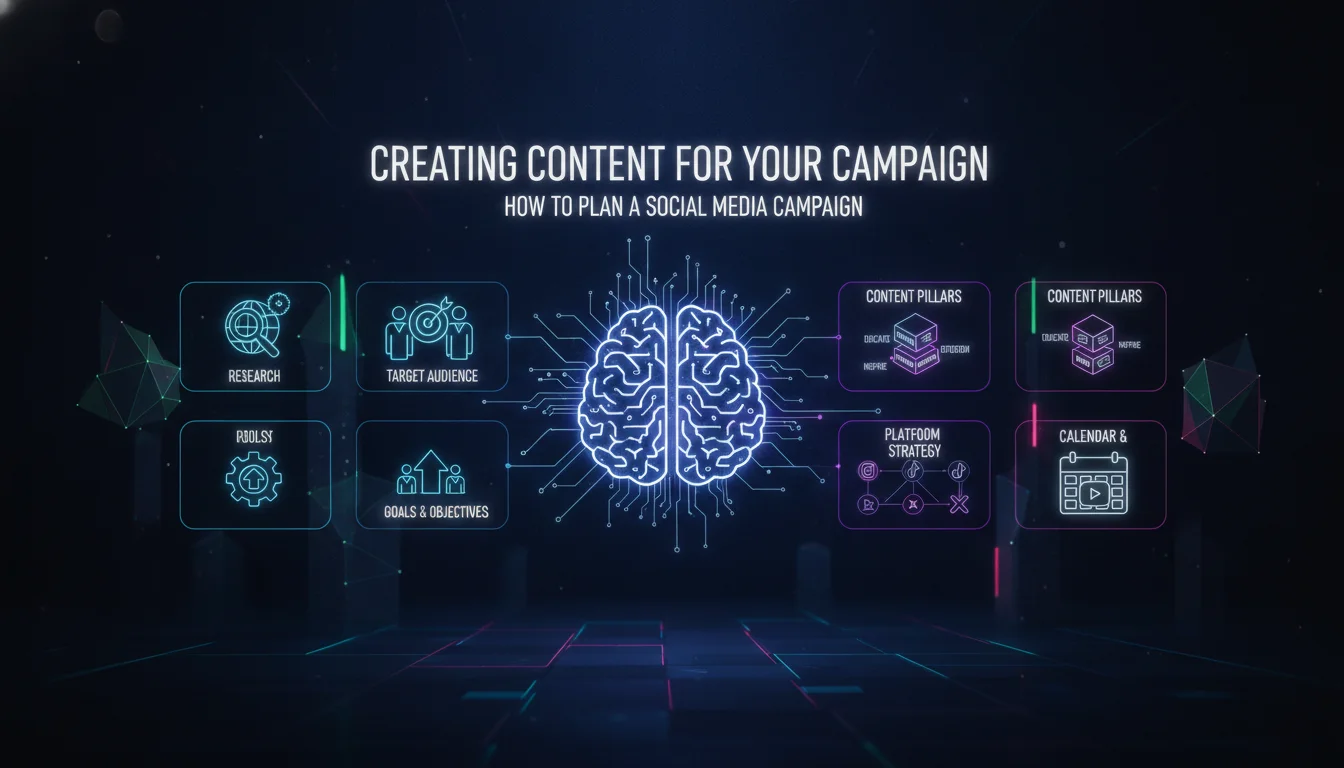
Content Types
- Visual Content: Use images, videos, and infographics to capture attention. Motion content, especially short-form video, continues to outperform static posts across most platforms.
- Written Content: Craft compelling captions, blog posts, and articles that provide value beyond the sell.
- User-Generated Content: Encourage your audience to create content related to your brand. UGC tends to feel more trustworthy than polished brand content, and it’s cheaper to produce at scale.
Content Calendar
Develop a content calendar to schedule your posts. This ensures consistent messaging and helps manage resources effectively. Tools like Hootsuite, Buffer, or Sprout Social can assist in scheduling, approvals, and reporting all in one dashboard, which matters once your campaign spans multiple platforms and team members.
What Tools Do You Need to Plan a Social Media Campaign?
The tools you need to plan a social media campaign fall into three buckets: scheduling, design, and analytics. You don’t need all of them on day one, but each solves a different bottleneck as your campaign scales.
- Scheduling and publishing: Hootsuite, Buffer, and Sprout Social handle multi-platform posting and team approvals.
- Design and creative production: Canva and Adobe Express work for quick-turn graphics, while Adobe Creative Cloud handles higher-end video and photo editing.
- Analytics and reporting: Native platform insights (Meta Business Suite, LinkedIn Analytics, TikTok Analytics) plus a centralized dashboard tool help you track KPIs without jumping between five tabs.
- Listening and monitoring: Tools like Brandwatch or native mention alerts help you catch conversations about your brand in real time.
Engagement Strategies
Monitoring and Interaction
Engage with your audience by responding to comments, messages, and mentions. Active engagement can enhance community building and brand loyalty. This isn’t optional anymore: 73% of social users say if a brand doesn’t respond to them on social, they’ll buy from a competitor instead, according to social media research. That statistic alone should justify a dedicated community manager during any active campaign window.
Utilizing Paid Promotions
Consider using paid advertising to boost your campaign’s reach. Platforms like Facebook and Instagram offer targeted ad options that can help you reach specific demographics, and even a modest boost budget can extend organic content well beyond your existing follower base.
“Every high-performing campaign starts with audience research, competitive analysis, and well-defined KPIs set before launch,” note industry strategists studying campaign performance across platforms.
What Should You Look For When Choosing a Campaign Approach?
When choosing how to plan a social media campaign approach, look for alignment between your budget, your audience’s platform habits, and the creative format that fits your message best. Not every brand needs a multi-platform blitz. Some need one sharp video and a strong paid push.
- Audience fit: Does the platform’s demographic match your actual customer base, not just where you personally enjoy scrolling?
- Creative capacity: Can your team realistically produce the content type this campaign format demands, or do you need outside production help?
- Budget flexibility: Does the platform’s ad system let you scale spend up or down based on early performance?
- Measurement clarity: Can you actually track the KPI that matters to your business, or just vanity metrics like likes?
- Timeline realism: Does your campaign window give the algorithm enough time to optimize delivery, typically at least two to three weeks?
Campaign Budget Tiers: What to Expect in 2026
Social media campaign budgets in 2026 generally fall into three tiers: budget, mid-range, and premium, each unlocking a different level of creative production and paid reach.
- Budget tier: Organic-first campaigns relying on in-house content, UGC, and minimal boost spend. Good for testing messaging before committing bigger dollars.
- Mid-range tier: A mix of produced content (photography, short video) plus a defined paid media budget across one or two platforms.
- Premium tier: Full creative production including video shoots, influencer partnerships, and multi-platform paid distribution with ongoing optimization.
None of these tiers guarantee success on their own. We’ve seen budget-tier campaigns outperform premium ones simply because the creative was sharper and the targeting was tighter.
Comparison of Social Media Platforms for Campaigns
| Platform | Best For | Key Features |
|---|---|---|
| Community Engagement | Groups, Events, Ads | |
| Visual Storytelling | Stories, Reels, Shopping | |
| B2B Marketing | Professional Networking, Articles | |
| Twitter/X | Real-Time Engagement | Trending Topics, Hashtags |
| TikTok | Trend-Driven Reach | Short-Form Video, Sounds, Duets |
Measuring Success
Key Performance Indicators (KPIs)
Establish KPIs to measure the success of your campaign. Common metrics include engagement rates, click-through rates, and conversion rates. Aim for a click-through rate benchmark that matches your industry average, then track improvement campaign over campaign rather than chasing an arbitrary number.
Adjusting Strategies
Analyze the performance data regularly to identify what is working and what isn’t. Be prepared to adjust your strategies based on real-time feedback and analytics. This is part of why every high-performing campaign starts with well-defined KPIs set before launch: you need a baseline to know if a mid-campaign pivot actually helped.
Pros and Cons
Pros
- A structured campaign gives your team a clear timeline, budget, and success metric instead of open-ended posting.
- Paid promotion options let you reach audiences beyond your existing followers quickly.
- Content calendars and scheduling tools reduce last-minute scrambling and missed posting windows.
- Measurable KPIs make it easier to prove marketing ROI to leadership or clients.
Cons
- Campaigns require upfront planning time that can feel slow compared to reactive, trend-jacking posts.
- Paid media costs can add up quickly if targeting isn’t refined before launch.
- Cross-platform coordination takes more resources than single-channel posting.
- Results can be delayed a few weeks before the algorithm fully optimizes delivery.
How to Style Your Campaign Across Platforms
You style a social media campaign by adapting one core creative concept into formats native to each platform, rather than copy-pasting the same asset everywhere. Here are a few real-world approaches based on common campaign goals.
- Product launch: Teaser Reels on Instagram, a countdown Story series, a LinkedIn post framing the business angle, and a TikTok behind-the-scenes clip.
- Brand awareness push: A hero video repurposed into 15-second cutdowns, paired with founder-voice captions and a UGC hashtag challenge.
- Lead generation campaign: Carousel posts breaking down a problem/solution, a downloadable resource promoted via paid ads, and retargeting creative for warm audiences.
- Seasonal/holiday campaign: Timely visual themes tied to the calendar, scheduled two to three weeks ahead of the actual date to build anticipation.
Best Practices for Social Media Campaigns
- Stay Consistent: Maintain a consistent brand voice and visual style across all platforms.
- Be Authentic: Authenticity resonates with audiences; share real stories and experiences rather than stock-photo energy.
- Leverage Trends: Keep an eye on social media trends and incorporate them into your campaign when relevant, but don’t force a trend that doesn’t fit your brand.
- Apply the 5-5-5 rule as a starting filter: some marketers use it to balance five original posts, five curated shares, and five engagement actions per week to keep a campaign feeling active without burning out your team.
Care and Maintenance: Keeping Your Campaign Healthy Mid-Run
Care and maintenance for a live social media campaign means checking performance data on a set schedule and refreshing creative before it fatigues your audience. Most campaigns start showing creative fatigue, meaning lower engagement despite steady reach, within two to four weeks of heavy paid rotation.
- Review KPI dashboards at least weekly, not just at the campaign’s end.
- Swap underperforming ad creative before the algorithm penalizes it further.
- Keep a buffer of 3-5 extra content pieces ready in case a post underdelivers.
- Watch comment sentiment, not just volume. A spike in comments isn’t always good news.
Brand Spotlight: What Great Campaign Creative Looks Like
The strongest social media campaigns we’ve studied share one trait: a single visual idea that survives being cut into ten different formats. A bold color story, a repeated motion cue, or a consistent caption voice can carry a campaign across Reels, Stories, feed posts, and paid units without feeling repetitive. That’s the mood-board thinking we bring into every client kickoff, before a single post gets scheduled.
Conclusion
Knowing how to plan a social media campaign is essential for using the power of social media to achieve your business goals. By following the outlined steps, from defining objectives to measuring success, choosing the right tools, and styling content for each platform, you can build campaigns that resonate with your audience and hold up under scrutiny from leadership.
Ready to plan a social media campaign that actually moves your numbers? Let’s build something bold. Contact Emin Media for a free brand consultation.
Frequently Asked Questions
What is the first step in planning a social media campaign?
The first step is to define your campaign goals, ensuring they are specific, measurable, achievable, relevant, and time-bound (SMART). Without a clear objective, every later decision, from platform choice to creative style, becomes a guess.
How do I choose the right platform for my campaign?
Analyze your target audience’s demographics and preferences to select the platforms where they are most active and engaged. It’s better to run a focused campaign on two platforms than a thin, spread-out effort across five.
What metrics should I track during my campaign?
Key metrics include engagement rates, click-through rates, conversion rates, and overall reach to evaluate campaign performance. Choose two or three KPIs that map directly to your original objective rather than tracking everything available.
How often should I post during a campaign?
Posting frequency can vary, but consistency is key. Some marketers reference the 3-3-3 rule, posting three times a day, three stories, and three engagement actions, though the right cadence depends on your platform and team bandwidth.
Can I run a campaign without a large budget?
Yes, effective campaigns can be run on smaller budgets by focusing on organic reach, engaging content, and leveraging user-generated content. A budget-tier campaign with sharp creative can outperform a premium-tier one with weak messaging.
What is the importance of a content calendar?
A content calendar helps organize your posting schedule, ensuring consistent messaging and efficient resource management throughout the campaign. It also gives your team visibility into gaps before they become last-minute scrambles.
What’s a good social media campaign template for beginners?
A beginner-friendly template includes your objective, target audience, chosen platforms, content calendar, budget tier, and the two or three KPIs you’ll track weekly. Starting with this simple structure keeps a first campaign from becoming overwhelming.
Enjoyed this article?
Contact Emin Media for a free brand consultation and let's create something amazing together.
Get in TouchRelated Articles
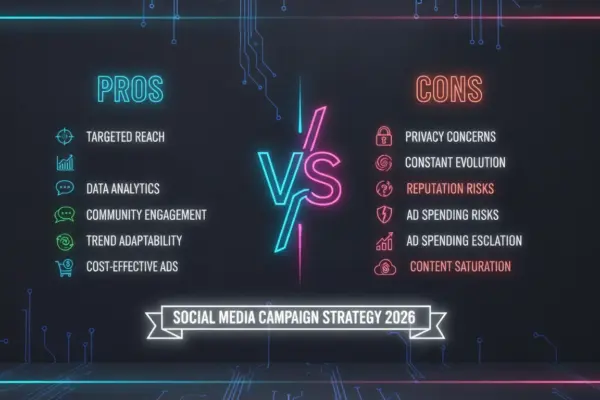
Social Media Campaign Strategy 2026 That Wins
Master social media campaign strategy 2026 with community-first frameworks, revenue attribution, AI tools, and serialized…
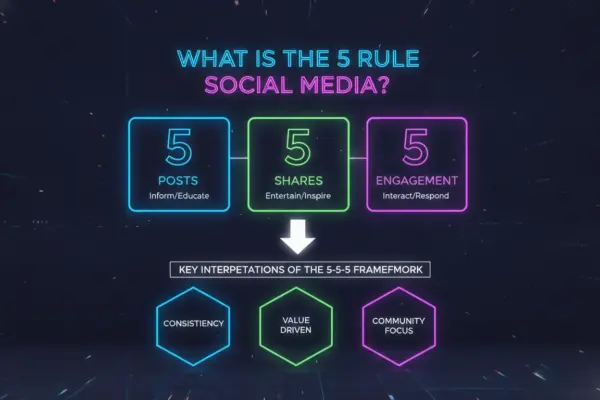
What Is the 5 Rule Social Media? The 5-5-5 Explained
What is the 5 rule social media strategy? We break down the 5-5-5 framework, compare…

Digital Marketing Blog Topics That Actually Rank in 2026
Find digital marketing blog topics that win AI search and readers alike. Real frameworks, formats,…