Social Media Campaign Strategy 2026 That Wins
Social Media Campaign Strategy 2026: Build Community, Measure Revenue, Win Attention
A social media campaign strategy 2026 is a goal-driven plan that prioritizes community depth, revenue attribution, AI-assisted engagement, and serialized content over broad reach, aligning platform choice, content mix, and measurement directly to business outcomes.
Key Takeaways
- Community depth now outweighs audience scale. Brands are prioritizing high-value niche communities over broad platform reach to improve retention and lifetime value, according to CMSWire.
- Revenue attribution is no longer optional. Integrated measurement systems connect social engagement directly to revenue, helping marketers justify investment with clearer ROI.
- AI enables but does not replace human strategy. Conversational AI improves customer service, while human insight still guides the strongest content.
- Serialized content creates appointment viewing. Recurring episodic formats build audience habits and loyalty that one-off viral posts simply cannot sustain.
- A 40/40/20 content mix works. Use 40% educational value, 40% engagement and community, and 20% promotion as a practical starting rule of thumb.
- Stop boosting bad creative. Paid amplification cannot fix content that lacks organic resonance, as Gary Vaynerchuk makes clear.
Pros and Cons
Pros
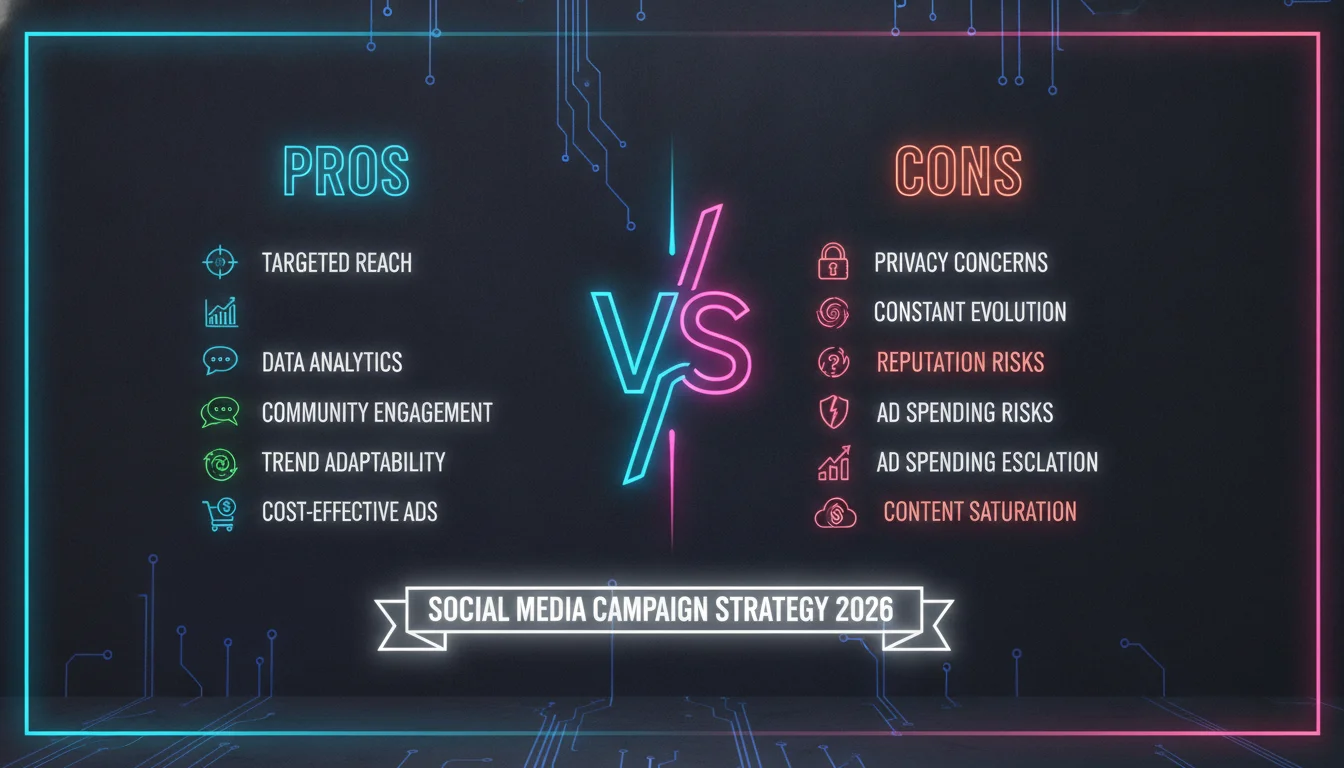
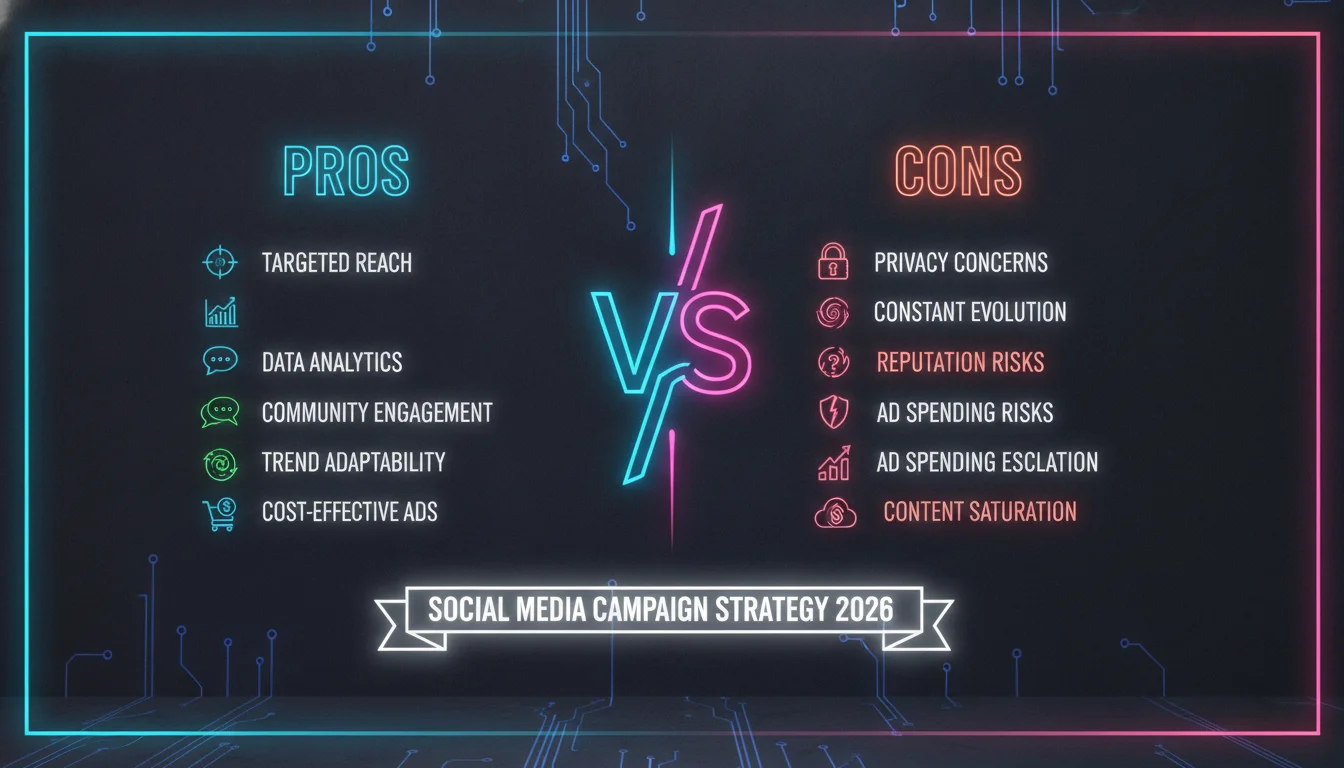
- Community-first strategies build stronger emotional bonds and faster feedback loops than broadcast-style marketing.
- Revenue attribution tools now make it possible to connect social activity directly to pipeline and closed deals.
- AI-assisted workflows free social teams to focus on high-value community moments instead of routine tasks.
- Serialized content formats create predictable audience habits, reducing dependence on algorithm luck.
- A focused platform strategy (2 core plus 1 experimental) concentrates creative energy where it counts most.
Cons
- Building genuine community takes time. Brands expecting quick follower spikes will find this approach frustrating at first.
- Multi-touch attribution across social, CRM, and paid channels requires technical setup that smaller teams may struggle to implement.
- Serialized content demands consistent production capacity. Missing episodes breaks the habit loop you worked to create.
- AI tools can accelerate mediocre content at scale, making it tempting to publish more instead of publishing better.
Why “Reach” Is Dead: The 2026 Shift to Community Economics
From Follower Count to Meaningful Interaction
Social media algorithms in 2026 no longer reward the loudest voices. They prioritize content that provokes genuine interactions: comments, shares, and saves over passive impressions. WF-Creative notes that virality no longer arises from mass but from relevance to the respective target group. Any strategy 2026 worth executing must be built around sparking meaningful dialogue, not accumulating followers.
The old playbook of buying reach or chasing vanity metrics is collapsing. CMSWire’s trend analysis describes the move from an era of “bigger audience, better results” to one where community depth beats audience breadth. Marketers must identify where their best audience congregates and invest in those spaces with content that serves the community rather than interrupts it.
What Community-Led Marketing Actually Means
Community-led marketing puts your audience at the center of every content decision. HeyOrca emphasizes that the brands that win in 2026 will not be the ones that publish the most, but the ones that show up the most human. That means listening, engaging, and responding to community signals rather than broadcasting a fixed message.
This approach requires a real shift in team mindset. Social media managers are no longer just content creators. They are community caretakers who spot trends, read the room, and see how the world impacts their audience in real time. A this type of 2026 that ignores this human layer will struggle to build trust, no matter how optimized the posting schedule is.
The Core Components of a Social Media Campaign Strategy 2026
Goals, Audience, and Platform Alignment
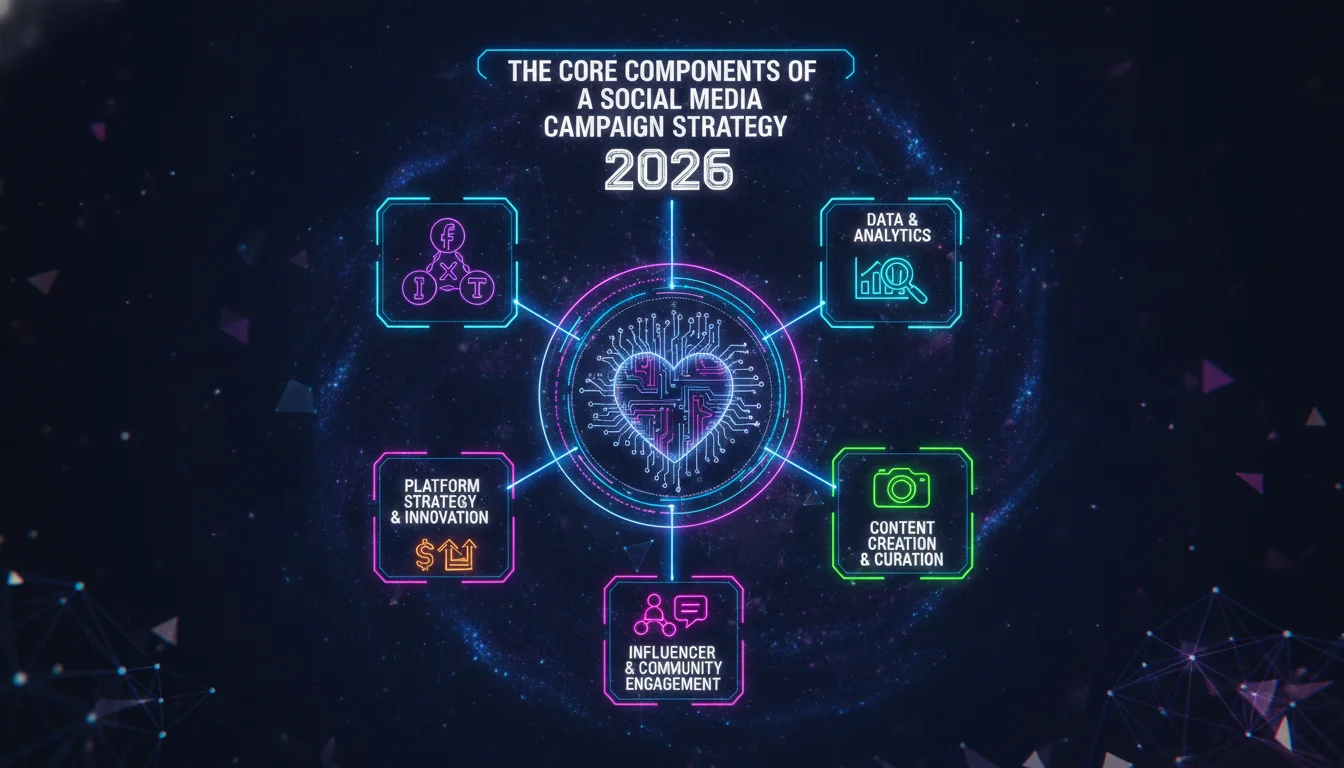
A complete this kind of strategy 2026 includes at least eight components: goals, ideal customer profile, platforms, community insights, content mix, posting schedule, KPIs, and ongoing optimization. Each element must connect to the others. A B2B SaaS company might prioritize LinkedIn and YouTube, while a D2C fashion brand might focus on Instagram Reels and TikTok plus Pinterest for shoppable discovery.
Goal setting should follow SMART criteria: Specific, Measurable, Achievable, Relevant, and Time-bound. LotsofMind’s framework suggests writing three SMART goals and assigning a primary KPI to each. Example goals include gaining 10,000 engaged followers on Instagram Reels by September 30, 2026, or generating 500 qualified leads from LinkedIn by Q2 2026. These goals focus content, budget, and measurement from day one.
Content Mix, Scheduling, and KPIs
Once goals and platforms are set, define 3 to 5 content pillars. A common structure includes education, product, community and user-generated content, culture and behind-the-scenes, and offers or promotions. A practical format mix is 40% value and education, 40% engagement and community, and 20% promotion. This prevents your feed from becoming a sales brochure while still driving business outcomes.
Cadence matters. LotsofMind recommends Reels and TikTok 3 to 5 times per week, Stories daily, and LinkedIn twice per week as starting points. Your posting schedule should align with platform behavior and audience habits, not just internal capacity. Pair each content pillar with a KPI: likes, comments, saves, click-through rate, or response time, so you can measure what actually moves the needle.
Ongoing Optimization and Feedback Loops
A the media campaign strategy 2026 is never static. HeyOrca’s guide includes a dedicated step for optimization and quarterly review. The goal is to test content formats, analyze performance, and update the strategy based on real data. WF-Creative emphasizes data-driven adjustments as a core practice, noting that continuous optimization separates successful brands from those that plateau.
Build feedback loops into your workflow. After each campaign cycle, review top-performing and low-performing content, identify patterns, and reallocate resources. This closed loop of measurement, learning, and adjustment is what makes a strategy resilient to algorithm changes and shifting user behavior.
What the Data Says: 2026 Trends Reshaping Campaign Strategy
Measurement Finally Connects Social to Revenue
Social media struggled for years to prove ROI. That changes with a mature 2026. CMSWire reports that integrated measurement systems now connect social engagement directly to revenue, helping marketers justify investment with clearer ROI. Social attribution links social media interactions to downstream revenue, and it is becoming table stakes for any serious marketing operation.
This trend means marketers must move beyond engagement metrics alone. Likes and comments still matter as signals of relevance, but the ultimate question is whether those interactions influence pipeline and retention. Tools that track UTM parameters, CRM integrations, and multi-touch attribution are now as important as the content calendar itself.
“Everyone has moved on from an era of ‘bigger audience, better results’ to an age where community depth beats audience breadth, measurement replaces guessing, and AI enables rather than replaces authentic voice.” – CMSWire, 2026
Conversational AI and AI-Powered Listening
Conversational AI is technology that automates human-like interactions through messaging and chat interfaces. CMSWire identifies conversational AI as a top trend transforming customer service on social. Brands are using AI-powered chatbots to handle routine inquiries, route complex issues, and respond faster than human-only teams could manage. This improves customer experience while freeing social media managers to focus on high-value community moments.
AI-powered listening adds another layer. Instead of simply monitoring mentions, AI tools analyze sentiment, detect emerging topics, and surface audience pain points across billions of online conversations. According to YouScan, social listening platforms with image recognition can analyze images from over 500,000 sources to understand customers better. This insight feeds directly into content strategy, helping brands create posts that resonate because they are grounded in real audience language.
Serialized Content and Creator Partnerships
Serialized content releases episodic or recurring themed posts to build audience habits and loyalty. CMSWire calls it “appointment viewing” for social. Brands that commit to a weekly series, whether a behind-the-scenes video, a recurring Q&A, or a themed reel, give followers a reason to return. This predictability builds stronger retention than one-off viral spikes.
Creator partnerships are also evolving from one-off sponsored posts to ongoing operations. Rather than treating influencers as paid media placements, forward-thinking brands cultivate long-term relationships where creators become community ambassadors. This shift enhances authenticity and reduces the transactional feel that audiences increasingly reject.
Social Commerce and Seamless Buying Experiences
Social commerce is the practice of completing a purchase directly within a social platform, without redirecting users to an external website. As of 2026, platforms like Instagram, TikTok, and Pinterest have deepened their native shopping features, making the path from discovery to checkout shorter than ever. A social media that ignores shoppable content is leaving revenue on the table.
The practical implication: product content must be built for in-platform conversion. That means tagging products in Reels, enabling TikTok Shop integrations, and designing Pinterest boards with shoppable pins as a core part of the content mix, not an afterthought.
Social Media Teams Evolve Into Hybrid Operations
Social media teams in 2026 are no longer siloed content departments. CMSWire identifies the evolution toward hybrid operations as a defining trend: teams now blend creative, analytics, customer service, and community management skills under one roof. This shift reflects how deeply social has become integrated into customer experience strategy.
For brand owners and marketing managers, this means hiring and structuring teams differently. A social media manager today needs fluency in data dashboards, community psychology, and content production. Agencies and in-house teams that operate with this hybrid model move faster, respond more authentically, and connect social activity to business outcomes more effectively.
Social Media and SEO: A Stronger Connection
Google’s indexing of social media content has matured significantly. WF-Creative highlights the integration of social media and SEO as a key strategy for 2026, noting that social posts, particularly on platforms like LinkedIn and YouTube, now appear in search results. This means your strategy 2026 should treat captions, video titles, and profile descriptions with the same keyword discipline you apply to blog content.
The practical play: align your social content pillars with your top SEO keyword clusters. A brand that ranks for “sustainable packaging” in search should also be publishing social content around that topic consistently. The combined effect of search visibility and social engagement creates a compounding authority signal that neither channel achieves alone.
Building a Social Media Campaign Strategy 2026: A Step-by-Step Process
Steps 1–2: Set Goals and Research Your Community
- Set clear goals. Write 3 SMART goals with assigned KPIs. For example: gain 10,000 engaged followers on Instagram Reels by September 30, 2026; generate 500 qualified leads from LinkedIn by Q2 2026; reduce average response time on social channels to under 2 hours by March 2026.
- Research your audience. Pull demographics from native analytics (Meta Insights, LinkedIn, TikTok). If none exist, create 2 to 3 buyer personas covering age, gender, job, income, interests, and pain points. Map the customer journey from awareness to retention.
These first two steps establish the foundation. Without clear goals, you cannot choose the right platforms or design a meaningful content mix. Without audience research, your content risks becoming generic noise in an algorithm that rewards relevance above everything else.
Steps 3–4: Choose Platforms and Analyze Competitors
- Choose platforms strategically. Prioritize 2 core platforms plus 1 experimental. Match your audience and goals to platform strengths. For D2C fashion, consider Instagram Reels and TikTok as core, with Pinterest as experimental. For B2B SaaS, LinkedIn and YouTube as core, with X for trend and PR monitoring.
- Conduct a competitor analysis. Pick 6 competitors: 3 direct and 3 aspirational. Record platforms used, content types (video, carousel, UGC), posting cadence, engagement rates, and visible paid ads. Note gaps you can exploit, such as competitors ignoring short-form video or Stories features.
HeyOrca’s guide illustrates this with a case study of KFC vs. Mary Brown’s at a Blue Jays Game, showing how observing a competitor’s real-time engagement can inspire faster, more relevant content. Competitor analysis is not about copying. It’s about finding the whitespace your brand can own.
Steps 5–7: Create, Schedule, Measure, and Optimize
- Build a content plan. Define 3 to 5 content pillars, set a 40/40/20 format mix, and create a weekly posting calendar. Use tools like Notion, Google Sheets, or Later for templates.
- Produce high-impact content. Focus on short-form video, serialized formats, and community-centric posts. Strengthen your brand voice and tailor content to each platform’s native behavior.
- Publish, monitor, and measure. Post according to your calendar, engage with comments and DMs in real time, and track KPIs weekly. At the end of each quarter, review top and low performers, then adjust your strategy.
This process mirrors the step-by-step frameworks from HeyOrca and LotsofMind, with an emphasis on continuous optimization. A this type of 2026 that skips measurement or quarterly review will quickly fall behind competitors who treat social as a system, not a series of random posts.
Content Formats That Win in 2026: The 40/40/20 Rule and Beyond
Short-Form Video and Creator-Driven Content
Short-form video remains the dominant format for attention in 2026. LotsofMind cites Hootsuite in noting that short-form video and creator-driven content are dominating social attention, and brands should plan accordingly. Reels, TikTok, and YouTube Shorts are not optional extras but core components of any this kind of strategy 2026.
Creator-driven content, where real people, influencers, or customers produce the material, outperforms overly polished brand content because it feels native to the feed. The role of the brand shifts from director to enabler: provide creators with product access, talking points, and clear guardrails, then let their authentic voice carry the message.
Serialized Content and Micro-Communities
Serialized content transforms one-off posts into appointment viewing. By committing to a recurring series, a weekly “Ask Me Anything,” a monthly behind-the-scenes documentary, or a daily tip, you build a habit loop that keeps followers returning. This aligns with CMSWire’s trend of serialized content creating stronger audience habits and loyalty.
Micro-communities are small, active subgroups within larger platforms or on dedicated spaces like Discord, Slack, or private groups. WF-Creative highlights the advantages of small, active communities: higher engagement rates, stronger emotional bonds, and faster feedback loops. Brands that nurture micro-communities can test ideas, gather insights, and convert superfans into advocates more effectively than broadcasting to the masses.
The Role of AI Without Losing the Human Voice
AI tools can generate drafts, schedule posts, analyze performance, and respond to routine comments. But the brands that win in 2026 will not be the ones that publish the most. They will be the ones that show up the most human, as HeyOrca puts it. Use AI for efficiency: ideation, data crunching, first drafts. Keep human judgment for tone, timing, and community care.
“Putting paid behind bad creative is like throwing money into the garbage, and then lighting a match and burning it to the ground.” – Gary Vaynerchuk, LinkedIn, 2025
Gary Vaynerchuk’s warning is direct: AI cannot rescue content that lacks genuine resonance. The best approach is to create content at scale, test organically, identify what resonates, and only then amplify the winners with paid budget. This human-first, AI-assisted workflow is the hallmark of a mature the media campaign strategy 2026.
Platform-Specific Priorities: Where to Focus Your Campaign
Instagram, TikTok, and Short-Form Video
Instagram and TikTok continue to reward relevance over reach. WF-Creative notes that algorithms now prioritize posts that provoke interactions such as comments, shares, or saves. For campaign strategy, this means designing content specifically to earn saves and shares: checklists, tutorials, before-and-after transformations, and takes that spark conversation.
Short-form video is especially powerful on these platforms. The recommended cadence from LotsofMind is Reels and TikTok 3 to 5 times per week, plus daily Stories. This consistent presence signals to the algorithm that your account is active and gives your community multiple touchpoints each week.
LinkedIn and B2B Community Building
LinkedIn is the core platform for B2B social media campaign strategy 2026. Its algorithm favors thoughtful, text-based posts that spark professional discussion. LotsofMind’s framework suggests posting twice per week on LinkedIn, but quality matters more than quantity. Long-form posts, industry insights, and employee advocacy content perform well.
For B2B brands, LinkedIn is also where revenue attribution is most measurable. Because LinkedIn integrates closely with CRM systems and professional buying journeys, tracking from post to lead to closed deal is more feasible than on consumer platforms. This makes LinkedIn a priority for any brand with long sales cycles.
Niche Communities and Emerging Spaces
Niche communities, whether on Reddit, Discord, or industry-specific forums, are where the deepest engagement happens. CMSWire’s trend of community depth beating audience scale means marketers should identify where their best audience congregates, even if those spaces have smaller total reach. A social media campaign strategy 2026 that ignores these spaces misses the highest-intent conversations.
Age-defined access is another emerging trend CMSWire identifies. As platforms introduce age-based features and content restrictions, audience strategy must adapt. Brands targeting Gen Z may need to shift content to platforms or formats favored by younger users, while those targeting older demographics may find traditional platforms still effective. Follow your audience, not the hype.
Comparison Table: Leading 2026 Campaign Strategy Frameworks
Framework Comparison at a Glance
The table below compares four publicly available frameworks for building a social media campaign strategy 2026. Each has a different emphasis, from community depth to step-by-step execution.
| Framework Source | Core Focus | Key Components | Best For |
|---|---|---|---|
| HeyOrca (Step-by-Step Guide) | Clarity, focus, community-building | Goals, audience insights, platform choice, competitor analysis, content mix, scheduling, KPIs, optimization | Teams wanting a complete, repeatable process |
| CMSWire (2026 Trends) | Community economics and revenue attribution | Measurement, conversational AI, creator partnerships, age-defined access, social commerce, serialized content, AI listening, hybrid teams | Marketing leaders justifying investment and aligning to CX |
| LotsofMind (Day-by-Day Plan) | Fast execution with SMART goals | SMART goals, audience research, 6-competitor scan, 2 core plus 1 experimental platform, 40/40/20 content mix, weekly micro-calendar | Small teams or solo marketers needing a tactical action plan |
| WF-Creative (10 Strategies) | Relevance over reach, continuous optimization | Relevance, community management, micro-communities, data-driven adjustments, influencer marketing, SEO integration | Brands prioritizing long-term trust and organic search collaboration |
How to Choose a Framework
Select the framework that matches your team’s maturity and resources. If you lack a structured process, HeyOrca’s step-by-step guide is a strong starting point. If you need to make a business case to leadership, CMSWire’s trend analysis provides the language of revenue attribution and community economics. For rapid execution, LotsofMind’s day-by-day plan gets you moving within a week.
Most brands will blend elements from multiple frameworks. Use HeyOrca’s community research steps, add CMSWire’s emphasis on serialized content, and adopt LotsofMind’s 40/40/20 content mix. The best social media campaign strategy 2026 is one you can actually execute consistently, not the most complex one on paper.
Common Mistakes That Derail a Social Media Campaign Strategy 2026
Paying to Boost Bad Creative
Gary Vaynerchuk is blunt: putting paid behind bad creative is like throwing money into the garbage and then lighting a match. In 2026, paid amplification cannot fix content that lacks organic resonance. The algorithm’s job is to serve relevant content. If your post doesn’t earn organic engagement, paid reach will only amplify indifference. Test organically first, identify what works, then scale the winners.
Spreading Too Thin Across Platforms
LotsofMind warns against spreading thin across every platform. Concentrate budget and creative energy on 2 core platforms plus 1 experimental. Trying to be everywhere usually means being mediocre everywhere. A focused social media campaign strategy 2026 chooses platforms based on audience and goals, not fear of missing out.
Ignoring Measurement and Attribution
Without measurement, you are guessing. CMSWire’s trend of social attribution maturing means marketing leaders now expect social to connect to revenue. If your campaign strategy only tracks likes and impressions, you cannot prove value. Implement UTM tracking, CRM integration, and multi-touch attribution from day one. Review performance weekly and quarterly, and be willing to cut underperforming formats.
According to Sprout Social’s 2026 Social Media Content Strategy Report, which surveyed more than 2,300 consumers and 1,200 marketers, the gap between what brands prioritize and what audiences actually want remains one of the biggest sources of wasted social investment. Closing that gap starts with measurement.
A winning social media campaign strategy 2026 is not about publishing more content or chasing every new feature. It is a disciplined system that combines human community insight, AI efficiency, focused platform selection, and rigorous revenue attribution. Start with clear goals, listen deeply, create a balanced content mix, measure what matters, and adjust quarterly. That is how brands turn social media from a cost center into a measurable growth engine.
Ready to build something bold? Contact Emin Media for a free brand consultation and let’s design a social media campaign strategy 2026 that actually moves the needle for your business.
Frequently Asked Questions
What are the key strategies for social media marketing in 2026?
Key strategies include prioritizing community depth over audience scale, connecting social engagement to revenue attribution, using conversational AI for customer service, and investing in serialized content and creator partnerships. The brands winning in 2026 are those that show up with human authenticity, not just high posting volume.
What is the 5 5 5 rule for social media?
The 5 5 5 rule is a community engagement tactic where you comment on 5 posts, like 5 posts, and share 5 posts daily. It helps increase visibility and build genuine relationships on social platforms without relying solely on your own content output.
What are the 7 C’s of social media strategy?
The 7 C’s are typically community, content, curation, connection, conversation, conversion, and consistency. These elements guide a complete social media campaign strategy 2026 by ensuring every action serves both the audience and the business goal.
What is the 5-3-2 rule on Instagram?
The 5-3-2 rule suggests that for every 10 posts, 5 should be curated content from others, 3 should be original content, and 2 should be personal or behind-the-scenes updates. It maintains balance without being overly promotional and keeps your feed feeling like a community resource rather than a sales channel.
How often should I post on social media in 2026?
Cadence depends on platform. LotsofMind recommends Reels and TikTok 3 to 5 times per week, Stories daily, and LinkedIn twice per week as a practical starting point for most brands. Consistency matters more than volume, so choose a cadence you can sustain with quality.
Do I need to be active on every social platform?
No. A focused social media campaign strategy 2026 concentrates on 2 core platforms plus 1 experimental where your audience and goals align. Spreading too thin reduces content quality and makes genuine community engagement nearly impossible to sustain.
Enjoyed this article?
Contact Emin Media for a free brand consultation and let's create something amazing together.
Get in TouchRelated Articles
Creative Brand Photography: The Complete Guide
Creative brand photography is your visual voice. Learn how to plan shoots, find the right…
Digital Storytelling for Brands: The Complete Guide
Digital storytelling for brands builds real audience connections through narrative. Learn proven techniques, formats, and…
Creative Direction for Video Shoots: A Complete Guide
Master creative direction for video shoots with proven steps, tools, and strategies that build brand…