How to Make Viral Social Media Content in 2026
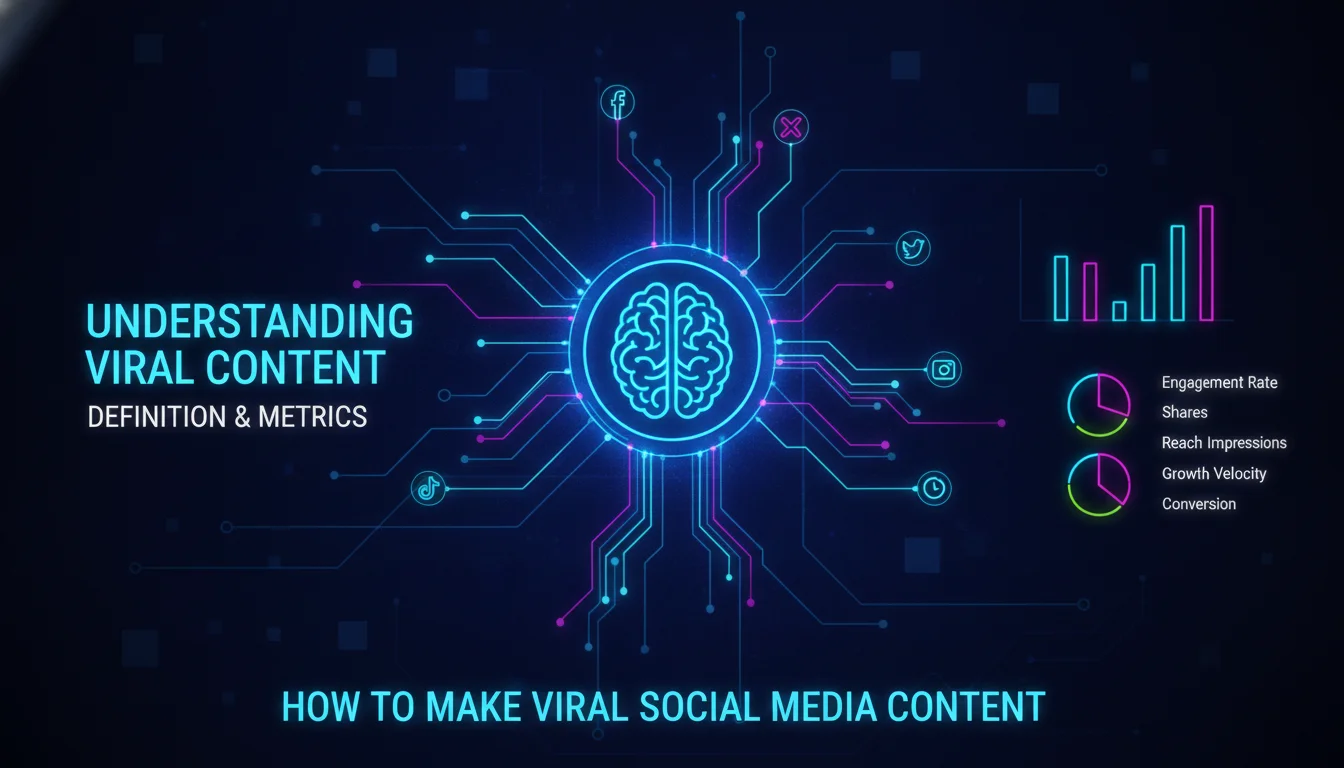
How to make viral social media content is the practice of crafting emotionally resonant, highly shareable posts that work with platform algorithms and audience psychology. No guaranteed formula exists, but a strategic mix of relatable storytelling, strong visual hooks, and consistent posting dramatically improves your odds.
Key Takeaways
- Viral content relies on emotional triggers like awe, humor, or surprise to compel sharing.
- Platform algorithms reward early engagement, so hooks are critical in the first 1-2 seconds.
- Consistency and trend-jacking amplify reach, but authenticity remains the deciding factor.
- Engagement frameworks like the 5-5-5 and 5-3-1 rules build the community that fuels shares.
- Data-driven optimization of formats, captions, and timing compounds your virality odds over time.
- Short-form vertical video dominates in 2026, with Reels, Shorts, and TikTok leading shareability across every niche.
Understanding Viral Content: Definition and Metrics
Viral content is any post, video, or image that spreads rapidly through voluntary sharing, accumulating massive views, likes, and comments in a compressed timeframe. Unlike paid distribution, viral spread is organic: your audience does the work because the content genuinely moves them. That distinction matters enormously for brand strategy.
What Counts as Virality?
There is no single universal threshold, but the benchmarks are clearer than most creators think. According to Epidemic Sound, most platforms and marketers define going viral as surpassing five million views on a single piece of content within one week. For micro-influencers or tight niche communities, reaching 2 million views can signal a genuine viral moment. The perception of virality also shifts based on your existing audience size and the platform’s typical engagement rates.
The Viral Coefficient and Shareability
A key metric is the viral coefficient: the number of new users each existing user brings in. A coefficient above 1.0 means exponential growth. Shareability drives that number, and shareability is shaped by emotional resonance, practical value, and social currency. Tracking this coefficient gives you a real measure of whether your content is actually spreading or just getting passive views.
The Difference Between Going Viral and Building a Sustainable Audience
Many creators confuse a one-hit viral moment with long-term success. A single spike in views won’t sustain a brand unless it’s backed by a content strategy that converts curious viewers into loyal community members. Think of virality as the door opener, not the whole house.
The Psychology Behind Why Content Goes Viral
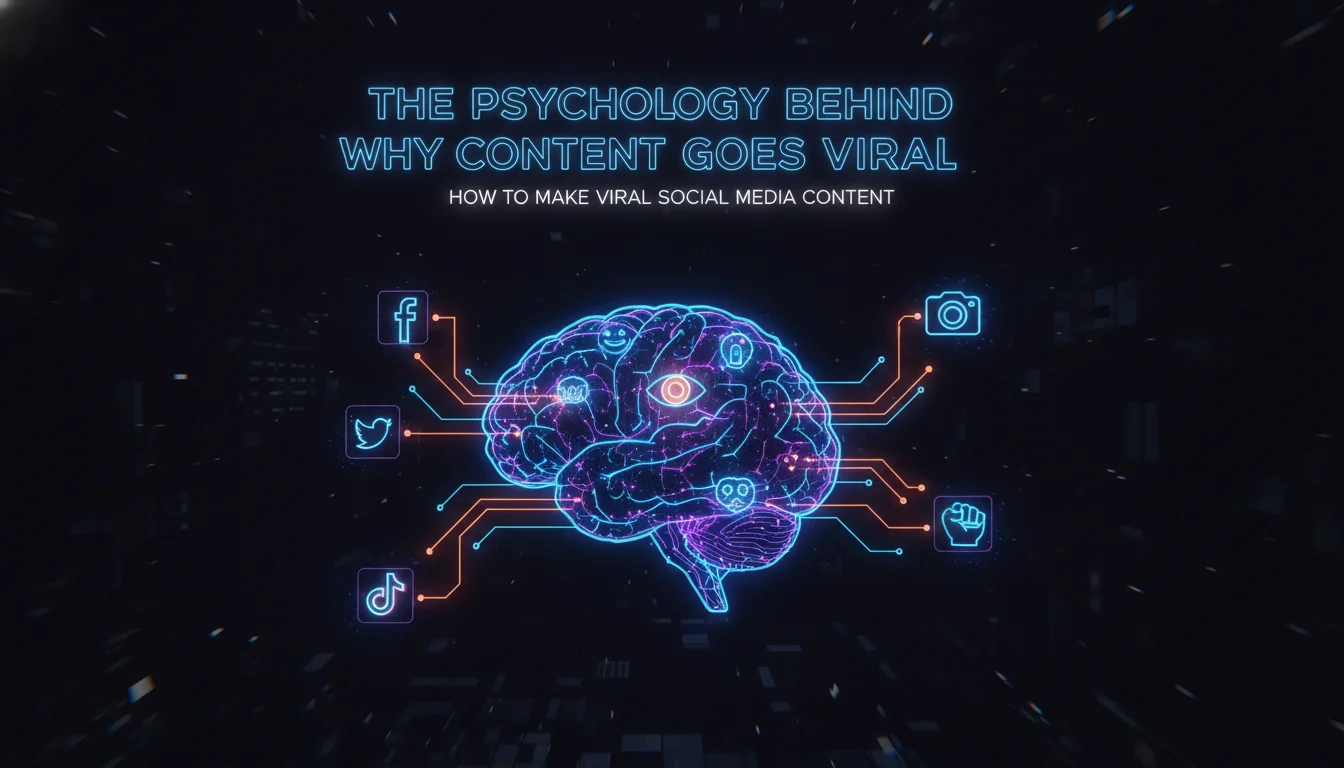
Sharing behavior is rooted in specific psychological triggers, and understanding those triggers is the real foundation of how to make viral social media content. Research from behavioral science consistently shows that people share content to connect, to define their identity, and to spread emotion to people they care about.
Emotional Contagion and High-Arousal States
Emotional contagion is the phenomenon where we absorb feelings from others, especially through social feeds. Content that evokes high-arousal emotions, whether positive (awe, excitement, humor) or negative (anger, anxiety), is far more likely to be shared than content triggering low-arousal states like mild sadness or quiet contentment. A heartwarming reunion taps into awe. A shocking injustice triggers anger. Both drive shares for fundamentally different reasons.
Social Currency and Identity Signaling
People share content that makes them look good. This is social currency in action. When someone reposts your content, they’re signaling their identity, taste, or insider knowledge to their network. Exclusive behind-the-scenes moments, expert opinions, and early-access information give your audience something worth passing along, effectively turning them into brand advocates without a single paid placement.
The Zeigarnik Effect and Cliffhangers
The Zeigarnik Effect tells us that people remember incomplete tasks better than finished ones. In content terms, this means open-loop structures and cliffhangers keep viewers watching and sharing. A video that starts mid-action, or a caption that reads “The third tip changed everything,” compels people to finish and then send it to someone else to see their reaction.
How to Make Viral Social Media Content with Emotional Triggers
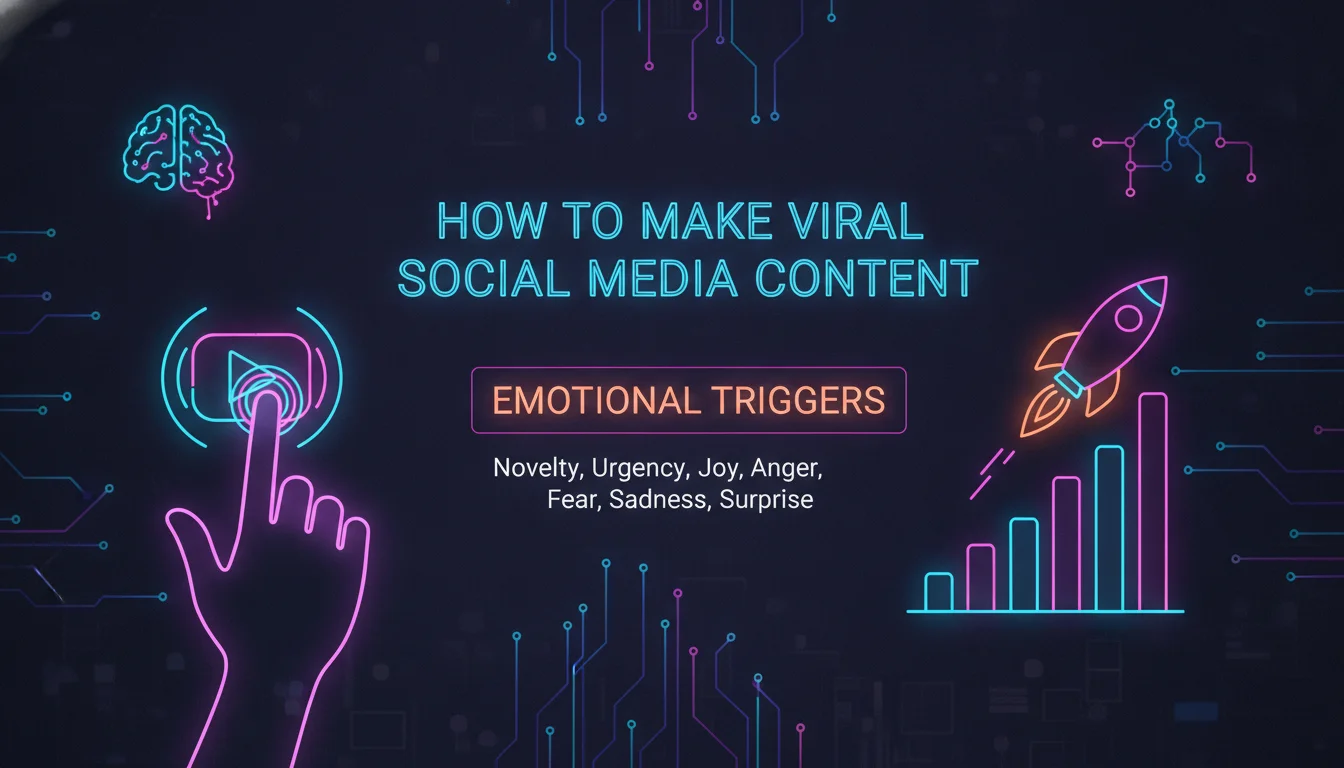
Intentional emotional design is one of the most reliable methods for how to make viral social media content. By building posts around specific feelings, you tap directly into the psychological wiring that drives sharing behavior at scale.
Awe and Inspiration
Awe-inducing content, such as breathtaking visuals, remarkable transformations, or unexpected acts of kindness, consistently tops viral charts across every platform. These posts don’t just grab attention; they create a physical reaction that viewers want to pass on. Focus on extraordinary visuals, underdog stories, or complex skills made simple to reliably trigger this response.
Humor and Surprise
Humor crosses cultures and demographics faster than almost any other emotional trigger. Whether it’s a clever pun, an unexpected twist, or a painfully relatable everyday blunder, funny content spreads because it delivers instant entertainment and a feel-good boost. The surprise element amplifies this: the human brain is wired to pay attention to anything that defies expectations, which is exactly why memes replicate so fast.
Anger and Controversy
Outrage-driven content can go viral by mobilizing people to share as advocacy or venting. The risk is real, though. If you choose this path, anchor the anger in universally unacceptable issues like fraud or injustice, and pair it with a constructive call-to-action. Controversy without resolution tends to attract the wrong audience and can damage brand trust in ways that take months to repair.
Nostalgia and “Look Back” Content
Nostalgia is a powerful, underused trigger in brand content. Posts that reference shared cultural moments, childhood memories, or “remember when” scenarios generate strong emotional responses and high comment rates as people tag friends who lived through the same era. As of 2026, throwback formats are performing particularly well on Instagram and Facebook, where older demographics skew the audience mix. Pair a nostalgic visual with a present-day brand angle to make it relevant rather than just sentimental.
| Emotion | Effect on Sharing | Best Content Types |
|---|---|---|
| Awe | High: inspires admiration and desire for connection | Epic visuals, transformation stories, science shocks |
| Humor | Very high: entertainment value drives rapid sharing | Memes, fail videos, parody, witty observations |
| Anger | Moderate-high: mobilizes sharing but can backfire | Exposés, social commentary, injustice highlights |
| Surprise | High: interruption of expectations captures attention | Plot twists, unusual comparisons, hidden camera |
| Nostalgia | High: triggers tagging and comment chains | Throwback posts, era references, brand origin stories |
| Sadness | Low-moderate: often passive, less shareable | Emotional storytelling, only if resolution is uplifting |
Leveraging Platform Algorithms to Boost Shareability

Each social platform runs a distinct algorithm that controls content visibility, and aligning with those signals is non-negotiable if you want to know how to make viral social media content that actually reaches beyond your existing followers. The core signals differ, but early engagement speed is the common thread across all of them.
Instagram’s Engagement Signals
Instagram prioritizes content that collects quick likes, comments, saves, and shares in the minutes after posting. Reels get the heaviest algorithmic push right now. Use trending audio, respond to comments within the first hour, and mix static posts with video. Prompts like “Save this for later” or “Tag someone who needs this” directly increase the save and share signals the algorithm values most.
TikTok’s For You Page Mechanics
TikTok’s algorithm is built around watch time, completion rate, and re-watches. The first 1-2 seconds are everything: a weak hook means the viewer scrolls, and a low completion rate tanks your distribution. Popular sounds, relevant hashtags, and captions that invite replies all feed the algorithm. Follower count matters far less on TikTok than on any other platform, which is exactly why trend-jacking works so well here for newer accounts.
YouTube’s Long-Form vs. Shorts Dynamics
YouTube runs separate algorithms for long-form and Shorts. For long-form, click-through rate and average view duration are the primary signals. Thumbnails and titles must be compelling without crossing into misleading territory. Shorts mirror TikTok’s emphasis on rapid engagement. A smart strategy combines both: Shorts pull in new viewers, and long-form content converts them into subscribers.
“Content that earns attention organically is the most durable asset a brand can build. Algorithms change, but an audience that genuinely wants your content stays.” – HubSpot Content Strategy Research, 2025
Content Formats That Drive Viral Success
Choosing the right format is a strategic decision that shapes whether your message spreads or stalls. The formats below consistently outperform others when it comes to how to make viral social media content across platforms.
Short-Form Vertical Video (Reels, Shorts, TikTok)
This format dominates virality in 2026. A compelling 15-60 second clip that delivers value, entertainment, or emotion can explode overnight. The non-negotiable elements: a pattern interrupt in the first second, clear audio or music, text overlay for silent viewers, and a strong CTA. Test at least 3 different hooks per concept to find what stops the scroll for your specific audience.
Carousel Posts and Infographics
On Instagram and LinkedIn, carousel posts drive massive save and share rates because they deliver digestible, step-by-step value that users want to revisit. Infographics on Pinterest similarly break complex topics into visual snippets that get repinned for months, generating long-tail traffic well after the initial post date. A single strong carousel can outperform 10 static images in cumulative reach.
Step-by-Step Tutorials
Tutorial content is one of the most consistently shared formats across every platform. People share tutorials because they want their network to benefit from the same knowledge, which is pure social currency in action. According to Wix’s content research, step-by-step how-to posts rank among the top-performing content types for saves and shares. Keep tutorials focused on a single outcome, use numbered steps visually, and end with a result the viewer can achieve within 24 hours.
Myth-Busting and Life Hack Content
“Everything you know about X is wrong” is one of the most reliable hooks in content creation. Myth-busting posts trigger surprise and mild outrage simultaneously, two high-arousal emotions that drive sharing. Life hack content works for similar reasons: it delivers immediate practical value that viewers want to pass on. Both formats perform especially well as short-form video, where the reveal structure keeps completion rates high.
Challenges and User-Generated Content
Challenges like the Ice Bucket Challenge or branded hashtag campaigns invite participation at scale. User-generated content (UGC) multiplies reach as participants share their own versions, each one a new distribution node. To launch a successful challenge, make it easy to replicate, set clear rules, and reward participation with recognition rather than just prizes.
How to Make Viral Social Media Content on TikTok, Instagram, and YouTube
Platform-specific execution is where most creators lose momentum. The core principles of how to make viral social media content stay consistent, but the tactics shift significantly depending on where you’re publishing.
TikTok: Embrace Trends and Audio
TikTok is driven by sounds and cultural moments. Monitor the Discover page daily and jump on trends while they’re still fresh, ideally within the first 48-72 hours of a trend emerging. Use popular songs, adapt trending formats to your niche, and lean into “storytime” or “did you know?” structures that keep viewers watching to the final second. The duet and stitch features let you piggyback on existing viral videos, adding your own perspective without starting from zero reach.
Instagram: Master the Reel and Carousel
Instagram Reels are the primary gateway to new audiences, but don’t underestimate the carousel. A high-quality, educational carousel can accumulate thousands of saves over weeks, continuously signaling value to the algorithm long after posting. Use Canva for clean, on-brand designs. For Reels, prioritize high-energy edits and trending audio. Use Stories to tease upcoming content and generate early engagement before a post goes live.
YouTube: Combine SEO with Clickability
YouTube virality often starts with search traffic or recommendation algorithms rather than social sharing. Optimize video titles and descriptions with relevant keywords using tools like TubeBuddy, and build thumbnails that stand out in a crowded feed. A series of successful Shorts can funnel viewers toward your long-form content, building channel authority over time. Responding to comments within the first few hours also boosts your community ranking signals.
The Role of Trends and Timeliness in Virality
Staying current with trends is a proven accelerator for how to make viral social media content. Trends provide built-in context and search volume, giving your content a head start that original concepts rarely get on their own.
How to Spot Trends Early
Use Google Trends, Exploding Topics, and the Trending tab on X (formerly Twitter) to identify rising topics before they peak. On TikTok and Instagram, follow niche hashtag pages and the top 10-15 creators in your industry. Setting up Google Alerts for your core keywords can tip you off the moment a topic starts spiking in search interest.
Trend-Jacking Without Losing Authenticity
Replicating a trend without adding your own angle is a fast path to being ignored. Ask yourself: “How does this trend connect to what my brand actually stands for?” A financial advisor can use a dance trend to explain compound interest. A fitness coach can turn a viral memory challenge into a workout routine. Speed matters, but relevance matters more. Be fast, be on-brand, and add something the original trend didn’t have.
The Danger of Outdated Trends
Jumping on a trend after it peaks makes you look out of touch and can attract negative engagement. Always check the creation date of a sound or filter on TikTok. Most visual platform trends have a shelf life of 1-2 weeks before saturation sets in. After that window, you’re better off creating original content than chasing something the algorithm has already moved past.
Crafting Shareable Visuals and Captions
Visuals and captions are the first things users process, and getting them right is central to how to make viral social media content that earns shares rather than just passive scrolls.
The Power of the Hook in the First Second
On video platforms, you have roughly 1-2 seconds before a viewer scrolls away. Start with movement, a provocative statement, or a question that creates a curiosity gap. “I was losing followers until I did this” or “The one thing most brands get completely wrong” immediately creates tension that the viewer needs to resolve. Test different hooks using A/B tools where available, and treat your hook library as one of your most valuable creative assets.
Designing Thumbnails and Visual Elements
For YouTube and long-form content, a thumbnail can determine whether a video goes viral or disappears. Use high contrast, expressive faces, and minimal text. Tools like Canva and Photoshop offer platform-optimized templates. Consistent colors and fonts across your content build brand recognition, making your posts instantly identifiable in a crowded feed even before a viewer reads a single word.
Writing Captions That Drive Engagement
Captions are not afterthoughts. On Instagram and LinkedIn, a strong caption can be the difference between a passive like and an active share. Open with a bold statement or question, use line breaks for readability, and close with a clear call-to-action. Emojis add tone but lose impact when overused. For how-to posts, numbered points improve clarity and encourage saves, which directly feeds the algorithm.
Engagement Rules: The 5-5-5 and 5-3-1 Strategies
Community engagement is a structural part of how to make viral social media content, not an optional add-on. These frameworks help you systematize interaction so the algorithm sees you as an active, valuable community member.
What Is the 5-5-5 Rule for Social Media?
The 5-5-5 rule is a daily engagement strategy where you interact with 5 relevant accounts, leave 5 meaningful comments, and share 5 posts from others in your niche. This approach increases your visibility across more feeds, builds reciprocal engagement, and signals to algorithms that you’re an active participant rather than a passive broadcaster. Practiced consistently over 30 days, most creators see measurable improvement in post reach.
What Is the 5-3-1 Rule for Social Media?
The 5-3-1 rule is a content cadence framework: 5 pieces of curated content, 3 pieces of original content, and 1 piece of promotional content per publishing period. This balance ensures you deliver consistent value without overwhelming your audience with sales messaging. It’s particularly effective on LinkedIn and Facebook, where overly promotional content is actively penalized by the algorithm.
What Is the 5-3-2 Rule on Instagram?
The 5-3-2 rule is specific to Instagram: for every 10 posts, 5 should be curated content from others, 3 should be original content from you, and 2 should be personal or behind-the-scenes content. This mix humanizes your brand while keeping your feed dynamic and share-worthy. It aligns with Instagram’s emphasis on authentic connection and tends to improve Story views and direct message volume over time.
Building a Consistent Content Cadence for Viral Growth
Consistency is the unsung engine behind viral success. One post may explode, but a steady stream of quality content keeps your profile active and primes the algorithm to push your next piece harder.
Creating a Content Calendar
A content calendar lets you plan topics, formats, and posting times at least 2 weeks in advance, including key dates, cultural moments, and trend predictions. Tools like Buffer, Hootsuite, and Later allow you to schedule across platforms from a single dashboard. This discipline ensures you never miss a peak engagement window and can batch-create content in focused sessions rather than scrambling daily.
Balancing Quantity and Quality
On TikTok, posting multiple times per day can accelerate growth significantly. On Instagram and LinkedIn, once per day is typically the sweet spot. But quality should never be sacrificed for frequency. A low-quality post actively hurts your engagement rate and signals to the algorithm that your content isn’t worth distributing. Build a baseline of high-quality posts and layer in quicker, trend-based content when the moment is right.
Timing Your Posts for Maximum Reach
Each platform has optimal posting windows based on when your specific audience is most active. Use your platform’s native analytics to identify these windows rather than relying on generic advice. As a general starting point, early mornings (7-9 AM) and evenings (7-9 PM) on weekdays perform well across most platforms, but your audience data will always be more accurate than industry averages. Tools like Sprout Social provide audience activity heat maps that make this analysis straightforward.
Collaborations and Influencer Partnerships
Partnering with other creators is one of the fastest ways to reach new audiences. Collaborations work because they borrow established trust, which is the hardest thing to build from scratch and the most valuable thing you can access through a well-matched partnership.
Finding the Right Collaboration Partners
Look for creators whose audiences overlap with your target market but who aren’t direct competitors. Micro-influencers in the 10,000-50,000 follower range typically deliver higher engagement rates than macro-influencers and are far more accessible for outreach. Platforms like AspireIQ can facilitate connections, or a direct, personalized DM often works better than any formal pitch.
Co-Created Content Formats
Joint live streams, split-screen duets, and challenge tags naturally merge two audiences into one shared experience. Cross-promote each other’s content for at least 24 hours before and after release. The collaboration should feel organic and viewer-first, not like two brands awkwardly trading audiences. If the content wouldn’t exist without both of you, it’s probably the right collaboration.
Measuring Collaboration ROI
Track new followers gained, engagement uplift on collaboration posts, and conversion toward your longer-term goals. Use unique tracking links or discount codes to directly attribute leads or sales. For smaller channels, a well-matched collaboration can deliver a 50-100% follower increase in a single campaign window, making it one of the highest-ROI tactics available without paid media spend.
Pros and Cons of Pursuing Viral Social Media Content
Virality is a powerful growth lever, but it comes with real trade-offs that every brand and creator should understand before making it the center of their strategy.
Pros
- Exponential organic reach without paid media spend, often reaching audiences 10-100x your current follower count.
- Rapid brand awareness that would take months of consistent posting to achieve through standard content cadence.
- Social proof at scale: high share and view counts signal credibility to new visitors who discover you through the viral post.
- Algorithm momentum: a viral post trains the platform’s algorithm to distribute your future content more aggressively.
- Community growth: a single viral moment can add thousands of engaged followers who become long-term brand advocates.
Cons
- Audience mismatch risk: viral content that doesn’t align with your brand attracts followers who have no interest in your core work, tanking long-term engagement rates.
- Unpredictability: even the most strategically crafted content can fail to spread, making virality an unreliable primary growth strategy.
- Reputational exposure: high visibility cuts both ways. A viral post invites scrutiny, and any misstep is amplified at the same scale as the original reach.
- Short shelf life: viral moments fade fast. Without a follow-up content strategy, the traffic spike disappears within days and leaves no lasting infrastructure.
Measuring and Analyzing Viral Performance
Data-driven refinement separates creators who go viral once from those who do it repeatedly. Without analyzing what works, you’re essentially guessing, and guessing at scale is expensive.
Key Metrics Beyond Views
Views are a vanity metric on their own. Engagement rate, save rate, and share-through rate are far stronger indicators of genuine virality. A high save rate tells the algorithm your content is worth revisiting. Track these in Instagram Insights, TikTok Analytics, or YouTube Studio, and prioritize them over raw view counts when evaluating performance.
A/B Testing Your Content
Create two versions of a Reel with different opening scenes and compare completion rates. Test different thumbnail styles on YouTube. Experiment with caption lengths and CTA placements. YouTube allows simultaneous thumbnail testing natively. Over time, these experiments build a precise picture of your audience’s preferences that no amount of industry benchmarking can replicate.
Iterating Based on Insights
Run weekly and monthly performance reviews to identify patterns. Which topics consistently earn high shares? What posting time generates the fastest early engagement? Double down on what works and cut what doesn’t. According to HubSpot’s content research, brands that regularly audit and iterate their social content see compounding improvements in reach and engagement over 3-6 month periods.
“The brands winning on social media aren’t the ones with the biggest budgets. They’re the ones who study their data, move fast on trends, and treat every post as a learning opportunity.” – Campaign Magazine, 2025
Common Pitfalls When Trying to Make Viral Social Media Content
Recognizing avoidable mistakes is part of building a sustainable approach to how to make viral social media content. Most creators hit the same walls, and most of those walls are entirely preventable.
Chasing Virality Over Value
The biggest trap is prioritizing reach over relevance. A viral post that doesn’t connect to your brand can flood your account with followers who have zero interest in your actual work, leading to low engagement rates that hurt your future distribution. Before publishing anything designed to go viral, ask: “Does this serve my audience and reflect what we actually stand for?”
Ignoring Platform Rules and Copyright
Using copyrighted music, reposting others’ content without permission, or importing watermarked videos from competing platforms can get your account suppressed or banned. TikTok’s algorithm actively deprioritizes videos with visible watermarks from other apps. Use royalty-free music from sources like Epidemic Sound and build original or properly licensed content from the ground up.
Inconsistent Branding and Messaging
If your viral content is dramatically different in tone or topic from your usual posts, new visitors won’t know what to expect and won’t follow. Maintain a consistent visual style, tone of voice, and content theme so that anyone landing on your profile for the first time immediately understands what you’re about. A disjointed feed is a conversion killer, no matter how many views the individual post earned.
Frequently Asked Questions
What is the 5-5-5 rule for social media?
The 5-5-5 rule is a daily engagement strategy where you interact with 5 accounts, leave 5 meaningful comments, and share 5 posts from others in your niche. Practiced consistently, this approach builds community visibility and signals active participation to platform algorithms.
What is the 5-3-1 rule for social media?
The 5-3-1 rule is a content ratio framework: 5 curated pieces, 3 original posts, and 1 promotional post per publishing period. It balances value delivery with brand promotion to avoid algorithmic penalties on platforms like LinkedIn and Facebook.
What is the 5-3-2 rule on Instagram?
For every 10 Instagram posts, the 5-3-2 rule recommends 5 curated posts, 3 original posts, and 2 personal or behind-the-scenes posts. This mix humanizes your brand and drives higher Story views and direct message engagement over time.
Is 10,000 views considered viral?
For small or new accounts, 10,000 views can feel like a viral moment, but by broad industry standards, virality typically means millions of views. On TikTok specifically, 10,000 views is a solid early signal but not a viral threshold by platform benchmarks.
How many views do you need to go viral?
According to Epidemic Sound, a video is generally considered viral when it surpasses five million views within a single week. For micro-influencers in niche communities, reaching 2 million views within that window can qualify as a genuine viral moment.
How long does it take to create viral content?
There’s no fixed timeframe. Some content goes viral within hours of posting; other pieces build momentum over several days before the algorithm picks them up. The most reliable approach is to post consistently, optimize every post for shares from the start, and treat each piece as a data point that improves your next one.
Ready to stop guessing and start building content that actually spreads? Contact Emin Media for a free brand consultation and let’s build something bold together.
Enjoyed this article?
Contact Emin Media for a free brand consultation and let's create something amazing together.
Get in TouchRelated Articles

Visual Content Marketing Trends for 2026
Visual content marketing trends for 2026 are reshaping how brands connect. Discover AI visuals, interactive…
Brand Voice Examples 2026: Build a Voice That Sticks
Explore the best brand voice examples 2026 has to offer. Learn frameworks, archetypes, and steps…

What Are the 3 Cs of SEO? Content, Code & Credibility
What are the 3 Cs of SEO? Learn how Content, Code, and Credibility work together…