Social Media Campaign Management Guide 2026
Social Media Campaign Management Guide for 2026
Social media campaign management is the systematic process of planning, executing, tracking, and optimizing brand activity across social platforms to achieve specific marketing goals. It connects strategy, content, scheduling, engagement, and analytics to convert audience attention into measurable business results.
Key Takeaways
- campaign management ties daily execution to long-term strategy through clear goals, content planning, and consistent measurement.
- According to Investopedia, more than 6 billion people used social media worldwide as of October 2025.
- Set SMART goals and track meaningful metrics such as leads generated, web referrals, and conversion rate, not just likes and retweets.
- Tools like Cloud Campaign can save agencies 3+ hours per day through automation and one-click approvals.
- Successful campaigns combine organic content, paid promotion, user-generated content, and influencer collaborations.
- The 5-5-5 content framework and funnel-aligned goals give campaigns structure and direction from day one.
What Is Social Media Campaign Management?
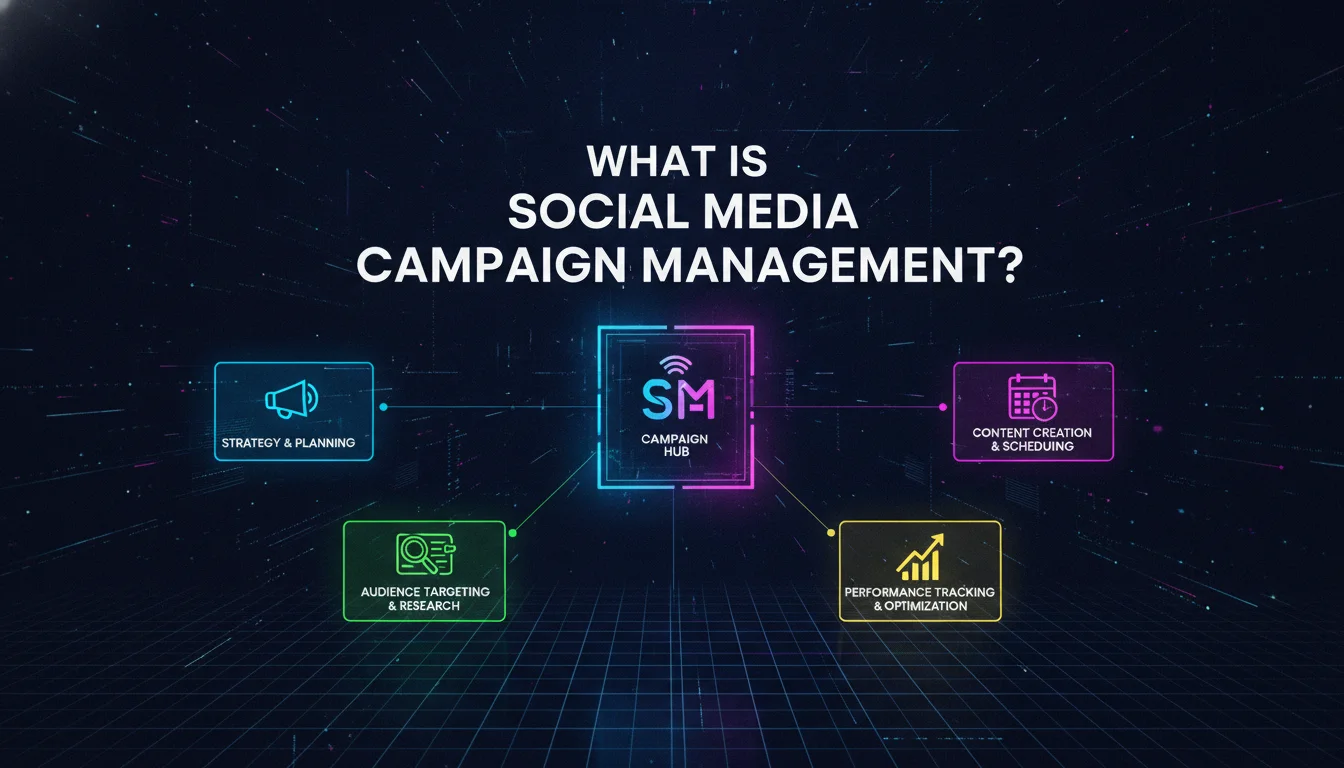
this type of management is the discipline of planning, executing, and optimizing coordinated marketing activities across social networks to achieve defined business objectives. Investopedia defines social media marketing as the use of social media platforms to build a brand, increase sales, and drive website traffic. Campaign management adds operational layers on top of that foundation: scheduling, approvals, community engagement, and performance reporting.
The Difference Between Social Media Marketing and Social Media Management
Many teams use these terms interchangeably, but they describe two distinct functions. Sprinklr explains that social media marketing focuses on strategy: defining objectives, targeting the right audience, and crafting campaigns. Management is the day-to-day upkeep: scheduling content, monitoring engagements, responding to audiences, and analyzing performance. In practice, this kind of campaign management encompasses both the strategic planning and the tactical execution required to keep a campaign aligned and consistent.
Why Social Media Campaign Management Matters
Without a structured approach, brands risk inconsistent posting, missed approvals, and unmeasurable returns. The American Marketing Association compares diving into social media without a strategy to cooking without a recipe. You might get lucky, but chances are it becomes a mess. According to Campaign Monitor, 95% of 18-to-34-year-olds in the U.S. say they would follow a brand on social media. That audience expects timely, relevant interaction, and only disciplined campaign management can deliver that at scale.
Core Components of a Successful Social Media Campaign
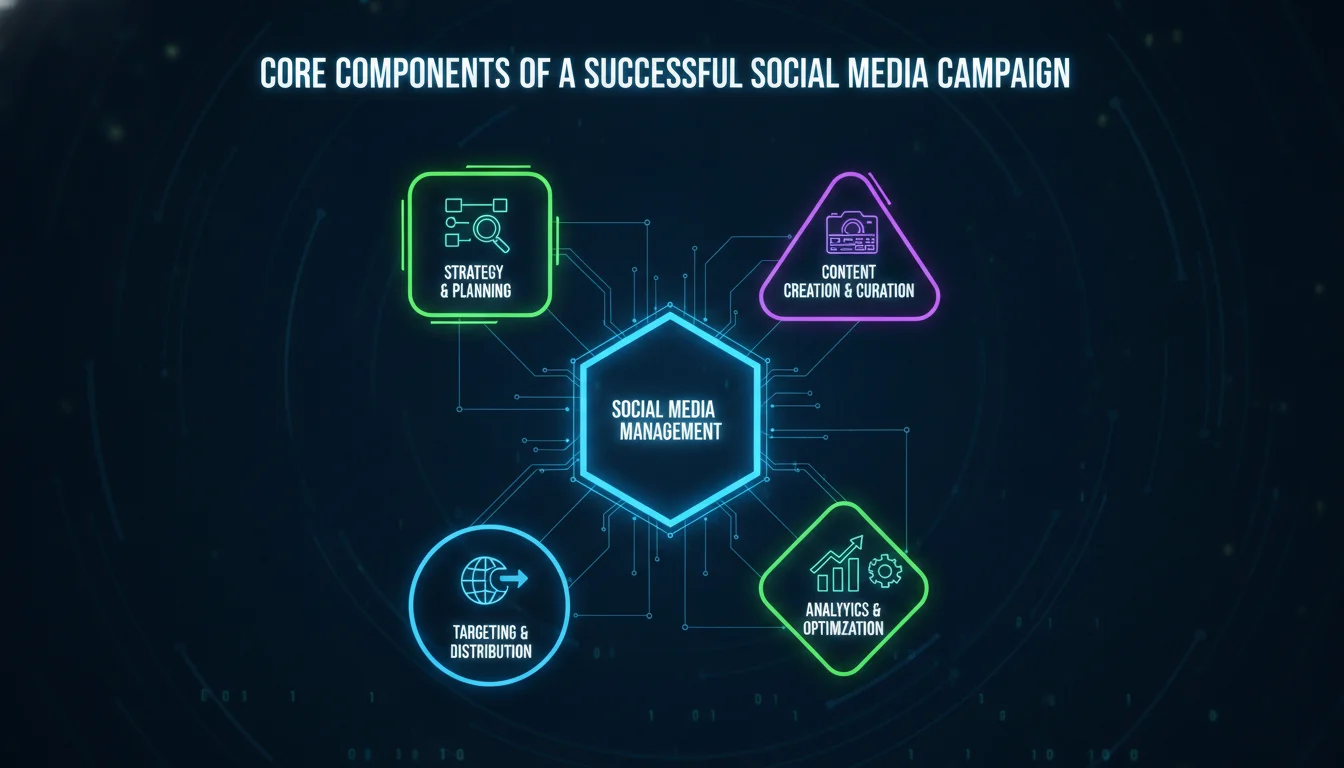
A great social media campaign is built on several interdependent elements. Campaign Monitor identifies profile optimization, a defined goal, wise platform selection, platform-specific content, strategic posting, and analytics tracking as foundational. User-generated content and influencer collaborations round out the mix.
Optimized Profiles and Clear Goals
An optimized profile has a clear, compelling bio and relevant images for the header and headshot. A defined goal prevents you from being on social media just for the sake of it. Without a goal, you cannot set meaningful KPIs or prove return on investment.
Platform-Specific Content and Strategic Posting
Not all content fits every network. Campaign Monitor advises creating content that is platform-specific, relevant, and engaging. Strategic posting means not bombarding followers with promotions every minute. Give valuable content first, then occasionally promote products or services. This balance maintains trust and encourages sharing.
User-Generated Content and Influencer Collaborations
User-generated content encourages customers to share brand experiences, increasing authenticity and engagement. Campaigns that promote specific hashtags or competitions often boost organic reach. Collaborating with influencers exposes your brand to targeted audiences, building trust and expanding visibility. Combining these strategies with organic and paid efforts elevates the overall results of your the media campaign management.
The 5-5-5 Rule and Other Content Frameworks
The 5-5-5 rule is a content distribution framework that helps brands balance promotional and value-driven posts across social platforms. The idea: for every five posts that educate or entertain, five that engage your community, and five that promote your brand or products, you maintain a feed that feels generous rather than self-serving. This ratio keeps audiences engaged without burning out your follower base on constant sales messaging.
Frameworks like this give management a repeatable rhythm. Instead of guessing what to post each week, your team works from a content architecture that already balances value and conversion. Pair it with a content calendar and you have a system, not just a schedule.
Step-by-Step Social Media Campaign Management Process
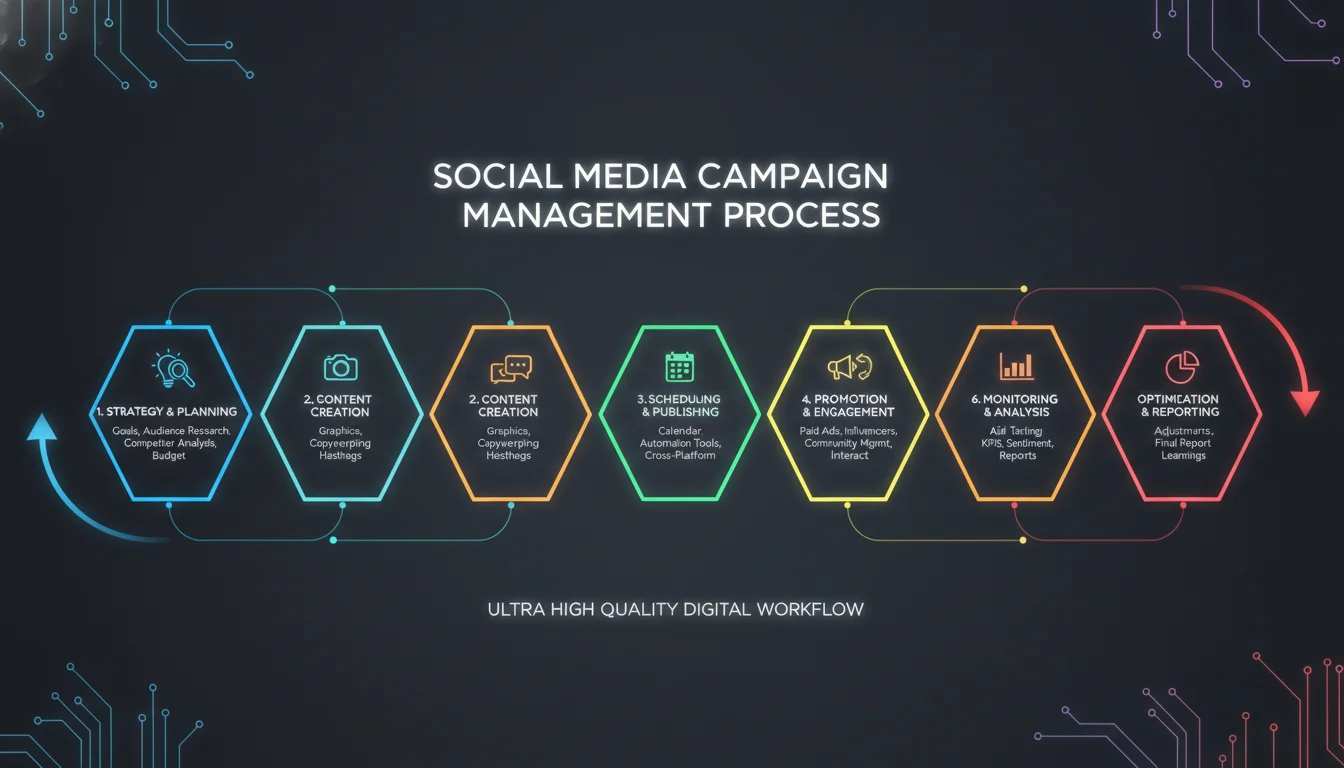
A repeatable process prevents ad-hoc posting and makes performance predictable. The AMA and Hootsuite both outline eight steps, from setting goals to testing and adjusting. Here is a consolidated workflow for social media.
- Set SMART goals aligned to business objectives. Specific, measurable, attainable, relevant, time-bound. The AMA gives this example: “Increase Instagram followers by 20% over the next six months.”
- Learn everything you can about your audience. Create audience personas. Hootsuite notes that social media listening helps you avoid creating your business strategy with blinders on.
- Research the competition. Understand what competitors are doing on each platform to identify gaps and opportunities.
- Conduct a social media audit. Assess current accounts, content, and performance to establish a baseline.
- Optimize profiles and set up accounts. Ensure bios, images, and links align with your brand.
- Create a social media content calendar. Plan posts in advance. Cloud Campaign’s drag-and-drop calendar and bulk uploads help schedule weeks of content in minutes.
- Execute, engage, and monitor. Publish content, respond to comments and direct messages, and monitor brand mentions.
- Measure, report, and adjust. Track KPIs such as reach, engagement, leads, and conversions. Use reports to refine strategy.
Applying the Process for Agencies
Agencies managing multiple clients benefit most from centralized workflows. Cloud Campaign reports that Frogman Media Group saved 3+ hours per day after migrating 40+ clients in under two weeks, while Strategic America reclaimed 3+ workdays per quarter by automating insight reports.
Common Workflow Pitfalls
Email approval chains stall content. Cloud Campaign’s approval portal is the feature reviewers mention most: clients comment, request edits, or approve the whole month’s calendar in one click. No more endless back-and-forth threads.
How to Set Goals and KPIs That Drive Results
Without measurable goals, social media ROI is impossible to demonstrate. The AMA recommends SMART goals; Hootsuite emphasizes tracking meaningful metrics rather than vanity metrics like retweets and likes. Focus on leads generated, web referrals, and conversion rate instead.
Aligning Goals to the Funnel
Top-of-funnel goals include impressions, reach, and new followers. Middle-of-funnel goals include clicks, engagement, and website traffic. Bottom-of-funnel goals include leads, purchases, and downloads. Set different goals for different channels and even for different uses of each channel. For example, use paid campaigns to increase brand awareness but measure acquisition and engagement for organic social posts.
Examples of SMART Social Media Goals
- Increase brand awareness: share storytelling posts that highlight brand values and personality, not just product promos.
- Generate new leads or sales: run targeted ad campaigns, special promotions, Instagram Shopping, or Facebook Shops.
- Grow your community size: create shareable content, engage with users in your niche, or launch referral campaigns such as tag-a-friend contests.
- Boost customer service and satisfaction: respond to all customer inquiries within 2 hours on social media.
Choosing the Right Platforms and Content Mix
Platform selection depends entirely on your audience. Campaign Monitor notes that B2B audiences are most likely found on LinkedIn. Sprinklr points out that platforms evolve rapidly, so a structured approach to campaign management is essential to avoid wasted effort.
Audience-First Platform Selection
Create audience personas first. A retail brand might create different personas based on customer segments, then match each persona to the platforms where they spend time: Facebook, Instagram, X, LinkedIn, YouTube, or TikTok. Knowing where your audience already is prevents wasted effort on irrelevant networks.
Organic, Paid, UGC, and Influencer Mix
A robust campaign combines organic content for credibility and community, paid promotions for reach, user-generated content for authenticity, and influencer partnerships for trust. Campaign Monitor highlights that UGC and influencer collaborations can greatly enhance a social media campaign’s effectiveness when combined with organic and paid efforts.
Pros and Cons of Social Media Campaign Management
Pros
- Measurable results: every post, ad, and engagement can be tracked against a defined KPI, making ROI visible and defensible.
- Audience precision: platforms offer targeting by demographics, interests, and behavior, so your message reaches the right people.
- Brand consistency: a structured workflow keeps tone, visuals, and messaging consistent across every channel and team member.
- Scalability: tools with automation, bulk scheduling, and AI content generation let small teams manage large content volumes without burning out.
- Real-time feedback: engagement data tells you what resonates within hours, not weeks, allowing fast iteration.
Cons
- Time-intensive setup: building a proper strategy, content calendar, and approval workflow takes significant upfront investment.
- Platform volatility: algorithm changes can reduce organic reach overnight, requiring constant adaptation.
- Approval bottlenecks: without the right tools, client or stakeholder approvals slow content to a crawl.
- Metric overload: too many dashboards and vanity metrics can obscure what actually drives business results.
- Content fatigue: audiences disengage when brands post too frequently or without enough variety in format and value.
Tools and Technology for Social Media Campaign Management
The right tools unify scheduling, approvals, reporting, and AI-assisted content creation under one roof. As of 2026, the market offers options ranging from agency-focused platforms to enterprise-grade suites.
| Platform | Key Feature | Best For | Pricing (as of source) |
|---|---|---|---|
| Cloud Campaign | White-label dashboards, AI toolkit, one-click approvals, branded reports | Agencies and SaaS products | Freelancer $49/mo; Team $199/mo; Agency $299/mo |
| Hootsuite | Strategy guide and social media management resources, content calendar | Businesses building or optimizing social presence | Not stated in source |
| Sprinklr Social | Unified enterprise platform with industry-leading AI | Global brands requiring scale | Not stated in source |
| Campaign Monitor | Email marketing plus campaign elements guidance | Marketers integrating email and social | Not stated in source |
AI and Automation in Campaign Management
AI captions, images, and inbox replies built into every plan can save hours each week. Cloud Campaign’s CloudStudio plans, creates, and publishes client content automatically, offering end-to-end fulfillment rather than just another editor. CaptionAI, ImageAI, and AI Social Inbox are all included free on every plan.
White-Labeling and Client Approvals
Agencies need client-facing dashboards without third-party branding. Cloud Campaign offers free white-labeling on Team and Agency plans, with branded reports and approval pages. This eliminates email chains and keeps this type of management moving without friction.
“Approvals without the email chains. Send one link with the whole month’s calendar. Clients comment, request edits, or approve in a single click.” – Cloud Campaign, on their approval portal feature
Measuring and Reporting Campaign Performance
Define KPIs before launch, not after. Investopedia notes that businesses use metrics such as engagement, reach, and conversions to measure the success of social media marketing campaigns. Hootsuite advises tracking leads generated, web referrals, and conversion rate rather than vanity metrics.
Key Metrics for Social Media Campaigns
- Reach and impressions: for brand awareness at the top of the funnel.
- Engagement: likes, comments, shares, direct messages.
- Website traffic and referrals: from social links back to your site.
- Leads and conversions: sign-ups, purchases, downloads.
- Customer service metrics: response time and resolution rate.
Reporting Structures and Frequency
Cloud Campaign generates branded, easy-to-digest reports with one click, combining organic and paid performance without juggling logins. Strategic America reclaimed 3+ workdays per quarter by automating insight reports and saved 6 to 8 hours monthly with automatic client watermarking. That is time your team can redirect toward strategy and creative work.
“Track meaningful metrics. While vanity metrics like retweets and likes can be fun to share, it’s hard to prove their real value. Instead, focus on targets such as leads generated, web referrals, and conversion rate.” – Hootsuite, Social Media Strategy Guide
Common Challenges and How to Overcome Them
this kind of campaign management runs into predictable friction points: inconsistent calendars, approval bottlenecks, and disjointed analytics. A well-defined workflow and the right tooling mitigate all three.
Approval Bottlenecks and Client Feedback
Email chains stall content. Use approval portals where clients comment, request edits, or approve the whole month’s calendar in one click. Cloud Campaign reports that 92% of clients praised the new approval system after Frogman Media Group migrated 40+ clients in under two weeks.
Maintaining Consistency Across Multiple Accounts
For multi-location or multi-client operations, centralized scheduling and approvals are non-negotiable. Cloud Campaign’s auto-filled schedule keeps 40 offices posting consistently for Kids Dental Brands, with centralized approvals saving hours every week.
Measuring ROI When Metrics Are Fragmented
Consolidate organic and paid performance in one report. Avoid vanity metrics and align every metric to a funnel stage. This makes it easier to show value and get executive buy-in for continued investment in the media campaign management.
Account Security and Succession Planning
Two challenges teams often overlook: account security and staff turnover. Social media accounts represent real brand equity. Establish clear security protocols, including two-factor authentication and role-based access, so no single person holds the keys to every channel. Build a succession plan so that when a team member leaves, content workflows, login credentials, and brand guidelines transfer without disruption. These operational details are as important as any content strategy.
Brand Spotlight: What Great Social Media Campaign Management Looks Like in Practice
Frogman Media Group, a full-service digital marketing agency, migrated 40+ clients to Cloud Campaign in under two weeks. The result: 3+ hours saved per day through auto-filled schedules, and 92% of clients praised the new approval system. That is not a marginal efficiency gain. That is a structural shift in how the agency operates.
Kids Dental Brands took a different angle. With 40 locations to manage, consistency was the challenge. One centralized auto-filled schedule kept every office posting on-brand, with approvals handled from a single dashboard. Social media campaign management at that scale requires systems, not heroics.
Conclusion
Effective social media campaign management is not about posting more. It is about posting with purpose, tracking the right metrics, and using systems that automate busywork so your team can focus on creative strategy. According to Campaign Monitor, citing Social Media Examiner, 96% of marketers use social media as part of their marketing strategy. To compete in 2026, you need a repeatable process, clear goals, platform-specific content, and tools that turn activity into measurable business results. Start with a SMART goal, build a content calendar, and let data guide every iteration.
Next Steps
Audit your current social presence, define one SMART goal, and evaluate whether a platform like Cloud Campaign can reduce your team’s daily busywork. Then build a content calendar and measure the metrics that matter to your business.
Ready to build something bold? Contact Emin Media for a free brand consultation and let’s turn your social presence into a performance engine.
Frequently Asked Questions
What is social media campaign management?
Social media campaign management is the process of strategically planning, executing, and optimizing brand activity across social platforms to achieve specific marketing goals. It includes content scheduling, community engagement, client approvals, and performance reporting, all working together as one coordinated system.
What is the 5-5-5 rule for social media?
The 5-5-5 rule is a content distribution framework where brands balance five educational or entertaining posts, five community engagement posts, and five promotional posts. This ratio keeps feeds valuable and prevents audiences from feeling like they are being sold to constantly.
How much does it cost to pay someone to manage your social media?
Costs vary widely depending on scope and tooling. Platform-side, Cloud Campaign starts at $49/month for freelancers and $199/month for teams. Agency retainers for full social media campaign management services typically range from a few hundred to several thousand dollars per month depending on deliverables and platform count.
What are the key elements of a great social media campaign?
Campaign Monitor identifies an optimized profile, a defined goal, wise platform selection, platform-specific content, strategic posting, and analytics tracking as the core elements. User-generated content and influencer collaborations further enhance effectiveness when layered on top of organic and paid efforts.
How do I measure social media campaign success?
Track metrics aligned to your funnel stage: reach and impressions for awareness, engagement for consideration, and leads and conversions for bottom-funnel outcomes. Hootsuite recommends focusing on leads generated, web referrals, and conversion rate rather than vanity metrics like likes and retweets.
What is the difference between social media marketing and social media management?
Marketing sets the strategy and defines objectives. Management handles day-to-day execution: scheduling, monitoring, engaging, and analyzing performance. As Sprinklr explains, while marketing sets the vision, management brings it to life through consistent daily action.
Enjoyed this article?
Contact Emin Media for a free brand consultation and let's create something amazing together.
Get in Touch