Graphic Design Trends 2026: Bold, Human, Alive
Key Takeaways
- Graphic design trends 2026 are defined by a tension between AI precision and human imperfection, leading to more authentic visual communication.
- AI becomes a collaborative tool, not a replacement, with node-based workflows giving designers full control over generative processes.
- Imperfect, hand-drawn, and brutalist aesthetics counterbalance the hyper-polished digital look, emphasizing warmth and personality.
- Experimental typography, bento grids, and mixed-media layouts break traditional grids, creating dynamic storytelling devices.
- Motion design is now a core branding element, from cinematic transitions to subtle micro-interactions.
- Vibrant, sensory-rich color systems and tactile textures invite deeper engagement, moving beyond flat design.
- Tools like Adobe Express, Canva, and Figma integrate these trends, making them accessible to designers at all levels.
Graphic design trends 2026 are the aesthetic and strategic forces reshaping how brands communicate visually this year: movement, sensory richness, and deliberate imperfection define the new creative standard.
As the design world recalibrates, 2026 marks a clear shift away from sterile minimalism toward emotionally resonant, multi-sensory experiences. According to the Adobe 2026 Creative Trends Forecast, the heavy influence of AI, AR, and gaming is ironically driving a backlash toward organic, analog, and human-centered design. Designers are no longer chasing perfection. They’re embracing the messy, the tactile, and the real. This article unpacks the most influential trends 2026, drawing on forecasts from Behance, Canva, Vistaprint, and industry thought leaders to give you a complete view of where the craft is headed.
The Balancing Act: AI and Human Creativity in 2026
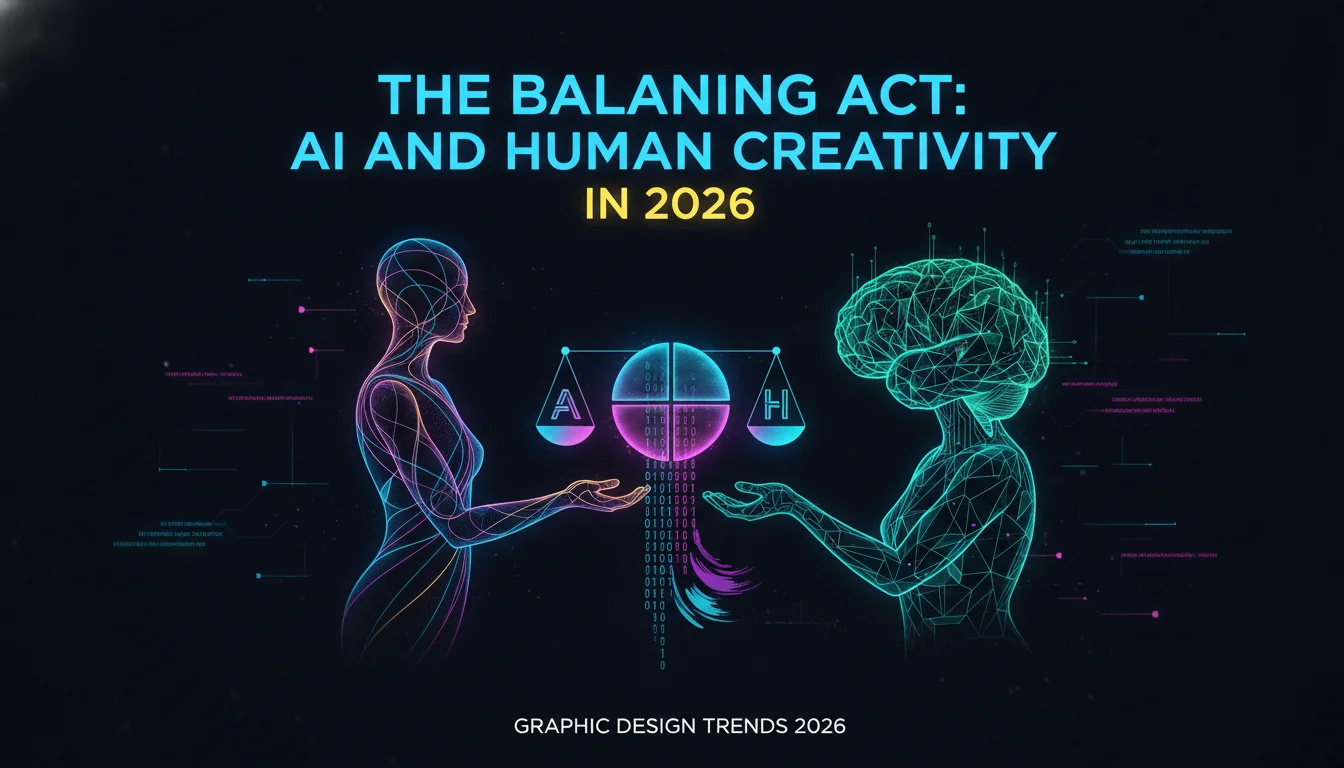
The dominant narrative shaping this type of 2026 is the relationship between artificial intelligence and human intuition. AI has matured from a novelty into a generative collaborator, allowing designers to explore vast creative territories while retaining authorship. Yet this technological leap has also sparked a counter-movement that values human imperfection above machine precision.
AI as a Collaborative Tool
In 2026, AI is no longer a shortcut. It’s a partner in ideation. Node-based interfaces let designers visually connect models, prompts, and logic, creating transparent, reusable workflows. According to the Behance Design Trends 2026 report, these tools give designers full control and transparency over AI workflows, making complex processes easy to adjust, remix, and scale. Tools like Adobe Firefly generate surreal imagery and unexpected compositions that humans then refine. The result is a co-creative process where AI accelerates exploration, but the final vision remains distinctly human.
A design trend is a prevailing style or technique that gains temporary popularity within the design community, often influenced by technology, culture, and economics. In this context, AI-generated design is not just a trend but a fundamental shift in the designer’s toolkit. As Lindsay Marsh notes in her 2026 trends analysis, the most compelling work uses AI to surface unexpected forms, which are then filtered through human judgment, ensuring the outcome still carries emotional weight and conceptual depth.
The Rise of Imperfect, Human-Centered Design
Paradoxically, the sophistication of AI has fueled a craving for raw, human touches. Designers are deliberately introducing flaws: hand-drawn letterforms, candid photography, and childlike illustrations. This naïve design trend embraces awkward proportions and visible errors as a way to re-introduce warmth, as Lindsay Marsh and Kittl’s 2026 trend report both confirm. It’s a pendulum swing away from the severe rigidity of polished brands, aligning with the broader this kind of trends 2026 theme of rebellion and authenticity.
According to Vistaprint’s research with the 99designs by Vista community, small businesses are using these human-centric styles to connect with audiences in a more sincere way. Elemental Folk and Notes App Chic (coined by Canva) exemplify this: designs that look like they were made by a person, not a machine, using crafty patterns and raw, unpolished visuals. Imperfection becomes a brand asset, signaling that there’s a conscious creator behind the work.
“We’re seeing a return to crafty old folklore patterns but expressed in a more fresh and contemporary way. This modern take draws from Northern European historical elements which feels warm, inviting and joyous.” – Mary Pho, Art Director, VistaPrint
“The digital-design landscape of 2026 is about balance: between AI and human creativity, between polished and imperfect, between experiential richness and performance. Designers who embrace new tools while holding tight to purpose will lead.” – Behance Design Trends 2026 Report
Top Aesthetic Movements in Graphic Design Trends 2026
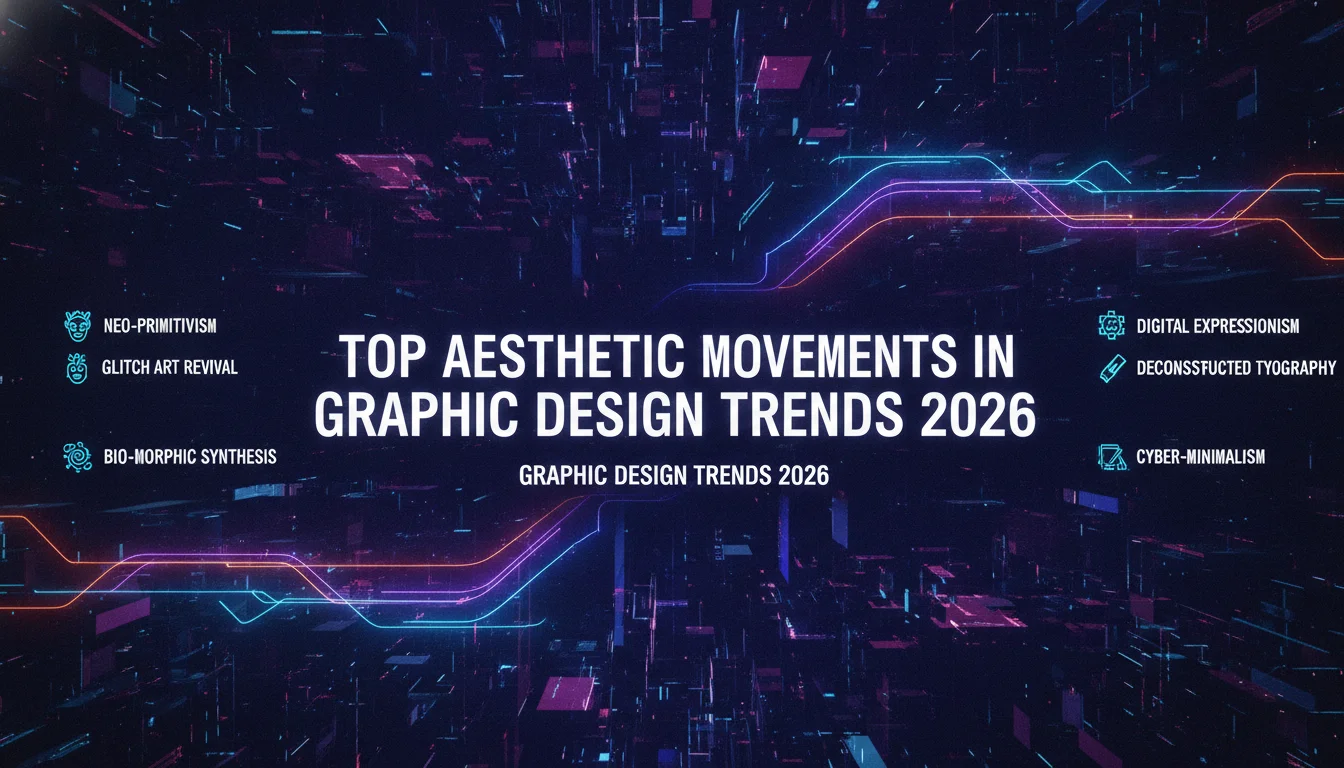
Beyond the AI-human dynamic, several distinct aesthetics are defining the visual language of this year. These movements don’t exist in isolation. They blend, giving rise to hybrid styles that push boundaries while remaining rooted in communication goals.
Neo-Brutalism and Utilitarian Design
Neo-brutalism continues to assert itself through raw layouts, oversized typography, and intentional friction. It prioritizes clarity and impact over refinement, often creating visuals that feel confrontational yet confident. This aesthetic thrives in digital spaces where bold positioning is essential. Utilitarian design, influenced by signage and wayfinding systems, values hierarchy and legibility above all, stripping away decoration to its functional core. Both resonate with the design trends 2026 because they reject visual noise in favor of straightforward communication: a direct response to information overload.
Naive and Elemental Folk Aesthetics
Naive design, as popularized by platforms like Canva’s Notes App Chic and Kittl’s trend report, uses childlike simplicity to evoke nostalgia and sincerity. Elemental Folk draws from regional craft traditions: florals, animals, ornamental borders, placed into modern compositions. Vistaprint highlights this trend’s cultural depth, noting it brings warmth and honesty to branding. These aesthetics serve as a counterpoint to AI’s cool precision, offering a tactile, roots-oriented feel that consumers find increasingly appealing.
Vibrant Color Systems and Sensory Richness
Color in 2026 is bold, dynamic, and sometimes reactive. Designers are layering gradients, duotones, and adaptive palettes that shift with mood or context. Adobe’s All Our Senses, to the Max trend emphasizes hyper-realistic textures that mimic touch, sound, and motion, creating immersive experiences. According to the Behance report, color becomes a storytelling device, representing brand emotion and inclusivity. This sensory approach is a defining characteristic of graphic design trends 2026, moving design beyond the screen into a multi-sensory experience.
Nature-Inspired Design
Nature-inspired design in 2026 feels grounded rather than decorative. According to Digital Synopsis’s analysis of the Jumping Goose Graphic Trend Report, organic shapes, muted palettes, and tactile textures are used to convey honesty and balance. This direction resists overt symbolism, focusing instead on atmosphere and materiality. It pairs naturally with the broader push toward warmth and authenticity that defines graphic design trends 2026, giving brands a sense of calm presence in a visually noisy world.
| Trend | Key Characteristics | Applications |
|---|---|---|
| Neo-Brutalism | Raw layouts, oversized type, deliberate friction | Web design, editorial, brand campaigns |
| Naive Design | Childlike drawings, hand-drawn lettering, visible errors | Lifestyle brands, packaging, social media |
| Vibrant Color Systems | Dynamic palettes, gradients, reactive schemes | Branding, UI/UX, motion graphics |
| Mixed-Media Layering | Collage of photography, illustration, and texture | Editorial, posters, digital art |
| Motion-Led Branding | Cinematic transitions, micro-interactions | Logos, web experiences, app design |
| Nature-Inspired Design | Organic shapes, muted palettes, tactile textures | Wellness brands, packaging, editorial |
| Elemental Folk | Folk motifs, florals, ornamental borders in modern layouts | Packaging, lifestyle branding, print |
Pros and Cons
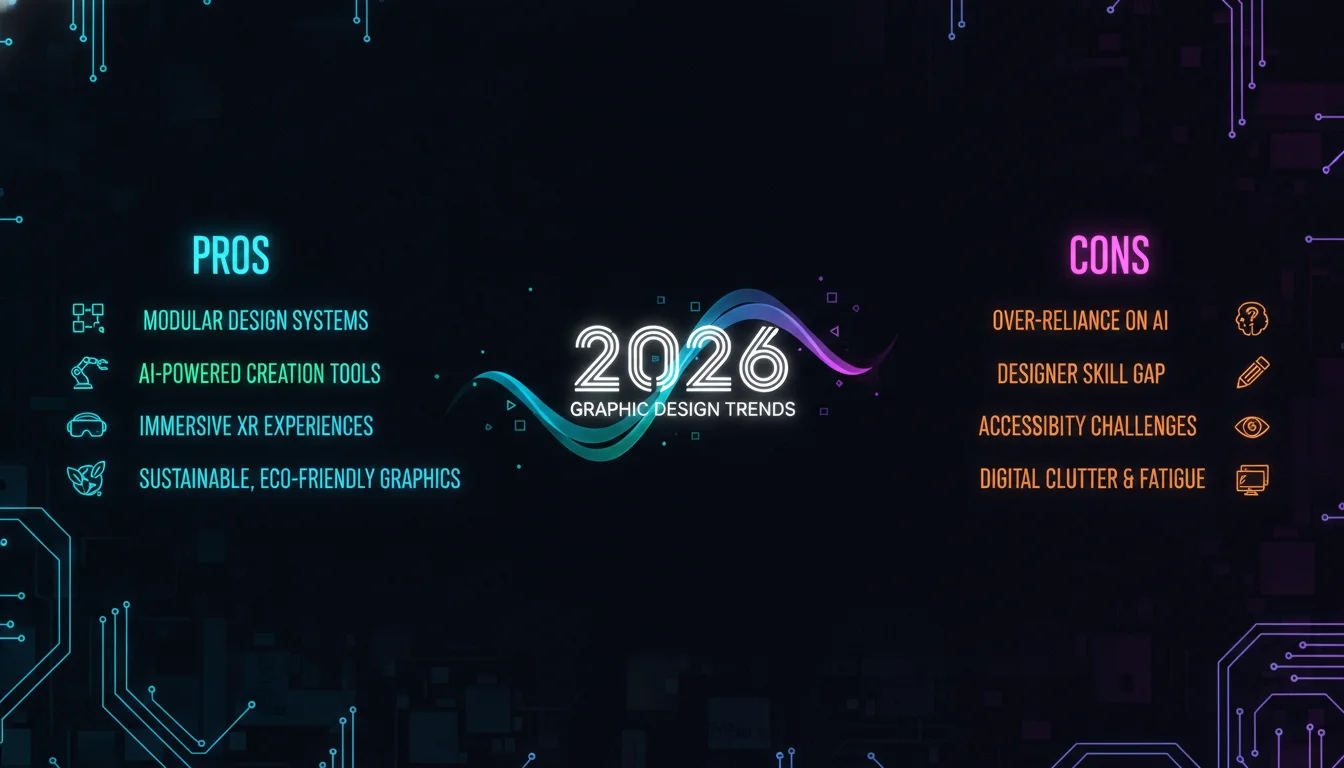
Pros
- Authenticity at scale: Human-centered aesthetics like naive design and Elemental Folk help brands stand out against AI-generated sameness, building genuine audience trust.
- AI accelerates exploration: Node-based workflows dramatically expand creative possibilities without sacrificing designer authorship or intent.
- Motion builds brand presence: Cinematic transitions and micro-interactions create memorable, personality-driven experiences that static visuals simply can’t match.
- Accessible to all skill levels: Tools like Canva, Adobe Express, and Figma make these trends approachable for small business owners and independent creators, not just agency teams.
- Cultural specificity resonates: Regional aesthetics like Granny Wave and Zinegeist connect with audiences on a deeper level than generic global design.
Cons
- Imperfection is hard to fake: Naive and brutalist styles must look intentional. Executed poorly, they read as careless rather than creative, damaging brand perception.
- Motion adds technical complexity: Cinematic animations and 3D spatial interfaces require performance optimization. Heavy assets can slow load times and hurt user experience.
- Trend chasing dilutes identity: Adopting every aesthetic movement without a strategic filter can make a brand feel inconsistent or opportunistic rather than authentic.
- AI homogenization risk: Over-reliance on AI generation without strong human curation can produce work that looks like everyone else’s, the opposite of what 2026 demands.
Typography and Layout Innovations
Type and composition are undergoing radical experimentation, breaking free from the grid-constrained minimalism that dominated the past decade. These shifts reflect a desire for more expression and narrative depth across graphic design trends 2026.
Experimental and Liquid Typography
Typography in 2026 is elastic, playful, and sometimes absurd. Designers stretch, bend, and soften letterforms, creating motion even in static compositions. This liquid typography, highlighted by Digital Synopsis, is typically reserved for display contexts where emotion and tone are paramount. Canva’s Reality Warp trend distorts type into otherworldly shapes, while Adobe’s exaggerated, playful letters approach uses oversized, bubbly fonts. These approaches align with the graphic design trends 2026 emphasis on personality over neutrality.
Ink Trap Fonts: From Function to Style Statement
Ink trap fonts deserve their own spotlight this year. Originally an engineering solution for print, where ink would spread into letterform corners, designers are now amplifying these details as a deliberate stylistic choice. According to Digital Synopsis’s analysis of the Jumping Goose Graphic Trend Report, ink traps introduce rhythm, character, and subtle disruption into typographic systems. The result is typography that feels engineered yet expressive: a perfect fit for brands that want technical credibility with a human edge. Expect to see ink trap fonts appearing in brand identities, editorial spreads, and digital campaigns throughout 2026.
Bento Grids and Modular Layouts
Bento-style layouts compartmentalize content into neatly organized, flexible modules. Popularized by UI design, they bring clarity to information-rich interfaces without feeling rigid. This trend, noted in both the Behance and Digital Synopsis reports, is particularly effective in responsive web design, allowing content to adapt smoothly across devices. It’s a structured yet playful approach that mirrors the organizing logic of a bento box: each piece distinct but part of a cohesive whole.
Mixed-Media and Collage Techniques
Flatness is out. Layered complexity is in. Designers are blending photography, illustration, texture, and type within a single composition, creating depth and richness. This mixed-media approach reflects a rejection of homogeneous visuals, embracing complexity as a storytelling tool. Adobe’s Freeform and Storytelling Layouts and Canva’s Zinegeist both champion this collage aesthetic, often with an analog feel that evokes zines and DIY culture. It’s a powerful way to convey authenticity in an era of digital sterility.
Motion and Interactivity as Core Design Principles
Motion is no longer an afterthought. It’s a primary language of branding. From subtle micro-interactions to full cinematic sequences, movement guides user attention and adds a layer of emotional engagement that static design simply cannot replicate.
Cinematic Motion and Micro-Interactions
Motion design in 2026 is narrative-driven. Brands use cinematic transitions and animated logos to convey rhythm and personality. According to the Behance Design Trends 2026 report, motion now “tells the story,” making it an indispensable part of the designer’s toolkit. Every animation should have a purpose: delight, inform, or direct. When done well, micro-interactions make interfaces feel responsive and alive, turning routine digital touchpoints into brand moments worth remembering.
Immersive 3D and Spatial Interfaces
3D design is shifting from spectacle to integration. Rather than dominating layouts, 3D elements add depth and tactility to brand systems. Spatial interfaces, think Apple Vision Pro environments, are pushing design beyond the flat screen. WebGL and real-time rendering enable these experiences, but performance remains a critical consideration. The goal is to enhance, not distract. This trend is central to graphic design trends 2026 because it creates a sense of presence and physicality that static visuals cannot match.
Technology Driving Change: AI, AR, and Beyond
Emerging tools and platforms are not just enablers. They are active players in shaping the direction of design. Understanding these technologies is essential to staying relevant in 2026 and beyond.
Node-Based AI Design Tools
Node-driven AI tools represent a new model for creative workflows. Unlike simple prompt-based systems, they offer visual, modular control over AI processes. Designers connect models like a flowchart, making complex automations transparent and reusable. This approach, ranked as the number one trend in Behance’s Design Trends 2026 report, lets designers iterate rapidly without losing sight of creative intent. Tools like Stable Diffusion with node interfaces and emerging platforms are paving the way for more democratized and sophisticated AI design.
Spatial Computing and Immersive Environments
While the hype around the metaverse has cooled, spatial computing is quietly maturing. Apple Vision Pro and Meta Quest 3 are driving demand for 3D assets and immersive interfaces. Designers must now consider how their work exists in a three-dimensional, interactive space. This shift influences everything from UI patterns to brand experiences, and it underscores a broader truth about graphic design trends 2026: design is no longer confined to 2D screens.
AR, Gaming, and the Backlash They Created
Adobe’s 2026 Creative Trends Forecast makes a fascinating observation: the heavy influence of AR technology and gaming in everyday life is ironically pushing creative design toward organic, analog, and human-centered work. The more immersive and synthetic our digital environments become, the more audiences crave something that feels made by hand. This tension between technological immersion and human warmth is one of the most productive creative conflicts driving graphic design trends 2026 forward.
Industry Shifts: What These Trends Mean for Designers
The trends of 2026 are not just aesthetic. They reflect deeper changes in the design profession. AI is reshaping roles, client expectations are evolving, and the value of human creativity is being recalibrated in real time.
The Pressure to Balance AI Skills and Human Craft
Designers today must be comfortable with AI tools while fiercely protecting their unique voice. As Lindsay Marsh discusses in her trend analysis, the future belongs to those who can use AI without letting it homogenize their work. This dual demand is redefining design education and hiring criteria. Companies are looking for visual storytellers who can also think in systems and prompts: a hybrid skill set that only the most adaptable will master.
The Return of Regional and Cultural Identity
Globalization once pushed design toward a bland universality. Now, trends like Elemental Folk, Granny Wave (a maximalist remix of Indian heritage), and Zinegeist (bringing analog effects back into Mexican visual culture) celebrate local visual languages. Brands are increasingly using design to express cultural authenticity, connecting with audiences on a deeper level. This is a meaningful counter-trend to AI’s generic outputs, proving that specificity and heritage still resonate powerfully.
How to Apply Graphic Design Trends 2026 in Your Work
Adopting a trend isn’t about blindly copying. It’s about strategic integration that aligns with your brand’s voice. Here’s a step-by-step approach to putting these movements to work effectively.
Step 1: Audit Your Brand’s Visual Language
Start by assessing your current design assets. Identify what feels dated or overly polished. Does your brand need more warmth? Consider introducing hand-drawn elements or imperfect typography. If you’re in a noisy market, a neo-brutalist look might cut through. The key is to map a trend to a specific brand need, not just jump on the bandwagon because it looks good on someone else’s Instagram.
Step 2: Experiment with AI in Your Workflow
Incorporate AI tools gradually. Begin with simple node chains in platforms like ComfyUI to generate texture variations or layout ideas. Use AI for rapid prototyping but always refine outputs by hand. The goal is to expand your creative possibilities without sacrificing your design’s soul.
Step 3: Prioritize Motion and Micro-Interactions
Even small animations can elevate a design. Use tools like After Effects or Lottie to add subtle movements to logos and icons. Ensure every animation has a purpose: guiding users, providing feedback, or conveying brand personality. Performance matters enormously here. Optimize for fast load times to keep the experience smooth.
Step 4: Embrace Imperfection Intentionally
If you adopt naive or brutalist styles, do so deliberately. The imperfection must look intentional, not careless. Pair rough textures with clean typography to create contrast, and use asymmetry to draw the eye. Test your designs across all touchpoints to ensure the human touch enhances, rather than detracts from, usability.
Frequently Asked Questions
What are the biggest graphic design trends for 2026?
The biggest graphic design trends 2026 include AI-generated design as a collaborator, imperfect and humanized aesthetics like naive design and neo-brutalism, experimental typography, immersive 3D, and motion-led branding. These movements share a common thread: authenticity and sensory engagement over sterile perfection.
How is AI influencing graphic design trends 2026?
AI serves as a generative partner, expanding creative possibilities through node-based workflows and image synthesis. Designers retain authorship, using AI outputs as starting points refined through human intuition and judgment.
Are brutalist and imperfect designs hard to execute?
They can be deceptively challenging because the raw, unpolished look must still be intentional and functional. Balancing visual friction with clear communication requires a strong understanding of design fundamentals, not an excuse to skip them.
What tools are popular for graphic design in 2026?
Adobe Express, Canva, and Figma remain staples, while dedicated AI tools like ComfyUI and Firefly are gaining traction. Motion design tools such as After Effects and Lottie are essential for bringing static concepts to life across brand touchpoints.
How can small businesses apply graphic design trends 2026?
Small businesses can use templates and AI-assisted tools to adopt trends like bold colors or imperfect typography without large budgets. The key is staying authentic and choosing styles that genuinely align with their brand story, not just what looks trendy.
Is minimalism still relevant in 2026?
Yes, but it has evolved. The Behance report calls it neo-minimalism: clean layouts paired with bold type or micro-details. It’s less about austerity and more about intentional, personality-driven simplicity that gives one strong element room to breathe.
As we move through graphic design trends 2026, one thing becomes clear: creativity is not being automated. It’s being amplified. This year’s movements challenge us to find beauty in the imperfect, to wield AI with purpose, and to design for all the senses. Whether you’re a seasoned designer or a brand owner figuring out your next visual direction, embracing these trends means committing to a more honest, human, and dynamic visual culture.
Ready to bring your brand into 2026 with intention and impact? Contact Emin Media for a free brand consultation and let’s build something bold together.
Enjoyed this article?
Contact Emin Media for a free brand consultation and let's create something amazing together.
Get in TouchRelated Articles
Digital Marketing for Creatives: A Bold Guide
Digital marketing for creatives builds real visibility and sales. Learn strategies for social media, SEO,…
Branding & Design Agency Tips That Actually Work
Discover branding and design agency tips to choose the right partner, set clear goals, and…
Creative Agency Pitch Deck Tips That Win Clients
Master creative agency pitch deck tips that win clients in 2026. Learn storytelling, design, and…