Creative Direction Tips for 2026
Creative direction tips are strategies and practices that help creative leaders develop compelling brand visions, guide teams effectively, and produce work that connects with audiences. As of 2026, the role demands more than artistic instinct: it requires strategic thinking, cultural awareness, and the ability to translate abstract ideas into measurable results.
Key Takeaways
- A creative director’s primary job is protecting and projecting a brand’s visual and emotional identity.
- The best creative direction tips combine artistic instinct with strategic, data-informed thinking.
- Mood boards, creative briefs, and structured feedback loops are non-negotiable workflow tools.
- Collaboration across departments produces richer ideas than siloed creative teams.
- Continuous learning, not just trend-watching, separates good creative directors from great ones.
- Knowing when to let go of hands-on design work is one of the hardest and most important transitions a creative director makes.
Pros and Cons of Pursuing Creative Direction
Pros
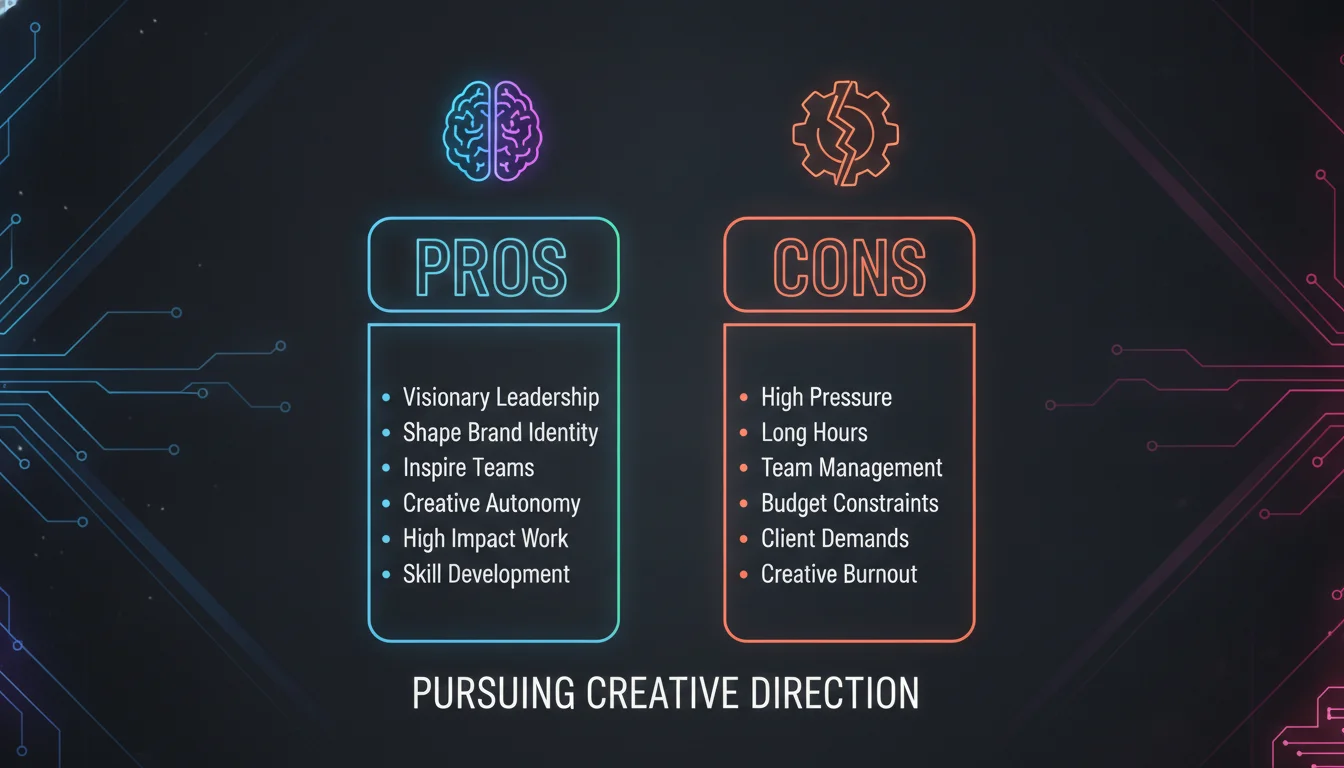
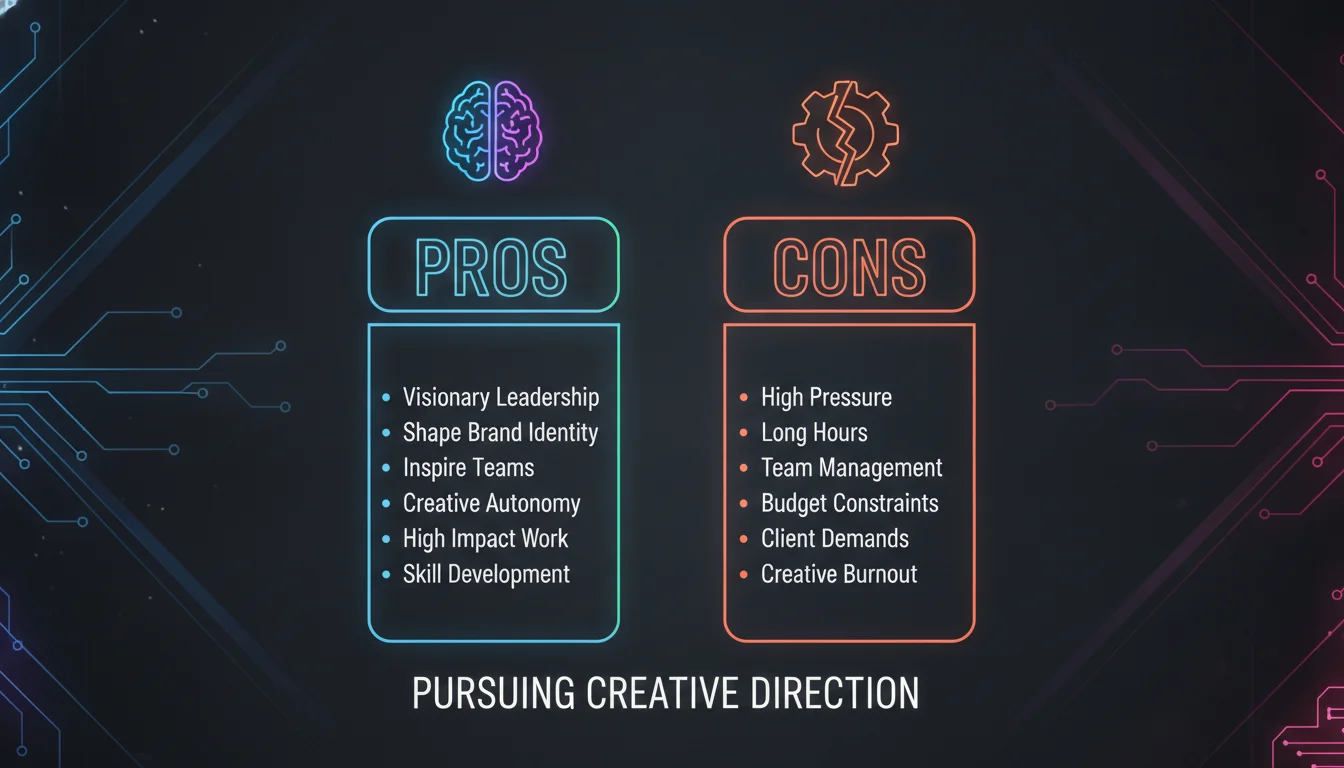
- Creative authority: You shape the entire visual and narrative identity of a brand or campaign.
- Cross-functional influence: Creative directors work across design, copy, strategy, and production, giving you broad organizational impact.
- Career longevity: Strong creative direction skills transfer across industries, from fashion and film to tech and consumer goods.
- Intellectual variety: No two briefs are the same. The role keeps you mentally engaged and constantly problem-solving.
- Team leadership: You build and mentor creative talent, which is deeply rewarding for people who love developing others.
Cons
- Letting go of craft: As Alex Normanton, independent creative director and former CD at Design Bridge in Amsterdam, notes, the hardest part of the transition from designer to creative director is letting go of day-to-day hands-on designing. Many struggle with this.
- High accountability: When a campaign underperforms, the creative director owns it. The visibility cuts both ways.
- Creative burnout risk: Generating ideas constantly, often under tight deadlines, is genuinely exhausting without proper systems in place.
- Stakeholder management: Balancing client expectations, brand guidelines, and team creative freedom requires constant diplomatic energy.
- Isolation at the top: Solo creative directors or small-team leads often lack peers to pressure-test ideas with.
Understanding the Role of a Creative Director

A creative director is the person responsible for the visual and conceptual integrity of a brand’s output, from campaign imagery to typography choices to the emotional tone of a video script. According to Gonzalo Muiño, creative director and faculty member at Vogue College of Fashion, the role is not limited to individual creativity. It also involves ensuring that the final work aligns with the artistic vision and strategic goals of a brand or project. That dual responsibility, artistic and strategic, is what makes the job genuinely difficult.
Defining the Creative Director’s Responsibilities
The responsibilities of a creative director vary by industry and organization size, but the core duties remain consistent across contexts:
- Leading Creative Teams: A creative director manages designers, writers, photographers, and other creatives, providing direction, feedback, and professional development.
- Developing Creative Concepts: They lead the ideation process, pushing teams toward ideas that are both original and strategically sound.
- Ensuring Brand Consistency: Every touchpoint, from a social post to a packaging design, must feel like it comes from the same brand universe. That coherence is the creative director’s responsibility.
“The role of creative director is crucial in any industry that depends on the creation and execution of visual ideas. Not only does this figure lead teams, but they are also responsible for ensuring that the final work aligns with the artistic vision and strategic goals of a brand or project.” – Gonzalo Muiño, Creative Director and Faculty, Vogue College of Fashion
The Importance of Vision in Creative Direction
A clear and compelling vision is the foundation of effective creative direction. Think of Tiffany’s turquoise. That specific color, applied consistently across logos, bags, store interiors, and digital assets, did not happen by accident. A creative director defined it, protected it, and built an entire brand language around it. Your vision works the same way: it’s a roadmap that keeps every team member aligned, even when the project gets complicated.
Skills Required for Effective Creative Direction
To succeed in creative direction, you need a blend of skills that most job descriptions underestimate:
- Leadership: The ability to inspire a team without micromanaging their process.
- Communication: Translating abstract visual ideas into clear, actionable direction for writers, designers, and clients.
- Problem-Solving: Finding creative solutions under budget constraints, tight timelines, and shifting client priorities.
- Cultural awareness: Understanding how different audiences read visual language, tone, and symbolism.
How Creative Direction Actually Works: The Underlying Mechanics
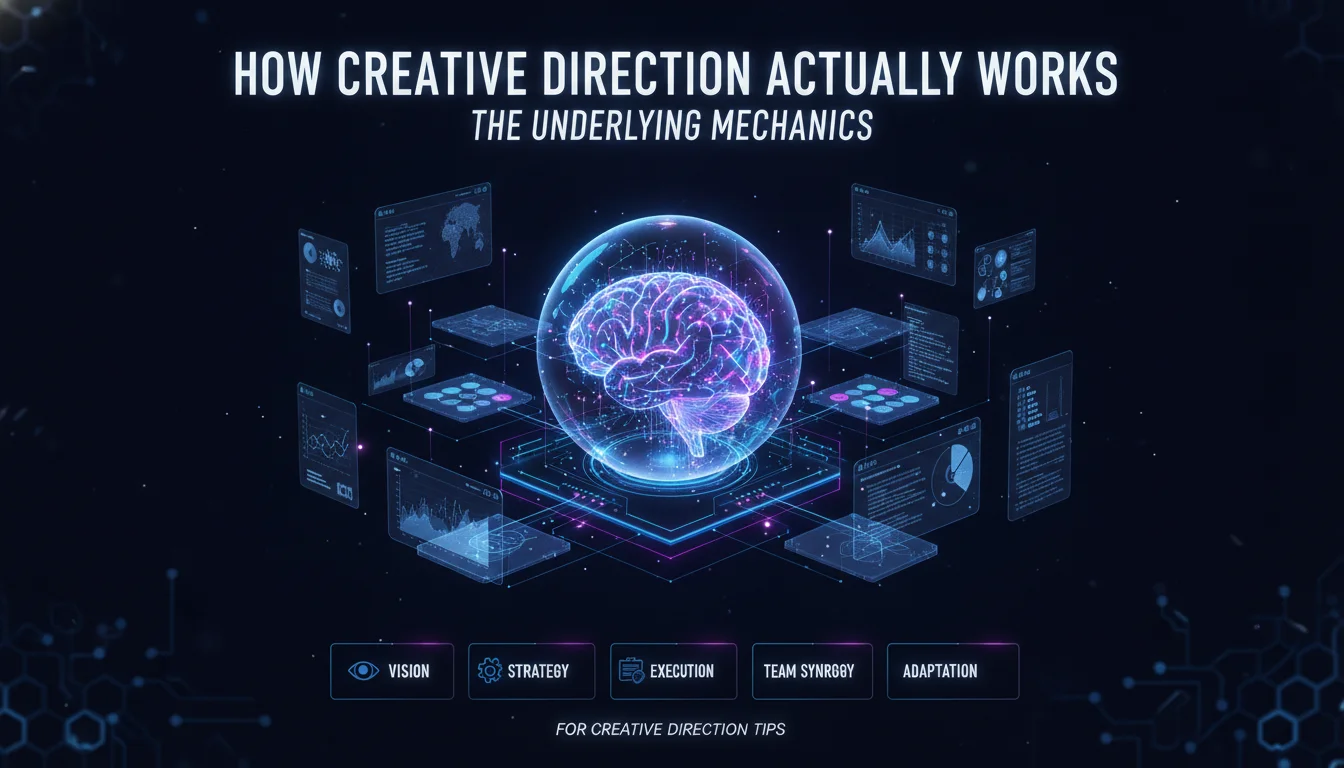
Creative direction works by establishing a visual and conceptual framework that every piece of content, every campaign asset, and every brand touchpoint is measured against. It’s not a single decision. It’s an ongoing editorial process.
Here’s how the mechanics break down in practice. A creative director starts with a brand’s core identity: its values, its audience, its competitive position. From that foundation, they develop a creative platform, a set of visual rules, tonal guidelines, and conceptual territories that define what the brand can and cannot do creatively. Every brief gets filtered through that platform. Every execution gets evaluated against it.
The process is iterative, not linear. Ideas get proposed, tested against the platform, refined through feedback, and either approved or killed. A strong creative director knows when to push an idea further and when to cut it cleanly. That editorial judgment is the core skill that separates creative directors from senior designers.
According to creative industry practitioners, the most common failure mode is skipping the platform-building step and jumping straight to execution. When that happens, campaigns feel inconsistent, teams lose confidence in the direction, and clients start second-guessing every decision.
“By having a varied career, it has given me a wider set of skills that enables me to think bigger and wider as a CD. We do after all live in a world where brands are communicating across different channels and platforms.” – Alex Normanton, Independent Creative Director, Amsterdam (formerly of Design Bridge and Massive Music)
How to Apply These Creative Direction Tips: A Step-by-Step Framework
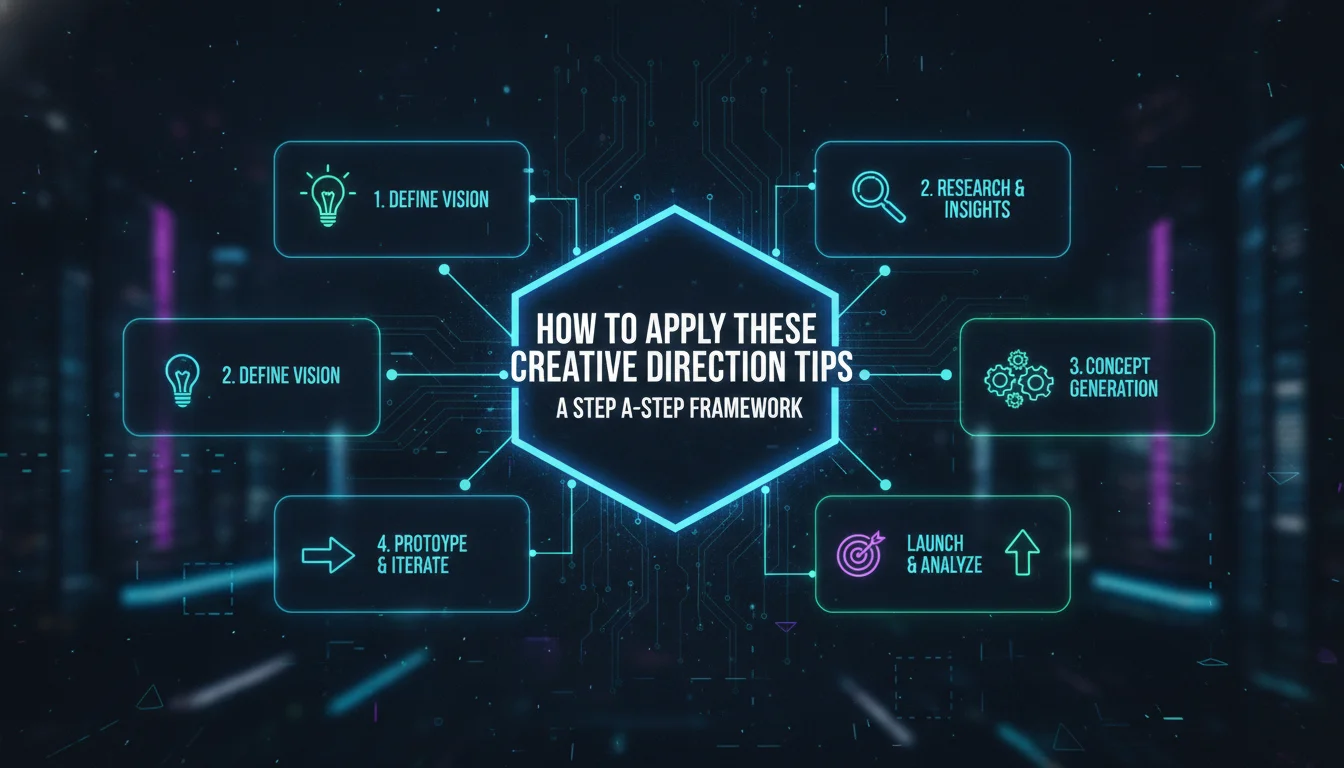
Applying creative direction tips effectively means building repeatable systems, not relying on inspiration to show up on demand. Here’s a practical framework we use at Emin Media.
Step 1: Build Your Creative Platform Before Any Brief
Before a single concept gets sketched, document your brand’s visual rules. Define three to five visual territories your brand lives in. Write down what your brand would never do visually. This document becomes your creative north star.
Step 2: Write a Brief That Actually Constrains Creativity
Counter-intuitive but true: the tighter the brief, the better the creative output. A well-defined creative brief outlines the project’s goals, target audience, key messages, and non-negotiables. It gives your team a clear problem to solve, which is far more generative than open-ended freedom.
Step 3: Run Structured Ideation Sessions
Don’t just call a meeting and ask for ideas. Use specific techniques. Start with word association to warm up the room. Move to mind mapping to build conceptual connections. Then run a “yes, and” round where every idea gets built on rather than evaluated. Save judgment for a separate session.
Step 4: Build a Living Mood Board
Amy Shamblen, a creative director who manages 20-plus photo projects simultaneously, keeps a running folder of images pulled from magazines, ads, and real-world observations, including photos from a college trip to Budapest that she still references years later. A mood board isn’t a one-time deliverable. It’s a living reference that evolves with the project.
Step 5: Create a Feedback Loop with Clear Criteria
Feedback without criteria is just opinion. Before any review session, share the creative platform and brief with everyone in the room. Then evaluate work against those documents, not personal taste. This keeps feedback productive and protects your team from arbitrary direction changes.
Step 6: Schedule Creative Recovery Time
Ideas don’t come from staring at a screen. Shamblen notes that many of her best concepts arrive in the shower or while playing with her dogs, because those are the moments when her mind is most relaxed. Build recovery time into your workflow. Even a 10-minute break during a tight turnaround can shift the quality of your thinking.
Effective Brainstorming Techniques
Brainstorming is a vital part of any creative direction process, but unstructured sessions waste time and produce mediocre ideas. These techniques make the difference.
Mind Mapping
Mind mapping is a visual brainstorming technique that connects related concepts in a diagram format. It helps teams see relationships between ideas that wouldn’t surface in a linear list. Start with the core brief in the center, then branch outward into themes, emotions, visual references, and audience insights.
Word Association
Write down a word that captures the project’s essence, then generate every associated word you can think of without filtering. This exercise bypasses the internal editor and surfaces unexpected creative directions. Some of the best campaign concepts start from a single unexpected word connection.
Collaborative Workshops
Hosting workshops that pull in team members from outside the core creative group, account managers, strategists, even client-side stakeholders, generates perspectives that purely creative teams miss. Diversity of viewpoint is a creative asset, not a complication.
Collaboration and Feedback in Creative Direction
Collaboration and feedback are not soft skills in creative direction. They’re the primary mechanism by which good ideas become great ones.
Building a Collaborative Environment
A collaborative culture doesn’t happen by accident. It requires deliberate structure: regular team rituals, psychological safety to share half-formed ideas, and leadership that models intellectual generosity. When a creative director shares their own rough thinking openly, it gives the team permission to do the same.
Seeking Constructive Feedback
Feedback is the quality control system of creative direction. The key is making it structural rather than personal. Tie every piece of feedback to the brief or the creative platform. “This doesn’t feel like us” is useful feedback when “us” is clearly defined. Without that definition, it’s just friction.
Utilizing External Perspectives
Involving people outside the creative team reveals blind spots that internal teams are too close to see. Focus groups, stakeholder reviews, and even informal conversations with people who represent your target audience can surface insights that change the direction of a project for the better. As one Quora contributor with over 12,000 answers on creative topics noted: for connecting with diverse audiences, the most important first step is having people from those audiences in your development teams.
Common Mistakes Creative Directors Make (And How to Avoid Them)
Even experienced creative directors fall into predictable traps. Knowing them in advance is the fastest way to avoid them.
Holding On to the Craft Too Long
The transition from designer to creative director is one of the hardest professional shifts in the creative industry. Alex Normanton, who spent 6 years running his own design consultancy before moving into senior CD roles, describes it clearly: the temptation to keep doing hands-on design work is real, but it undermines your ability to lead. Your job is to direct, not to execute. Let your team do the work you hired them to do.
Skipping the Creative Brief
A brief that’s vague or missing entirely is the single most common cause of creative rework. Teams without a clear brief default to their own assumptions, which rarely align with the client’s or the brand’s actual needs. Write the brief before any concepting begins, every time.
Confusing Social Media Consumption with Creative Research
Scrolling Instagram feels like research but often works against creative thinking. Shamblen is direct about this: social media intake can inundate the mind and create stress rather than inspiration. Limit passive scrolling during active concepting phases. Seek out primary references instead: exhibitions, physical spaces, editorial photography, film.
Running Feedback Sessions Without Criteria
When a review meeting has no defined evaluation criteria, it becomes a taste contest. Strong opinions override quiet insights. The loudest voice wins. Prevent this by anchoring every feedback session to the brief and the creative platform.
Neglecting Recovery and Renewal
Creative burnout is real and it’s expensive. A creative director who is mentally depleted produces safe, predictable work. Build renewal into your schedule: take breaks, consume culture outside your industry, and protect time for thinking that isn’t attached to a deliverable.
Creative Direction in Practice: A Realistic Scenario
Here’s how these creative direction tips come together in a real project context.
Imagine a mid-sized lifestyle brand launching a new product line targeting a younger demographic. The creative director’s first move is not to start designing. It’s to run a brand audit: reviewing existing visual assets, identifying what’s working, and mapping the gap between the current brand perception and the target audience’s visual language.
From that audit, the creative director builds a new creative platform for the launch. It defines three visual territories: raw texture, natural light, and candid human moments. It specifies what the brand will not do: no stock photography, no overly polished studio shots, no generic lifestyle imagery.
The team runs a collaborative workshop with the marketing manager, a copywriter, and a photographer. Using word association and mind mapping, they develop five distinct campaign concepts. The creative director evaluates each against the platform, not personal preference. Two concepts get developed further. One becomes the campaign.
The result is a launch that feels cohesive, intentional, and distinctly the brand’s own. Not because the creative director had a flash of inspiration, but because the process was structured to produce that outcome consistently.
Comparison: Creative Direction Approaches
| Approach | Best For | Key Strength | Main Risk |
|---|---|---|---|
| Platform-First Direction | Established brands with defined identity | Consistency across all touchpoints | Can feel restrictive for emerging concepts |
| Campaign-First Direction | Product launches, seasonal campaigns | Focused, high-impact creative output | Risk of inconsistency with broader brand |
| Collaborative Direction | Cross-functional teams, diverse audiences | Richer ideas, stronger team buy-in | Slower process, requires strong facilitation |
| Solo Direction | Small studios, independent creative directors | Speed, singular vision | Blind spots without external feedback |
| Data-Informed Direction | Performance-driven brands, digital campaigns | Measurable outcomes, reduced guesswork | Can suppress bold creative risk-taking |
Staying Organized and Maintaining Clarity
Organization is what separates creative directors who consistently deliver from those who produce brilliant work occasionally and chaos the rest of the time. These systems make the difference.
Project Management Tools
Utilizing project management software keeps creative projects on track across multiple stakeholders and timelines. Tools like Trello, Asana, or Monday.com give everyone visibility into task ownership, deadlines, and project status. The specific tool matters less than the discipline of actually using it.
Creating a Clear Brief
A well-defined creative brief is the single most valuable document in any project. It outlines goals, target audience, key messages, visual references, and non-negotiables. Every team member should be able to read it and understand exactly what success looks like.
Regular Check-Ins
Scheduling regular check-ins with the team surfaces problems early, before they become expensive. These meetings aren’t status updates. They’re opportunities to reassess direction, address creative blocks, and make sure the work is still aligned with the brief.
Continuous Learning and Adaptation
The creative industry shifts constantly. What worked visually two years ago can feel dated today. Staying sharp requires deliberate effort, not passive absorption.
Staying Updated on Industry Trends
Regularly consuming industry content, including publications like Campaign, AdAge, and Cannes Lions case studies, keeps creative directors informed about where visual culture is heading. The goal isn’t to chase trends. It’s to understand them well enough to decide when to use them and when to ignore them.
Networking with Other Professionals
Building relationships with other creative directors provides the peer pressure-testing that solo work can’t replicate. Industry events, professional organizations, and even informal creative communities give you access to perspectives that sharpen your own thinking. Alex Normanton’s career across agencies in London and Amsterdam, spanning over two decades, reflects how much a varied professional network shapes creative range.
Embracing Feedback and Change
Being open to feedback is not a sign of weakness in creative direction. It’s a professional discipline. The creative directors who grow fastest are the ones who treat every project, successful or not, as data about what works and what doesn’t.
2026 Outlook: Where Creative Direction Is Heading
This year, the most significant shift in creative direction is the integration of AI-assisted ideation tools into the early stages of the creative process. These tools are changing how mood boards get built, how concepts get explored, and how quickly teams can move from brief to visual prototype. The creative direction tips that matter most in 2026 are the ones that help you use these tools without losing the human editorial judgment that makes creative work meaningful.
According to creative industry observers, the brands winning attention right now are the ones with the clearest creative platforms. In a world where content volume is increasing rapidly, distinctiveness is the only reliable competitive advantage. A strong creative direction practice is how you build and protect that distinctiveness.
The role of creative director is increasingly in demand, particularly in fashion, beauty, and luxury sectors, as noted by Vogue College of Fashion in their 2026 coverage of the profession. The skills that define great creative direction, vision, editorial judgment, collaborative leadership, are not being automated. They’re becoming more valuable.
Frequently Asked Questions
How do you get better at creative direction?
Getting better at creative direction requires building deliberate practice into your workflow. Study campaigns you admire and reverse-engineer the creative decisions behind them. Seek feedback on your direction from people whose taste you respect. And as practitioners consistently note, the fastest growth comes from directing more work, not just thinking about directing it.
How do you start in creative direction?
Most creative directors start as specialists: designers, copywriters, photographers, or art directors. The path into creative direction typically involves demonstrating strong conceptual thinking, taking on leadership responsibilities within your current role, and building a body of work that shows you can shape a visual identity, not just execute one. Some, like Alex Normanton, launch their own studios to accelerate the transition.
What should you study for creative direction?
Formal education in graphic design, visual communication, advertising, or fine arts provides a strong foundation. But creative direction also draws on brand strategy, cultural studies, psychology, and business. Many of the most effective creative directors are self-directed learners who combine formal training with deep personal research into visual culture, film, architecture, and design history.
Is creative director a hard job?
Yes, genuinely. The role requires you to maintain a clear creative vision while managing people, satisfying clients, hitting deadlines, and staying culturally relevant. The hardest part, as multiple experienced creative directors describe it, is the transition from doing the work yourself to directing others to do it. That shift requires a fundamentally different relationship with creative control.
What are the most important creative direction tips for beginners?
The most practical creative direction tips for beginners: write a brief before you concept anything, build a mood board before you open a design tool, and limit your social media consumption during active ideation phases. These three habits alone will put your creative output ahead of most peers at the same career stage.
How do you maintain creative energy over a long career?
Sustained creative energy comes from building renewal into your routine, not waiting until you’re burned out to rest. Consume culture outside your industry. Take breaks during ideation, even brief ones. Find people outside your creative team to bounce ideas off. And stay curious about fields that have nothing to do with your current brief. The most original creative direction often comes from unexpected cross-disciplinary connections.
Ready to build a brand that’s as bold as your vision? Contact Emin Media for a free brand consultation and let’s create something that actually stands out.
Enjoyed this article?
Contact Emin Media for a free brand consultation and let's create something amazing together.
Get in TouchRelated Articles
Digital Marketing for Creatives: A Bold Guide
Digital marketing for creatives builds real visibility and sales. Learn strategies for social media, SEO,…
Branding & Design Agency Tips That Actually Work
Discover branding and design agency tips to choose the right partner, set clear goals, and…
Creative Agency Pitch Deck Tips That Win Clients
Master creative agency pitch deck tips that win clients in 2026. Learn storytelling, design, and…