Creative Direction for Brands: The Strategic Framework
Creative Direction for Brands: The Strategic Framework
Creative direction for brands is the strategic system that defines how a brand looks, sounds, and feels across every touchpoint. It aligns visual identity, messaging, and experience to build recognition and trust.
Key Takeaways
- for brands translates brand strategy into unified visual and verbal expression.
- It comes after brand clarity is established, not before. Skip strategy and the visuals mean nothing.
- Strong creative direction builds consistency across platforms, earns trust, and makes a brand genuinely hard to copy.
- The process moves through brand foundation, style definition, moodboards, and cross-touchpoint application.
- Creative direction is a skill. Being a Creative Director is a responsibility for people, environment, and culture.
- The right framework depends on your brand’s maturity, resources, and how many channels you need to hold together.
What Is Creative Direction for Brands?
The Definition of Creative Direction
this type of brands is a set of parameters that define the personality and look of a brand. According to Studio Seaside, it is the foundation on which all other elements are developed, including colors, fonts, and logo design. That framing matters because it positions creative direction as a system rather than a one-off design task. A defined creative direction gives you a guide for building a visual language unique to the brand, and it keeps that language consistent across every campaign and customer touchpoint.
The term often gets reduced to aesthetics. The strongest practitioners push back on that. Arpan Karmakar, in a widely shared guide published on LinkedIn, writes that creative direction isn’t about making things look good; it’s about making them feel right. Design is craft. Creative direction is the compass. It makes sure your logo, website, and packaging all feel like part of the same story. That compass is what turns isolated design choices into a unified brand world.
Why Creative Direction Is Not Just Design
Too many teams treat this kind of for brands as a visual exercise. They jump straight into moodboards, color palettes, or design references. According to Wild Woman Haus, that approach skips the most important part of the process. Creative direction is not where you begin. It is what you build after clarity is established. The creative direction process is the system that shapes how a brand looks, sounds, and feels across every touchpoint.
When done well, creative direction ensures everything works together instead of competing for attention. If a brand feels inconsistent or unclear, the issue is not creativity. It is a lack of direction. Without a defined process, brands make isolated decisions. Over time, that inconsistency weakens recognition and trust. Creative direction prevents that fragmentation by creating structure across every decision.
The Strategic Role of Creative Direction in Brand Success
the direction for brands is the strategic and artistic leadership that defines how a brand shows up in the world: visually, emotionally, and experientially. Ferrgood Studio describes it as the intersection of design, strategy, narrative, art direction, marketing psychology, and cultural intuition. It is your brand’s editor-in-chief. It is why an Instagram grid feels like the website, why packaging and an investor pitch feel like they belong to the same world, and how people remember and trust you.
“Design catches the eye, but creative direction catches the heart. It’s the difference between a brand people see and a brand people remember.” – Himani, brand strategist commenting on Arpan Karmakar’s LinkedIn guide
The Business Case for Creative Direction

Brand Positioning and Perception
Brand positioning goes beyond listing features or setting competitive pricing. It is all about perception. How your audience sees you depends significantly on whether your creative direction backs up your strategic promises. A disconnect between message and visuals can reduce trust and miss the mark quickly. Brand Russo explains that creative direction brings clarity by answering three questions: Does your brand look appropriate for your target client base? Are your tone and visuals in line with what customers expect and trust? Can someone grasp your value difference almost immediately?
Consider a B2B software company trying to reach large enterprises. If that company uses a playful, tech startup look and casual language, enterprise buyers might question their credibility. If the same brand uses refined visuals, consistent tone, and clear communication, it sends a strong signal about professionalism and trust. brands syncs your message with the way you present it.
Consistency Across Platforms and Trust
A strong brand voice is more than a cool logo or color scheme. Cohesion across emails, social content, websites, ads, and presentations builds familiarity and trust. Customers expect brands to bring the same tone and meaning wherever they show up. Consistency in brand experience reinforces loyalty. Whether someone reads an X post or downloads a whitepaper, the message, visual style, and tone should feel unmistakably yours.
Brand Russo recommends four ways to keep consistency working: create clear brand guidelines, stick with unified design choices, keep messaging consistent, and get internal alignment. When sales and marketing teams operate from the same creative direction, every touchpoint reinforces the same promise.
How Creative Direction Supports B2B and Purpose-Driven Brands
For B2B companies, creative direction is not a luxury. It plays a central role in how a brand is perceived and recognized. An unclear message or inconsistent presence often leads to weak connections and missed opportunities. When multiple stakeholders are involved in decision-making, a brand needs more than a solid design. It needs a focused creative voice that aligns with strategy and communicates with intent.
For purpose-driven founders, the stakes are even higher. Ferrgood Studio notes that for mission-led businesses in industries like sustainable fashion, femtech, or climate tech, creative direction keeps values, visuals, and messaging in sync as you grow. It can be the difference between getting traction or staying stuck in the “nice idea” zone. A sustainable fashion brand, for example, might center creative direction around natural textures, analog photography, and slow, deliberate storytelling, all reinforcing a slower, more conscious lifestyle.
Pros and Cons of Investing in Creative Direction for Brands
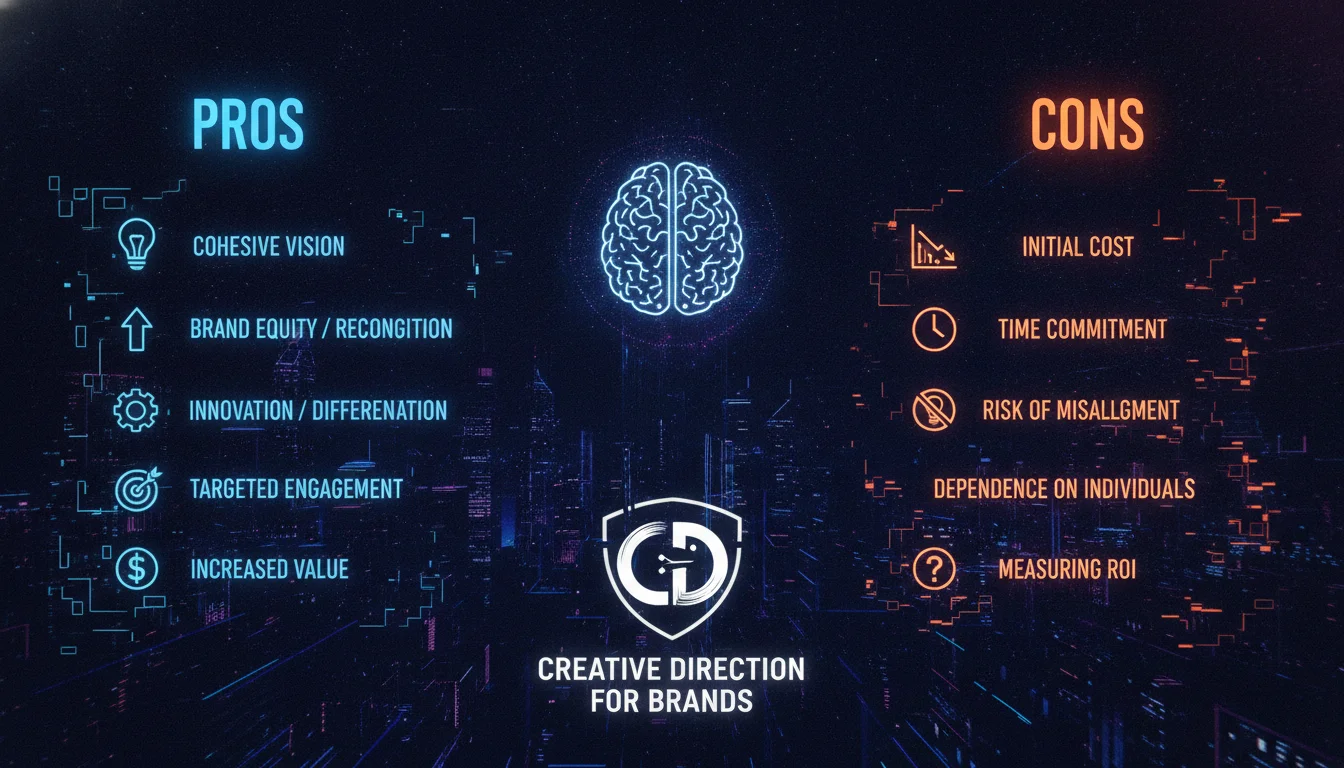
Pros
- Builds brand recognition faster. A unified visual and verbal system makes your brand memorable across every channel, not just on your homepage.
- Reduces costly creative rework. When parameters are defined upfront, teams spend less time second-guessing decisions and more time executing well.
- Makes your brand hard to copy. A deeply considered creative direction is rooted in your specific values and audience. Surface-level imitation cannot replicate it.
- Aligns cross-functional teams. Sales, marketing, and design all operate from the same source of truth, which reduces internal friction and mixed messages.
- Scales with your business. As you add channels, markets, or product lines, a strong creative direction holds the brand together without constant creative oversight.
Cons
- Takes time to build properly. A strategy-first approach means visual work is delayed until the foundation is solid. That can feel slow for founders who want momentum fast.
- Requires cross-functional buy-in. Creative direction only works if leadership, marketing, and sales teams actually follow it. Without internal alignment, even the best system breaks down.
- Can become rigid if not revisited. A creative direction that made sense at launch may not serve a brand that has grown, pivoted, or entered new markets. It needs regular review.
- Harder to DIY at scale. Early-stage founders can often manage basic creative direction themselves, but as the brand grows across channels, professional creative leadership becomes necessary.
Core Components of Creative Direction for Brands

Brand Foundation and Core Values
The first component of for brands is the brand foundation. Studio Seaside recommends learning about the client’s business as a whole, identifying their “secret sauce,” and defining overarching goals. Key questions include: What are your brand’s core values? Who is your ideal client? What does your ideal client need that you can help them with? Why do they want to work with or buy from you? What is your brand’s positioning statement? List three competitors and what sets you apart from them. These answers create the strategic starting point for all creative decisions.
Visual Language and Style Guide
The second component is the style guide, which translates the brand foundation into visual preferences. Studio Seaside suggests asking specific questions about the vibe you want your brand to have, such as rustic, modern, boho, kitschy, clean, feminine, or masculine. You should also identify particular colors, symbols or icons, font preferences, and admired brands. By using these questions as a launching point, you can develop a creative direction that meets client needs and guides design decisions.
A style guide is a documented system of visual and verbal rules that keeps creative work consistent. It includes color palettes, typography, image style, spacing, and messaging preferences. Without this documentation, even the best creative direction can drift when multiple team members execute work.
Verbal Language and Experience Design
this type of brands is not only visual. It also includes verbal language, experience design, and sensory details. Arpan Karmakar lists four core elements: visual language, verbal language, experience design, and sensory details. Together, they build a brand’s world. The verbal language defines tone, vocabulary, and key messages. Experience design shapes how content is structured and delivered. Sensory details govern the non-visual cues that make a brand feel cohesive, such as sound, texture, or motion.
Step-by-Step Creative Direction Process
The following step-by-step process is synthesized from multiple practitioner frameworks. Use it to move from strategy to expression without skipping the foundational work.
- Step 1: Understand the strategy. Define who you are, who you serve, what you stand for, and what differentiates you. Without this, creative decisions become arbitrary.
- Step 2: Clarify brand voice and messaging. Determine tone of voice, vocabulary, key messages, and communication style. Language must align with strategy before visual work begins.
- Step 3: Define mood and perspective. Decide the emotional tone and point of view the brand will express across every touchpoint.
- Step 4: Create moodboards and style references. Collect visual references that embody the defined mood, color, texture, and typography. This makes the direction tangible.
- Step 5: Apply across touchpoints. Roll out the creative direction across website, packaging, social media, sales collateral, and presentations.
- Step 6: Review, refine, repeat. Creative direction is iterative. Review outputs against the strategy, refine inconsistencies, and repeat as the brand evolves.
Step 1: Start with Brand Strategy
Wild Woman Haus emphasizes that creative direction is not the first step. It is what you build after clarity is established. Start by defining who you are, who you serve, what you stand for, and what differentiates you. Skip this step and creative decisions become arbitrary. Visuals may look polished, but they will not communicate anything meaningful. Strategy is the foundation that gives creative direction its purpose.
Step 2: Define Mood and Visual References
Once strategy is clear, translate it into mood and perspective. Create moodboards and style references that embody the intended feel. This step bridges the gap between abstract values and concrete design choices. Arpan Karmakar’s framework includes this step explicitly: define mood and perspective, then create moodboards and style references. The moodboard becomes the visual anchor that keeps every subsequent decision aligned.
Step 3: Apply, Review, and Refine Across Touchpoints
Application is where creative direction for brands proves its value. Apply the direction across every touchpoint: website, packaging, social media, email, ads, presentations, and investor decks. Then review, refine, and repeat. Creative direction is not a one-time deliverable. It evolves as the brand matures, but the core parameters should remain stable enough to be recognizable. Ask yourself: Would my brand still feel like us without the logo? Do our visuals and voice tell the same story?
What Is the 3-7-27 Rule of Branding?
The 3-7-27 rule of branding is a framework describing how many exposures a person needs before they recognize, recall, and truly know a brand. The model suggests roughly 3 exposures create initial awareness, around 7 build recognition, and approximately 27 consistent interactions are needed before a person feels they genuinely know and trust a brand. This is why creative direction for brands matters so much: if your visual and verbal identity shifts between touchpoints, those exposures do not compound. Each inconsistent impression resets the clock. A strong, unified creative direction ensures every touchpoint adds to the same cumulative impression rather than fragmenting it.
“Creative direction isn’t decoration, it’s orchestration. The difference between a brand that looks nice vs. a brand that feels inevitable comes down to the compass you use to guide every decision.” – AMNA KIRAN, responding to Arpan Karmakar’s LinkedIn guide on creative direction
Creative Direction vs. Art Direction vs. Creative Director
The Difference Between Creative Direction and Art Direction
Art direction and creative direction are often used interchangeably, but they operate at different levels. Art direction focuses on the visual execution of a specific piece: composition, photography, lighting, and graphic design. Creative direction for brands is the overarching vision that guides art direction. Art direction answers, “How does this look?” Creative direction answers, “Why does this look and feel this way, and does it align with the brand?” Both are necessary, but creative direction sets the parameters within which art direction operates.
Creative Direction as a Skill vs. Creative Director as a Role
Craig Jamieson, in a piece on Medium, draws a sharp distinction: Creative direction is a skill. Being a Creative Director is a responsibility. Giving creative direction means articulating what needs to be done without being a dictator. It is about setting a clear vision, giving your team enough to build from, and having the taste to pull the right levers at the right time. Good creative direction is storytelling. It helps people see where an idea could go and gives them confidence to explore it.
Being a Creative Director shifts the focus from what is made to how it is made and by whom. A Creative Director shapes the environment where work happens. Responsibilities include structure, people, culture, rhythm, hiring, budgets, performance, and growth. Many people who grow into this role struggle with the balance because the creative power is appealing, yet the admin and accountability are heavy. Creative direction is earned through responsibility, not only through instinct.
Brand Director vs. Creative Director
A brand director typically owns brand strategy, market positioning, customer segmentation, and brand equity. A creative director owns the expression of that strategy through design, content, and experience. In smaller organizations, one person may hold both roles. In larger organizations, they work in tandem: the brand director defines the destination, and the creative director builds the vehicle that gets there. Misalignment between these roles often produces a brand that says one thing but looks or sounds like another.
Building a Brand Style Guide from Creative Direction
Translating Values into Visual Elements
A style guide turns abstract creative direction for brands into repeatable visual elements. Ferrgood Studio gives a clear example: a sustainable fashion brand might center creative direction around natural textures, analog photography, and slow, deliberate storytelling. These choices reinforce a slower, more conscious lifestyle. The style guide then documents those choices so every future asset uses the same visual grammar.
Typography, Color, and Imagery Systems
Typography, color, and imagery are the building blocks of visual identity. Studio Seaside recommends asking about font preferences, such as serif, sans serif, script, bold, or handwritten, and identifying particular colors, symbols, or icons to highlight. A well-built system defines not only which colors to use but also how to use them, including proportions, contrast, and accessibility considerations. Without a documented system, teams drift toward personal preference instead of brand consistency.
Maintaining Consistency with Brand Guidelines
Brand guidelines are the practical output of creative direction for brands. They outline brand voice, tone, color use, image style, and messaging preferences. Brand Russo advises creating clear brand guidelines and getting internal alignment so sales and marketing teams operate from the same source of truth. The most effective guidelines are specific enough to eliminate guesswork but flexible enough to allow creative problem solving within the defined brand world.
If you want to go deeper on how brand identity systems come together visually, explore our work on brand and creative services at Emin Media.
Comparison Table: Approaches to Creative Direction for Brands
Three Common Creative Direction Frameworks
| Approach | Primary Focus | Key Output | Best For | Limitations |
|---|---|---|---|---|
| Strategy-First | Brand foundation, positioning, values | Brand strategy document, voice and messaging guide | B2B companies, rebrands, complex stakeholder environments | Can delay visual work if strategy phase is prolonged |
| Visual-First | Moodboards, color, typography, imagery | Style guide, visual identity system | Early-stage consumer brands, fashion, packaging-heavy products | May produce polished visuals without strategic meaning |
| Integrated | Equal weight on strategy and expression | Full creative direction system: visual, verbal, experiential | Purpose-driven brands, scale-ups, multi-channel businesses | Requires more time, budget, and cross-functional alignment |
Choosing the Right Approach for Your Brand
The right approach depends on your maturity, resources, and risk profile. A startup with a strong product but no visual identity may benefit from a visual-first approach to gain momentum quickly. A B2B enterprise with multiple decision-makers and high-ticket sales should invest in a strategy-first process to avoid costly misalignment. An integrated approach works best for brands that need to scale across many touchpoints without losing coherence. The key is to avoid skipping strategy altogether, even if visual work begins early.
Common Mistakes in Creative Direction
Starting with Visuals Before Strategy
Wild Woman Haus identifies this as the most common error: jumping straight into moodboards and design references before clarity is established. The result is work that may look polished but does not communicate anything meaningful. Creative direction for brands is not where you begin. It is what you build after strategy, positioning, and audience are defined.
Inconsistent Application Across Touchpoints
Brand Russo highlights the danger of inconsistency. When visuals and tone vary wildly between a product page and a blog article, audiences lose confidence. Creative direction exists to prevent that fragmentation. A unified approach ensures that every touchpoint, from an X post to a whitepaper, feels unmistakably part of the same brand.
Confusing Pretty with Powerful
Arpan Karmakar puts it directly: creative direction is not about pretty. It is about powerful. Pretty gets attention for two seconds. Powerful gets remembered. The best creative direction makes people feel something they cannot ignore. If your visuals and voice do not tell the same story, the work may be aesthetically pleasing but strategically weak.
The Compound Effect of Consistent Creative Direction
Why Creative Direction Is a Business Asset
Creative direction for brands is a business asset, not a marketing expense. It aligns strategy with execution, shapes how the brand feels, builds consistency across platforms, and makes the brand hard to copy. According to Spellbrand, creative direction is the process of identifying the right brand message and translating it into a form that can be communicated to the target audience. That translation is the difference between a brand people see and a brand people remember.
When creative direction for brands is consistent, it compounds. Every aligned touchpoint reinforces the same story, building familiarity, trust, and preference. Brand value grows with consistent investment and positive customer experience. Creative direction becomes a defensive moat and a growth accelerator at the same time.
A Practical Starting Point
Start by asking the foundational questions: Who are you? Who do you serve? What do you stand for? What differentiates you? Then translate those answers into visual and verbal parameters. Create a style guide, apply it across every touchpoint, and review regularly. Creative direction for brands is not a one-time task. It is a system that evolves with your brand while keeping its core recognizable.
Ready to build something bold? Contact Emin Media for a free brand consultation and let’s build a creative direction that actually holds together at scale.
Frequently Asked Questions
What is a brand creative direction?
A brand creative direction is a set of parameters that define the personality and look of a brand, including colors, fonts, and logo design. It is the foundation on which all other visual and verbal elements are developed, according to Studio Seaside.
What are the key components of a brand creative direction?
The two main components are the brand foundation and the style guide. The brand foundation defines core values, ideal client, positioning, and differentiation. The style guide translates those into visual preferences such as vibe, colors, symbols, and fonts.
How does creative direction differ from art direction?
Art direction focuses on the visual execution of a specific piece, such as composition and photography. Creative direction for brands is the overarching vision that guides art direction and ensures alignment with brand strategy across all touchpoints.
What is the difference between a brand director and a creative director?
A brand director owns brand strategy, positioning, and market segmentation. A creative director owns the expression of that strategy through design, content, and experience. Both must align for the brand to feel cohesive, and in smaller organizations one person often holds both roles.
What does a creative director do for clothing brands?
A creative director for a clothing brand defines the visual and emotional world of the label, including seasonal direction, photography, styling, and tone. They ensure every collection, campaign, and retail experience feels part of the same brand universe.
What is the 3-7-27 rule of branding?
The 3-7-27 rule describes how many brand exposures a person needs to move from awareness to recognition to genuine familiarity. Roughly 3 exposures create initial awareness, around 7 build recognition, and approximately 27 consistent interactions build real trust. This is why consistent creative direction for brands matters: inconsistency breaks the compound effect.