Creative Branding Ideas 2026: Bold Moves That Stick
Creative branding ideas 2026 are multi-sensory, motion-led identity systems built on substance rather than surface polish. They move beyond static logos into kinetic assets, sonic identity, AI-assisted workflows, and purpose-led archetypes that build trust and emotional connection across every touchpoint.
Key Takeaways
- ideas 2026 are multi-sensory, motion-led, and built on substance rather than surface polish.
- Authenticity drives preference: according to DesignRush, 86% of consumers favor brands they see as genuine and easy to identify.
- Kinetic logos, sensory branding, and total branding define the leading edge, according to Envato.
- Human imperfection and AI automation must coexist to avoid AI-generated sameness.
- Archetypes, personalization, influencer collaboration, video content, and social responsibility remain high-performing this type of 2026.
What Creative Branding Ideas 2026 Actually Mean
The Shift from Static Logos to Total Branding
Total branding is the practice of treating any online or real-life moment as a potential brand-defining touchstone. In 2026, a logo is no longer a fixed image. It is one piece of a living system that includes motion, sound, cultural commentary, and interactive experiences. According to Envato, branding now goes multi-dimensional and multi-media, driven by shifts from AI, TikTok, and experiential marketing. This means this kind of ideas 2026 must be designed as systems, not assets.
A brand archetype is a defined personality model that shapes how a business communicates and presents itself. It acts as the “character” in the brand story, guiding tone, visuals, and messaging. Without this foundational clarity, kinetic logos and sensory cues become decorative rather than strategic.
Why Authenticity Drives Preference in 2026
Consumers are tired of polished, generic brand identities. High-performing companies show that the branding ideas 2026 succeed when they combine purpose with recognition. DesignRush reports that 86% of consumers favor brands they see as genuine and easy to identify. That figure explains why anti-trend branding and imperfect typography are gaining traction: audiences read perfection as manufactured and sameness as untrustworthy.
The tension is real. Brands must be recognizable enough to identify in a feed, yet flexible enough to feel human. 2026 solve this by building narrative, opinion, and aesthetic into one coherent package rather than chasing surface-level visual novelty.
Where Sources Converge and Diverge
The leading sources largely agree on one point: visual polish gets attention, but substance and a human point of view are what make a brand stick. They diverge on style. Some emphasize minimalism with warmth, while others champion neo-minimalism and micro-maximalism. Behance frames 2026 as a balance between polished and imperfect, and between AI and human creativity. This divergence is useful: it means creative branding are not one-size-fits-all, but a spectrum from restrained to expressive.
Brand strategy, however, is non-negotiable. Before choosing an aesthetic, teams must define purpose, audience, values, and direction. That clarity separates ideas 2026 from random visual experiments.
Kinetic Logos, Sensory Branding, and the Death of Skin-Deep
Kinetic Logos as Living Brand Assets
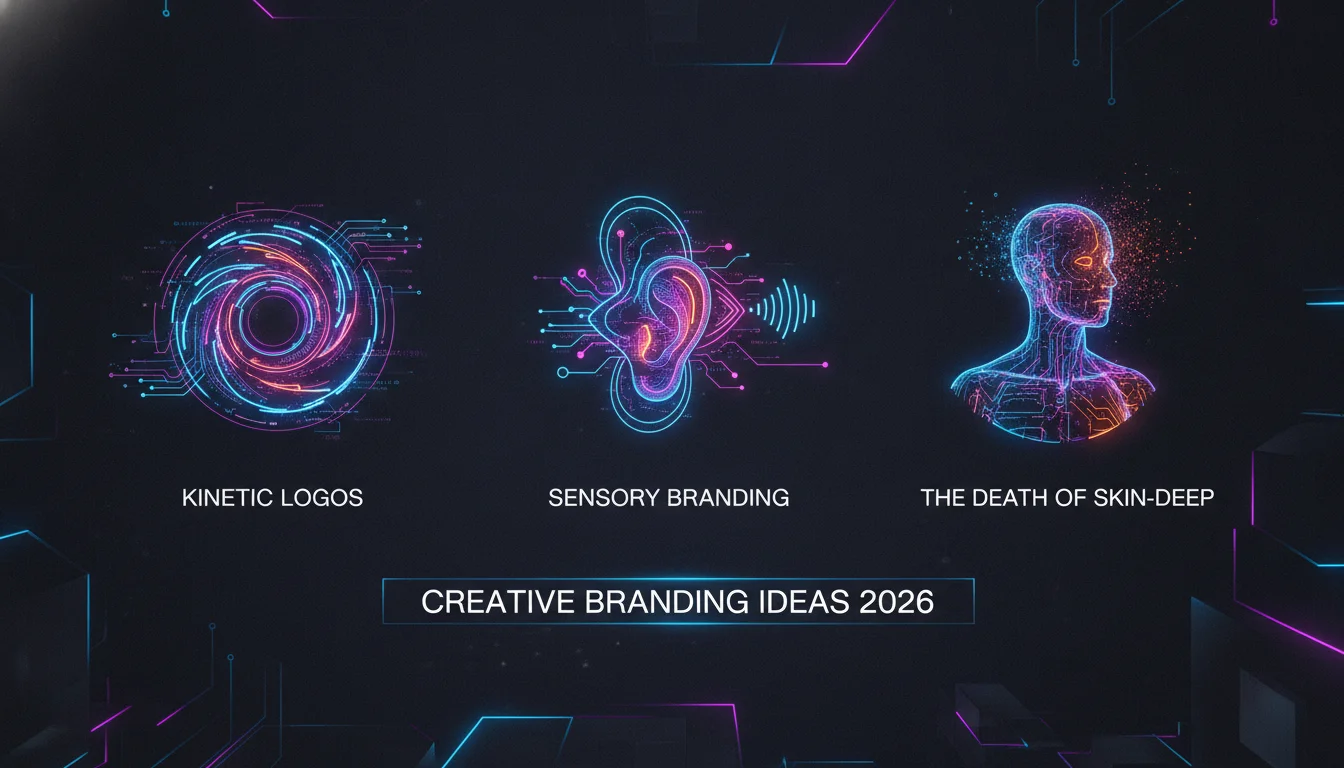
Kinetic logos are logo systems that use motion as a core identity element rather than an afterthought. A kinetic logo can respond to cursor movement, play as a short animation in a social feed, or shift form across app screens. Envato identifies kinetic logos as one of the standout branding trends for 2026, alongside sensory branding and authentic brand experiences. The advantage is attention and recognizability in motion-heavy environments like TikTok and Instagram Reels.
Designers should treat motion deliberately. A kinetic logo must remain readable across screens and contexts. As Eric Turney, President of The Monterey Company, puts it: the strongest logos use clear shapes and strong contrast while staying flexible across applications.
Sensory Branding and Sonic Identity
Sensory branding is the practice of designing brand assets for sound, motion, and physical texture, not just visual appearance. It includes sonic logos, tactile packaging, and ambient brand sounds. In a multi-media landscape, sound can trigger memory faster than sight, making sonic identity a low-cost differentiator for brands that have historically focused only on visual identity.
Envato notes that motion logos and sonic branding boost the sensory appeal of campaigns. This is part of a broader shift toward total branding, in which any moment can become brand-defining. this type of 2026 should therefore audit every touchpoint for sensory opportunity, not only the logo.
Total Branding and Cultural Moments
Total branding turns cultural events into brand assets. Envato points to the Wuthering Heights effect, where a major film release generated a wave of 1980s type tributes and influenced shopping behavior. The point is not to copy a movie. The point is that every cultural event and social media moment is now an opportunity for brands to insert themselves meaningfully. Agenda branding, when done with a genuine point of view, can push brands beyond skin-deep identity. But brands must avoid jumping on moments without relevance, because audiences detect inauthenticity immediately.
Agenda Branding as a Strategic Pillar
Agenda branding is more than cause marketing. It is the deliberate choice to build a brand around a point of view, a position, or a cultural stance that your audience actually cares about. Envato identifies agenda branding as one of the defining directions for 2026, sitting alongside kinetic logos and childlike anarchy as a full creative expression. The brands that do this well are not reactive. They build the agenda into their identity from the start, so every campaign, post, and product launch reinforces the same conviction. Done without genuine commitment, it reads as performative. Done with consistency, it creates the kind of loyalty that no ad spend can manufacture.
Creative Branding Ideas 2026: 8 Core Approaches to Test
Brand Archetypes and Personality
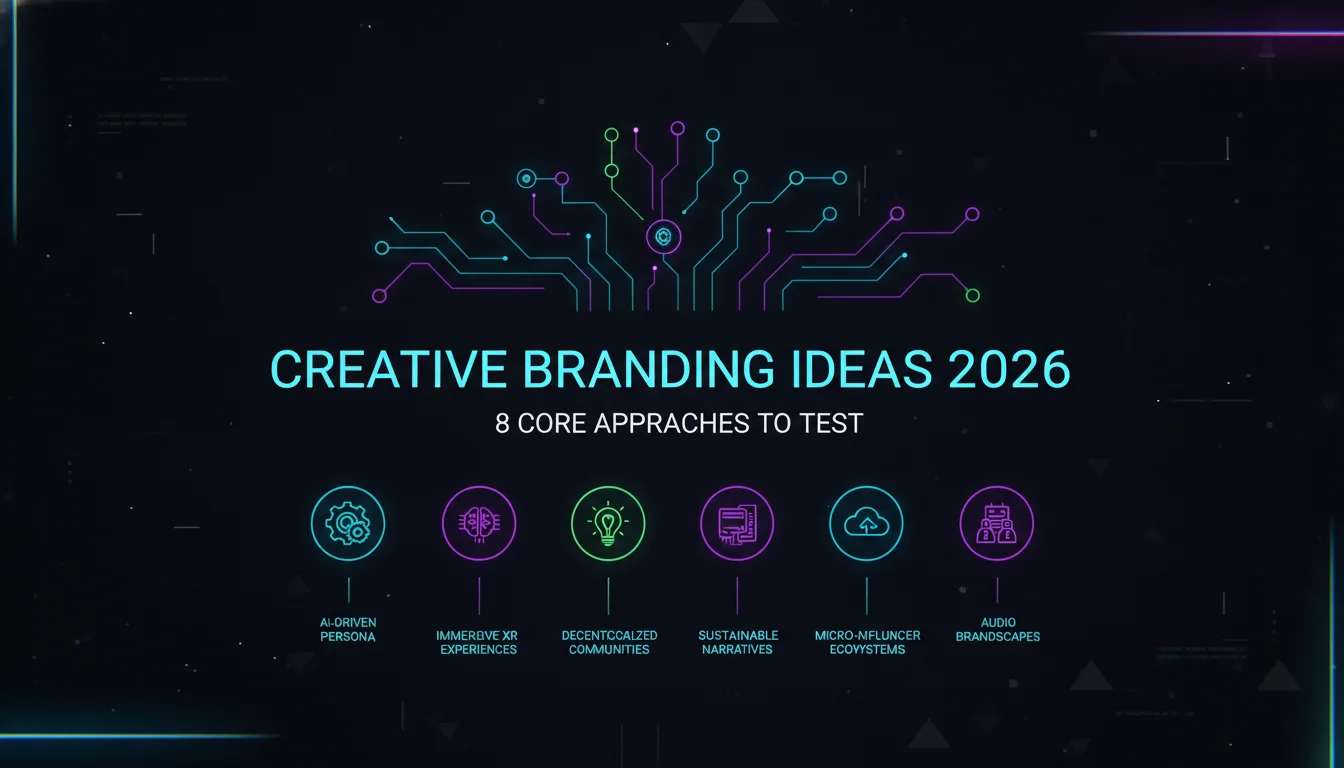
Finding your archetype is the first of eight creative branding ideas outlined by DesignRush for 2026. A brand archetype is a defined personality model that shapes how a business communicates and presents itself. Apple, for example, is a classic example of a brand built on a coherent archetype. Start by selecting an archetype that aligns with how you want customers to feel: caregiver, outlaw, sage, creator, or another model. That character then guides tone, visuals, and messaging across every output.
Deep Personalization Without Creepiness
Deep personalization of content and brand experiences is a core creative branding idea for 2026. Use AI and first-party data to tailor landing pages, email flows, product recommendations, and content journeys. The goal is to make the brand feel like it understands the customer without crossing into surveillance. The strongest personalization respects privacy, communicates consent, and adds value rather than simply following users with retargeted messages.
Influencers, Video, and Expert-Led Content
Collaborating with brand influencers and creating video are two of the eight ideas, but they work best as a pair. Influencers provide social proof and reach. Video provides emotional texture. For B2B and B2C brands alike, expert-led content communicates from a position of authority. A brand can combine influencer collabs with videos that answer customer questions, demonstrate product use, and show the team behind the brand. This blend builds the familiarity that recognition and trust require.
Social responsibility is another pillar. Giving back must be a real commitment, not a badge. Consumers reward consistency and punish performative activism, which is why transparency matters more than volume.
Childlike Anarchy as a Full Design Expression
Childlike anarchy is one of the standout creative directions Envato flags for 2026. It is not accidental messiness. It is a deliberate rejection of corporate polish in favor of raw, playful, rule-breaking visual energy: wobbly type, clashing colors, hand-drawn marks, and compositions that feel like they were made by someone who never learned the rules and is better for it. For brands targeting younger audiences or operating in culture-adjacent categories, this aesthetic signals freedom, irreverence, and authenticity in a way that no amount of refined minimalism can replicate. The key is intention. Chaotic by design reads as bold. Chaotic by accident reads as amateur.
Pros and Cons of Creative Branding Ideas 2026
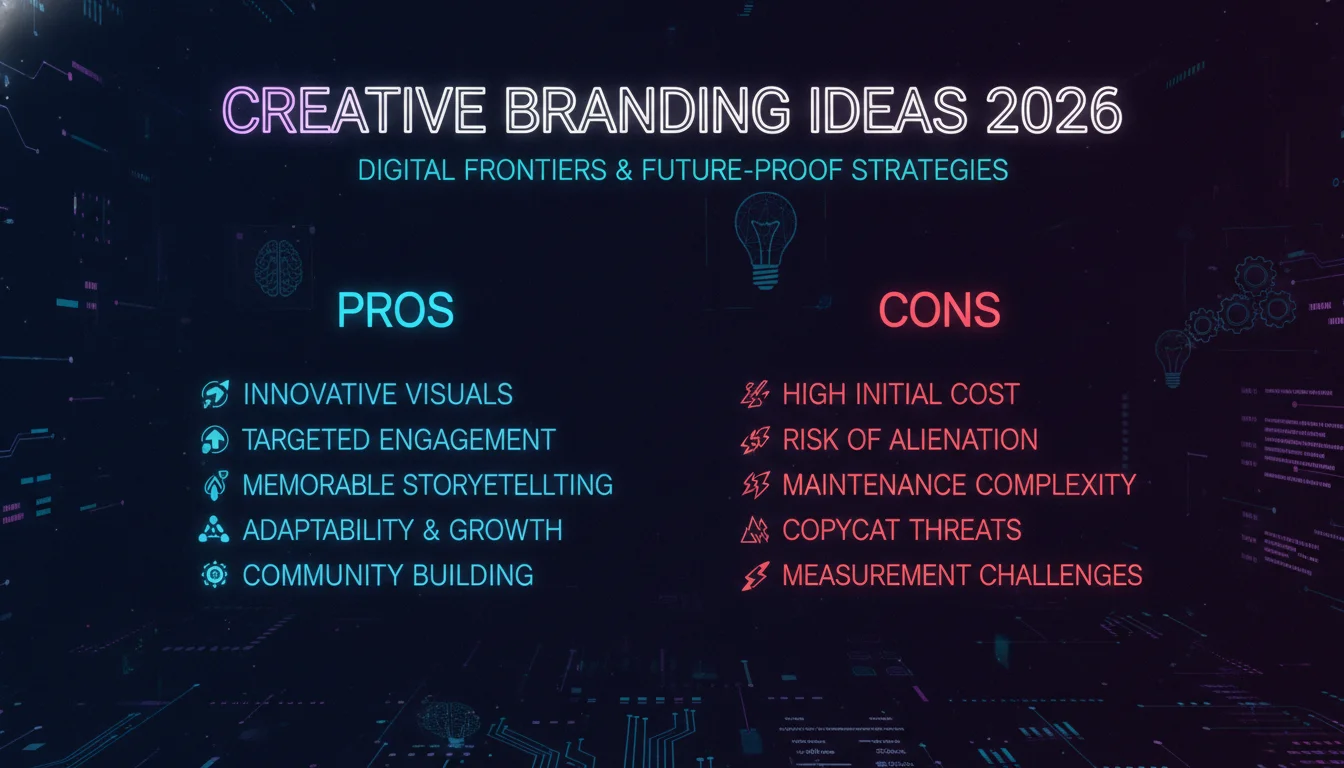
Pros
- Stronger emotional connection: Multi-sensory and motion-led branding creates memory triggers that static logos cannot match.
- Competitive differentiation: Brands that build identity systems rather than single assets stand out in crowded digital feeds.
- AI-powered scale: AI-assisted workflows reduce production cost and increase content volume without sacrificing creative direction.
- Authenticity premium: Purpose-led and archetype-driven brands earn loyalty that performance advertising alone cannot buy.
- Cultural relevance: Total branding and agenda branding give brands a way to participate in cultural moments meaningfully rather than reactively.
Cons
- Higher production complexity: Kinetic logos, sonic identity, and sensory assets require more resources and specialist skills than static design.
- Risk of AI sameness: Over-reliance on generative tools without strong human creative direction produces generic, forgettable output.
- Performative activism backlash: Agenda branding and social responsibility claims that lack genuine commitment damage trust faster than silence would.
- Trend fatigue: Chasing every 2026 aesthetic direction at once dilutes brand identity rather than strengthening it.
AI-Assisted Design vs. Human Imperfection: A Balanced Workflow
AI Integration for Speed and Scale
AI integration into branding is a significant competitive advantage. Outcrowd describes AI as a set of technologies that help brands analyze user data, personalize experiences, interpret feedback, generate ideas, and respond faster to audience behavior. AI-assisted design is a workflow in which machine learning and generative tools support human creative direction, not replace it. For this kind of ideas 2026, AI reduces production cost and increases volume. But AI alone produces sameness. The real advantage comes from using AI as a force multiplier for human creative direction.
“The strongest logos use clear shapes, strong contrast, and details that remain readable across screens, embroidery, enamel, and metal products.” – Eric Turney, President of The Monterey Company, as reported by Digital Synopsis
Retro, Brutalist, and Imperfect Aesthetics as Counterbalance
As AI makes polished design cheap, audiences crave human touch. Behance identifies retro, brutalist, and imperfect aesthetics as a 2026 direction, including rough textures, asymmetry, visible grids, and 1990s nostalgia. These styles signal intentional imperfection and honesty. Humanized and imperfect letterforms bring personality back into digital design and counterbalance the precision of AI-generated visuals. Use imperfection deliberately. It should look intentional, not careless.
Slick Retro: Nostalgia with a Contemporary Stamp
Slick retro is a distinct direction from brutalist imperfection. Where brutalism leans into roughness and visible construction, slick retro combines nostalgia marketing with a contemporary finish: smooth gradients, refined vintage type, and color palettes that feel familiar but freshly executed. Envato highlights this as a branding direction that appeals to audiences who want warmth and heritage without the grit. For brands in lifestyle, food, or fashion, slick retro offers a way to feel rooted and confident without looking dated.
Node-Based AI Design Tools
Node-based AI design tools are interfaces that let creators connect models, prompts, data, and logic in a flexible, modular way. Behance notes that this gives designers control and transparency over AI workflows, making complex processes easy to adjust, remix, and scale. For brands without large in-house teams, starting with simple node chains can unlock scalable creative production without losing the brand’s personality.
“Branding in 2026 goes multi-dimensional and multi-sensory, mixing motion, sound, culture, and AI into total branding experiences rather than static logos. Visual polish gets attention, but substance and a human point of view are what make a brand stick.” – Envato, Logo and Branding Trends 2026
How to Implement Creative Branding Ideas 2026 in Your Business
A Five-Step Implementation Plan
Creative branding ideas 2026 require sequence, not chaos. Use the following step-by-step process to move from inspiration to execution.
- Step 1: Define your brand archetype. Choose one personality model that fits your audience and category, then write a one-page brief covering tone, visual language, and key messages.
- Step 2: Audit your existing touchpoints. Review your website, social profiles, packaging, product UI, and customer emails to identify static moments that can become kinetic, sensory, or personalized.
- Step 3: Pilot one kinetic or sensory asset. Rather than redesign everything, choose one high-traffic moment such as your logo animation on social or a sonic cue in videos. Test it with your audience.
- Step 4: Integrate AI into the workflow. Use AI for content adaptation, personalization, feedback analysis, and idea generation while keeping human review for tone, taste, and truth.
- Step 5: Measure and refine. Track brand recall, engagement, conversion, and sentiment. Use the data to double down on what works and remove what does not.
Brand Clarity Before Execution
Brand clarity is essential. Before implementing creative branding ideas 2026, businesses must define purpose, audience, values, and direction. This is the difference between a cohesive brand and a collection of trends. Write a short brand strategy document that answers: Who are we? Who do we serve? What do we promise? Why should anyone care? Without these answers, kinetic logos and sensory branding become noise.
Measuring Branding Outcomes
Branding is not invisible. Measure recognition through branded search volume, social mentions, and direct traffic. Measure trust through reviews, repeat purchases, and NPS surveys. Creative branding ideas 2026 should tie to the metrics that matter for your business: lead quality, conversion rate, retention, and referral. The best branding work compounds over time, but only if you connect it to observable behavior.
If you want to see how we approach brand strategy and identity work at Emin Media, our branding and creative services page walks through how we build systems, not just assets.
Comparison Table: Four Branding Approaches for 2026
How to Read the Comparison
This table compares four creative branding ideas 2026 across intent, pros, cons, and best-fit categories. Use it as a starting point to prioritize one or two moves rather than trying to implement everything at once.
| Approach | What It Is | Pros | Cons | Best For |
|---|---|---|---|---|
| Brand archetype | A defined personality model guiding tone, visuals, and messaging. | Strong emotional recognition; simpler consistency. | Can feel restrictive if applied too literally. | Services, DTC, legacy brands. |
| Kinetic logo system | Motion-first logo that adapts across digital touchpoints. | High attention in feeds; multi-platform flexibility. | Requires motion design resources; risk of visual noise. | SaaS, media, entertainment. |
| Sensory branding | Assets designed for sound, motion, and physical texture. | Multi-sensory memory; stands out in crowded feeds. | Production cost; harder to maintain consistently. | Hospitality, CPG, lifestyle. |
| AI-assisted human-led design | Generative tools speed production while humans direct strategy and taste. | Speed, personalization, scale; preserves human point of view. | Risk of AI slop without curation; needs clear workflow. | High-volume content, global brands. |
Choosing Based on Your Brand Stage
Startups should begin with a brand archetype and a simple kinetic logo, then add sensory cues as budget allows. Mid-sized businesses benefit from AI-assisted personalization and expert-led video content. Enterprises can invest in total branding systems that link motion, sound, and cultural moments. The key is not to chase every trend, but to choose the creative branding ideas 2026 that align with your stage, audience, and distribution channels.
Expert Insights and Source Perspectives
Eric Turney on Logo Legibility
“The strongest logos use clear shapes, strong contrast, and details that remain readable across screens, embroidery, enamel, and metal products.” – Eric Turney, President of The Monterey Company, as reported by Digital Synopsis
This insight underlines why kinetic logos and imperfect type must still preserve legibility. Creative branding ideas 2026 should be flexible without losing structure.
DesignRush on Archetypes and Authenticity
DesignRush outlines eight creative branding ideas and emphasizes authenticity throughout. Its research notes that high-performing companies such as Patagonia and Gymshark use purpose-led and influencer-first identities. The 86% consumer preference for genuine brands is a reminder that recognition and authenticity are not separate metrics. They reinforce each other.
Envato on Cultural Influence
Envato argues that branding is now shaped by cultural events, AI, YouTube influencers, and major movies. The rise of total branding means any moment can become a brand-defining touchstone. From the Wuthering Heights aesthetic influencing type and fashion to viral influencer reviews, the most successful identities build narrative, opinion, and aesthetic into one package.
What to Avoid in 2026
Avoid AI slop: output that is technically competent but creatively hollow. Avoid performative activism and social responsibility claims that exist only as campaign copy. Avoid treating kinetic logos or sensory branding as decorative add-ons without strategic grounding. The brands that win in 2026 will be the ones that use technology to scale a distinctly human perspective, not replace it. As Behance puts it, the designers who lead will be those who embrace new tools while holding tight to purpose: human, inclusive, meaningful.
Frequently Asked Questions
What are the branding trends for 2026?
The major branding trends for 2026 are kinetic logos, sensory branding, total branding, AI-assisted design, agenda branding, and authentic imperfect aesthetics. According to Envato, these trends move identity beyond static visuals into multi-sensory experiences that build narrative and opinion into the brand itself.
What are some unique branding ideas?
Unique branding ideas include finding a brand archetype, using kinetic logo motion, adding sonic branding, building agenda-led campaigns, and partnering with niche influencers. These creative branding ideas 2026 help brands stand out in crowded feeds without chasing gimmicks.
What are the creative design trends for 2026?
Creative design trends for 2026 include retro brutalist aesthetics, humanized imperfect letterforms, immersive 3D spatial interfaces, slick retro nostalgia, and neo-minimalism paired with micro-maximalist details. Each balances polish with human warmth, according to Behance and Envato.
What are the newest branding trends?
The newest branding trends include agenda branding, childlike anarchy, AI-slop avoidance, and the death of skin-deep brand identity. They emphasize substance, opinion, and a clear human point of view over visual novelty alone.
How can small businesses use creative branding ideas 2026?
Small businesses can choose one or two creative branding ideas 2026, such as a brand archetype and a simple kinetic logo, then layer sensory cues and AI tools as they scale. This reduces risk while building real differentiation over time.
Are AI-generated brands a risk in 2026?
AI-generated brands risk sameness and distrust. The strongest approach is human-led, AI-assisted design, where humans set strategy and taste while AI handles execution and scale. Outcrowd notes that the real competitive advantage comes from using AI as a force multiplier, not a creative replacement.
Build Something Bold with Emin Media
The strongest creative branding ideas 2026 share a common sequence: define a clear brand archetype, add motion and sensory cues, integrate AI for scale, and deliberately preserve human imperfection. Brands that follow this sequence build trust, recognition, and emotional connection across every touchpoint. Start with brand clarity, then choose one high-impact asset to test rather than relaunching everything at once.
Ready to build a brand identity that actually sticks? Contact Emin Media for a free brand consultation and let’s create something that stands for something.
Enjoyed this article?
Contact Emin Media for a free brand consultation and let's create something amazing together.
Get in TouchRelated Articles
Digital Marketing for Creatives: A Bold Guide
Digital marketing for creatives builds real visibility and sales. Learn strategies for social media, SEO,…
Branding & Design Agency Tips That Actually Work
Discover branding and design agency tips to choose the right partner, set clear goals, and…
Creative Agency Pitch Deck Tips That Win Clients
Master creative agency pitch deck tips that win clients in 2026. Learn storytelling, design, and…