Creative Brand Identity Design: Build Boldly
Key Takeaways
- Creative brand identity design is the visual and emotional system that makes your brand instantly recognizable.
- Core elements include logos, typography, color palettes, taglines, and imagery – each working together, not in isolation.
- A six-step process moves you from brand discovery through to living, breathing guidelines.
- Consistency across every touchpoint builds the trust that turns first-time buyers into loyal advocates.
- Brand guidelines are not a one-time document. Review them every six months to stay relevant and sharp.
Creative Brand Identity Design: Build Boldly
Creative brand identity design is the visual and emotional system a business builds to represent itself across every touchpoint. It includes logos, typography, color palettes, taglines, and imagery – all working together to create instant recognition and real consumer connection.
What Is Creative Brand Identity Design?
identity design is a strategic process of shaping how a brand looks, sounds, and feels to the people it wants to reach. It goes far beyond picking a nice logo. According to the American Marketing Association, brand identity refers to the visual and symbolic elements that represent a brand – the name, logo, color scheme, typography, and design elements that, when brought together, create a recognizable image consumers can identify and connect with. Think of it as the visual personality of your business: the first impression, the lasting memory, and the reason someone chooses you over the competitor sitting right next to you on the shelf.
Brand Identity vs. Brand Image
Brand identity is how your company chooses to present itself. Brand image is how consumers actually receive that presentation. The gap between the two is where most branding problems live. A strong this type of design process closes that gap by making intentional choices at every level – from the weight of your headline font to the warmth of your brand photography.
Why Brand Identity Matters
A well-defined brand identity communicates values, builds loyalty, and sharpens recognition in crowded markets. As entrepreneur and author Seth Godin puts it: “A brand is the set of expectations, memories, stories, and relationships that, taken together, account for a consumer’s decision to choose one product or service over another.” That decision happens in seconds. Your identity either earns it or loses it.
“A brand is the set of expectations, memories, stories, and relationships that, taken together, account for a consumer’s decision to choose one product or service over another.” – Seth Godin
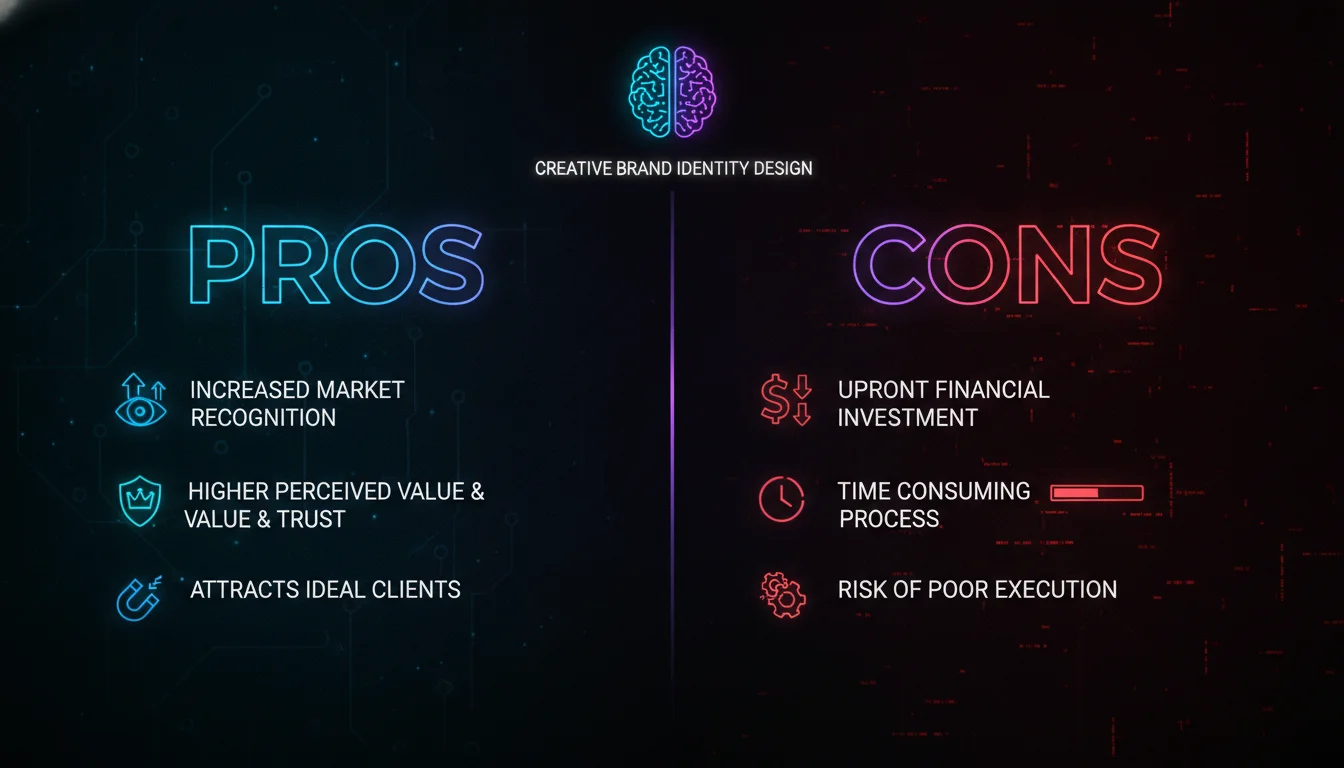
Pros and Cons of Investing in Creative Brand Identity Design
Pros
- Instant recognition: A cohesive visual system makes your brand memorable across every channel and format.
- Customer trust: Consistency in design signals professionalism and reliability – two things consumers reward with loyalty.
- Competitive differentiation: A distinctive identity separates you from competitors who look and sound interchangeable.
- Internal alignment: Clear brand guidelines give your team a shared creative language, reducing rework and off-brand content.
- Perceived value: Strong branding influences how much consumers believe your product or service is worth – often more than the product itself.
Cons
- Upfront investment: Professional brand identity work requires real budget – typically ranging from a few thousand dollars for smaller projects to significantly more for complex, multi-channel systems.
- Time commitment: A thorough process takes weeks, not days. Rushing it produces generic results.
- Maintenance overhead: Brand guidelines need regular reviews. A static identity in a shifting market quickly feels stale.
- Risk of over-design: Too many elements, colors, or typefaces creates visual noise that confuses rather than connects.
Key Elements of Creative Brand Identity Design
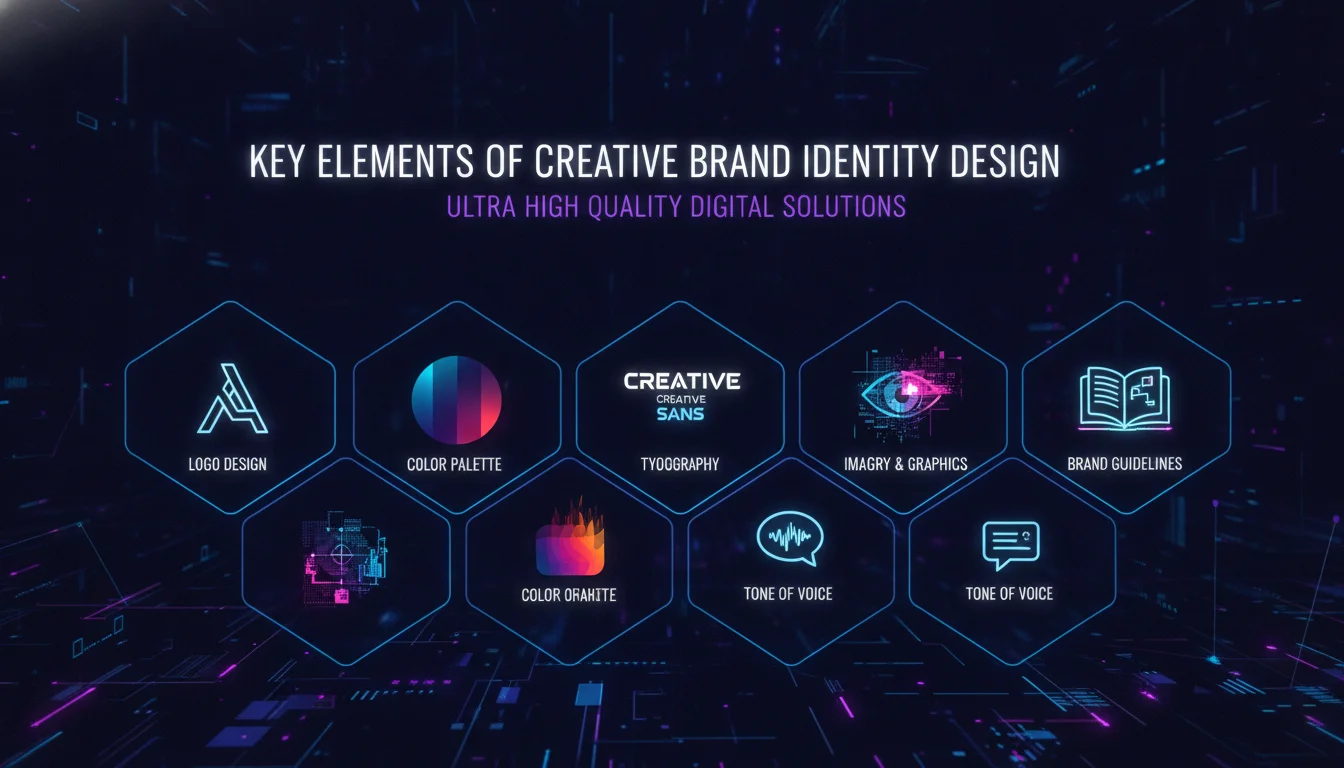
Effective this kind of identity design is built from five core elements – each one a deliberate creative decision, not a default choice.
Logos
A logo is often the most recognizable aspect of a brand’s identity. It should be simple, distinctive, and directly relevant to what the brand stands for. Think of it as the visual anchor: everything else in your identity system orbits around it. A great logo works at any size – from a favicon to a billboard – and reads clearly in black and white before it ever gets color applied.
Typography
Typography sets the tone before a single word is read. The choice of typeface tells your audience whether you’re authoritative or approachable, minimal or expressive, timeless or trend-forward. Consistent typography across all brand materials – from your website headers to your email signatures – creates a visual rhythm that feels intentional and professional.
Color Palette
Color is one of the fastest emotional triggers in design. Blue communicates trust and stability. Red signals energy and urgency. Green evokes growth and calm. A well-defined color palette does two things simultaneously: it evokes the right feeling and it makes your brand immediately recognizable. Limit your palette to a primary set of two to four colors, with defined secondary and accent options for flexibility.
Taglines
A sharp tagline reinforces your brand’s core message in a single line. It’s the verbal equivalent of your logo – compact, memorable, and loaded with meaning. The best taglines don’t describe what you do. They communicate why it matters.
Imagery and Photography
Every photo, illustration, and graphic you publish is a brand statement. Imagery should align with your identity and consistently reflect your values and aspirations. A wellness brand that uses cold, clinical stock photography is sending the wrong signal, no matter how good the copy is. Develop a clear visual direction for imagery – mood, lighting, subject matter, color grading – and apply it everywhere.
The 6-Step Process for Creative Brand Identity Design
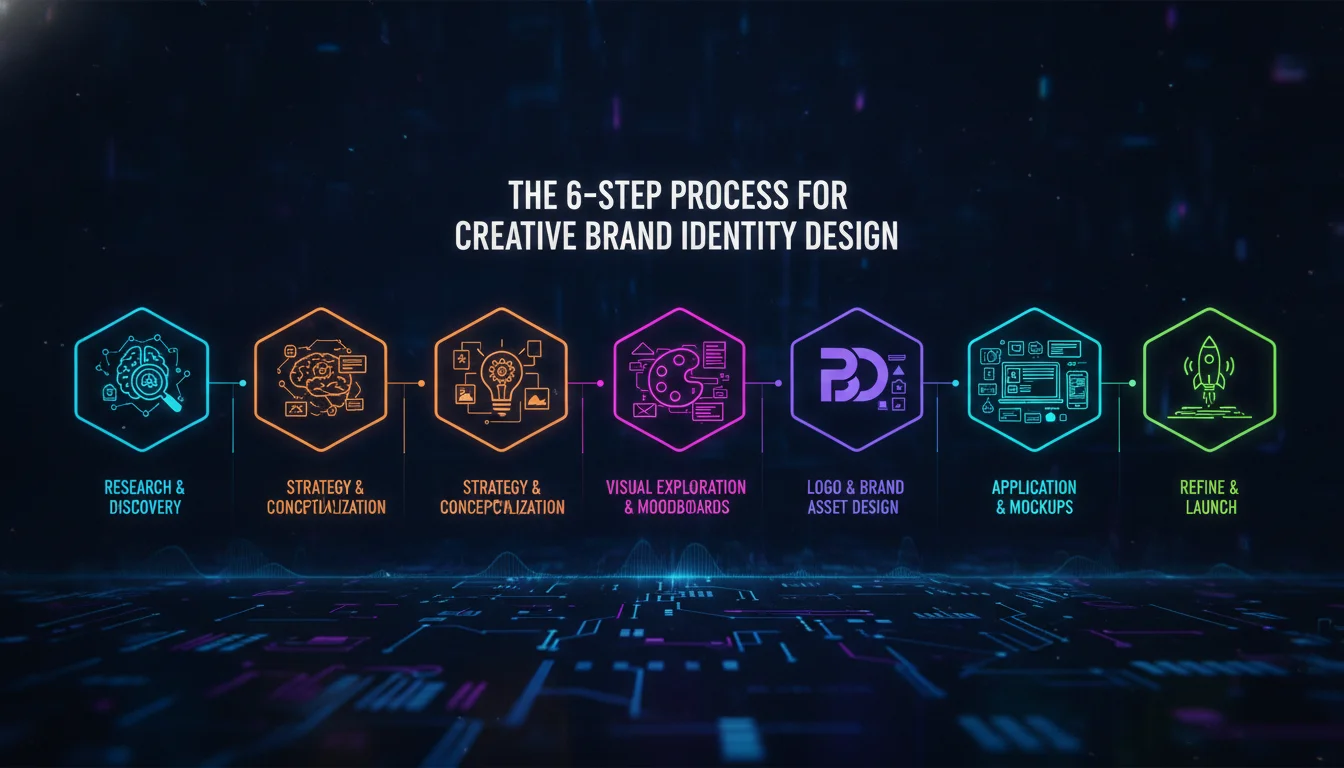
Building a strong brand identity follows a clear, repeatable process. Skip a step and you’ll feel it later.
Step 1: Understand Your Brand
Start by going deep on what the brand actually is. Conduct interviews with founders, key stakeholders, and existing customers. Understand the mission, values, history, and future goals. This step sets the direction for every creative decision that follows. Without it, you’re designing in the dark.
Step 2: Analyze Your Competitors
Study the visual identities of your closest competitors. Look for common design patterns, color conventions, and typographic habits in your category. Then find the white space. Differentiation isn’t about being different for its own sake – it’s about being distinctly, memorably yourself in a way that your competitors can’t easily copy.
Step 3: Define Your Brand Strategy
Before any design work begins, lock in the brand’s positioning, personality, and messaging. This strategy becomes the filter for every creative decision. If a font choice doesn’t align with the brand personality, it doesn’t make the cut – no matter how beautiful it is.
Step 4: Craft the Visual Elements
Now the creative work begins. Select colors that align with the brand personality and evoke the right emotions. Choose fonts that complement the brand voice and remain legible across contexts – from mobile screens to print. Create a logo that is simple, memorable, and unique. Every visual element should feel like it belongs to the same family.
Step 5: Create Brand Guidelines
Document every design decision in a brand guidelines document. This includes rules for logo usage, color codes, typography hierarchies, imagery direction, and tone of voice. Guidelines are what transform a one-time design project into a living brand system. According to brand management research, teams with clear brand guidelines produce more consistent content and spend less time on revisions.
Step 6: Monitor, Review, and Adapt
A brand identity is not a set-it-and-forget-it asset. Creative industry data shows that the strongest brand systems are reviewed at least every six months. Monitor how your brand is perceived, track where guidelines break down in practice, and introduce updates when the business evolves. A typeface that felt right at launch may need revisiting when the company pivots its core offering.
“Brand identity breaks down when treated as a one-time launch. Run reviews every six months, embed approvals into workflows, and use centralized updates so changes propagate consistently.” – Marq Brand Identity Research, 2026
Best Practices for Creative Brand Identity Design
Three principles separate brand identities that last from ones that fade.
Simplicity
Restraint is a creative skill. Limiting your color palette, keeping your logo clean, and resisting the urge to use every font you love will make your brand sharper and more recognizable. Complex visual systems confuse consumers. Simple ones stick.
Emotional Connection
Design with a specific feeling in mind. Whether that’s nostalgia, excitement, calm, or confidence – choose one dominant emotional register and build toward it. An Akeneo study on consumer behavior found that a majority of respondents were willing to pay more for products that clearly communicate their company’s brand values. Emotion isn’t soft. It’s commercial.
Consistency
Consistency is what turns a design system into a brand. Apply your visual elements – logos, colors, fonts – the same way across every channel, every time. Create a brand guidelines document and actually use it. Review it regularly. Consistency builds the recognition that makes brands feel trustworthy, and trust is what drives purchase decisions.
Versatility
Your brand identity needs to work everywhere: social media thumbnails, outdoor signage, packaging, email headers, and pitch decks. Test every element across formats before finalizing. A logo that only works on a white background isn’t a finished logo.
Brand Spotlight: What Great Identity Design Looks Like in Practice
The strongest brand identities share a common trait: every element feels inevitable. Nothing looks accidental. The color palette, the typeface, the logo mark, the photography style – they all tell the same story from different angles. Look at the work coming out of studios like HuskyFox, Bortoletto Studio, and Obrazur Brands on Behance. Projects like the KATSEYE album identity and the Flaren brand system show how visual coherence creates emotional impact at scale. The craft is in the details. The strategy is in the system.
Comparison of Creative Brand Identity Design Tools
| Tool | Features | Best For |
|---|---|---|
| Adobe Illustrator | Vector graphics, logo design, typography tools | Professional designers |
| Canva | User-friendly templates, drag-and-drop interface | Small businesses and beginners |
| Figma | Collaborative design, prototyping | Teams and remote collaboration |
| Sketch | Vector editing, design systems | UI/UX designers |
Frequently Asked Questions
What are the 5 P’s of brand identity?
The 5 P’s of brand identity are Purpose, People, Product, Process, and Presentation. Together they define a brand’s essence and shape how it communicates with its audience across every channel and interaction.
What is a brand identity design?
Brand identity design is the process of creating a cohesive visual and emotional representation of a brand. It covers logos, typography, color palettes, taglines, and imagery – all working together to create recognition and connection with the right audience.
How much does a brand identity designer make?
Salaries for brand identity designers vary significantly based on experience, location, and whether the designer works in-house or freelance. Entry-level roles typically start lower, while senior designers and creative directors at established agencies command considerably higher compensation.
How much does a brand identity design cost?
The cost of brand identity design depends on the scope and the team behind it. Smaller projects with a freelance designer sit at a different price point than full agency engagements covering strategy, visual identity, and brand guidelines. Getting clear on deliverables before briefing anyone will help you budget accurately.
What is the difference between brand identity and brand image?
Brand identity is how a company intentionally presents itself through visual and verbal choices. Brand image is how consumers actually perceive those choices. The strongest brands work hard to close the gap between the two – and the brand identity design is the primary tool for doing that.
Can I create my own brand identity?
Yes – tools like Canva and Adobe Illustrator make it possible for non-designers to build a basic visual identity. That said, a professional designer brings strategic thinking, category knowledge, and craft that self-built identities often lack. For brands serious about differentiation, professional design is worth the investment.
Ready to build something that actually stands out? Contact Emin Media for a free brand consultation and let’s create an identity your audience won’t forget.
Enjoyed this article?
Contact Emin Media for a free brand consultation and let's create something amazing together.
Get in TouchRelated Articles
Digital Marketing for Creatives: A Bold Guide
Digital marketing for creatives builds real visibility and sales. Learn strategies for social media, SEO,…
Branding & Design Agency Tips That Actually Work
Discover branding and design agency tips to choose the right partner, set clear goals, and…
Creative Agency Pitch Deck Tips That Win Clients
Master creative agency pitch deck tips that win clients in 2026. Learn storytelling, design, and…