20 Content Marketing Examples That Actually Work
Content marketing examples are real-world campaigns where brands create valuable content to attract, engage, and convert audiences without relying on direct advertising. From Red Bull’s extreme sports documentaries to HubSpot’s educational blog empire, these cases show exactly how great content drives measurable business results.
Key Takeaways
- marketing examples span diverse formats: video, blogs, user-generated content, personalized experiences, and interactive tools.
- Top brands like Red Bull, HubSpot, and GoPro build authority and loyalty by prioritizing audience value over direct selling.
- According to Demand Metric, content marketing generates three times more leads than outbound marketing while costing significantly less.
- B2B buyers engage with 3 to 7 pieces of content before contacting a salesperson, making consistent publishing essential.
- Studying proven this type of examples helps you adapt battle-tested tactics to your own industry and goals.
- As of 2026, the brands winning with content treat it as a product: audience-first, data-informed, and continuously refined.
What is Content Marketing?
Definition and Core Principles
Content marketing is a strategic approach focused on creating and distributing valuable, relevant, and consistent content to attract and retain a clearly defined audience, ultimately driving profitable customer action. Unlike traditional advertising that interrupts people with promotional messages, content marketing earns attention by solving problems or entertaining audiences. The Content Marketing Institute frames it simply: become a trusted resource, not just another vendor pushing products.
How Content Marketing Differs from Traditional Advertising
Traditional advertising pushes promotional messages at audiences who didn’t ask for them. Content marketing pulls audiences in by offering something genuinely useful first. A blog post that teaches you how to solve a real problem, a video that entertains while subtly showcasing a brand’s values: these are this kind of examples in their purest form. This approach builds long-term relationships and credibility, which translate into higher customer loyalty and lifetime value over time.
Why Studying Content Marketing Examples Drives Strategy Success

Learning from Top Brands
Analyzing content marketing from leading brands reveals repeatable patterns behind their success. According to data cited by Podium, content marketing leaders experience year-over-year unique site traffic growth at a rate 7.8 times greater than followers, with growth rates of 19.7% versus 2.5%. That gap doesn’t happen by accident. It’s the compounding result of consistent strategy, audience focus, and format discipline.
Adapting Strategies to Your Industry
Every industry has its own rhythm. marketing examples from B2B software companies often center on in-depth guides, webinars, and certification programs, while B2C brands lean into viral videos and social campaigns. By examining how companies like HubSpot and Red Bull tailor their content to completely different audiences, you can identify frameworks that map directly to your own audience’s preferences and buying behavior.
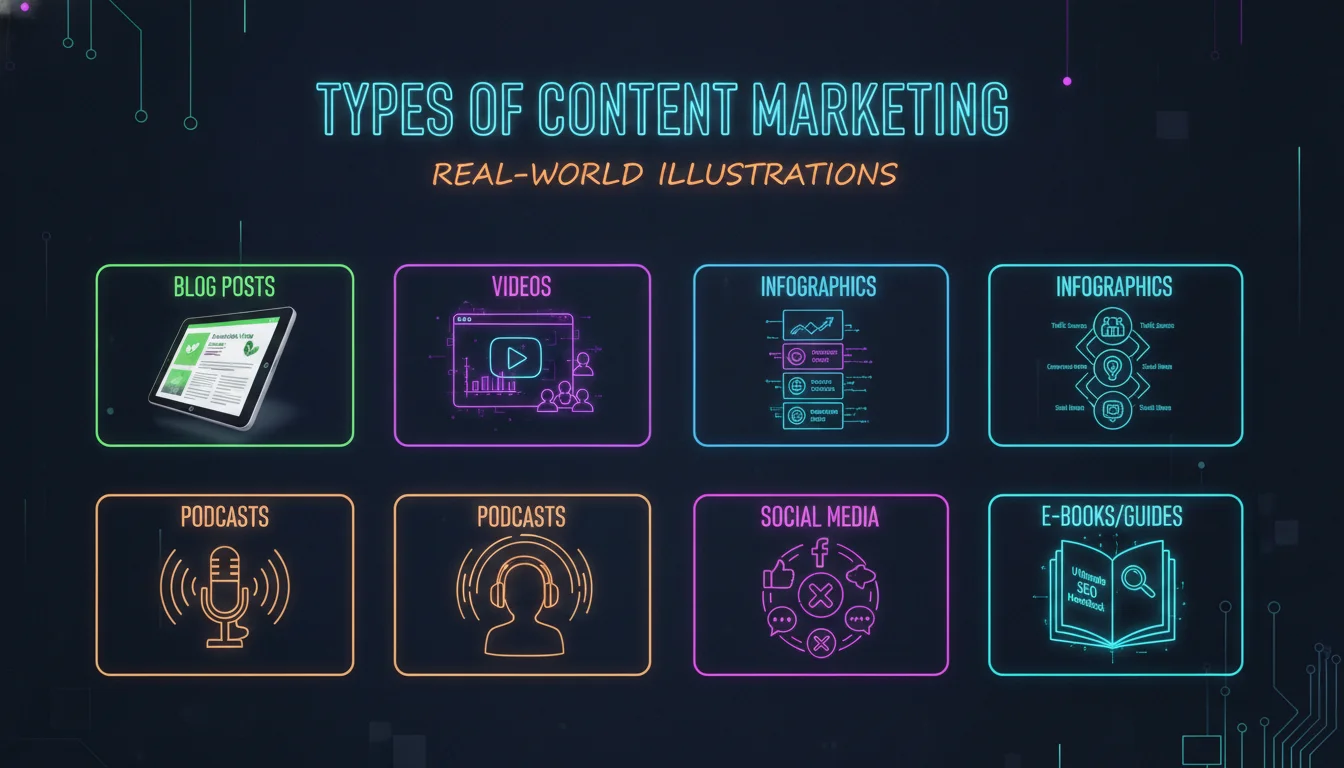
Types of Content Marketing with Real-World Illustrations
Blog and Written Content
Blogging remains a foundational content format for brands that want to own search. HubSpot’s blog ranks among the top results for thousands of marketing-related searches, pulling in millions of visitors each month through sheer editorial consistency. Written formats like ebooks, white papers, and case studies educate audiences and generate leads at scale. American Express OPEN Forum is another strong example: a platform built entirely around business insights for small business owners, with no hard sell in sight.
Video and Multimedia
Video content has become the dominant format for audience engagement across nearly every platform. Tasty’s overhead cooking videos, published around 50 times per month with a consistent visual style, rack up over 50 million YouTube views monthly. Red Bull’s extreme sports documentaries and GoPro’s user-generated clips show how video can build entire brand identities, not just campaigns.
| Content Type | Key Brand Example | Strategic Advantage | Notable Result |
|---|---|---|---|
| Video | Tasty | High engagement, shareability | 50M+ YouTube views/month |
| User-Generated Content | GoPro | Community building, authentic advocacy | 43,000+ video submissions per year |
| Blog/Educational | HubSpot | SEO authority, lead generation | Dominates marketing search results |
| Personalization | Spotify Wrapped | User delight, viral sharing | Millions of organic social shares annually |
| Documentary/Storytelling | Be Vocal: Beyond Silence | Emotional resonance, brand values | 416 million impressions |
Interactive and Immersive Formats
Immersive content like interactive infographics, quizzes, and scroll-driven multimedia stories engage users at a depth that static pages rarely achieve. Platforms like Shorthand enable publishers to create visually rich, scroll-stopping stories that increase time on page and comprehension. These formats work especially well for brands trying to explain complex ideas without losing the reader halfway through.
Brand Spotlights: Content Marketing Examples in Action

Red Bull: Extreme Sports as Brand Identity
Red Bull didn’t build a media brand by accident. It made a deliberate choice to own the extreme sports space through content, not just sponsorship. With 17.2 million YouTube subscribers and a constant stream of documentaries, live events, and athlete-focused stories, Red Bull’s content marketing examples show how brand identity can be woven into every piece of content. The famous Felix Baumgartner stratosphere jump wasn’t just a stunt. It was a content strategy executed at global scale, creating a lifestyle association that no 30-second ad could replicate.
“Red Bull doesn’t sell energy drinks through its content. It sells a feeling. The product is almost incidental to the story.” – Creative industry analysis, SCU Leavey School of Business
HubSpot: The Inbound Marketing Playbook
HubSpot’s entire business model is built on inbound marketing, and its blog, academy, and certification programs are among the most prominent content marketing examples in the B2B space. By consistently answering marketers’ questions with high-quality, data-backed articles, HubSpot attracts leads at scale without a single cold call. Their content ecosystem spans templates, courses, free tools, and newsletters, nurturing leads from first awareness all the way through to purchase.
GoPro: Turning Customers into Creators
GoPro’s content strategy is built on a simple insight: their customers are already creating extraordinary content. The annual Million Dollar Challenge invited users to submit their best footage shot on GoPro cameras for a chance to win a share of one million dollars. With over 43,000 submissions, this campaign generated a massive library of authentic, high-quality content that GoPro repurposes across every marketing channel. The result is a brand that barely needs to produce its own content because its community does it better.
User-Generated Content Marketing Examples
GoPro’s Million Dollar Challenge
The GoPro Million Dollar Challenge is a masterclass in content marketing examples that leverage customer creativity. Users produce content that showcases the product’s capabilities while building a community of adventure enthusiasts. This approach reduces production costs dramatically while delivering authentic, relatable material that consistently outperforms brand-produced advertising in engagement metrics.
Airbnb’s Storytelling Community
Airbnb’s platform thrives on stories. Their content marketing examples include host and guest narratives, local guides, and the “Cooking on Airbnb” series where guests share family recipes with hosts. These authentic stories build a sense of belonging that no traditional travel ad could manufacture. Airbnb has grown into a market leader with 7.7 million listings worldwide, and its content strategy is a significant part of that story.
How to Encourage UGC for Your Brand
To replicate these content marketing examples, brands can launch contests, create branded hashtags, and spotlight real customers. The key is a clear incentive paired with frictionless sharing. GoPro combined a monetary reward with social recognition. Airbnb built on emotional storytelling and cultural exchange. Both strategies produced high engagement and lasting brand loyalty without a massive production budget.
Video-First Content Strategies
Tasty’s Consistent Recipe Videos
BuzzFeed’s Tasty revolutionized food content with a deceptively simple formula: overhead camera, fast cuts, satisfying results. By publishing around 50 new videos every month with a consistent visual style, Tasty achieves over 50 million YouTube views monthly. This content marketing example proves that consistency in format and frequency can build a massive, dedicated following even in a saturated category.
Dove’s Real Courage Campaign
Dove’s “Real Courage” video, released in 2020, featured healthcare workers during the COVID-19 pandemic, complete with unretouched images showing the physical toll of frontline work. The campaign aligned with Dove’s long-standing Real Beauty platform and demonstrated something most brands struggle with: timely, empathetic storytelling that deepens trust rather than just generating impressions. It was authentic because it had to be.
Measuring Video Content ROI
Video campaigns need clear metrics beyond view counts. Brand lift, engagement duration, and click-through rates to your site tell a more complete story than raw views. According to Demand Metric, content marketing overall generates three times more leads than outbound marketing while costing significantly less. For video specifically, tracking how long viewers stay and whether they take a next step is where the real signal lives.
Blog and Written Content for Authority Building
HubSpot’s Educational Blog Empire
HubSpot’s blog covers marketing, sales, and customer service with a depth that consistently earns top search rankings. This publishing consistency has made it a primary destination for business professionals, feeding organic traffic directly into their CRM funnel. Content marketing examples like this prove that investing in educational writing pays compounding dividends in SEO authority and lead generation over time.
American Express OPEN Forum
American Express OPEN Forum is a digital platform built entirely around business advice for small business owners. It’s a strong content marketing example because it never pushes credit cards. Instead, it builds community by sharing expert insights, case studies, and networking opportunities. That restraint is the strategy. By staying useful rather than promotional, the platform has remained relevant for well over a decade.
SEO Best Practices for Blogs
To build authority through blogging, focus on keyword research, user intent, and quality over volume. Research indicates that B2B buyers engage with 3 to 7 pieces of content before initiating contact with a salesperson, so each post must address a specific pain point with genuine depth. Use internal linking and clear calls to action to guide readers through the funnel rather than leaving them at a dead end.
Interactive and Personalized Content Approaches
Spotify Wrapped: Personalized Year-in-Review
Every December, Spotify Wrapped generates personalized listening roundups for users, complete with shareable graphics and a curated playlist of their most-played songs. This content marketing example drives massive organic social media buzz because it makes users feel seen and celebrated. By turning behavioral data into a delightful personal experience, Spotify strengthens user loyalty and attracts new subscribers through word-of-mouth at a scale no paid campaign could match.
CeraVe’s Anti-Advertising Campaign
CeraVe’s campaign, highlighted by Adobe, took a deliberate anti-advertising approach by partnering with healthcare professionals and leading with authentic educational content rather than polished commercials. This content marketing example resonated with consumers who had grown skeptical of traditional marketing. Honesty and demonstrated expertise cut through the noise in a way that a slick production never could.
Duolingo’s TikTok Strategy
Duolingo turned its brand mascot into a TikTok personality with a distinct voice: chaotic, self-aware, and genuinely funny. Rather than producing polished brand content, Duolingo leaned into platform-native humor and trending formats. The result is one of the most-followed brand accounts on TikTok, built almost entirely on content that prioritizes entertainment over promotion. It’s a reminder that the best content marketing examples often break the rules of traditional brand communication.
Canva’s Design School
Canva built a free educational hub called Design School that teaches non-designers how to create professional visuals. Every tutorial, course, and template doubles as a product demonstration. This approach positions Canva as the obvious tool for the skills it’s teaching, creating a content-to-conversion pipeline that feels helpful rather than sales-driven. It’s one of the cleaner content marketing examples of education as acquisition strategy.
Tools for Creating Personalized Content
Brands can use data analytics and audience segmentation to deliver personalized emails, product recommendations, and dynamic web experiences. The success of content marketing examples like Spotify Wrapped shows that personalization drives sharing and loyalty when it’s built around genuine user data rather than generic assumptions. Start with what you already know about your audience and build from there.
“The brands winning with content in 2026 aren’t the ones publishing the most. They’re the ones who understand their audience deeply enough to make content feel personal at scale.” – Emin Media creative team, based on client campaign analysis
Pros and Cons of Content Marketing
Pros
- Builds lasting authority: Consistent, high-quality content compounds over time, earning search rankings and audience trust that paid ads cannot replicate.
- Cost-effective lead generation: According to Demand Metric, content marketing generates three times more leads than outbound marketing at significantly lower cost.
- Strengthens brand identity: Great content communicates your values, voice, and expertise in ways that product pages alone never will.
- Supports every stage of the funnel: From awareness-stage blog posts to decision-stage case studies, content works across the entire buyer journey.
- Encourages community and loyalty: UGC campaigns and storytelling-driven content turn customers into advocates, as GoPro and Airbnb demonstrate clearly.
Cons
- Results take time: Content marketing is a long game. Most brands won’t see significant organic traffic growth for several months after launching a consistent strategy.
- Requires sustained investment: Quality content demands skilled writers, designers, videographers, and strategists. Cutting corners on quality undermines the entire effort.
- Hard to attribute directly: Connecting a blog post to a closed deal requires solid analytics infrastructure that many smaller teams don’t have in place.
- Content saturation is real: Every category is crowded. Generic, undifferentiated content gets ignored regardless of publishing frequency.
Applying These Examples to Your Brand
Summarizing the Top Strategies
Across all of these content marketing examples, a few themes repeat consistently: prioritize audience value over self-promotion, embrace authentic storytelling, use user-generated content to scale authenticity, and maintain format consistency. Brands like Red Bull and HubSpot didn’t build content empires by guessing. They followed clear strategies that aligned every piece of content with a specific business goal.
Where to Start
Whether you’re a startup or an established brand, you can adapt these content marketing examples to your context. Start by identifying your audience’s most pressing challenges. Then choose the formats that best match how they consume information. Measure what matters, and iterate based on real data. The most successful content marketers treat their content like a product: continuously refined, audience-tested, and built to solve a real problem.
If you want to build a content strategy that actually moves the needle, explore what Emin Media’s creative team can do for your brand. We’ve helped founders, marketing managers, and creative teams develop content that earns attention and drives results. Browse our latest insights for more frameworks and campaign breakdowns.
Ready to build something bold? Contact Emin Media for a free brand consultation and let’s create content that your audience actually wants to find.
Frequently Asked Questions
What is content marketing?
Content marketing is a strategic approach focused on creating valuable, relevant content to attract and retain a defined audience rather than pushing products directly. It builds trust and authority over time, turning audiences into customers through consistent, useful communication.
What are the 5 C’s of content marketing?
The 5 C’s are Content (valuable material), Context (audience relevance), Channels (distribution platforms), Consistency (regular publishing), and Customers (target audience focus). This framework ensures your content strategy stays audience-centered and purposeful rather than scattered.
What are the four types of content marketing?
The four primary types are text-based content (blogs, ebooks), visual content (infographics, photography), video, and audio (podcasts). Each format serves different stages of the buyer journey and suits different audience preferences and consumption habits.
What are the 3 C’s of content marketing?
The 3 C’s refer to Content, Context, and Channels: what you say, how it fits your audience’s situation, and where you deliver it. These three elements form the foundation of any effective content plan.
How do I choose the right content marketing examples for my brand?
Look for examples from brands that share your target audience profile or operate in adjacent industries, then analyze their strategies for format choice, publishing cadence, and distribution. Adapt the underlying principles rather than copying surface tactics, since what works for Red Bull won’t automatically work for a B2B SaaS company.
What makes a content marketing campaign successful?
Successful campaigns deliver consistent, high-quality content that solves real problems or genuinely entertains a specific audience. The strongest content marketing examples are data-informed, audience-first, and distributed across the channels where their audience actually spends time.
Enjoyed this article?
Contact Emin Media for a free brand consultation and let's create something amazing together.
Get in TouchRelated Articles

Digital Storytelling for Brands: The Complete Guide
Digital storytelling for brands builds real audience connections through narrative. Learn proven techniques, formats, and…
Design Thinking for Marketing: A 2026 Guide
Design thinking for marketing builds campaigns around real user needs. Learn the 5 phases, common…

Creative Direction for Video Shoots: A Complete Guide
Master creative direction for video shoots with proven steps, tools, and strategies that build brand…