Content Creation for Brands: Strategy Guide
Content creation for brands is the strategic process of producing text, video, audio, and visual content that connects with target audiences, builds brand authority, and drives measurable business outcomes. Done right, it’s the difference between a brand people scroll past and one they follow, share, and buy from.
Key Takeaways
- for brands works best when rooted in a clear audience definition and specific business goals.
- A structured content process, from strategy to analysis, consistently outperforms ad-hoc publishing.
- Quality and authenticity beat volume every time. One resonant piece outperforms ten forgettable ones.
- Tracking performance metrics every 30 days lets you double down on what your audience actually responds to.
- Brand consistency across every content format builds the kind of recognition that compounds into loyalty.
- The right mix of in-house, outsourced, and tool-assisted content depends on your team’s strengths and budget.
Understanding Content Creation for Brands
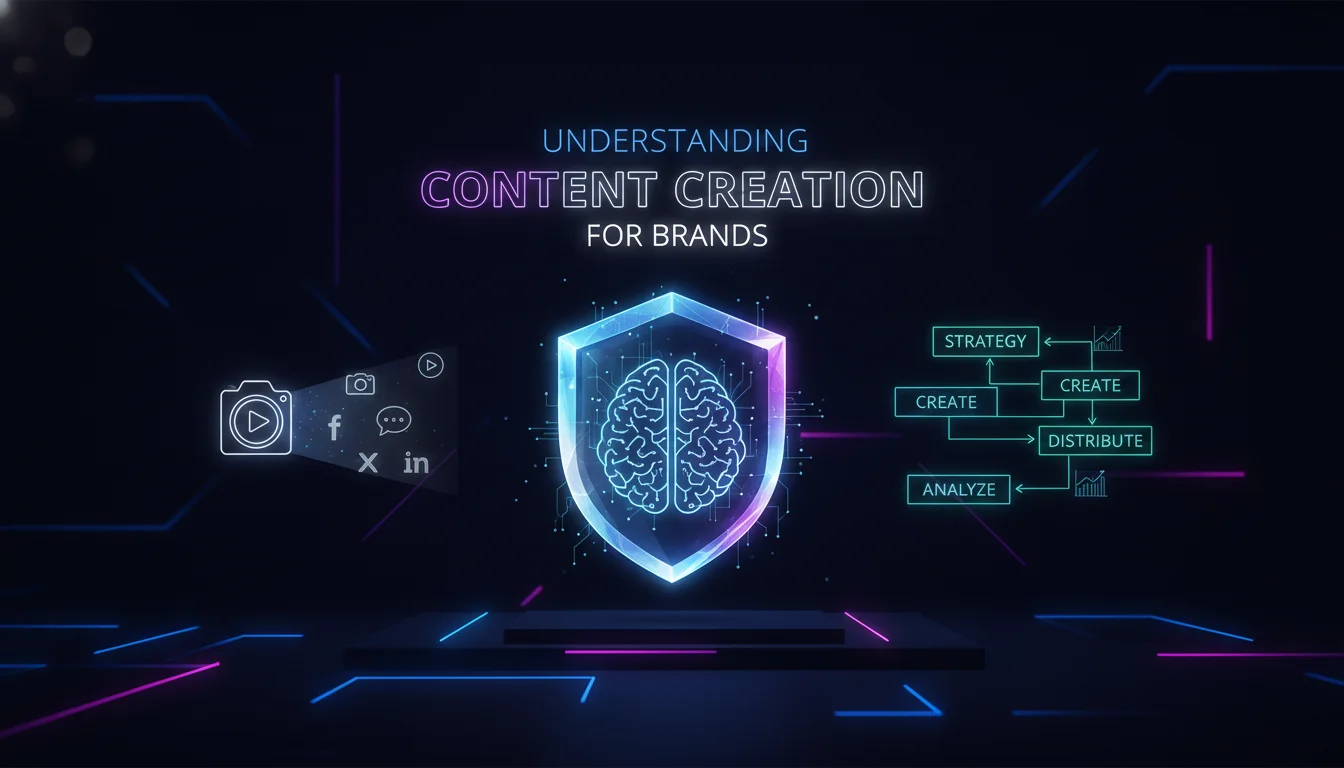
Content creation for brands is the full-cycle practice of planning, producing, publishing, and refining content that serves both your audience and your business. It’s not just about filling a content calendar. It’s about building a body of work that earns attention, trust, and eventually revenue.
What Content Creation Actually Means
Content creation is the act of generating material for digital platforms: articles, videos, social posts, podcasts, graphics, and more. Each format serves a different purpose in your brand’s communication ecosystem. A blog post builds search authority. A short-form video builds personality. A podcast builds intimacy. The best brand content strategies use all of these together, intentionally.
Why It Matters More Than Ever in 2026
Audiences are more skeptical and more selective than they’ve ever been. Generic content gets ignored. According to Orbit Media’s research on small business content marketing, fewer than 20% of small business owners consistently create and publish traffic-generating content. That gap is your opportunity. Brands that show up with genuine value, consistently, own the conversation in their category.
“Different is better than better. To stand out, focus on being different rather than marginally better. It’s easier to be unique than to be 20 times better than the competition.” – Udi Ledergor, former CMO and Chief Evangelist at Gong, whose content-first approach helped grow the company from zero to over $200 million in revenue.
Types of Content for Brands
- Blog Posts and Articles: Long-form content that builds search authority and demonstrates expertise over time.
- Short-Form Video: The dominant format on Instagram Reels, TikTok, and YouTube Shorts as of 2026. Fast, visual, and shareable.
- Social Media Posts: High-frequency touchpoints that reinforce brand personality and drive community interaction.
- Podcasts: Audio content that builds deep audience relationships during commutes, workouts, and downtime.
- Email Newsletters: Owned-channel content that reaches your most engaged audience directly, without algorithm interference.
- Infographics and Visual Assets: Digestible data and brand storytelling in a format built for sharing.
Steps for Effective Content Creation
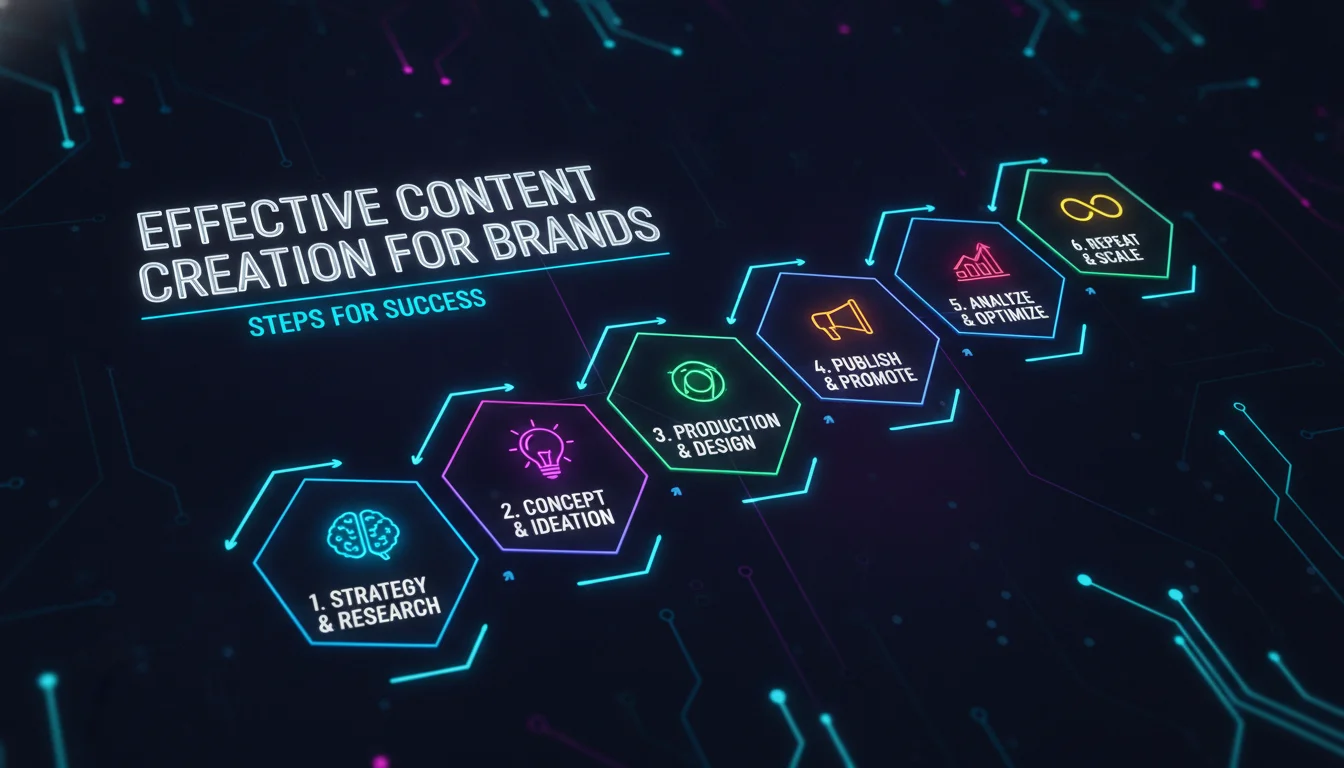
Effective content creation for brands follows a repeatable process, not a random burst of inspiration. Here’s how we structure it at Emin Media.
Step 1: Define Your Audience with Precision
Start narrow, not broad. “Marketing professionals” is not an audience. “Early-stage startup founders who are building their first brand identity” is. The more specific your audience definition, the more magnetic your content becomes. Map out their daily frustrations, their aspirations, and the questions they’re already searching for answers to.
Step 2: Set Goals That Connect to Business Outcomes
Use the SMART format: Specific, Measurable, Achievable, Relevant, and Time-bound. A goal like “increase organic website traffic by 20% within three months through targeted blog posts” gives your team a clear target and a clear success signal. Vague goals produce vague results.
Step 3: Build a Content Strategy, Not Just a Calendar
A content calendar tells you when to post. A content strategy tells you why. Your strategy should define the content formats you’ll produce, the platforms you’ll prioritize, the brand voice you’ll maintain, and how each piece connects to a business objective. According to Convince and Convert, brands that consistently create and share genuinely valuable content, not just “good enough” content, are the ones that build lasting audience relationships.
Step 4: Produce with Brand Consistency
Your brand is not your logo. As Storyblocks puts it, your brand is the feeling someone gets when they think of your content. That feeling should be consistent across every post, video, and article you publish. Same tone. Same visual language. Same values. Consistency is what turns casual viewers into loyal followers.
Step 5: Analyze and Iterate Every 30 Days
Review your analytics monthly. Look at which content formats, topics, and posting times drive the most engagement and conversion. On YouTube and Instagram, your audience will tell you exactly what they want more of. The brands that grow fastest are the ones that listen to that data and adjust quickly.
Tools and Resources for Content Creation
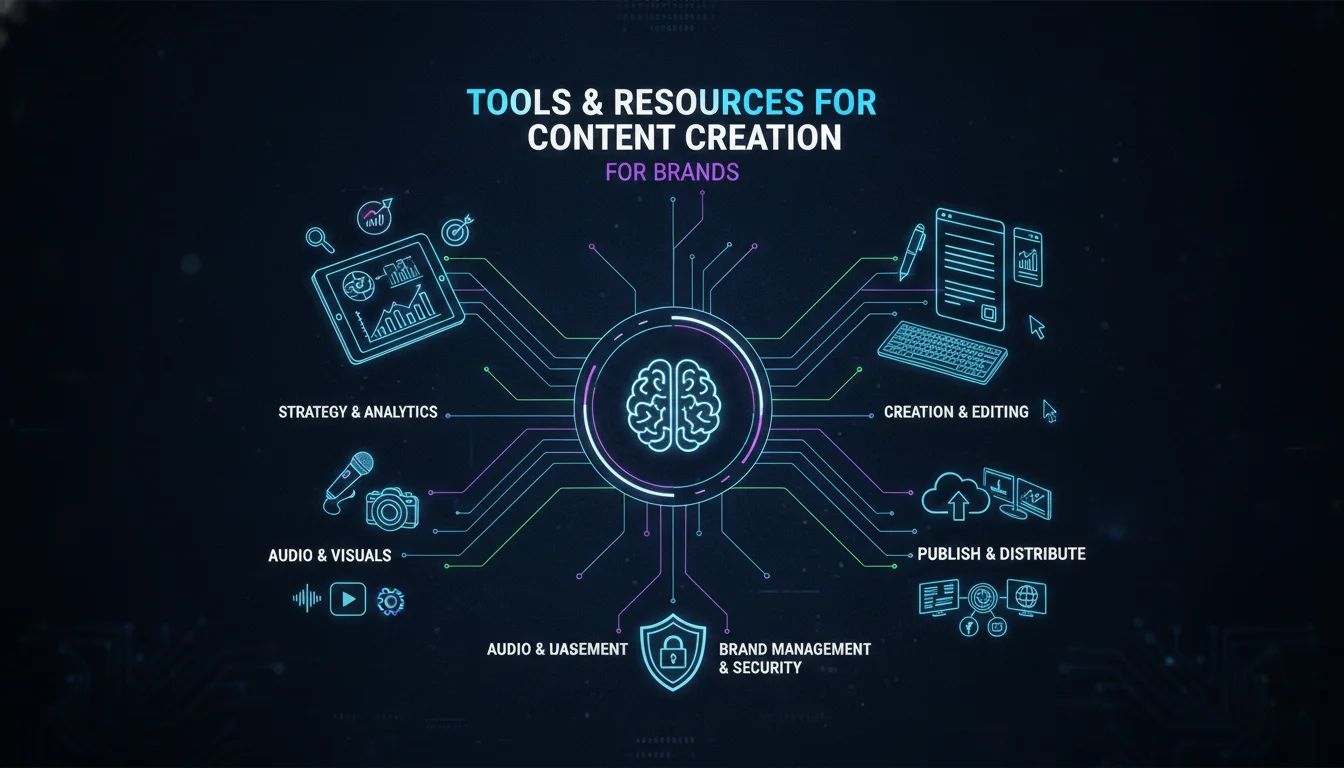
The right tools make content creation for brands faster, more consistent, and easier to scale without sacrificing quality.
Content Management Systems
Platforms like WordPress give brands a central hub for publishing, organizing, and optimizing written content. A good CMS also makes internal linking and SEO management significantly easier, both of which compound your content’s long-term value.
Graphic Design and Video Tools
Canva has become the go-to for brands that need to produce visual content at speed. For more sophisticated video production, tools like Adobe Premiere and CapCut (for short-form) give your team professional output without requiring a full production studio.
Analytics and Performance Tools
Google Analytics, combined with native platform insights from Instagram, YouTube, and LinkedIn, gives you a complete picture of how your content performs. Track engagement rate, reach, time on page, and conversion paths. These numbers tell you where to invest more and where to stop wasting effort.
Content Organization Systems
Tools like ClickUp or Notion let you build a content database: every piece you’ve published, its performance data, what was promoted, and what’s ready for repurposing. This is especially valuable when you’re scaling content production across a team.
Challenges in Content Creation (And How to Solve Them)

Content creation for brands comes with real friction points. Knowing them in advance means you can build systems to handle them before they stall your momentum.
Maintaining Consistency Without Burning Out
Inconsistent publishing is one of the most common brand content failures. The fix isn’t willpower. It’s systems. Build a content database, batch your production sessions, and lean into evergreen formats like long-form blog posts and YouTube videos that keep generating traffic long after they’re published. Evergreen content is the compound interest of brand building.
Staying Relevant Without Chasing Every Trend
Not every trend deserves your attention. The brands that chase every viral moment often end up looking desperate rather than relevant. Instead, identify the 2-3 content categories your audience consistently responds to, and own those deeply. Trend participation should feel natural, not forced.
Measuring What Actually Matters
Vanity metrics, like raw follower counts and post impressions, feel good but rarely connect to revenue. Set KPIs that tie directly to business goals: lead form submissions, email sign-ups, product page visits from content, and customer acquisition cost from organic channels.
Best Practices for Content Creation
These are the principles that separate brands with real content authority from brands that are just posting into the void.
Quality Over Volume, Always
One piece of content that genuinely helps your audience is worth more than ten pieces that don’t. According to Convince and Convert, the new standard in content marketing is simple: either you rock or you don’t. There’s no middle ground that earns audience loyalty anymore.
Build Community, Not Just an Audience
Respond to comments. Ask questions. Feature your customers’ stories. The brands that turn content into conversation are the ones that build communities, and communities are far more durable than audiences. An audience watches. A community advocates.
Make SEO Part of Your Creative Process
SEO isn’t a post-production checklist. It’s a creative input. Start with the questions your audience is already searching for, then build content that answers those questions better than anyone else. This is how content creation for brands generates compounding organic traffic over time, not just a spike on publish day.
Repurpose Strategically
A single long-form blog post can become a short-form video, three social media posts, an email newsletter section, and a podcast talking point. Smart repurposing multiplies your output without multiplying your effort. Keep records of everything you publish so you can identify repurposing opportunities quickly.
Pros and Cons of Content Creation Approaches
Pros
- Builds long-term brand authority that paid advertising cannot replicate.
- Generates compounding organic traffic through SEO-optimized content.
- Creates genuine audience relationships that translate into customer loyalty.
- Provides measurable ROI through analytics tied to business goals.
- Scales across formats: one core idea can fuel content across multiple platforms.
Cons
- Results take time. Content authority builds over months, not days.
- Requires consistent investment of time, creative energy, and sometimes budget.
- Staying consistent across formats and platforms is genuinely hard without systems.
- Measuring content’s contribution to revenue requires sophisticated attribution tracking.
Pro/Con Comparison of Content Creation Approaches
| Approach | Pros | Cons |
|---|---|---|
| In-House Content Creation | Full control over brand voice and messaging. Deep product knowledge baked into every piece. | Resource-intensive. Requires hiring or training skilled content producers. |
| Outsourced Content Creation | Access to specialized creative skills. Faster scaling without headcount growth. | Requires strong briefing and brand guidelines to maintain voice consistency. |
| Automated Content Tools | High efficiency for templated or data-driven content. Good for scaling distribution. | Risk of generic output. Works best as a support layer, not a replacement for human creativity. |
Brand Spotlight: What Great Content Creation Looks Like
Gong built one of the most recognized B2B brands in the world not through bigger ad budgets, but through smarter content. Their Gong Labs series turned their own product data into audience-first insights, giving sales professionals genuinely useful intelligence they couldn’t get anywhere else. The content was hyper-relevant, immediately applicable, and distinctly theirs. That’s the model: find the data or perspective only your brand can offer, then share it generously.
“Content is king in branding. The three elements of effective content are: hyper-relevant to your specific audience, interesting and timely enough to consume now, and immediately applicable so readers can use it right away.” – Udi Ledergor, former CMO at Gong, as shared via LinkedIn’s top content on content creation strategies for brands.
Expert Insights on Content Creation for Brands
The Convince and Convert team, led by Ann Handley, frames it this way: this era of content marketing isn’t just about storytelling. It’s about telling a true story well. Brands that hire journalists, reporters, and storytellers to produce content from the inside out are consistently outperforming brands that treat content as a marketing afterthought. The shift toward brand journalism, where content creators work inside companies to uncover and narrate real stories, is one of the most significant structural changes in content creation for brands over the past decade.
Frequently Asked Questions
How do I start content creation for my brand?
Start by defining your target audience with as much specificity as possible, then set one clear content goal tied to a business outcome. From there, choose one or two platforms where your audience already spends time and build a consistent publishing rhythm before expanding to additional channels.
How do I create content for my brand?
Begin with the questions your audience is actively searching for, then produce content that answers those questions better than anything else available. Use a mix of formats, blog posts for search authority, video for personality, and social content for community, and review your analytics every 30 days to refine what’s working.
What types of content should I create for my brand?
A strong brand content mix typically includes long-form written content for SEO, short-form video for reach and personality, email newsletters for your most engaged audience, and social posts for daily brand presence. The right balance depends on where your specific audience spends their attention.
What is the 70/20/10 rule for content?
The 70/20/10 rule suggests that 70% of your content should be original and audience-serving, 20% should be curated or shared from other credible sources, and 10% should be directly promotional. This ratio keeps your brand valuable to your audience rather than feeling like a constant sales pitch.
What is the 3-7-27 rule in branding?
The 3-7-27 rule suggests that it takes roughly three impressions for a consumer to remember a brand, seven impressions to recognize it, and 27 impressions to build genuine loyalty. This is exactly why consistent, high-frequency content creation for brands matters: every touchpoint is an impression that moves your audience closer to trust.
How can I measure the success of my content?
Go beyond vanity metrics and track engagement actions that connect to business goals: email sign-ups, lead form submissions, product page visits from content, and returning visitor rates. Use Google Analytics alongside native platform insights to build a complete picture of your content’s real impact.
Ready to build a content strategy that actually moves your brand forward? Contact Emin Media for a free brand consultation and let’s create something worth paying attention to.
Enjoyed this article?
Contact Emin Media for a free brand consultation and let's create something amazing together.
Get in TouchRelated Articles
Digital Storytelling for Brands: The Complete Guide
Digital storytelling for brands builds real audience connections through narrative. Learn proven techniques, formats, and…
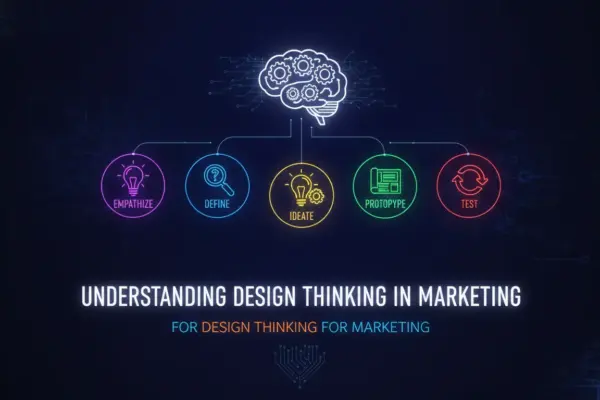
Design Thinking for Marketing: A 2026 Guide
Design thinking for marketing builds campaigns around real user needs. Learn the 5 phases, common…

Creative Direction for Video Shoots: A Complete Guide
Master creative direction for video shoots with proven steps, tools, and strategies that build brand…