Canon 550D Digital SLR Camera: Full 2026 Guide
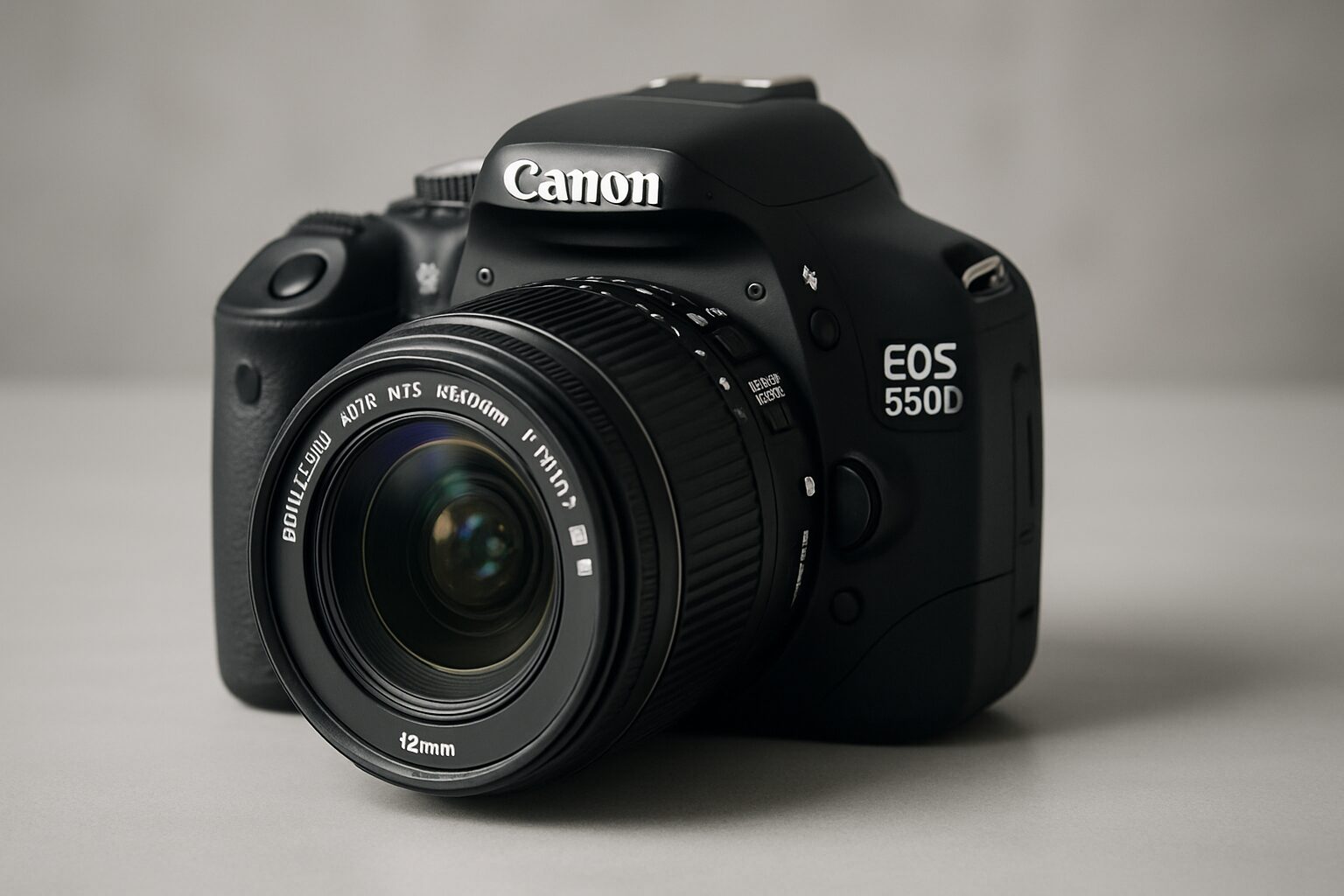
The Canon 550D digital SLR camera is an 18-megapixel DSLR released in 2010, featuring Full HD video, DIGIC 4 processing, and a 3-inch LCD. It remains a compelling budget option for beginners and video enthusiasts as of 2026.
Key Takeaways
- The slr camera features an 18.0 MP APS-C CMOS sensor paired with a DIGIC 4 image processor.
- It records Full HD 1080p video at up to 30 fps and 720p at 60 fps, with a 3.5mm external mic jack for serious audio.
- Continuous shooting reaches 3.7 frames per second, adequate for casual action and everyday photography.
- The 3.0-inch Clear View LCD delivers 1,040,000 dots for crisp image review and Live View shooting.
- Used bodies sell for roughly $200–$350, making this one of the most cost-effective entry points into Canon’s EF/EF-S ecosystem.
- Magic Lantern custom firmware adds RAW video, focus peaking, and intervalometer without replacing Canon’s original firmware.
- Discontinued in June 2012, the camera is still widely supported in the pre-owned market with abundant lens and accessory options.
Key Features of the Canon 550D Digital SLR Camera
Sensor and Processor
At the heart of the this type of camera is an 18.0-megapixel APS-C CMOS sensor measuring 22.3 × 14.9 mm with a 1.6x crop factor. This sensor pairs with the DIGIC 4 processor, enabling 14-bit analog-to-digital conversion for smooth tonal gradations and rich color depth. According to Wikipedia’s Canon EOS 550D entry, the sensor delivers a maximum resolution of 5,184 × 3,456 pixels, sufficient for poster-size prints or aggressive cropping in post.
DIGIC 4 also powers Canon’s noise reduction algorithms at higher ISO values and keeps startup times virtually instant. The chip’s efficiency supports a continuous shooting speed of 3.7 frames per second for up to 34 JPEGs or 6 RAW frames, a respectable figure for an entry-level DSLR released in 2010.
Video and Live View
One of the 550D’s defining features is Full HD 1080p video recording at 24, 25, or 30 fps, plus 720p at 50/60 fps. This made it a go-to choice for aspiring filmmakers when it launched, and it holds up surprisingly well today. The camera also supports Movie Crop mode, which uses only the center of the sensor for a 7x effective zoom in VGA resolution, useful when you can’t swap lenses mid-shoot.
Live View feeds the sensor image directly to the LCD for real-time composition from unusual angles. Manual exposure control is available in video mode, and an HDMI port enables direct playback on HDTVs with CEC control, letting the TV remote navigate menus.
Body and Controls
The 550D’s polycarbonate body measures 129 × 98 × 62 mm and weighs approximately 530 g with battery and card. Made in Japan, it feels solid for a consumer DSLR, though the grip can feel narrow for larger hands. A redesigned control layout places a Quick Control button within thumb reach, surfacing a settings screen for rapid adjustments. The mode dial covers creative zones (P, Tv, Av, M), scene modes, and a dedicated Movie position.
Canon 550D Image Quality and ISO Performance
Resolution and Dynamic Range
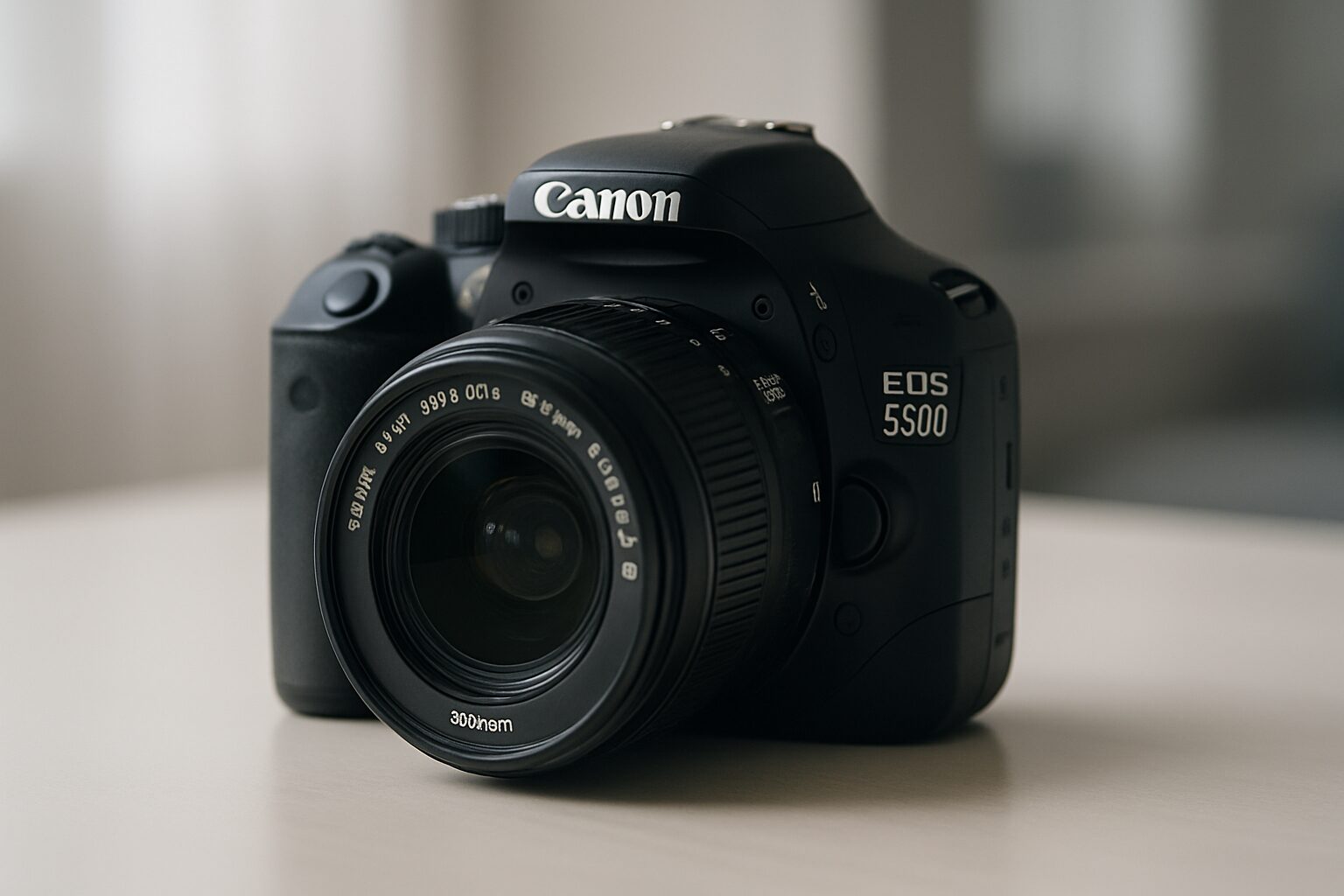
With 18 megapixels on board, the Canon 550D digital SLR camera captures fine detail that holds up in large prints and heavy crops. In RAW mode, dynamic range is generous for its class, allowing meaningful recovery of highlights and shadows in post-processing. Canon’s official specifications confirm that 14-bit processing produces images with notably low noise at base ISO settings.
By 2026 standards, 18 megapixels is modest but still adequate for web sharing, social media, and prints up to roughly A2 size. The absence of an anti-aliasing filter produces slightly sharper per-pixel output, a quality landscape photographers genuinely appreciate.
Low-Light Shooting
The native ISO range spans 100 to 6,400, expandable to 12,800. ISO 6,400 is usable with noise reduction applied, but the sweet spot for clean images sits between ISO 100 and 1,600. The CMOS design and DIGIC 4 processor keep chroma noise under control, making handheld dusk scenes feasible without flash. Shooting RAW and applying modern noise reduction tools like Lightroom or DxO PhotoLab can yield clean results at ISO 3,200.
Full HD Video Recording on the Canon 550D
Frame Rate Options and Quality
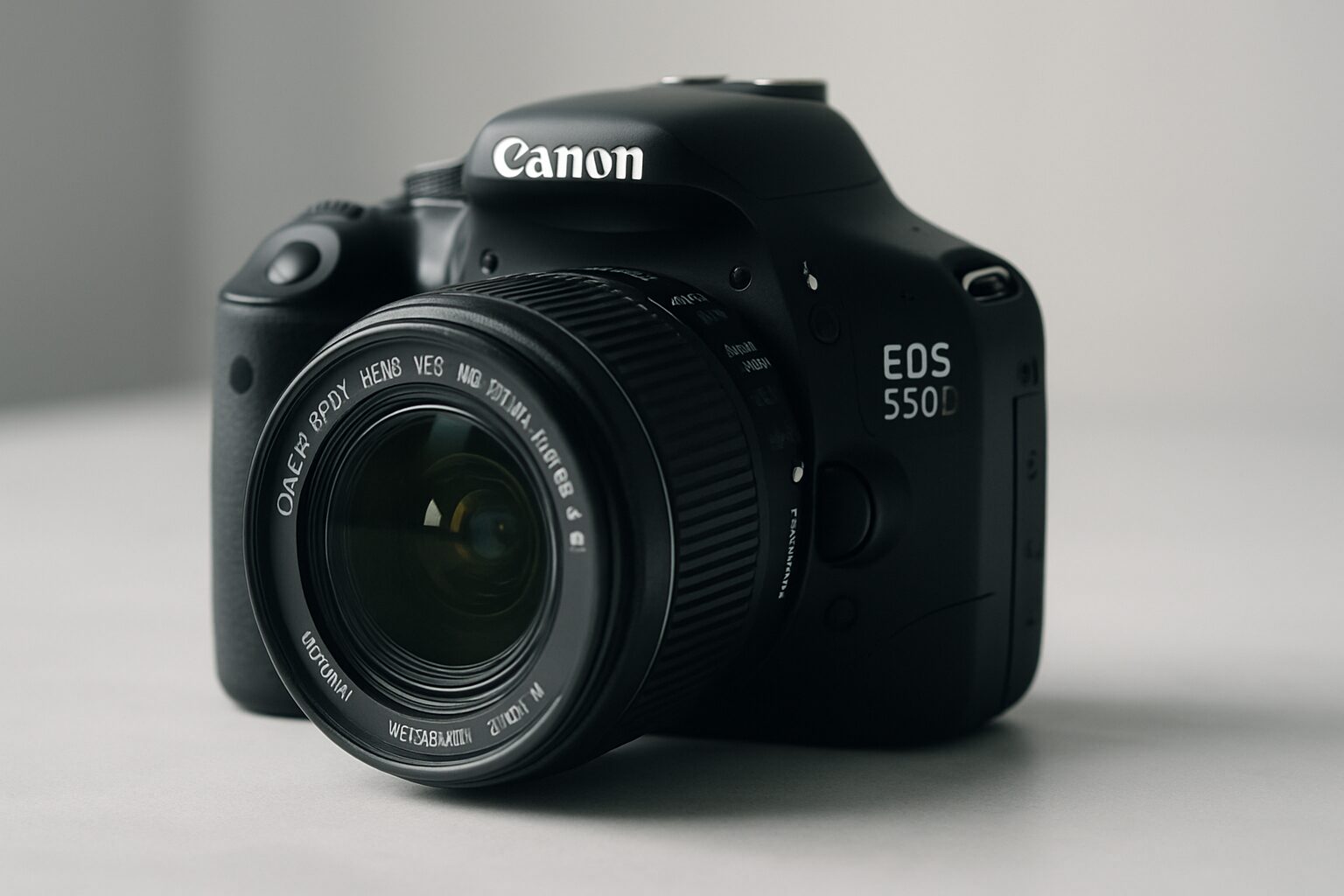
The Canon 550D digital SLR camera records 1080p at 24, 25, and 30 fps, matching cinematic motion cadences. The 720p option at 50/60 fps is ideal for smooth slow-motion sequences. While the codec is H.264 in a .MOV container, video quality remains surprisingly robust in good lighting. Videographers consistently praise its color science and the cinematic look achievable with fast prime lenses.
Maximum clip length is capped at 12 minutes in 1080p due to a 4 GB file size limit, which demands careful shot planning. This restriction can be worked around with Magic Lantern firmware, covered in detail below. The camera also supports both NTSC and PAL modes, switchable via the menu, making it usable across international broadcast standards.
Manual Controls and External Audio
Full manual exposure is available in video mode, giving users direct control over aperture, shutter speed, and ISO. This was a defining feature that separated the 550D from many competitors at launch. The built-in mono microphone picks up ambient noise adequately, but the 3.5 mm stereo mic jack is where production value jumps. Plugging in a Røde VideoMicro or a Takstar SGC-598 instantly elevates audio quality, making the Canon 550D digital SLR camera a capable vlogging and short-film tool even in 2026.
Autofocus and Exposure Systems
9-Point AF with Cross-Type Center
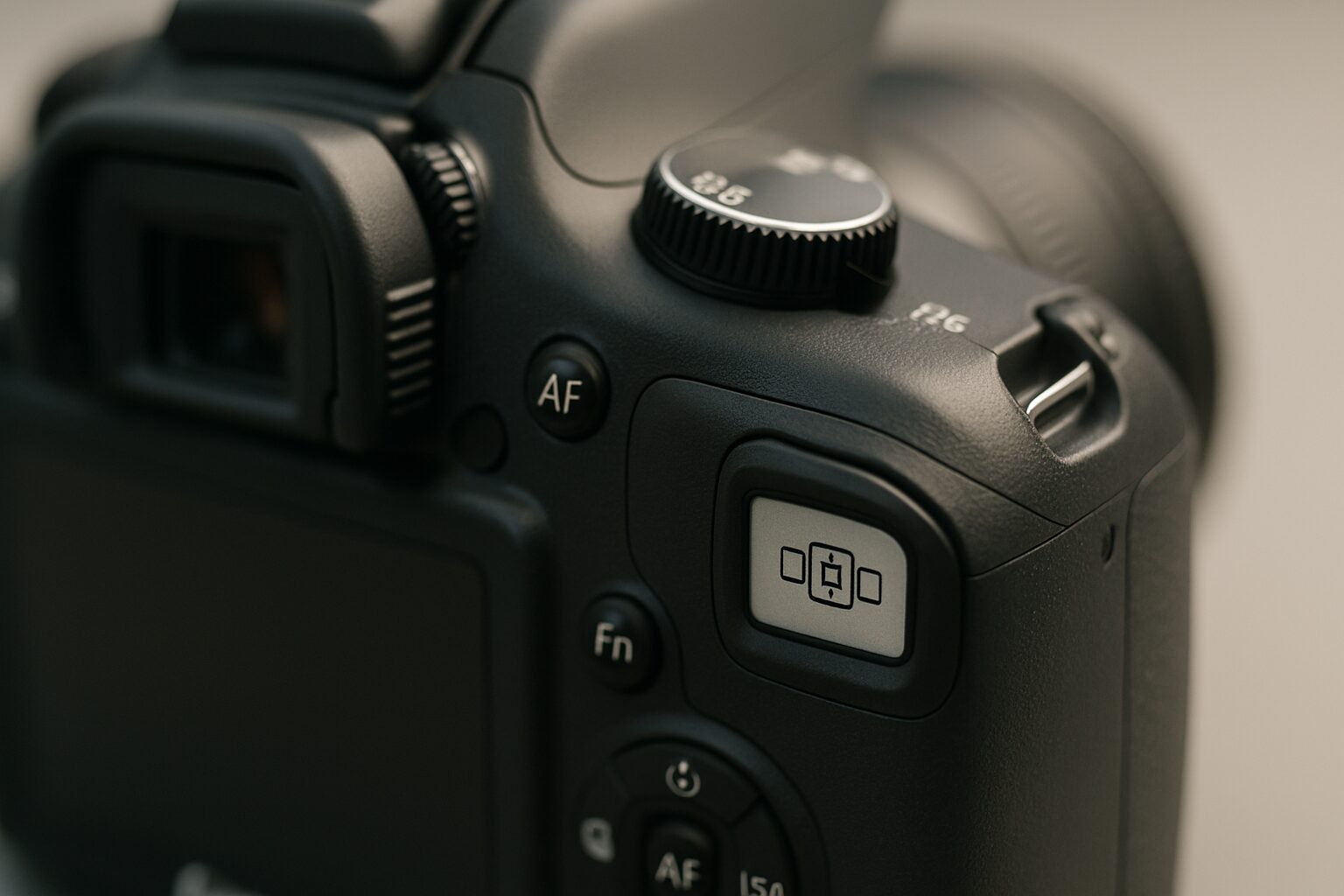
The 550D employs a 9-point phase-detection autofocus system with a cross-type center point sensitive to f/2.8 and above. While basic by modern mirrorless standards, it’s accurate in good light and sufficient for portraits, landscapes, and casual action. AI Servo mode tracks moving subjects, though the outer 8 points are line-sensitive only, which can slow acquisition in low-contrast scenes. In Live View, contrast-detect AF is available but slow, so most videographers rely on manual focus for critical work.
63-Zone iFCL Metering
Canon’s iFCL (intelligent Focus, Color, Luminance) metering system uses a 63-zone dual-layer sensor to evaluate each scene. This same technology appeared in the semi-pro EOS 7D, giving the 550D a surprisingly sophisticated exposure brain. Evaluative, spot (4% at center), partial (9% at center), and center-weighted average modes provide real flexibility. In practice, exposure consistency is excellent even in challenging backlit situations, according to long-term user reports across photography forums.
Magic Lantern: Unlocking the Canon 550D’s Potential
RAW Video and Advanced Features
The most compelling reason to own a Canon 550D digital SLR camera in 2026 may well be Magic Lantern custom firmware. This open-source add-on runs from the memory card and does not replace Canon’s firmware, so the original shooting experience stays intact. Key video upgrades include RAW video recording at lower resolutions, focus peaking, zebra stripes, waveform monitor, and manual audio gain control. For stills, it adds intervalometer, dual ISO, and trap focus, effectively transforming the camera into a feature-rich creative tool.
According to the Magic Lantern community, the 550D is one of the most stable platforms for these enhancements, with active builds maintained years after Canon discontinued the body.
“Magic Lantern turns the 550D into something Canon never intended to sell. RAW video, dual ISO, focus peaking – it’s a completely different camera once you install it.” – Magic Lantern community contributor, magiclantern.fm forums
Installation and Risks
- Verify camera firmware version (1.0.9 or later). Check the menu; if outdated, update via Canon’s official site first.
- Format a 32 GB or larger SD card in the camera. Magic Lantern requires a bootable card formatted by the camera itself.
- Download the ML build for 550D from magiclantern.fm. Use only the official build for your firmware version.
- Copy the unzipped files onto the card. Do not alter the folder structure.
- Insert the card, power on the camera, and run Firmware Update from the menu. The ML menu appears after a restart.
While thousands use Magic Lantern safely, it’s community-developed and not endorsed by Canon. Stable builds for the 550D pose minimal risk, but always test on a non-critical shoot before relying on it professionally.
Bundled Software and Firmware History
Included Software
The Canon 550D digital SLR camera ships with a software suite that includes Digital Photo Professional (DPP) for RAW processing, ZoomBrowser EX (Windows) or ImageBrowser (Mac) for image organization, and PhotoStitch for panorama assembly. EOS Utility handles tethered shooting and firmware updates directly from a computer. While newer versions of DPP are available as free downloads from Canon, the bundled disc versions remain functional for basic RAW conversion workflows.
Firmware Updates
Canon released several firmware updates for the 550D during its production life. Version 1.0.8 addressed minor operational stability issues, while version 1.0.9 is the final official release and the version required for Magic Lantern compatibility. If you’re buying used, check the firmware version in the camera menu and update to 1.0.9 via Canon’s support site before installing any third-party tools.
Best Lenses and Accessories for the Canon 550D
Starter Lens Options
The Canon EF-S 18-55mm f/3.5-5.6 IS II kit lens is a logical starting point, often found used for around $50–$70. It covers wide to short telephoto with decent optical stabilization. For portraits, the EF 50mm f/1.8 STM (the “Nifty Fifty”) delivers creamy background separation for roughly $100 new. Aspiring videographers gravitate toward the EF-S 24mm f/2.8 STM pancake for its compact size and sharp rendering. Because the Canon 550D digital SLR camera accepts both EF and EF-S mounts, hundreds of lens combinations exist across Canon, Sigma, and Tamron lineups.
Must-Have Accessories
- LP-E8 battery: The original LP-E8 (7.2 V, 1120 mAh) delivers approximately 440 shots per charge under CIPA testing conditions. Carry at least two; third-party options from Wasabi Power or BM Premium cost under $15 each.
- SD card: The 550D supports SD, SDHC, and SDXC cards. A Class 10 or UHS-I 64 GB card (around $10) handles both stills and HD video without bottlenecks.
- External microphone: A Røde VideoMicro or Takstar SGC-598 dramatically improves audio over the built-in mono mic.
- Remote switch: The RS-60E3 remote switch connects via the camera’s 2.5mm jack for shake-free long exposures and intervalometer work without Magic Lantern.
- Tripod: A fluid-head tripod like the Manfrotto Compact Action (around $70) is essential for smooth video pans.
- Camera bag: A padded bag like the Lowepro Tahoe BP 150 protects the body and a couple of lenses during transport.
Canon 550D vs. Modern Budget Cameras: Spec Comparison
Specs at a Glance
| Feature | Canon 550D | Canon EOS Rebel T7 | Canon EOS R50 |
|---|---|---|---|
| Sensor Resolution | 18.0 MP APS-C CMOS | 24.1 MP APS-C CMOS | 24.2 MP APS-C CMOS |
| ISO Range | 100–6400 (H: 12800) | 100–6400 (H: 12800) | 100–32000 (H: 51200) |
| Continuous Shooting | 3.7 fps | 3.0 fps | 12 fps (electronic) |
| Video Max. Quality | 1080p 30/25/24 fps | 1080p 30/25/24 fps | 4K 30p, 1080p 120p |
| Autofocus System | 9-point (1 cross-type) | 9-point (1 cross-type) | Dual Pixel CMOS AF II (651 zones) |
| LCD Screen | 3.0″ 1,040k dots, fixed | 3.0″ 920k dots, fixed | 3.0″ 1.62M dots, vari-angle touch |
| Weight (body only) | 530 g | 475 g | 375 g |
| Release Year | 2010 | 2018 | 2023 |
| Current Price | Discontinued (used ~$200–$350) | $479 (with lens) | $799 (with lens) |
Which Camera Is Right for You?
If you’re on a tight budget and value manual video controls plus Magic Lantern expansion, a used Canon 550D digital SLR camera is hard to beat. For beginners who want built-in Wi-Fi and a modern interface straight out of the box, the Rebel T7 delivers. If you need 4K video, face-tracking autofocus, and a compact mirrorless body, the EOS R50 justifies its higher price. All three share the Canon EF/EF-S mount ecosystem, so lenses migrate with you as you upgrade.
“For anyone learning photography on a budget, the 550D remains one of the most capable used DSLRs available. The image quality, lens compatibility, and community support are genuinely impressive for a camera released in 2010.” – Photography Blog, photographyblog.com
Pros and Cons
Pros
- Exceptional value: Used bodies for $200–$350 give you a capable 18 MP DSLR with a massive lens ecosystem at a fraction of modern camera prices.
- Full HD video with manual controls: 1080p at multiple frame rates plus full aperture, shutter, and ISO control in video mode still impresses for the price.
- Magic Lantern compatibility: One of the most stable Magic Lantern platforms, adding RAW video, focus peaking, dual ISO, and dozens of advanced tools.
- Broad lens compatibility: Accepts hundreds of Canon EF and EF-S lenses, plus third-party options from Sigma and Tamron.
- 3.5mm mic jack: External audio input is a genuine differentiator for video work at this price point.
- Proven 63-zone iFCL metering: Borrowed from the semi-pro EOS 7D, this system handles tricky lighting with consistency.
Cons
- No 4K video: Maximum internal recording is 1080p. Modern cameras at similar used prices increasingly offer 4K.
- Slow continuous shooting: 3.7 fps is adequate for casual action but limiting for sports or wildlife photography.
- No Wi-Fi or Bluetooth: Image transfer requires a cable or card reader. No remote control via smartphone without third-party adapters.
- Fixed LCD screen: The 3.0-inch display doesn’t tilt or articulate, limiting shooting angles for video and self-recording.
- Aging autofocus in Live View: Contrast-detect AF in Live View and video mode is noticeably slow compared to modern Dual Pixel CMOS AF systems.
- Discontinued support: Canon no longer provides firmware updates or official repairs for this body.
Where to Buy a Canon 550D in 2026
Used Marketplaces
The Canon 550D digital SLR camera has been officially discontinued since June 2012, so you’ll only find it pre-owned. Reputable platforms include MPB, KEH Camera, UsedPhotoPro, and eBay. Bodies in good condition average $200–$300, while a kit with the 18-55mm IS lens typically lists between $280–$380. Always buy from sellers with high ratings and clear return policies.
What to Check When Buying Used
- Shutter count: The 550D’s shutter is rated for approximately 100,000 actuations. Tools like EOSCount can read this figure from a JPEG EXIF file.
- Sensor condition: Shoot at f/16 against a plain white wall and zoom in on the LCD to check for dust spots or scratches.
- Battery compartment and pins: Inspect for corrosion. Original LP-E8 batteries lose capacity over time; budget for replacements.
- All dials and buttons: Confirm the mode dial, control wheel, and rear buttons respond crisply without sticking.
- Memory card slot: Insert an SD card to verify it locks and reads correctly.
- Hot shoe and flash: Test with an external flash unit if possible to confirm the contact points are clean.
Frequently Asked Questions
Is the Canon 550D discontinued?
Yes, Canon ended production of the EOS 550D in June 2012, shortly after launching the EOS 650D. The camera remains widely available on the used market through platforms like MPB, KEH Camera, and eBay, typically priced between $200 and $350 for a body in good condition.
What are common problems with the Canon 550D?
Typical issues include a sticky shutter button, erratic mode dial behavior, and a drained internal clock battery after years of storage. The rubber grip can peel with heavy use, but these problems are generally repairable at low cost by a camera technician or through DIY repair kits.
Can the Canon 550D shoot 4K video?
No, the maximum internal recording resolution is 1080p at up to 30 fps. With Magic Lantern RAW video enabled, you can capture cropped lower-resolution RAW footage that can be upscaled in post, but it is not true 4K capture.
What battery does the Canon 550D use?
It uses the LP-E8 Lithium-Ion rechargeable battery (7.2 V, 1120 mAh), rated for approximately 440 shots per charge under CIPA conditions. Compatible third-party batteries from Wasabi Power and BM Premium are widely available for under $15 each.
Is the Canon 550D good for beginners in 2026?
Absolutely. Its straightforward controls, massive lens ecosystem, and low used price make it an excellent platform for learning photography fundamentals. The built-in Guide Mode walks newcomers through settings step by step, and Magic Lantern adds advanced tools as skills develop.
What lens mount does the Canon 550D use?
The camera uses the Canon EF/EF-S lens mount, compatible with hundreds of Canon lenses and third-party optics from Sigma and Tamron. EF-S lenses are optimized for APS-C sensors, while full-frame EF lenses work without vignetting on the 550D’s 1.6x crop sensor.
Enjoyed this article?
Contact Emin Media for a free brand consultation and let's create something amazing together.
Get in TouchRelated Articles
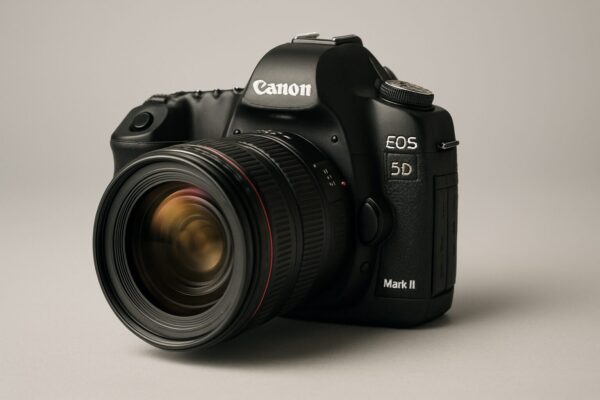
Canon 5D Mark II Digital SLR Camera Review 2026
The Canon 5D Mark II digital slr camera delivers full-frame quality under $500. Read our…
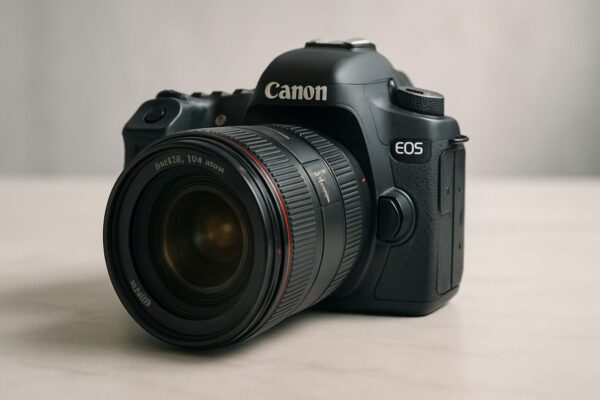
Best Canon Digital SLR Camera: Top Picks for 2026
Find the best Canon digital SLR camera for your style. We rank top DSLRs from…
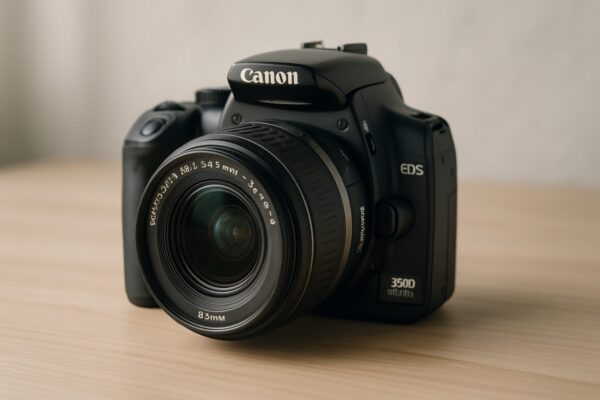
Canon 350D Digital SLR Camera: 2026 Buyer’s Guide
The Canon 350D digital SLR camera delivers film-like 8MP images for under $120 used. Is…