Canon 5D Mark II Digital SLR Camera Review 2026
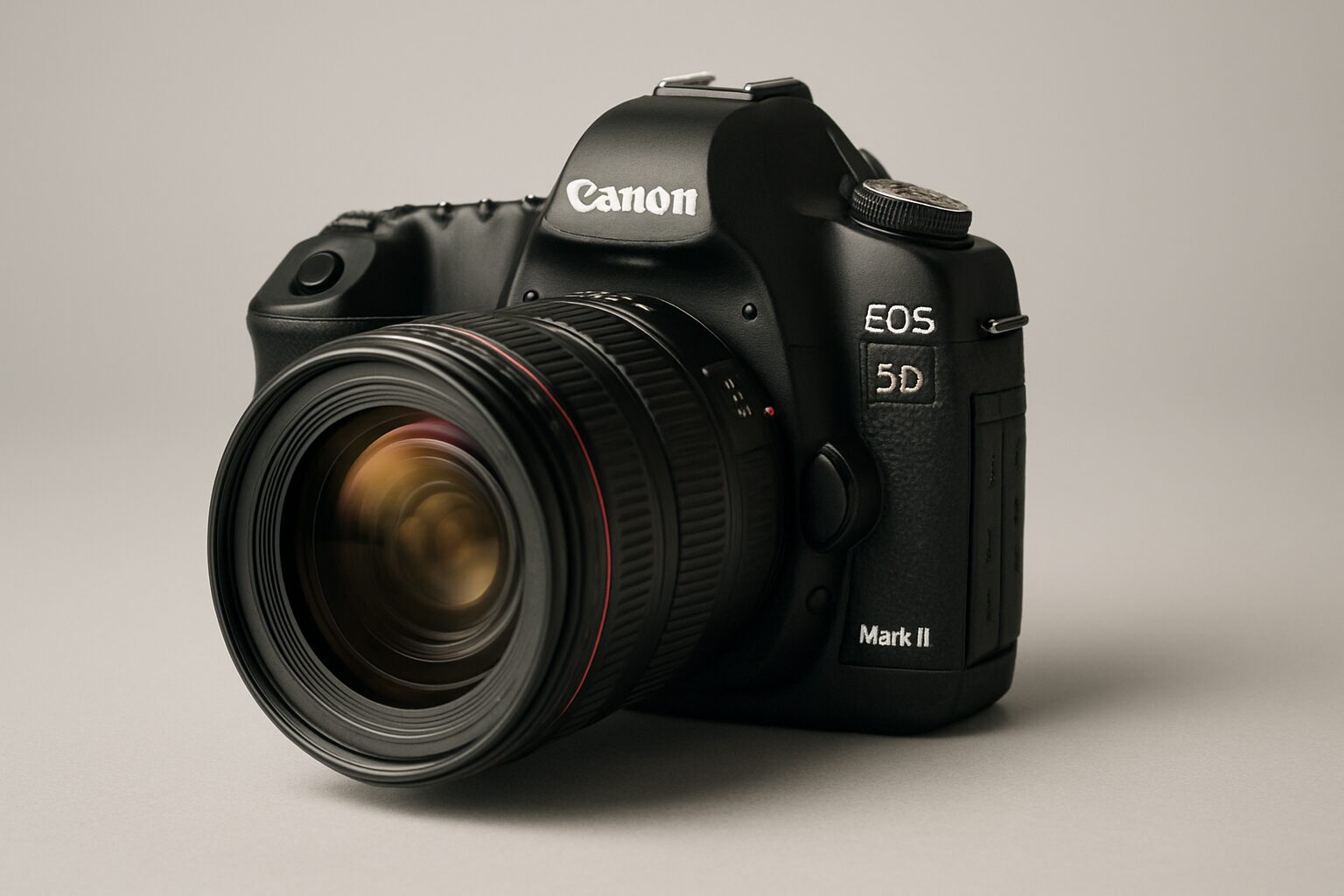
Canon 5D Mark II Digital SLR Camera Review in 2026
The Canon 5D Mark II digital SLR camera is a 21.1-megapixel full-frame DSLR launched in September 2008, offering 1080p video, strong low-light performance, and a magnesium alloy body. It remains one of the most capable affordable full-frame options on the used market today.
Key Takeaways
- The slr camera features a 21.1MP full-frame CMOS sensor and 1080p HD video recording, the first Canon DSLR to offer both.
- Used copies sell for as little as $289 to $500, making full-frame image quality accessible to almost any budget.
- Its legendary low-light performance and magnesium alloy body keep it relevant for portrait, landscape, and studio work in 2026.
- The 9-point autofocus system and absence of 4K video are real limitations for action shooters and modern video creators.
- Magic Lantern firmware and a wide Canon EF lens ecosystem extend the camera’s creative range well beyond its factory specs.
- Understanding its strengths and limits helps you decide whether this body fits your workflow before you buy.
Canon 5D Mark II Digital SLR Camera: An Enduring Full-Frame Legend
A Brief History
The this type of camera was announced on September 17, 2008, as the direct successor to the original Canon EOS 5D. According to Wikipedia, it was the first Canon EOS camera to feature video recording, a move that permanently reshaped how photographers and filmmakers thought about DSLRs. Priced at US$2,699 at launch, it quickly earned a reputation among professionals for image quality and video capabilities that no competitor could match at the time.
Key Specifications at a Glance
The this kind of slr camera pairs a 21.1-megapixel full-frame CMOS sensor with the DIGIC 4 image processor. It shoots at 3.9 frames per second, covers an ISO range of 100 to 6400 (expandable to 50 to 25,600), and records full HD video at 1920×1080. The 3.0-inch LCD delivers 920,000 dots of resolution, and the pentaprism viewfinder provides 98% coverage at 0.71x magnification. The body is built from magnesium alloy and weighs 810 grams. It accepts CompactFlash Type I and II cards, and its burst buffer handles up to 78 JPEGs or 13 RAW files before slowing down.
Who Should Consider This Camera Today?
As of 2026, the the 5d mark ii digital slr camera appeals to photography students learning full-frame technique, budget-minded enthusiasts upgrading from crop-sensor bodies, and working professionals who need a reliable backup. Its sensor still ranks well for color rendition and dynamic range, making it a strong choice for portraits, landscapes, and studio setups where burst speed is not the priority. The camera’s native ISO range and 14-bit RAW files also make it a solid option for astrophotography, where low dark current and long-exposure noise reduction at ISO 1600 matter most.
Why the Canon 5D Mark II Digital SLR Camera Remains Relevant in 2026
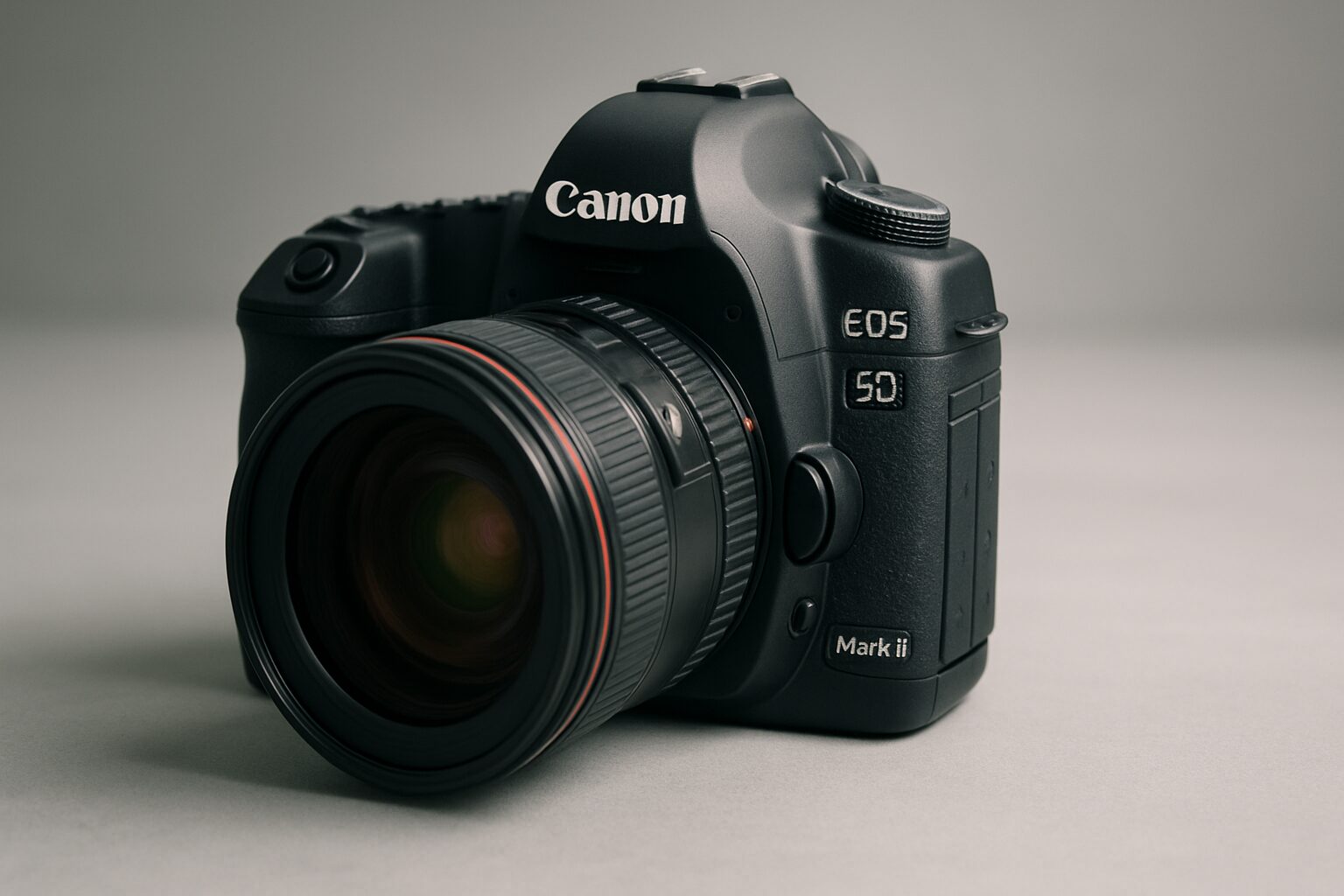
Image Quality That Still Impresses
The 21.1-megapixel resolution produces prints up to A2 size without upscaling. The full-frame sensor’s large pixels excel in low light, delivering clean images at ISO 3200 and usable shots at ISO 6400. As noted by All Things Photography, “low light photography with the Canon EOS 5D Mark II is amazing.” Dynamic range at base ISO sits around 11.5 stops, which still holds up against many entry-level full-frame mirrorless cameras. That latitude lets photographers recover highlight and shadow detail without banding, preserving the warm, accurate color rendering that Canon shooters have relied on for years.
“The Canon EOS 5D Mark II redefined what a DSLR could do. Its full-frame sensor and 1080p video capability created an entirely new category of hybrid imaging tools that the industry is still building on today.” – Camera Legend retrospective, 2024
Video Capabilities That Changed the Industry
The camera was a pioneer in DSLR video, recording full HD 1920×1080 clips with a 4GB per-file cap, which equates to roughly 12 minutes of continuous footage. It lacks continuous autofocus during recording, so manual focus is essential. That limitation did not stop filmmakers. Movies, TV productions, and commercial campaigns adopted this body for its cinematic depth-of-field aesthetic, and used copies still appear on indie film sets today. The uncropped sensor readout gives a true full-frame field of view, a quality that many modern crop-sensor video cameras still cannot replicate at this price point.
The Magic of the Full-Frame Sensor
Full-frame sensors are prized for shallow depth of field and low-light advantage. The 36x24mm sensor in the canon 5d delivers exactly that. Paired with fast prime lenses like the Canon EF 50mm f/1.8 STM or the classic EF 85mm f/1.2L II, the camera produces beautifully blurred backgrounds that crop-sensor DSLRs and smartphones still struggle to match. That optical quality is one reason this body keeps selling on the used market years after Canon discontinued it.
Pros and Cons
Pros
- Exceptional image quality: 21.1MP full-frame sensor with roughly 11.5 stops of dynamic range at base ISO.
- Outstanding low-light performance: Clean results at ISO 3200, usable shots at ISO 6400.
- Affordable full-frame entry: Used bodies available from $289 to $500 as of 2026.
- Durable build: Magnesium alloy construction with weather-resistant sealing.
- Broad lens compatibility: Accepts the full Canon EF ecosystem, including decades of professional glass.
- Expandable via Magic Lantern: Open-source firmware adds focus peaking, zebras, higher bitrates, and intervalometer functions.
Cons
- Dated autofocus: 9-point system with only 1 cross-type center point struggles with fast-moving subjects.
- No 4K video: Tops out at 1080p 30fps with no continuous autofocus during recording.
- Slow burst rate: 3.9 fps limits usefulness for sports and wildlife.
- CompactFlash only: No SD card slot means sourcing older, sometimes pricier storage media.
- No built-in Wi-Fi: Wireless transfer requires an optional WFT-E4 transmitter or third-party adapter.
Canon 5D Mark II vs. Modern Entry-Level Full-Frame Cameras
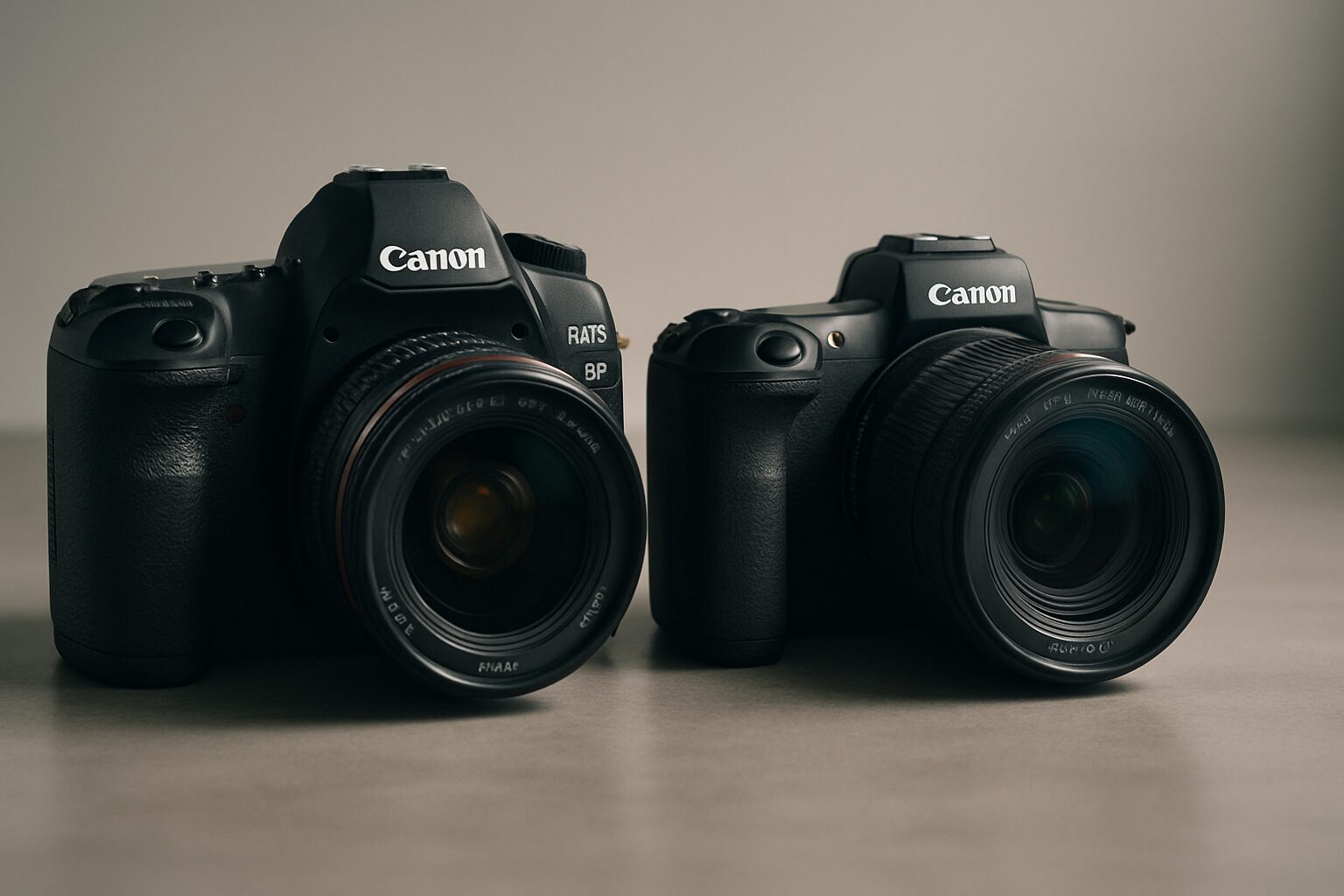
Comparison with Canon 5D Mark III and 5D Mark IV
The slr camera holds its own on resolution but falls behind its successors in autofocus, burst speed, and video. The table below shows where each body stands.
| Feature | Canon 5D Mark II | Canon 5D Mark III | Canon 5D Mark IV |
|---|---|---|---|
| Megapixels | 21.1 MP | 22.3 MP | 30.4 MP |
| ISO Range (normal) | 100–6400 | 100–25600 | 100–32000 |
| FPS | 3.9 fps | 6 fps | 7 fps |
| AF Points | 9 (1 cross-type) | 61 (41 cross-type) | 61 (41 cross-type) |
| Video | 1080p 30fps | 1080p 30fps | 4K 30fps |
| Screen | 3.0″ 920k dots | 3.2″ 1.04M dots | 3.2″ 1.62M dots |
| Weight | 810 g | 950 g | 890 g |
| Used Price (2026) | ~$300–$500 | ~$600–$900 | ~$1,100–$1,500 |
Used Market Value Proposition
The this type of camera appears on Amazon listings for as little as $289, with excellent-condition or renewed copies priced around $500. That is a remarkable deal for a full-frame body. A new entry-level full-frame mirrorless camera like the Canon EOS RP typically costs three to four times more, and it still cannot match the 5D Mark II’s optical rendering with fast prime glass.
When to Choose Newer Models
If you need reliable continuous autofocus for sports or wildlife, the 9-point system will feel limiting fast. Shooting regularly at ISO 12800 or higher also exposes the sensor’s age, since the 5D Mark III and Mark IV handle high-ISO noise considerably better. For video work that demands autofocus, even a modern crop-sensor mirrorless body will outperform this camera. Know your priorities before committing.
Buying a Used Canon 5D Mark II: A Step-by-Step Guide
Step 1: Verify Shutter Count and Physical Condition
Shutter count is the primary indicator of wear on any used DSLR. Use EOSInfo on Windows or ShutterCount on Mac to read the actuations from the camera’s EXIF data. Canon does not publish an official shutter life rating for this body, but units with very high counts may need a shutter replacement sooner. Budget roughly $200 to $300 for a Canon service center shutter swap if needed. Inspect the body for cracked grips, loose port covers, and worn rubber seals.
Step 2: Check Sensor and Mirror for Dust or Damage
Set the camera to aperture priority at f/16 or smaller, shoot a bright white surface, and zoom in on the image to spot dust or scratches. The this kind of slr camera includes an integrated ultrasonic sensor cleaning system, but older bodies may still carry stubborn dust that needs professional attention. Also inspect the mirror box to confirm the mirror is clean and the focusing screen is undamaged.
Step 3: Test All Functions and Accessories
Confirm the LP-E6 battery (1800 mAh) holds a full charge and that a genuine Canon charger is included. Test write speeds with a known UDMA-7 CompactFlash card. Check the LCD for dead pixels, the hot shoe for proper flash communication, and every dial and button for responsiveness. The camera should complete a full burst of around 13 RAW files without stalling. A 32GB CF card holds roughly 500 to 600 RAW files, so bring one to the inspection if possible.
Getting the Most Out of Your Canon 5D Mark II for Still Photography
Optimal Settings for Wedding and Portrait Work
For weddings, many photographers built their entire workflow around the the 5d mark ii digital slr camera’s center AF point in One-Shot mode, focusing and then recomposing. As shared by All Things Photography, “Using the central focussing point on ‘one shot’ auto focussing, I lifted my camera quickly, aimed the central point on the ring and fired a few shots. All of them were spot on!” Pair the body with a speedlite for fill flash and shoot RAW to preserve highlight detail in bright reception lighting.
Mastering Low-Light Shooting
The 5D Mark II’s high-ISO performance rivals many modern APS-C cameras. In dim environments, ISO 3200 and ISO 6400 are both usable with confidence. Enable in-camera high-ISO noise reduction for JPEG delivery, and use manual exposure to avoid underexposure, which amplifies noise more than a slightly higher ISO setting would. The camera’s 14-bit RAW files provide significant latitude for shadow recovery in post-processing software like Adobe Lightroom or Capture One.
Lens Pairings That Maximize Sharpness
To extract the best from the 21.1MP sensor, pair it with sharp glass. The Canon EF 24-105mm f/4L IS USM was the original kit lens and remains a versatile workhorse. Prime lenses like the EF 85mm f/1.8 USM and the budget-friendly EF 40mm f/2.8 STM punch well above their price. Vintage manual-focus lenses adapted via EF mount can also produce characterful results, and the deliberate pace of manual focusing suits the camera’s overall shooting rhythm.
Landscape, Nature, and Macro Photography Tips
For landscapes, use a tripod, mirror lock-up, and a remote release to maximize sharpness. Stop down to f/8 to f/11 for edge-to-edge clarity while avoiding diffraction. In nature photography, the 5D Mark II’s quiet shutter mode helps avoid startling wildlife. One user review on All Things Photography describes capturing a bee in flight using the center AF point and AI Servo mode, demonstrating that the camera can handle fast-moving natural subjects when technique compensates for the limited AF array. The 21.1MP resolution also allows significant cropping while retaining enough detail for large prints.
Unlocking the Cinematic Potential of the Canon 5D Mark II
Video Recording Basics
The camera records video at 1920×1080 at 30 frames per second, with a 4GB per-clip limit of roughly 12 minutes. Manual focus is essential since continuous autofocus is not available during recording. The HDMI output supports external monitoring, and the 3.5mm microphone input accepts an external stereo mic like the Rode VideoMic for significantly better audio than the built-in option.
Firmware Upgrades and Magic Lantern
Canon released several official firmware updates for this body, resolving the early “black dot” video highlight artifact and adding manual audio control. The latest official firmware is version 2.1.2, available directly from Canon USA Support. Beyond official updates, the open-source Magic Lantern firmware adds focus peaking, zebra patterns, higher bitrates, custom white balance presets, focus assist tools, and a built-in intervalometer for timelapse. These additions extend the canon 5d’s video capabilities well beyond what Canon originally shipped, making it a genuinely capable filmmaking tool even by current indie production standards.
“Magic Lantern transformed the 5D Mark II from a capable DSLR into a legitimate cinema tool. Features that cost thousands of dollars in dedicated video equipment became accessible overnight.” – Magic Lantern community documentation, widely cited in DSLR filmmaking forums
Audio and Monitoring Solutions
For serious video work, connect an external recorder or a quality microphone to the 3.5mm jack. The camera lacks a headphone output for real-time monitoring, so users typically rely on visual audio meters or external recorders with built-in monitoring. The HDMI Type C port connects to an external monitor for precise focus and framing, which is especially useful when shooting solo without a focus puller.
Canon 5D Mark II Accessories and Maintenance
Batteries and Grips for Extended Shooting
The LP-E6 battery (1800 mAh) is rated for approximately 850 shots per charge under CIPA standards. Live View and video recording reduce that number significantly, so carry at least one spare. The Canon BG-E6 battery grip holds two LP-E6 packs or six AA cells, essentially doubling shooting time while improving vertical handling and replicating portrait-orientation controls.
Recommended CF Cards and Storage
The slr camera accepts CompactFlash Type I and II cards. Modern UDMA-7 cards like the SanDisk Extreme Pro (rated at 160 MB/s) ensure fast buffer clearing after a burst. A 32GB card holds roughly 500 to 600 RAW files. Always format cards in-camera rather than on a computer to avoid file system errors that can corrupt data mid-shoot.
Cleaning the Full-Frame Sensor
Dust on a full-frame sensor becomes visible at small apertures. The 5D Mark II includes a self-cleaning sensor unit that uses ultrasonic vibrations each time the camera powers on. For stubborn spots, start with a rocket blower. If that fails, a sensor swab with Eclipse fluid works safely. Professional cleaning services typically charge $50 to $80 and are worth it for a body you plan to use long-term.
Common Problems and How to Solve Them
Autofocus Challenges
The 9-point AF system is the weakest link by modern standards. Only the center point is cross-type and sensitive to f/2.8. In low light, the camera may hunt or fail to lock. The practical fix: stick to the center point, use faster lenses, or add an external flash with an AF-assist beam. For static subjects, live view’s contrast-detect AF is slower but accurate. For moving subjects, AI Servo mode with continuous shooting can yield a solid hit rate in good light, though it requires more discipline than modern phase-detect systems demand.
Mirror and Shutter Durability
Many users report shutter counts exceeding 100,000 actuations without failure. If the mirror mechanism becomes noisy, a service center can inspect and lubricate it. A shutter replacement from Canon service centers runs roughly $200 to $300, which is still economical given the body’s current used price of $300 to $500. That repair essentially resets the mechanical life of the camera.
Known Issues and Firmware Fixes
Early firmware versions produced a “black dot” artifact in video highlights, resolved by firmware 2.0.4. The “Err 70” error occasionally appeared due to card compatibility issues. Using genuine Canon batteries and UDMA-compliant CF cards minimizes both errors. Always update to firmware 2.1.2 from the Canon USA support page before shooting a critical assignment.
Canon 5D Mark II Digital SLR Camera: Final Verdict
Is It Still Worth It?
If you can work within its autofocus limitations and live without 4K video, the Canon 5D Mark II digital SLR camera is an exceptional value. Its image quality holds up to real scrutiny, and the full-frame sensor encourages a more deliberate, considered approach to photography. For under $500, you get a body that once sat in the hands of leading photojournalists and award-winning filmmakers.
Overall Recommendation
The Canon 5D Mark II digital SLR camera is ideal for portrait, landscape, and studio photographers on a budget. It is also a perfect entry point into the Canon EF ecosystem, where decades of excellent glass are available at every price point. Avoid it if you need fast action tracking or video autofocus. For everything else, it remains a genuinely capable performer that earns its place in any serious photographer’s kit.
Want to build a visual brand around imagery this compelling? Explore what Emin Media can create for you, or read our guides on brand storytelling and visual content strategy to see how great photography fits into a complete marketing system. Let’s build something bold together. Contact Emin Media for a free brand consultation.
Frequently Asked Questions
What are the common problems with the Canon 5D Mark II?
Common issues include autofocus hunting in low light, shutter wear at high actuations, and sensor dust accumulation. Early units may show a “black dot” video artifact, fixed by updating firmware to version 2.0.4 or later. The mirror mechanism can also become noisy over time but is serviceable at most Canon-authorized centers.
Can the Canon 5D Mark II shoot 4K video?
No. The Canon 5D Mark II digital SLR camera records up to 1080p Full HD at 30 frames per second. It has no native 4K capability. Magic Lantern firmware adds higher bitrates and enhanced video tools, but the resolution ceiling remains 1080p.
Is the Canon 5D Mark II good for sports photography?
It can handle casual sports with the center AF point in AI Servo mode and a fast lens, but its 3.9 fps burst rate and 9-point autofocus system are limiting compared to newer bodies. For professional action photography, a Canon 7D Mark II or a current mirrorless option will serve you better.
What memory cards does the Canon 5D Mark II use?
The Canon 5D Mark II uses CompactFlash Type I and II cards only. It does not accept SD cards. UDMA-7 cards like the SanDisk Extreme Pro deliver the fastest write speeds for clearing the buffer after a burst.
Does the Canon 5D Mark II have built-in Wi-Fi?
No. Wireless transfer requires the optional WFT-E4 or WFT-E4 II wireless file transmitter. Some users also use a CF-to-SD adapter with a Wi-Fi SD card, though compatibility varies and transfer speeds are slower than a direct cable connection.
Is the Canon 5D Mark II compatible with EF-S lenses?
No. The full-frame mirror clearance only accommodates Canon EF lenses. Attempting to mount an EF-S lens risks damaging the camera’s mirror box and is not recommended under any circumstances.
How long does the battery last on a Canon 5D Mark II?
The LP-E6 battery is rated for approximately 850 shots per charge under CIPA standards. Live View and video recording reduce that number considerably. Carrying at least one spare battery is strongly recommended for any shoot lasting more than a few hours.
Enjoyed this article?
Contact Emin Media for a free brand consultation and let's create something amazing together.
Get in TouchRelated Articles
Canon 550D Digital SLR Camera: Full 2026 Guide
The Canon 550D digital slr camera still delivers in 2026. Specs, Magic Lantern tips, lens…
Best Canon Digital SLR Camera: Top Picks for 2026
Find the best Canon digital SLR camera for your style. We rank top DSLRs from…
Canon 350D Digital SLR Camera: 2026 Buyer’s Guide
The Canon 350D digital SLR camera delivers film-like 8MP images for under $120 used. Is…