25+ Brand Style Guide Examples Worth Studying in 2026
Brand style guide examples are real documents from companies like Apple, Coca-Cola, Discord, and Foursquare that show how to define logo usage, color palettes, typography, voice, and imagery.
Key Takeaways
- guide examples are real documents that define logo rules, colors, type, voice, and imagery, and studying them beats reading theory.
- Top sources include Canva’s collection of 50 style guides, brandingstyleguides.com’s PDF archive, Behance’s 10,000+ branding projects, Wix’s 18 examples, and Frontify’s 19 digital guideline case studies.
- A complete guide includes logo usage, color palette, typography, tone of voice, and clear do/don’t examples.
- Use this type of examples to extract structure and rules, not to copy specific visuals or colors.
- Follow a five-step process to build your own guide, then choose PDF or digital format based on how your team actually works.
- As of 2026, digital brand hubs are overtaking static PDFs for teams that need to update guidelines often.
What Are Brand Style Guide Examples?
Definition and Core Purpose
A brand style guide is a document that outlines the core pieces of a brand: logo usage, color palette, typography, imagery, and tone of voice. Some teams call it brand guidelines, a brand manual, brand standards, or a brand book, but the job is the same. this kind of guide examples are simply real-world versions of these documents, pulled from companies that have formalized their visual and verbal identity. Think of them as a shared rulebook for anyone touching brand assets, from your in-house designer to a freelance agency three time zones away.
The core purpose is consistency, full stop. When a brand shows up across websites, social feeds, packaging, and slide decks, a style guide keeps every contributor playing from the same sheet music. Skip it, and you’ll see a stretched logo here, a slightly-off blue there, and messaging that drifts further from the brand’s actual personality with every campaign.
Why Real-World Examples Matter
Studying the style guide examples beats reading abstract theory because they show how real organizations solved real branding problems. Foursquare’s brand manual, for instance, gives detailed rundowns for the rules and guides to each design element a brand needs to stay consistent, including logo files and color palettes. It’s a clear demonstration of how a tech company turned a playful, location-based identity into hard visual rules anyone can follow.
Real examples also show the range of formats and depth teams actually use. Some are lean and personal, like designer Amanda Michiru’s identity guide, which covers logo construction and primary and secondary palettes in just the essentials needed for a solid brand. Others go deep: the FIFA World Cup 2026 brand guidelines run 184 pages, according to the brandingstyleguides.com archive.
The Difference Between Static PDFs and Digital Guidelines
A static PDF brand style guide is a fixed file, usually downloaded and passed around by email. The brandingstyleguides.com archive lists documents with page counts and publication years ranging from a 7-page guide for Ville de Caen in 2026 to a 500-page guide for Ajuntament de Barcelona in 2025. These files are easy to archive, but they go stale fast.
A digital brand hub is the online, interactive alternative. According to Frontify’s guide to brand guidelines, the days of using static documents to house brand guidelines are over, since digital versions are easier to navigate, access, update, and share than PDFs. Frontify points to Bang & Olufsen as a brand hub that pairs strong design with dead-simple navigation.
“Successful brand guidelines help internal teams and external partners uphold a consistent brand identity when creating offline and digital experiences,” notes Frontify’s guide to brand guidelines, pointing to online access, practical application examples, and comprehensive detail as the three hallmarks of guides that actually get used.
Essential Elements of a Brand Style Guide
Logo Usage and Variations
Every brand style guide has to spell out how the logo can and cannot be used. That means minimum sizes, clear space, approved color variations, and a gallery of what not to do. Foursquare’s guide includes the correct color palette and proper use of the logotype, with separate downloadable logo files. Many strong examples include a “do not” section showing a stretched, recolored, or rotated logo, because someone, somewhere, will try it.
Logo rules also extend to sub-brands and co-branding situations. Larger organizations running multiple product lines often specify exactly how the parent brand and product brands appear side by side.
Color Palette and Typography
A color palette is a defined set of primary and secondary colors with exact values, typically in HEX, RGB, CMYK, and Pantone. That precision keeps a brand looking the same on a phone screen and on a printed brochure. Typography rules cover typefaces, weights, hierarchy, and spacing: a brand might pair a bold sans-serif for headlines with a quieter serif for body copy, plus web-safe fallback fonts.
Take Animal Planet’s 2016 rebrand, led by Chermayeff & Geismar & Haviv, which focused on capturing childlike joy and wonder in the network’s visual identity. Rebrands like this typically rebuild color and type from the ground up to support the new positioning, even when the specific palette isn’t public.
Voice, Imagery, and Do/Don’t Guidelines
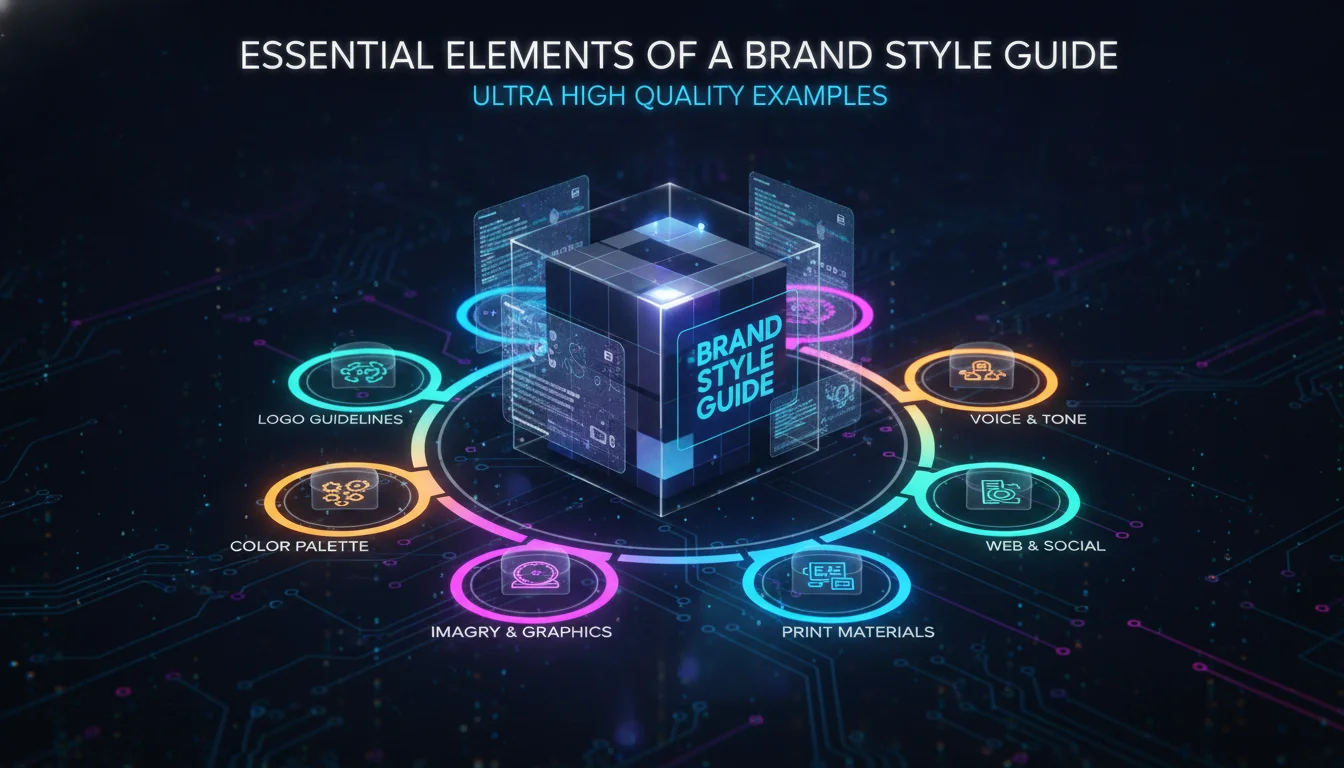
Brand voice is the personality, tone, and language a brand uses consistently across every piece of writing. A solid style guide covers word choice, sentence structure, and messaging priorities, not just visuals. Imagery guidelines cover photography style, illustration, iconography, and file types. Wix’s list of essential elements includes brand story or intro, logo, color palette, typography, image and image file types, tone of voice, and digital design, with spacing, layout, do-not guidelines, UI elements, social media use, iconography, and grid as additional layers.
Imagery do’s and don’ts matter most for brands leaning on user-generated content or partner materials. Without them, off-brand visuals creep in and slowly dilute the identity you’ve worked to build.
Why Brand Style Guide Examples Are Critical for Consistency
Cross-Channel Brand Recognition Depends on Consistency
Consistent branding makes recognition instant. When every touchpoint uses the same colors, logos, and tone, customers know the brand the moment they see it, whether that’s a social post, a website banner, or a product on a shelf. brand style show exactly how companies pull this off across wildly different media.
Coca-Cola’s brand guidelines, listed in the brandingstyleguides.com archive as a 67-page document from 2020, help the company protect its iconic red and script logo across global markets. Apple’s 65-page guide from 2019, in the same archive, governs everything from product packaging to retail signage.
Scaling Brand Quality Across Teams
Large organizations almost never have one person controlling every branded asset, which is exactly why a shared reference matters. A style guide gives designers, marketers, developers, and outside agencies a single source of truth, cutting down the back-and-forth and letting new hires produce on-brand work from day one. The online ESPN and GitHub guidelines listed in the brandingstyleguides.com archive show how digital-first brands make their standards accessible to distributed teams working across time zones.
Avoiding Costly Rebrands and Misuse
Undocumented brand rules practically guarantee misuse. Off-brand colors, stretched logos, and inconsistent type erode trust and can force an expensive rebrand down the road. A well-maintained guide heads this off by making correct usage impossible to misread. The sheer number of public guide examples, from McDonald’s 14-page guide in 2024 to Standard Bank’s 159-page guide in 2023, shows that organizations of every size treat this as protection worth investing in.
Where to Find the Best Brand Style Guide Examples
Curated Archives and PDF Collections
The brandingstyleguides.com archive is a dedicated directory of brand design manual documents, searchable by A-Z, language, year of publication, size, region, and tag. Recent entries include Georgia Aquarium’s 41-page guide from 2025, Omsom’s 46-page guide from 2020, and Safefood’s 54-page guide from 2024. The most popular entries include the FIFA World Cup 2026 guide at 184 pages, Coca-Cola’s 67-page guide, and Discord’s 74-page guide from 2021.
Archives like this earn their keep because they give you direct access to the actual PDF, so you can study real structure and real language instead of a summary.
Digital Brand Hubs and Online Guidelines
Some brands skip PDFs entirely and publish style guides straight online. The brandingstyleguides.com archive lists online guidelines from ESPN, GitHub, University College London, the U.S. Department of War, The Guardian, NASA, Google Play Store, and Bloomingdale’s. These hubs tend to be interactive, with searchable components and downloadable assets baked right in.
Frontify’s collection of brand guidelines experts love makes the case that online, practical, and comprehensive guidelines are the hallmarks of the strongest brand systems. Bang & Olufsen shows how a central hub can marry design with genuinely simple navigation.
Community Showcases and Creative Portfolios
Behance is the largest creative network for showcasing and discovering branding work, and a search for “brand guidelines” returns 10,000+ results on the platform. Popular projects include the Discord Brand Design System & Guidelines, with 12,378 appreciations and 196,954 views, and Green Lead Brand Guidelines, with 11,110 appreciations and 328,078 views.
Community examples like these often include process work, rejected concepts, and detailed explanations, which is gold for designers learning how to present a brand system to a client or a boardroom.
How to Use Brand Style Guide Examples to Build Your Own
Step 1: Audit Your Existing Assets First
Auditing comes before browsing brand style guide examples, not after. Collect your logo files, color values, fonts, photography, and messaging examples, then flag the inconsistencies: multiple versions of the logo floating around, social graphics using different colors than the website. This audit tells you exactly what your guide needs to document.
Wix notes that a brand style guide can range from a simple one-page document to a lengthy in-depth book, so your existing asset inventory should shape the scope you’re aiming for.
Step 2: Select Reference Guides by Category
Not every example deserves your attention equally. Pick brand style guide examples from companies in your industry, of similar size, or with a comparable personality. A consumer tech brand should study Foursquare or Discord; a cultural institution might look at the British Museum guide listed in the archive. Even legacy names can spark ideas that feel current, proving that inspiration doesn’t need to come from your exact category.
Use the comparison table below to choose sources based on format and depth.
Step 3: Extract Transferable Rules, Not Visuals
The goal here is structure, never a copy-paste of a competitor’s colors or typeface. Look at how the guide is built: Does it open with brand story? How does it handle do-and-don’t examples? What categories make the cut? Frontify highlights that great guidelines include text and images illustrating how to apply brand elements, and often make each component downloadable. Borrow that structural clarity, then fill it entirely with your own brand rules.
Build a Brand Style Guide From Examples in Five Steps
Follow This Five-Step Process
Building a brand style guide breaks down into five sequential steps, informed by the elements and formats found across Canva, Wix, and Frontify’s collections.
- Define your brand story and positioning. Write a short introduction covering mission, values, and personality. This anchors every visual rule that follows.
- Assemble and audit your brand assets. Gather logos, colors, fonts, images, and templates, then flag what’s current versus outdated.
- Establish logo usage rules. Specify approved logo variations, minimum sizes, clear space, and prohibited uses, and build a do-not section with visual proof.
- Define your color palette and typography. Lock in primary and secondary colors with exact values, then choose typefaces and hierarchy standards.
- Document voice, imagery, and digital guidelines. Write tone-of-voice guidance, image style rules, and UI or social media standards, then compile everything in a shareable PDF or digital hub.
Making the Process Stick
Once the five steps are done, share the guide with every team touching brand assets, not just design. Schedule quarterly reviews to update examples and add new use cases as the brand evolves. This year, the strongest brand style guide examples we’ve studied treat the document as a living system, not a one-time PDF that gets buried in a shared drive.
Comparison of Top Brand Style Guide Example Collections
Different sources serve different needs, so use the table below to pick the right reference for your project.
| Source | Number of Examples | Formats | Notable Brands Included | Key Advantage |
|---|---|---|---|---|
| Canva | 50 style guides | Visual articles, templates | Foursquare, AMD, Animal Planet | Free templates; visual inspiration |
| Branding Style Guides Archive | Curated PDF archive, filterable by year/pages | PDF documents | Coca-Cola, Apple, Discord, FIFA World Cup 2026, Georgia Aquarium | Downloadable real PDFs; page counts and years |
| Behance | 10,000+ results | Project pages, images, case studies | Discord, Kryon, Petbarn, Green Lead | Community portfolios with process work |
| Wix Blog | 18 examples | Blog article with element breakdown | Wix, Netflix, Spotify, Monday.com, TripAdvisor, Waze | Clear elements list and practical guidance |
| Frontify | 19 examples | Digital hub case studies | Bang & Olufsen | Focus on online, practical, comprehensive guidelines |
Each source complements the others rather than competing. Canva and Behance are great for quick visual inspiration, brandingstyleguides.com is unmatched for studying actual PDF structures, and Frontify offers the strongest reference point for a digital-first system.
Pros and Cons of Studying Brand Style Guide Examples
Pros
- You skip months of trial and error by seeing how established brands solved the same structural problems.
- Free archives like brandingstyleguides.com and Behance mean zero cost to start researching.
- Real PDFs show actual page counts, formatting choices, and depth, not just theory.
- Digital hub examples like Bang & Olufsen show a clear path toward easier long-term maintenance.
Cons
- It’s tempting to copy specific colors or layouts instead of extracting the underlying structure.
- Some archives skew toward large enterprise brands, which can make scope planning tricky for a small team.
- Older PDFs in some collections may reflect outdated design trends that don’t map to current expectations.
- Too much browsing without a clear audit first can lead to a bloated, unfocused guide.
PDF vs. Digital Guidelines: Choosing the Right Format
Static PDFs Work Best for Formal, Archivable Distribution
Static PDFs are easy to share by email, and exact versions are simple to archive for legal or historical reference. The brandingstyleguides.com archive demonstrates this format well, with documents ranging from a 7-page Ville de Caen guide to a 500-page Barcelona guide. The tradeoff: PDFs go stale and get hard to navigate once they grow past a certain size.
Digital Brand Hubs Solve the Update Problem
Digital brand hubs fix what PDFs can’t. Frontify’s guide notes that digital brand guidelines are easier to navigate, access, update, and share than static files, and many teams add do’s and don’ts for different file types or show real use cases with each component downloadable.
A Hybrid Approach Often Wins
A hybrid setup works well for a lot of teams: keep a PDF for formal distribution and a digital hub for daily use. The brandingstyleguides.com archive lists both PDF and online guidelines side by side, and brands like ESPN and The Guardian publish theirs online exclusively. This combination gives teams both permanence and day-to-day flexibility.
Common Mistakes When Using Brand Style Guide Examples
Copying Visuals Instead of Structure
The single biggest mistake is lifting specific colors, typefaces, or layouts from brand style guide examples instead of extracting the structural principles behind them. That path leads to derivative branding and, in some cases, legal headaches.
Ignoring Brand Voice and Messaging
Another common error is obsessing over visual identity while skipping tone of voice entirely. Wix lists brand story or intro and tone of voice as essential elements, yet plenty of teams skip straight to logo and color pages and never circle back.
Overcomplicating the Guide
Overcomplicating a guide can backfire just as badly as under-documenting one. A 7-page guide for Ville de Caen or a 14-page McDonald’s guide can work just as well as a 184-page FIFA guide, as long as it covers the right rules for that organization’s actual size and needs.
According to Wix’s research on brand identity, a strong style guide “cultivates brand identity, fosters loyalty, and ensures that all touchpoints are speaking the same language,” regardless of whether that guide runs seven pages or five hundred.
Tools and Templates to Support Your Style Guide
Free and Low-Cost Templates Get You Started Fast
Canva offers over 900 branding templates, including a White and Blue modern professional brand guidelines template inspired directly by Foursquare’s approach. Templates like these let a team produce a working guide without starting from a blank page.
Design and Brand Management Platforms Keep It Consistent
Frontify and Canva both include brand management features that help teams apply the guide correctly after it’s built. Frontify’s Bang & Olufsen example shows how a central hub doubles as both a reference document and an asset management system.
Community and Archive Resources Fuel Ongoing Inspiration
Behance and brandingstyleguides.com remain free, reliable resources for continuous inspiration. The archive lets you browse by region, year, and page count, while Behance shows how designers actually present branding work to the world.
Turning Brand Style Guide Examples into Action
Start with a Clear Audit and Structure
Brand style guide examples are more than pretty documents. They’re operational tools that protect brand equity and keep execution consistent across every team touching the brand. By studying examples from Apple, Coca-Cola, Discord, Foursquare, and dozens of others, you shortcut the process of building a guide that actually fits your organization.
Learn from Leaders Without Losing Your Identity
Use the five-step process above, pick the format that matches how your team works, and revisit the guide on a regular cycle. This year and beyond, the strongest brand style guide examples treat the document as a living system, whether that’s a 67-page Coca-Cola PDF or a digital hub like Bang & Olufsen’s.
Treat the Guide as a Living Document
Start today: audit your current assets and pull three reference examples from the comparison table above. Your brand’s future consistency depends on the foundation you build right now. Let’s build something bold, starting with a guide your whole team will actually use.
Frequently Asked Questions
What are brand style guide examples?
Brand style guide examples are real documents from companies that show how to define logo usage, colors, typography, voice, and imagery. They serve as practical references for building your own guide instead of starting from a blank page.
Where can I download brand guidelines PDF examples?
The brandingstyleguides.com archive offers a searchable collection of PDFs from Coca-Cola, Apple, Discord, FIFA World Cup 2026, and many others. You can filter by year, page count, and region to find the closest match to your project.
What should be included in a brand style guide?
A complete guide includes brand story, logo rules, color palette, typography, tone of voice, imagery guidelines, and clear do/don’t examples. Additional sections like spacing, iconography, and social media use round out a stronger guide.
How many pages should a brand style guide be?
There’s no fixed length that works for everyone. Examples range from a 7-page Ville de Caen guide to a 500-page Ajuntament de Barcelona guide, and the right length depends entirely on your organization’s size and complexity.
What is the difference between brand guidelines and a brand style guide?
The terms are used interchangeably in most of the industry. A brand style guide is a document that outlines visual and verbal rules, while brand guidelines typically refer to that same set of standards under a different name.
How do I make my own brand style guide?
Start by auditing your existing assets, then define logo rules, colors, typography, voice, and imagery. Templates from Canva or reference examples from Frontify can speed up the process significantly.
Ready to stop guessing and start building a brand system that holds up across every channel? Contact Emin Media for a free brand consultation, and let’s build something bold together.
Enjoyed this article?
Contact Emin Media for a free brand consultation and let's create something amazing together.
Get in TouchRelated Articles
Digital Marketing for Creatives: A Bold Guide
Digital marketing for creatives builds real visibility and sales. Learn strategies for social media, SEO,…
Branding & Design Agency Tips That Actually Work
Discover branding and design agency tips to choose the right partner, set clear goals, and…

Creative Agency Pitch Deck Tips That Win Clients
Master creative agency pitch deck tips that win clients in 2026. Learn storytelling, design, and…