Brand Storytelling Techniques That Build Real Loyalty
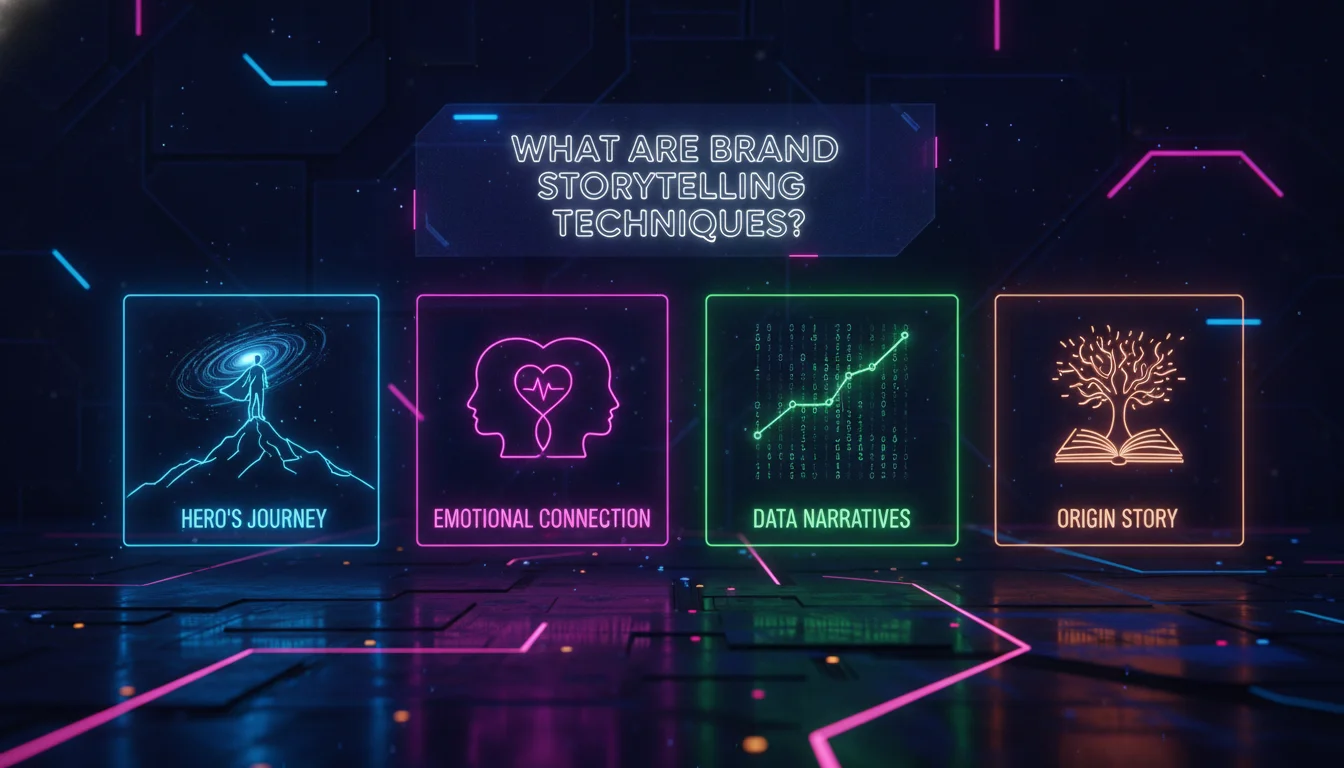
Brand storytelling techniques are structured narrative methods that businesses use to build emotional connections, clarify identity, and earn trust with an audience. They shift marketing from listing features to inviting people into a story worth remembering.
Key Takeaways
- storytelling techniques shift marketing from promoting products to building emotional connections through narrative.
- Effective storytelling blends discovery, real customer and employee experiences, with aspirational brand invention.
- Purpose-driven brands resonate more strongly with consumers, according to Accenture research cited by Frontify.
- Structured narrative arcs, relatable characters, and consistent visuals are the foundation of a story that sticks.
- Measuring story impact means tracking engagement, sentiment, conversion lift, and long-term loyalty, not just clicks.
What Are Brand Storytelling Techniques?
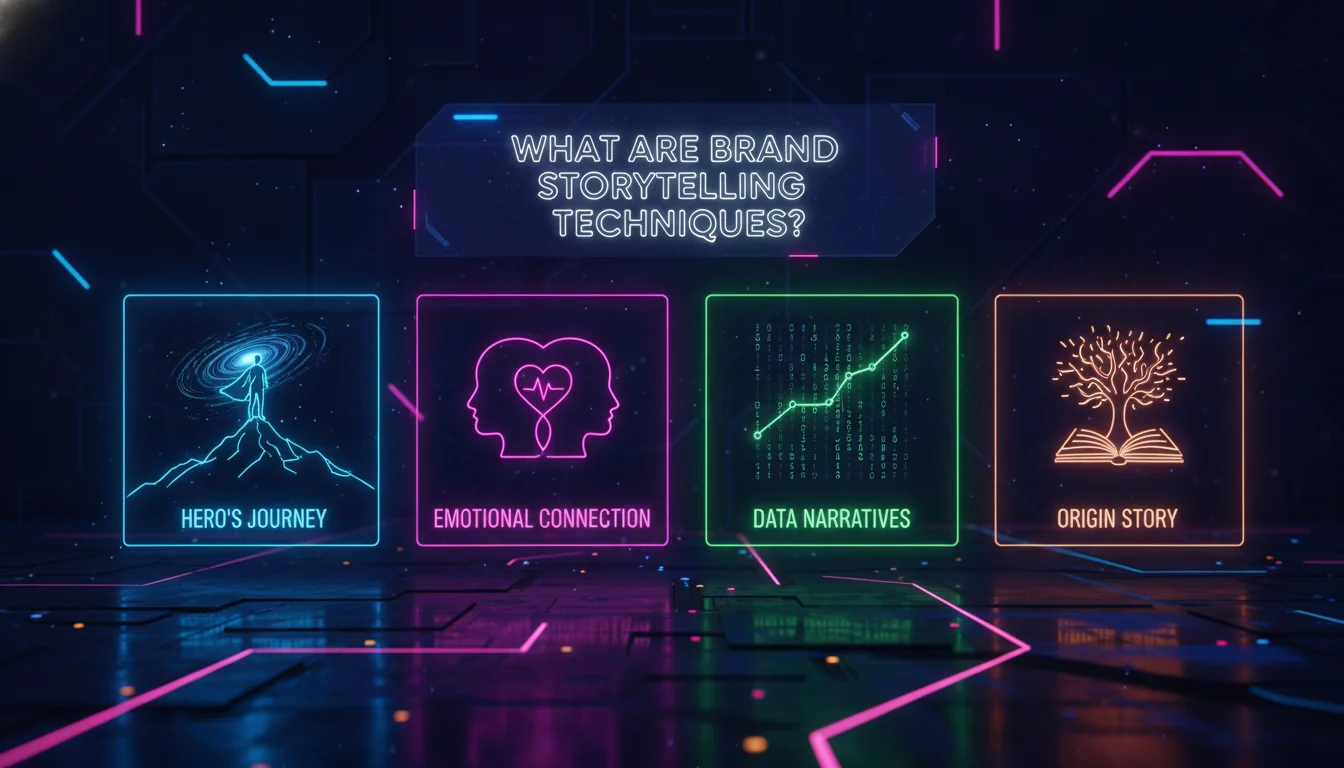
The Essence of Brand Storytelling
this type of techniques are the deliberate narrative choices a company makes to shape how audiences see its identity, values, and purpose. Unlike traditional marketing that leans on product specs, these techniques weave a cohesive story that invites customers into something bigger than a transaction. Karl Wikström, Frontify’s Chief Storyteller, put it simply: brand storytelling
“is everything you do, big and small”
from the marketing messages you craft to the product experience you deliver and the culture you build internally. A well-told brand story answers two questions: why should someone care, and why should they share?
Why Brands Need Narrative Now More Than Ever
In a media environment where consumers encounter 4,000 to 10,000 ads daily, according to Outbrain, standing out takes more than a catchy tagline. this kind of techniques cut through that noise by activating the brain’s empathy and memory centers at the same time. Research published by The New York Times Licensing found that stories are up to 22 times more memorable than isolated facts. That’s exactly why brands like Nike, Patagonia, and Airbnb pour resources into narrative. They’re not just selling shoes, jackets, or stays. They’re inviting people into a worldview.
The Core Components of a Brand Story
Every strong brand story shares a few structural bones. There’s a protagonist (often the customer, sometimes the brand itself acting as guide), a conflict that resonates with the audience, a journey that builds tension, and a resolution that shows the brand’s role in solving the problem. Good brand storytelling techniques layer emotional triggers onto that framework: hope, belonging, aspiration. Done right, the story pulls double duty, working on both the rational and emotional sides of a decision.
The Business Case for Investing in Brand Storytelling
Investing in brand storytelling pays off because emotionally connected customers spend more and stick around longer than customers who are simply satisfied. According to Harvard Business Review, emotionally connected customers are 52% more valuable than those who are merely satisfied with a brand. A Headstream study cited by Outbrain found that 55% of consumers are more likely to buy from a brand if they love its story, and 44% will share that story with others. These brand storytelling techniques create the emotional pull that turns one-time buyers into repeat advocates.
Enhancing Brand Awareness and Recall
A consistent, well-told brand story makes a company instantly recognizable. When people recall a story, they recall the brand attached to it. That’s why storytelling matters so much for awareness campaigns: it encodes a message into a format the brain naturally holds onto. Instead of remembering spec sheets, customers remember how a brand made them feel, and that feeling often decides the sale.
Guiding Strategic Decision-Making
Beyond external marketing, a clear brand story aligns internal teams. When everyone, from product to customer support, understands the narrative identity, decisions get sharper. Wikström notes that a brand story helps evaluate partnerships and initiatives by asking a simple question: does this fit our narrative, or will it feel like a departure from our ethos? Using brand storytelling techniques as an internal compass reduces missteps and keeps the brand consistent across every touchpoint.
The Anatomy of a Compelling Brand Narrative
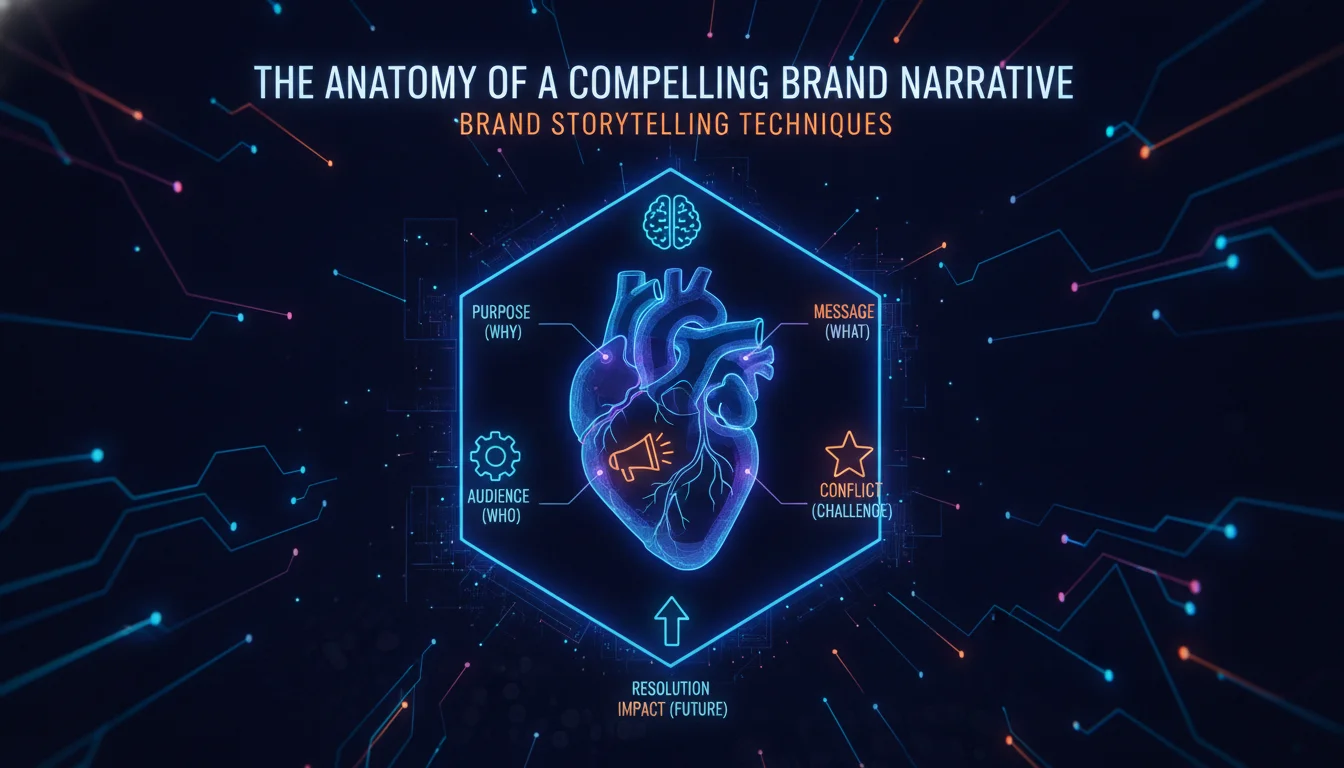
What Makes a Brand Narrative Compelling?
A compelling brand narrative follows the classic arc: exposition, rising action, climax, and resolution, adapted for how a brand shows up in the world. In branding terms, that means establishing context (what life looks like without the brand), introducing tension (the customer’s pain point), escalating the stakes, then resolving it through the brand’s value. Patagonia’s “Don’t Buy This Jacket” campaign flipped the formula by making the product itself the conflict, with environmental responsibility as the resolution.
Character Development: Your Brand as Hero or Guide
Deciding who plays the hero is one of the more important calls in brand storytelling. Many successful stories cast the customer as hero and the brand as the wise guide supplying tools, knowledge, or inspiration, which is exactly how Nike frames its empowerment narratives: the athlete overcomes limits, and the gear enables rather than stars. Founder-led origin stories flip that script, making the brand itself the hero, as with Ben & Jerry’s, where the founders’ path toward sustainable, quirky ice cream becomes the plot. Both work when the audience sees themselves reflected in it.
Weaving Emotion into the Story
Emotion is the glue between story and memory. The strongest brand storytelling techniques target specific emotional responses on purpose: joy, surprise, belonging, even a little sadness. Guinness’s ads rarely mention beer ingredients, focusing instead on friendship and resilience, making the brand synonymous with those feelings. Strategic use of music, imagery, and pacing amplifies all of it, so the story lodges in long-term memory rather than fading after one viewing.
Essential Brand Storytelling Techniques
Emotional Storytelling: Tapping into Universal Human Experiences
Emotional storytelling anchors a brand to a core human feeling: love, ambition, security, freedom. Coca-Cola’s “Share a Coke” campaign leaned on personalization and happiness to create individual recognition inside a global brand. To apply this, identify the primary emotion your audience already associates with your category, then build a narrative that elevates that feeling beyond the product itself.
Customer-Centric Narratives: Making the Audience the Protagonist
Shifting the spotlight from brand to customer drives real engagement. Mailchimp’s “All in a Day’s Work” series documented real small business owners using the platform to solve daily headaches, putting the user’s journey front and center. This builds trust because it validates the customer’s experience instead of just talking at them. To execute it well, invest in customer research, surveys, interviews, social listening, to surface authentic stories that match your brand’s promise.
Mission-Driven Stories: Aligning Values with Action
When a brand’s story is rooted in a clear mission, it can turn into a movement. According to Accenture research cited by Frontify, 64% of consumers find brands that actively communicate their purpose more appealing than those that don’t. Patagonia’s environmental activism, documented through its “Footprint Chronicles” and gear repair stories, transforms buyers into advocates who feel part of something bigger. The catch: authenticity is non-negotiable. Purpose-washing gets spotted fast, and it backfires just as fast.
Visual Storytelling: Using Imagery to Reinforce the Narrative
Images, video, and design don’t just accompany a story, they carry it. Think of Apple’s minimalist product shots communicating sophistication without a single word, or Airbnb’s user-generated photos conveying belonging through real moments. Visual consistency across logos, color, typography, and photography style makes sure every touchpoint pulls in the same direction, so the brand is recognizable even with the text stripped away. This is where a strong branding and creative direction partner earns their keep, translating narrative into a visual language people remember.
| Story Type | Purpose | Key Elements | Example Brand |
|---|---|---|---|
| Origin Story | Build authenticity and heritage | Founder struggles, humble beginnings | Ben & Jerry’s |
| Mission-Driven Story | Activate values-based consumers | Social or environmental cause, real impact | Patagonia |
| Customer Hero Journey | Demonstrate empathy and product fit | User overcoming challenge with brand help | Mailchimp |
| Product Journey | Highlight quality and craft | Design process, sourcing, unique features | Guinness |
| Overcoming the Odds | Inspire and create underdog appeal | Obstacles, grit, eventual triumph | Nike |
Advanced Brand Storytelling Techniques for 2026
What’s New in Brand Storytelling for 2026?
As of 2026, the biggest shift in brand storytelling is audience participation: people expect to step inside the narrative, not just watch it unfold. Interactive video, augmented reality experiences, and light gamification now sit alongside traditional formats. Manchester United’s digital museum, for instance, uses immersive storytelling to let fans relive historic matches, deepening the emotional bond well past a highlight reel. Brands can build “choose your own adventure” narratives on social platforms or use AR try-ons that fold product features into a personal story layer, making the experience both memorable and shareable.
Data-Driven Story Personalization
Personalization at scale has become one of the more advanced brand storytelling techniques in a marketer’s toolkit. By using customer data, purchase history, browsing behavior, location, brands like Spotify craft narratives that feel individually built, like a year-end listening summary. This demands solid data infrastructure and a narrative template flexible enough to adapt across millions of variations while keeping one consistent brand voice. Done well, it turns a generic message into something that genuinely feels like it was made for one person.
Transmedia Storytelling Across Platforms
Instead of repeating the same story everywhere, transmedia storytelling unfolds different pieces of a narrative across platforms, with each piece contributing something distinct. Adidas’s “Here to Create” campaign used short videos on Instagram, long-form documentaries on YouTube, and real-world events to build a complete picture of athletic creativity. This framework requires careful coordination so each piece satisfies on its own while still feeding the larger whole and pulling audiences to follow the thread across channels.
How to Implement Brand Storytelling Techniques Step by Step
Step 1: Define Your Brand’s Core Purpose and Values
Start by naming why your brand exists beyond revenue. What change do you want to make happen? Shopify advises entrepreneurs to define their conviction and purpose as the foundation of any brand story. Run workshops with founders, employees, and loyal customers to surface the beliefs that will anchor your brand storytelling techniques, then document them in a brand story brief everyone can reference.
Step 2: Understand Your Audience Deeply
Good stories are told with the listener in mind, not the teller. Use market research, surveys, and social listening to map your audience’s aspirations, fears, and values. For B2B brands, that might mean understanding operational pain points; for D2C, it’s often lifestyle desires. Whatever you find will shape the conflict at the heart of your narrative and keep it feeling personal instead of generic.
Step 3: Craft Your Central Narrative and Choose a Story Type
Based on your purpose and audience insight, pick the story framework that fits: origin, mission, customer hero, and so on (see the comparison table above). Write a one-sentence premise that captures the essence, something like: “Our software helps overwhelmed project managers reclaim their evenings by automating tedious admin so they can focus on strategic work.” That premise becomes the north star for every story told across the organization.
Step 4: Select Channels and Formats for Distribution
Different pieces of your story belong in different places. Short, emotional clips thrive on TikTok and Instagram Reels; in-depth case studies suit LinkedIn or your blog; interactive experiences work well on your site or a mobile app. Map your narrative arc to a content calendar that sequences the story over time, matching format to platform strength. Behind-the-scenes clips on Instagram Stories can build anticipation, while a longer YouTube piece delivers the full emotional payoff.
Step 5: Measure, Learn, and Iterate
No story lands perfectly the first time. Track engagement (shares, comments, watch time), run brand lift surveys, and watch conversion data to see which techniques actually move the needle. Tools like Google Analytics, heatmap software, and social listening platforms reveal how audiences respond emotionally. Use what you learn to refine the story, maybe a different conflict, a different lead character, without changing the underlying truth, so it gets stronger with each telling.
Real-World Examples of Successful Brand Storytelling
Nike: Inspiring Through Empowerment
Nike’s storytelling rarely mentions shoe technology. Instead, it zeroes in on the inner battle every athlete faces: the doubt, the discipline, the breakthrough, and positions Nike as fuel for that journey. Campaigns like “You Can’t Stop Us” use split-screen video and shared human emotion to build a sense of solidarity across very different athletes. This is a textbook case of making the customer the hero and the brand the quiet partner, and it’s helped Nike hold a dominant cultural presence for decades.
Guinness: Anchoring to Timeless Values
Guinness ads read more like short films about friendship, loyalty, and resilience than beer commercials. The “Made of More” campaign told stories of everyday people showing extraordinary character, with the beer itself appearing only at the edges. By skipping the hard sell and embedding the brand in emotionally rich stories instead, Guinness turns the product into a symbol of a lifestyle. That patience builds a kind of emotional moat competitors can’t easily cross.
Airbnb: Building Belonging on a Global Scale
Airbnb’s entire brand story rests on one idea: anyone can belong anywhere. User-generated photos, host stories, and campaigns like “We Accept” all reinforce that narrative. By letting real users share their own travel and hosting experiences, Airbnb applies storytelling that’s authentic by design and scales naturally, turning customers into a content engine of their own. The story was never really about accommodations. It’s about human connection, and that narrative has helped drive the company’s massive valuation.
“You have a very clear shared idea of why your brand exists, who you’re for, and what you want to do better than anyone else. It’s the foundation for making yourself relevant to your customers.” – Karl Wikström, Chief Storyteller, Frontify
Common Pitfalls When Applying Brand Storytelling Techniques
What Mistakes Undermine Brand Storytelling?
The most common mistake is overcomplicating the narrative by trying to pack every feature and value into a single story, which results in a confusing mess instead of a message. The best techniques focus on one simple idea that’s understandable in under 30 seconds. If it needs a flowchart, it’s too complicated. Stick to one core conflict and one clear resolution, and let supporting details surface gradually across multiple touchpoints.
Lacking Authenticity
Consumers have a sharp radar for stories that don’t hold up. If your sustainability messaging doesn’t match your manufacturing practices, or your talk of customer empathy clashes with slow support response times, the whole narrative collapses. That’s why brands like Patagonia spend as much energy on supply chain transparency as they do on the marketing story itself. Authenticity isn’t a nice extra, it’s the floor everything else stands on.
Ignoring the Audience’s Voice and Evolving Needs
A brand story isn’t a monologue, it’s a conversation that has to keep evolving. Relying on outdated personas or ignoring audience feedback can flatten even the most polished narrative. Keep tabs on social conversations, reviews, and shifting cultural context to make sure your story stays relevant. When Dove broadened its “Real Beauty” campaign to include more diverse representation over time, it kept the core story feeling fresh instead of dated.
Measuring the ROI of Brand Storytelling Techniques
How Do You Measure the ROI of Brand Storytelling?
You measure brand storytelling ROI by combining engagement metrics with brand lift surveys and conversion data, rather than relying on any single number. Shares, comments, and watch time are a starting point, but the real signal comes from tracking changes in awareness, consideration, and preference through controlled surveys. For direct response, compare conversion lift and customer lifetime value between audiences exposed to story-driven content versus feature-driven ads. Sentiment analysis on social and review platforms helps gauge the emotional resonance behind those numbers.
Tools and Methodologies
A handful of tools help quantify narrative impact in practice. Google Analytics and similar platforms track on-site behavior after story exposure, while social listening tools assess sentiment and thematic resonance across channels. Some marketers go further with neuromarketing techniques, eye tracking, EEG, facial coding, to measure subconscious emotional response, though even a simple A/B test comparing product-focused pages against story-focused landing pages can produce useful data for budget decisions.
Connecting Stories to Business Outcomes
To justify continued investment, marketers need to build a bridge from narrative to revenue. That might mean showing how a documentary-style video series lifted site traffic and lowered cost-per-acquisition over a quarter, or how a values-driven campaign tracked alongside a stronger repeat purchase rate. Tie story metrics to KPIs your finance team already trusts, and brand storytelling stops being a “nice to have” and starts operating as a real growth lever. Our team at Emin Media has seen this shift firsthand while building campaign strategy for clients who wanted their content to actually move revenue, not just impressions.
Pros and Cons of Brand Storytelling Techniques
Pros
- Builds emotional loyalty that outlasts price-based competition
- Improves recall since audiences remember stories longer than specs or slogans
- Aligns internal teams around a shared sense of purpose and decision-making filter
- Scales naturally through user-generated content and word of mouth
Cons
- Takes longer to show measurable ROI compared to direct-response ads
- Requires genuine internal alignment, a mismatched story and practice backfires fast
- Demands ongoing investment in research, production, and iteration
- Can be harder to standardize across large, multi-team organizations
Frequently Asked Questions
What exactly are brand storytelling techniques?
Brand storytelling techniques are structured narrative methods that businesses use to communicate their identity, values, and mission in an emotionally engaging way, turning audiences into loyal advocates over time.
Which brand storytelling techniques work best for small businesses?
Small businesses often do well with origin stories and customer hero journeys since these require minimal production budgets and can be shared effectively through social media and local community channels.
How do brand storytelling techniques differ from traditional advertising?
Traditional advertising focuses on features and immediate conversion, while brand storytelling builds emotional connection and long-term trust by weaving a narrative audiences identify with over time.
Can B2B companies use brand storytelling techniques effectively?
Yes. B2B brands use storytelling to humanize complex solutions, highlighting customer success stories, founder vision, and team culture to build trust and stand apart in crowded, feature-heavy markets.
What metrics should I track to see if brand storytelling is working?
Track a mix of engagement metrics (shares, time on page), brand health metrics (awareness, sentiment), and conversion metrics (lead quality lift, customer lifetime value) tied specifically to story-driven campaigns.
Conclusion
Mastering brand storytelling techniques isn’t optional anymore, it’s a competitive requirement. Whether you’re a founder launching with something to say or an enterprise leader trying to reconnect with a fragmented audience, the principles hold steady: anchor in authenticity, build around a clear arc, center the customer’s journey, and keep refining with real data. Apply the frameworks and examples in this guide, and you can turn your brand from a logo people scroll past into a story people actually return to. Ready to put these ideas into practice? Let’s build something bold together. Contact Emin Media for a free brand consultation.
Enjoyed this article?
Contact Emin Media for a free brand consultation and let's create something amazing together.
Get in TouchRelated Articles

Digital Marketing for Creatives: A Bold Guide
Digital marketing for creatives builds real visibility and sales. Learn strategies for social media, SEO,…
Branding & Design Agency Tips That Actually Work
Discover branding and design agency tips to choose the right partner, set clear goals, and…
Creative Agency Pitch Deck Tips That Win Clients
Master creative agency pitch deck tips that win clients in 2026. Learn storytelling, design, and…