Brand Personality Traits: Frameworks & Examples
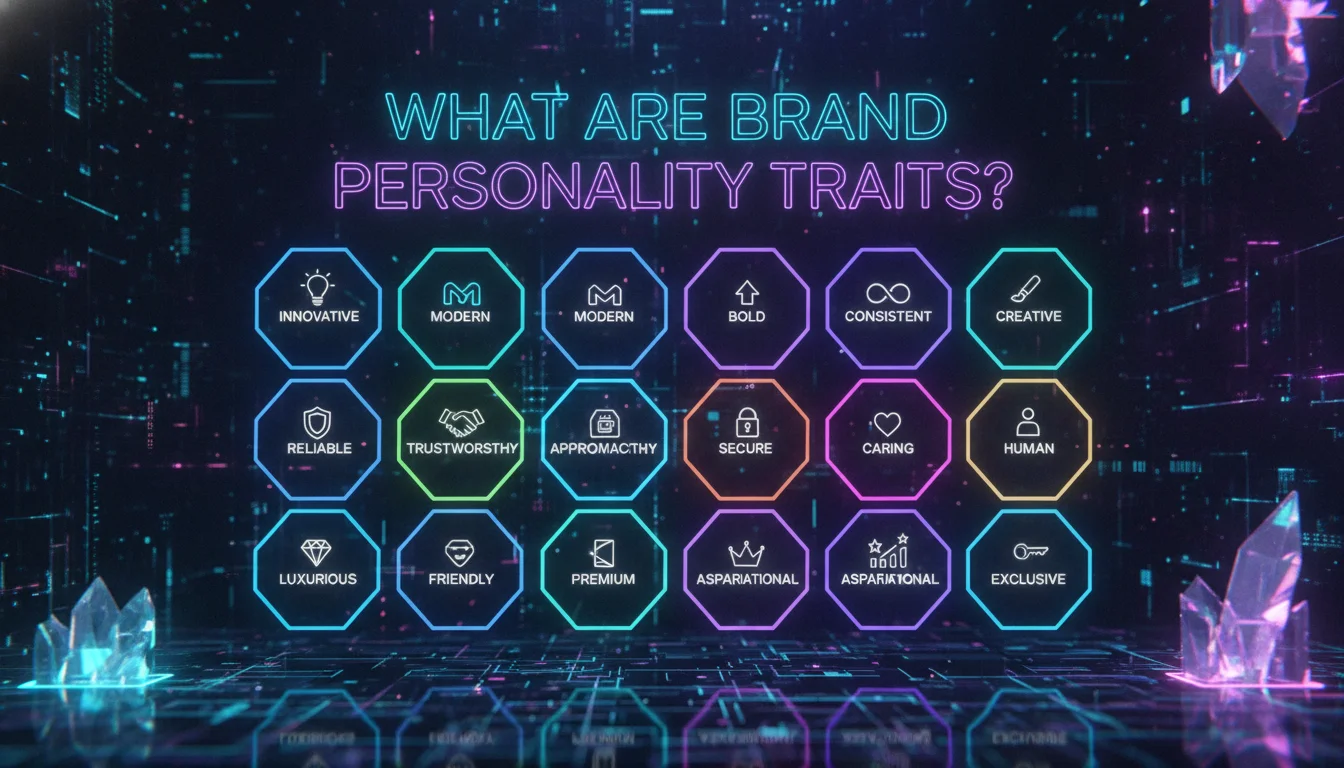
Brand Personality Traits: Frameworks, Examples, and Selection
Key Takeaways
- Brand personality traits are the human characteristics a brand expresses through voice, visuals, and behavior to build emotional connections.
- The most widely used framework groups traits into five dimensions: sincerity, excitement, competence, sophistication, and ruggedness.
- Curated lists range from 51 organized traits to 300 raw adjectives; most practitioners recommend narrowing to three core traits.
- A five-step process covering audience research, differentiation, trait selection, documentation, and integration turns traits into consistent brand behavior.
- According to Adobe, 88% of consumers say authenticity is crucial when deciding which brands to support, so traits must match real behavior.
Brand personality traits are the human characteristics a brand expresses through voice, visuals, and behavior to build emotional connections with customers. They range from sincerity and excitement to competence, sophistication, and ruggedness, and are chosen through structured frameworks.
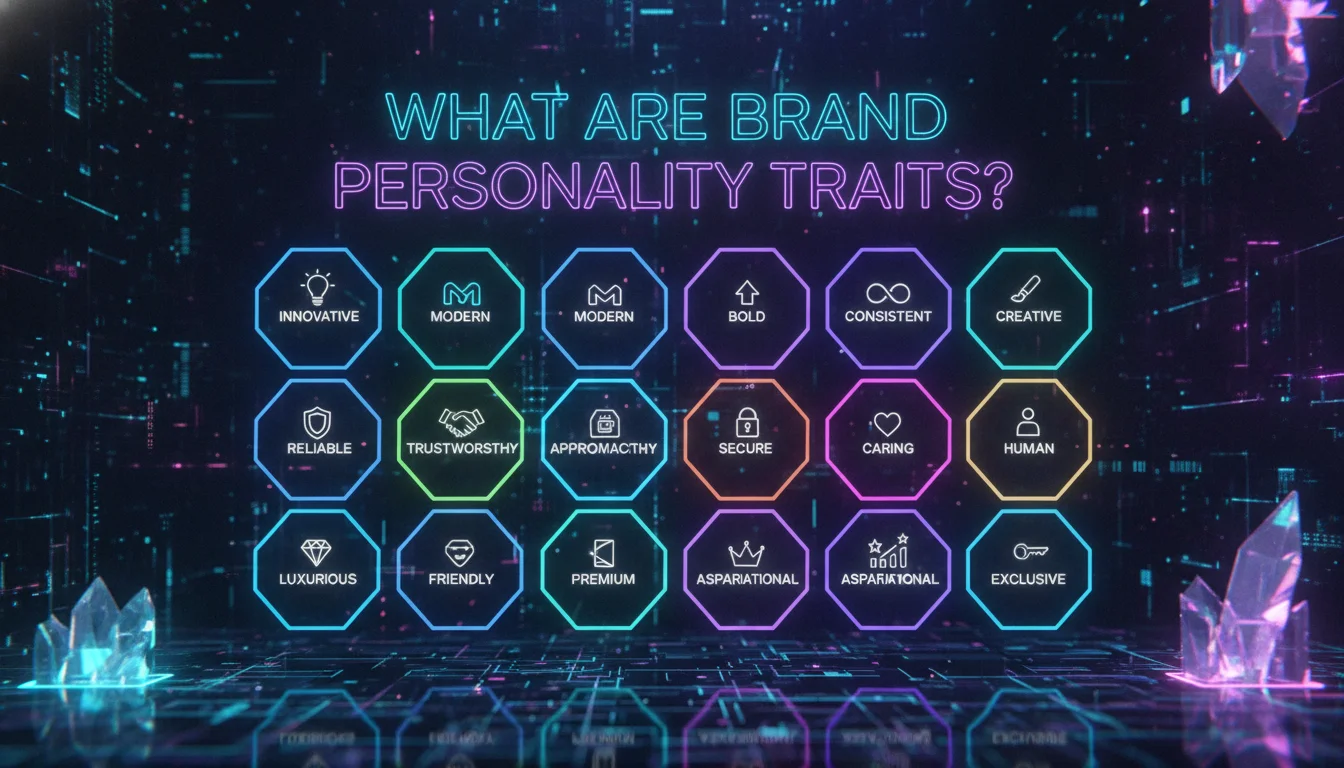
What Are Brand Personality Traits?
Definition and Core Function
Brand personality is the way a brand is personified: the sum of its emotional, psychological, and behavioral patterns that remain unique over the course of its lifespan. That definition comes from The Branding Journal, which notes these are the human characteristics and traits consumers relate to. In simpler terms, personality traits are the specific human adjectives a brand consistently expresses, such as playful, reliable, sophisticated, or rugged. They transform a business from an abstract logo into a relatable presence with a distinct voice, tone, tenor, and temperament.
Branding expert Jean-Noël Kapferer expands this by saying brand personality fulfills a psychological function: it allows consumers to identify with the brand or project themselves into it, and it is the main source of tone and style of advertising. When a software company describes itself as innovative and helpful, those this type of traits shape how its website copy sounds, how support agents write emails, and how product features are presented. The personality is not a marketing layer; it is the operating logic for communication.
Brand Personality vs. Brand Identity
Brand personality is one element of a larger brand identity. Brand identity is the full system of visual and verbal elements that identify a brand, including logo, color palette, typography, messaging, and values. Personality sits inside that system and gives it a human character. According to Adobe, brand personality encapsulates how a brand communicates its values and beliefs through visual cues, communications, and marketing. That means two brands can share similar color palettes but feel completely different because their this kind of traits diverge: one may be warm and sincere, the other cool and sophisticated.
This distinction matters because personality alone cannot carry an identity. A logo without a defined personality may look professional but still feel hollow. The personality provides the tone and style that makes the identity speak. When you choose brand personality, you are deciding what kind of person the brand would be in a room, not just what it would wear.
Why Human Traits Drive Consumer Attachment
Humans are inherently social and driven by emotions, relationships, and connection. When a brand expresses human personality traits, it triggers the same social evaluation mechanisms we use with people. Consumers decide whether a brand is trustworthy, exciting, competent, sophisticated, or rugged in seconds. If they like what they see, they form attachment. East Texas A&M explains that when consumers connect deeply to a brand, they become more than customers; they become advocates. That advocacy is built on personality traits that mirror the audience’s values or aspirations.
personality traits also create self-identification. A consumer may choose a rugged outdoor brand because they see themselves as adventurous, or a sincere family brand because it reflects their values. Jean-Noël Kapferer’s point about projection is central: personality gives consumers a surface to project their desired self onto. That is why trait selection must be intentional rather than accidental.
The Five-Dimension Framework for Brand Personality Traits
Sincerity and Excitement
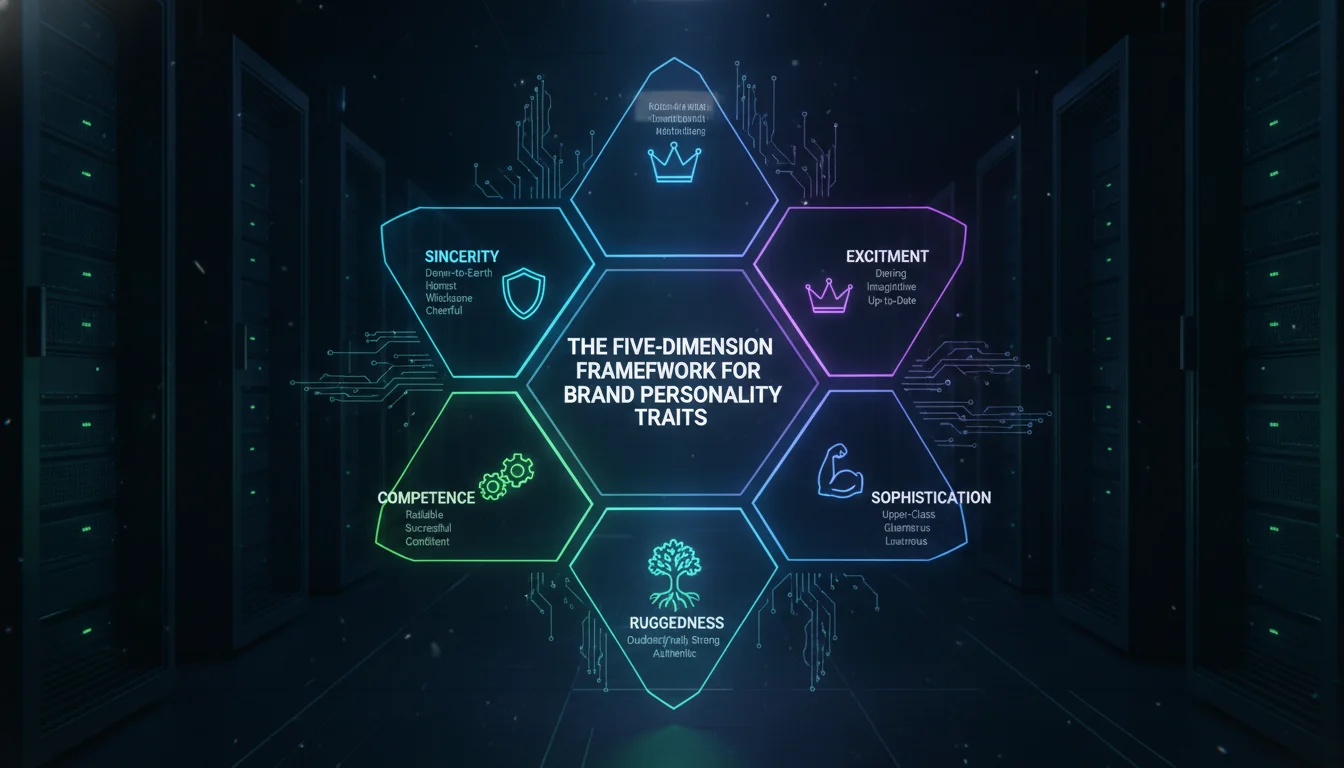
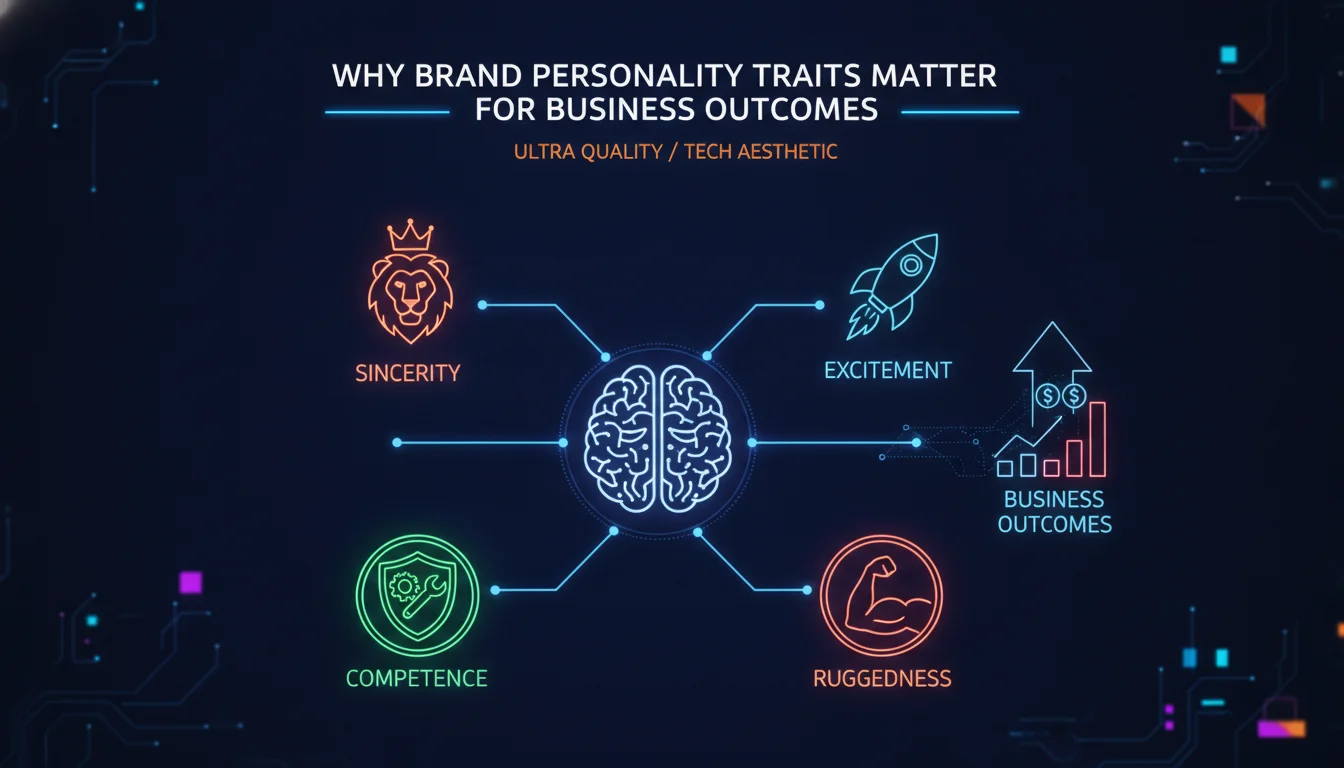
The most widely used model for structuring this type of traits is the five-dimension framework. The five-dimension framework classifies brand personality into five core dimensions, each with a set of associated traits: sincerity, excitement, competence, sophistication, and ruggedness. Mailchimp describes a sincere brand personality as kind and genuine, projecting warmth and honesty. Traits in this dimension include down-to-earth, honest, wholesome, and cheerful. Sincerity works well for family-oriented, community-focused, and health-conscious brands that want to feel approachable.
Excitement, by contrast, captures energy, youth, and thrill. Brands with excitement traits are seen as spirited, imaginative, and trendy. Words such as daring, playful, imaginative, and contemporary belong here. A beverage brand targeting young adults might lean heavily into excitement this kind of traits, while a retirement planning firm would likely avoid them. The dimension provides a diagnostic lens: if your brand feels flat, you may lack excitement; if it feels chaotic, you may be over-indexed on excitement without enough sincerity or competence.
Competence, Sophistication, and Ruggedness
Competence is the dimension of reliability, success, and intelligence. A competent brand is perceived as reliable, successful, and intelligent, showcasing leadership and dependability. Traits include trusted, efficient, expert, and leader. Adobe’s example trait group of trustworthy, covering reliable, dependable, and honest, sits at the intersection of sincerity and competence, showing that dimensions can blend.
Sophistication exudes charm and smoothness, catering to a more discerning audience with refined tastes. Traits such as elegant, glamorous, prestigious, and smooth belong to this dimension. Luxury fashion, high-end hospitality, and premium automotive brands often emphasize sophistication brand personality. Ruggedness, by contrast, projects outdoorsy vibes, robustness, and strength. Tough, rugged, masculine, and Western are characteristic traits. This dimension is common in outdoor equipment, workwear, and certain automotive or beverage categories.
Using the Spectrum to Diagnose Gaps
When brands have multiple personality traits, it’s called the brand personality spectrum. The spectrum concept is useful because few successful brands live in a single dimension. A brand might be primarily competent but also sincere enough to feel human and slightly sophisticated to justify premium pricing. The five-dimension framework helps diagnose gaps: if customer feedback says you feel cold, you may lack sincerity; if you attract budget shoppers despite a premium product, you may need more sophistication.
Mapping your current personality traits against the five dimensions reveals imbalances. You can list the adjectives customers and employees use, sort them into dimensions, and see which dimension is over- or under-represented. This exercise turns an abstract concept into a strategic planning tool.
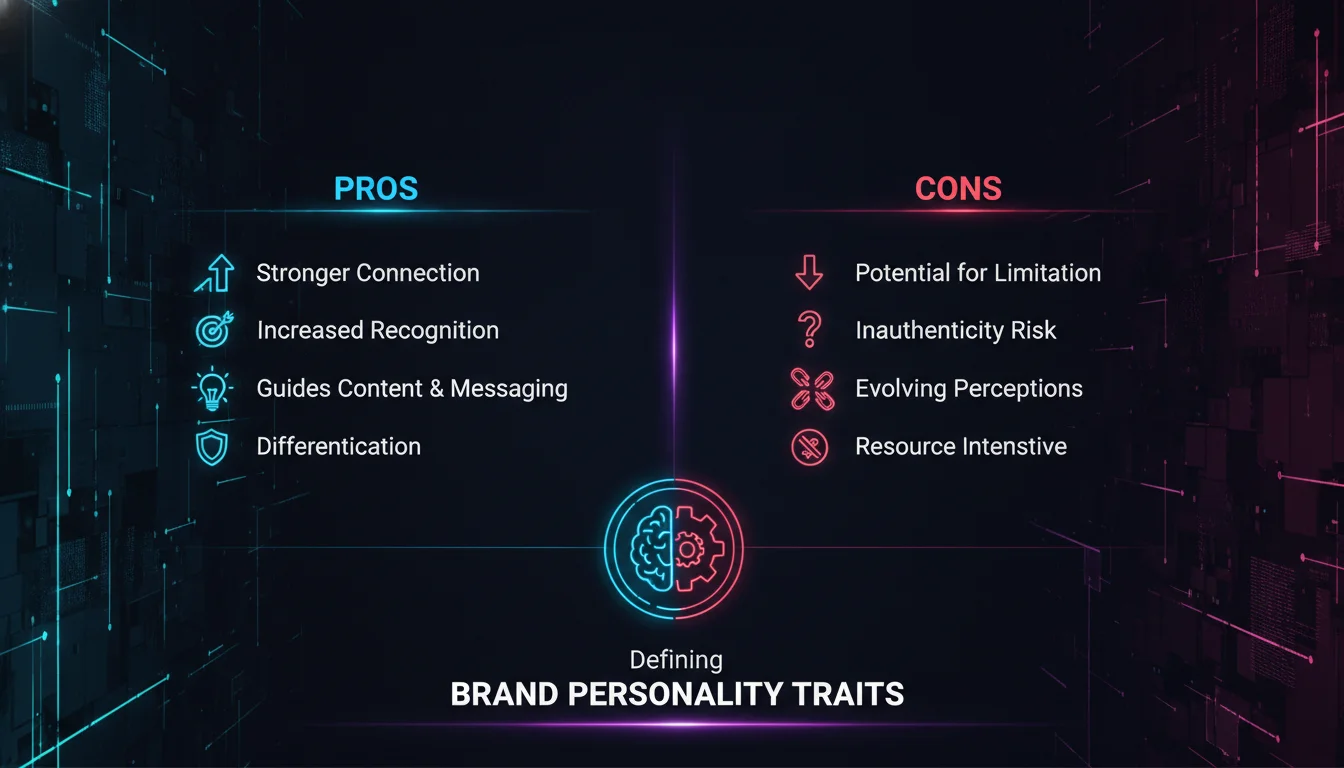
Pros and Cons of Defining Brand Personality Traits
Pros
- Emotional connection: Clearly defined this type of traits give customers something to attach to, turning transactions into relationships.
- Differentiation: Competitors can copy a product feature or undercut a price, but replicating a coherent personality expressed consistently over years is genuinely difficult.
- Consistency across touchpoints: A documented set of traits gives every team, from marketing to customer service, a shared reference for how to sound and behave.
- Strategic longevity: Personality is a durable asset. While product lines change, a well-chosen personality can remain stable and compound in equity over time.
- Advocacy: According to East Texas A&M’s brand guidelines, audiences that identify with a brand’s personality become advocates, not just customers.
Cons
- Inauthenticity risk: Choosing traits for differentiation alone, without grounding them in real behavior, backfires. Adobe’s data shows consumers are highly sensitive to authenticity gaps.
- Over-narrowing: Locking into three traits too early, before proper audience research, can produce a personality that feels right internally but misses the audience entirely.
- Execution drift: Even well-documented traits erode when teams grow, leadership changes, or agencies rotate. Maintenance requires ongoing effort.
- Analysis paralysis: With lists ranging from 51 to 300 adjectives, the selection process can stall without a structured framework or scoring method.
Why Brand Personality Traits Matter for Business Outcomes
Emotional Connection and Loyalty
A strong, well-defined personality humanizes a brand, making it both distinctly different and relatable in a cluttered marketplace, according to The Branding Journal. When customers feel they are talking to one consistent voice, they generate attachment. That attachment translates into measurable business outcomes: repeat purchases, higher tolerance for minor mistakes, and word-of-mouth advocacy. East Texas A&M’s brand guide states that if audiences like the brand and identify with what it stands for, they’ll be more drawn to engage with it.
The emotional connection is why this kind of traits are not cosmetic. A brand with inconsistent or absent personality forces consumers to fill the void with assumptions, often negative. A defined personality gives consumers a clear, positive frame for interpreting every interaction.
“Brand personality fulfills a psychological function. It allows consumers to either identify with it or project themselves into it. Brand personality is also the main source of tone and style of advertising.” – Jean-Noël Kapferer, branding expert, as cited by The Branding Journal
Differentiation in Crowded Markets
Standing out is a necessity for businesses. As Mailchimp puts it, every brand has a unique identity that provides a human touch and helps them resonate with customers. But uniqueness alone isn’t enough; it has to be attractive. brand personality create distinctiveness in markets where products and prices are nearly identical. Two coffee shops may sell the same beans at the same price, but one feels warm and community-focused while the other feels sleek and efficient. The personality determines which customers choose each.
Differentiation through personality is also more durable than functional differentiation. Competitors can copy a product feature or undercut a price, but they cannot easily replicate a coherent set of personality traits expressed consistently over years. This is why brand personality is a strategic asset, not a style choice.
Consistency Across Touchpoints
Once you have your brand personality traits, you can continuously refer back to them to keep your business consistent. Lisa Furze recommends using your chosen traits when creating a logo, choosing brand colors, or finding the right words and phrases for taglines and headings. This consistency compounds: every touchpoint reinforces the same personality, making the brand easier to recognize and remember.
Inconsistency is costly. If a brand’s website copy sounds witty and playful but its customer service emails are stiff and bureaucratic, consumers experience cognitive dissonance. They may not consciously articulate it, but they feel something is off. A defined set of brand personality traits solves this by giving every team a shared reference for how to sound and behave.
How to Select Traits for Your Brand
Step 1: Start with Audience and Positioning
The first step in selecting brand personality traits is understanding your audience and what makes your brand unique. Adobe’s five-step process begins with knowing your audience and defining what makes your brand unique. Your traits should complement the products you advertise and the lifestyle your target audience wants to emulate. If your audience values security and expertise, competence traits are a stronger starting point than excitement traits. If they seek transformation and energy, excitement may lead.
Positioning matters because personality must support the brand’s place in the market. A luxury brand that chooses cheerful as a primary trait may undermine its sophisticated positioning. Conversely, a children’s brand that chooses stern may confuse its audience. Align traits with both the functional promise and the emotional payoff of the brand.
Step 2: Use Categorized Trait Lists to Avoid Overwhelm
Raw lists of hundreds of adjectives can be overwhelming. A 300-trait list from Enosta demonstrates the problem: many brands don’t need 300 options, they need a structured way to narrow. Copyfolio addresses this by curating 51 personal brand traits into five functional categories: presence and first impressions; communication and connection; values and mindset; creativity and innovation; and work style and professional edge. Each category aligns with a different aspect of how a brand shows up.
Using categorized lists helps you avoid choosing traits that all sound similar. For example, you might choose confident for first impressions, witty for communication, reliable for values, creative for innovation, and efficient for work style. That gives a well-rounded personality rather than a cluster of synonyms. Copyfolio recommends choosing one or two traits from each category for a balanced personal brand.
Step 3: Narrow to Three Core Traits
There are no hard rules about the number of brand personality traits, but Lisa Furze advises sticking to a combination of three distinct traits. Three is enough to create nuance without diluting focus. Copyfolio also notes that three core traits may be sufficient to guide your work. If you need more structure, the manual method works: copy the trait list into a document, mark every trait that resonates, then score each trait from 1 to 10, with 1 meaning that’s not what I’m aiming for and 10 meaning yes, that’s exactly who I want to be. Choose the highest-scoring traits.
Here is a simple process for narrowing your list:
- Assemble a trait list using a curated set like Copyfolio’s 51 or a larger source like Enosta’s 300.
- Highlight every trait that resonates with your brand’s desired personality.
- Score each highlighted trait from 1 to 10 based on how accurately it should define your brand.
- Sort scores and shortlist the top 10 traits.
- Force-rank to three core traits that together cover different aspects: typically one relational, one functional, and one aspirational.
Step 4: Document and Integrate
Adobe’s process continues with creating a personality statement and brand style guide. Write a one-page document that defines your three core brand personality traits, what each one means in practice, and how each shows up in voice, visuals, and behavior. Share it with every team member who creates content, handles customers, or represents the brand externally. Without documentation, even the best-chosen traits evaporate within months.
Step 5: Evolve Without Abandoning
Adobe’s process ends with integrating and evolving the personality. Brand personality is not static; it should be refined as the market, audience, and company evolve. Regular audits can check whether the traits still fit. Customer interviews, social listening, and brand perception surveys reveal whether your intended personality matches actual perception. If a gap emerges, you can adjust messaging, visuals, or service protocols rather than abandon the personality altogether.
Evolution does not mean rebranding every year. Consistency over time builds equity. The goal is to keep the core traits stable while updating their expression for new channels and cultural moments. As of 2026, brands that have maintained consistent personalities across a decade or more tend to carry significantly stronger recognition than those that reinvent themselves with every trend cycle.
Trait Frameworks and Curated Lists Compared
The 300-Trait Master List vs. Curated 51
The difference between a master list and a curated list is not just length but decision architecture. Enosta’s 300 personality traits function as a comprehensive reference for anyone who wants to see the full range of possibilities. It includes unusual adjectives like boorish, blasé, and babyish, which can be useful for naming negative traits to avoid. However, its size can lead to analysis paralysis. Copyfolio’s 51 traits, by contrast, are selected and organized to guide decision-making for personal brands, making the process faster and more intentional.
For business brands, Lisa Furze’s 160-trait list sits between the two extremes. It offers breadth without the raw alphabet approach, and it is explicitly framed for service-based business owners who need to elevate their online presence. Each list has a role: exhaustive lists for exploration, curated lists for selection.
The Five-Dimension Model vs. Five Personal-Brand Categories
The five-dimension model and Copyfolio’s five personal-brand categories organize traits differently. The five dimensions, covering sincerity, excitement, competence, sophistication, and ruggedness, group traits by the psychological impression they create. The personal-brand categories group traits by the operational function they serve: presence, communication, values, creativity, and work style. A brand can use both: the dimensions for high-level positioning and the categories for day-to-day expression. For example, a brand may choose sincerity as a dimension and then select warm from presence, authentic from communication, and responsible from values to flesh out that dimension.
Neither framework is superior in all contexts. The five-dimension model is grounded in academic research and widely applicable to corporate brands. The five-category approach is more practical for solopreneurs and personal brands that need to define how they show up in content and professional interactions.
Which Approach Fits Your Business Type
Service-based businesses may benefit most from a curated trait list tied to their brand foundation. Personal brands need categories that align with how they appear online. Large organizations and institutions often need archetypal frameworks, such as the Hero archetype used by East Texas A&M, to align multiple departments. The right approach depends on who is making the decision and how the traits will be used.
Copyfolio also notes that understanding your brand personality traits helps align them with different brand architecture models, ensuring consistency across all sub-brands and offerings. This is a practical consideration for any business that operates multiple product lines or serves distinct audience segments under one umbrella.
The comparison table below summarizes the main frameworks and lists discussed:
| Approach | Source | Scope | Organizational Structure | Best For |
|---|---|---|---|---|
| 160-Trait List | Lisa Furze | 160 adjectives | Alphabetical, no categories | Service-based business owners |
| 51 Curated Traits | Copyfolio | 51 traits | Five functional categories | Personal brands |
| 300 Personality Traits | Enosta | 300 traits | Alphabetical with definitions | Comprehensive reference |
| Five-Dimension Model | Mailchimp/Aaker | 5 dimensions + traits | Psychological dimensions | Corporate and product brands |
| Archetype Model | East Texas A&M | 12 archetypes, e.g. Hero | Narrative roles | Institutions and legacy brands |
Operationalizing Brand Personality Traits Across Channels
Voice, Visual Identity, and Messaging
Brand personality traits only create value when expressed consistently across channels. Adobe describes personality as expressed through visual cues, communications, and marketing. Your voice should reflect the chosen traits in every sentence: a competent brand uses clear, confident language; a sincere brand uses warm, plain language; an exciting brand uses energetic, vivid language. Visual identity also expresses personality through color, typography, imagery, and layout. A rugged brand might use earthy tones and bold type, while a sophisticated brand might use black, serif fonts, and minimal spacing.
Messaging frameworks such as taglines and value propositions should also echo the personality. Lisa Furze advises referring back to your three traits when finding words for taglines and headings. This prevents drift and ensures the personality is not just a workshop artifact.
Customer Service and Internal Culture
Mailchimp notes that infusing identity into your operations isn’t just marketing: it can guide overall business decisions, interactions, and milestones. Customer service is a critical personality channel. If your chosen traits include caring and helpful, support interactions must be patient and empathetic. If your brand is efficient and competent, support should be quick and knowledgeable. The personality becomes a decision filter for hiring, training, and performance evaluation.
Internal culture is equally important. Employees are the most direct expression of brand personality traits. When team members understand the traits, they can embody them in sales calls, presentations, and internal communication. This is why brand guidelines often include personality keywords, as seen in East Texas A&M’s brand guidelines, so that everyone from marketing to operations shares the same language.
Real-World Examples and Archetypes
Nike and the Hero Archetype
East Texas A&M uses the Hero archetype as its brand personality model and lists Nike, Gatorade, the U.S. Army, FedEx, and the Red Cross as example Hero brands. The Hero profile is characterized by courage, determination, and a desire to overcome challenges. Nike’s personality traits, bold, inspiring, and competitive, map directly to the Hero’s goals and fears. This archetypal approach works because it gives audiences a familiar narrative: the brand helps them become the hero of their own story.
Archetypes are a set of patterns or ideas we use to understand ourselves and the people around us. In branding, archetypes make character traits relatable by fitting them into universal behavioral categories. Not every business needs a formal archetype, but knowing whether your brand is a Hero, Caregiver, Sage, or Explorer can clarify why certain brand personality traits feel right and others don’t.
Trait Combinations in B2B and B2C
Adobe’s examples show how brands combine human traits: trustworthy brands are reliable, dependable, and honest; dynamic brands are energetic, outgoing, and ambitious; fun-loving brands are playful, lighthearted, and quirky; innovative brands are forward-thinking, creative, and revolutionary. A B2B software company might combine competence traits like reliable, efficient, and expert with a touch of sincerity, honest and helpful, to appear both capable and approachable. A B2C lifestyle brand might blend excitement traits like spirited and trendy with sincerity traits like genuine and warm to feel exciting but not alienating.
The specific combination depends on the category and the audience’s expectations. There is no single correct set of brand personality traits, but there are coherent sets. The five-dimension framework helps ensure that the combination covers the right psychological territory without contradiction.
What the Consumer Authenticity Finding Means in Practice
Adobe reports that 88% of consumers say authenticity is a crucial factor when deciding which brands to support. This finding underscores why brand personality traits cannot be chosen purely for differentiation. If a brand claims to be rugged but its supply chain practices are inconsistent with that image, consumers will detect the gap. Authenticity means the personality aligns with real behavior, values, and product experience. When a brand’s stated traits match its actions, the personality becomes credible and magnetic. When they don’t, even the best-designed personality backfires.
This is why the selection process should involve internal stakeholders and real customer insights, not just a creative director’s preference. Consumers are not buying a persona; they are buying a relationship with a brand they believe is what it says it is.
“A strong, well-defined personality humanizes a brand, making it both distinctly different and relatable in today’s cluttered marketplace.” – The Branding Journal
Brand Personality Traits and Rebranding: What Failures Teach Us
Some of the most instructive lessons in brand personality come from rebranding failures. The Branding Journal documents cases like New Coke, the Gap logo redesign, and Tropicana’s packaging overhaul as examples of brands that disrupted their established personality without audience buy-in. In each case, the brand’s existing personality traits had built deep consumer attachment. When the visual or product expression shifted dramatically, it felt like meeting a familiar person who had become someone else entirely.
The lesson is not that brands should never evolve. It is that evolution must stay tethered to the core personality traits that audiences already trust. You can update the expression of a trait without abandoning the trait itself. A brand that is known for being warm and honest can refresh its visual identity while keeping that warmth intact. The personality is the constant; the execution is the variable.
Making Brand Personality Traits Work: Your Next Steps
Why a Structured Approach Beats Random Adjective Picking
Randomly choosing attractive-sounding brand personality traits creates a superficial brand that collapses under pressure. A structured approach, using a framework like the five dimensions or a categorized list, forces you to consider what the traits will do in practice. It also ensures the traits cover multiple facets of the customer relationship, from first impressions to long-term trust.
The evidence from the sources is consistent: define the personality early, keep it to a manageable number of traits, and document it so every team member can execute it. Whether you use Lisa Furze’s three-trait rule, Copyfolio’s one-to-two-per-category recommendation, or Adobe’s five-step process, the underlying principle is the same: intentionality beats improvisation.
Your Next Three Actions
If you are ready to define your brand personality traits, start here. First, audit your current brand expressions, including website, social media, and customer service, and list the traits they currently project. Second, choose a framework from this article that fits your business type and shortlist traits using the scoring method. Third, write a one-page personality statement that defines your three core traits, what they mean, and how they show up in voice, visuals, and behavior. Share it with your team and refer back to it during every creative decision.
Maintaining your brand personality traits over time is not a once-and-done task. It is a living system that, when maintained, turns a business into a relationship and customers into advocates. Ready to build something bold? Contact Emin Media for a free brand consultation and let’s define the traits that will make your brand impossible to ignore.
Frequently Asked Questions
What are brand personality traits?
Brand personality traits are the human characteristics a brand expresses through voice, visuals, and behavior. They make a brand relatable and help customers form emotional connections, as defined by The Branding Journal and Adobe.
How many brand personality traits should a brand choose?
Most experts recommend three core traits. Lisa Furze advises sticking to three distinct traits, and Copyfolio notes three may be enough, though you can choose one or two per category for a more detailed personal brand.
What are the five dimensions of brand personality?
The five dimensions are sincerity, excitement, competence, sophistication, and ruggedness. Mailchimp describes each dimension with associated traits like warmth, energy, reliability, charm, and strength.
What is the difference between brand personality and brand identity?
Brand identity is the full system of visual and verbal elements, while personality is the human character within that system. Personality is one element of identity and gives the identity its tone and style.
Why is authenticity important in brand personality?
Adobe reports that 88% of consumers say authenticity is crucial when choosing brands. If brand personality traits don’t match actual behavior, consumers detect the gap and trust erodes quickly.
How can I create a brand personality for my business?
Follow a structured process: know your audience, define what makes you unique, choose core traits, create a personality statement and style guide, then integrate and evolve across channels. Adobe outlines this exact five-step approach.
Enjoyed this article?
Contact Emin Media for a free brand consultation and let's create something amazing together.
Get in TouchRelated Articles
Digital Storytelling for Brands: The Complete Guide
Digital storytelling for brands builds real audience connections through narrative. Learn proven techniques, formats, and…
Design Thinking for Marketing: A 2026 Guide
Design thinking for marketing builds campaigns around real user needs. Learn the 5 phases, common…

Creative Direction for Video Shoots: A Complete Guide
Master creative direction for video shoots with proven steps, tools, and strategies that build brand…