Brand Loyalty Strategies: Retention Playbook 2026
Brand Loyalty Strategies: Proven Retention Playbook for 2026
Brand loyalty strategies are deliberate programs and experiences that keep customers choosing your brand over competitors, even when alternatives are cheaper or more convenient. Updated for 2026, this playbook covers rewards design, omnichannel personalization, and measurement frameworks that turn one-time buyers into lifelong advocates.
Key Takeaways
- loyalty strategies combine emotional connection, consistent quality, and structured rewards – price cuts alone will not build lasting retention.
- According to the US Chamber of Commerce, a 5% increase in customer retention can lift revenue between 25% and 95%.
- Trust is foundational: 88% of consumers say brand trust is as important as price and quality, per Coursera citing industry research.
- Product quality is the single biggest loyalty driver – 82% of consumers list it as the top factor, according to EasyPost.
- The strongest programs layer points, personalization, omnichannel integration, and community – not just discounts.
- Measurement matters: track Net Promoter Score, repeat purchase rate, and Customer Loyalty Index to know what is actually working.
Loyalty is no longer a byproduct of a great product. As of 2026, it is a structured outcome of how well a brand understands its buyers, removes friction, and rewards behavior. According to Drive Research, 59% of U.S. consumers say that once they are loyal to a brand, they are loyal for life – a figure that underscores both the opportunity and the cost of getting loyalty wrong.
What Brand Loyalty Strategies Actually Mean in 2026
this type of strategies are the structured methods businesses use to create and reinforce a consistent customer preference for their brand over competitors, even when alternatives are more affordable or accessible. Customer loyalty, a closely related term, describes the ongoing relationship between a business and its customers that drives repeat purchases and protects the business from competitive offers. The two concepts overlap, but brand loyalty lives in the emotional and psychological layer while customer loyalty shows up in the behavioral data.
Several forces have reshaped this kind of strategies since 2024. Persistent inflation, economic uncertainty, and shifting consumer expectations have made even historically dominant brands work harder to defend their positions. Industry giants such as Procter & Gamble – maker of Pampers – and PepsiCo once banked on what they called irresistible superiority. According to PepsiCo CEO Ramon Laguarta in July 2024, as reported by Open Loyalty, the company saw much more price sensitivity and consumers looking for value across all income groups. That shift forced a fundamental rethinking of what brand loyalty must deliver.
Brand Loyalty vs Customer Loyalty: A Definitional Split
Brand loyalty is an emotional and psychological commitment to a brand. Customer loyalty is a behavioral pattern of repeat purchases. A B2B buyer may remain loyal to a vendor for practical reasons – contracts, switching costs, or simplicity – while a B2C consumer may stay for identity, values, or habit. Effective loyalty strategies address both the rational and emotional layers by combining rewards, trust, and consistent delivery.
The Economic Case for Retention-First Thinking
Retention is a financial strategy, not just a marketing goal. According to the US Chamber of Commerce, a 5% increase in customer retention leads to a significant rise in revenue, typically between 25% and 95%. That range is broad because it depends on industry margins, purchase frequency, and program design. Additionally, Influx cites Harvard Business Review research showing that acquiring new customers can cost 5 to 25 times more than retaining an existing one. These figures explain why so many this type of strategies now prioritize existing customer experience over acquisition-only growth.
How Competitor Pricing Pressure Reshaped Loyalty
Price sensitivity has undermined the old assumption that loyal customers will accept any premium. When inflation rises, consumers across income groups compare unit prices more aggressively and try private-label or challenger brands. This does not mean this kind of strategies are obsolete. It means they must emphasize value, affordability, and genuine understanding of consumer needs. A loyalty approach built on emotional connection alone will underperform if the product feels overpriced or the experience is inconsistent. The brands winning in 2026 pair emotional resonance with tangible value – through rewards, service, and real convenience.
The Strategic Foundations Behind Durable Brand Loyalty
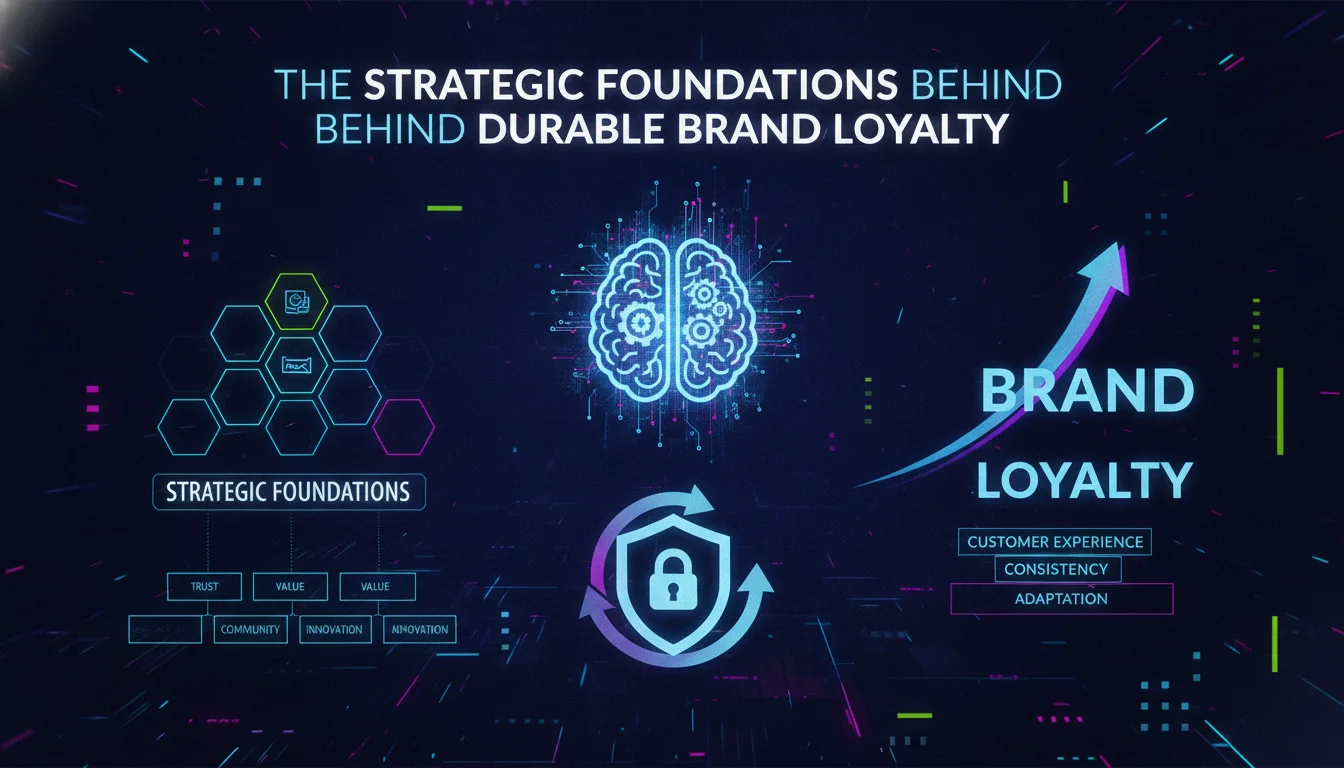
Most successful brand loyalty rest on three foundational elements identified across competitor research: consistency, trust, and emotional connection. Consistency means the brand delivers the same quality and experience every time. Trust means customers believe the brand will meet their expectations. Emotional connection means the brand aligns with customers’ values and personal identity. Without these three, even the most generous rewards program becomes a discounting exercise rather than a loyalty engine.
Consistency, Trust, and Emotional Connection
Drive Research describes loyal customers as gold for businesses: they return, spread positive word-of-mouth, and often pay a premium. Those behaviors emerge when a brand is reliable. A customer who buys the same skincare brand because it never causes a reaction is demonstrating consistency-based loyalty. If the brand changes the formula without warning, that trust collapses and the customer explores alternatives. loyalty strategies should therefore protect the core promise before adding new features or campaigns.
“Loyal customers are like gold for businesses. They not only return, but they also often spread the word about the brands they love.” – Drive Research, 2024
Why Product Quality Still Dominates
Product quality is the baseline that makes all other loyalty tactics possible. According to EasyPost, one study found that 82% of consumers list product quality as the top factor in building brand loyalty. A rewards program cannot compensate for a product that fails to perform. B2B and B2C brands alike should treat quality assurance, supply chain reliability, and post-purchase support as this type of strategies in their own right. If the product is excellent, rewards and personalization amplify loyalty. If it is mediocre, those same tactics merely delay churn.
The Role of Customer Experience and Post-Purchase Moments
Customer experience covers every interaction from discovery through support. EasyPost emphasizes that loyalty depends on the quality of your products and the experiences customers have with your business. A great post-purchase experience – clear order updates, easy returns, proactive support – can convert a one-time buyer into a repeat customer. In B2B, exceptional customer service is even more critical because buying cycles are longer and relationships more complex. Tailored services, live chat options, and proactive issue resolution are all part of the loyalty toolkit.
Pros and Cons of Investing in Brand Loyalty Strategies
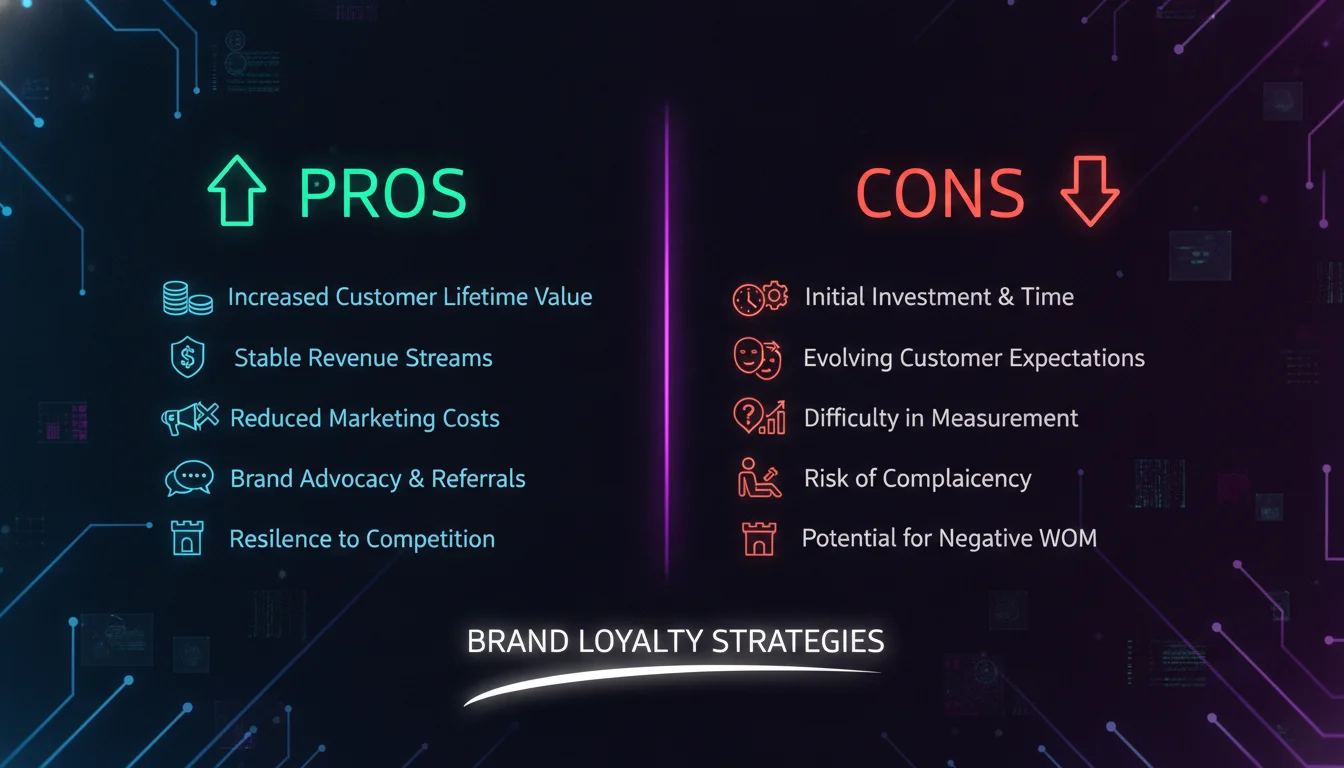
this kind of strategies deliver real financial returns, but they require sustained investment and careful design. Before committing to a full program, weigh the genuine advantages against the real challenges.
Pros
- Higher lifetime value: Loyal customers spend more over time, try new products, and upgrade to premium options because they already trust the brand.
- Lower acquisition costs: Retaining existing customers is significantly cheaper than constantly replacing churned ones, freeing budget for product and experience investment.
- Organic word-of-mouth: Loyal customers become brand ambassadors, leaving positive reviews and referring friends – reducing paid media dependency.
- Competitive insulation: A strong loyalty base makes it harder for competitors to poach customers on price alone, especially during market downturns.
- Richer data: Loyalty programs generate first-party behavioral data that powers better personalization and smarter product decisions.
Cons
- Upfront cost and complexity: Building a real loyalty program – technology, rewards inventory, staff training – requires meaningful investment before results appear.
- Risk of discount dependency: Poorly designed programs train customers to wait for points or promotions rather than buying at full price, eroding margins.
- Data privacy pressure: Collecting the behavioral data that powers personalization requires transparent policies and ongoing compliance work as regulations tighten.
- Program fatigue: Consumers belong to multiple loyalty programs and disengage from those that feel generic or fail to deliver clear value quickly.
Proven Brand Loyalty Strategies for B2C and B2B Markets
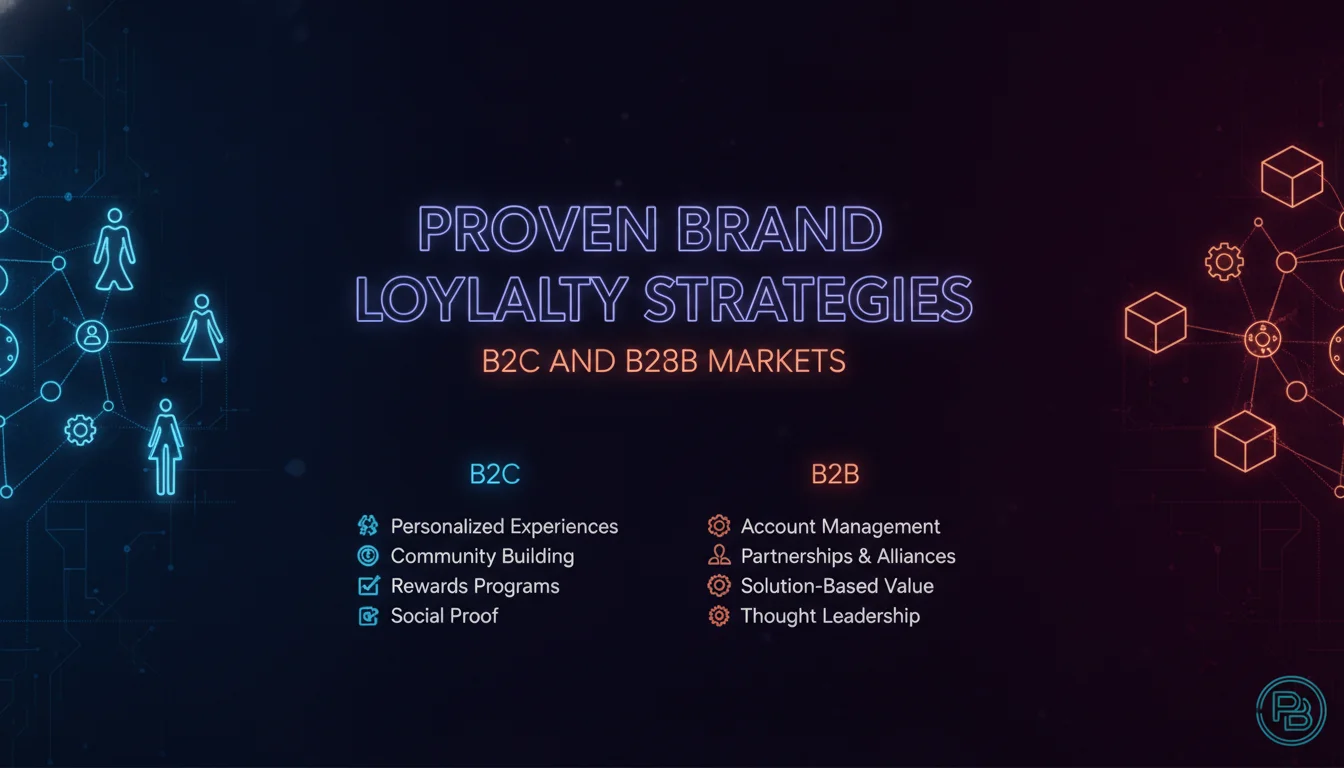
The following brand loyalty appear consistently across the competitor landscape and apply to both B2C and B2B settings. They are not mutually exclusive. The strongest programs layer several tactics together to create a cumulative effect, targeting different drivers of repeat behavior from rational incentives to emotional belonging.
Rewards Programs That Actually Reward
A rewards program is a structured system that incentivizes repeat purchases or other valuable actions. The most effective loyalty strategies built around rewards are easy to understand and offer meaningful value at predictable thresholds. Starbucks launched My Starbucks Rewards as one of the first mobile app loyalty programs, allowing customers to pay and earn without waiting while giving the company valuable preference data. Sephora’s Beauty Insider program uses a traditional points-based system but differentiates by letting customers choose how to spend points in its Rewards Bazaar. In B2B, loyalty programs can offer exclusive deals, early access, or referral incentives that align with longer buying cycles.
Omnichannel Engagement and Personalization
Omnichannel engagement is the practice of delivering a consistent, connected experience across every channel a customer uses: app, website, email, social media, and physical store. Personalization is the use of customer data to tailor offers, messages, and recommendations to individual preferences. Together they create the sense that the brand genuinely knows the customer. Brands should avoid forcing customers to repeat information across channels or sending generic promotions that ignore purchase history. These two failures are among the fastest ways to undermine this type of strategies that are otherwise well-funded.
Customer Service and Feedback Loops
Customer service is a direct expression of brand values. Listening to customers through surveys, social media comments, and support interactions – then implementing changes based on that feedback – signals respect. The US Chamber of Commerce advises B2B businesses to provide top-notch service using automated replies for common inquiries and live chat options, with staff who can proactively identify and address issues before they escalate. A feedback loop closes the gap between what the brand promises and what customers actually experience.
Community Building and Shared Identity
Transactional rewards are necessary but insufficient on their own. The strongest this kind of strategies build emotional community by connecting customers to a story, mission, or shared identity. According to Mailchimp, brand loyalty is customers’ emotional and psychological commitment toward a brand, and 72 percent of customers have brand loyalty for at least one brand. That means the market is already saturated with loyalty programs. The battle is for which brand earns the emotional slot. Community features like user groups, exclusive events, and shared values deepen the bond beyond the purchase transaction.
“Cultivating brand loyalty is a long-term investment that requires consistent dedication and understanding your target audience. It involves delivering on your brand promise and providing value at every touchpoint.” – Mailchimp Marketing Library
Loyalty Program Models Compared
Not all loyalty programs are created equal. The table below compares six common program models, including points-based systems, tiered VIP structures, paid memberships, referral programs, gamification, and subscription-based perks. Each model has different strengths depending on your margins, purchase frequency, and audience expectations.
| Program Model | How It Works | Best For | Evidence-Based Example |
|---|---|---|---|
| Points-based rewards | Customers earn points for purchases and redeem them for rewards. | High-frequency B2C purchases with broad product catalogs. | Sephora Beauty Insider lets customers choose rewards in the Rewards Bazaar. |
| Tiered VIP tiers | Customers unlock higher status and benefits as they spend more or engage more. | Brands with a wide range of customer value and room for aspirational loyalty. | Mirenesse offers a paid gold tier with double points and secret sales for a $10 monthly membership. |
| Paid memberships | Customers pay a recurring fee for exclusive perks and better economics. | High-engagement brands with predictable replenishment or premium service. | Mirenesse’s gold tier is a direct paid member tier example. |
| Referral programs | Existing customers receive incentives for referring new customers. | B2B and B2C brands where word-of-mouth drives acquisition. | Referral programs are highlighted by Rivo as a core loyalty strategy. |
| Gamification | Customers earn badges, complete challenges, or unlock achievements for engagement. | Brands targeting digitally native audiences with frequent app or site visits. | Rivo lists gamification alongside omnichannel loyalty and flexible redemption. |
| Subscription-based perks | Recurring subscription includes member-only benefits beyond the core product. | Businesses with natural replenishment cycles or content-driven value. | Rivo emphasizes subscription-based perks as a separate loyalty strategy. |
Points-Based and Tiered VIP Systems
Points-based systems are the most familiar loyalty model. They work best when redemption is transparent and rewards feel attainable. Tiered VIP systems add status psychology: customers who reach a higher tier feel recognized and are less likely to defect. The key is not making tiers so far apart that only the top spenders benefit. Design tiers around realistic spend thresholds and include soft benefits like early access or dedicated support at every level.
Paid Memberships and Subscription Perks
Paid memberships flip the loyalty equation. Instead of earning rewards through spending, customers pay a recurring fee to unlock better value. Mirenesse’s gold tier, described by Influx, charges a $10 monthly membership for two points per dollar spent, queue jumps, secret sales, and access to a tester panel. This model works only when the perceived value of perks clearly exceeds the fee. It also creates a committed relationship because the customer has a financial stake in continuing.
Gamification and Non-Purchase Rewards
Gamification is the application of game mechanics – badges, progress bars, challenges – to loyalty programs. Rivo lists gamification as a favorite strategy, alongside rewarding non-purchase activities such as social follows, reviews, and referrals. Rewarding actions beyond purchases broadens engagement and captures customers who may not buy frequently but influence others. A B2B software brand might reward users for attending a webinar or completing onboarding, not just for renewing a contract.
How to Measure and Optimize Brand Loyalty Strategies
Measurement separates real brand loyalty from guesswork. Without clear metrics, brands cannot tell whether their rewards program is building emotional commitment or simply renting behavior with discounts. The research suggests tracking a combination of attitudinal and behavioral signals: Net Promoter Score, Customer Loyalty Index, and repeat purchase rates. These metrics answer different questions – NPS measures willingness to recommend, Customer Loyalty Index measures overall loyalty strength, and repeat purchase rate measures actual buying behavior.
Core Metrics: NPS, Repeat Purchase Rate, and Customer Loyalty Index
NPS is a single-question metric that asks customers how likely they are to recommend a brand on a 0-to-10 scale. Repeat purchase rate is the percentage of customers who buy more than once over a defined period. Customer Loyalty Index is a composite metric that combines attitudinal and behavioral data to score loyalty. According to Open Loyalty, tracking these metrics helps refine brand loyalty strategies and identify areas for improvement. Brands should establish baselines before launching a new program and measure shifts at least quarterly.
Segmenting B2B Buyers and B2C Audiences
Segmentation is the division of a customer base into distinct groups based on needs, behaviors, or firmographics. B2B brand loyalty strategies work better when informed by segmentation because business buyers have different values than individual consumers. The US Chamber of Commerce recommends identifying the values of each segment and determining how they align with business offerings. A segment that values speed may respond to expedited service benefits, while a segment that values cost certainty may respond to bulk pricing perks. Personalizing rewards by segment is a recurring theme across the top-performing loyalty programs.
Using Data Analytics Without Losing Trust
Data analytics powers personalization, but it must be used transparently. Consumers are more willing to share data when they receive clear value in return – personalized offers, faster service, or relevant recommendations. Loyalty software can track purchase behavior, program engagement, and channel preferences. The goal is to use that data to make the experience feel effortless, not surveilled. Privacy policies should plainly state what is collected and why. As of 2026, trust in data handling is itself a loyalty lever, and brands that handle it poorly will see it reflected in their NPS scores.
Common Mistakes That Erode Brand Loyalty Strategies
Even well-funded loyalty programs fail when they ignore basic customer psychology. Open Loyalty identifies several common mistakes: inconsistent experiences, lack of personalization, unrewarding loyalty programs, and ignoring loyalty milestones. These errors are costly because they actively weaken trust – the same trust that 88 percent of consumers say is as important as price and quality, according to Coursera.
Inconsistent Experiences and Unrewarding Programs
Inconsistency occurs when a brand delivers different levels of service, pricing, or quality across channels or over time. A customer who receives excellent in-store service but poor app support feels the brand is unreliable. Unrewarding programs fail to deliver perceived value. If points expire too quickly, redemption options are sparse, or rewards are irrelevant, participation drops. Both mistakes convert brand loyalty strategies into sources of frustration rather than retention.
Ignoring Milestones and Lacking Personalization
Loyalty milestones – a customer’s one-year anniversary, tenth purchase, or referral milestone – are natural opportunities to reinforce the relationship. Ignoring them makes customers feel unseen. Lack of personalization has a similar effect: sending a generic discount for a product the customer never buys signals that the brand does not know them. Personalization is not just using a first name. It is tailoring the next best action based on past behavior and segment data.
Overcomplicating the Loyalty Experience
Simplicity is a competitive advantage. The US Chamber of Commerce advises creating a loyalty program that is easy to understand and avoiding too many features at once. A complicated point system with tier thresholds, blackout dates, and limited redemption windows overwhelms customers and makes tracking usage difficult. Start with a straightforward point accumulation system that provides benefits at certain levels or tiers. Add complexity only after customers adopt the core loop and engagement data confirms they want more.
Technology’s Role in Scaling Brand Loyalty Strategies
Technology enables brand loyalty strategies to scale beyond what manual programs can achieve. Loyalty software, data analytics platforms, social media tools, and AI-driven personalization engines work together to deliver the right message to the right customer at the right time. According to Open Loyalty, emerging trends include AI-driven personalization, omnichannel integration, and gamification – all of which require a technology backbone that unifies customer data across channels.
AI-Driven Personalization and Loyalty Software
AI-driven personalization is the use of machine learning to predict customer preferences and automate tailored recommendations. Loyalty software is a platform that manages program rules, points, tiers, and rewards while capturing engagement data. These tools let small teams operate programs that once required large marketing departments. They also enable real-time adjustments – for example, triggering a win-back offer when a high-value customer’s engagement drops below a threshold.
Social Platforms and User-Generated Content
Social media is both a listening channel and an advocacy channel. Encouraging user-generated content – reviews, photos, and testimonials – turns loyal customers into brand ambassadors. UGC builds social proof and deepens emotional connection, which is why it appears as a proven tactic across competitor research. Brands can highlight customer stories, run hashtag challenges, and reward customers for sharing authentic experiences. In B2B, case studies and peer recommendations serve the same function.
Omnichannel Integration and Mobile Wallets
Omnichannel integration is the technical connection of all sales and service channels so customer data and experience flow without friction. Mobile wallets and dedicated apps reduce friction at the point of purchase. Starbucks’ mobile app remains a benchmark: customers can order ahead, pay, and earn rewards in one action. For B2B, omnichannel may look like a unified customer portal where buyers can review orders, access support, and redeem loyalty benefits without contacting a representative. Less friction means stronger habit formation.
Step-by-Step Process to Design Brand Loyalty Strategies
A loyalty program is a structured initiative that rewards customers for repeat engagement. Designing one does not require a massive budget, but it does require a sequence that connects customer insight to measurable outcomes. The following process synthesizes competitor guidance and works for both B2C and B2B brands looking to build brand loyalty strategies that last.
- Step 1: Map Customer Segments and Values. Use purchase data, surveys, and support interactions to divide customers into groups based on needs, behaviors, and value. Identify what each segment wants – speed, price stability, recognition, access, or community. This step ensures your brand loyalty strategies are not generic.
- Step 2: Choose a Program Structure. Decide between points-based, tiered, paid membership, referral, gamification, or a hybrid. Match the structure to purchase frequency and margin. B2B brands with long sales cycles may prefer tiered relationship perks over points.
- Step 3: Set Clear Rewards and Thresholds. Define what customers earn, how they earn it, and what they redeem. Keep it simple and avoid too many features at launch. Tie rewards to behaviors that drive long-term value, not just one-time discounts.
- Step 4: Integrate Across Channels. Ensure the program works in-store, online, in-app, and through customer service. Consistent tracking across channels prevents data silos and customer frustration.
- Step 5: Launch, Measure, and Iterate. Start with a pilot segment. Track NPS, repeat purchase rate, and redemption rate. Collect qualitative feedback and adjust thresholds, rewards, or communication cadence. Brand loyalty strategies are never finished – they evolve with customer expectations.
Step 1: Map Customer Segments and Values
Without segmentation, a loyalty program treats every customer the same, which wastes budget and dilutes relevance. Use purchase history to identify high-frequency buyers, high-value buyers, and at-risk customers. Then interview or survey a sample to understand what would make them feel valued. This step alone often reveals that different segments need entirely different loyalty incentives – and that one-size-fits-all brand loyalty strategies are a false economy.
Step 2: Choose a Program Structure
The program structure should mirror how customers already buy. A coffee chain benefits from a points-per-purchase model because purchases are frequent and low-cost. A B2B supplier with annual contracts may benefit more from a tiered status program that rewards relationship length and contract value. Consider paid memberships only if you can deliver perks that clearly exceed the fee, as Mirenesse does with its $10 monthly gold tier.
Step 3: Launch, Measure, Iterate
Launching is not the end. It is the beginning of optimization. Establish a baseline for repeat purchase rate and NPS before launch. After 90 days, compare behavior among enrolled versus non-enrolled customers. If redemption is low, check whether rewards are attainable or relevant. If engagement drops after signup, revisit onboarding and communication. Iteration is what separates successful brand loyalty strategies from stagnant discount clubs.
Brand Loyalty and the Broader Brand Equity Picture
Brand loyalty strategies do not operate in isolation. They sit inside a larger brand equity framework that includes brand awareness, brand association, and perceived quality. Brand awareness is whether customers know you exist. Brand association is what they think and feel when they encounter your name. Perceived quality is their judgment of your product relative to alternatives. Loyalty is the behavioral output of all three working together. A brand with strong awareness but weak associations will struggle to convert recognition into retention, no matter how generous the rewards program.
This is why brand loyalty strategies must be coordinated with creative and communications teams, not siloed inside a CRM tool. The visual identity, the tone of customer emails, the packaging experience – all of these shape the associations that make loyalty feel natural rather than transactional. At Emin Media, we see this connection play out across every branding and digital campaign we run: the brands that retain customers longest are the ones whose loyalty programs feel like an extension of who they are, not a bolt-on incentive layer.
The Future of Brand Loyalty Strategies
Brand loyalty strategies in 2026 must earn retention rather than assume it. The evidence from competitor research is consistent: customers reward brands that combine excellent products, trustworthy service, personalized engagement, and meaningful rewards. They punish brands that deliver inconsistent experiences, ignore feedback, or treat loyalty as a transaction. The future belongs to brands that make loyalty feel like a relationship, not a points balance.
From Transactional Rewards to Emotional Community
Transactional rewards – discounts and points – are necessary but insufficient. The strongest brand loyalty strategies build emotional community by connecting customers to a story, mission, or shared identity. According to Mailchimp, 72 percent of customers have brand loyalty for at least one brand. That means the market is already saturated with loyalty programs. The battle is for which brand earns the emotional slot. Community features like user groups, exclusive events, and shared values deepen the bond beyond the purchase.
What the Evidence Tells Us About Sustainable Loyalty
The data points are clear: 59 percent of U.S. consumers say once loyal, loyal for life; 88 percent say trust is as important as price and quality; 82 percent list product quality as the top factor; and a 5 percent retention increase can lift revenue between 25 percent and 95 percent. These numbers do not describe a passive market. They describe a market where loyalty is valuable but fragile. Sustainable brand loyalty strategies require continuous investment in product quality, customer experience, and value. A brand that cuts service to fund rewards will see the rewards program fail.
Next Moves for Brand Leaders
Start by auditing your current customer experience for consistency and trust. Then implement one or two brand loyalty strategies from this article – a simple points-based program or a referral incentive – and measure the impact on repeat purchase rate and NPS. Use technology to personalize outreach without losing the human touch. The brands that succeed in 2026 will treat loyalty not as a marketing campaign, but as an operating principle baked into every customer interaction.
Ready to build something that actually retains customers? Contact Emin Media for a free brand consultation and let’s design brand loyalty strategies that fit your audience, your margins, and your long-term vision.
Frequently Asked Questions
What are the 5 pillars of brand loyalty?
The five pillars commonly referenced are trust, consistency, emotional connection, customer experience, and value. These pillars align with competitor research showing that loyal customers prioritize product quality, reliable service, and a sense of being understood by the brand.
What is the 3-7-27 rule in branding?
The 3-7-27 rule is a branding guideline about repetition and impression frequency. It does not appear in the competitor evidence reviewed for this article, so brands should verify its applicability from primary sources rather than treating it as a proven loyalty framework.
What are the four C’s of customer loyalty?
The four C’s are often described as customer, consistency, convenience, and communication. While not explicitly named in the competitor research, these concepts map directly to the brand loyalty strategies of segmentation, omnichannel integration, simplicity, and feedback loops covered throughout this article.
What are examples of brand loyalty?
Strong examples include My Starbucks Rewards, Sephora’s Beauty Insider, and Mirenesse’s paid gold tier. Each brand excels by combining rewards, mobile convenience, personal choice, and tiered perks to keep customers engaged across multiple touchpoints.
How do you measure brand loyalty strategies effectively?
Measure them using Net Promoter Score, Customer Loyalty Index, repeat purchase rate, and redemption rate. Track these metrics over time and segment results by customer group to understand which brand loyalty strategies drive retention versus which ones simply attract one-time deal seekers.
Why is product quality more important than rewards for loyalty?
According to EasyPost, 82 percent of consumers list product quality as the top factor in building brand loyalty. A rewards program amplifies loyalty only when the underlying product consistently meets expectations. Without that foundation, even the most generous brand loyalty strategies simply delay churn rather than prevent it.
Enjoyed this article?
Contact Emin Media for a free brand consultation and let's create something amazing together.
Get in TouchRelated Articles
Digital Storytelling for Brands: The Complete Guide
Digital storytelling for brands builds real audience connections through narrative. Learn proven techniques, formats, and…
Design Thinking for Marketing: A 2026 Guide
Design thinking for marketing builds campaigns around real user needs. Learn the 5 phases, common…

Creative Direction for Video Shoots: A Complete Guide
Master creative direction for video shoots with proven steps, tools, and strategies that build brand…