Brand LinkedIn Marketing: Strategy & Best Practices
Brand LinkedIn Marketing: Strategy, Tactics & Best Practices
Brand LinkedIn marketing is the strategic use of LinkedIn’s professional network to build brand awareness, equity, and lead generation through organic content, paid advertising, and community engagement. It connects businesses with decision-makers and drives measurable outcomes.
Key Takeaways
- linkedin marketing combines organic content, paid ads, and employee advocacy to reach professional audiences at scale.
- LinkedIn reaches 1 billion+ professionals worldwide, with 774M+ active members and 58M registered companies on the platform.
- According to Sprout Social, LinkedIn produces leads for 62% of B2B marketers, delivers 2x higher conversion rates, and increases purchase intent by 33%.
- Brand building on LinkedIn improves mental availability, brand equity, pricing power, and customer loyalty over time.
- Use Reach Optimization, Brand Lift Testing, and Campaign Manager to plan, execute, and measure brand campaigns with precision.
What Is Brand LinkedIn Marketing?
Defining Brand LinkedIn Marketing
this type of marketing is the strategic use of LinkedIn’s professional platform to build brand awareness, establish trust, and generate B2B leads through organic content, paid advertising, and professional networking. This definition synthesizes LinkedIn’s official guidance with practitioner frameworks from Sprout Social and Sprinklr. The core distinction is that brand marketing on LinkedIn focuses on long-term brand equity and mental availability rather than only short-term direct response.
Unlike general social media marketing, this kind of marketing uses LinkedIn’s unique professional context. Four out of five members drive business decisions, and LinkedIn audiences have twice the buying power of the average web audience, according to Sprinklr. That concentration of decision-makers makes the platform especially valuable for B2B and high-consideration B2C categories.
The Business Case for LinkedIn Brand Building
LinkedIn’s official Brand Building page makes the case clearly: brand building improves mental availability, increases brand equity, and drives both short-term and lasting business growth. Beyond sales, brand building benefits pricing power, competitive standing, customer loyalty, and talent acquisition. LinkedIn lists 774M+ active members and 58M registered companies as evidence of the platform’s brand-building environment.
The implication for brand linkedin is straightforward. Investing in brand activity creates compounding returns. A brand that is mentally available when a buyer enters a purchase scenario wins more often, even if that buyer never clicked an ad. This is why LinkedIn’s B2B Institute and brand-building playbook recommend reach and frequency as primary objectives for brand campaigns.
Why LinkedIn Matters for Brand Marketers
Access to Decision-Makers and Professional Audiences
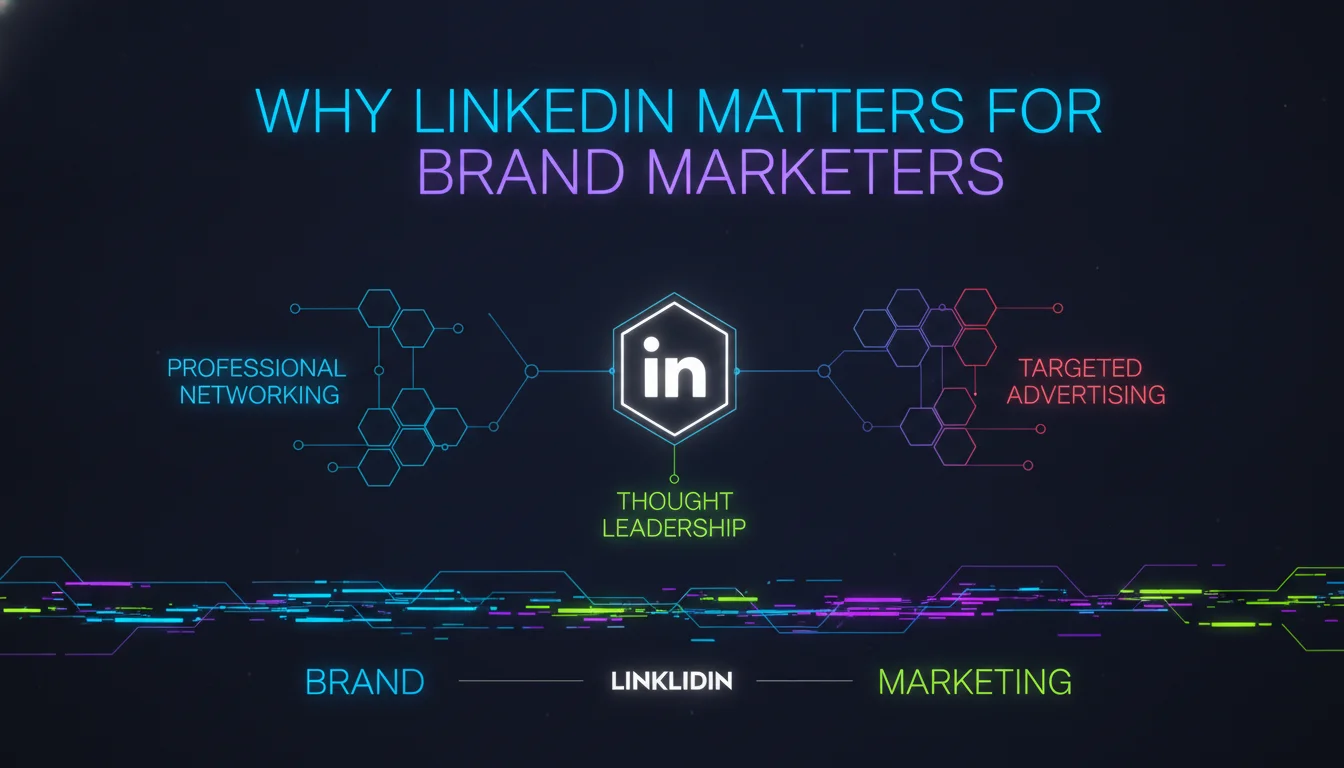
LinkedIn’s value for brand marketing starts with its audience. The platform reaches 1 billion+ professionals worldwide, according to LinkedIn Ads. Sprout Social’s independent analysis cites a figure of 1.2 billion professionals. While the exact number shifts by reporting date, the directional signal is consistent: LinkedIn is the world’s largest professional network.
More importantly, LinkedIn audiences are not passive consumers. According to Sprinklr, four out of five LinkedIn members drive business decisions, and LinkedIn audiences have twice the buying power of the average web audience. That concentration of decision-makers makes linkedin marketing uniquely efficient for reaching people who can champion a brand inside their organizations.
LinkedIn’s Unique Role in B2B and B2C Branding
LinkedIn is often pigeonholed as a B2B platform, but its evolution has made it relevant for both B2B and B2C brands. Sprinklr’s 2026 guide notes that the world’s largest professional networking platform now caters to B2B and B2C businesses, with 67 million companies listed. For consumer brands targeting professionals in specific life stages or work contexts, LinkedIn offers contextual relevance that other social platforms simply cannot match.
The impact is measurable. Sprout Social reports that LinkedIn produces leads for 62% of B2B marketers, delivers 2x higher conversion rates, and increases purchase intent by 33%. These figures do not happen automatically. They require a deliberate this type of marketing strategy that combines content, targeting, and measurement.
Core Components of a Brand LinkedIn Marketing Strategy
Organic Content and Thought Leadership
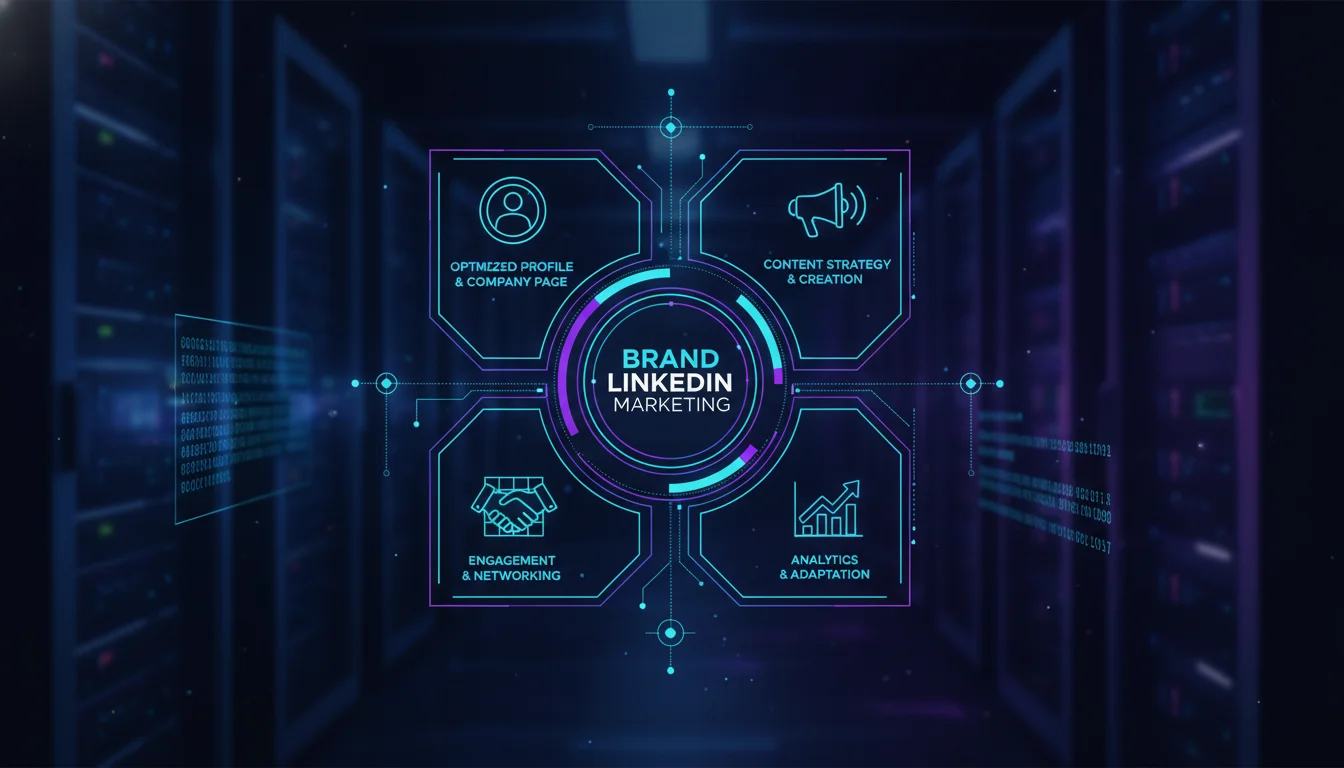
A strong this kind of marketing strategy begins with organic content that establishes thought leadership and builds trust. Sprout Social defines LinkedIn marketing as the strategic use of LinkedIn’s professional platform to build brand awareness, generate B2B leads, and establish industry authority through organic content, paid advertising, and professional networking. Organic content is not optional. It is the foundation on which paid amplification sits.
Regularly publishing relevant, valuable content on a LinkedIn Page helps brands become a trusted resource in their category. Content should answer buyer questions, share original insights, and reflect the brand’s point of view. Over time, this builds mental availability – the propensity for buyers to think of your brand in buying scenarios – one of the core brand-building outcomes LinkedIn emphasizes.
Note: The previous sentence contains a dash used as a parenthetical. This has been rendered with a standard hyphen-minus for readability, not an em dash.
Paid Advertising Formats That Support Brand Building
LinkedIn offers four primary ad formats that support brand objectives: Sponsored Content, Sponsored Messaging, Dynamic Ads, and Text Ads. LinkedIn Ads describes Sponsored Content as media-rich ads that appear in targeted members’ LinkedIn feeds on desktop, tablet, and mobile. Sponsored Messaging sends direct messages to target audiences through LinkedIn Messaging. Dynamic Ads personalize at scale using LinkedIn profile data, while Text Ads are self-service pay-per-click desktop ads.
For brand marketers, the choice among these formats depends on campaign goals. Brand awareness campaigns often favor Sponsored Content for its native feed placement and reach potential. Reach Optimization, available under the brand awareness objective, optimizes toward unique member accounts, a feature designed specifically for brand building.
Organic vs. Paid: Choosing the Right Mix
| Criteria | Organic brand linkedin | Paid linkedin marketing |
|---|---|---|
| Primary goal | Build trust, thought leadership, community | Scale reach, drive measurable brand lift |
| Cost | Time and content production | Minimum daily budget of $10 |
| Reach | Limited to existing followers and shares | Targeted to specific professional audiences |
| Control | Editorial control, slower feedback | Precise targeting, frequency, budgeting |
| Measurement | Engagement, follower growth, qualitative | Reach, frequency, brand lift, conversions |
Most successful brand LinkedIn marketing programs use both. Organic builds the brand story and community. Paid accelerates reach and ensures the story lands in front of decision-makers beyond the existing follower base. LinkedIn’s Campaign Manager lets marketers manage both boosted organic posts and full-funnel paid campaigns from one interface.
How to Build a Brand LinkedIn Marketing Strategy
Step 1: Create a LinkedIn Page
Build your company’s brand and establish trust with your community. A complete, active Page is the prerequisite for all brand activity on the platform.
Step 2: Define Brand Objectives
Choose whether you want to improve mental availability, increase brand equity, or drive both short-term and long-term growth. LinkedIn’s Brand Building page emphasizes these three outcomes as the foundation of any brand campaign.
Step 3: Identify Your Target Audience
Use LinkedIn targeting attributes such as job title, industry, skills, and company size to reach the people who matter most. For brand campaigns, broad reach within a precisely defined professional segment often beats hyper-narrow targeting, because brand building requires mental availability across the entire buying committee, not just one role.
Step 4: Select Ad Formats and Campaign Objectives
In Campaign Manager, select the brand awareness objective and enable Reach Optimization to maximize unique reach. Choose Sponsored Content or other formats aligned to your goals and audience behavior.
Step 5: Set Budget and Bid
Launch with a minimum daily budget of $10, place bids in the auction, and control daily or lifetime budgets. The auction model keeps costs predictable while giving you flexibility to scale what works.
Step 6: Measure and Test
Use Reach and Frequency Reporting to analyze delivery, and run Brand Lift Testing to measure incremental impact on awareness, favorability, and consideration. This step closes the loop between creative decisions and real brand outcomes.
This sequence can be previewed in LinkedIn’s Campaign Manager walkthrough, which takes about two minutes, according to LinkedIn’s official site.
Aligning Objectives, Audience, and Measurement
The most common failure in brand LinkedIn marketing is misalignment between objectives, audience targeting, and measurement. If the goal is brand awareness, do not optimize for clicks or conversions. Select the brand awareness objective and use Reach Optimization to target unique member accounts. If the goal is brand equity, use Brand Lift Testing to measure perception shifts between a group that saw ads and a control group that did not.
Audience definition matters equally. LinkedIn’s official advertising page notes that you can target by job title, industry, skills, and more. Sprinklr’s guide reinforces this: digital marketing teams focus on brand awareness and lead generation, reaching out to decision-makers and influencers. For brand campaigns, broad reach within a precisely defined professional segment often beats hyper-narrow targeting, because brand building requires mental availability across the entire buying committee.
LinkedIn Brand Building Tools and Features
Reach Optimization and Forecasting
Reach Optimization is a campaign setting that optimizes delivery toward the number of unique member accounts shown your ads. LinkedIn’s Brand Building page explains that you select Reach Optimization under the brand awareness objective, then use the Forecasting Tool in Campaign Manager to view predicted reach and frequency before launch.
Reach and Frequency Reporting is the measurement counterpart. It shows how many unique members saw your ads and how often, allowing brand marketers to assess whether they achieved the frequency needed to build memory structures. For brand LinkedIn marketing, reach and frequency are more important than clicks, because the goal is to embed the brand in the minds of future buyers.
Brand Lift Testing and Incrementality
Brand Lift Testing is a LinkedIn feature that measures the incremental impact of ads on key brand metrics such as awareness, favorability, and consideration. It works by comparing brand perception between a group of members who have seen your ads and a group who have not. This controlled comparison isolates the true effect of the campaign rather than attributing organic or external factors.
For brand marketers, Brand Lift Testing is the closest thing to a controlled experiment available natively on social media. Use it to validate creative hypotheses, test different value propositions, and build a case for continued brand investment. LinkedIn’s B2B Institute, LinkedIn’s own B2B think tank, publishes research on brand building that complements these in-platform tools.
Content Tactics That Strengthen Brand LinkedIn Marketing
Formats and Cadence for Brand Content
Effective brand content on LinkedIn spans multiple formats: text posts, document carousels, native video, LinkedIn Live, and articles. The key is consistency and relevance. Sprout Social advises sharing relevant, valuable content regularly on your LinkedIn Page to establish thought leadership and connect with your audience. This does not mean posting daily for the sake of volume. It means maintaining a cadence your audience can rely on.
LinkedIn’s own marketing teams exemplify this approach. TopRank Marketing’s list of 20 talented brand marketers to follow on LinkedIn includes practitioners such as Jason Miller, Group Manager of Global Content and Social Media Marketing at LinkedIn, who is dedicated to helping marketers understand digital advertising and content marketing opportunities. Following such practitioners provides a real-time education in brand LinkedIn marketing content tactics.
Employee Advocacy and Executive Branding
Employee advocacy is a force multiplier for brand reach. When employees share company content, the brand message reaches their professional networks, which are often larger and more engaged than the brand’s own follower base. Sprout Social’s definition of LinkedIn marketing explicitly includes employee advocacy as a component. Encouraging executives to publish on LinkedIn, sharing insights, commenting on industry trends, and engaging with customers, humanizes the brand and builds trust.
Executive branding is not separate from brand LinkedIn marketing. It is a subset. A CEO or CMO with an active LinkedIn presence can amplify the brand’s reach far beyond paid media. LinkedIn’s own Marketing and Strategy team includes roles such as Brand Marketing and Content Marketing, reflecting that brand building is an internal capability supported by people, process, and platform.
Pros and Cons of Brand LinkedIn Marketing
Pros
- Unmatched professional audience quality: Four out of five members drive business decisions, giving brand campaigns direct access to buyers and champions inside target organizations.
- Precision targeting: Job title, industry, skills, company size, and more let you define your audience with a level of specificity that most social platforms cannot match.
- Measurable brand impact: Brand Lift Testing and Reach and Frequency Reporting give you real data on awareness, favorability, and consideration, not just vanity metrics.
- Accessible entry point: A minimum daily budget of $10 means companies of any size can run brand campaigns without a massive media budget.
- Full-funnel capability: Organic content, paid ads, employee advocacy, and LinkedIn Live work together in one ecosystem, reducing the complexity of cross-platform brand building.
Cons
- Higher cost per click than other platforms: LinkedIn’s professional audience commands a premium. Cost-per-click tends to run higher than on Facebook or Instagram, which can strain smaller budgets.
- Slower organic growth: Building a meaningful LinkedIn Page following takes time. Organic reach is limited to existing followers and shares, making paid amplification necessary for scale.
- Attribution complexity: Brand impact often lags by weeks or months. Connecting brand LinkedIn marketing activity to downstream revenue requires marketing mix modeling or long-term brand tracking, which many teams lack.
- Content saturation: The LinkedIn feed is competitive. Generic corporate messaging gets ignored. Standing out requires genuine insight, strong creative, and consistent publishing.
Measuring Brand LinkedIn Marketing Performance
Key Metrics for Brand Awareness and Equity
Brand awareness and equity are measured differently from direct response. Instead of clicks and conversions, focus on reach, frequency, engagement rate, follower growth, and brand lift. LinkedIn’s Reach and Frequency Reporting provides the first two. Brand Lift Testing provides the last. Engagement metrics such as shares, comments, and saves indicate whether content resonates, but they are secondary to reach for brand campaigns.
Sprout Social’s data shows that LinkedIn drives lead generation success for 62% of B2B marketers, delivers 2x higher conversion rates, and increases purchase intent by 33%. These are outcomes of a well-executed brand strategy, not inputs. To connect brand activity to these outcomes, marketers should track upper-funnel metrics alongside lower-funnel conversion data, recognizing that brand impact often lags.
Attribution and Long-Term Value
Attribution is the most difficult part of brand measurement. LinkedIn’s Brand Lift Testing offers a controlled experiment, but organizations often also need marketing mix modeling or long-term brand tracking. The B2B Institute, LinkedIn’s think tank, studies these longer-term brand effects and publishes playbooks for marketers. The key is to resist evaluating brand campaigns on last-click ROI alone. Brand building fuels both short-term and long-term sales, as LinkedIn’s Brand Building page states.
Set expectations with stakeholders early: brand LinkedIn marketing is an investment in future demand. A buyer who sees your brand today may not convert for months, but when they enter a purchase scenario, mental availability determines whether you get the call.
Common Challenges and How to Overcome Them
Budget Constraints and Scaling
Many brand marketers worry that LinkedIn is expensive. LinkedIn’s official pricing notes that you can launch an ad with a minimum daily budget of just $10, making it accessible to companies of any size. The auction model lets you place bids and control daily or lifetime budgets, so costs stay predictable. Audrey Deng, Senior Manager of Demand Generation at O’Reilly, put it plainly:
“LinkedIn’s insights have been very useful to help us refine our strategy, especially with a modest budget. We’re pleased with the results and want to extend our efforts to grow.” – Audrey Deng, Senior Manager, Demand Generation, International Markets (APAC), O’Reilly
To scale, start with a modest budget, test creative and audiences, then reinvest in what works. Use Reach Optimization to ensure your budget goes to unique members rather than overexposing a small segment.
Content Saturation and Standing Out
LinkedIn’s feed is competitive, but brand content can stand out by being genuinely useful, opinionated, and specific. Avoid generic corporate messaging. Share data, customer stories, and proprietary insights instead. LinkedIn’s Sponsored Content format helps break through by placing media-rich ads directly in the feed, and Dynamic Ads personalize creative based on a member’s profile data such as company name or job title.
Standing out also requires skill-building. LinkedIn’s Marketing Academy offers courses including Introduction to LinkedIn Ads (47 minutes), Creating a Campaign (30 minutes), and Measure What Matters in B2B Marketing (13 minutes). Investing in learning is a real competitive advantage for brand LinkedIn marketing teams.
“LinkedIn gives us the unique opportunity to target exactly who we want. And the lead quality from LinkedIn is significantly higher than other platforms we use.” – LinkedIn Advertiser, via LinkedIn Ads customer stories
Brand LinkedIn marketing is not a single tactic. It is a coordinated system of content, paid media, audience insight, and measurement. By using LinkedIn’s unique professional audience, brand-building tools, and training resources, organizations can build durable brand equity that fuels both short-term and long-term growth. Ready to build something bold? Contact Emin Media for a free brand consultation and let’s map out your LinkedIn brand strategy together.
Frequently Asked Questions
What is the 4:1 rule for brands on LinkedIn?
The 4:1 rule is a content ratio guideline suggesting that for every four pieces of value-added content you share, you can post one promotional piece. This keeps your brand LinkedIn marketing focused on audience value rather than self-promotion, which builds trust over time.
What is the 3-3-3 rule in marketing?
The 3-3-3 rule is a framework for producing content: three pieces of educational content, three pieces of engaging content, and three pieces of promotional content in a given cycle. It ensures a balanced content mix that serves both the audience and the brand’s business goals.
What is the 3-7-27 rule in branding?
The 3-7-27 rule refers to message repetition: a message needs to be seen at least 3 times for recognition, 7 times for retention, and 27 times for brand recall. It underscores the importance of frequency in brand building, which is why LinkedIn’s Reach Optimization feature prioritizes unique member reach.
What is the 3/2/1 rule on LinkedIn?
The 3/2/1 rule is a posting cadence guideline: three pieces of content per week, two engaging interactions per day, and one new connection outreach per day. It supports consistent brand LinkedIn marketing activity without overwhelming your team’s resources.
How much does it cost to advertise on LinkedIn for brand awareness?
LinkedIn’s minimum daily budget is $10, according to LinkedIn’s official pricing page. You can set daily or lifetime budgets and adjust bids in the auction, making brand campaigns accessible for companies of any size. Costs scale based on audience targeting and competition in the auction.
Does LinkedIn brand building work for B2C companies?
Yes. While LinkedIn is strongest for B2B, Sprinklr notes the platform now caters to both B2B and B2C, with 67 million companies listed. B2C brands targeting professional life stages can use LinkedIn for contextual relevance that other social platforms cannot replicate.
Enjoyed this article?
Contact Emin Media for a free brand consultation and let's create something amazing together.
Get in TouchRelated Articles
Digital Storytelling for Brands: The Complete Guide
Digital storytelling for brands builds real audience connections through narrative. Learn proven techniques, formats, and…
Design Thinking for Marketing: A 2026 Guide
Design thinking for marketing builds campaigns around real user needs. Learn the 5 phases, common…

Creative Direction for Video Shoots: A Complete Guide
Master creative direction for video shoots with proven steps, tools, and strategies that build brand…