Brand Equity Measurement: The Complete 2026 Guide
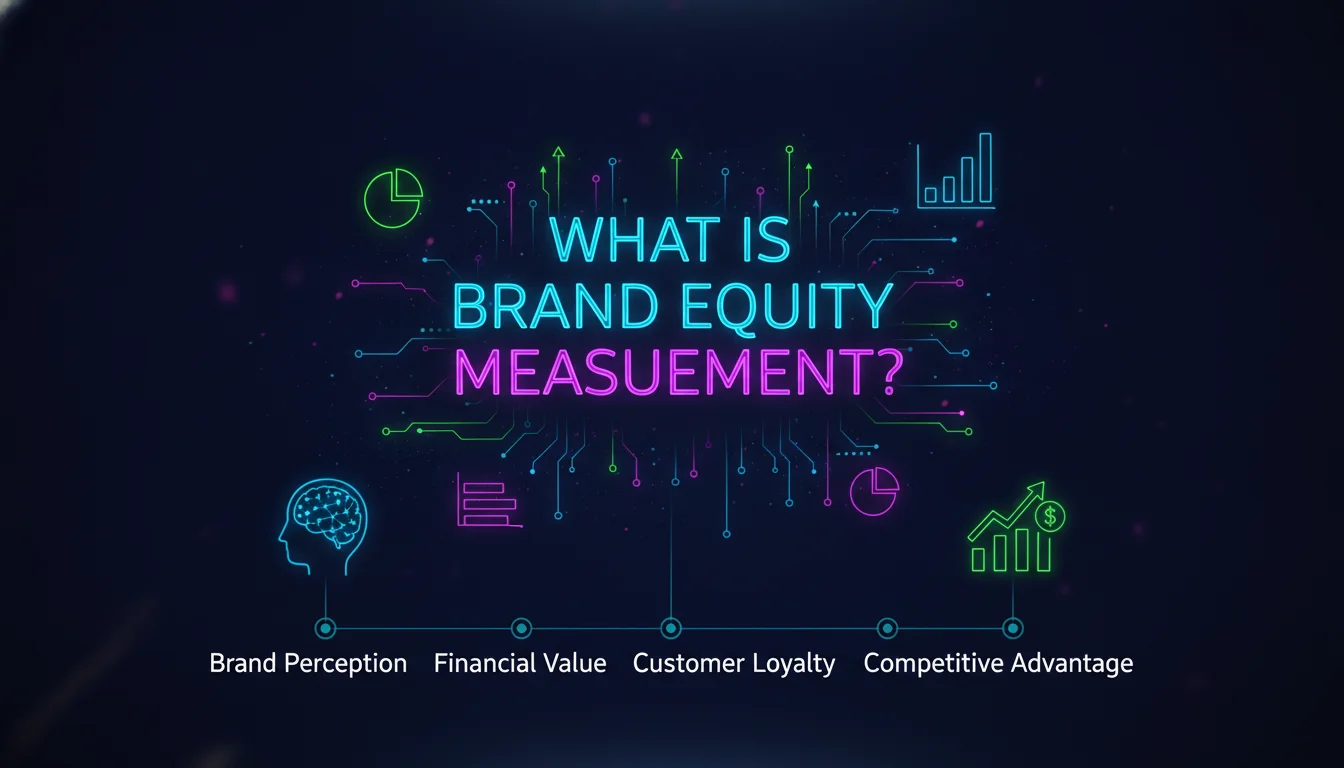
Brand equity measurement is the process of quantifying consumer awareness, perceptions, and loyalty to determine a brand’s financial and strategic value. It combines survey metrics, behavioral data, and financial modeling to guide brand investment.
Key Takeaways
- equity measurement connects consumer perceptions to business outcomes by tracking awareness, knowledge, loyalty, and perceived quality.
- Kantar Brand Power uses meaningful, different, and salient as core metrics that predict long-term sales.
- Ipsos offers complementary tools including Brand Value Creator, Brand Mental Networks, and Brand Signals.
- Marketing mix models can incorporate brand metrics, but they require careful econometric handling to avoid misleading results.
- Negative brand equity from recalls, scandals, or price increases without added value needs monitoring right alongside the positive metrics.
- Personal brand equity shifts depending on audience and category, so a single universal score rarely tells the whole story.
What Is Brand Equity Measurement?
this type of measurement is the discipline of assessing the strength of consumer-held associations, attitudes, and behaviors toward a brand. It moves past revenue reports to capture the intangible asset that drives willingness to pay, repeat purchase, and resilience against competitors. Think of it as the difference between a logo people recognize and a brand people actually trust.
Brand Equity Defined
According to Harvard Business School Online, brand equity encompasses consumers’ individual and collective levels of brand awareness and knowledge. Brand awareness refers to consumers’ level of recall, salience, and familiarity with your brand. Brand knowledge refers to consumers’ thoughts, feelings, attitudes, and relationships regarding your brand. These mental structures form the foundation of this kind of measurement, and they’re exactly why two brands with identical products can command wildly different prices.
Why Measurement Matters
Measuring brand equity helps organizations quantify an asset that never shows up on the balance sheet. Kantar frames a brand’s equity in the minds of consumers as the multiplier that drives the calculation of brand value. Without brand equity, marketing investments can’t be tied to long-term financial performance, and stakeholder buy-in becomes a tough sell in the boardroom.
“A brand’s equity in the minds of the consumers is the game-changing multiplier in the calculation of a brand’s value,” notes Kantar’s brand guidance team, describing why BrandZ methodology weighs perception alongside balance-sheet assets.
Measurement Versus Valuation
equity measurement focuses on consumer perception metrics over time, while brand valuation assigns a financial figure to the brand. Kantar’s BrandZ methodology accounts for intangible consumer perceptions over and above tangible assets. The distinction matters: measurement is an ongoing diagnostic process, while valuation is one output of that process.
Core Dimensions of Brand Equity
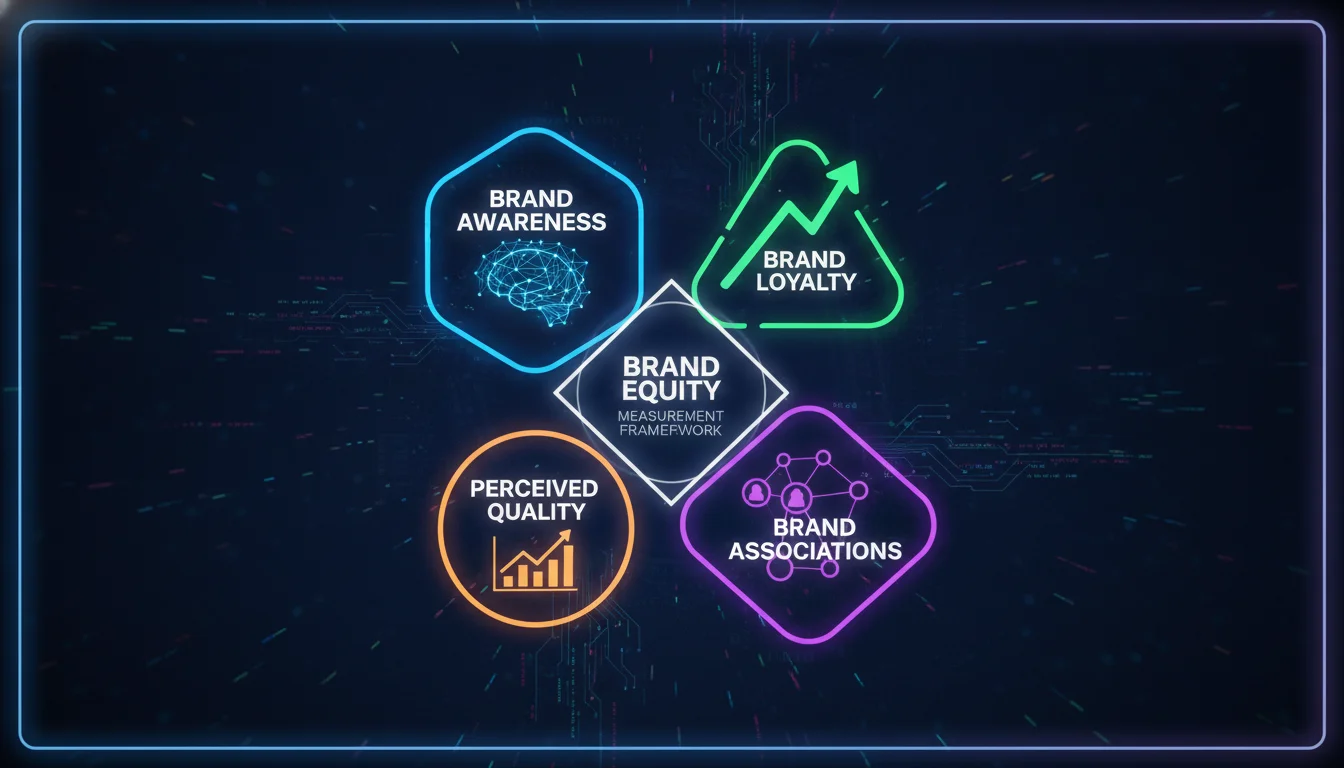
The core dimensions of brand equity are awareness, knowledge or associations, perceived quality, and loyalty. Most measurement frameworks break the concept into these levers because each captures a different way consumers think, feel, and act toward a brand.
Brand Awareness and Knowledge
Harvard Business School Online draws a clear line between brand awareness and brand knowledge. Awareness is the recall, salience, and familiarity consumers have with a brand. Knowledge runs deeper. It includes thoughts, feelings, attitudes, and relationships. A solid measurement system captures both the breadth of awareness and the depth of that knowledge.
Perceived Quality and Brand Associations
Associations are the meanings consumers attach to a brand through identity, narrative, and lived experience. HBS Online points to Apple for constant innovation, an intuitive experience, and clean design, and Lego for a high-quality, creative play experience. Nike gets called out too, for its enduring tie to peak athletic performance and inspiration. These associations shape perceived quality and pull a brand out of a crowded category.
Loyalty and Willingness to Pay
Positive brand equity makes consumers less price-sensitive and willing to pay a premium, according to HBS Online. They’re also more likely to make repeat purchases, try new products under the same name, and shrug off competitor offers. Negative equity flips that script entirely: avoidance, even when quality sits right on par with rivals.
Step-by-Step Brand Equity Measurement Process
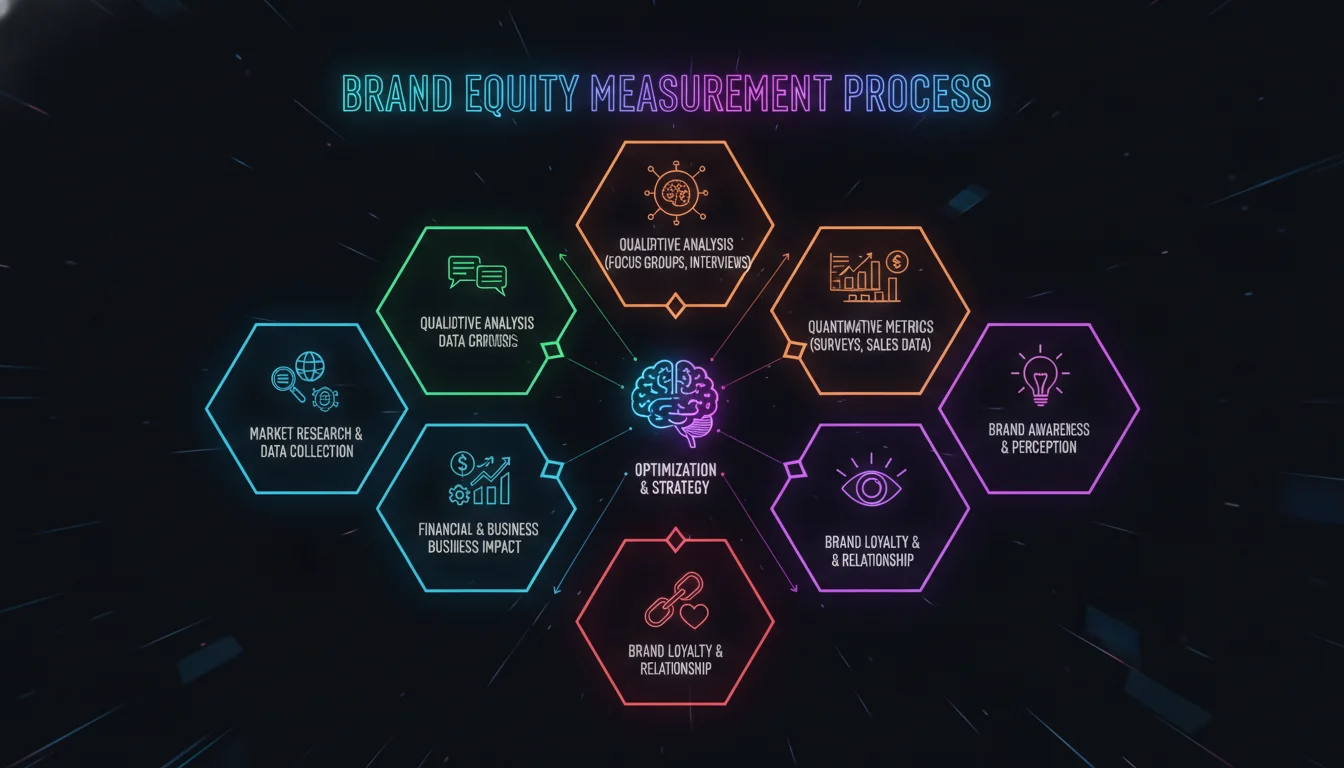
Building a this type of measurement system means following a repeatable process, not chasing a single metric. The six steps below give you a structure that adapts to both B2B and B2C contexts.
- Define brand equity dimensions
- Select measurement framework and metrics
- Collect survey, behavioral, and social data
- Analyze data and model brand effects
- Translate insights into action
- Track and refine over time
Step 1: Define Brand Equity Dimensions
Start by deciding which dimensions matter most for your category and strategy. Kantar’s Brand Power framework uses meaningful, different, and salient. Other models add perceived quality, loyalty, and associations on top. Defining dimensions up front stops measurement sprawl before it starts and gets stakeholders aligned on what winning actually looks like.
Step 2: Select Measurement Framework and Metrics
Choose a framework that fits your data and resources realistically, not aspirationally. Survey-based brand tracking measures awareness, consideration, and associations. Ipsos Brand Value Creator identifies what makes a difference to a brand’s equity by exploring consumer desire and market effects. Marketing mix models can be augmented with mindset metrics like unaided brand awareness or brand consideration.
Step 3: Collect Survey, Behavioral, and Social Data
Good data comes from three places: primary survey research, sales and share data, and social conversation. Ipsos Brand Signals combines social conversation insights with brand health tracking data using Synthesio, its social media intelligence platform. This setup lets brands capture structured survey responses alongside organic, in-the-moment consumer language, which is often where the real story lives.
Step 4: Analyze Data and Model Brand Effects
Analysis has to connect brand metrics to business outcomes, or it’s just decoration. Kantar’s Brand Power is validated as a stand-in for understanding and quantifying long-term sales. When using marketing mix models, analysts must account for time series properties such as evolutionary sales trends and cointegration, as Market Science explains in its research on brand metrics and MMM.
Step 5: Translate Insights into Action
Measurement only earns its keep when it changes decisions. Ipsos uses Brand Value Creator analysis to set an activation strategy and identify the KPIs clients need to track. Kantar emphasizes that brand equity tracking lets marketers quantify wins in the boardroom and secure stakeholder buy-in through commercial alignment.
Step 6: Track and Refine Over Time
Brand equity is never static, and treating it that way is where measurement programs go stale. Continuous tracking reveals how campaigns, PR moments, and market shifts move consumer perceptions. Kantar’s annual BrandZ rankings show that brands with strong equity navigate market storms and new category entrants more smoothly. A measurement system should get reviewed and recalibrated as category dynamics shift, not left running on autopilot.
Seven Proven Ways to Measure Brand Equity
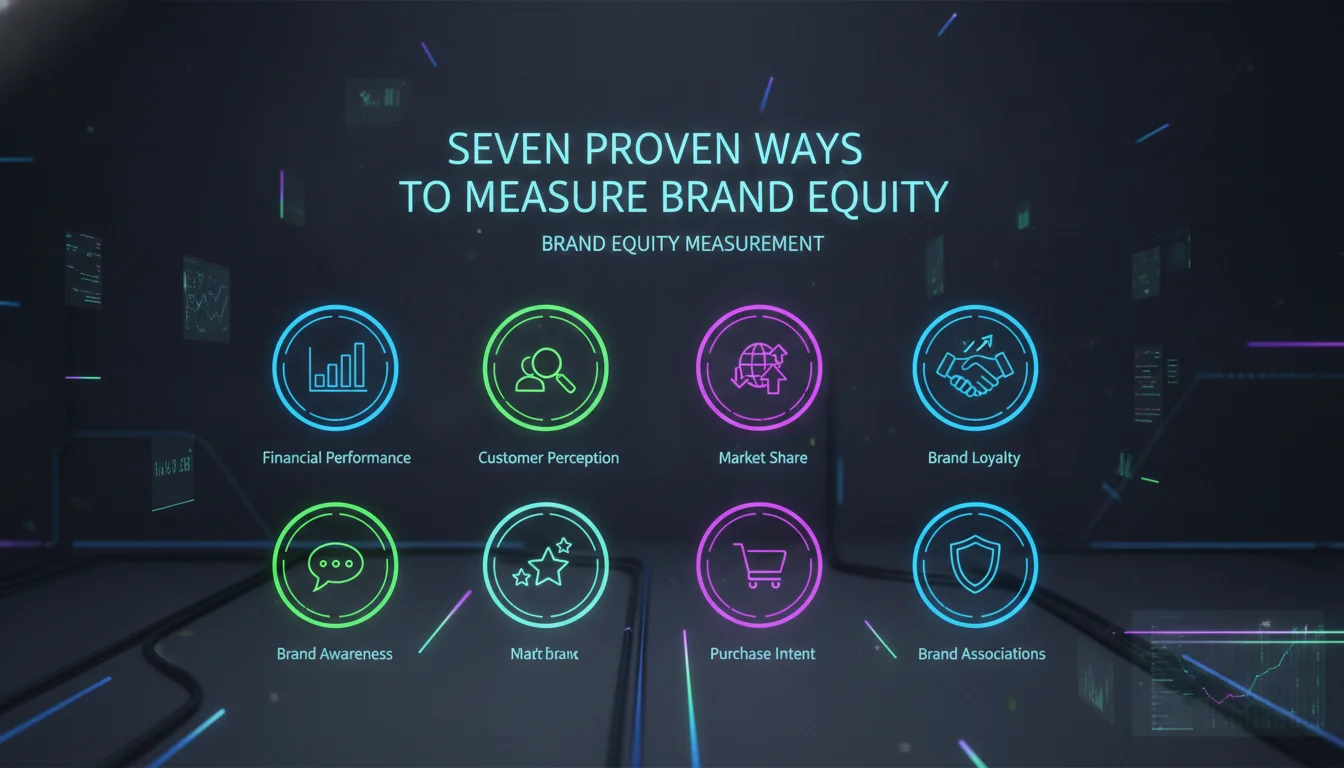
Brand equity gets measured through several proven methods, and the strongest programs stack more than one. Each method captures a different slice of the consumer-brand relationship, from recall to real-world choice behavior.
- Brand awareness measurement tracks recall, salience, and familiarity levels.
- Brand knowledge and association measurement captures thoughts, feelings, attitudes, and relationships.
- Brand loyalty measurement quantifies repeat purchase, retention, and resistance to competitors.
- Perceived quality measurement assesses consumer judgments about product or service excellence.
- Kantar Brand Power scores brands on meaningful, different, and salient dimensions.
- Ipsos Brand Value Creator measures brand desire in a real-world choice context.
- Marketing mix model augmentation adds survey-based mindset metrics to econometric models.
Survey-Based Metrics for Awareness, Knowledge, and Loyalty
Survey research is still the backbone here. Unaided awareness, consideration, association mapping, and loyalty intention are the common survey metrics teams lean on. According to Harvard Business School Online, brand equity encompasses awareness and knowledge, both measurable through structured questionnaires that track recall, salience, familiarity, and attitudinal relationships.
Kantar Brand Power: Meaningful, Different, and Salient
Kantar built Brand Power as a simple yet comprehensive set of brand equity metrics that explain and predict a brand’s market reality. It combines three components: a brand is meaningful if it meets people’s needs and creates an emotional connection; different if it’s perceived as a trendsetter and unique; salient if it comes to mind quickly in buying situations. Kantar’s analysis shows the BrandZ top 100 most valuable global brands increased brand value by 5.8% in 2020 while the global economy declined 3.3% from 2019 to 2020, proof that strong equity buys real resilience.
Marketing commentator Mark Ritson has argued the industry moved past a “differentiate or die” mindset toward one that combines salience and meaningful difference, adding that this combination works out to more than the sum of its parts, roughly 1 + 1 + 1 > 3.
Ipsos Brand Value Creator and Brand Mental Networks
Ipsos offers several complementary tools worth knowing. Brand Value Creator measures brand desire in a real-world context and identifies KPIs to track. Brand Mental Networks reveals unbiased organic and spontaneous perceptions of a brand using consumers’ own words, which is closer to how people actually talk about brands than any survey checkbox. Brand Signals integrates social conversation insights with brand health tracking data, supported by Synthesio, to catch emerging trends and early warning signals before they become a crisis.
Brand Equity Measurement in Marketing Mix Models
this kind of measurement fits into marketing mix models (MMM) by augmenting short-term sales data with survey-based mindset metrics that capture long-term brand effects. This approach is powerful, but it demands real econometric discipline or the results mislead more than they inform.
The Conventional MMM Approach
In a conventional MMM, dynamic specifications like Adstocks capture transitory effects over weeks or months. To address long-term brand building, the model gets augmented with survey-based mindset metrics such as unaided brand awareness or brand consideration. Sub-models link advertising variables to these brand metrics, and the indirect effects of advertising on sales get interpreted as long-term effects.
Econometric Challenges and Spurious Regression
Market Science identifies three reasons why simply bolting brand metrics onto the standard MMM equation is internally inconsistent. First, if brand building effects exist, sales must show evolutionary or trending behavior; if they don’t, any regression of brand metrics on sales can only reflect a short-term relationship. Second, if sales are evolving while marketing and brand metrics stay stationary, the equation is unbalanced and sales must be first-differenced. Third, if brand metrics are also evolving, spurious regression risks creep in, and cointegrating relationships must be built into the model.
Integrating Long-Term Brand Metrics Correctly
A more valid approach links long-term brand preferences embodied in mindset metrics directly to long-term purchase demand revealed through base sales. This requires first-differencing brand equity metrics and testing for cointegration. Skip these steps, and brand equity inside MMM can produce conclusions about advertising’s long-term impact that simply don’t hold up.
Comparing Brand Equity Measurement Approaches
No single equity measurement approach fits every organization. The table below compares four major approaches by core focus, data inputs, strengths, and limitations, so you can see where each one earns its keep.
Overview of Measurement Solutions
Proprietary solutions from Kantar and Ipsos deliver validated frameworks, while academic and econometric approaches offer more flexibility. Personal this type of measurement, as described by GoTo, adds a situational lens: the same personal brand can carry different equity for different audiences or product categories.
Comparison Table
| Approach | Core Focus | Data Inputs | Strengths | Limitations |
|---|---|---|---|---|
| Kantar Brand Power | Meaningful, different, salient | Survey-based brand equity metrics | Validated predictor of long-term sales; used in BrandZ rankings | Requires ongoing tracking and proprietary scoring |
| Ipsos Brand Value Creator | Brand desire in real-world context | Consumer surveys, market effects | Identifies activation strategy and KPIs | Proprietary; not fully transparent |
| Marketing Mix Model augmented with brand metrics | Indirect advertising effects on sales | Sales data plus mindset metrics like unaided awareness | Links brand to short- and long-term sales | Econometric pitfalls; spurious regression if mishandled |
| Ipsos Brand Mental Networks | Memory structure of associations | Unaided organic consumer perceptions | Reveals unbiased perceptions in consumers’ own words | Qualitative complexity; requires specialized analysis |
How to Choose the Right Approach
Selection comes down to data availability, budget, and strategic goals. Large enterprises with existing brand tracking often lean toward Kantar Brand Power or Ipsos BVC. Organizations with strong sales data and econometric chops may explore MMM augmentation instead. The most robust programs we’ve seen combine survey-based mindset metrics with behavioral and social data rather than betting on just one.
Pros and Cons of Formal Brand Equity Measurement
Formal brand equity measurement gives brands a repeatable way to prove marketing’s value, but it comes with real costs and complexity. Weigh both sides before committing budget to a full tracking program.
Pros
- Connects marketing spend to long-term financial outcomes, making budget conversations easier to win
- Surfaces early warning signals, like the ones Ipsos Brand Signals flags from social conversation, before a reputation issue snowballs
- Gives creative and strategy teams a shared, data-backed language for what’s working
- Supports stakeholder buy-in by translating perception into a metric leadership can act on
Cons
- Proprietary frameworks like Kantar Brand Power or Ipsos BVC aren’t fully transparent, so you’re trusting a black box to a degree
- Marketing mix model augmentation carries real econometric risk, including spurious regression if the math isn’t handled carefully
- Ongoing tracking requires sustained budget and survey infrastructure, which smaller brands may not have
- Metrics can feel abstract to non-marketing stakeholders unless tied explicitly to revenue or pricing power
Common Mistakes in Brand Equity Measurement
Brand equity measurement fails when teams treat it as a one-off project or lean on a single metric to tell the whole story. Avoiding these common mistakes keeps the system credible and actually useful.
Over-Reliance on Short-Term Metrics
The conventional MMM is short-term focused, with Adstocks capturing mean-reverting effects over several weeks or months. If brand equity measurement only chases short-term sales lift, it misses persistent shifts in core brand preferences. Long-term brand building requires explicitly modeling the link between mindset metrics and base sales, not just watching the weekly bump.
Ignoring Negative Brand Equity and Risks
Harvard Business School Online cautions that negative equity can stem from product recalls, poor customer service, inconsistent products, scandals, price increases without added value, environmental damage, and associations with controversial figures. Measurement systems that track only the positive metrics miss these risks entirely. Ipsos Brand Signals helps identify “unknown unknowns” and early warning signals pulled from social conversation, which is often where trouble surfaces first.
Treating Brand Metrics as Static
Brand equity shifts by audience and context, and pretending otherwise is a mistake. GoTo’s analysis of personal brand equity shows Jamie Oliver’s equity runs high for food-related endorsements but falls flat for sporting equipment. Stephen Curry’s equity with Under Armour depends on a natural connection between athlete and brand, not just fame alone. This fluidity means brand equity measurement should be segmented and situational, never a single universal score pinned to a dashboard.
Brand Spotlight: What Strong Equity Looks Like
Strong brand equity shows up visually before it ever shows up in a spreadsheet. Picture Apple’s stark product pages, all negative space and one hero object, or Nike’s swoosh doing more storytelling in one shape than most brands manage in a paragraph. HBS Online points to Apple for its constant innovation, intuitive experience, and clean design, and to Lego for delivering a high-quality, creative play experience across generations. That’s the visual and emotional residue that shows up later as a premium price tag and a customer who won’t switch. As of 2026, we’re seeing more clients ask us to audit that residue before touching a single campaign brief, because you can’t build on brand equity you haven’t actually measured.
Conclusion: Building a Sustainable Brand Equity Measurement System
A sustainable brand equity measurement system pulls together multiple dimensions, leans on validated frameworks, and stays responsive to market changes. This isn’t a dashboard you check once a year. It’s a continuous diagnostic process that should be shaping strategy every quarter.
Key Principles for Long-Term Success
First, define the dimensions that matter for your category. Second, combine survey, behavioral, and social data rather than picking just one. Third, model the relationship between brand metrics and business outcomes with real statistical rigor. Fourth, translate findings into activation strategies and stakeholder communication that people actually act on. Kantar’s BrandZ data shows strong brands grew value even during economic decline, which underscores why disciplined measurement pays off.
The Future of Brand Equity Measurement
AI and social intelligence are expanding the toolkit fast. Ipsos Brand Signals uses AI-empowered analysis to integrate social conversation with brand health tracking, surfacing memories, associations, and emerging threats in near real time. Brand Mental Networks maps the memory structures that drive choice at a level surveys alone can’t reach. This year, these tools are making brand equity measurement faster, more granular, and considerably more predictive than the annual-survey model most teams grew up on.
Final Word
Brand equity measurement is the bridge between marketing activity and long-term business value. By adopting proven frameworks, dodging common pitfalls, and committing to continuous tracking, brands can turn intangible consumer perceptions into a measurable, strategic advantage. Updated for 2026, the discipline matters more than ever as attention gets harder to earn and easier to lose.
Ready to see what your brand’s equity actually looks like in the numbers? Contact Emin Media for a free brand consultation, and let’s build something bold, backed by data that holds up in the boardroom.
Frequently Asked Questions
How is brand equity measured?
Brand equity is measured through survey-based metrics like awareness, knowledge, loyalty, and perceived quality, often combined with behavioral data and financial modeling. Frameworks such as Kantar Brand Power and Ipsos Brand Value Creator provide standardized ways to run that process consistently.
What are the four dimensions of brand equity?
The four commonly referenced dimensions are brand awareness, brand knowledge or associations, perceived quality, and brand loyalty. These dimensions capture how consumers recognize, think about, evaluate, and commit to a brand over time.
What are the five pillars of brand equity?
The five pillars label isn’t standardized across the industry, but many frameworks include awareness, associations, perceived quality, loyalty, and proprietary brand assets. Kantar’s Brand Power, by contrast, uses three core pillars: meaningful, different, and salient.
What are brand equity metrics?
Brand equity metrics are quantitative indicators of consumer perception and behavior, such as unaided awareness, consideration, association strength, loyalty intention, and willingness to pay a premium. These metrics feed directly into any brand equity measurement system worth running.
Why is brand equity measurement important?
Brand equity measurement matters because it links marketing investment to financial outcomes by quantifying the intangible value consumers place on a brand. It supports stakeholder buy-in, predicts long-term sales, and flags risks before they quietly erode brand value.
What is the difference between brand equity and brand value?
Brand equity refers to consumer perceptions and attitudes that shape behavior, while brand value is the financial worth of the brand as an asset. Brand equity measurement tracks the perceptions; brand valuation converts those perceptions into monetary terms.
Enjoyed this article?
Contact Emin Media for a free brand consultation and let's create something amazing together.
Get in TouchRelated Articles

Digital Marketing for Creatives: A Bold Guide
Digital marketing for creatives builds real visibility and sales. Learn strategies for social media, SEO,…

Branding & Design Agency Tips That Actually Work
Discover branding and design agency tips to choose the right partner, set clear goals, and…

Creative Agency Pitch Deck Tips That Win Clients
Master creative agency pitch deck tips that win clients in 2026. Learn storytelling, design, and…